Uploaded Tactic
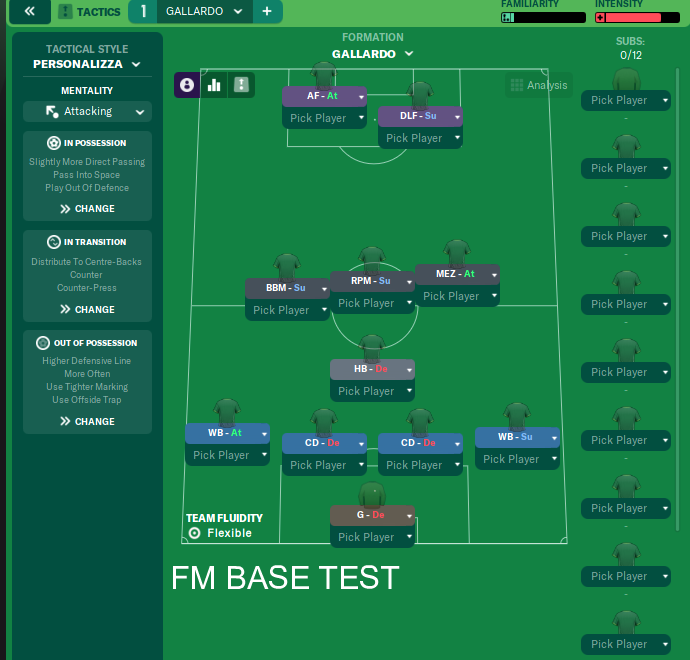
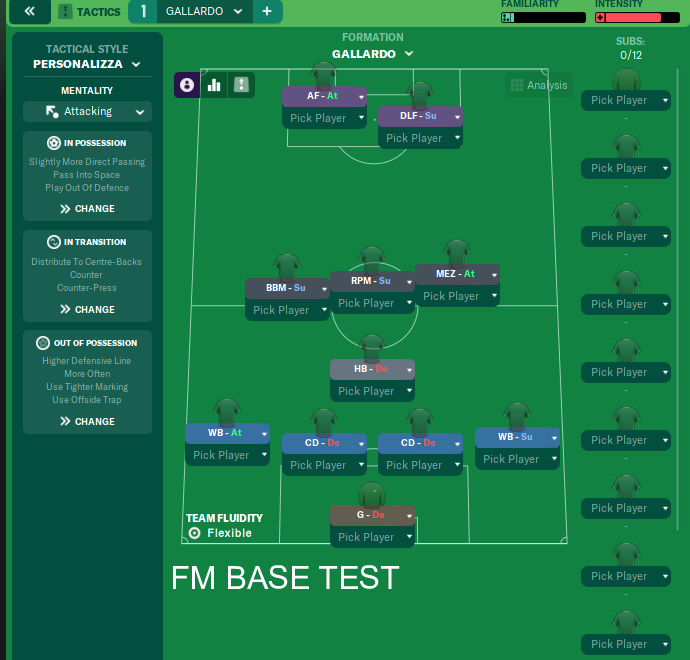
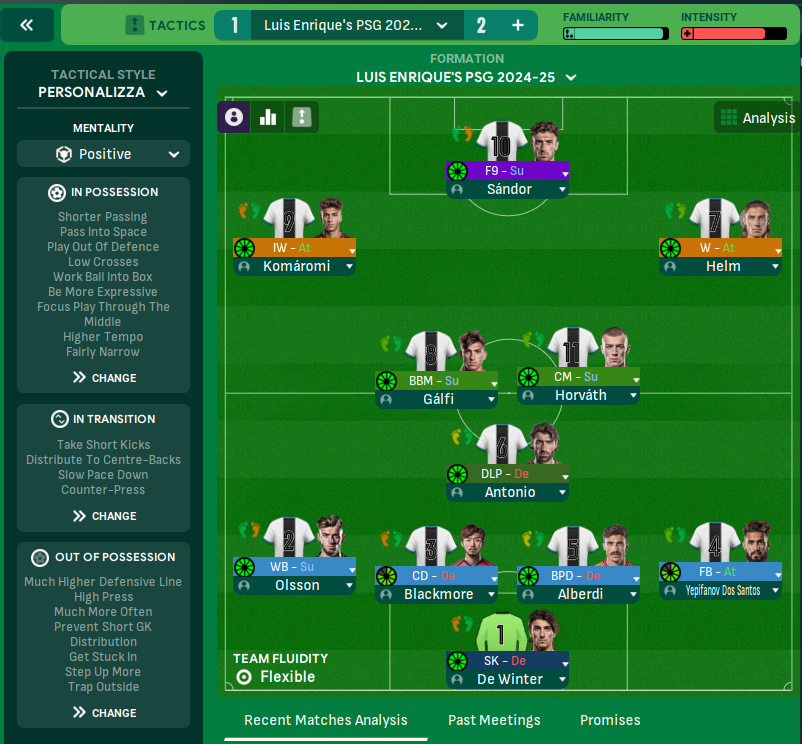
Formation & Style
Tactical Style:Personalizza
Mentality:Attacking
Formation:4-2-3-1
Team Fluidity:Flexible
In Possession
Slightly More Direct Passing
Pass Into Space
Play Out Of Defence
In Transition
Distribute To Centre-Backs
Counter
Counter-Press
Out of Possession
Higher Defensive Line
Press More Often
Use Tighter Marking
Use Offside Trap
Team Shape Without Ball
Shape:4-2
Description:Compact shape with emphasis on staying organized and applying pressure on the ball.
Evidence:CD-De at [2,2], [2,3] and HB-De at [3,2] supporting a solid defensive line.
Team Shape With Ball
Shape:4-3
Description:Fluid attacking shape with emphasis on wing play and central penetration.
Evidence:WB-At at [2,1], [2,5] providing width while MEZ-At at [4,3] operates centrally.
Phase Description
Attacking Play
Utilizes width from wing-backs and dynamic movement from attacking midfielders to create goal-scoring opportunities.
Defensive Transition
Quick transition from attack to defense with a focus on pressing and maintaining higher defensive line.
Main Focus
Creating scoring chances through quick passing and exploiting spaces.
Key Strengths
Dynamic Attack
Utilizes various attacking roles to create unpredictable movements.
Fluid Midfield
The combination of BBM-Su, RPM-Su, and MEZ-A allows for creativity and mobility.
Wing-Back Contribution
Wing-backs provide width and are crucial in both attack and defense.
Conflicting Directions
High Line Risks
A higher defensive line may leave the team vulnerable to fast counter-attacks.
Dependency on Wing-Play
Reliance on wing-backs may limit central penetration if they are marked out.
Limited Depth in Attack
Two forwards may struggle against teams with stronger defenses.
Tactical Suggestions
Consider a Defensive Midfielder
Adding a DM could provide extra protection for the defense.
Central Attacking Variation
Introduce a central striker or change one to a Target Forward to exploit aerial advantage.
Adjust Defensive Line
Consider lowering the defensive line if opponents are consistently breaking the high line.
Ask Questions About Your Lineup
Related Tactics
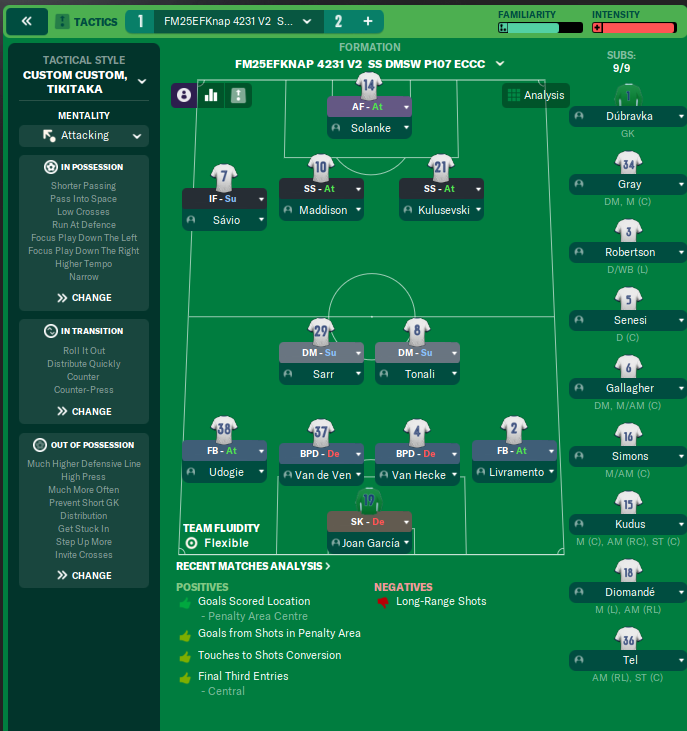
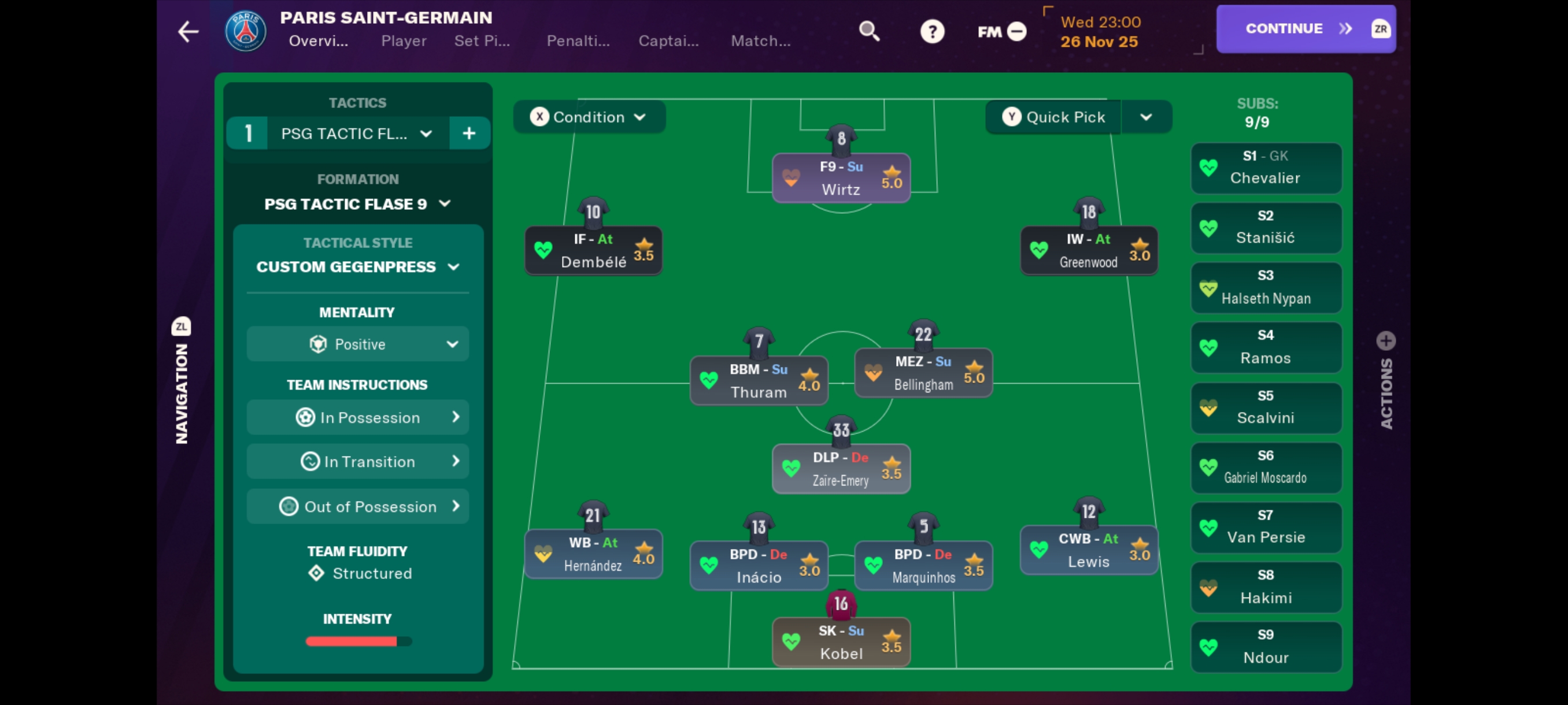
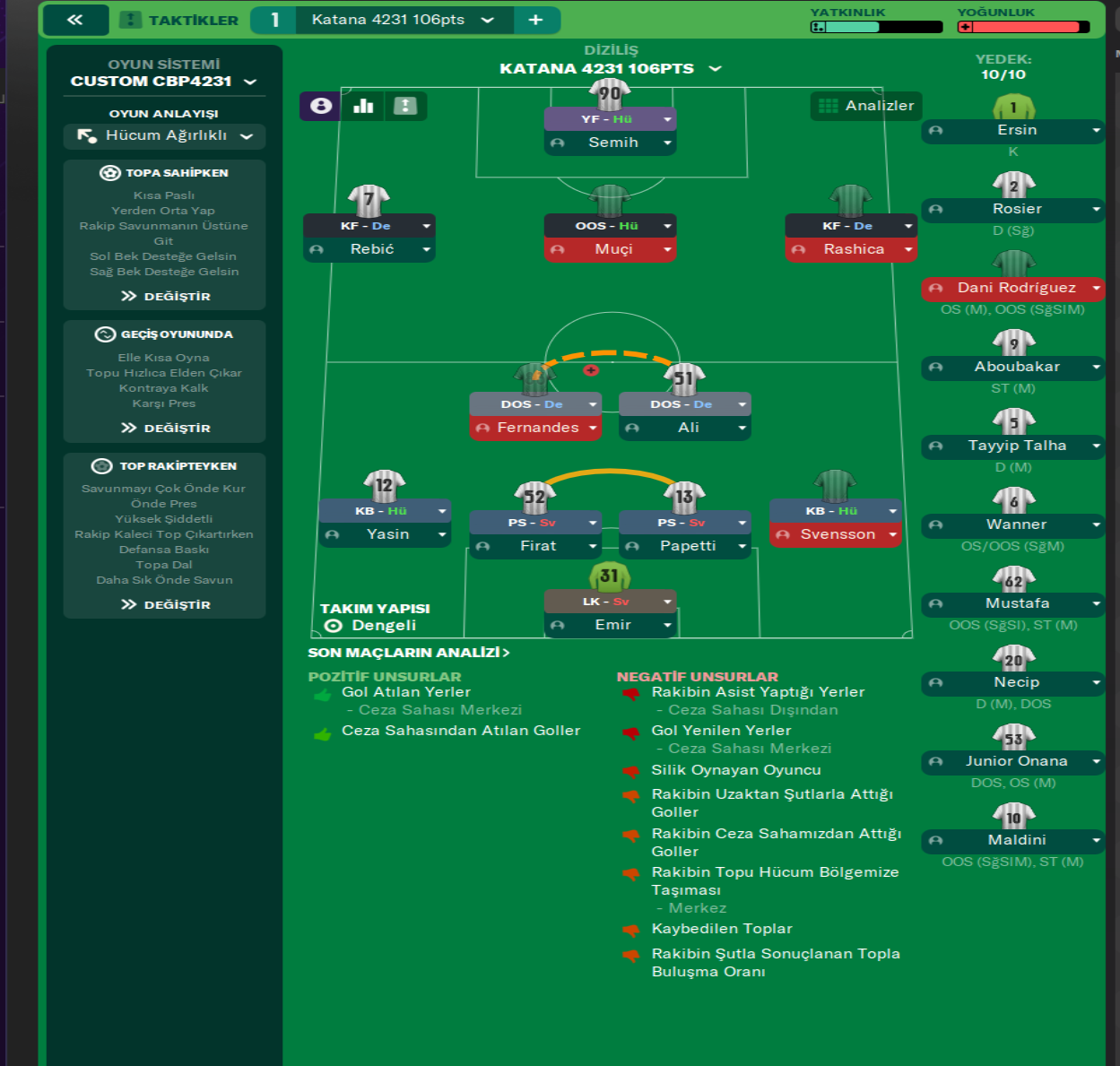
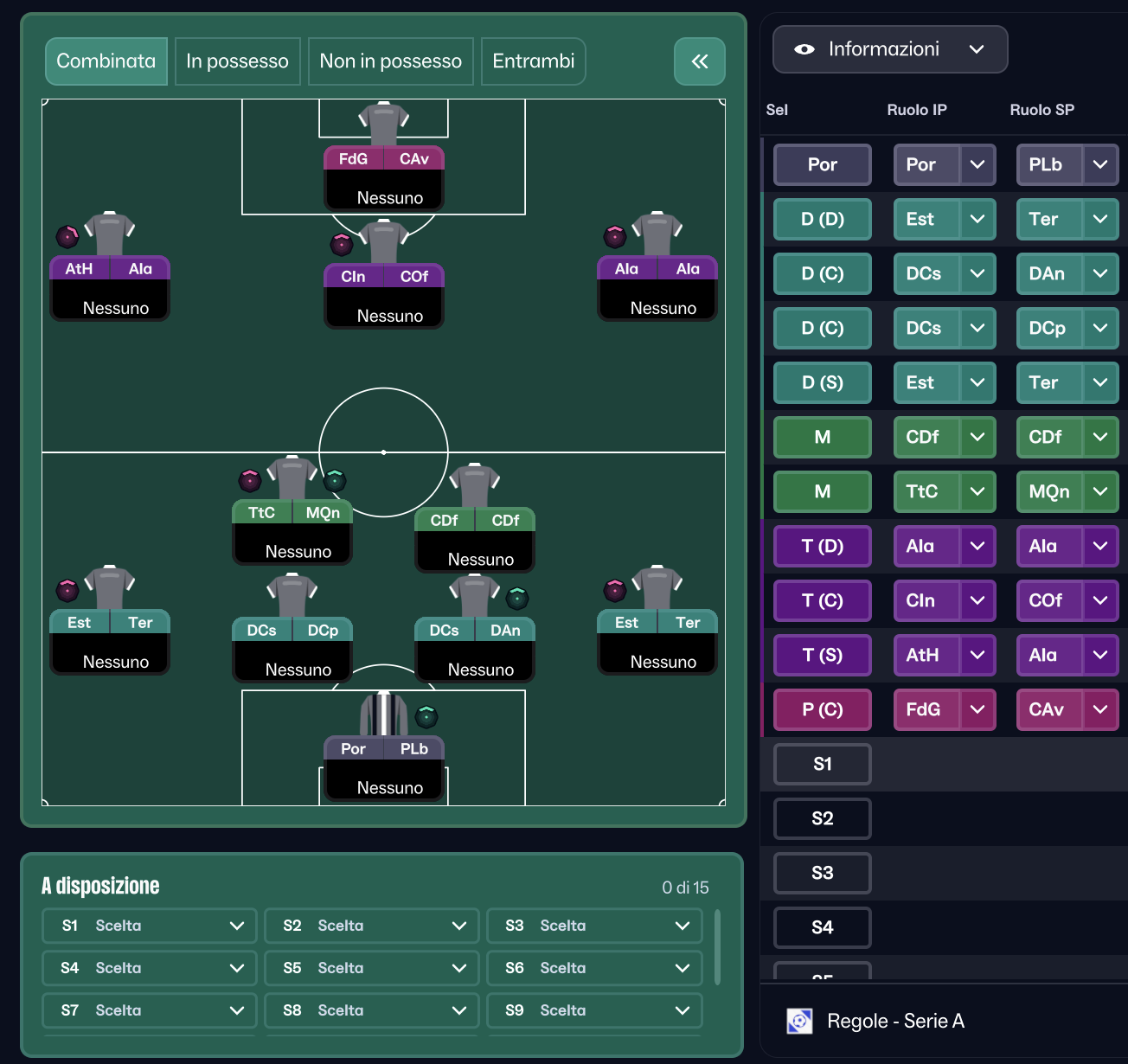
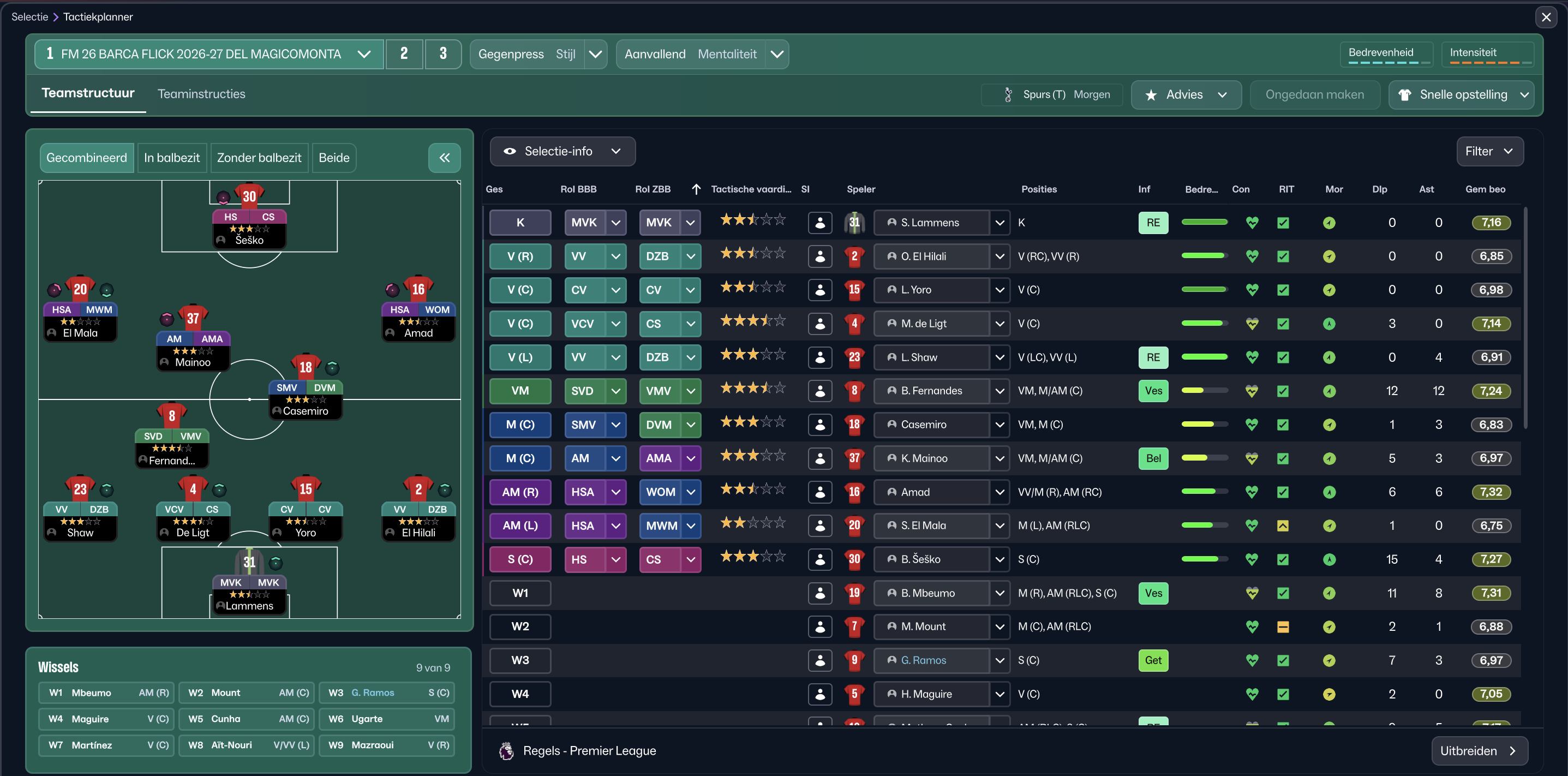
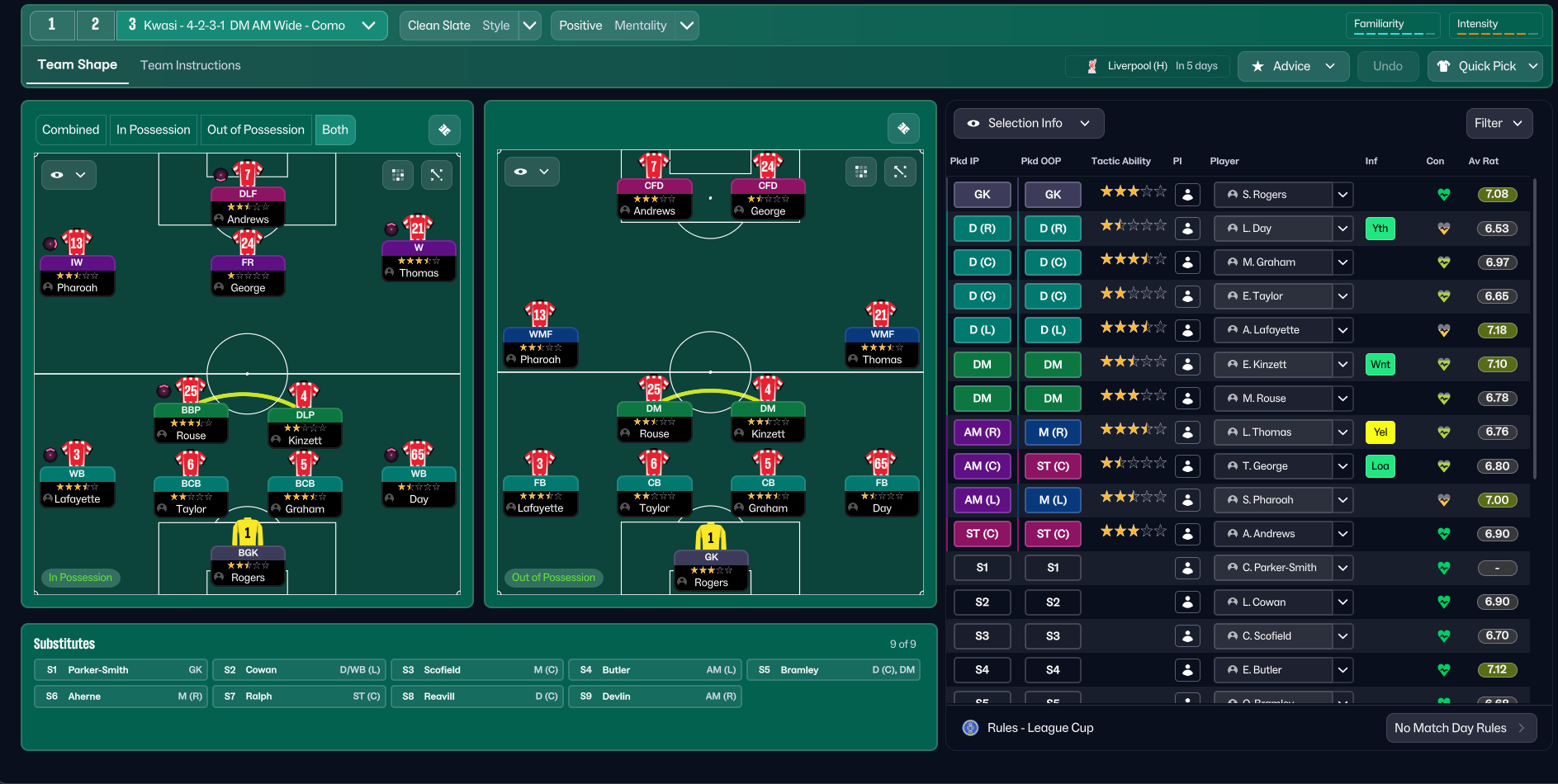
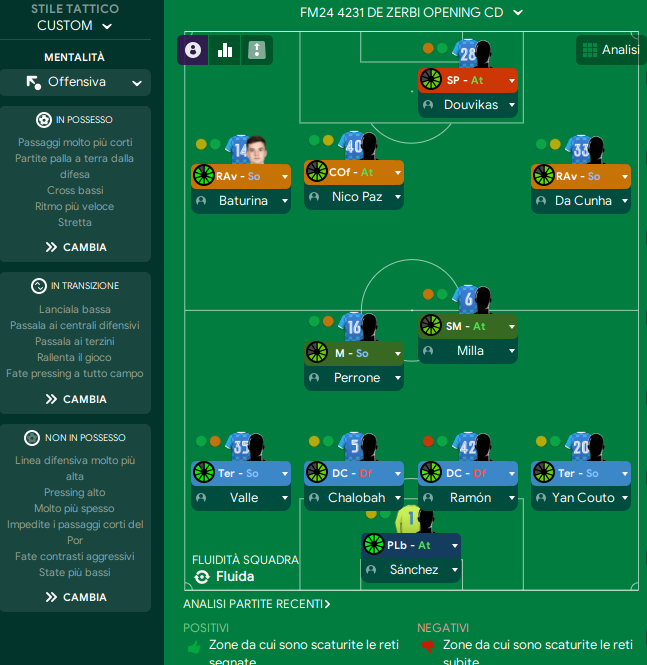
More Personalizza tactics
Guides for this formation
The tactical theory behind the 4-2-3-1: roles, instructions, and the trade-offs that decide whether the system holds up.
Player pairings
Midfield Pairs in 4-2-3-1 and 4-4-2
Double pivots and flat pairs in 4-2-3-1 and 4-4-2: when each pairing works, when it collapses, and the AMC unicorn that rescues both.
Read guide
Playing styles
Gegenpressing: A Full Guide
Klopp-style gegenpressing in FM, including squad profile, line-and-press pairing, sustainable workload, and the antipatterns to avoid.
Read guide