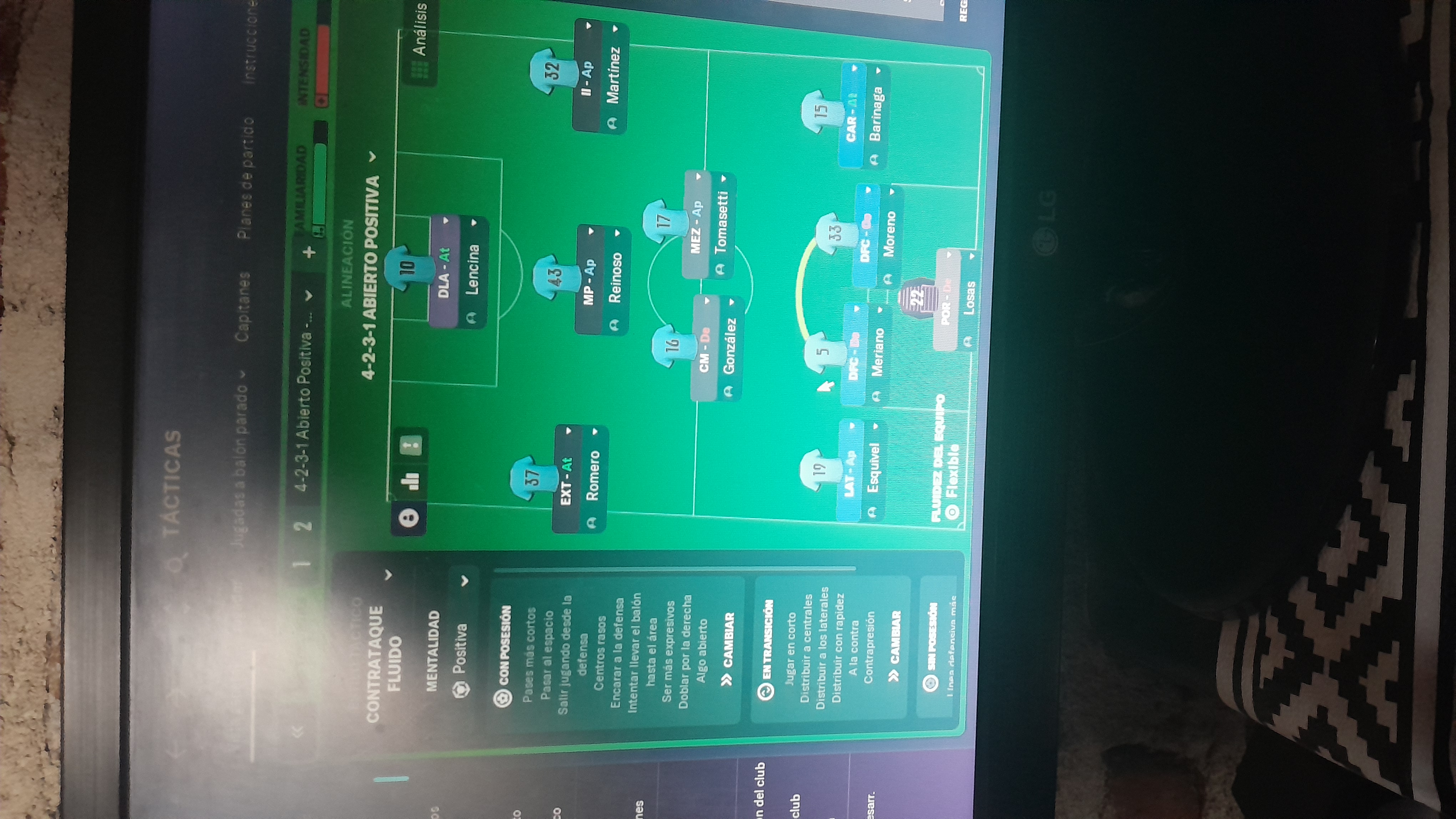
Uploaded Tactic
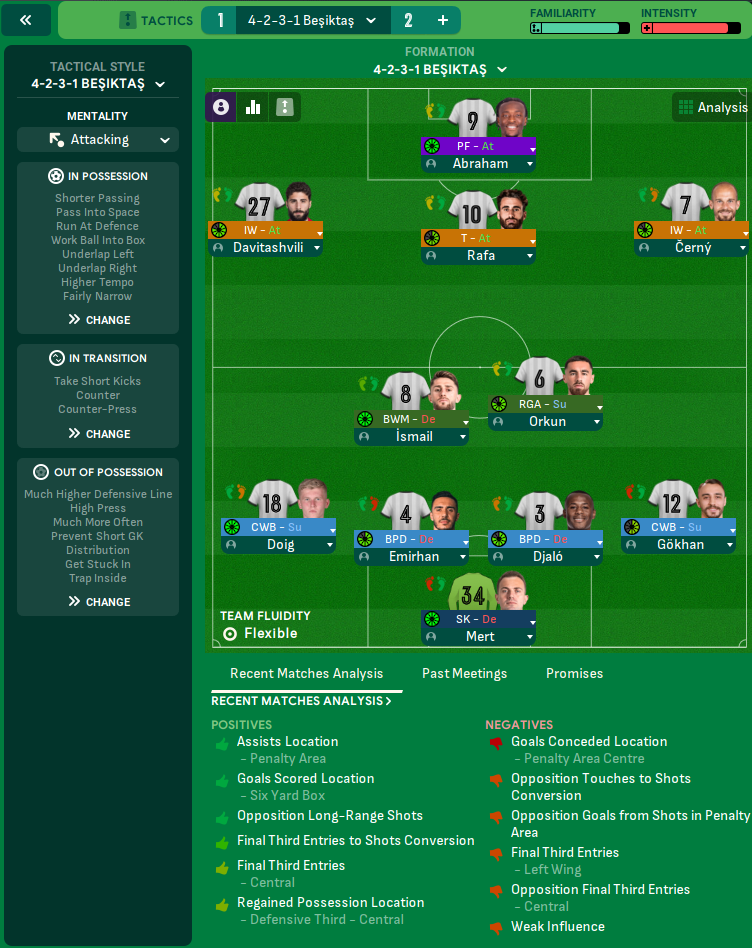
Formation & Style
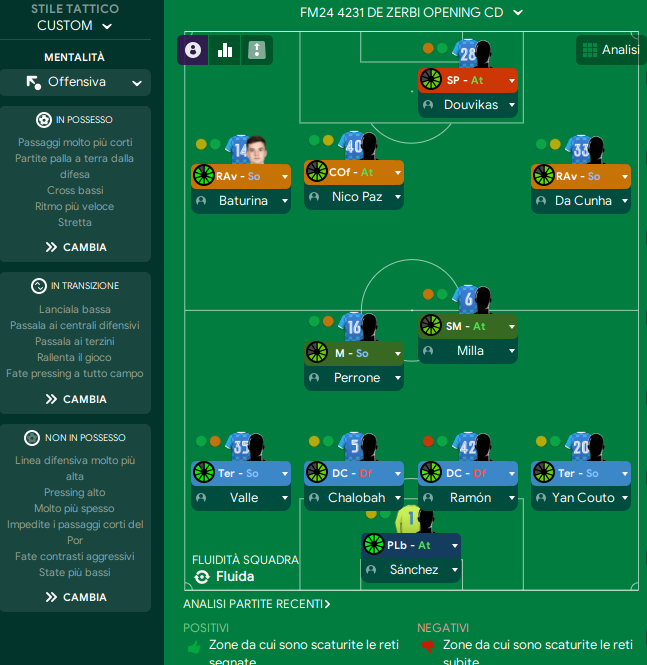
Tactical Style:4-2-3-1
Mentality:Attacking
Formation:4-2-3-1
Team Fluidity:Flexible
In Possession
Shorter Passing
Pass Into Space
Run At Defence
Work Ball Into Box
Underlap Left
Underlap Right
Fairly Narrow
In Transition
Take Short Kicks
Counter
Counter-Press
Out of Possession
Much Higher Defensive Line
High Press
Much More Often Prevent Short GK Distribution
Get Tucked In
Trap Inside
Team Shape Without Ball
Shape:Compact
Description:The higher defensive line compresses space and pushes opponents towards the wings while maintaining pressure.
Evidence:Much Higher Defensive Line combined with High Press.
Team Shape With Ball
Shape:Fluid and Dynamic
Description:The movement of IWs draws defenders out of position, allowing the PF and T to exploit gaps.
Evidence:Involves Underlapping runs from IWs supported by CWB.
Phase Description
Attacking Play
Utilizes width from the IW and CWB to stretch opposition and create spaces inside for T and PF to exploit.
Defensive Transition
Quickly transitions to counter pressing when possession is lost, using high aggression to regain the ball.
Main Focus
Dominates central areas while allowing the width to create space, aiming for late runs into the box.
Key Strengths
Dynamic Offensive Transition
The team's ability to counter-attack swiftly leads to quick goal-scoring opportunities.
Width in Attack
CWB and IWs effectively stretch the pitch, creating chances from wide areas.
Central Midfield Control
The dual-pivot provides options both defensively and creatively in midfield.
Conflicting Directions
Pressing Balance
High press may leave spaces behind against fast opposition strikers, risking counter-attacks.
Narrow Build-Up Risks
The Fairly Narrow approach might cause congestion in midfield, limiting passing options.
Overlapping Full-Backs
CWB require a balance; over-reliance on overlapping may create defensive vulnerabilities.
Tactical Suggestions
Adjust Defensive Line
Consider lowering the defensive line to provide more cover against quick counters.
Variation in Attack
Introduce a more varied attacking approach to include direct balls or counter-attacks.
Encourage Wide Play from Central Mids
Instruct central players to exploit wide areas more frequently to stretch opposition.
Ask Questions About Your Lineup
Related Tactics
Guides for this formation
The tactical theory behind the 4-2-3-1: roles, instructions, and the trade-offs that decide whether the system holds up.
Player pairings
Midfield Pairs in 4-2-3-1 and 4-4-2
Double pivots and flat pairs in 4-2-3-1 and 4-4-2: when each pairing works, when it collapses, and the AMC unicorn that rescues both.
Read guide
Playing styles
Gegenpressing: A Full Guide
Klopp-style gegenpressing in FM, including squad profile, line-and-press pairing, sustainable workload, and the antipatterns to avoid.
Read guide