Uploaded Tactic
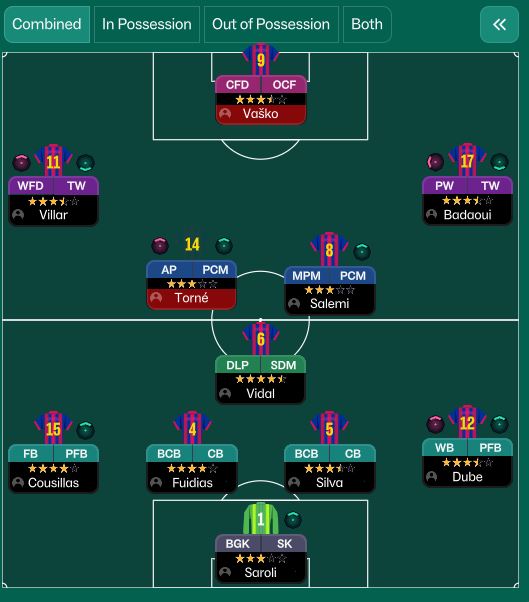
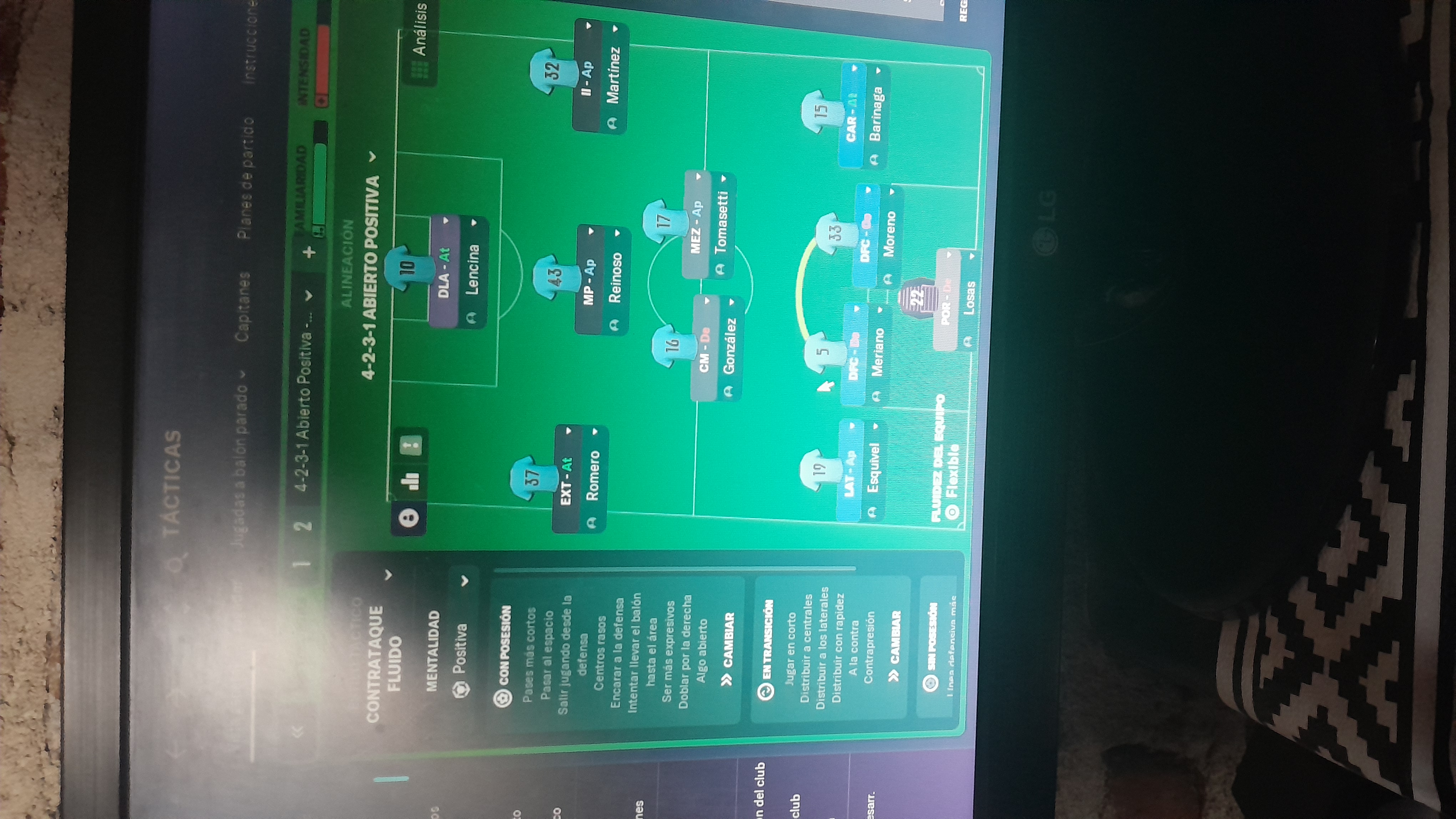
Formation & Style
Tactical Style:Fluid Fluidity
Mentality:Attacking
Formation:4-2-3-1
Team Fluidity:Fluid
In Possession
Play Out of Defence
More Direct Passing
Run At Defence
In Transition
Counter-Press
Counter
Out of Possession
Higher Defensive Line
Higher Line of Engagement
Prevent Short GK Distribution
Team Shape Without Ball
Shape:Compact
Description:The team maintains a compact shape, making it difficult for opponents to penetrate.
Evidence:Higher Defensive Line with CBs positioned centrally at [2,2], [2,3] and [2,4].
Team Shape With Ball
Shape:Fluid
Description:Fluid attacking structure allows for interchanging positions among forwards and midfielders.
Evidence:Winger and wing-backs stretching the play while the attacking midfielder operates centrally at [5,3].
Phase Description
Attacking Play
Utilizes width with wingers and wing-backs, aiming for central link-up play with the attacking midfielder.
Defensive Transition
Quickly transitions to pressing the opposition, aiming to regain possession swiftly.
Main Focus
Vertical play through the midfield towards the striker, while using width to stretch the opponent's defense.
Key Strengths
Dynamic Midfield Play
The midfield has a blend of roles that can transition effectively between defence and attack.
Width in Attack
Utilizing wingers and wing-backs provides width to stretch opposing defenses.
Solid Defensive Setup
A back three coupled with wing-backs ensures defensive solidity.
Conflicting Directions
Risk of Over-Committing Full-Backs
Wing-Backs pushing high can leave the defense exposed to counter-attacks.
Heavy Midfield Reliance
The strategy heavily relies on midfielders to control the game; failure to dominate could lead to issues.
Striker Isolation
The central forward may become isolated if the midfield does not connect effectively.
Tactical Suggestions
Adjust Wing-Back Role
Consider changing the duty of the wing-back to Support to maintain defensive stability.
Improve Defensive Midfield Support
Ensure the defensive midfielder is positioned correctly to protect the backline effectively.
Encourage More Direct Passing
Emphasize a more vertical passing strategy to exploit open spaces quickly.
Ask Questions About Your Lineup
Related Tactics
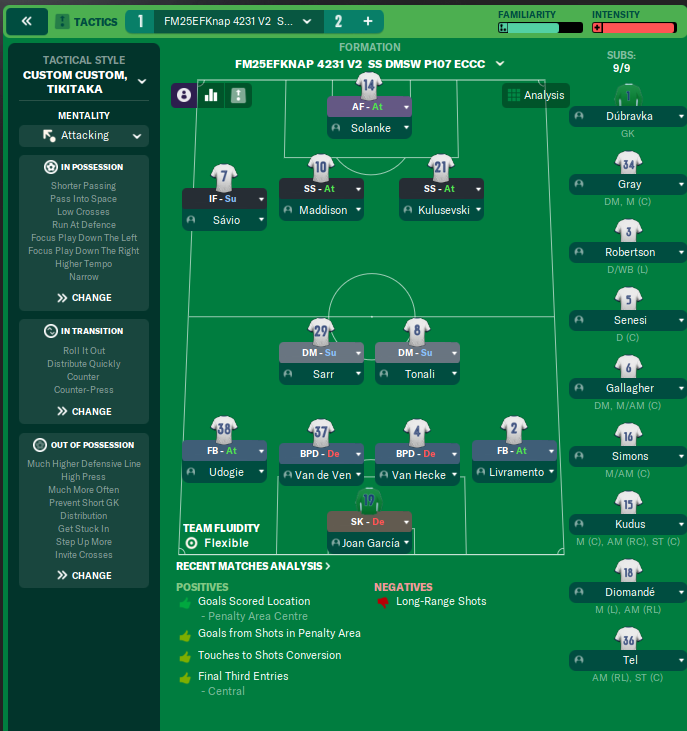
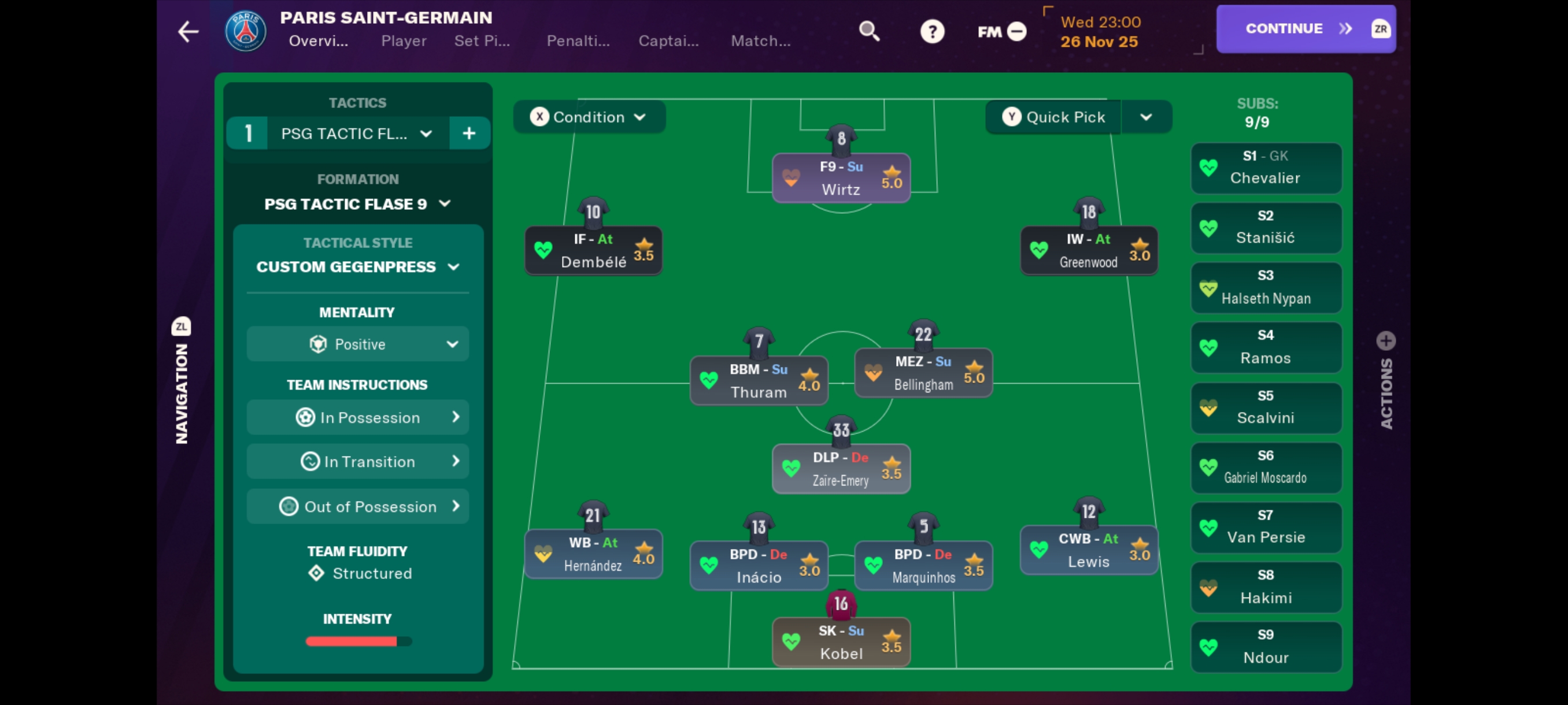
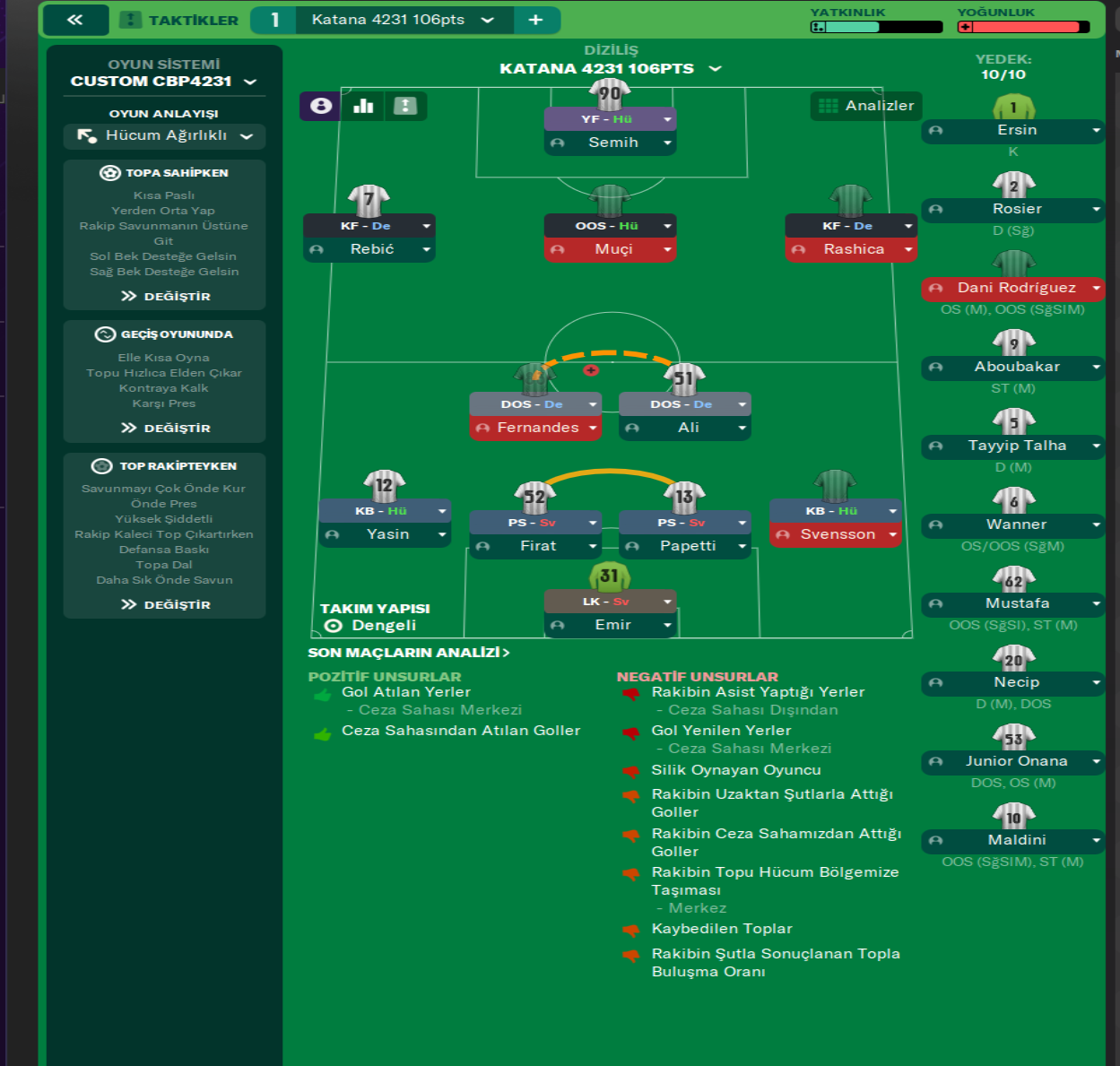
Guides for this formation
The tactical theory behind the 4-2-3-1: roles, instructions, and the trade-offs that decide whether the system holds up.
Player pairings
Midfield Pairs in 4-2-3-1 and 4-4-2
Double pivots and flat pairs in 4-2-3-1 and 4-4-2: when each pairing works, when it collapses, and the AMC unicorn that rescues both.
Read guide
Playing styles
Gegenpressing: A Full Guide
Klopp-style gegenpressing in FM, including squad profile, line-and-press pairing, sustainable workload, and the antipatterns to avoid.
Read guide