Uploaded Tactic
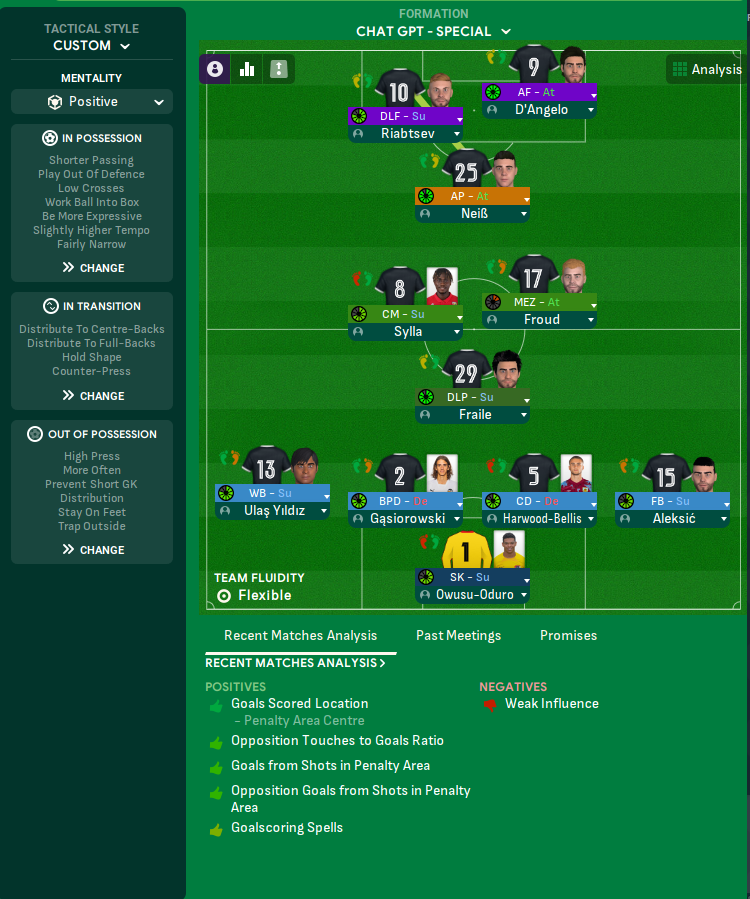
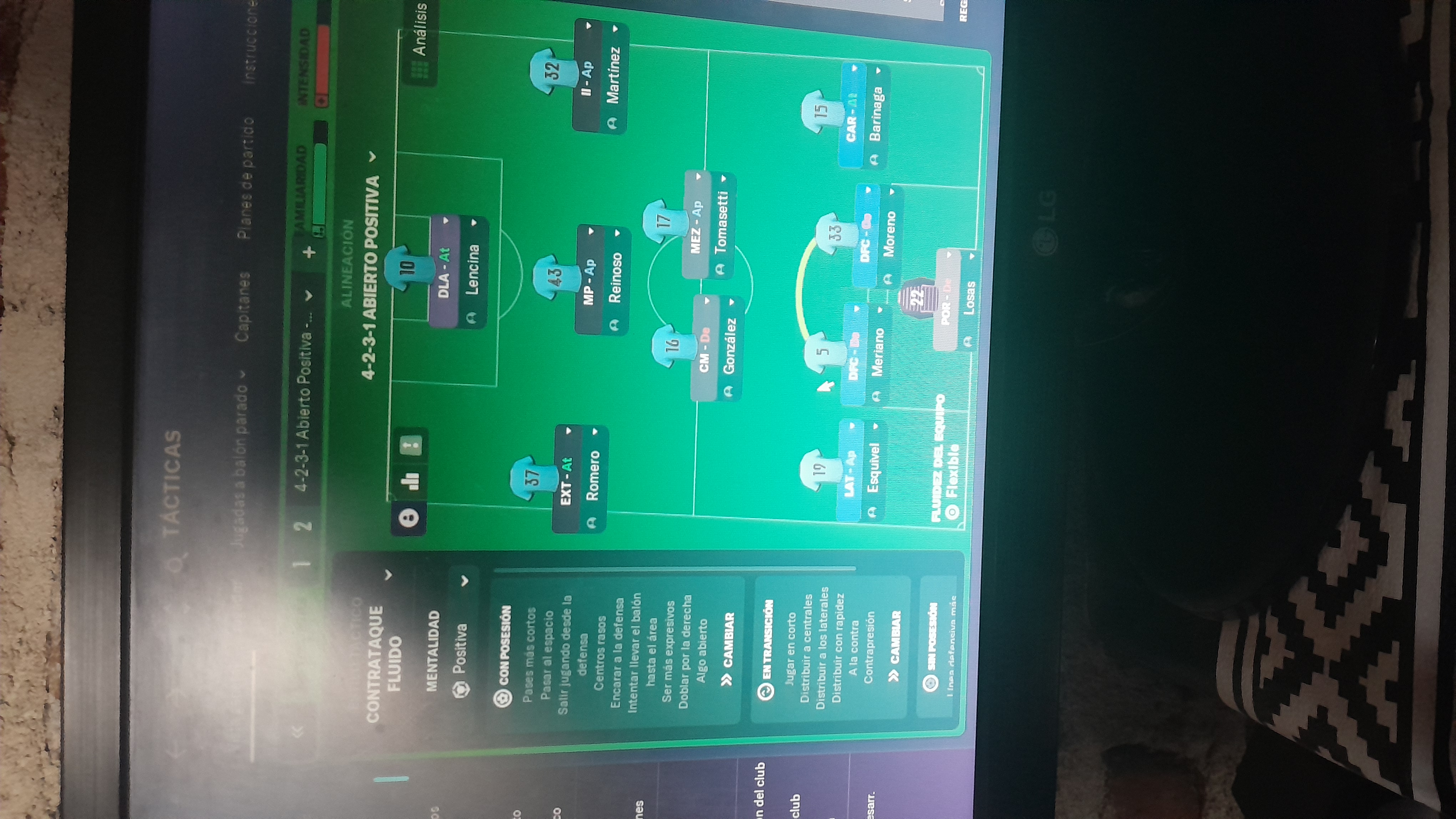
Formation & Style
Tactical Style:Custom
Mentality:Positive
Formation:4-2-3-1
Team Fluidity:Flexible
In Possession
Shorter Passing
Play Out Of Defence
Low Crosses
Work Ball Into Box
Be More Expressive
Slightly Higher Tempo
Fairly Narrow
In Transition
Distribute To Centre-Backs
Hold Shape
Counter-Press
Out of Possession
High Press
More Often Prevent Short GK Distribution
Stay On Feet
Trap Outside
Team Shape Without Ball
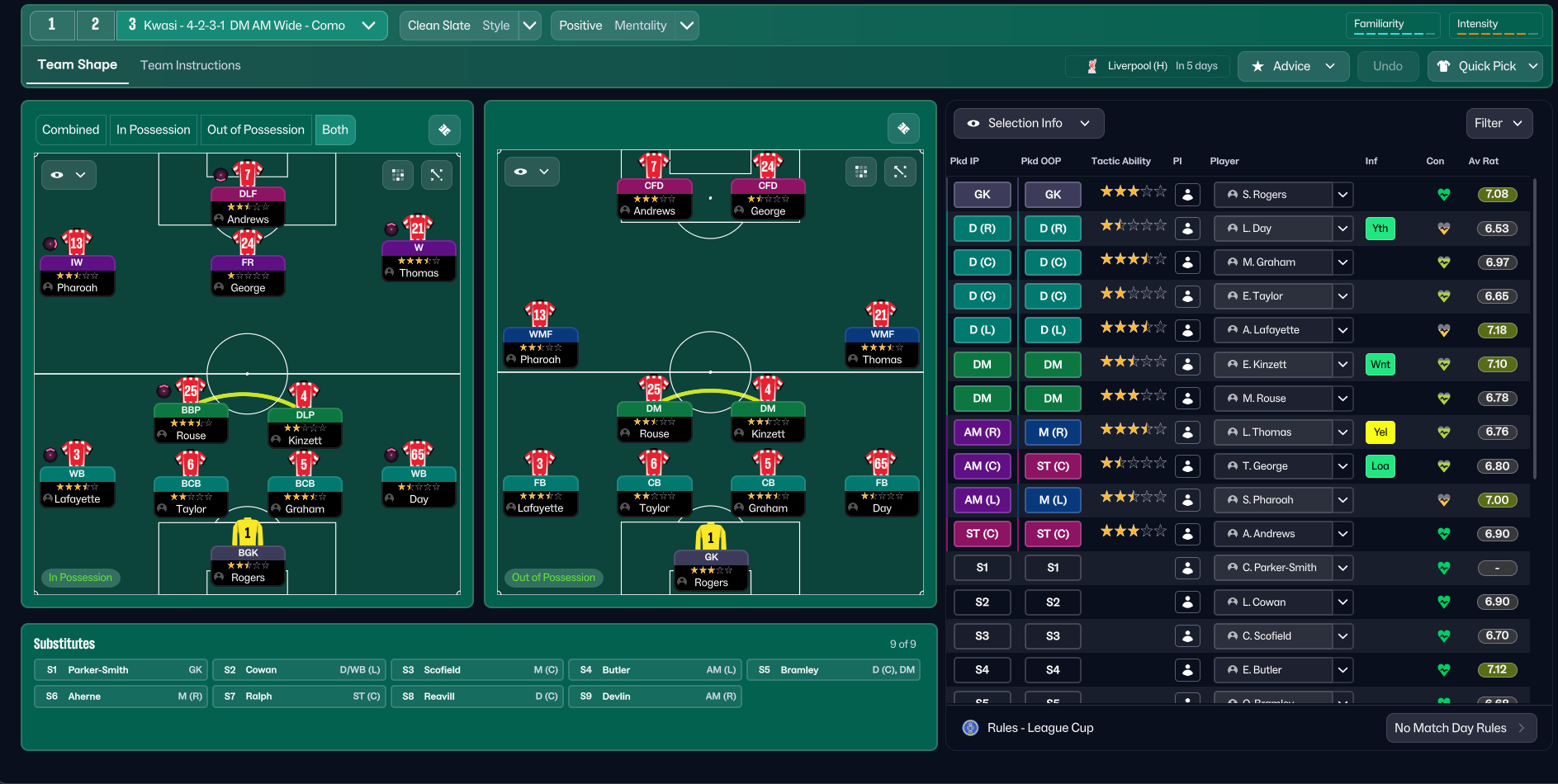
Shape:4-4-2
Description:The team shapes up in a compact 4-4-2 formation during defensive phases.
Evidence:Presence of 4 defenders and midfielders close to the defensive line.
Team Shape With Ball
Shape:4-2-3-1
Description:Formation shifts to a 4-2-3-1 while attacking, providing width and depth.
Evidence:The advanced playmaker and wingers support the attack effectively.
Phase Description
Attacking Play
Utilizes short passing and seeks to break down the opposition with patient build-up.
Defensive Transition
Quick recovery of formation after losing possession, aiming to regain control swiftly.
Main Focus
Possession-based play that emphasizes creativity and attacking options.
Key Strengths
Creative Midfield
The presence of a Mezzala (Froud) and an Advanced Playmaker (Neiß) allows for dynamic play-making.
Flexible Attack
The combination of roles in the forward line allows for various attacking movements.
Ball-Playing Defence
Two ball-playing defenders enhance the ability to progress the ball from defense to attack.
Conflicting Directions
High Press with Low Defensive Line
The team employs a high press but lacks the compactness necessary when defending deep.
Fluid Movement vs. Direct Play
While the tactic encourages creativity, over-expansion can lead to gaps when transitioning.
Focus on Width vs. Tighter Middle
The tactic aims for wide play, but the 4-2-3-1 formation can sometimes bloat the middle.
Tactical Suggestions
Adjust Defensive Line
Consider lowering the defensive line to maintain compactness against counter-attacks.
Balance Attacking Roles
Mix attacking responsibilities among the forwards to ensure better coverage during transitions.
Utilize the Flanks More
Encourage the wing-backs to provide width, especially with players like Ulaş Yıldız pushing up.
Ask Questions About Your Lineup
Related Tactics
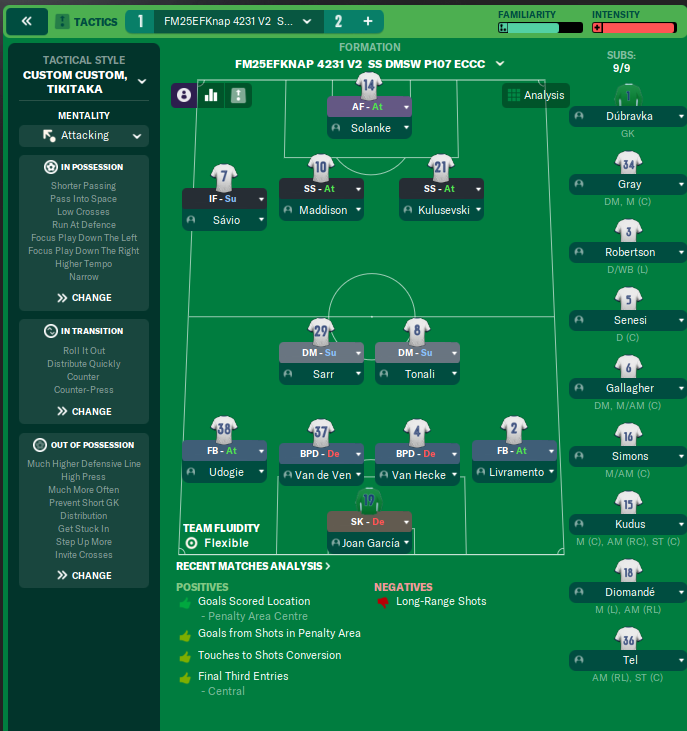
Guides for this formation
The tactical theory behind the 4-2-3-1: roles, instructions, and the trade-offs that decide whether the system holds up.
Player pairings
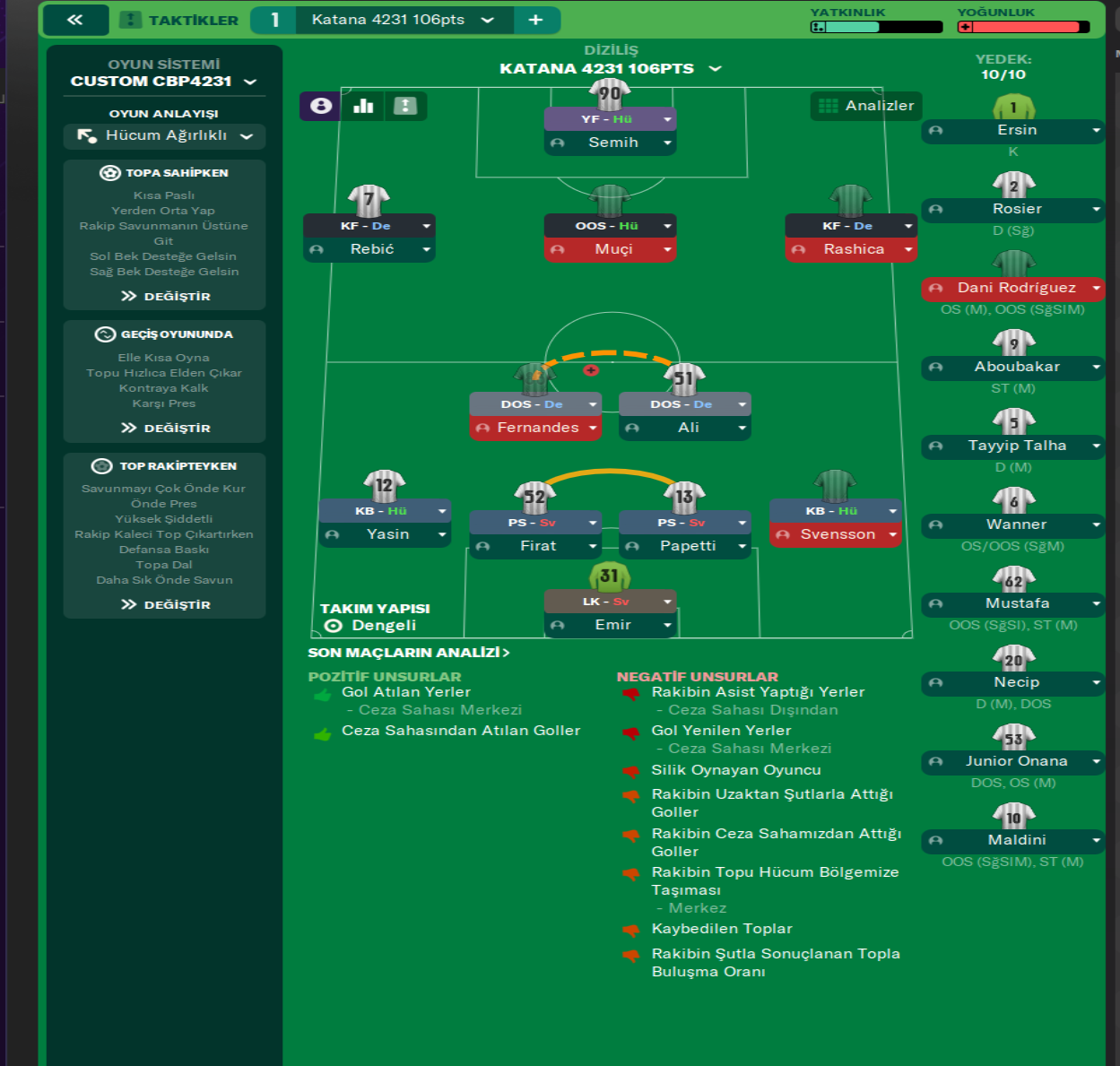
Midfield Pairs in 4-2-3-1 and 4-4-2
Double pivots and flat pairs in 4-2-3-1 and 4-4-2: when each pairing works, when it collapses, and the AMC unicorn that rescues both.
Read guide
Playing styles
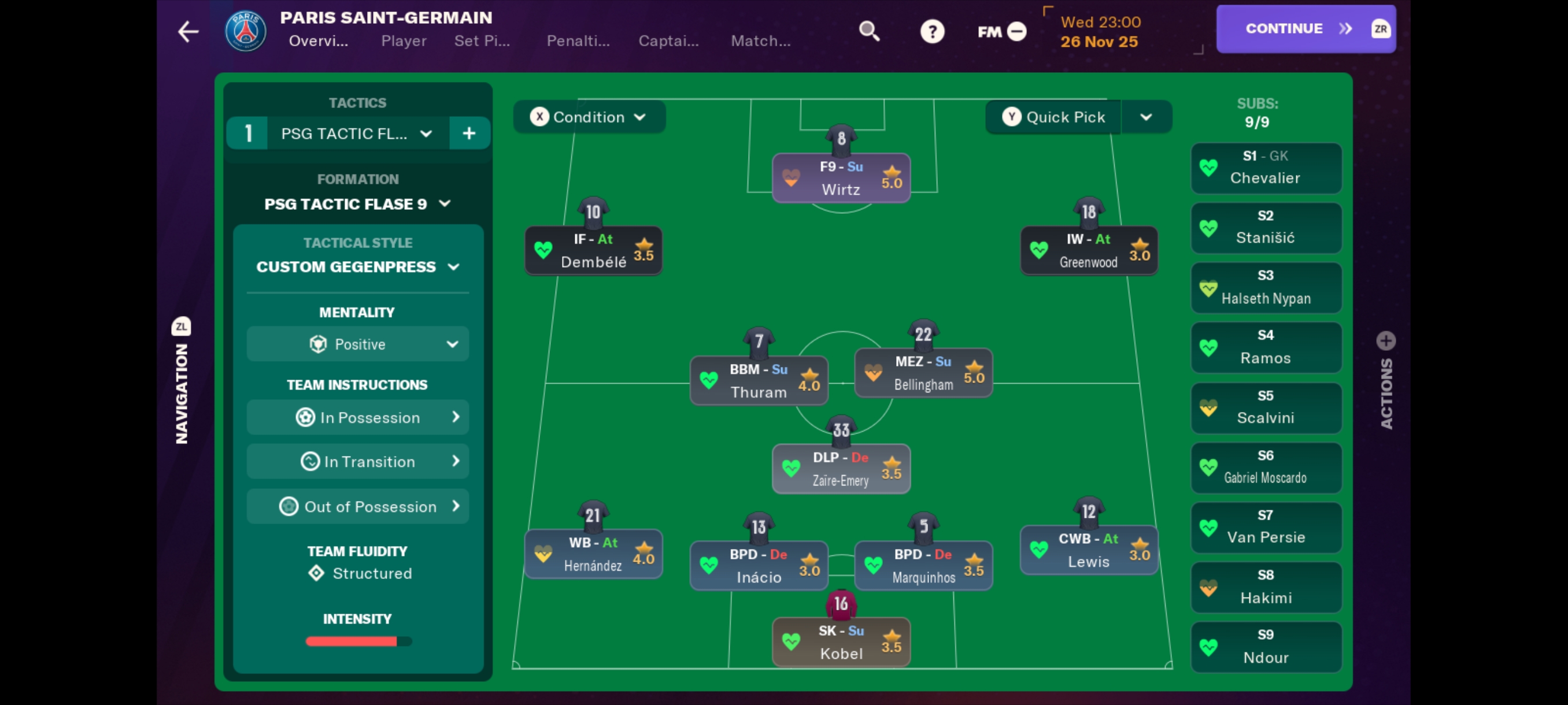
Gegenpressing: A Full Guide
Klopp-style gegenpressing in FM, including squad profile, line-and-press pairing, sustainable workload, and the antipatterns to avoid.
Read guide