Uploaded Tactic
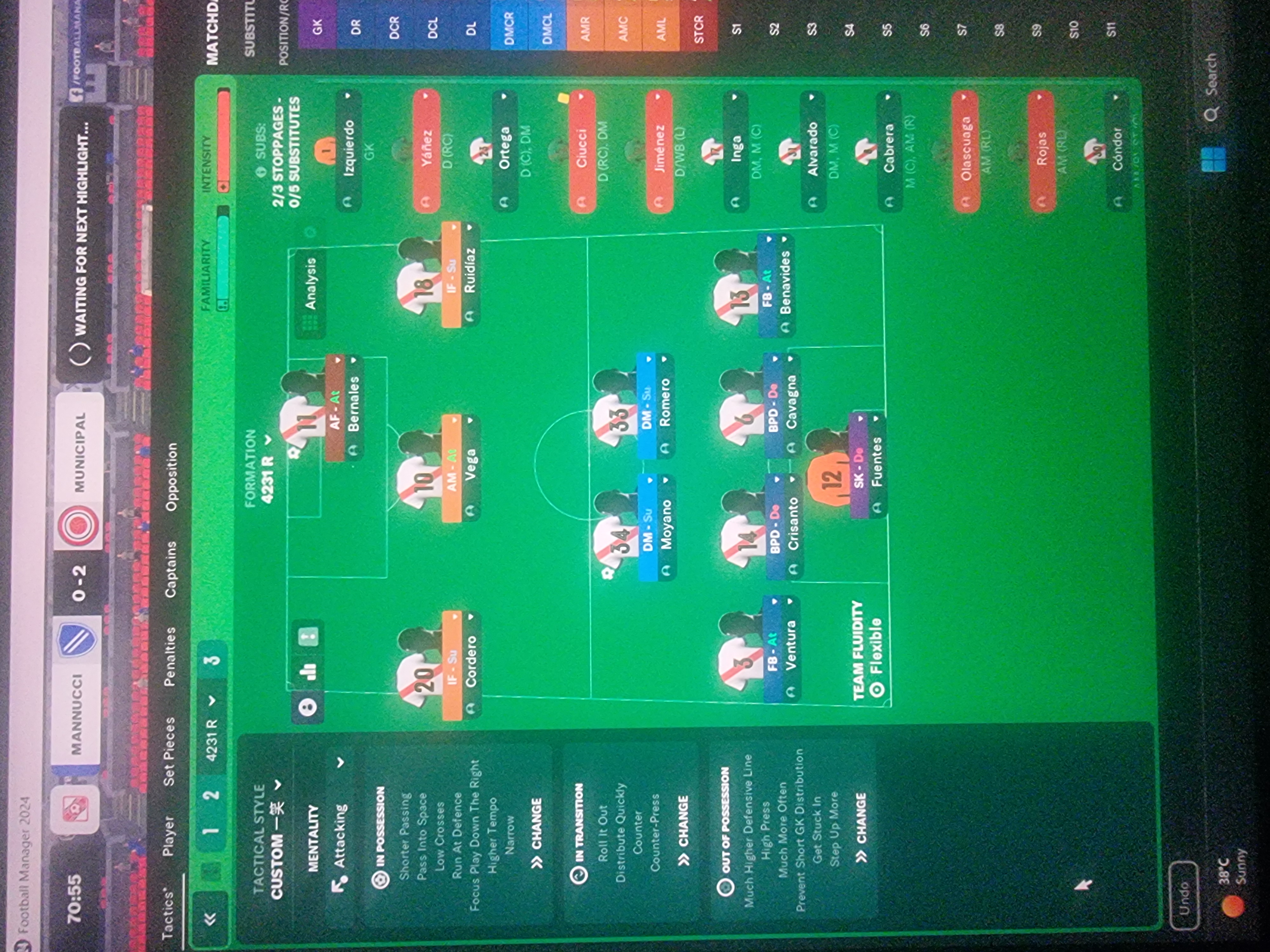
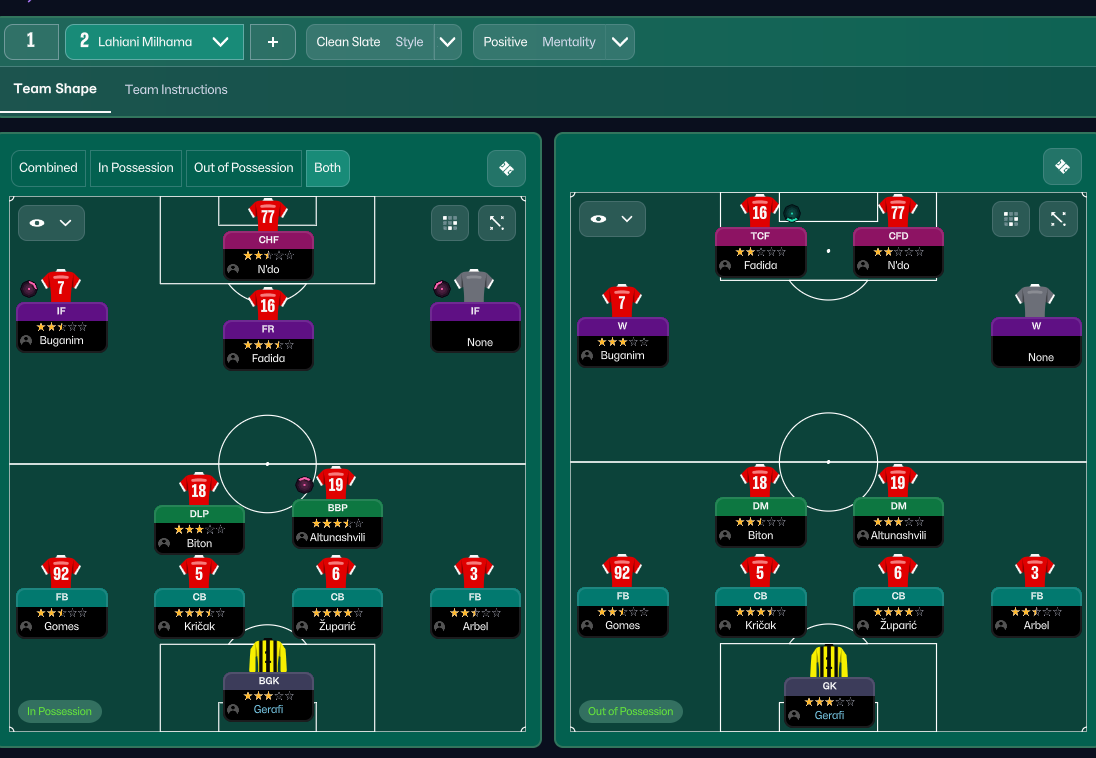
Formation & Style
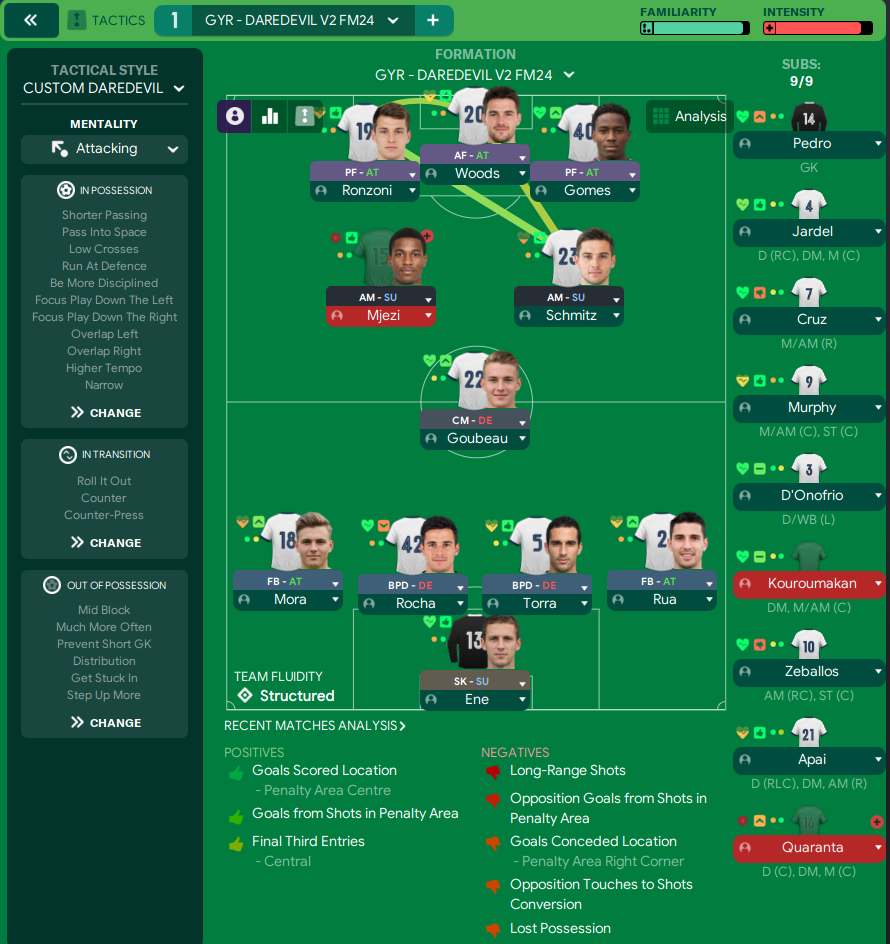
Tactical Style:Custom
Mentality:Attacking
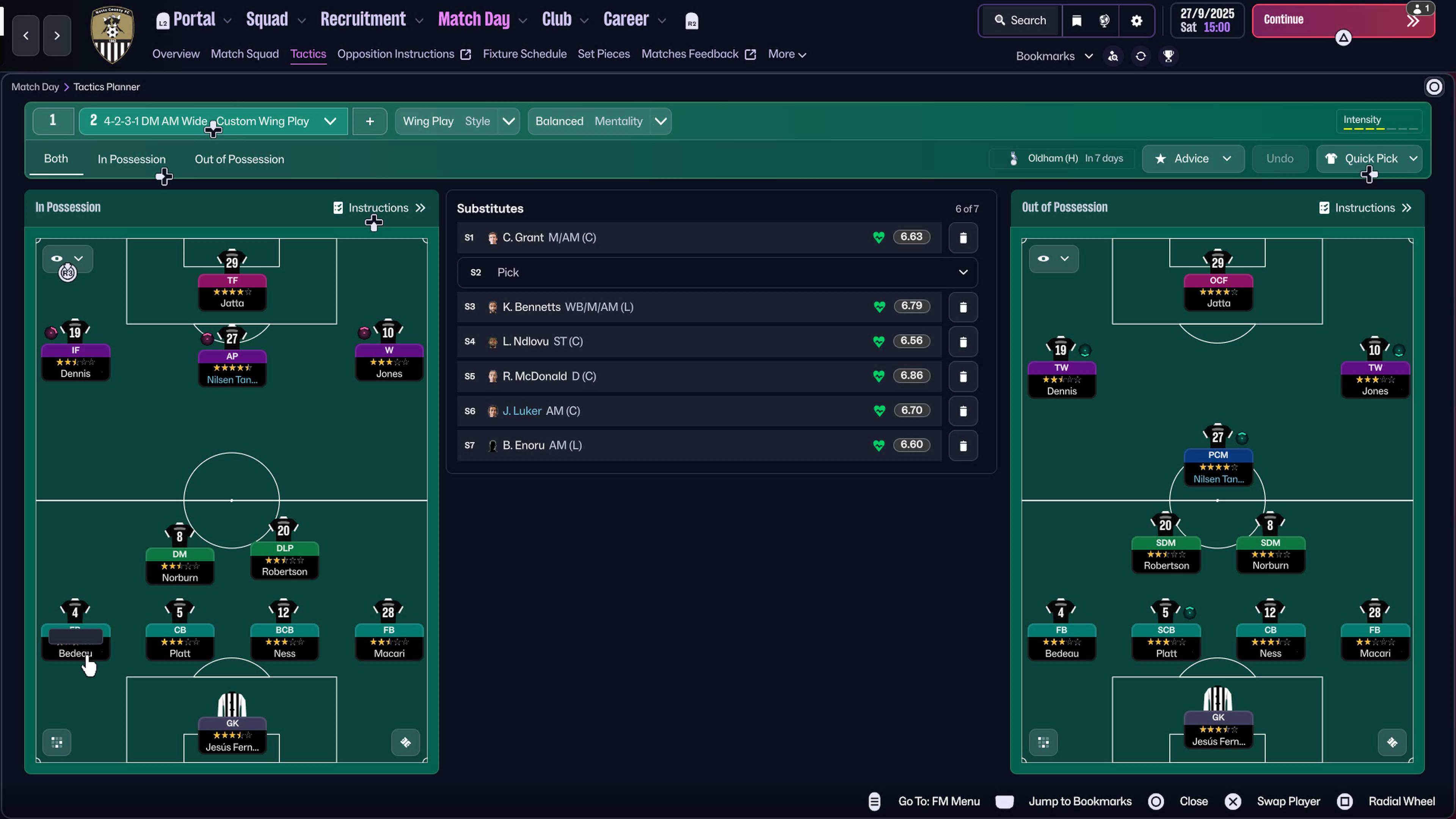
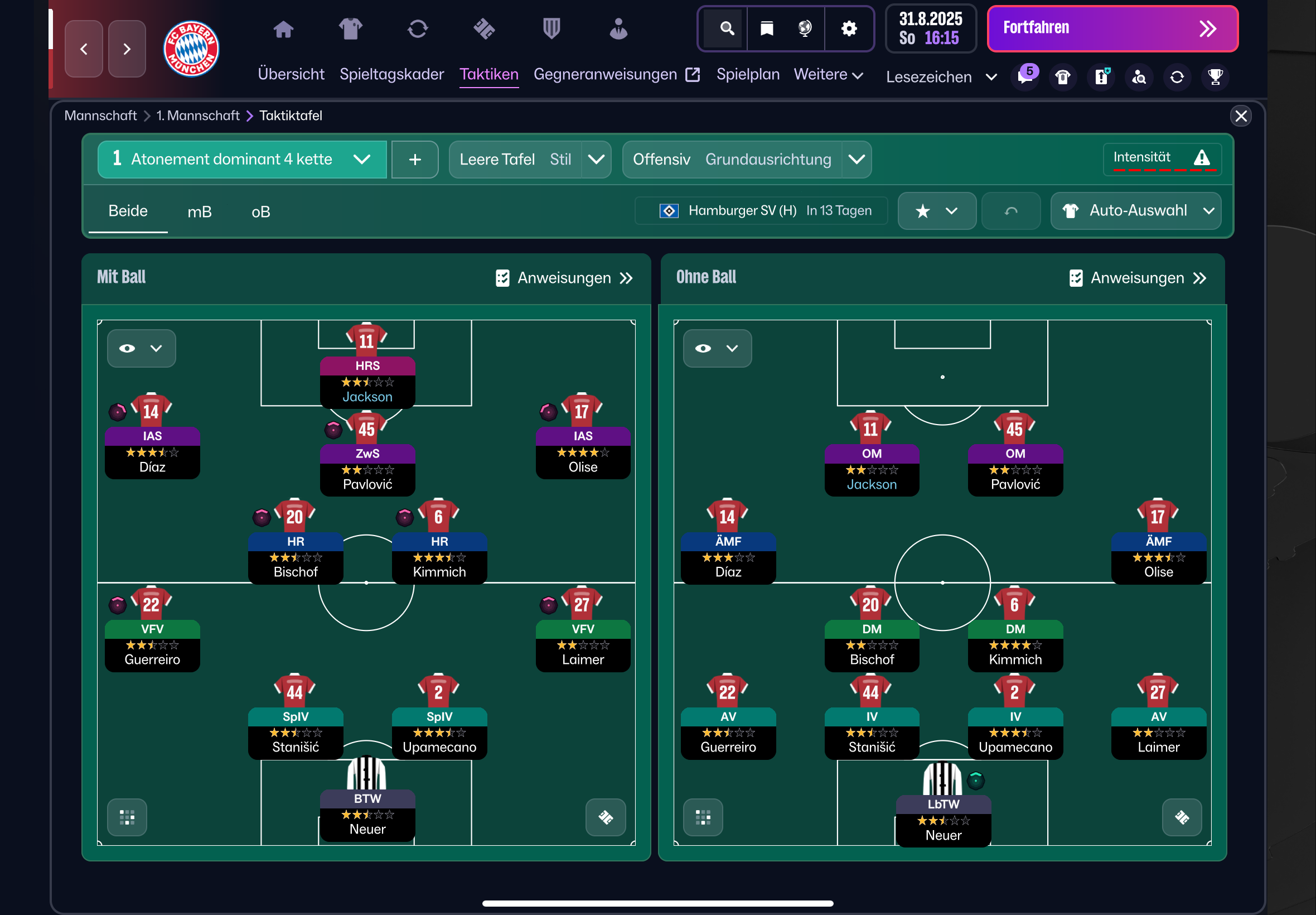
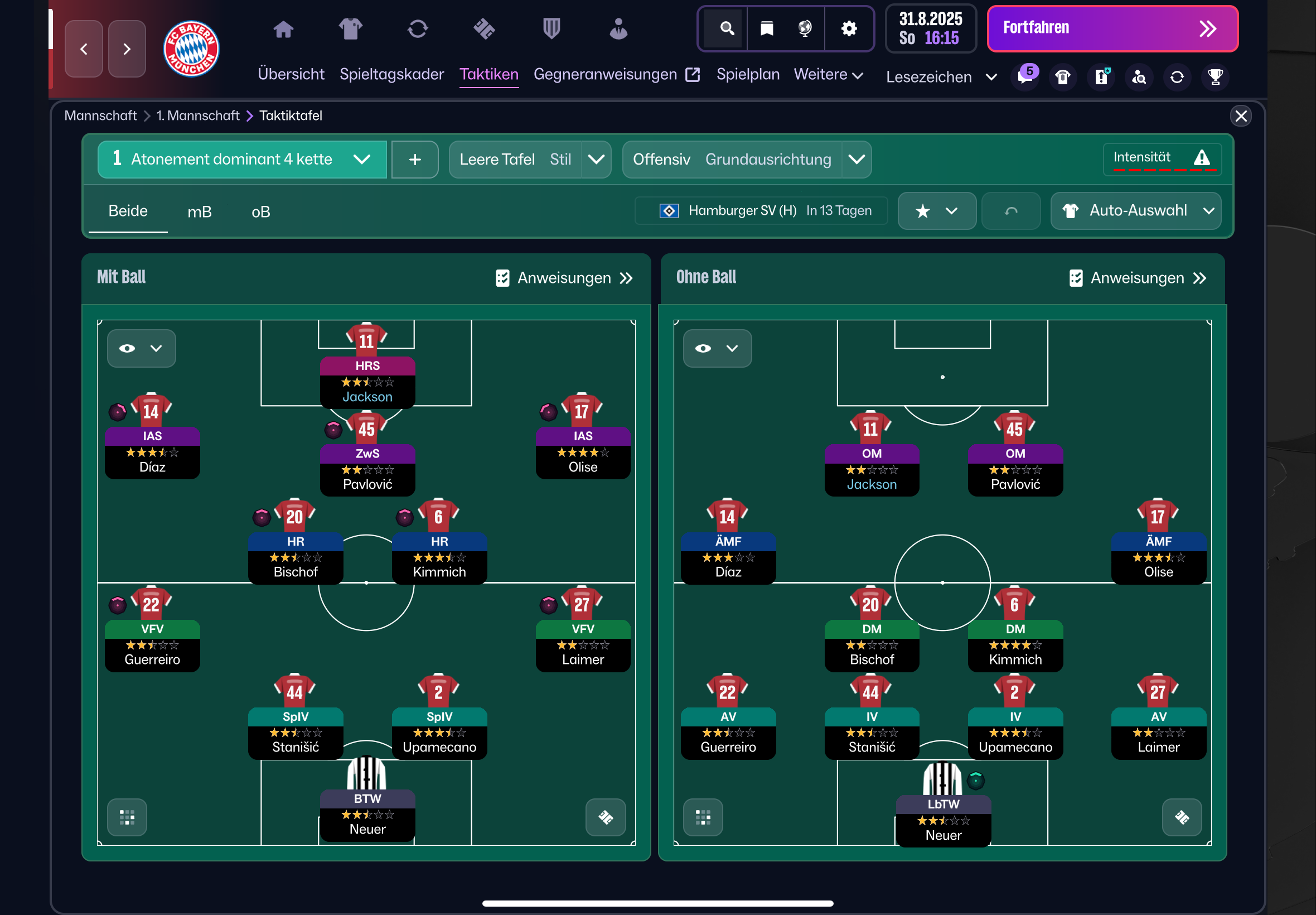
Formation:4-2-3-1
Team Fluidity:Flexible
In Possession
Shorter Passing
Run At Defence
Focus Play Down The Right
Higher Tempo
Narrow
In Transition
Roll It Out
Distribute Quickly
Out of Possession
Much Higher Defensive Line
High Press
Much More Often
Prevent Short GK Distribution
Get Stuck In
Step Up More
Team Shape Without Ball
No team shape without ball data available
Team Shape With Ball
No team shape with ball data available
Key Strengths
Attacking Versatility
The formation facilitates a dynamic attack through multiple channels, utilizing inside forwards and an advanced forward.
High Defensive Line
Enables pressing and quick recovery of the ball, promoting an aggressive playing style.
Fluid Movement
The flexible team fluidity encourages players to interchange positions and create space from defensive to offensive transitions.
Direct Play
Shorter passing combined with a higher tempo facilitates swift and effective transitions into attack.
Conflicting Directions
High Defensive Line vs Quick Counter
While the higher defensive line promotes pressing, it can leave the team vulnerable to quick counter-attacks.
Short Passing vs High Tempo
Shorter passing can slow down play, which may contradict the desired higher tempo in certain situations.
Narrow Width vs Wing Play
A narrow setup may limit the effectiveness of the full-backs in overlapping and providing width.
Prevent Short GK Distribution vs Quick Build-Up
Preventing short distribution can hinder quick transitions, slowing the tempo of play.
Tactical Suggestions
Adjust Width
Consider a slightly wider approach to exploit the wings and fully utilize full-backs.
Modify Defensive Line
Lowering the defensive line slightly could reduce vulnerability to fast counters.
Review Passing Style
Mix up passing styles to incorporate some direct play, especially during transitions.
Utilize Wingers
Consider replacing one inside forward with a winger role for wider threats and crosses.
Ask Questions About Your Lineup
Related Tactics
Guides for this formation
The tactical theory behind the 4-2-3-1: roles, instructions, and the trade-offs that decide whether the system holds up.
Player pairings
Midfield Pairs in 4-2-3-1 and 4-4-2
Double pivots and flat pairs in 4-2-3-1 and 4-4-2: when each pairing works, when it collapses, and the AMC unicorn that rescues both.
Read guide
Playing styles
Gegenpressing: A Full Guide
Klopp-style gegenpressing in FM, including squad profile, line-and-press pairing, sustainable workload, and the antipatterns to avoid.
Read guide