Uploaded Tactic
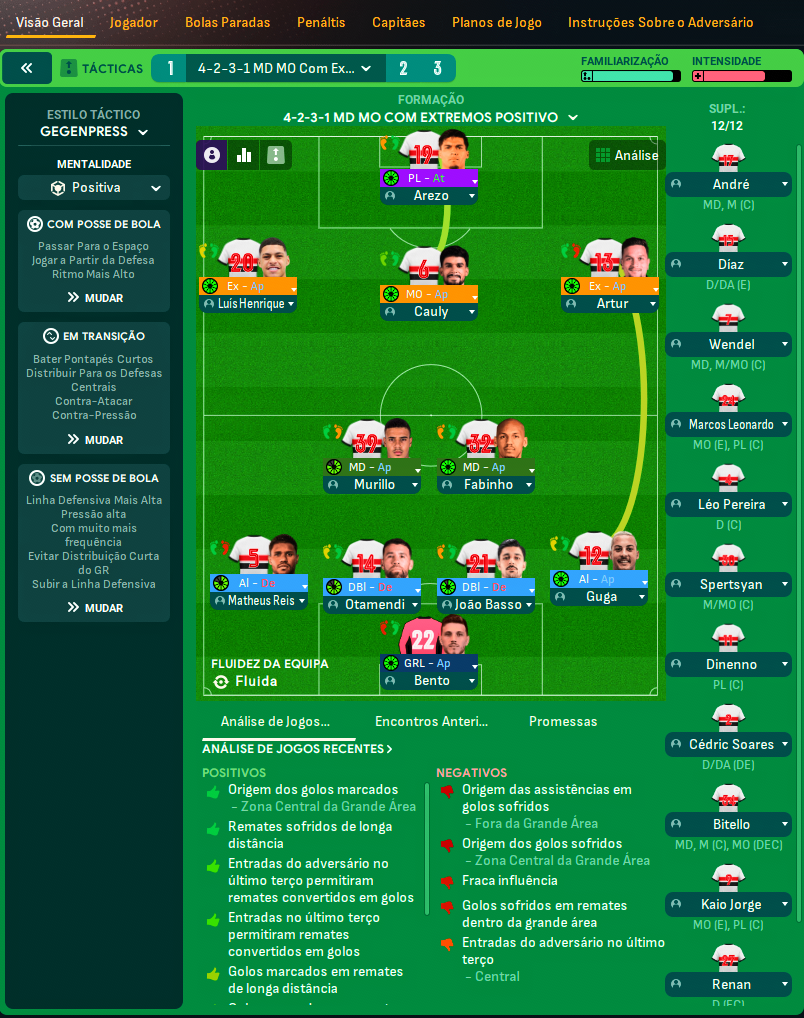
Formation & Style
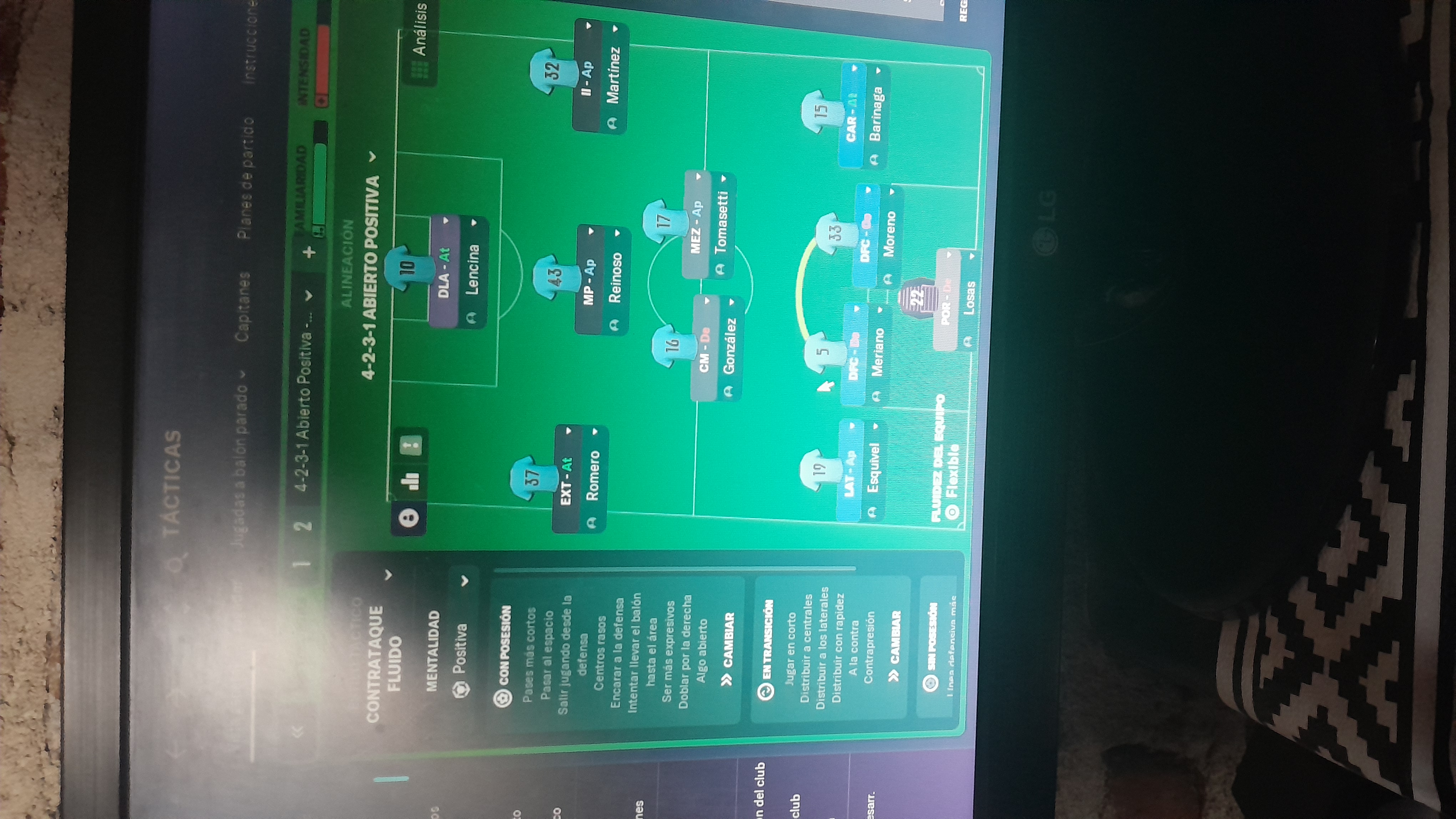
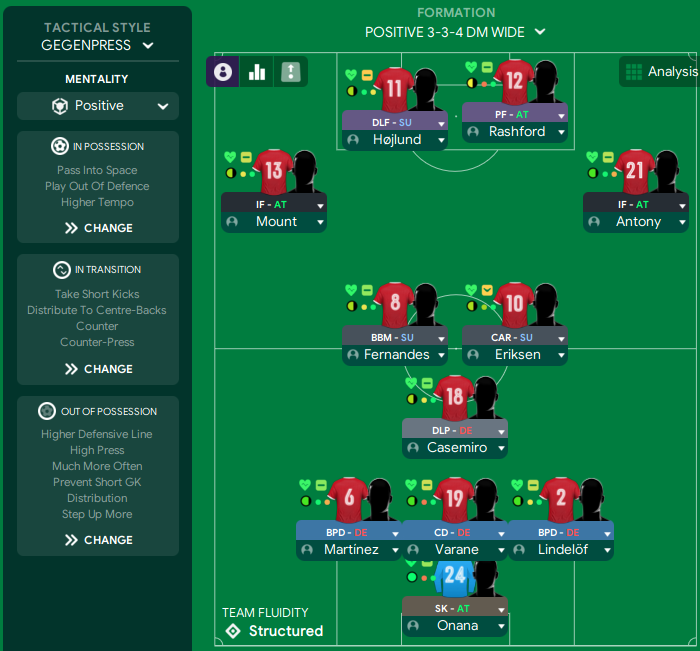
Tactical Style:Gegenpress
Mentality:Positive
Formation:4-2-3-1
Team Fluidity:Fluid
In Possession
Pass into Space
Play at Higher Tempo
Work Ball into Box
In Transition
Counter-Press
Distribute to Centre-Backs
Out of Possession
Higher Defensive Line
Much Higher Line of Engagement
Prevent Short GK Distribution
Trigger Press More Often
Team Shape Without Ball
Shape:4-2
Description:A solid and compact defensive structure with the back four supported by two midfielders.
Evidence:2 x DCs at [2,2],[2,3] and 2 x CMs at [3,2],[3,3] in a 4-2 setup.
Team Shape With Ball
Shape:3-1-3
Description:A dynamic attacking shape with players making runs into the box and utilizing the flanks.
Evidence:AM positions at [6,2],[6,3],[6,4] and ST at [6,3] creating diverse attacking threats.
Phase Description
Attacking Play
The team aims to leverage attacking width with inside forwards and dynamic movements from midfield.
Defensive Transition
Quick recovery with high pressing to regain possession immediately after losing the ball.
Main Focus
Utilizing the pace of the wingers and creating overloads in the final third.
Key Strengths
Explosive Attacking Play
Utilizes fast-paced transitions and attacking width to stretch opposition defenses.
Compact Defensive Structure
Provides a solid defensive foundation, making it difficult for opponents to penetrate.
Versatile Midfield Roles
Allows for diverse attacking play, with the DLP facilitating play and BBM joining the attack.
Conflicting Directions
Counter-Attacking Styles
May struggle against teams that focus on quick counter-attacks due to high defensive line.
Possession-Based Tactics
Risk of losing control against teams dominating possession.
Set-Piece Vulnerabilities
Potential for conceding from set pieces due to height or positioning.
Tactical Suggestions
Adjust Defensive Line
Consider lowering the defensive line to mitigate vulnerability to pacey counter-attacks.
Substituting Tired Players
Maintain intensity by replacing fatigued players with fresh legs.
Vary Set-Piece Strategies
Implement diverse set-piece tactics to avoid predictability.
Ask Questions About Your Lineup
Related Tactics
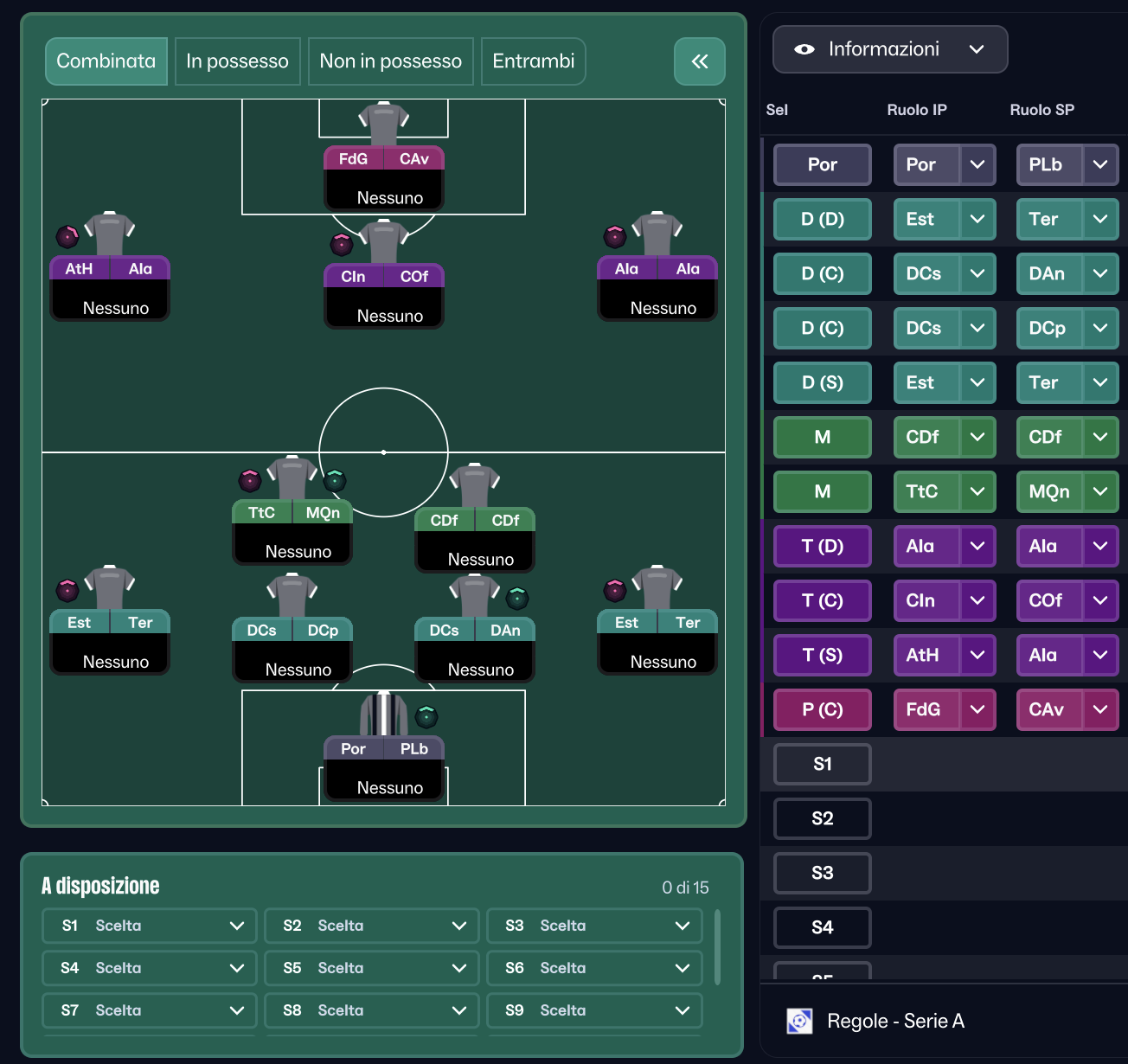
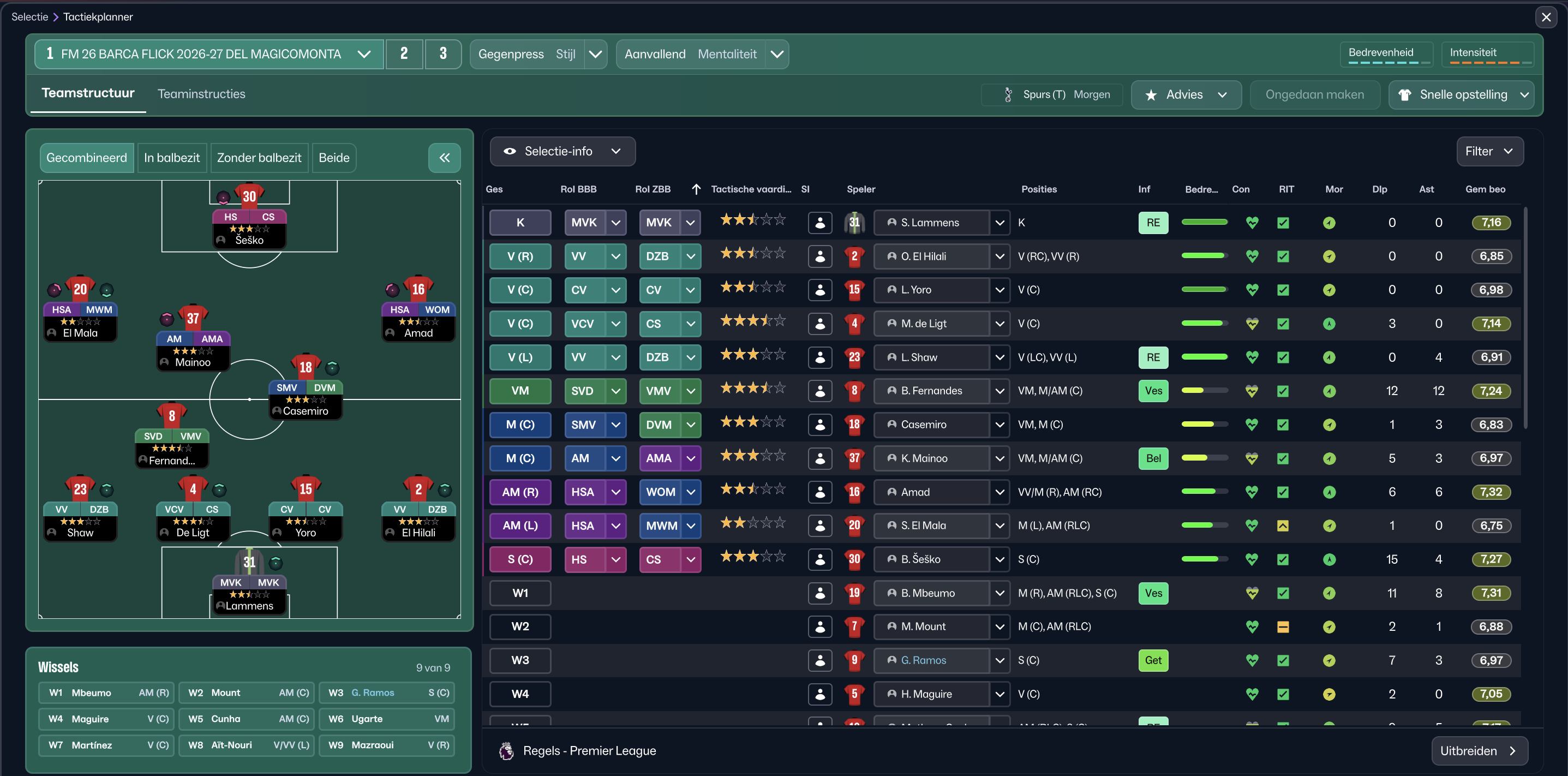
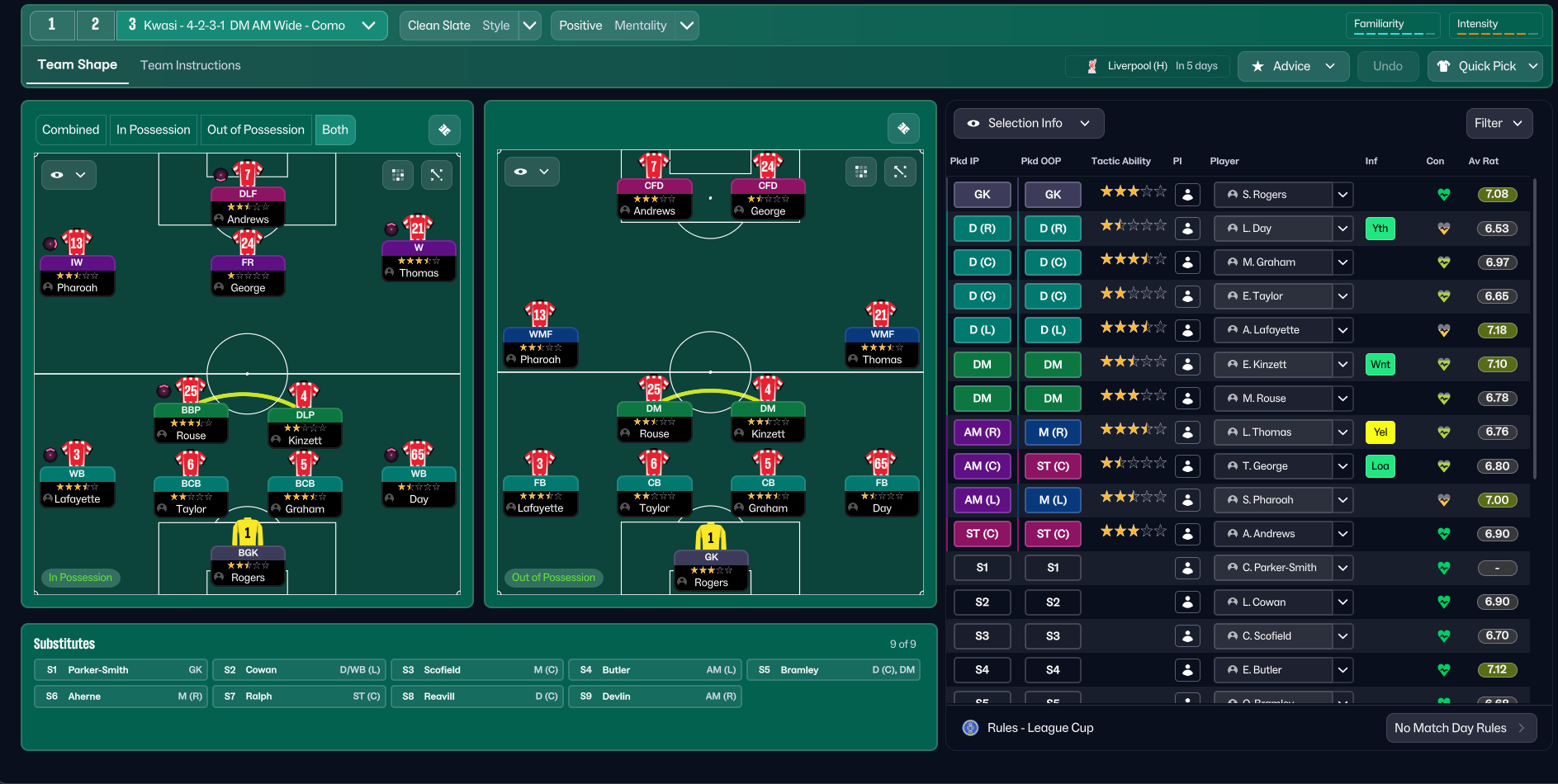
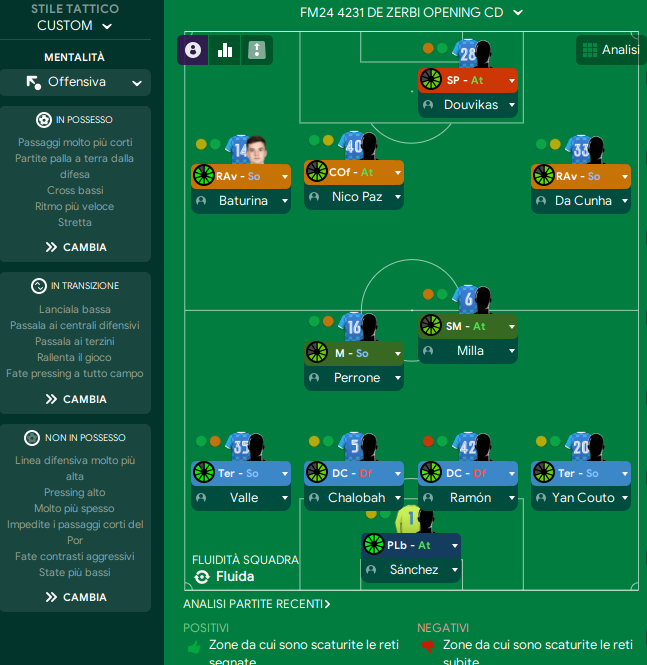
More Gegenpress tactics
Guides for this formation
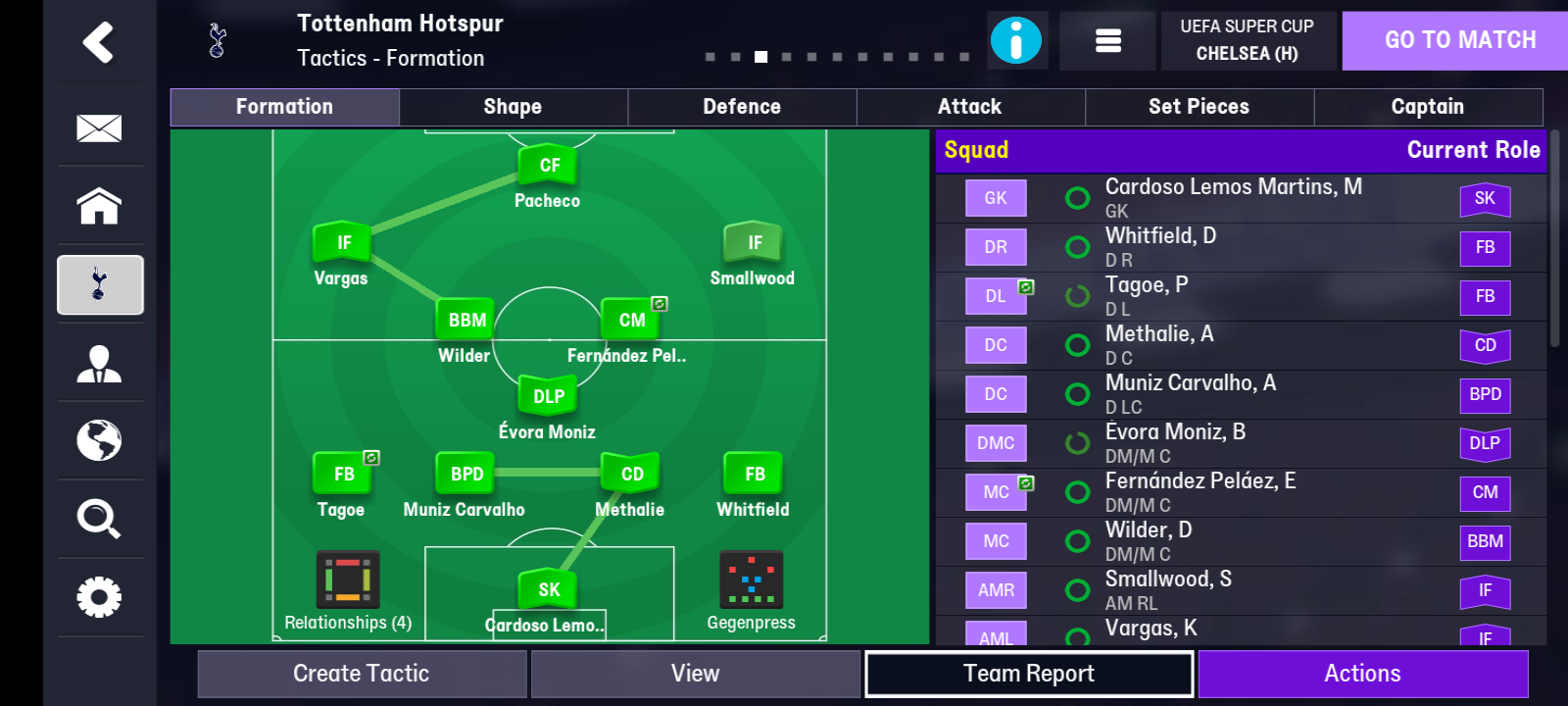
The tactical theory behind the 4-2-3-1: roles, instructions, and the trade-offs that decide whether the system holds up.
Player pairings
Midfield Pairs in 4-2-3-1 and 4-4-2
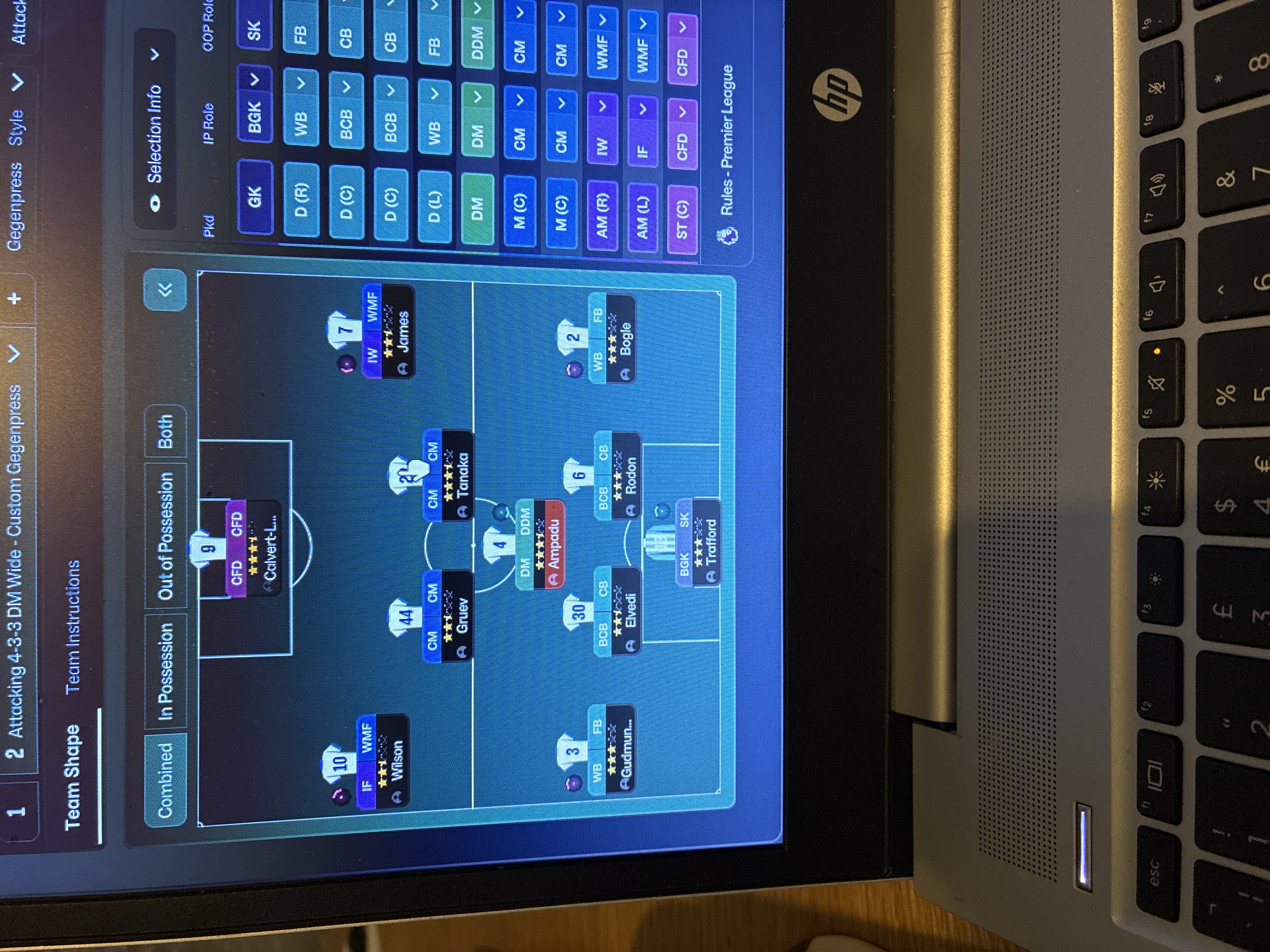
Double pivots and flat pairs in 4-2-3-1 and 4-4-2: when each pairing works, when it collapses, and the AMC unicorn that rescues both.
Read guide
Playing styles
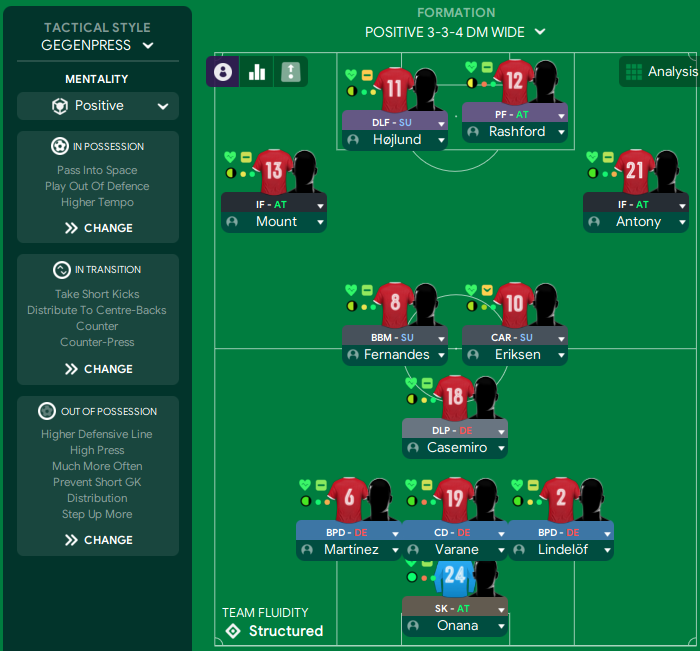
Gegenpressing: A Full Guide
Klopp-style gegenpressing in FM, including squad profile, line-and-press pairing, sustainable workload, and the antipatterns to avoid.
Read guide