Uploaded Tactic
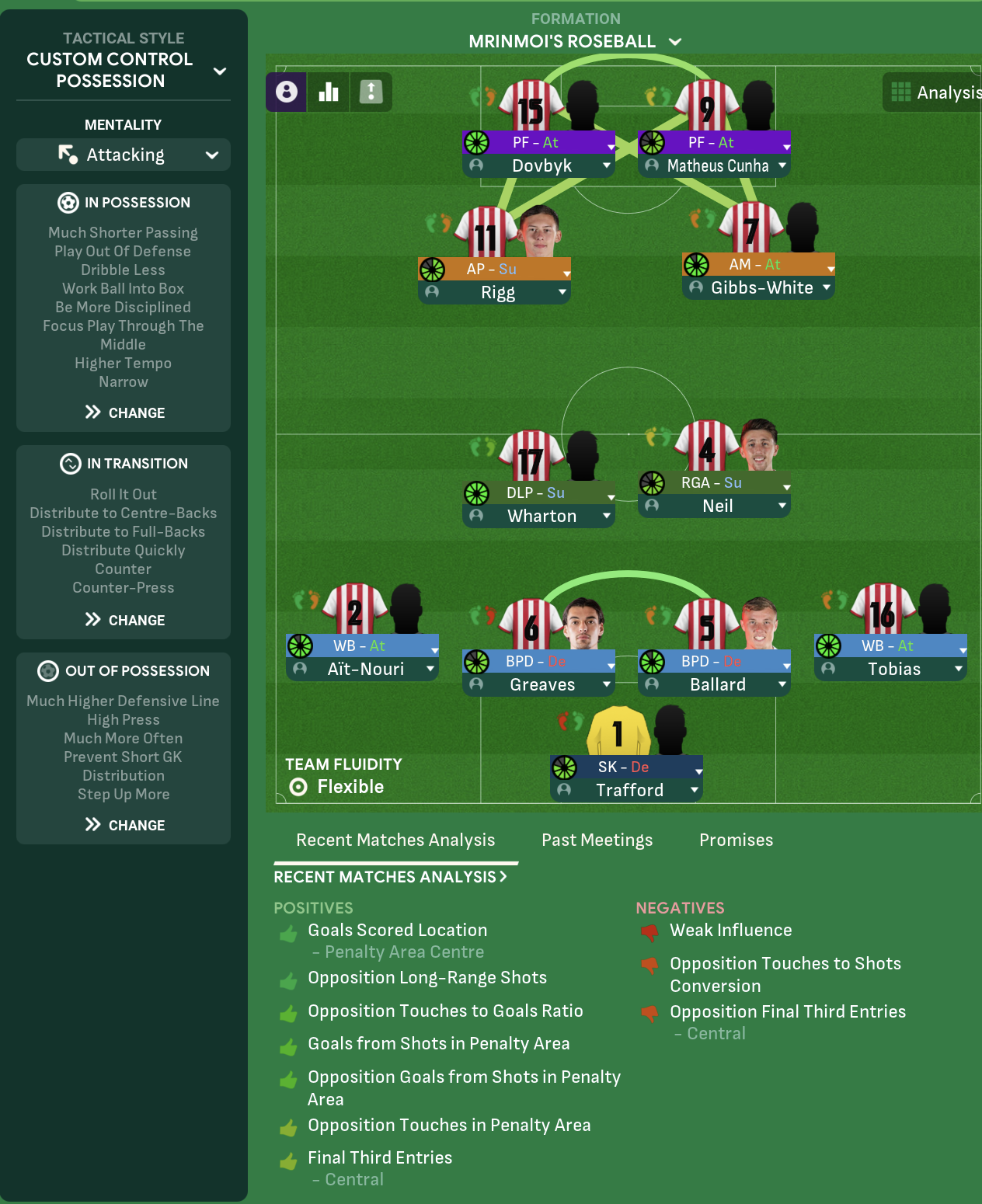
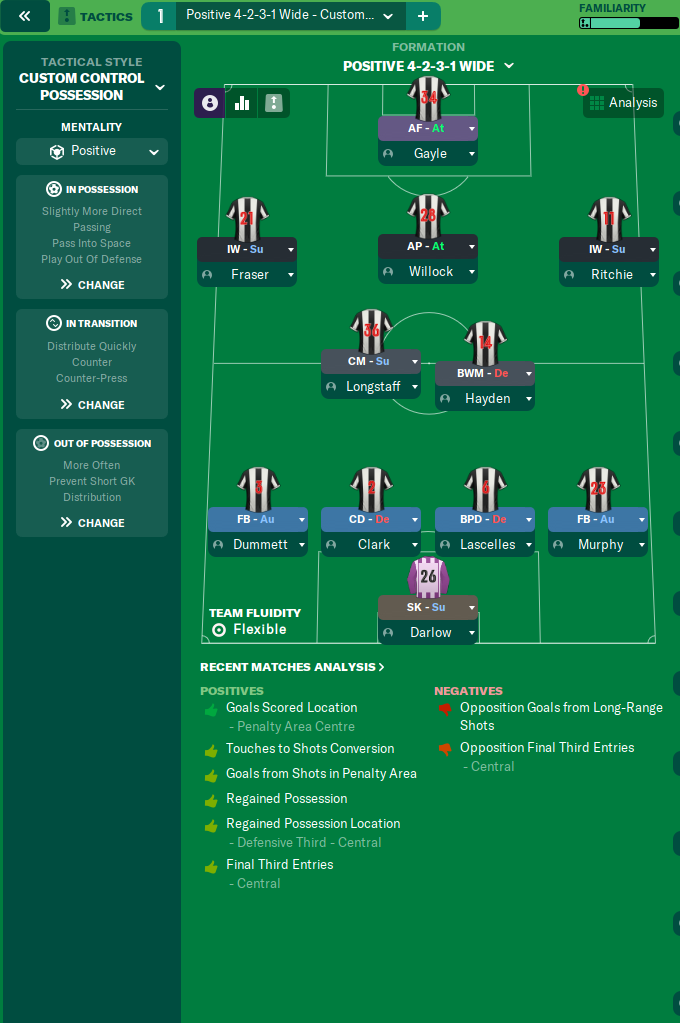
Formation & Style
Tactical Style:Custom Control Possession
Mentality:Attacking
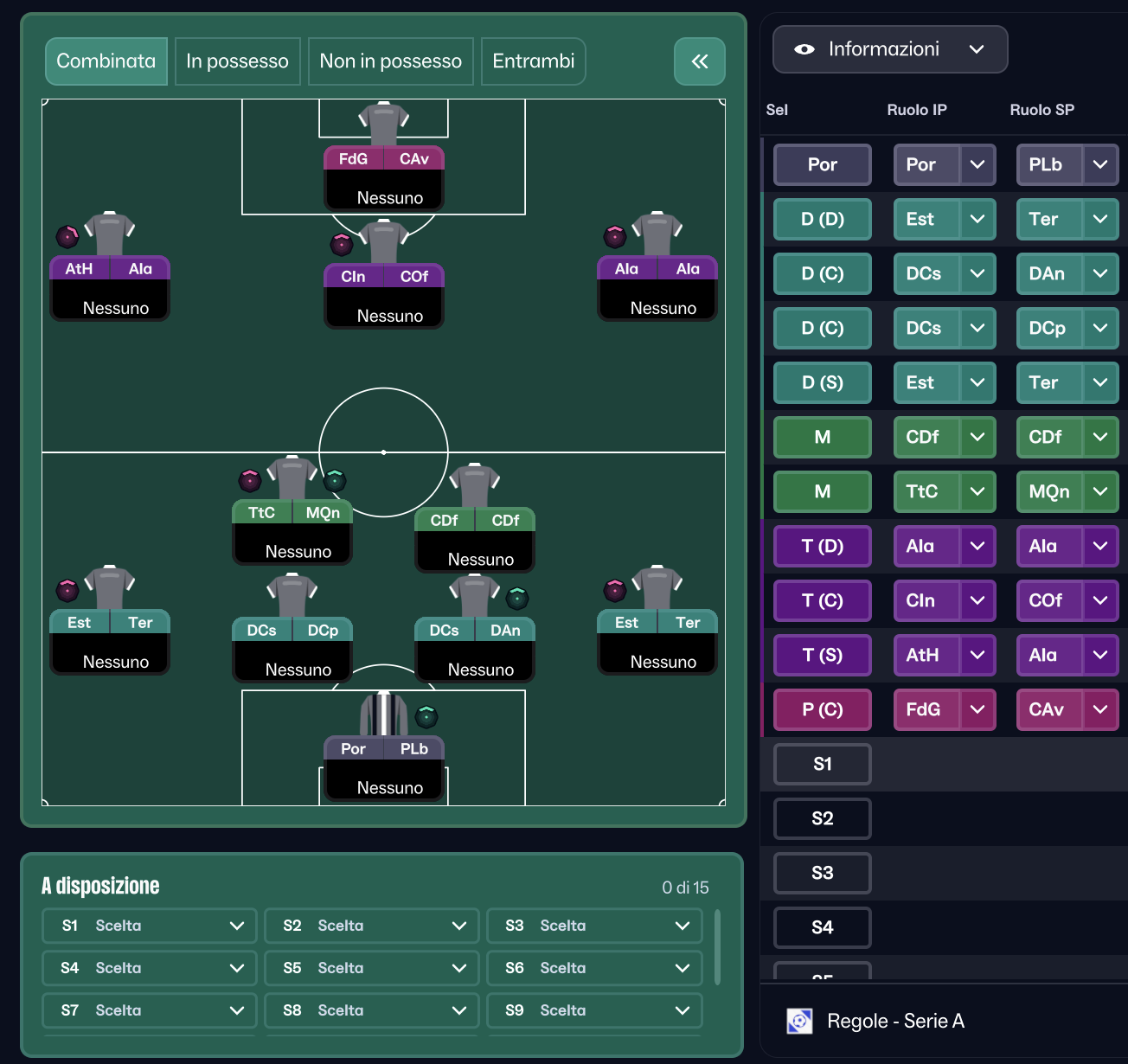
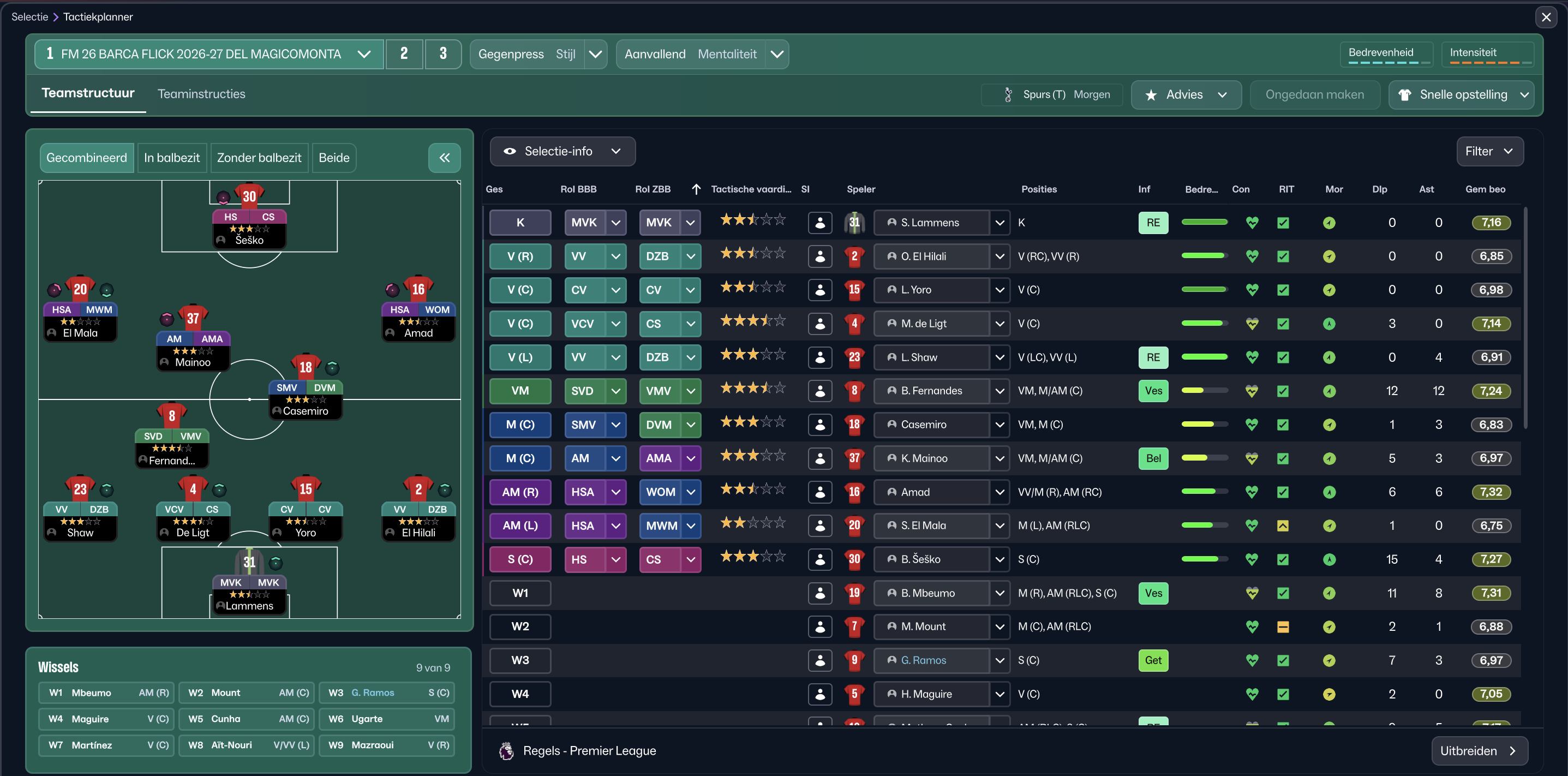
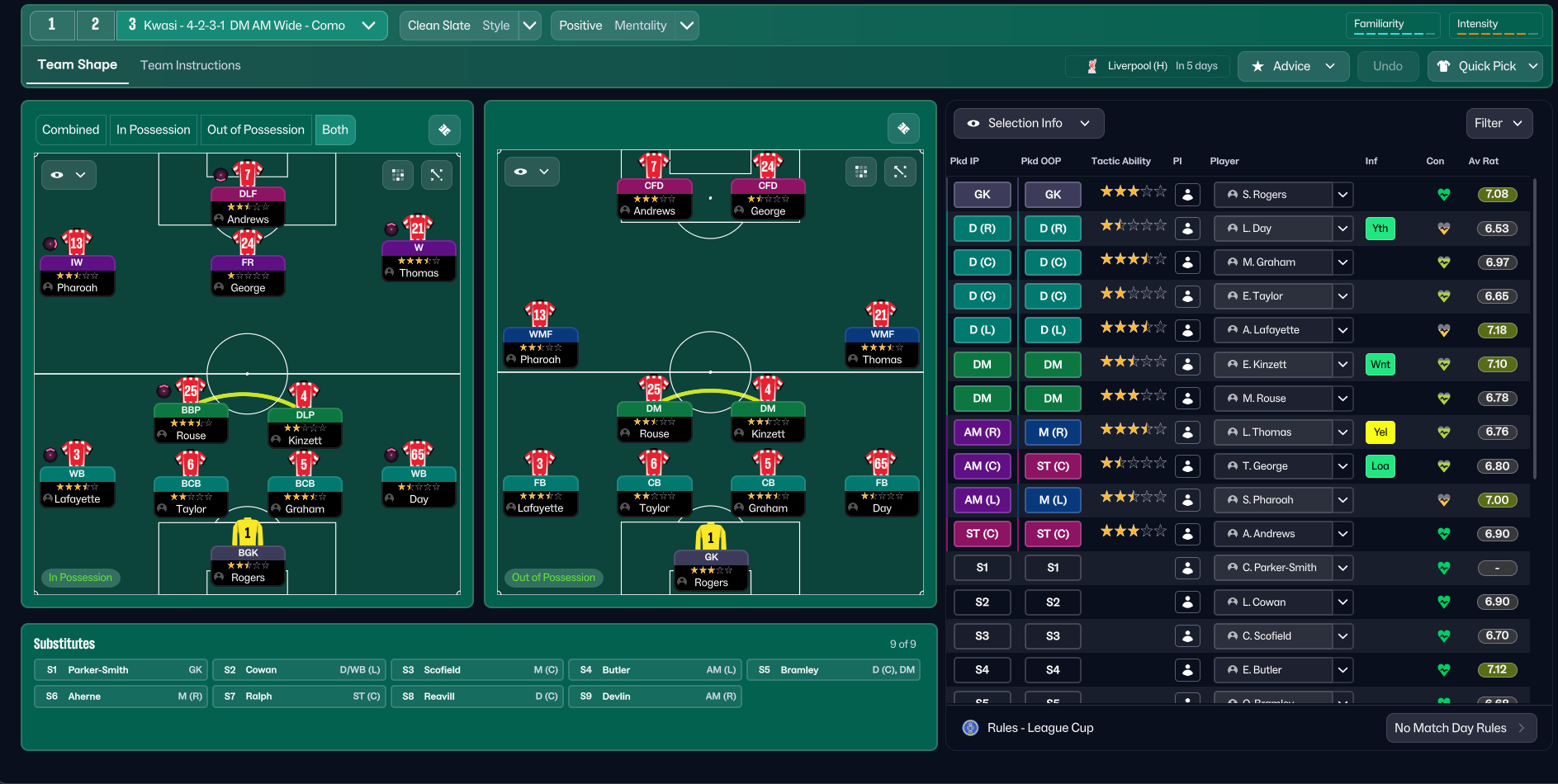
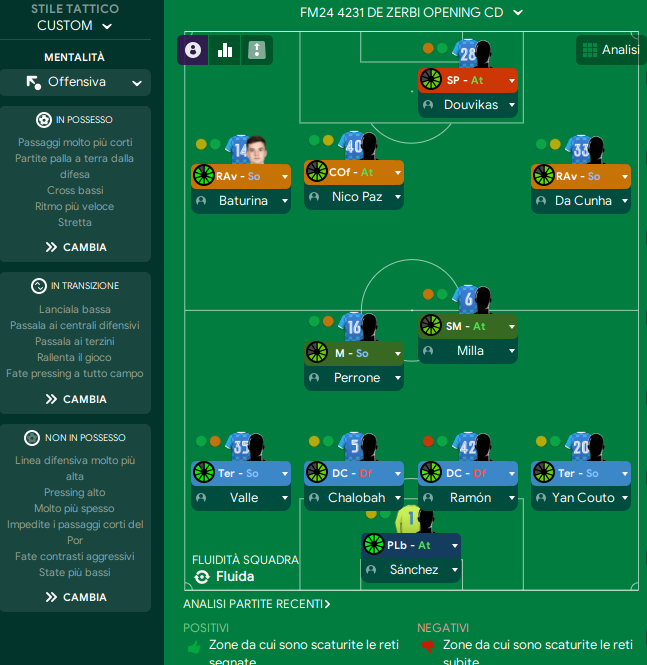
Formation:4-2-3-1
Team Fluidity:Flexible
In Possession
Much Shorter Passing
Play Out Of Defense
Dribble Less
Work Ball Into Box
Be More Disciplined
Focus Play Through The Middle
Higher Tempo
Narrow
In Transition
Roll It Out
Distribute to Centre-Backs
Distribute Quickly
Counter
Counter-Press
Out of Possession
Much Higher Defensive Line
High Press
Much More Often Prevent Short GK Distribution
Step Up More
Team Shape Without Ball
Shape:4-4-2
Description:The team remains compact, with the front players applying pressure alongside the back four.
Evidence:High Press alongside a Much Higher Defensive Line.
Team Shape With Ball
Shape:4-2-3-1
Description:Utilizing width through the wing-backs along with a dynamic attacking midfield for creative options.
Evidence:Wing-Backs (At [2,1] and [2,5]) at attack duty supporting the creative midfield.
Phase Description
Attacking Play
Focus on ball retention with high short passing, working the ball into the box, and maintaining aggression in the final third.
Defensive Transition
Quick recovery to prevent counter-attacks, utilizing a high defensive line and pressing opponents high up the pitch.
Main Focus
Controlled possession leading to high-quality chances while also maintaining defensive solidity.
Key Strengths
Controlled Possession
The team prioritizes shorter passing to maintain control of the game.
Dynamic Attacking Play
With two pressing forwards and a creative attacking midfield, the team can threaten from multiple angles.
High Pressing Ability
The defensive setup allows for effective pressing higher up the pitch to regain possession quickly.
Conflicting Directions
Inconsistent Defensive Line
A much higher defensive line may expose the back line to quick counters, especially if pressing fails.
Compromised Width in Attack
While wing-backs provide width, the narrowness in the attacking midfield could lead to congested central areas.
Over-reliance on Creativity
Relying heavily on the advanced playmaker without significant forward support could lead to predictability.
Tactical Suggestions
Implement Wider Attack Strategy
Encourage wing-backs to make overlapping runs to stretch the opposition.
Adjust Defensive Line Based on Opponent
In matches against quick strikers, consider lowering the defensive line to avoid being exposed.
Utilize Substitutes to Freshen Pressing Game
Introduce fresh legs during the second half to maintain pressing effectiveness.
Ask Questions About Your Lineup
Related Tactics
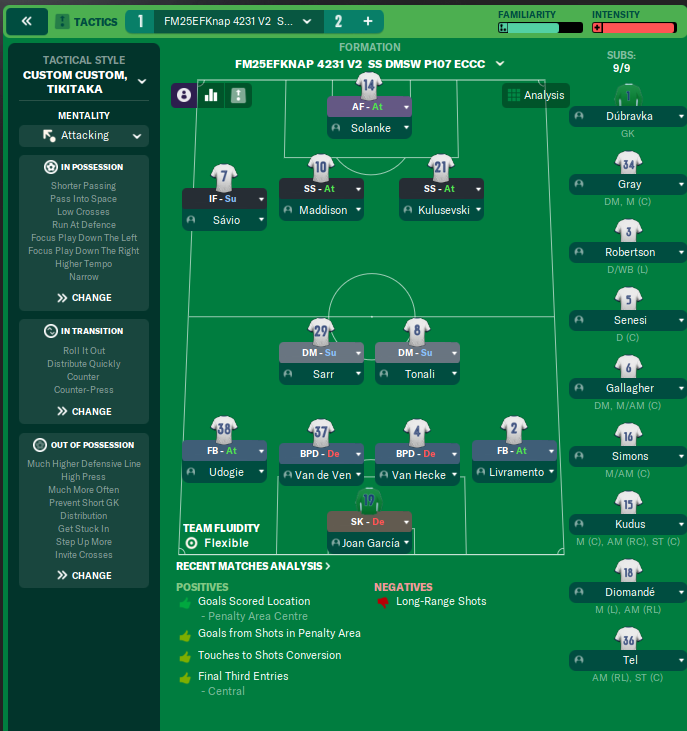
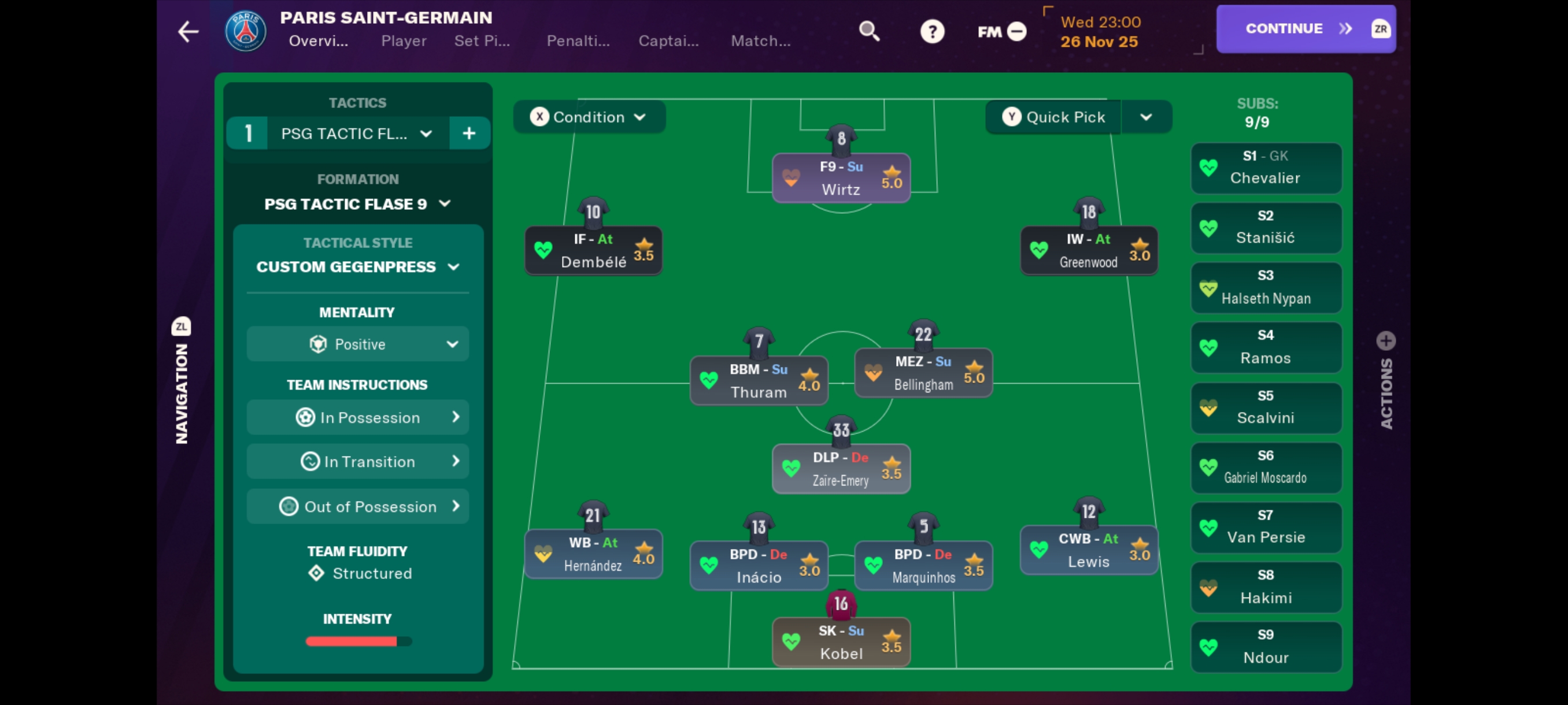
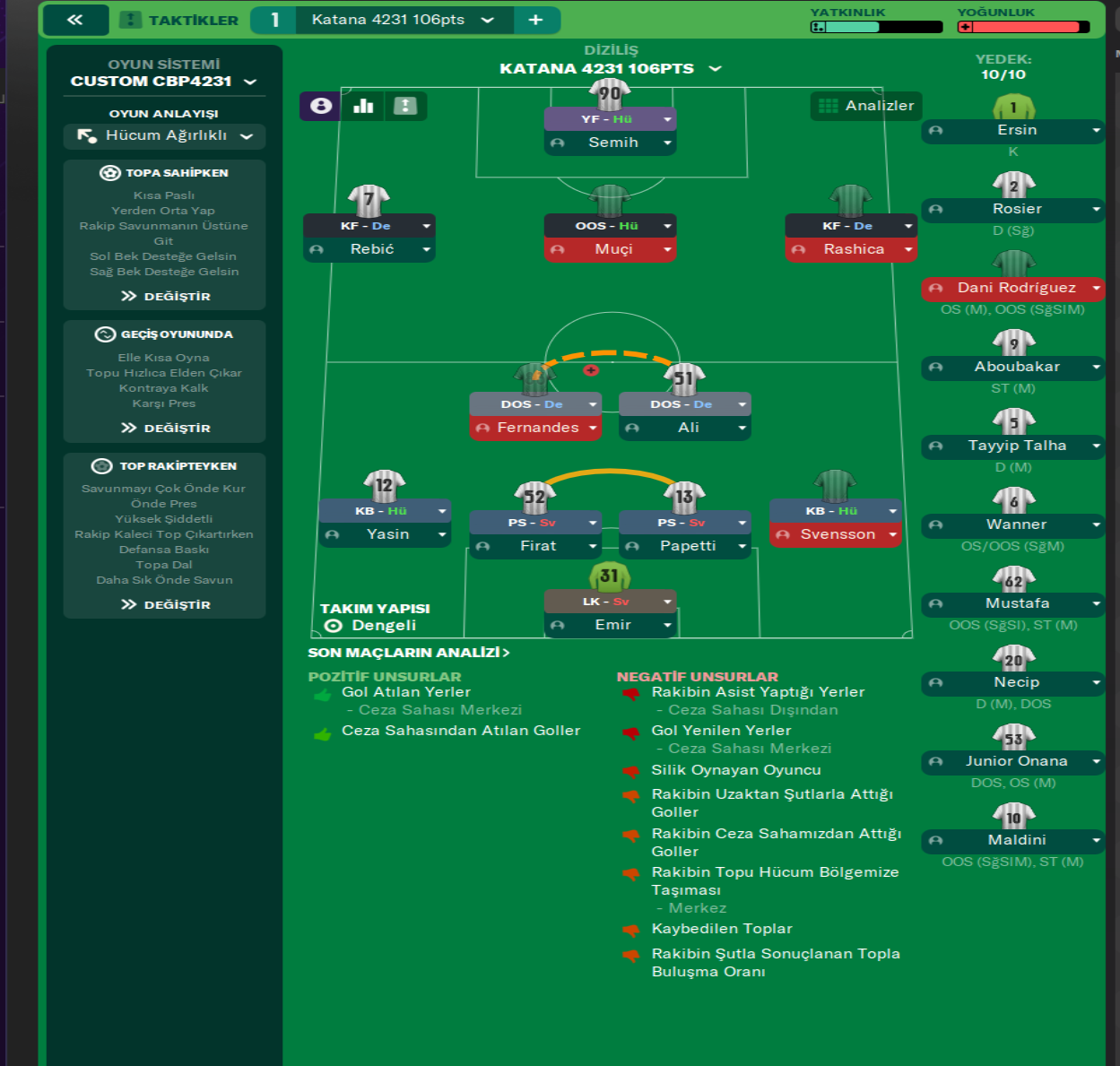
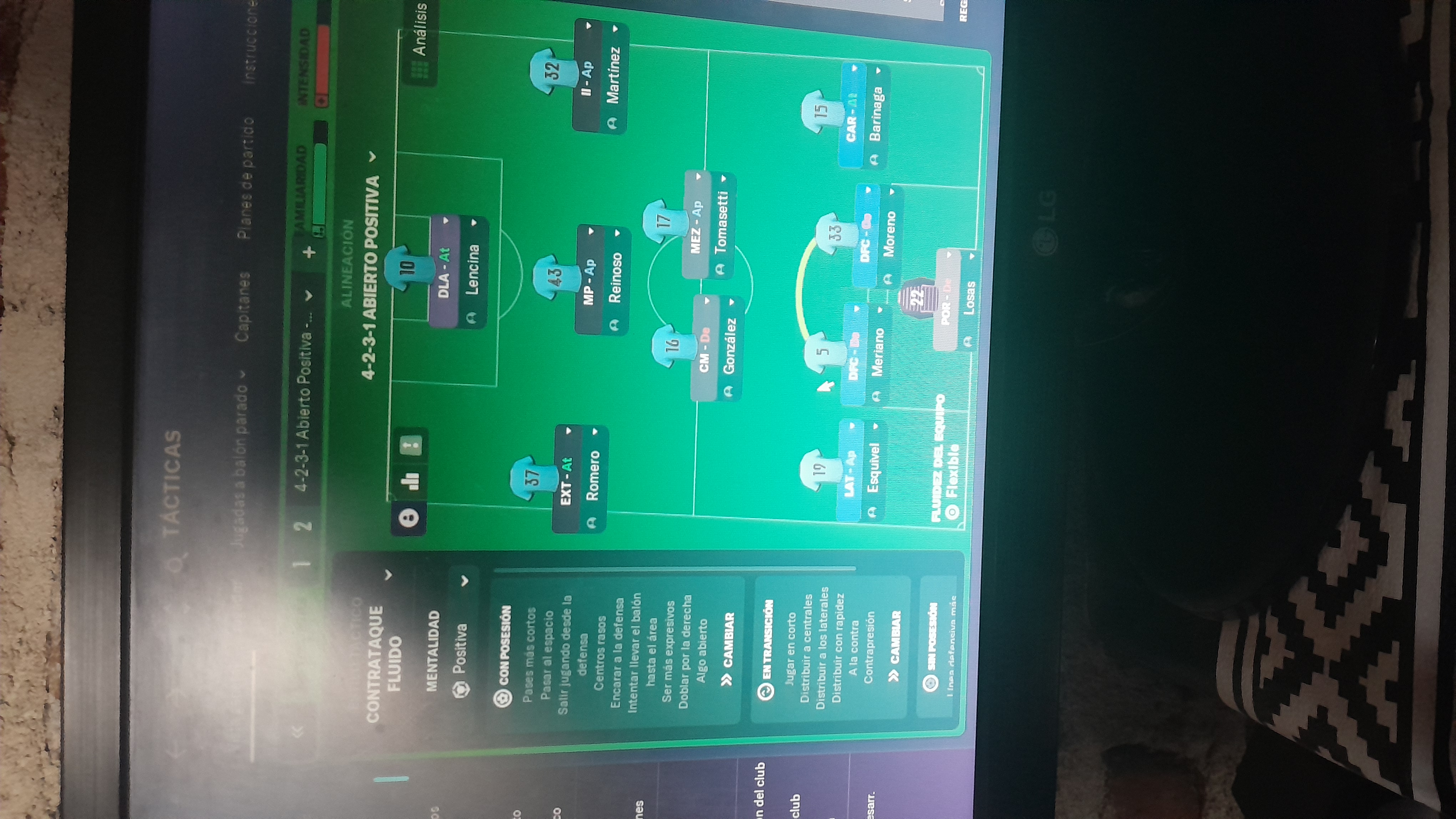
More Custom Control Possession tactics
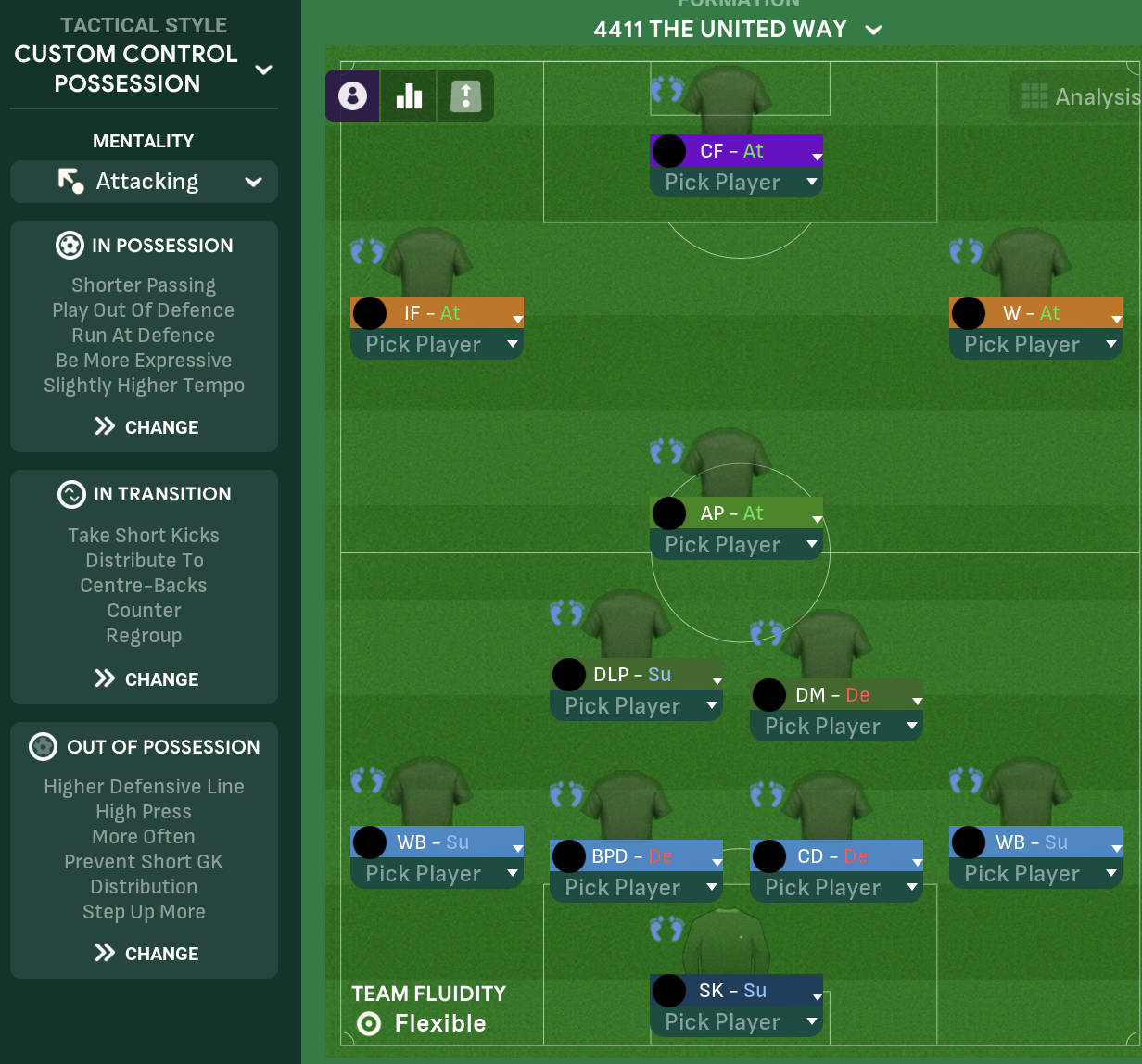
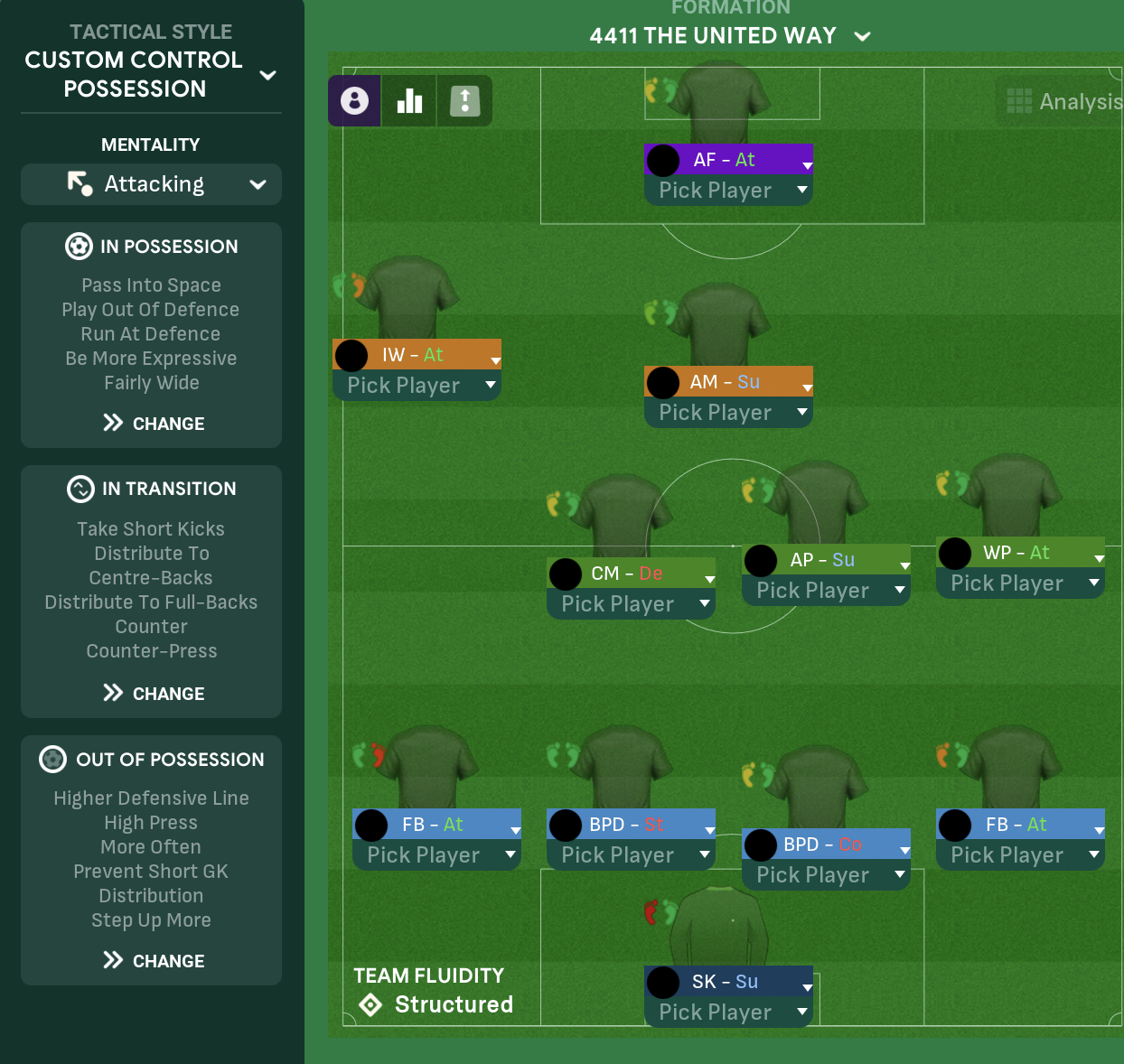
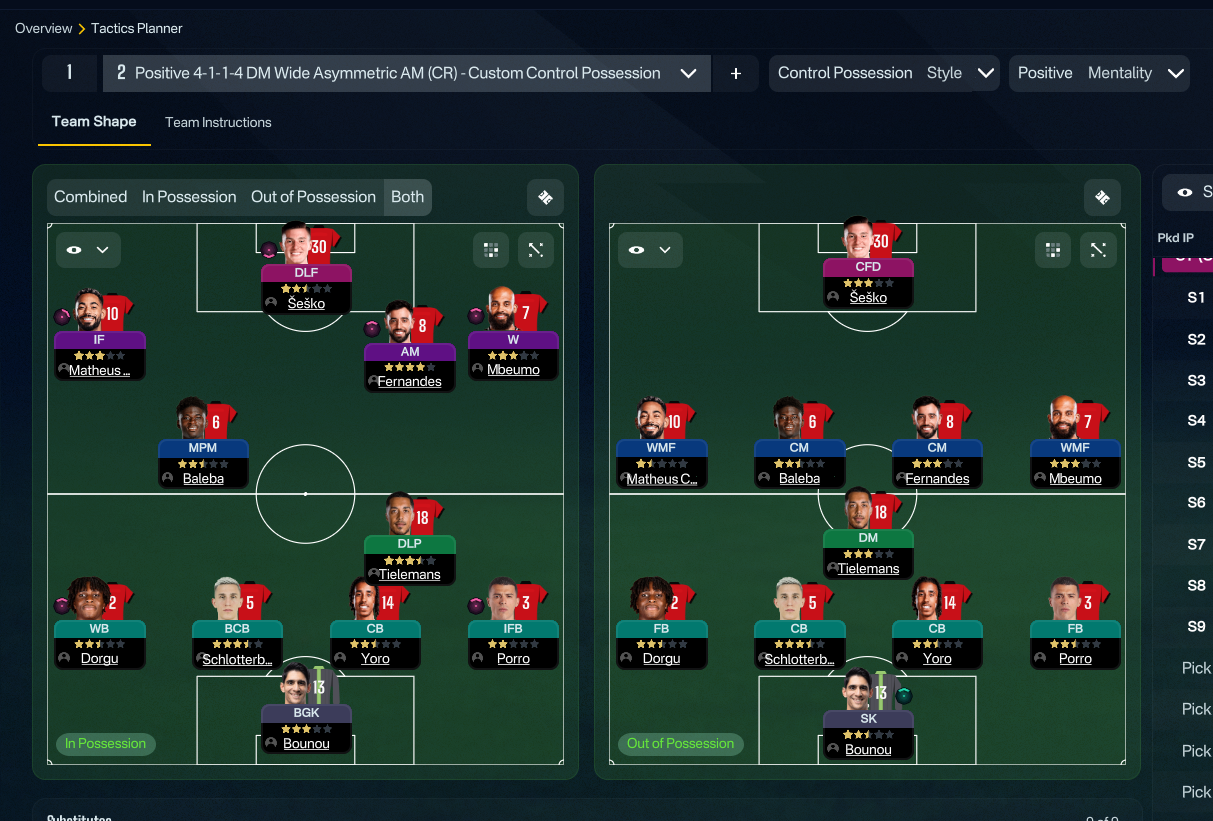
Guides for this formation
The tactical theory behind the 4-2-3-1: roles, instructions, and the trade-offs that decide whether the system holds up.
Player pairings
Midfield Pairs in 4-2-3-1 and 4-4-2
Double pivots and flat pairs in 4-2-3-1 and 4-4-2: when each pairing works, when it collapses, and the AMC unicorn that rescues both.
Read guide
Playing styles
Gegenpressing: A Full Guide
Klopp-style gegenpressing in FM, including squad profile, line-and-press pairing, sustainable workload, and the antipatterns to avoid.
Read guide