Uploaded Tactic
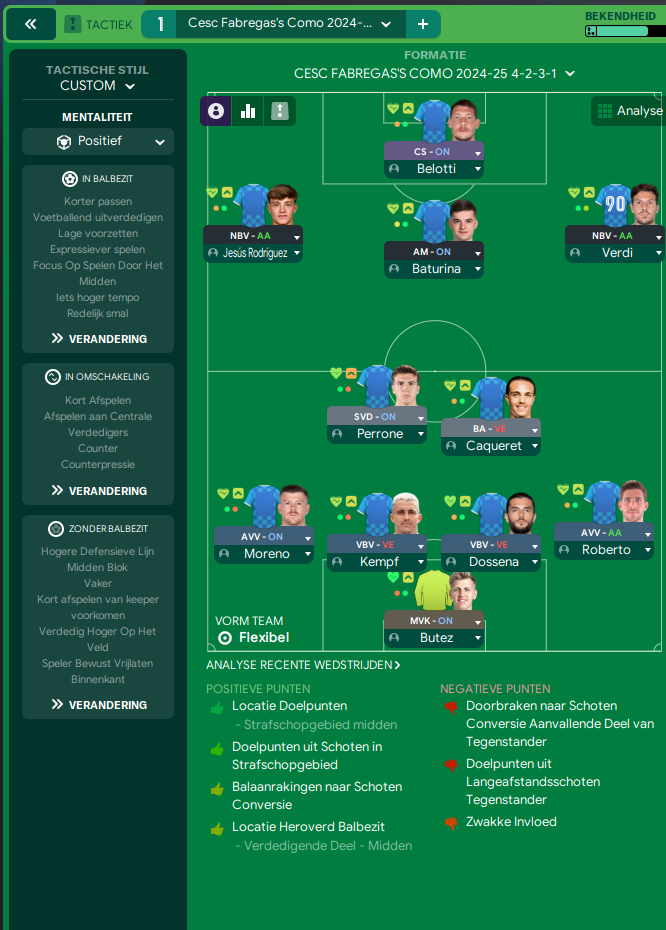
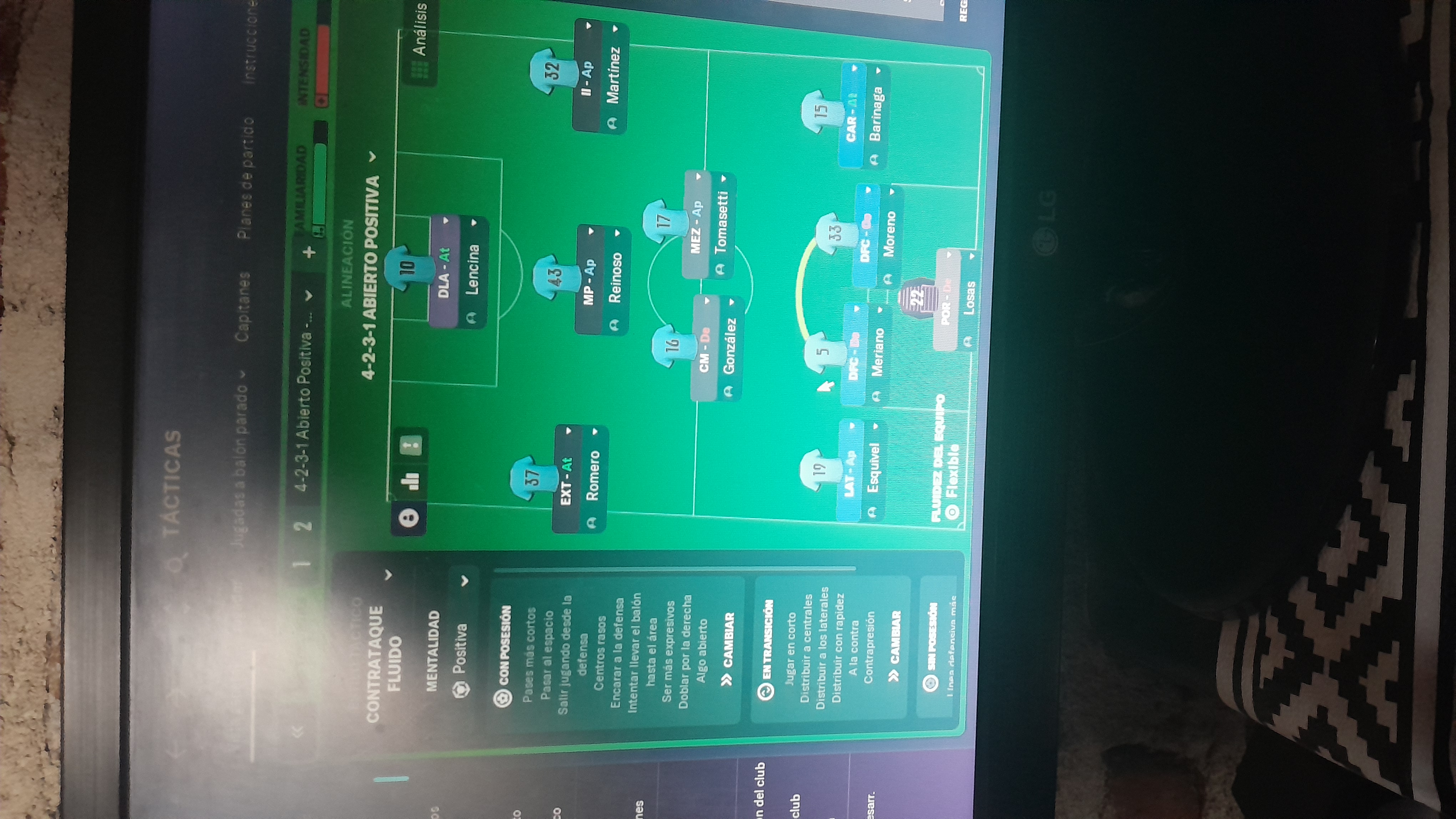
Formation & Style
Tactical Style:Custom
Mentality:Positive
Formation:4-2-3-1
Team Fluidity:Flexible
In Possession
Short Passing
Focus Play Down the Middle
Higher Tempo
In Transition
Counter
Counter-Press
Out of Possession
Higher Defensive Line
Mid Block
Tighter Marking
Team Shape Without Ball
Shape:4-2
Description:A strong defensive shape focusing on compactness and teamwork.
Evidence:DC playing as BPD and DM as Anchorman provides stability at [2,2] and [3,3].
Team Shape With Ball
Shape:4-3
Description:Utilizes width and depth to stretch defenders and create space for inside runs.
Evidence:Inside Forwards at [6,2] and [6,4] combined with an Advanced Playmaker at [5,3] facilitates fluid movement.
Phase Description
Attacking Play
Utilizes short passes and focuses on penetrating the center, using the advanced playmaker to orchestrate attacks.
Defensive Transition
Quickly transitions into a counter-press to regain possession high up the pitch.
Main Focus
Creating scoring opportunities through combination play in the final third.
Key Strengths
Strong Central Penetration
The team's structure allows for effective central combinations, especially with the Advanced Playmaker and two Inside Forwards.
Defensive Depth
The double pivot consisting of BWM and Anchorman showcases strong protection in front of the defense.
Dynamic Wing Play
Utilizes the Wing-Backs to provide width, allowing the Inside Forwards to cut inside.
Conflicting Directions
High Pressing Strategy
While effective in regaining possession, high pressing can lead to a disorganized shape if the pressing triggers are mismatched.
Overcommitment in Attack
The emphasis on attack may leave the team vulnerable at the back during quick counter-attacks.
Dependency on Central Playmakers
Relying heavily on the Advanced Playmaker can create a bottleneck if they are tightly marked.
Tactical Suggestions
Introduce More Width
Encourage wingers to stay wide to stretch the defense, providing more space for central attackers.
Increase Defensive Cohesion
Focus on ensuring that midfielders track back effectively to maintain compactness.
Consider Rotation in Front Three
Employ fluid rotation among forwards to create confusion in opposition defense and generate mismatches.
Ask Questions About Your Lineup
Related Tactics
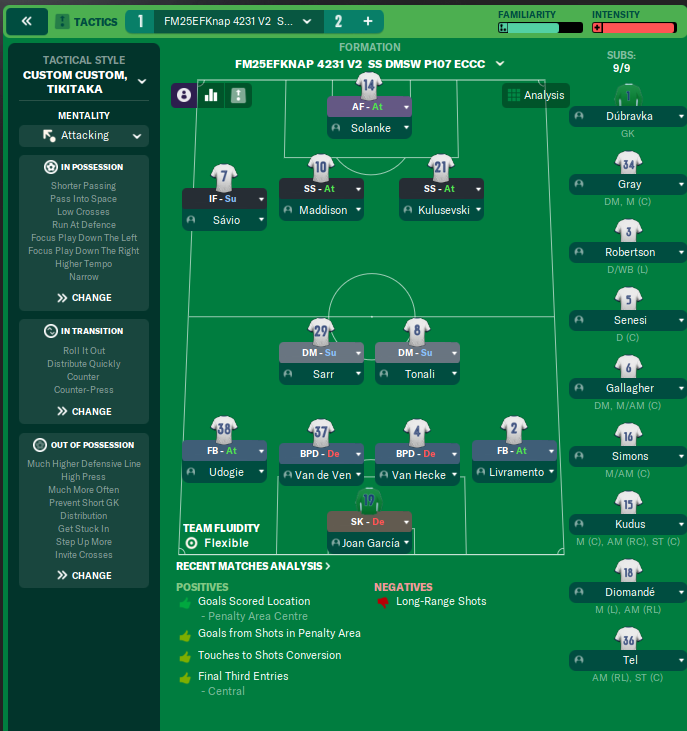
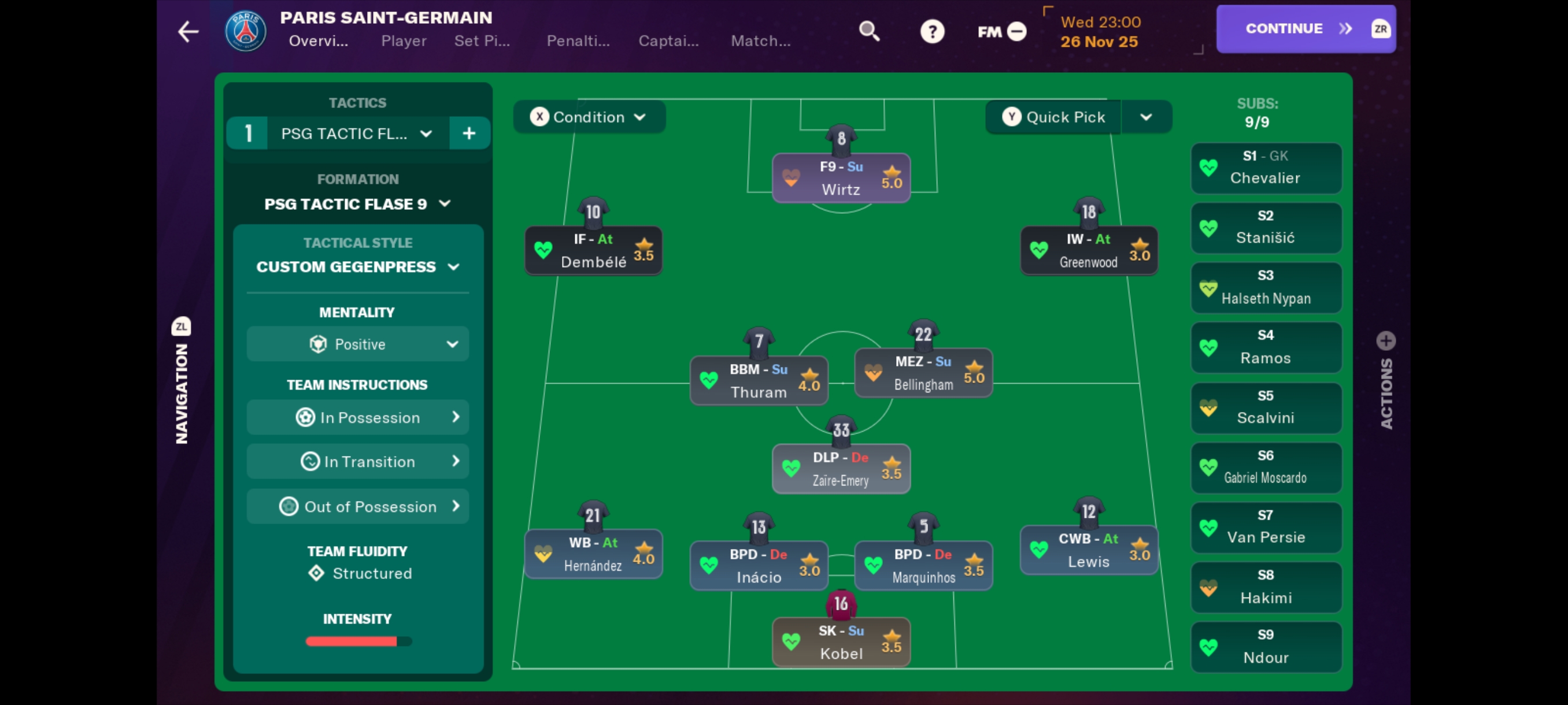
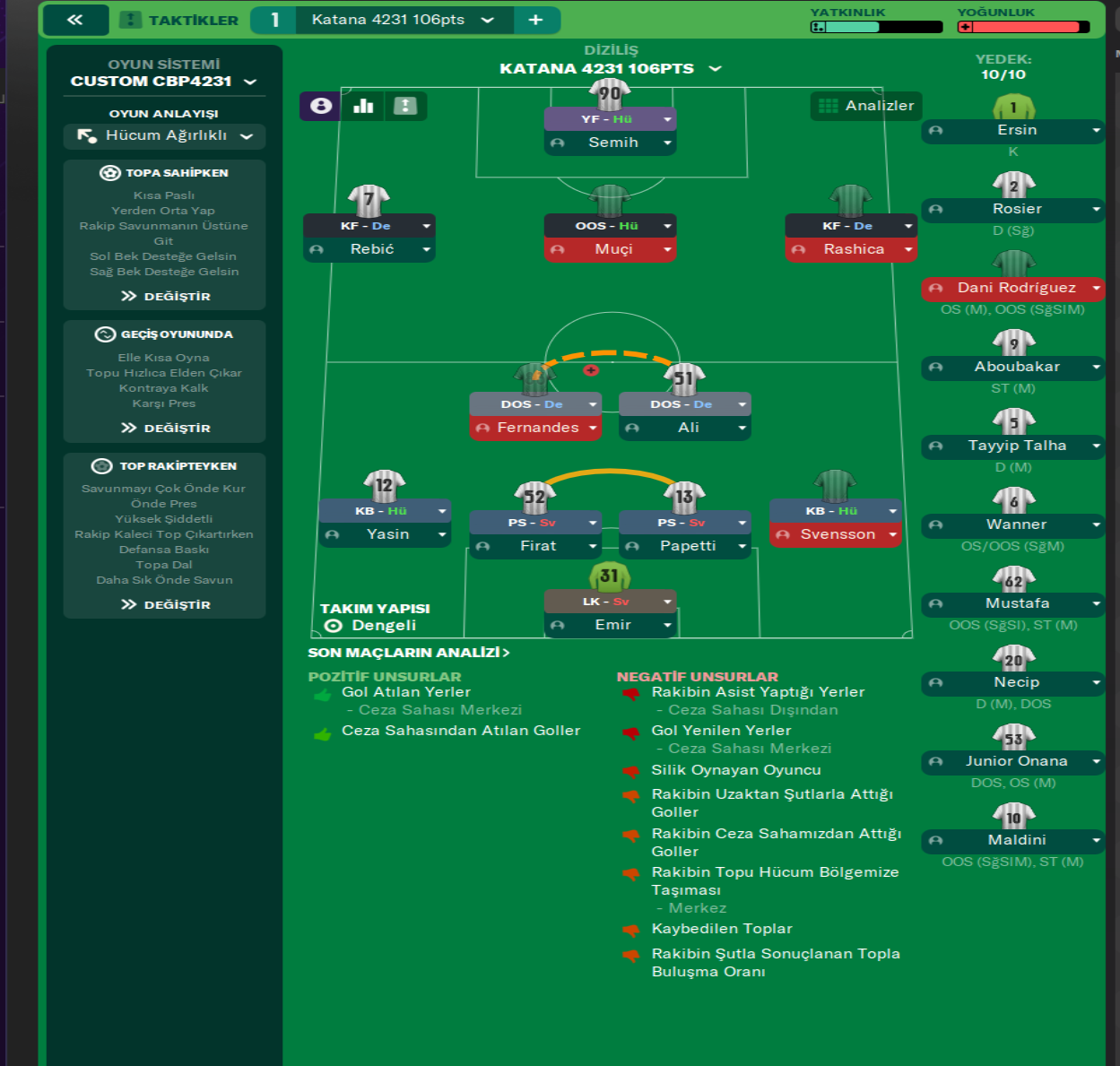
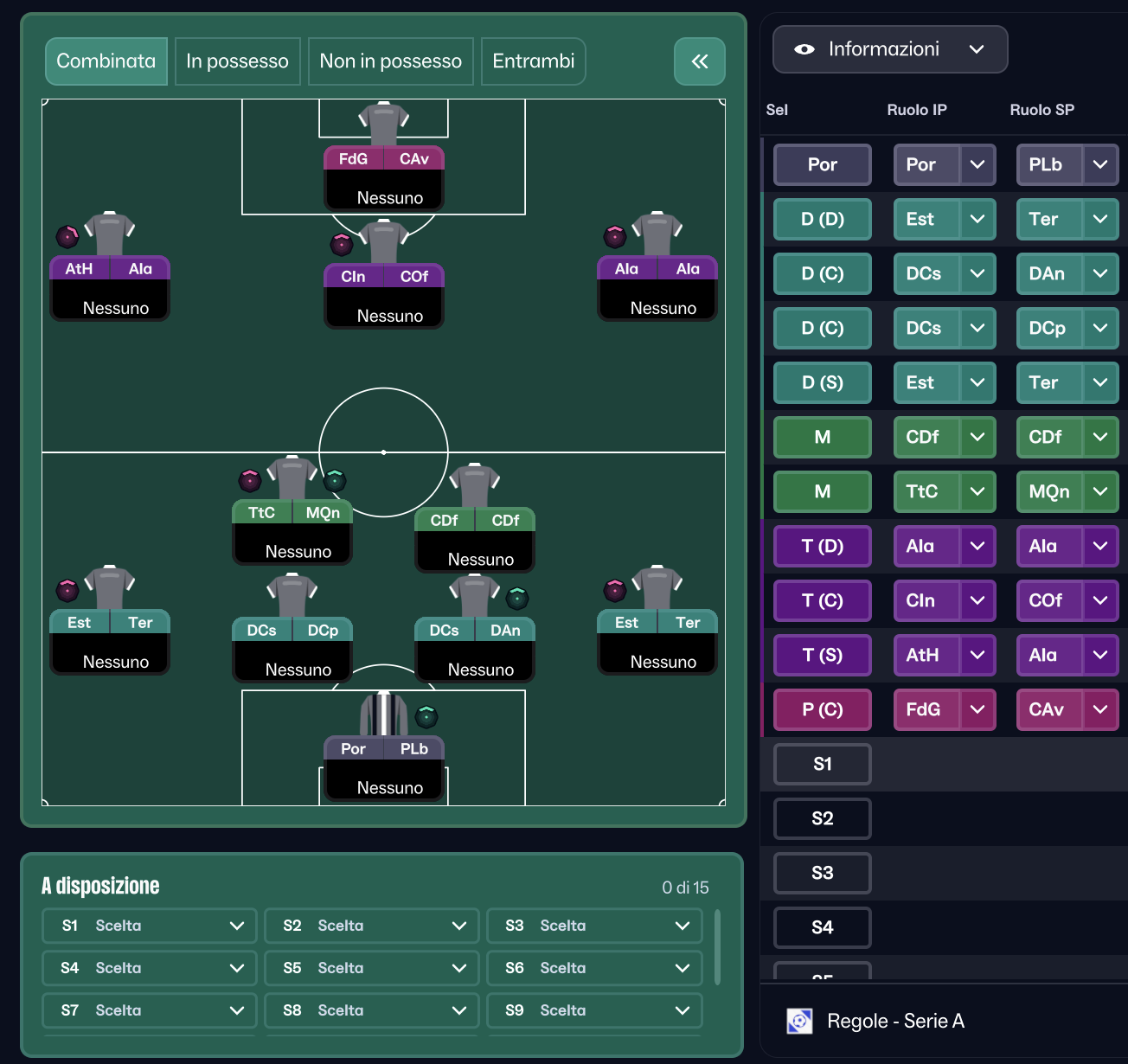
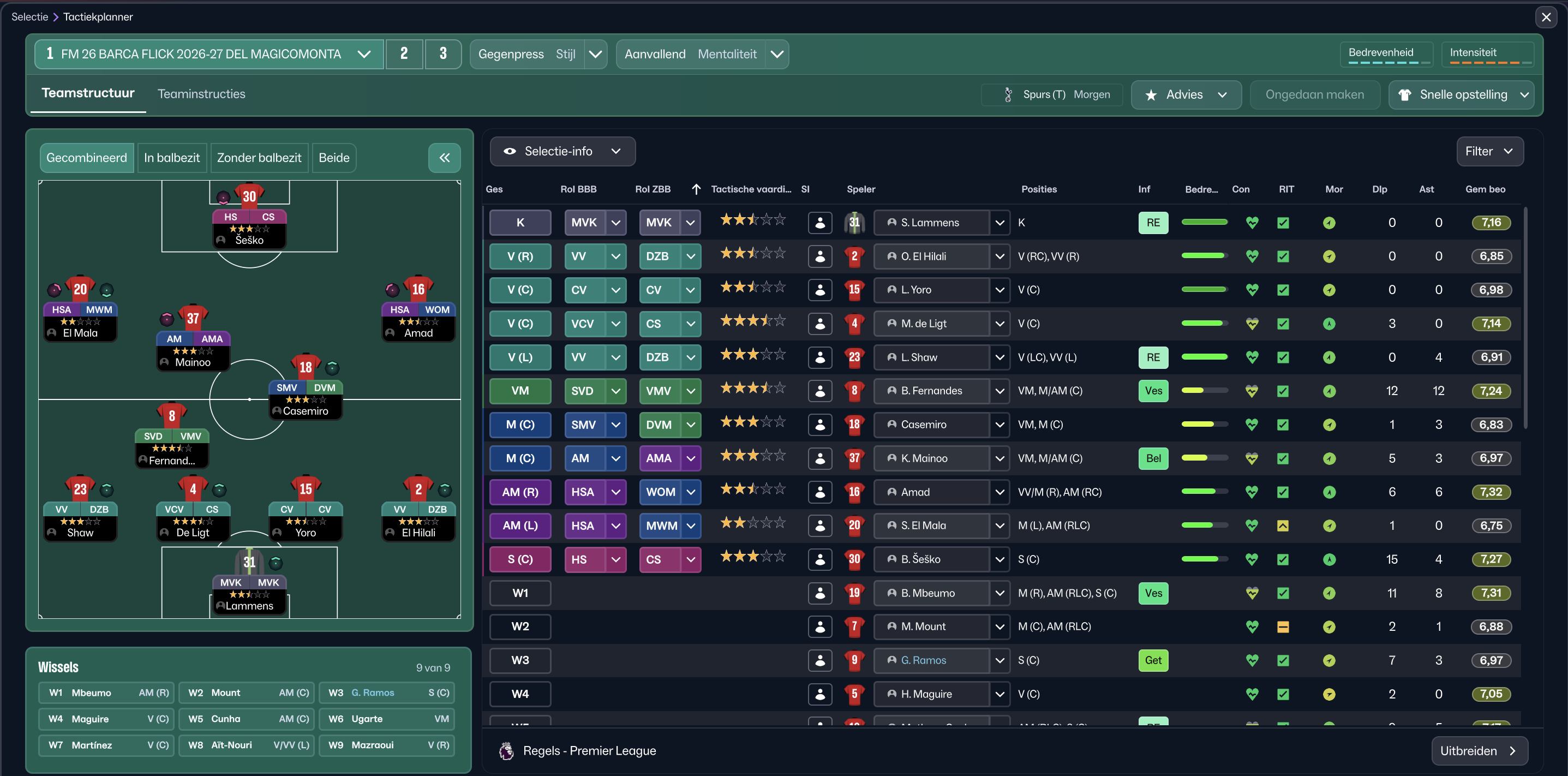
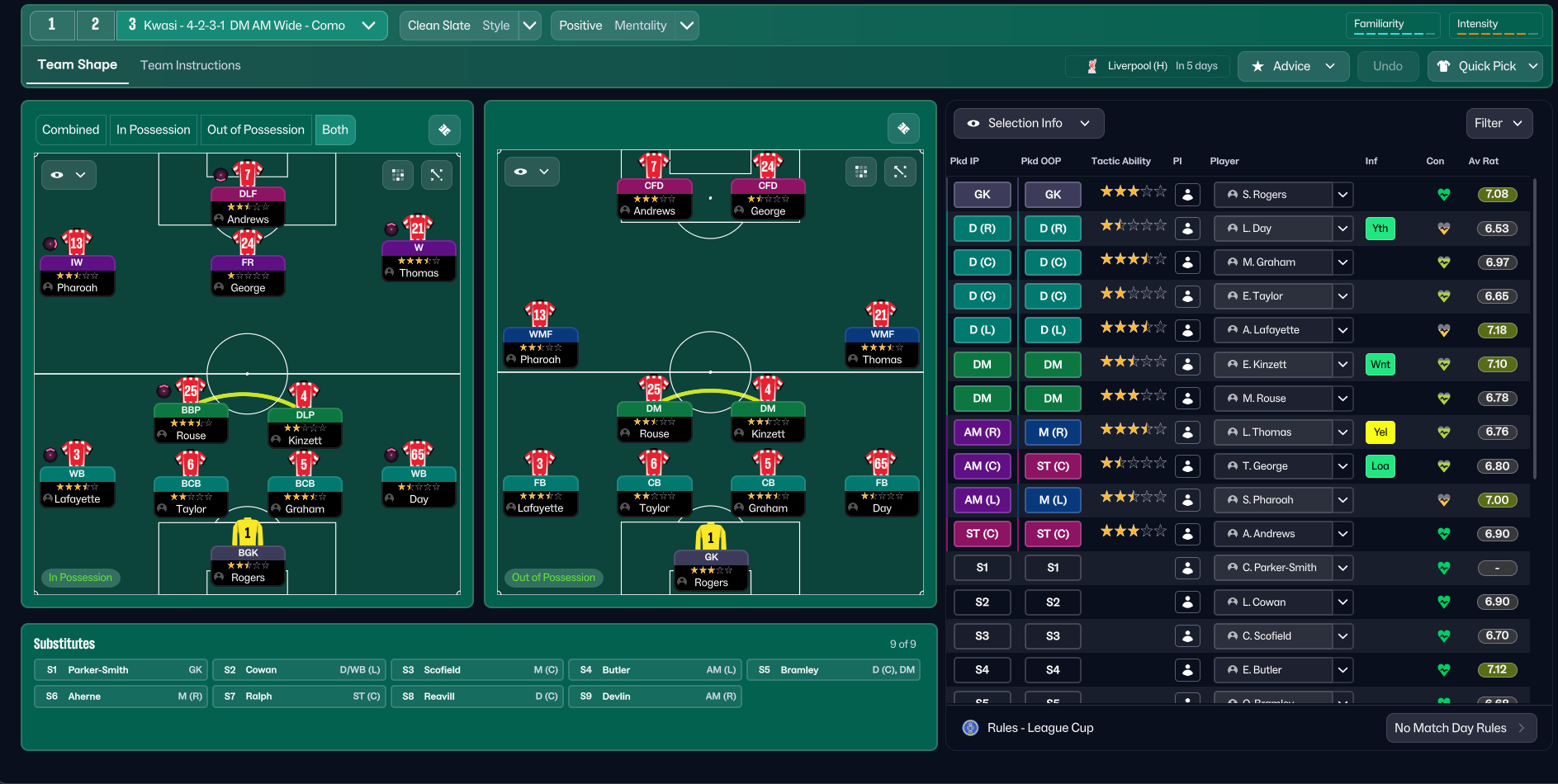
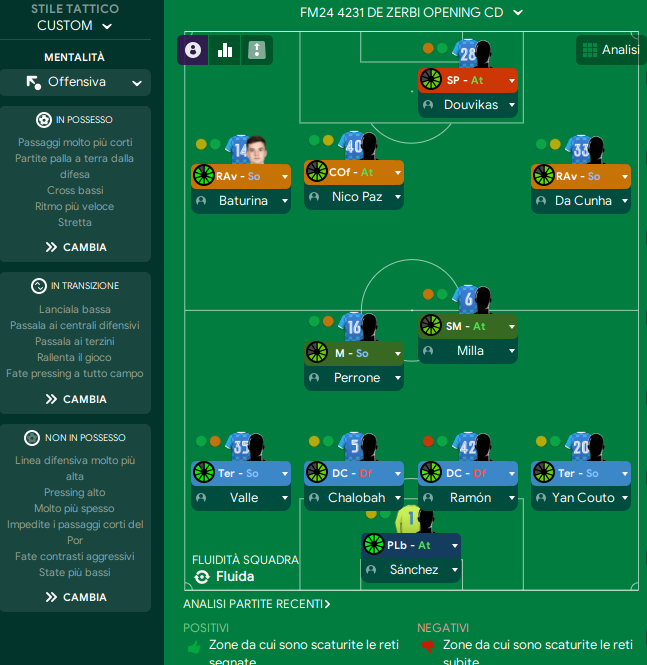
Guides for this formation
The tactical theory behind the 4-2-3-1: roles, instructions, and the trade-offs that decide whether the system holds up.
Player pairings
Midfield Pairs in 4-2-3-1 and 4-4-2
Double pivots and flat pairs in 4-2-3-1 and 4-4-2: when each pairing works, when it collapses, and the AMC unicorn that rescues both.
Read guide
Playing styles
Gegenpressing: A Full Guide
Klopp-style gegenpressing in FM, including squad profile, line-and-press pairing, sustainable workload, and the antipatterns to avoid.
Read guide