Uploaded Tactic
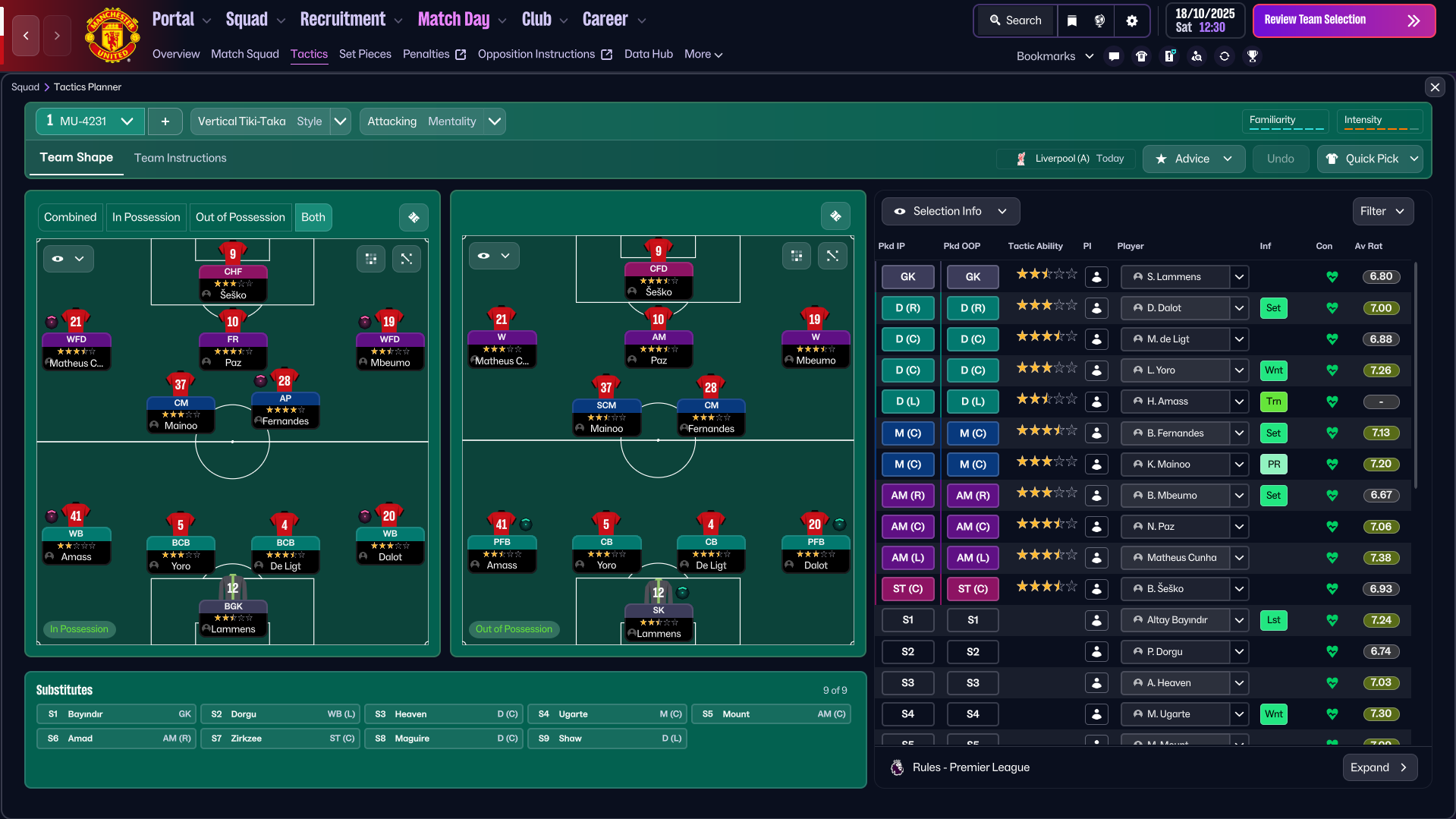
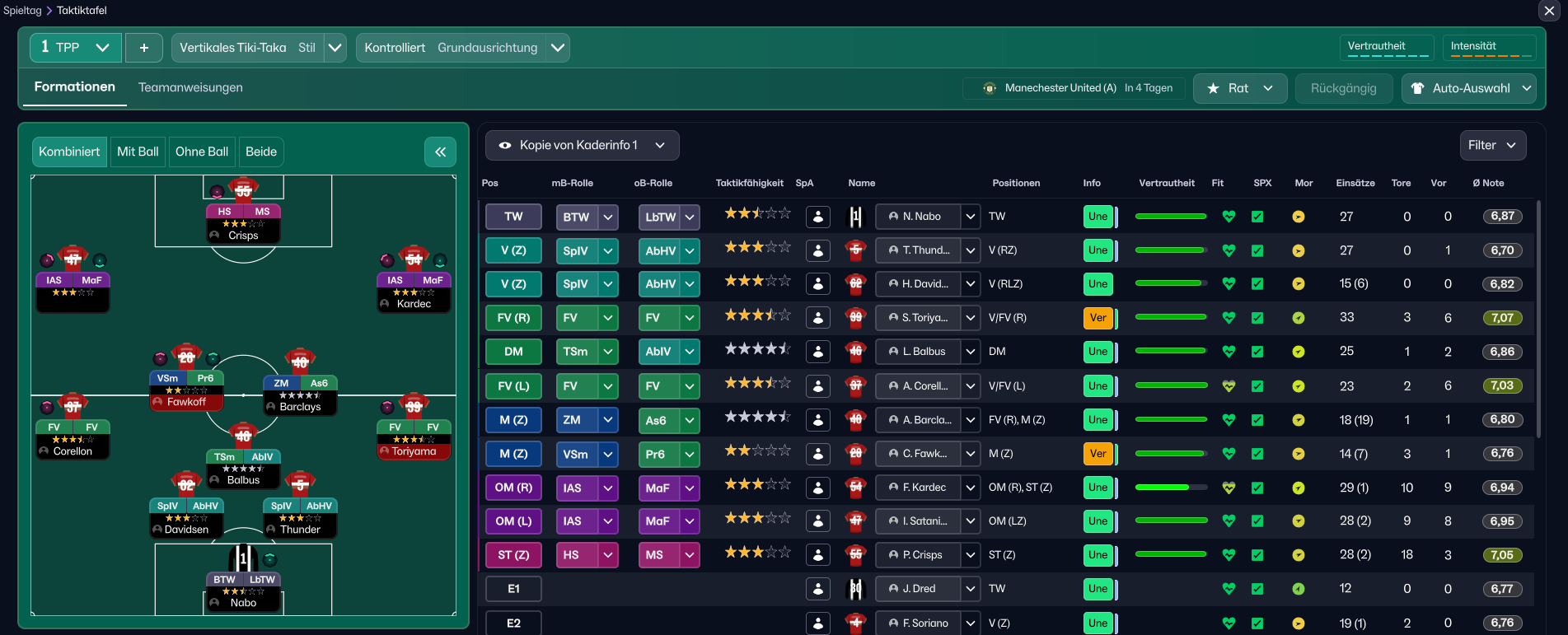
Formation & Style
Tactical Style:Vertical Tiki-Taka
Mentality:Attacking
Formation:4-2-3-1
Team Fluidity:Structured
In Possession
Shorter Passing
Work Ball Into Box
Be More Expressive
Run At Defence
In Transition
Counter-Press
Counter
Distribution: Goalkeeper Distribute to Centre-Backs
Out of Possession
Higher Line of Engagement
Higher Defensive Line
Prevent Short GK Distribution
Trigger Press More Often
Team Shape Without Ball
Shape:4-4-2 Shape When Out of Possession
Description:The defensive structure remains compact and organized, with midfielders falling back to support the defense.
Evidence:Two banks of four when the opposition is in possession of the ball.
Team Shape With Ball
Shape:Fluid 4-2-3-1
Description:Utilizes width with wingers stretching the opposition and an advanced playmaker supporting the forward line.
Evidence:Wide forwards are positioned high and wide, creating space for the attacking midfielder.
Phase Description
Attacking Play
The team focuses on rapid ball movement through short passing to create openings while utilizing width from the wide forwards.
Defensive Transition
Upon losing possession, the team quickly transitions into a high pressing shape, aiming to regain the ball swiftly.
Main Focus
Maintain possession and create scoring opportunities through patient build-up play.
Key Strengths
Dynamic Midfield Play
The combination of a Secondo Volante and Advanced Playmaker offers flexibility in both attacking and defensive phases.
Attacking Width
Wide forwards provide crucial width, creating space for central players to exploit gaps.
Ball-Playing Defence
Ball-Playing Defenders facilitate the team's focus on possession-based football.
Conflicting Directions
High Defensive Line with Deep Strikers
Maintaining a high defensive line may expose the team to balls over the top, especially with an attacking mindset.
Numerical Imbalance in Midfield
If the opposing team plays with an extra midfielder, our setup can be easily overrun.
Pressing Structure
The intensity of pressing might lead to players being out of position if not executed perfectly.
Tactical Suggestions
Consider Adjusting Mentality
To avoid being exposed defensively, consider switching to a more cautious mentality against stronger opponents.
Reinforce Central Midfield
Introducing a third midfielder versus teams with a strong central presence could help maintain control.
Utilize Fluidity Adjustments
Improving team fluidity could enhance attacking coordination and movement off the ball.
Ask Questions About Your Lineup
Related Tactics
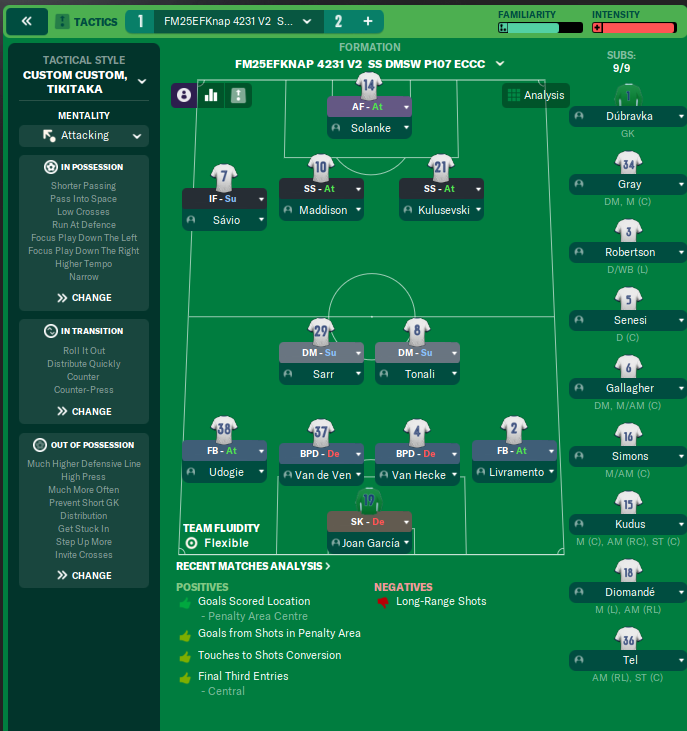
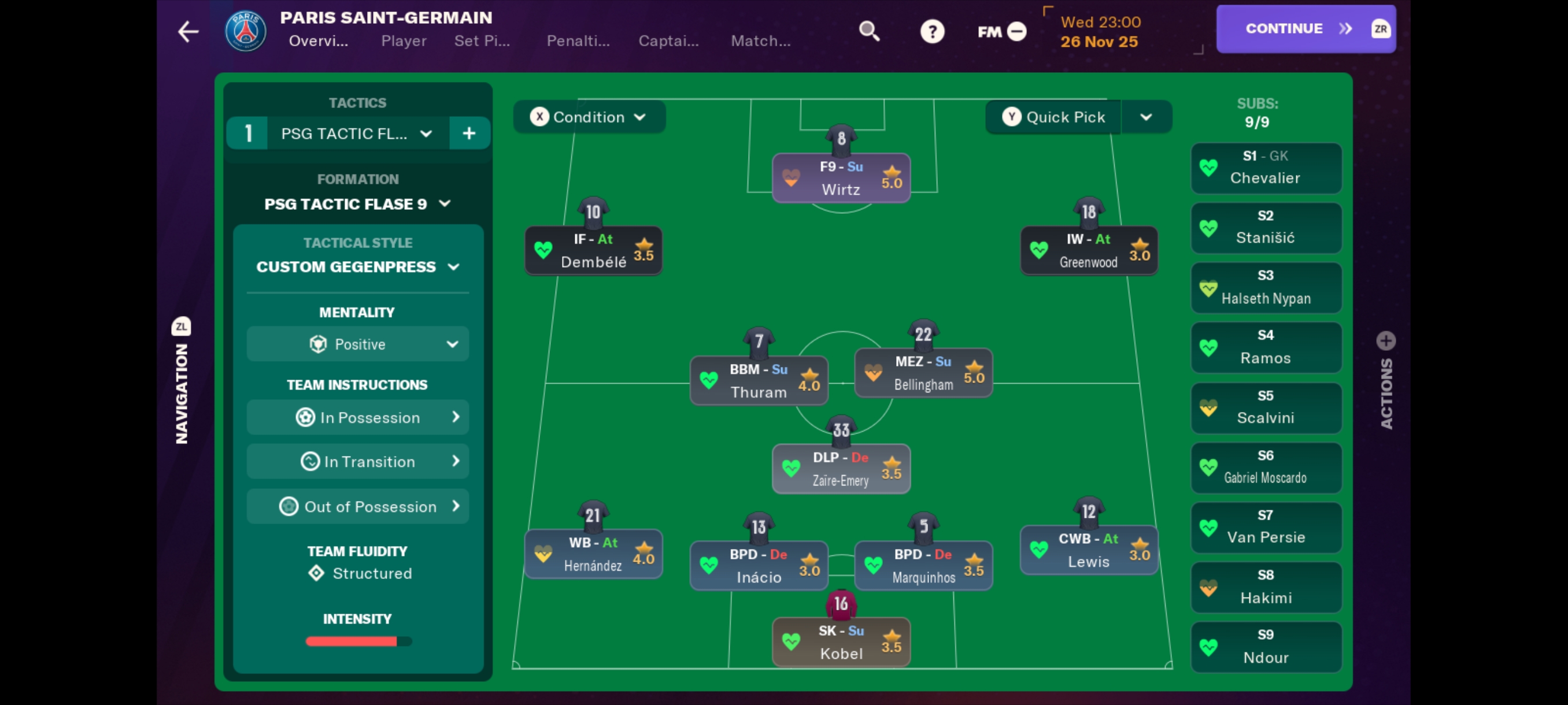
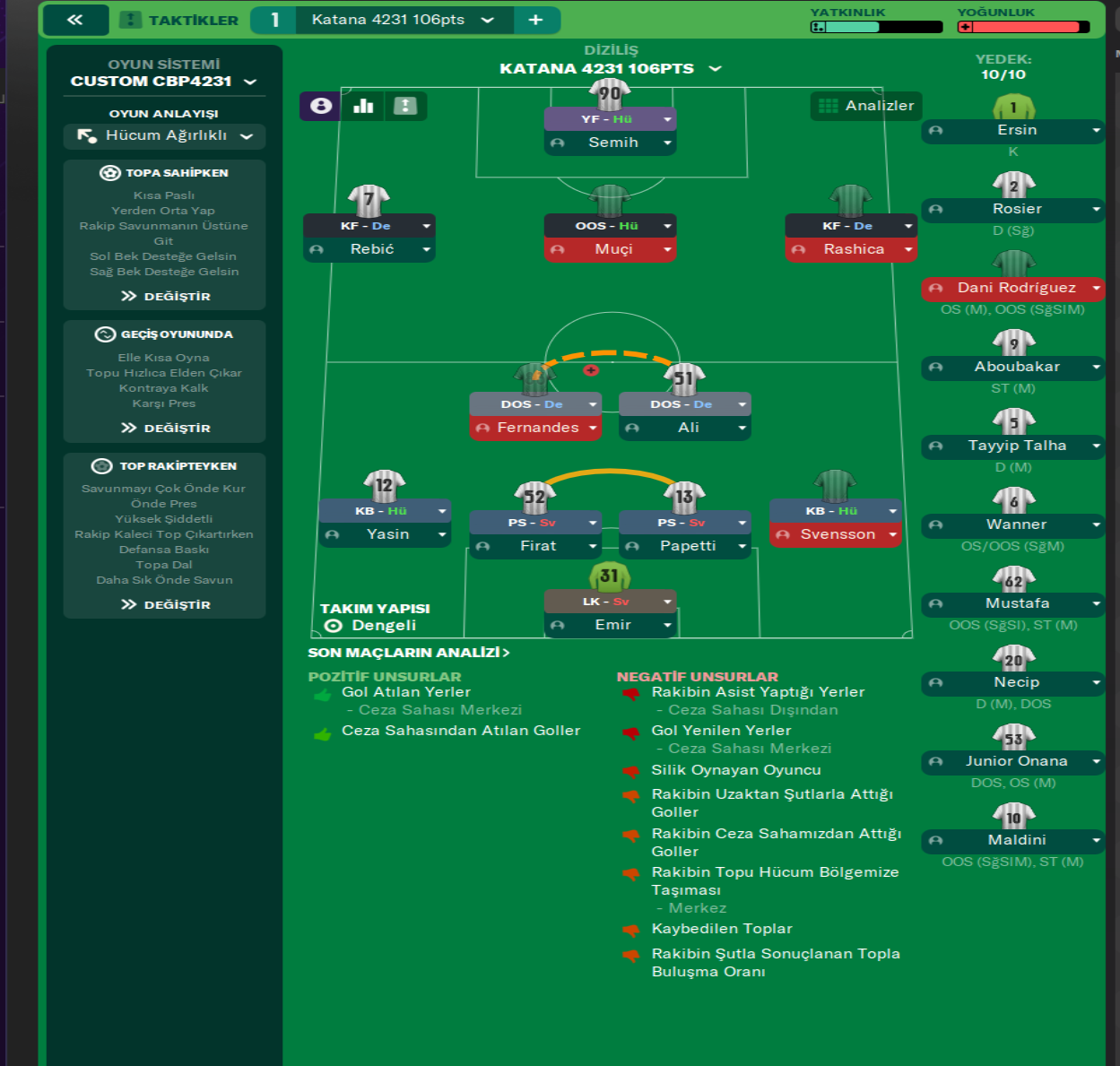
More Vertical Tiki-Taka tactics
Guides for this formation
The tactical theory behind the 4-2-3-1: roles, instructions, and the trade-offs that decide whether the system holds up.
Player pairings
Midfield Pairs in 4-2-3-1 and 4-4-2
Double pivots and flat pairs in 4-2-3-1 and 4-4-2: when each pairing works, when it collapses, and the AMC unicorn that rescues both.
Read guide
Playing styles
Gegenpressing: A Full Guide
Klopp-style gegenpressing in FM, including squad profile, line-and-press pairing, sustainable workload, and the antipatterns to avoid.
Read guide