Uploaded Tactic
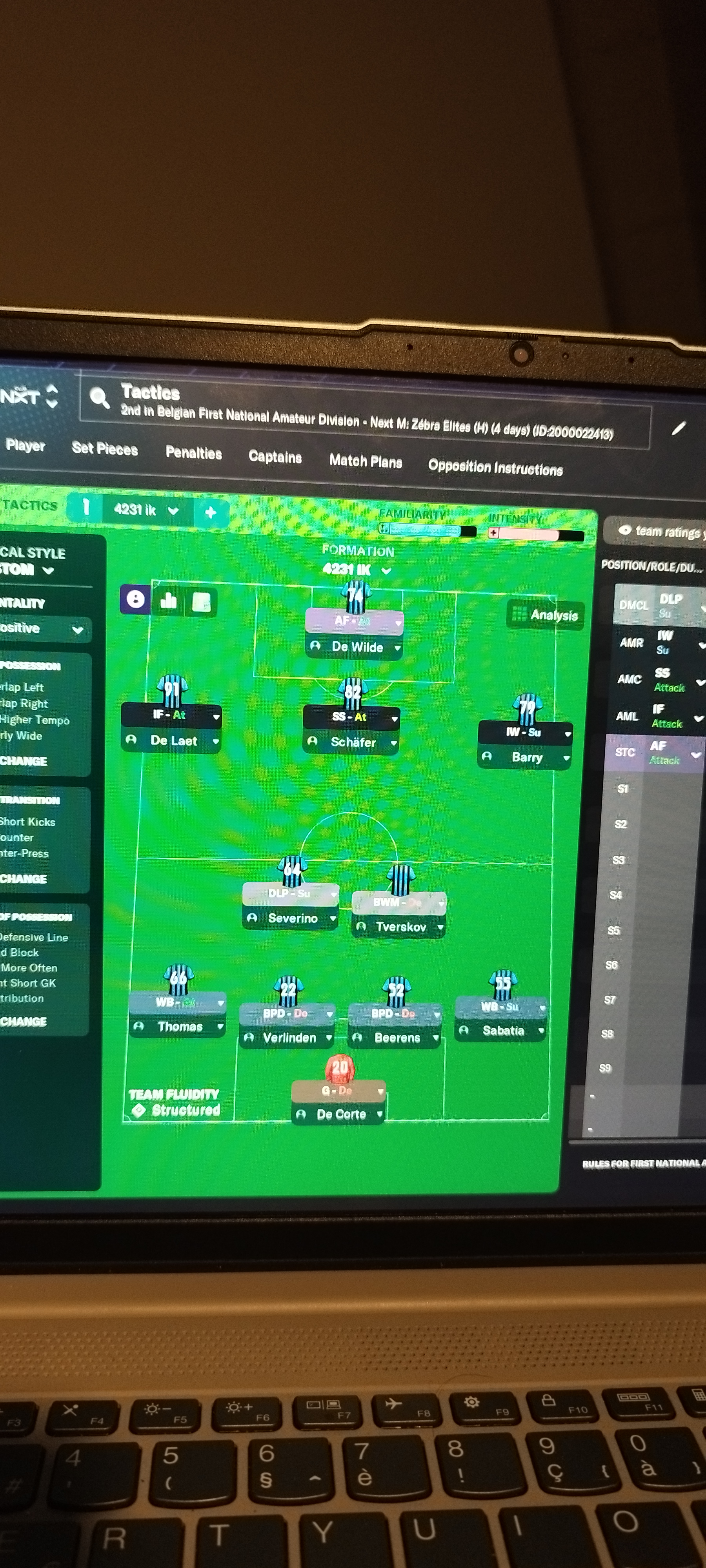
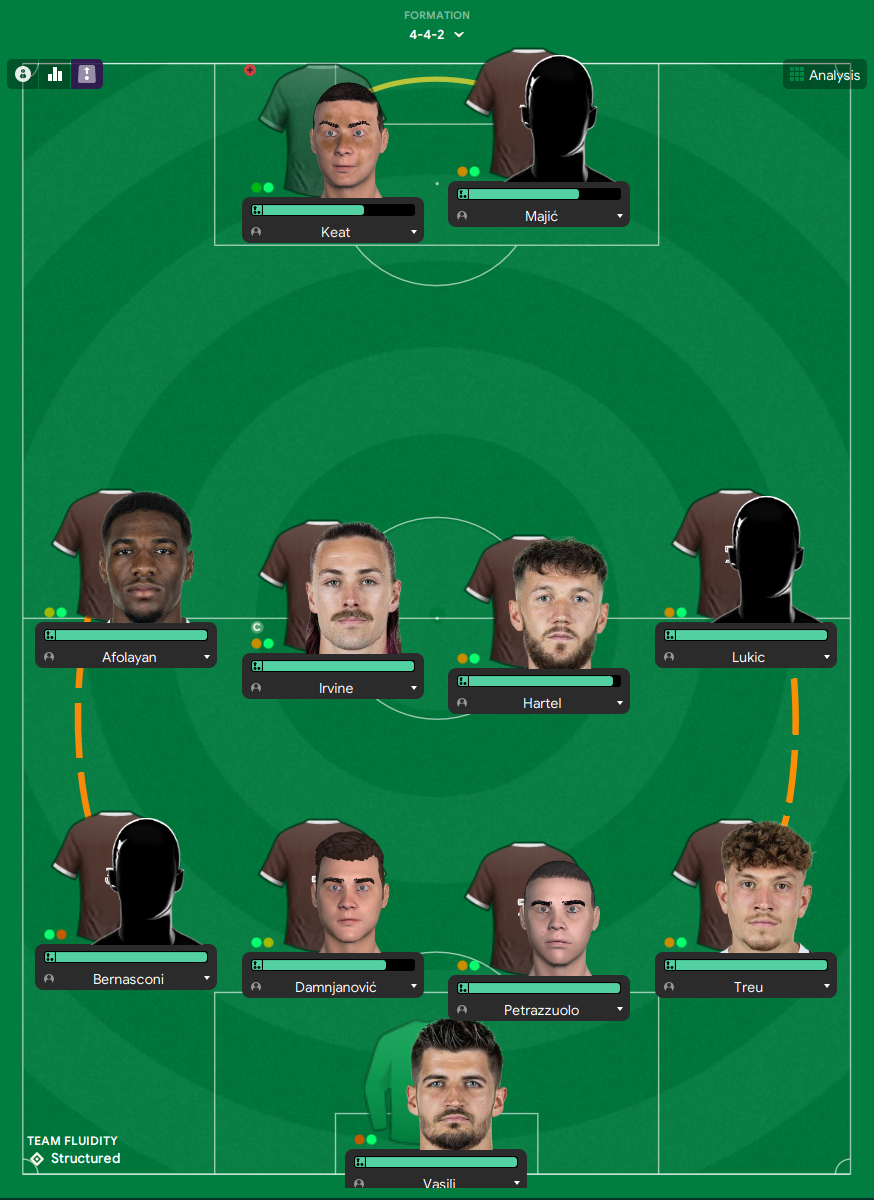
Formation & Style
Tactical Style:Structured
Mentality:Positive
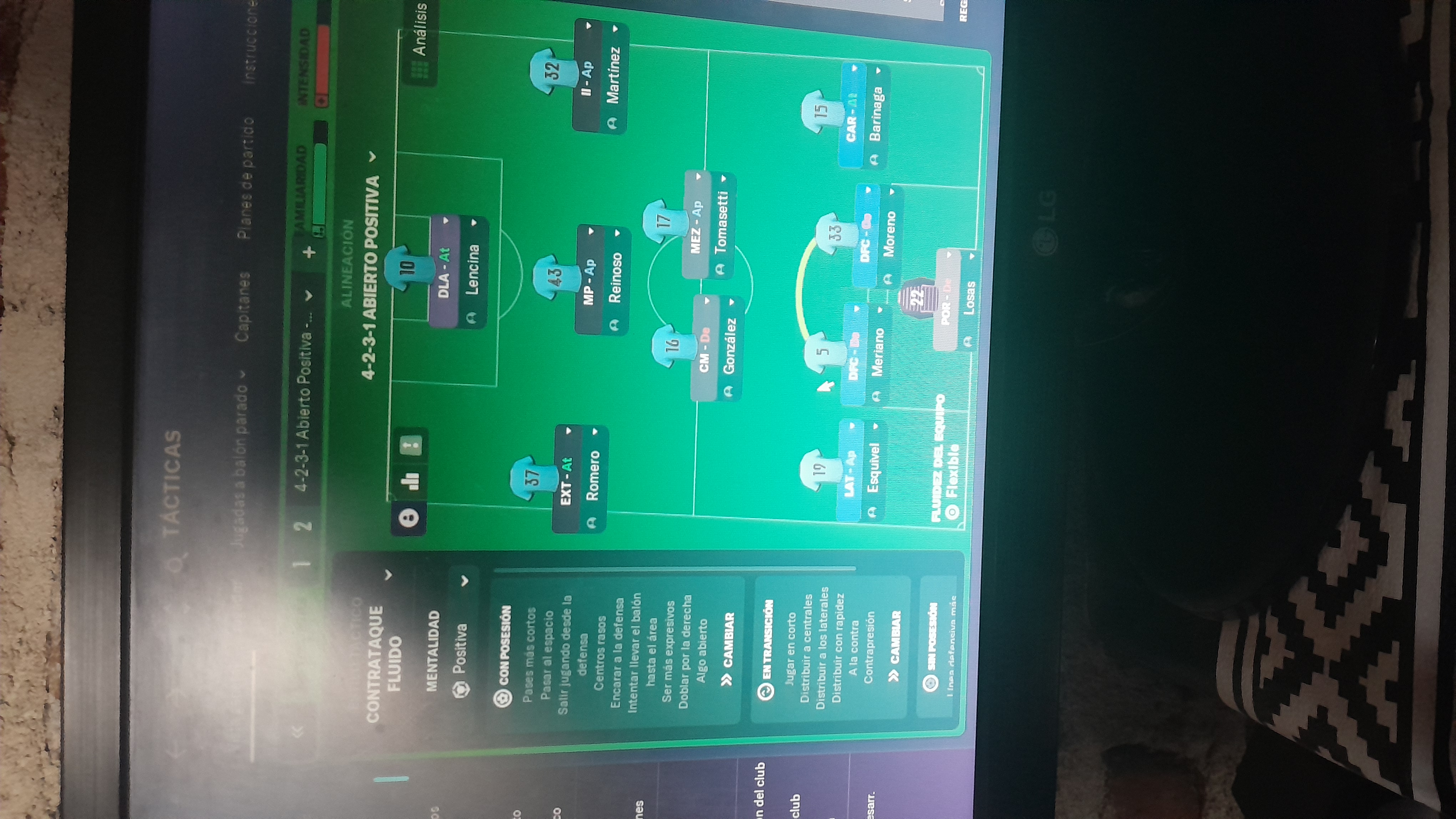
Formation:4-2-3-1
Team Fluidity:Structured
In Possession
Higher Tempo
Exploit the Flanks
Play Wider
In Transition
Counter
Counter-Press
Out of Possession
Defensive Line: Higher
Pressing Intensity: More Urgent
Team Shape Without Ball
No team shape without ball data available
Team Shape With Ball
No team shape with ball data available
Key Strengths
Attacking Width
Utilizing inside forwards and wing backs creates space and stretching the opposition.
Dynamic Midfield
The combination of a deep-lying playmaker and a ball-winning midfielder allows for both creative buildup and defensive stability.
High Press
The pressing system can disrupt the opponent's buildup and regain possession quickly.
Versatile Front Line
Having multiple attacking roles provides unpredictability and flexibility in attacking situations.
Conflicting Directions
Pressing vs Defensive Line
A higher defensive line may leave space behind for counterattacks, potentially conflicting with the pressing strategy.
Inside Forwards vs Wing Backs
Both inside forwards and wing backs pushing forward could congest attacking areas and limit space.
Mentality vs Player Duties
A positive mentality might contradict the deeper defensive duties of the ball winning midfielder.
Fluidity vs Structure
Structured fluidity might hinder players' adaptability during dynamic transitions.
Tactical Suggestions
Adjust Defensive Line
Consider lowering the defensive line to minimize vulnerability against counterattacks.
Balance Attacking Width
One inside forward could be switched to support duty or play as a winger to create balance.
Streamline Midfield Roles
Test different combinations of midfield roles to find a balance between creativity and defensive coverage.
Flexibility in Mentality
Adjust the mentality based on opponent strengths to avoid being overly aggressive or conservative.
Ask Questions About Your Lineup
Related Tactics
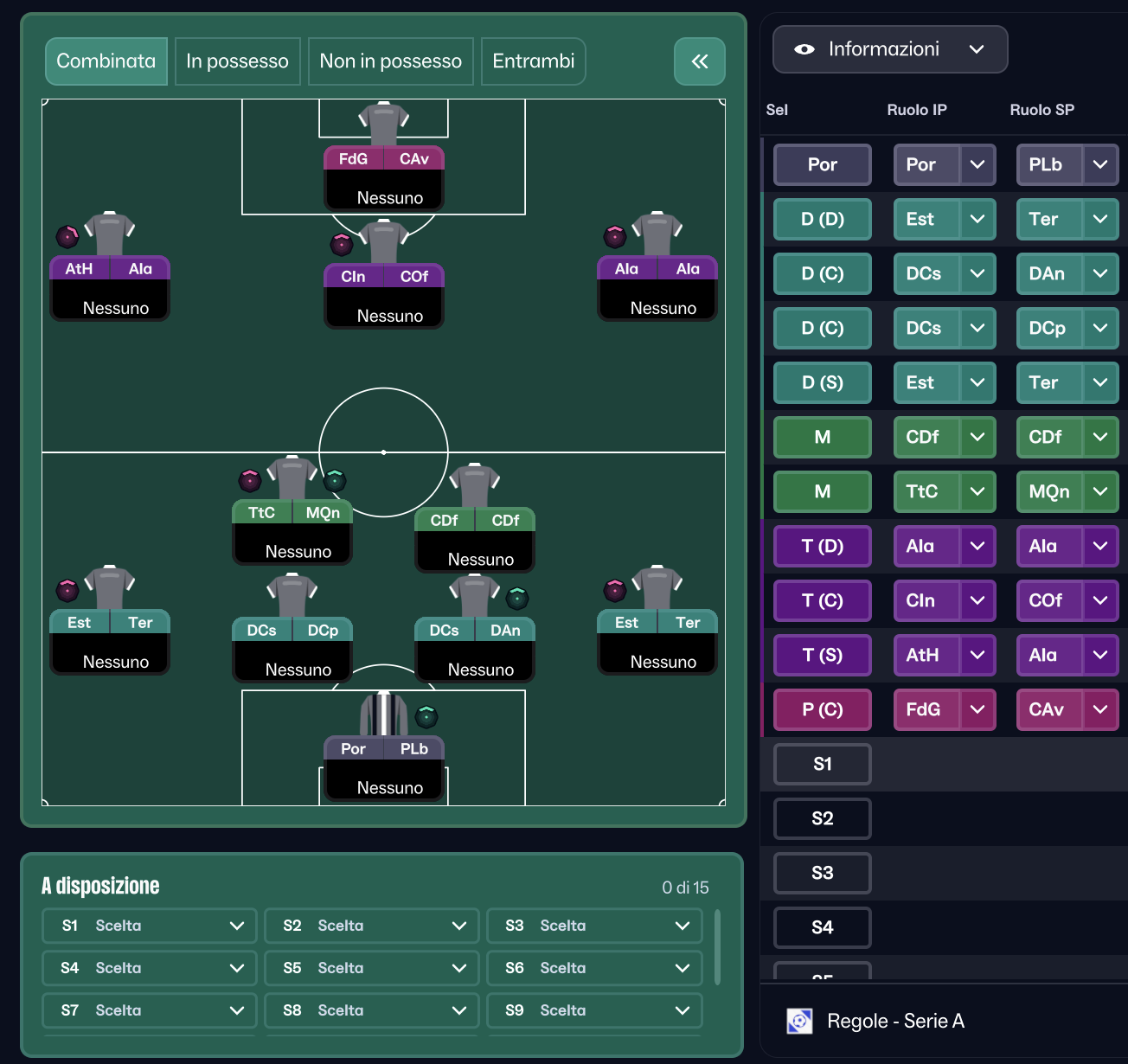
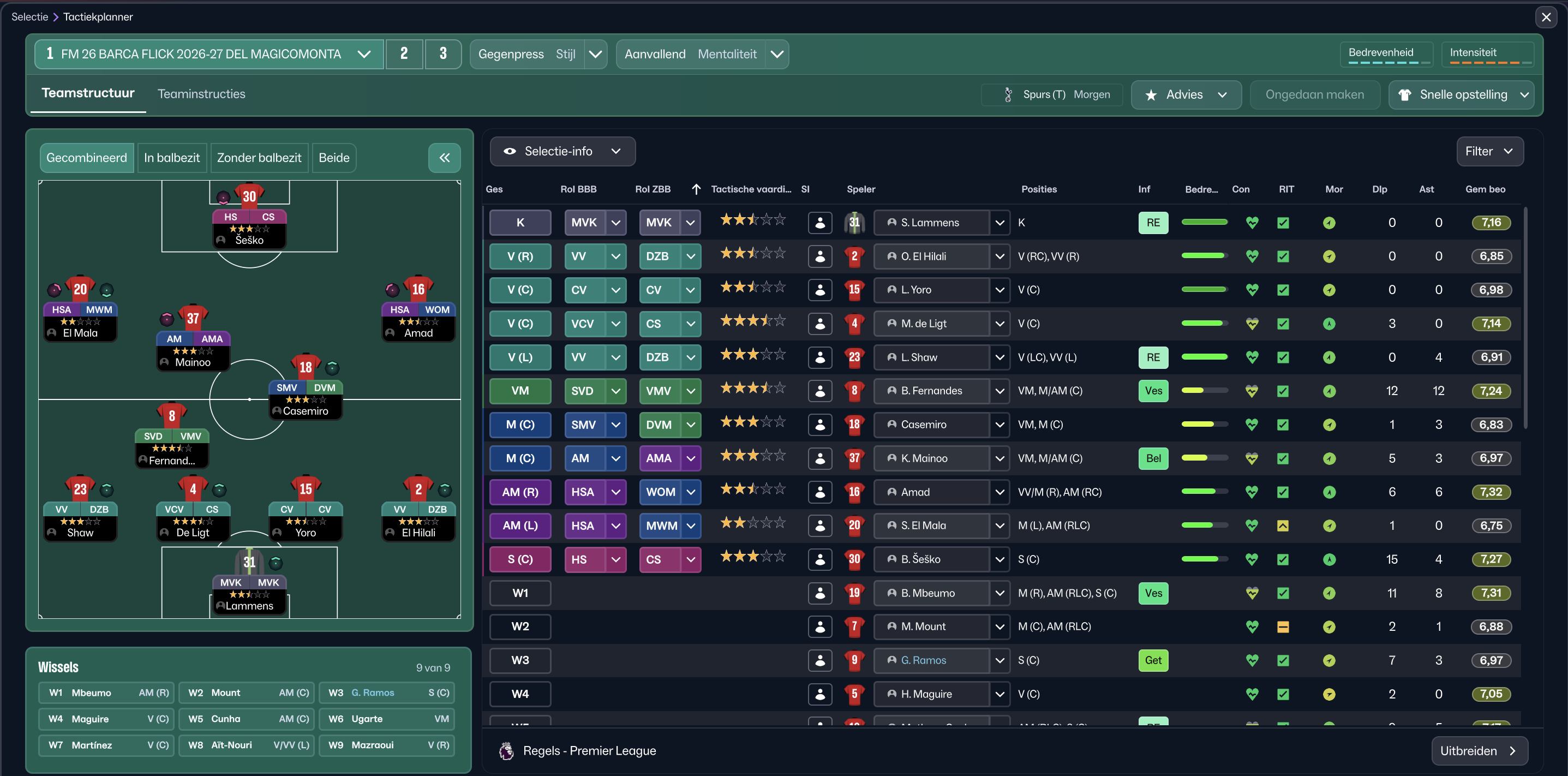
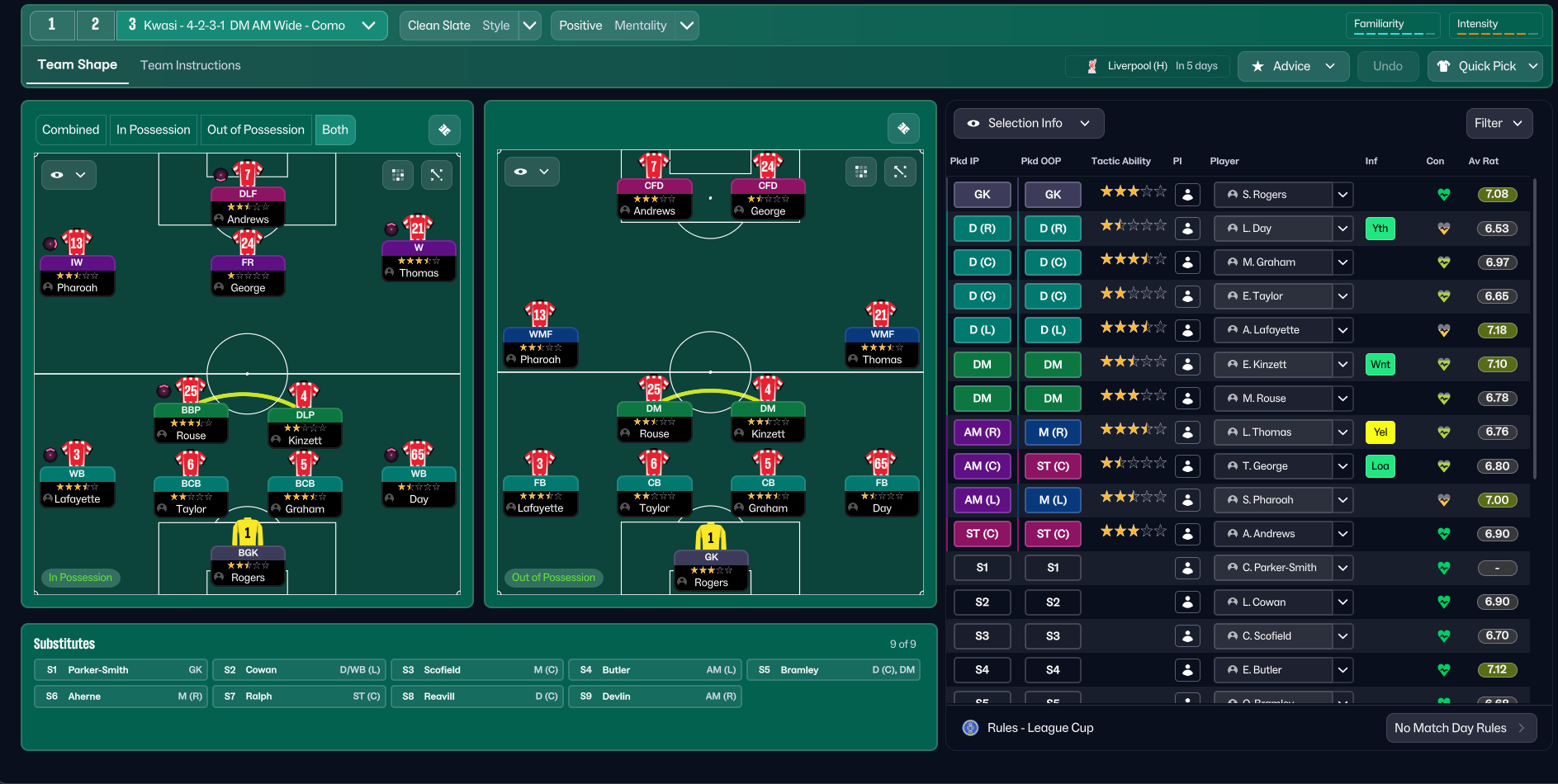
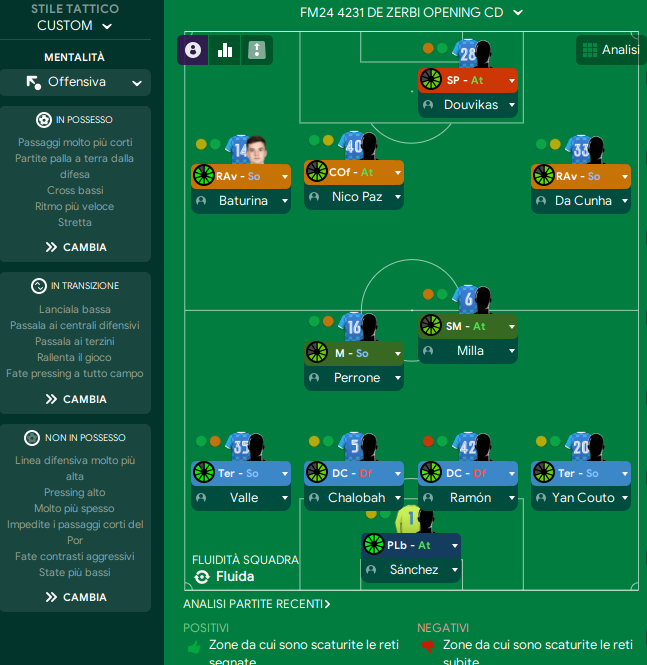
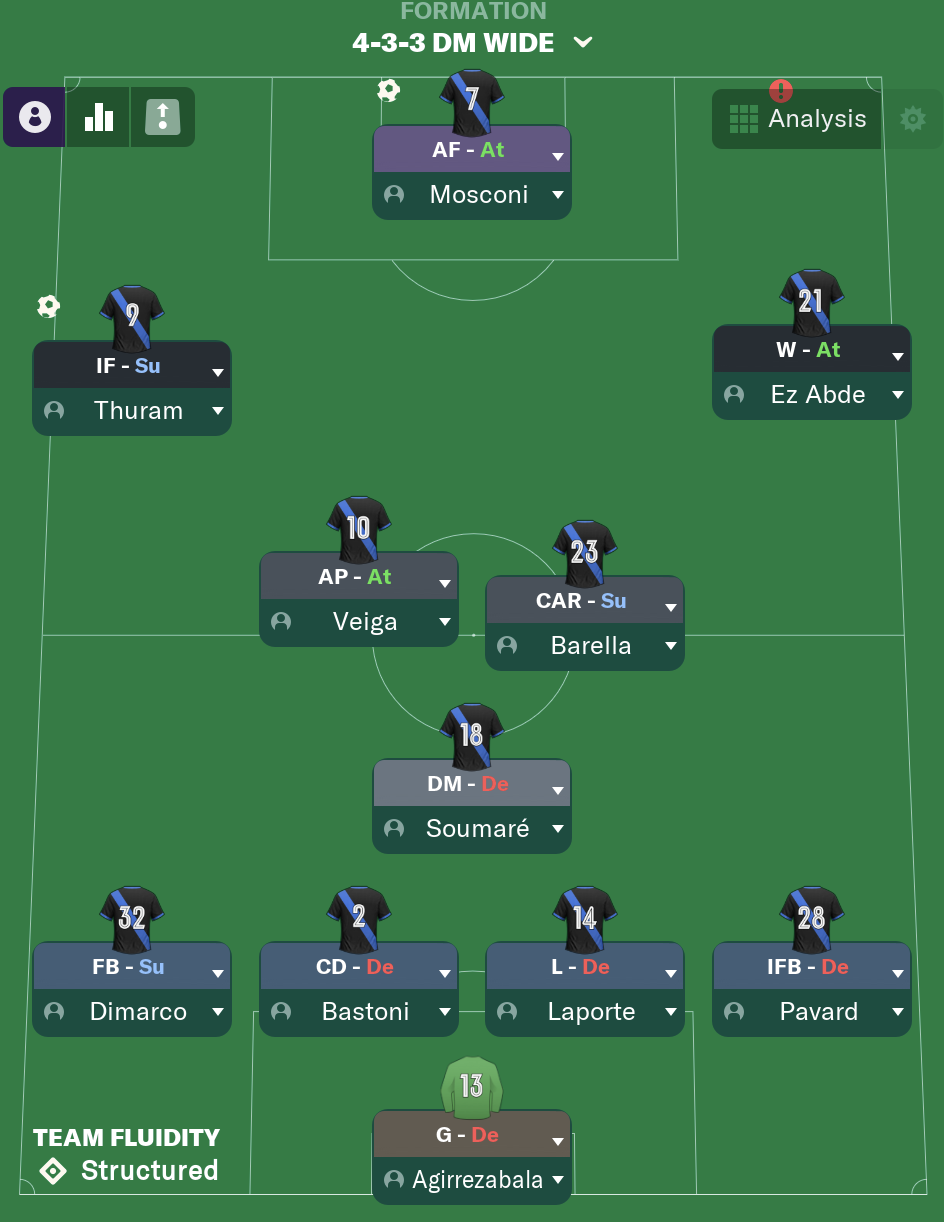
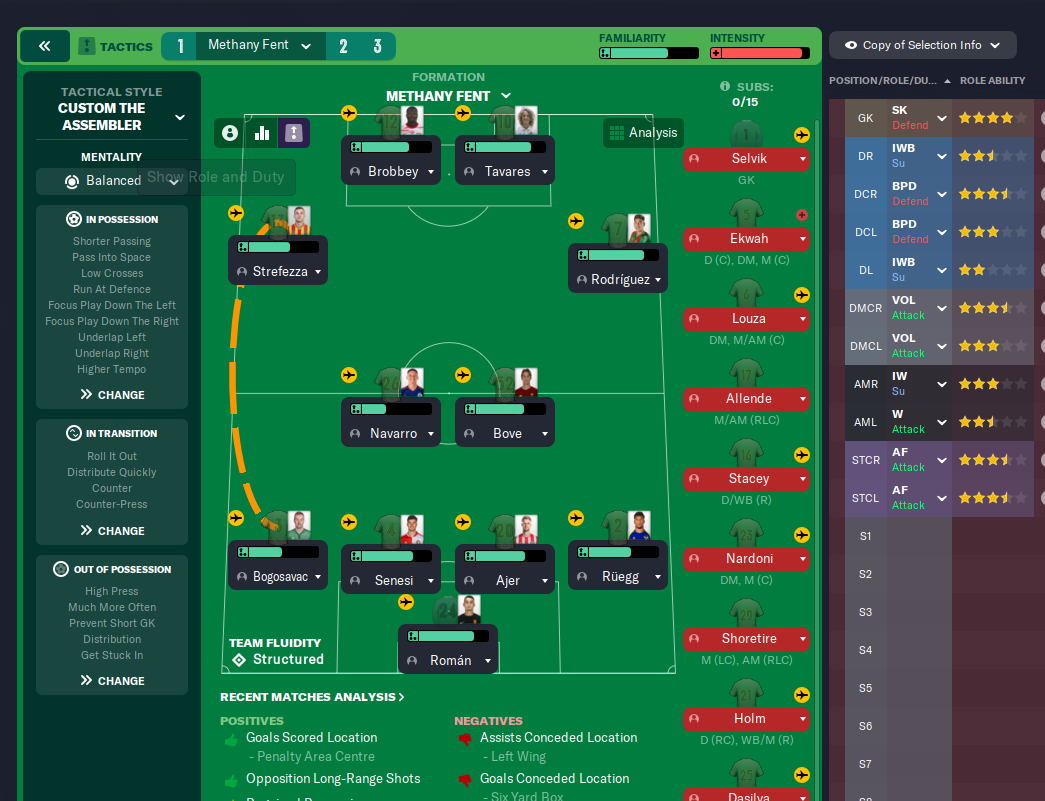
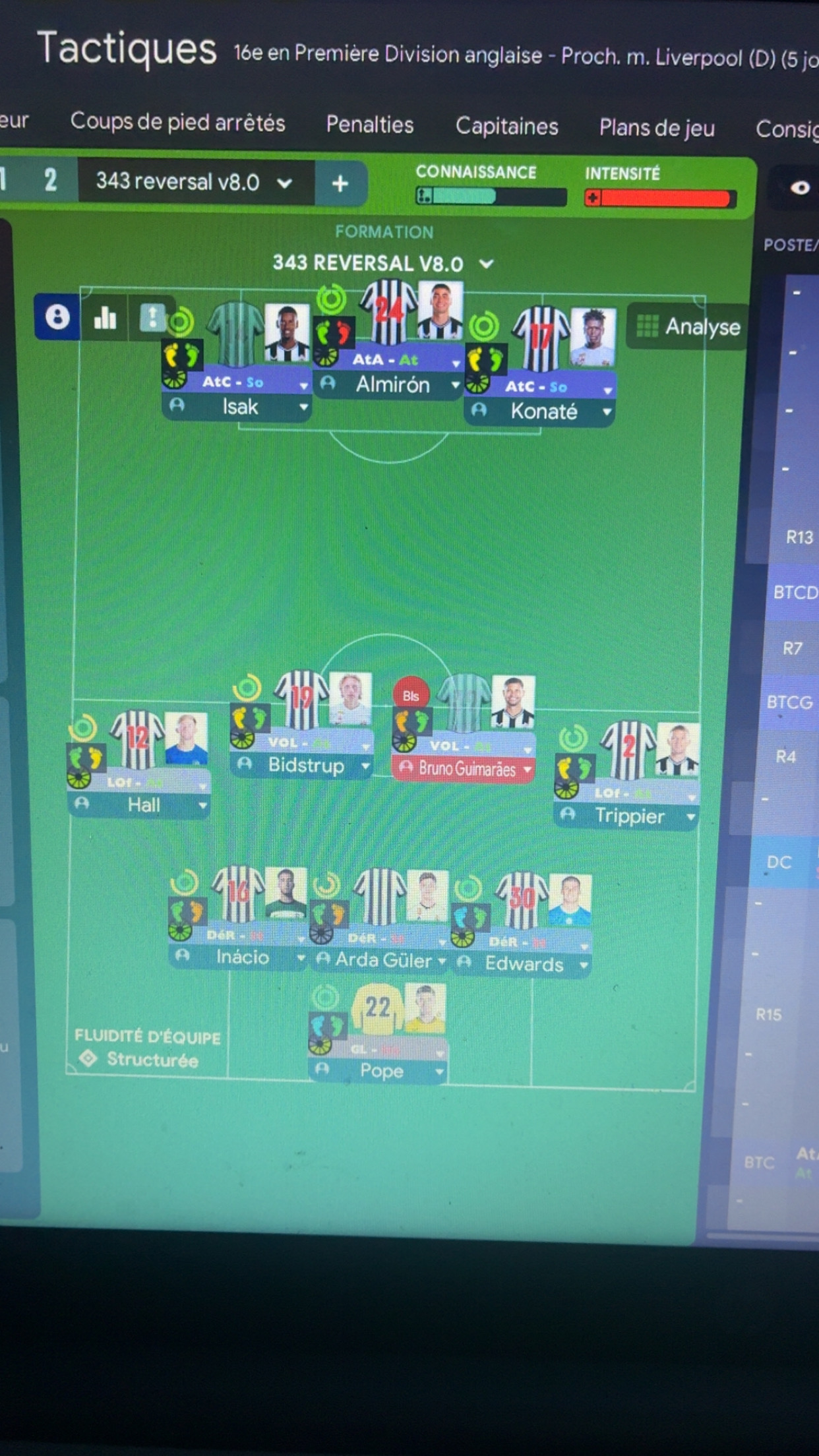
More Structured tactics
Guides for this formation
The tactical theory behind the 4-2-3-1: roles, instructions, and the trade-offs that decide whether the system holds up.
Player pairings
Midfield Pairs in 4-2-3-1 and 4-4-2
Double pivots and flat pairs in 4-2-3-1 and 4-4-2: when each pairing works, when it collapses, and the AMC unicorn that rescues both.
Read guide
Playing styles
Gegenpressing: A Full Guide
Klopp-style gegenpressing in FM, including squad profile, line-and-press pairing, sustainable workload, and the antipatterns to avoid.
Read guide