Uploaded Tactic
Formation & Style
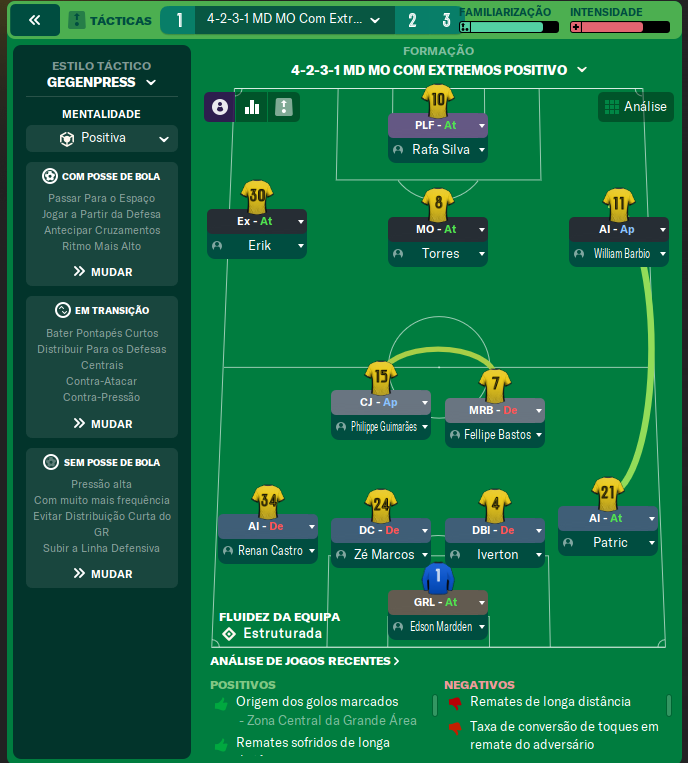
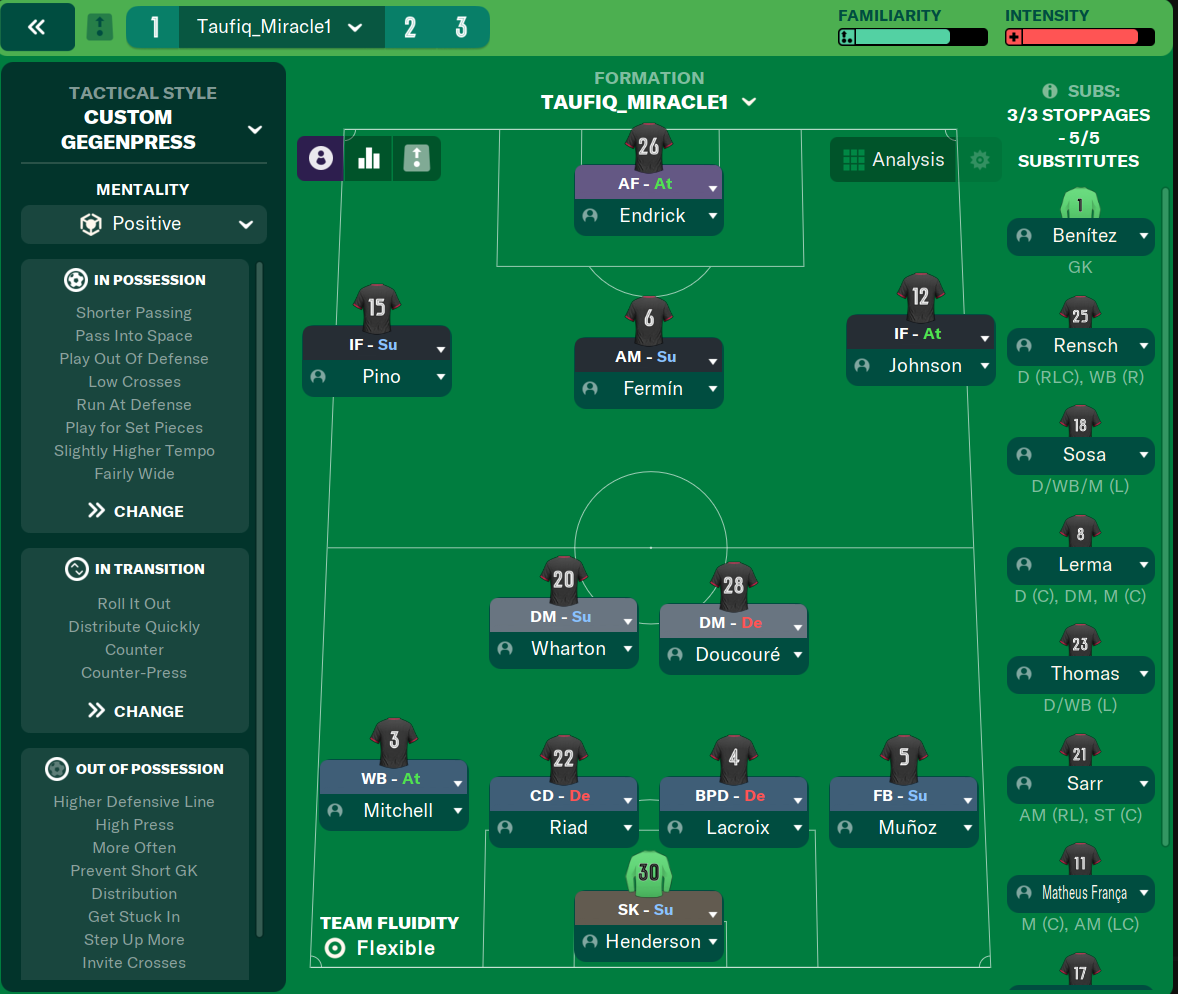
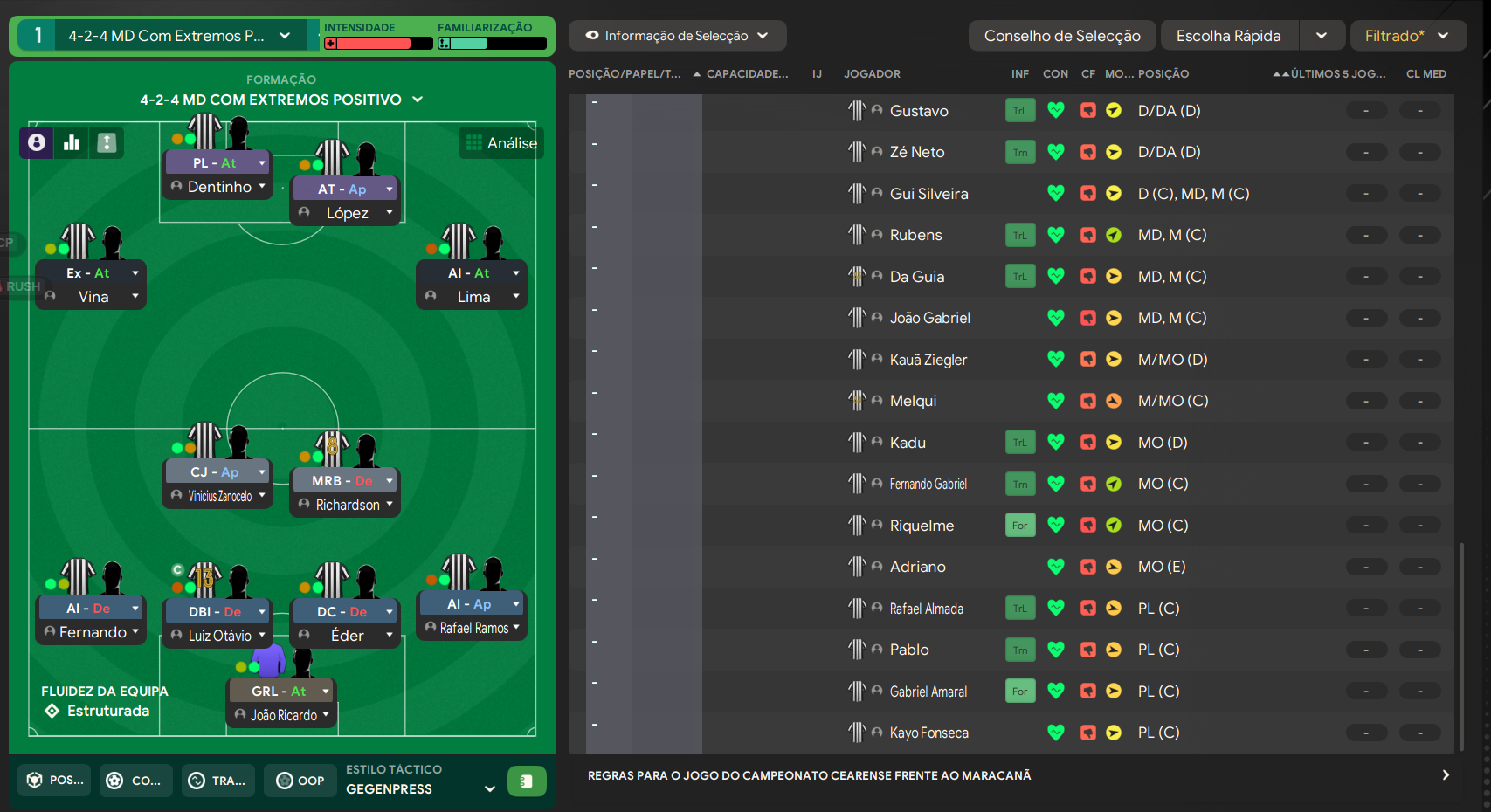
Tactical Style:Gegenpress
Mentality:Positive
Formation:4-2-3-1
Team Fluidity:Estruturada
In Possession
Passar Para o Espaço
Jogar a Partir da Defesa
Antecipar Cruzamentos
Ritmo Mais Alto
In Transition
Bater Pontapés Curtos
Distribuir Para as Defesas Centrais
Contra-Ataque
Contra-Pressão
Out of Possession
Pressão alta
Com muita frequência
Evitar Distribuição Curta do GR
Subir a Linha Defensiva
Team Shape Without Ball
Shape:4-2
Description:Compact defensive structure with midfielders assisting in defence.
Evidence:Two central defenders at [2,2] and [2,3] support by two full-backs at [2,1] and [2,5] with one deep-lying playmaker at [3,3].
Team Shape With Ball
Shape:4-3
Description:Dynamic offensive play with an emphasis on width and combining play between midfielders and forwards.
Evidence:Three advanced players at [6,2] (PF), [6,3] (AM), and [6,4] (IF) supported by the attacking midfielder at [5,3].
Phase Description
Attacking Play
Utilizes quick passing and movement, emphasizing width and space creation for forwards.
Defensive Transition
Quick to regain possession through high pressing and immediate counter-pressing after losing the ball.
Main Focus
Strengthening central attacks while maintaining the ability to exploit wide areas.
Key Strengths
High Pressing Effectiveness
The team applies constant pressure on opposing players, winning the ball back quickly.
Wide Play Exploitation
Utilizes the full-backs to create width and space for the forwards.
Combination Play
Effective interplay between midfield and attack maximizes goal-scoring opportunities.
Conflicting Directions
Overcommitting to Attack
The positive mentality encourages attacking play, which might leave the defense exposed.
Defensive Vulnerabilities
Potential vulnerabilities in counter-attacks due to high defensive line.
Width vs. Central Play
Striking a balance between utilizing width and effective central attacks can be challenging.
Tactical Suggestions
Tactical Adjustments
Consider adjusting the defensive line if opponents are strong on counter-attacks.
Midfield Rotation
Encourage midfielders to interchange positions for unpredictability.
Utilizing Substitutions
Incorporate fresh legs, especially for wingers and midfielders, in late-game scenarios.
Ask Questions About Your Lineup
Related Tactics
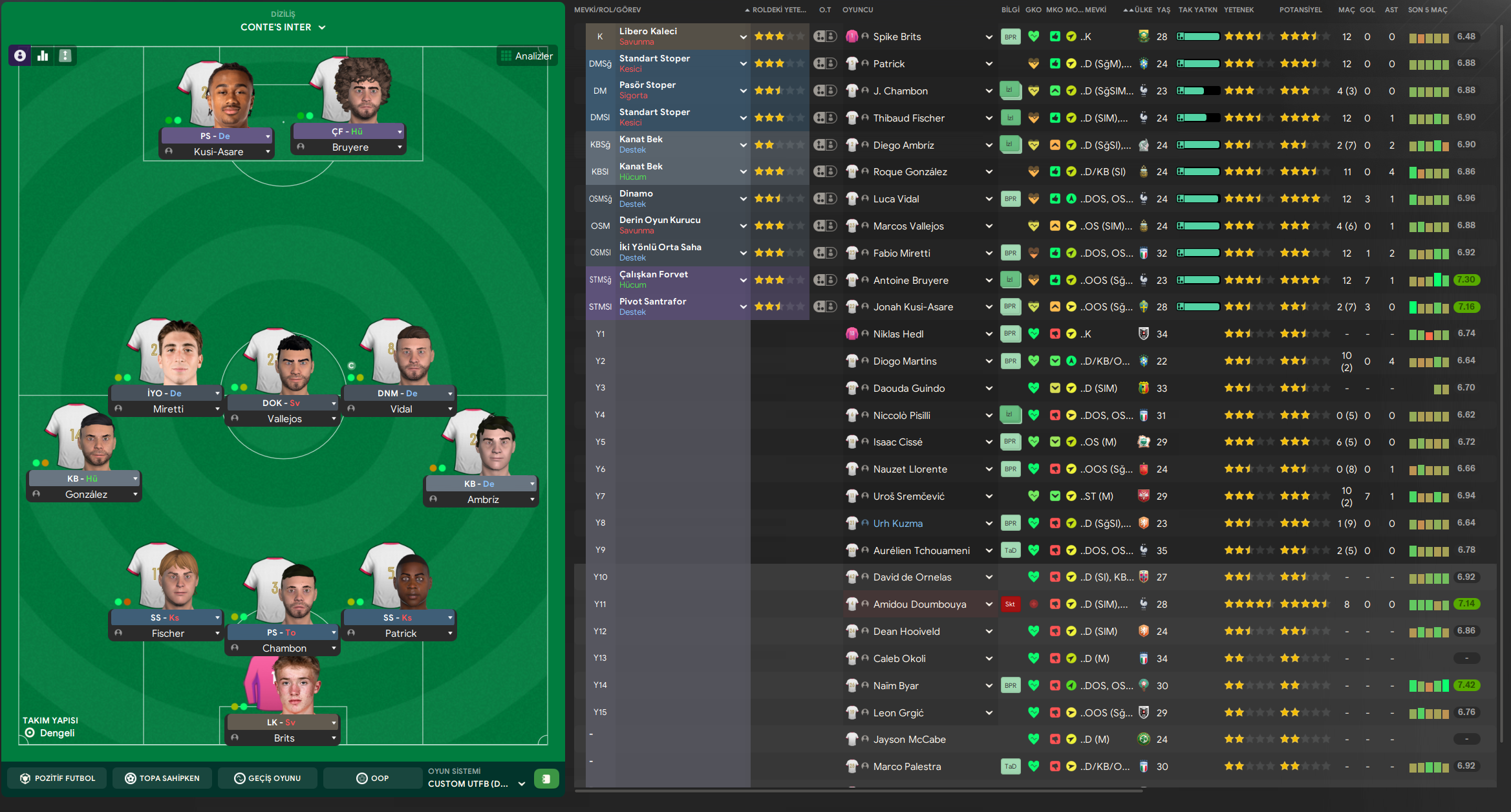
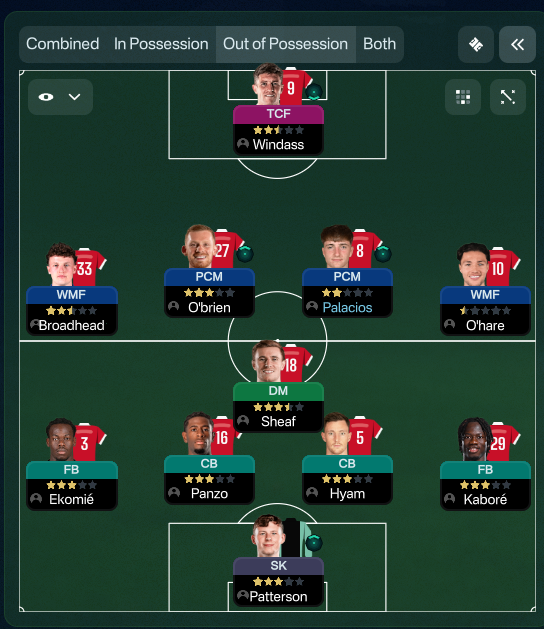
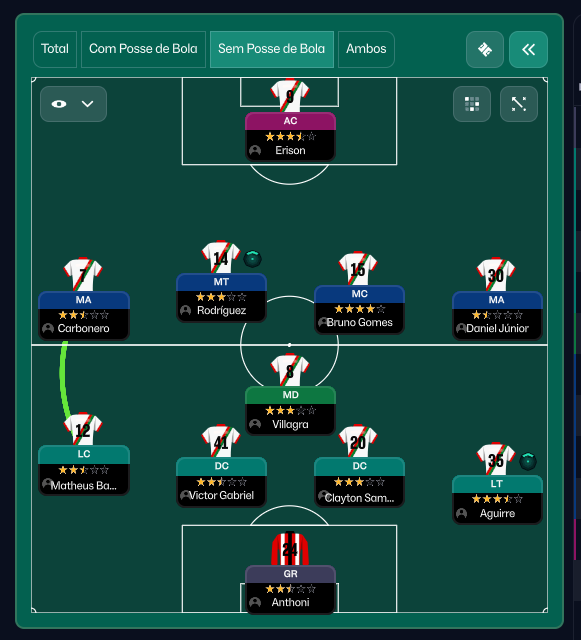
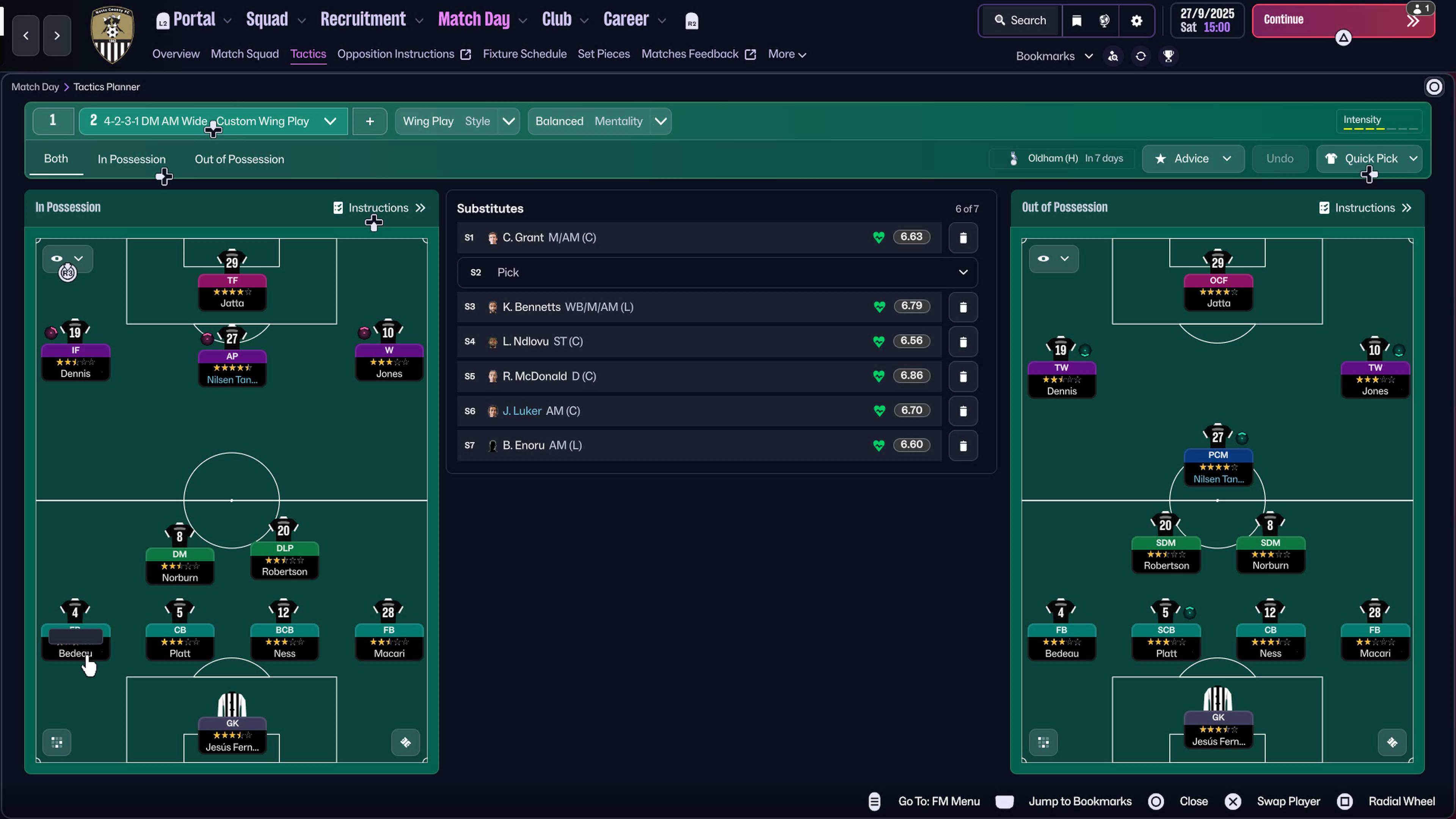
More Gegenpress tactics
Guides for this formation
The tactical theory behind the 4-2-3-1: roles, instructions, and the trade-offs that decide whether the system holds up.
Player pairings
Midfield Pairs in 4-2-3-1 and 4-4-2
Double pivots and flat pairs in 4-2-3-1 and 4-4-2: when each pairing works, when it collapses, and the AMC unicorn that rescues both.
Read guide
Playing styles
Gegenpressing: A Full Guide
Klopp-style gegenpressing in FM, including squad profile, line-and-press pairing, sustainable workload, and the antipatterns to avoid.
Read guide