Uploaded Tactic
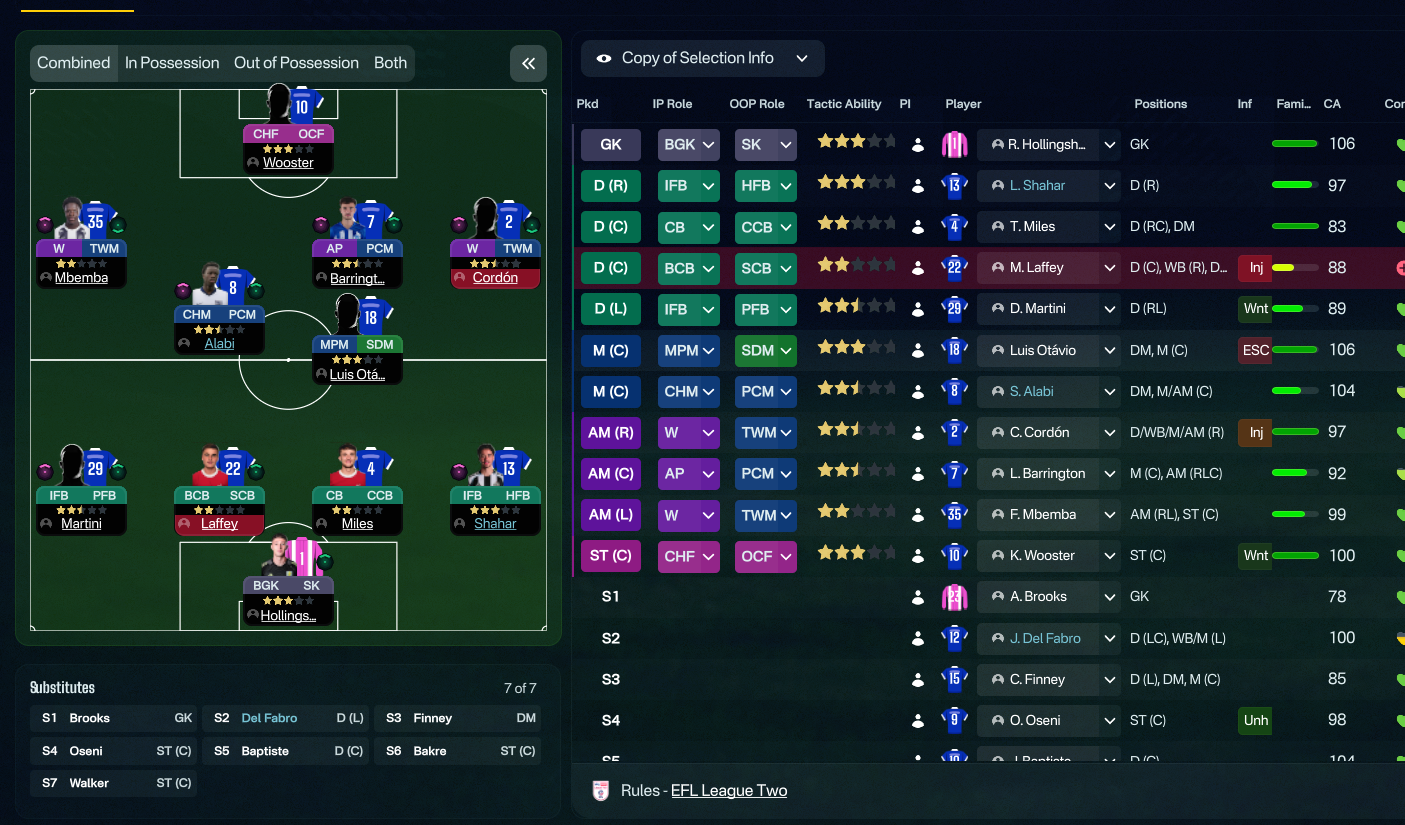
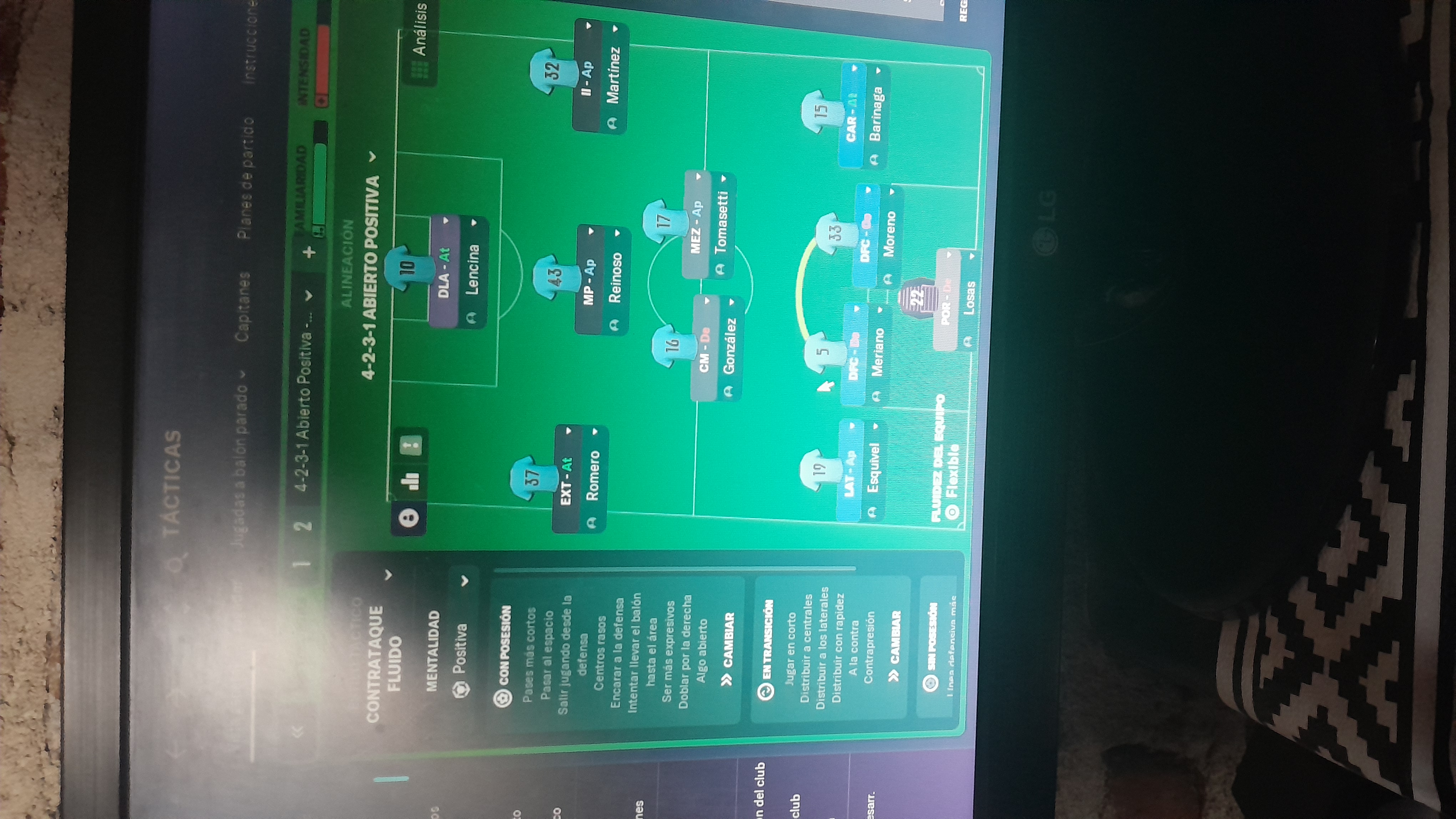
Formation & Style
Tactical Style:Balanced
Mentality:Positive
Formation:4-2-3-1
Team Fluidity:Fluid
In Possession
Play Out of Defence
Be More Expressive
Work Ball Into Box
In Transition
Counter-Press
Counter
Out of Possession
Higher Defensive Line
Higher Line of Engagement
Prevent Short GK Distribution
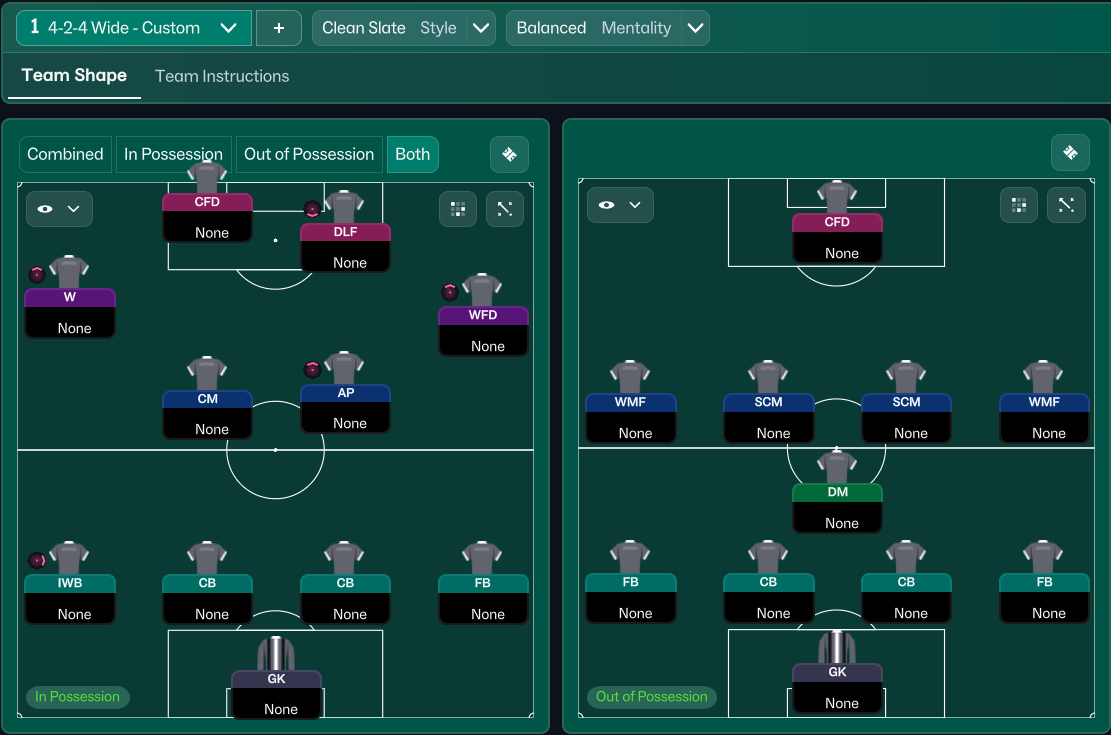
Team Shape Without Ball
Shape:4-2
Description:A compact midblock with two tight midfielders offering support to the defense.
Evidence:Higher Defensive Line with BPD providing forward passing options.
Team Shape With Ball
Shape:4-3
Description:Utilization of width through wingers and creative play from the central advanced midfielder.
Evidence:Wingers on both flanks with AP pulling strings centrally.
Phase Description
Attacking Play
Focuses on building from the back with the BPD in play. The wingers provide width while the AM works in the central space to create chances.
Defensive Transition
Team aims to regain possession quickly, pressing high to disrupt opponent buildup.
Main Focus
Creating width through wingers while using central plays to capitalize on opposition gaps.
Key Strengths
Wide Attack Options
Wingers are positioned to stretch the opponent's defense, allowing for penetration in central areas.
Dynamic Midfield
Two central midfielders provide versatility between defense and attack.
Ball Distribution
The presence of a Ball-Playing Defender enhances buildup play.
Conflicting Directions
Potential Overload on Flanks
With two attacking wingers, there may be situations where central attackers lack support.
Inverted Full-Back Role Conflict
The attack-focused inverted full-back may leave gaps if not properly coordinated with central defenders.
High Line Risks
A higher defensive line might lead to vulnerability against fast counter-attacks.
Tactical Suggestions
Consider Deeper Defensive Line
To protect against fast counter-attacks, shifting to a medium defensive line could yield better results.
Explore a DLP Role
Adding a Deep-Lying Playmaker could help in controlling the midfield better.
Incorporate a Target Man
Especially in longer balls, a target man could provide a pivot for build-ups.
Ask Questions About Your Lineup
Related Tactics
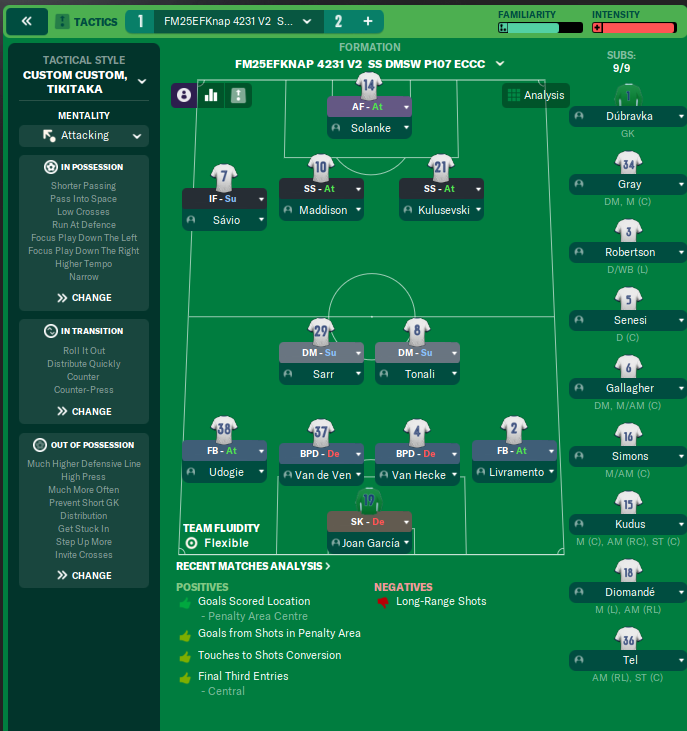
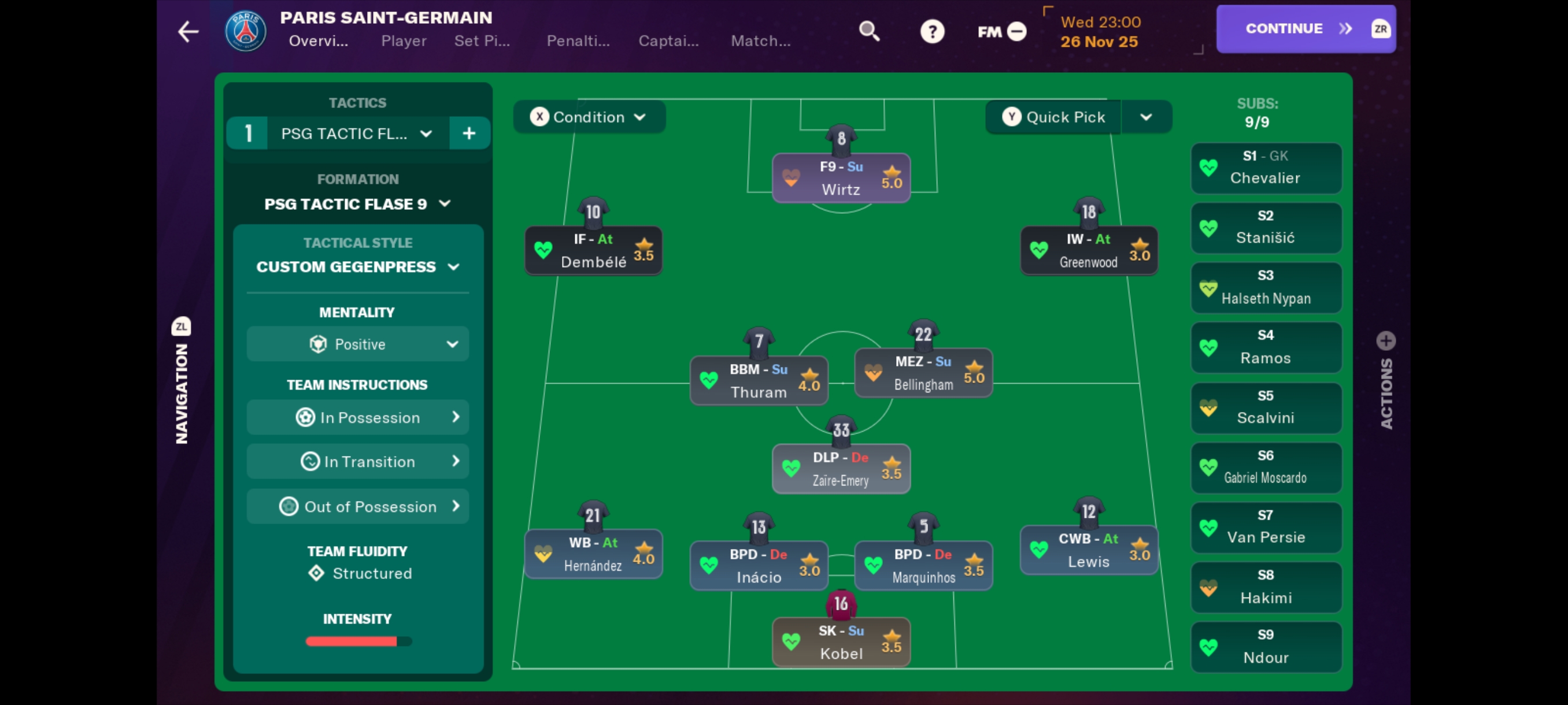
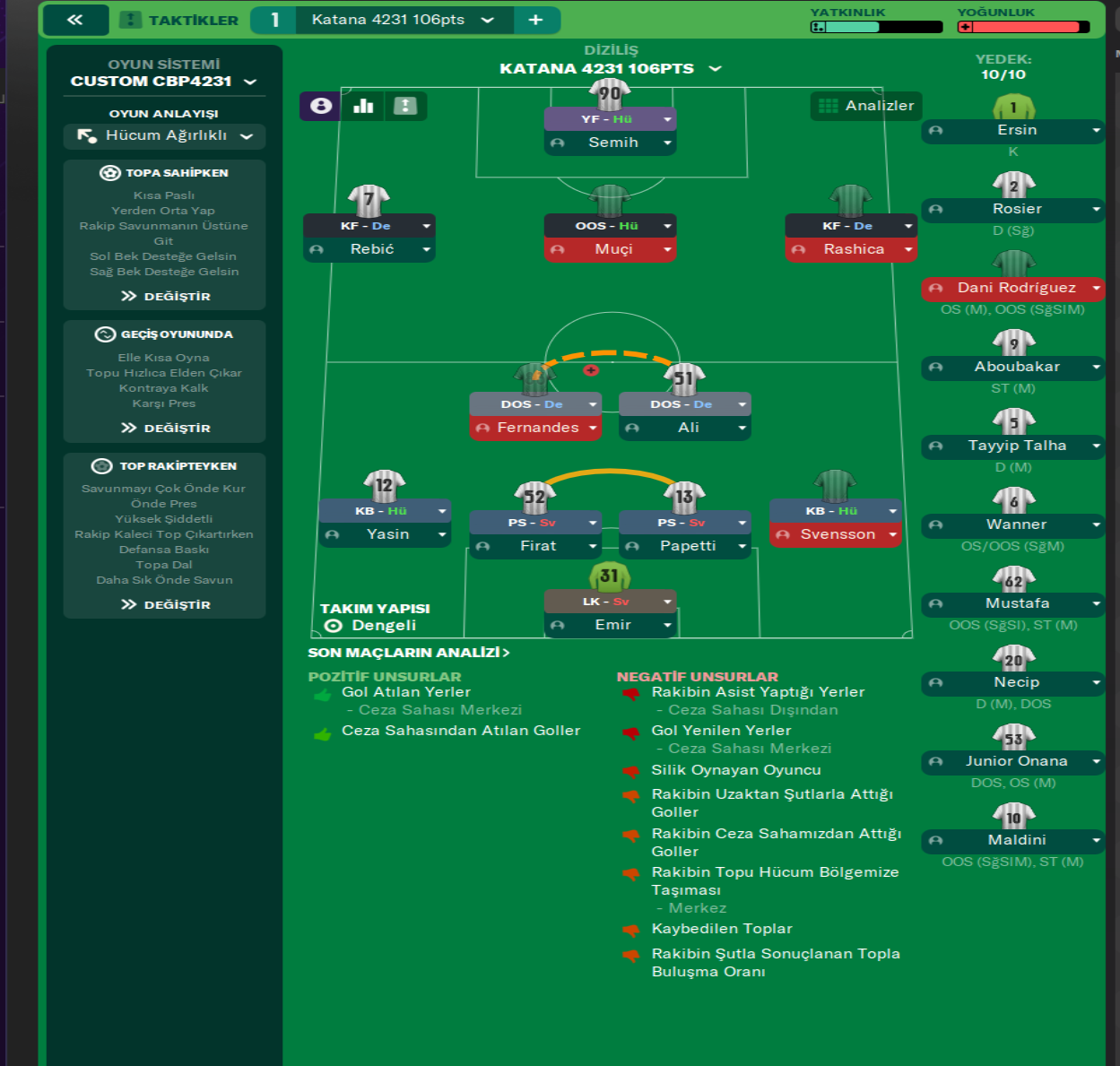
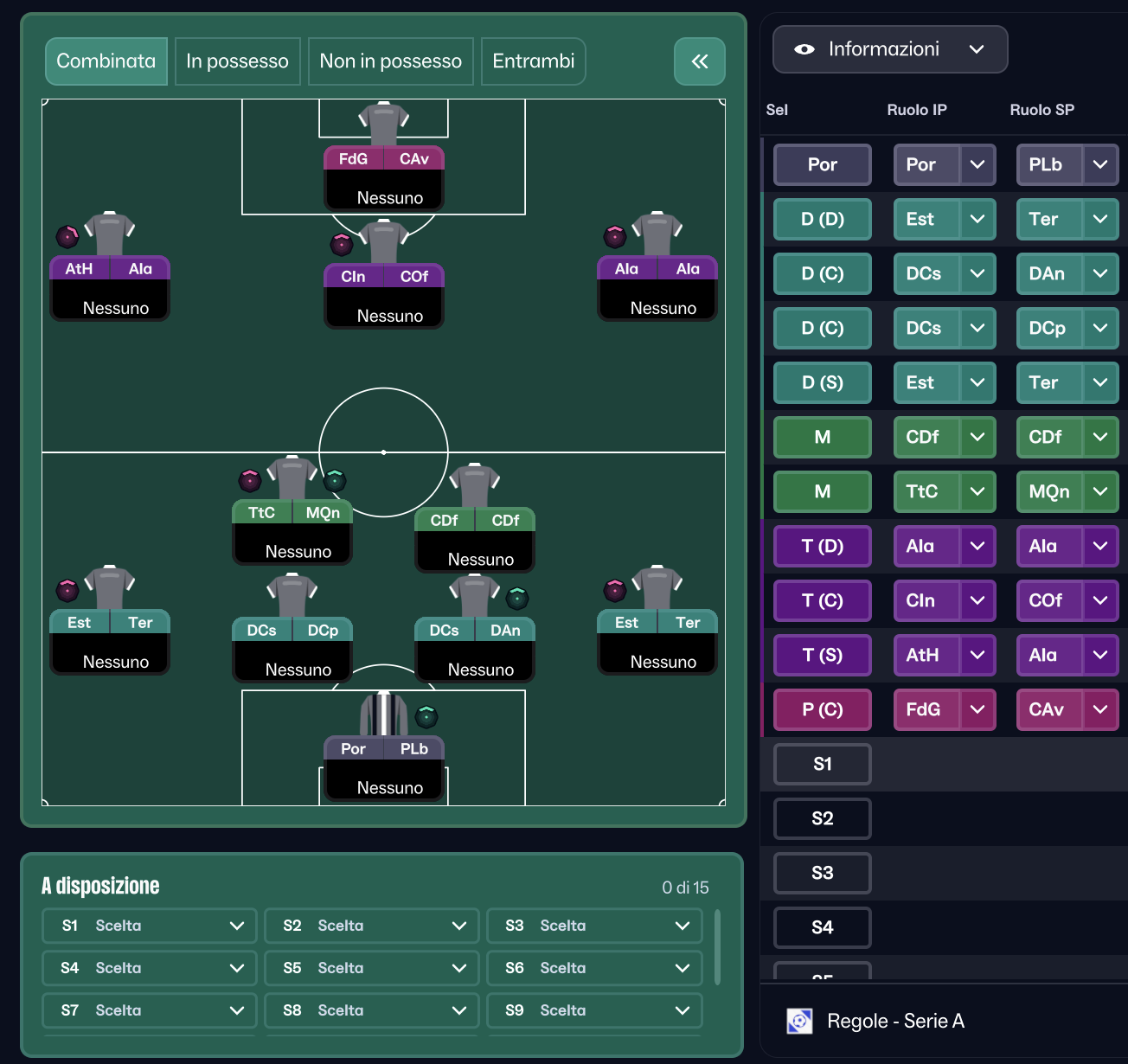
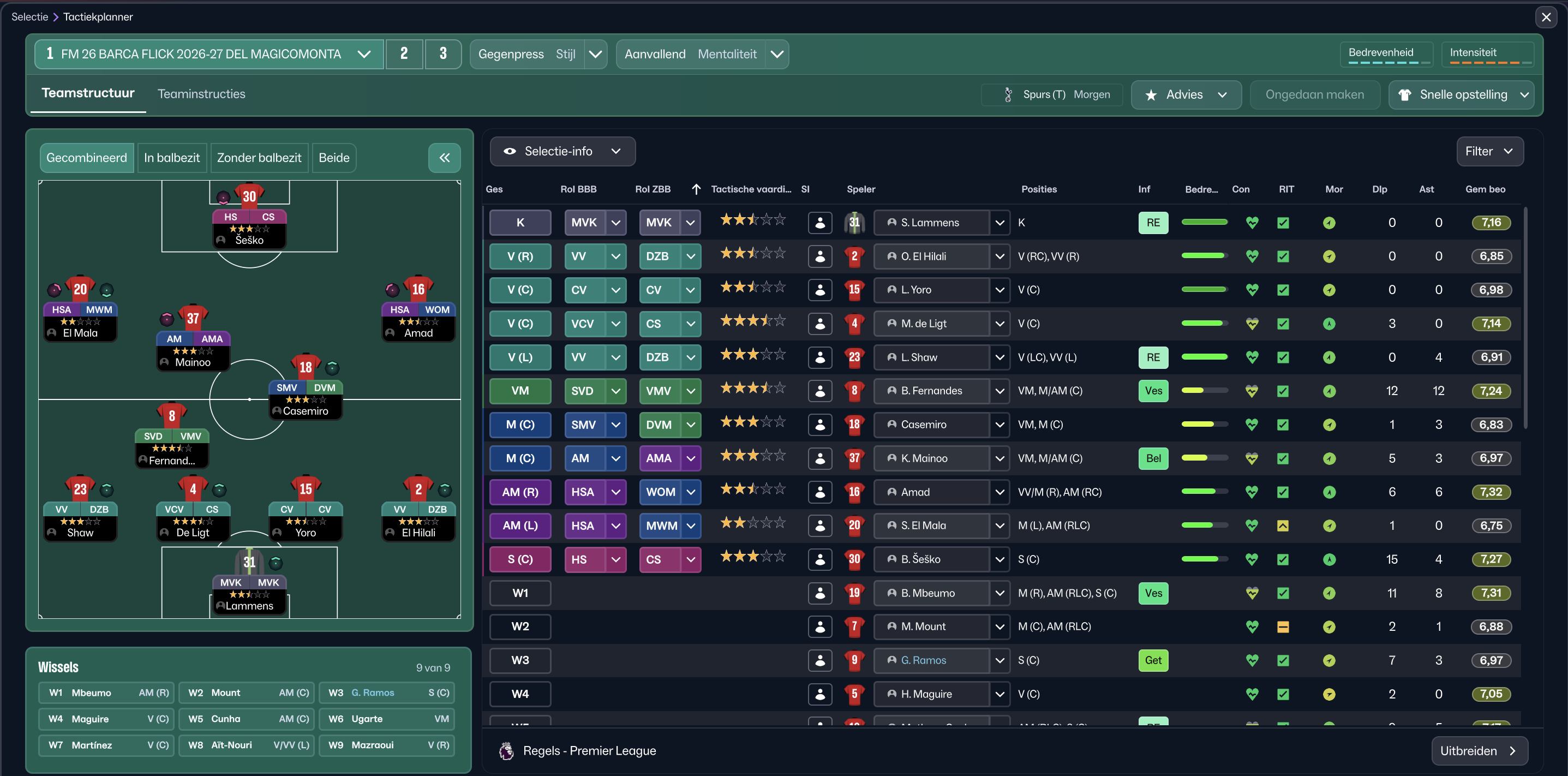
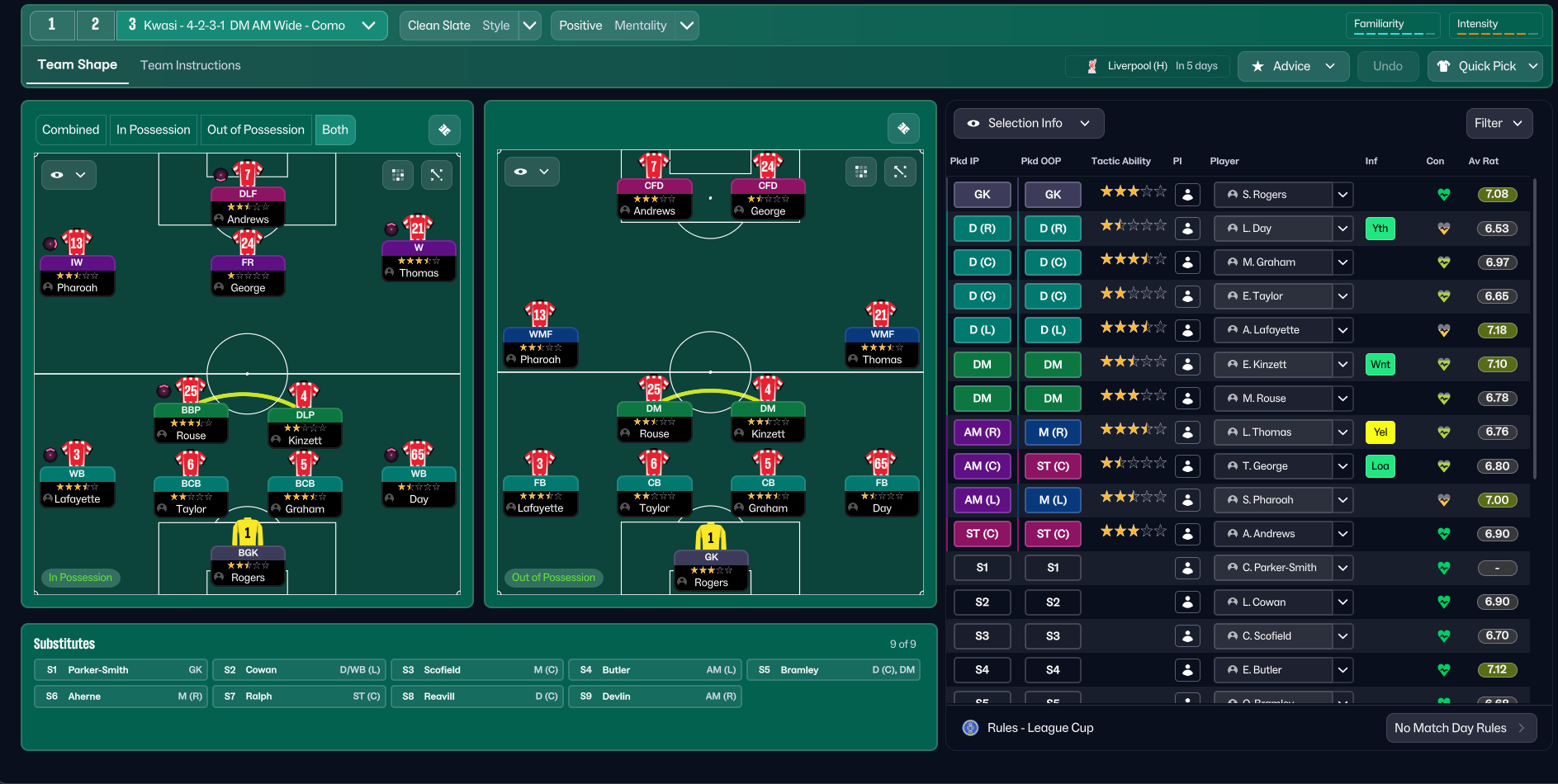
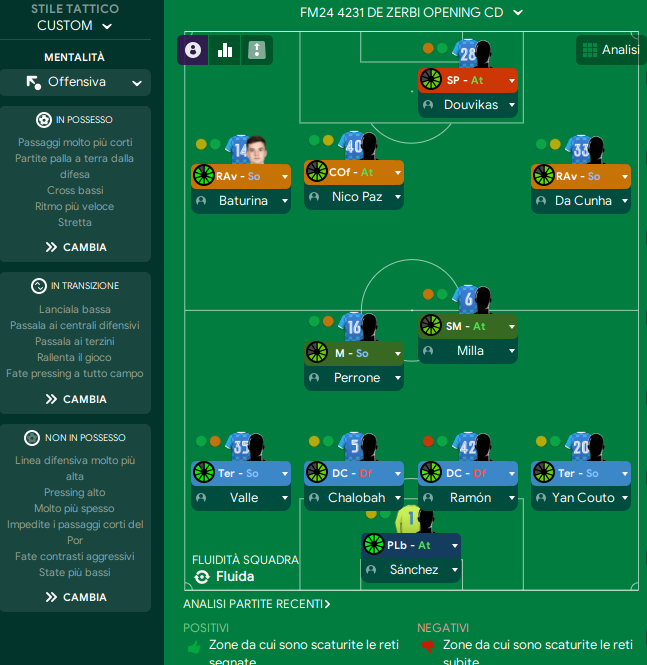
More Balanced tactics
Guides for this formation
The tactical theory behind the 4-2-3-1: roles, instructions, and the trade-offs that decide whether the system holds up.
Player pairings
Midfield Pairs in 4-2-3-1 and 4-4-2
Double pivots and flat pairs in 4-2-3-1 and 4-4-2: when each pairing works, when it collapses, and the AMC unicorn that rescues both.
Read guide
Playing styles
Gegenpressing: A Full Guide
Klopp-style gegenpressing in FM, including squad profile, line-and-press pairing, sustainable workload, and the antipatterns to avoid.
Read guide