Uploaded Tactic
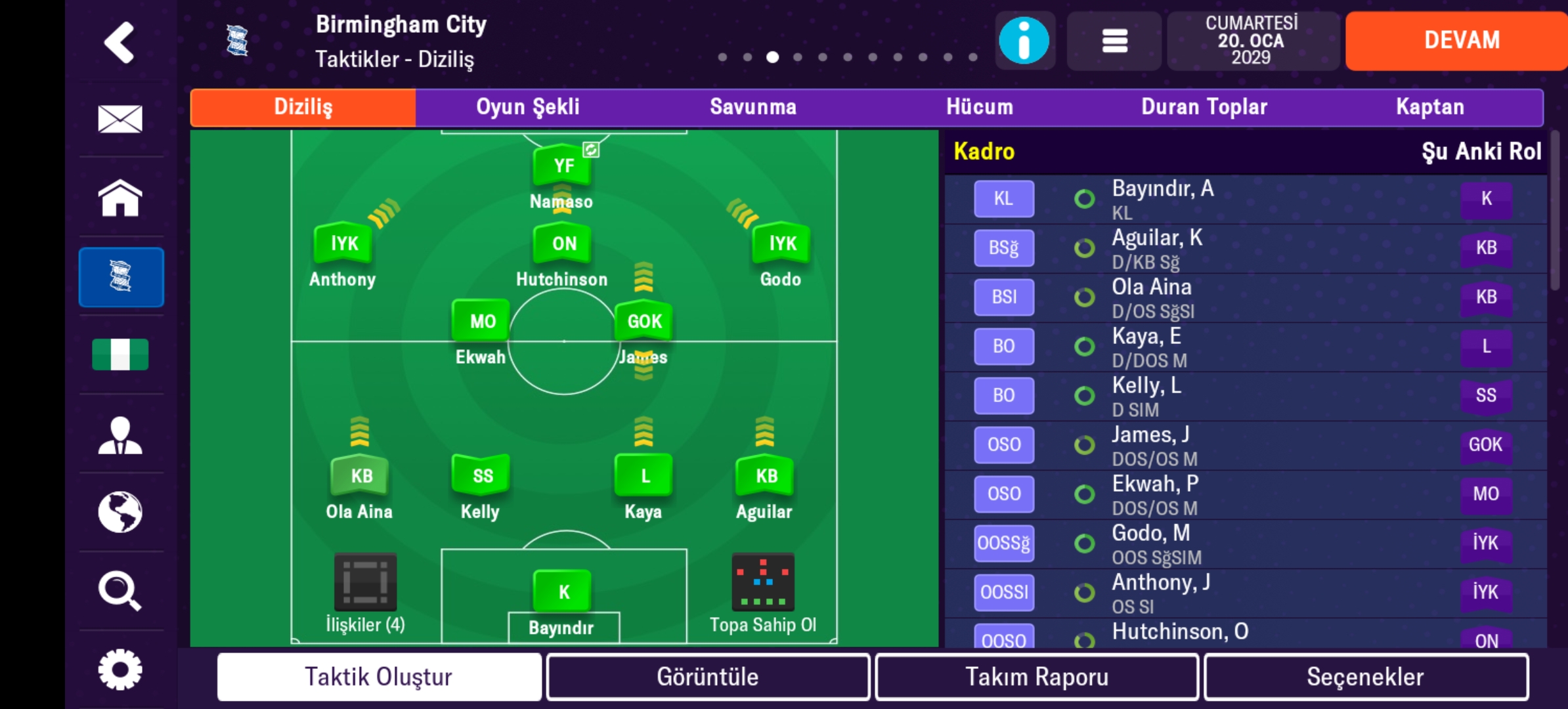
Formation & Style
Tactical Style:Balanced
Mentality:Positive
Formation:4-2-3-1
Team Fluidity:Structured
In Possession
Focus on wide play with Inside Forwards (IF) cutting in.
Encourage overlapping runs from Full-Backs (FB).
Utilize the Advanced Playmaker (AP) for creative passing in the final third.
In Transition
Counter-press immediately upon losing possession.
Quick transitions with the Advanced Forward (AF) leading the line.
Out of Possession
Employ a medium block to regain possession.
Prioritize closing down space for opposition attackers.
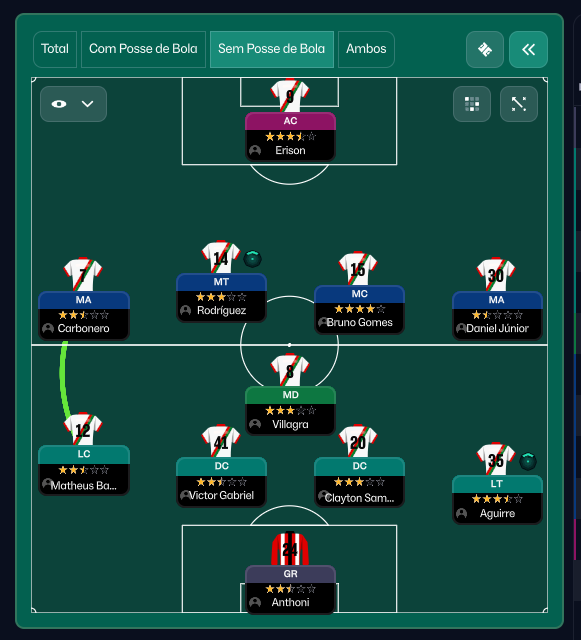
Team Shape Without Ball
Shape:4-2-3-1
Description:Defensive setup with a medium block preventing direct penetration.
Evidence:Two defensive midfielders (BWM-S at [3,3] and AP-S at [3,4]) and a flat back four.
Team Shape With Ball
Shape:4-2-3-1
Description:Flexible attacking shape with wingers cutting inside and a central striker looking for space.
Evidence:Inside Forwards (IF-A at [5,2] and [5,4]) creating overlaps with Full-Backs.
Phase Description
Attacking Play
Utilizing width to stretch the opponent's defense while maintaining fluid movement from the midfield to create opportunities.
Defensive Transition
Players quickly regroup to a solid midfield and defensive structure upon losing possession.
Main Focus
Creating scoring opportunities through overlapping runs and central attacking plays.
Key Strengths
Attacking Width
Utilizing Inside Forwards allows for excellent width and space occupation.
Defensive Solidity
The two Centre-Backs and the Ball-Winning Midfielder provide a strong defensive foundation.
Transition Speed
Quick transitions from defense to attack with the Advanced Forward leading.
Conflicting Directions
Overreliance on Width
Excessive focus on wide play could lead to central congestion.
Pressing Vulnerabilities
While pressing, the setup could leave gaps in the midfield.
Lack of Depth in Midfield
Limited options in midfield when build-up is stalled.
Tactical Suggestions
Balanced Midfield Shape
Consider adding a more dynamic midfielder or changing the role of one CM to increase versatility.
Adjust Defensive Instructions
Tweaking the defensive line to prevent high through balls could strengthen back line.
Utilize Substitutions
Make tactical changes in the second half to maintain fitness and exploit the opposition’s fatigue.
Ask Questions About Your Lineup
Related Tactics
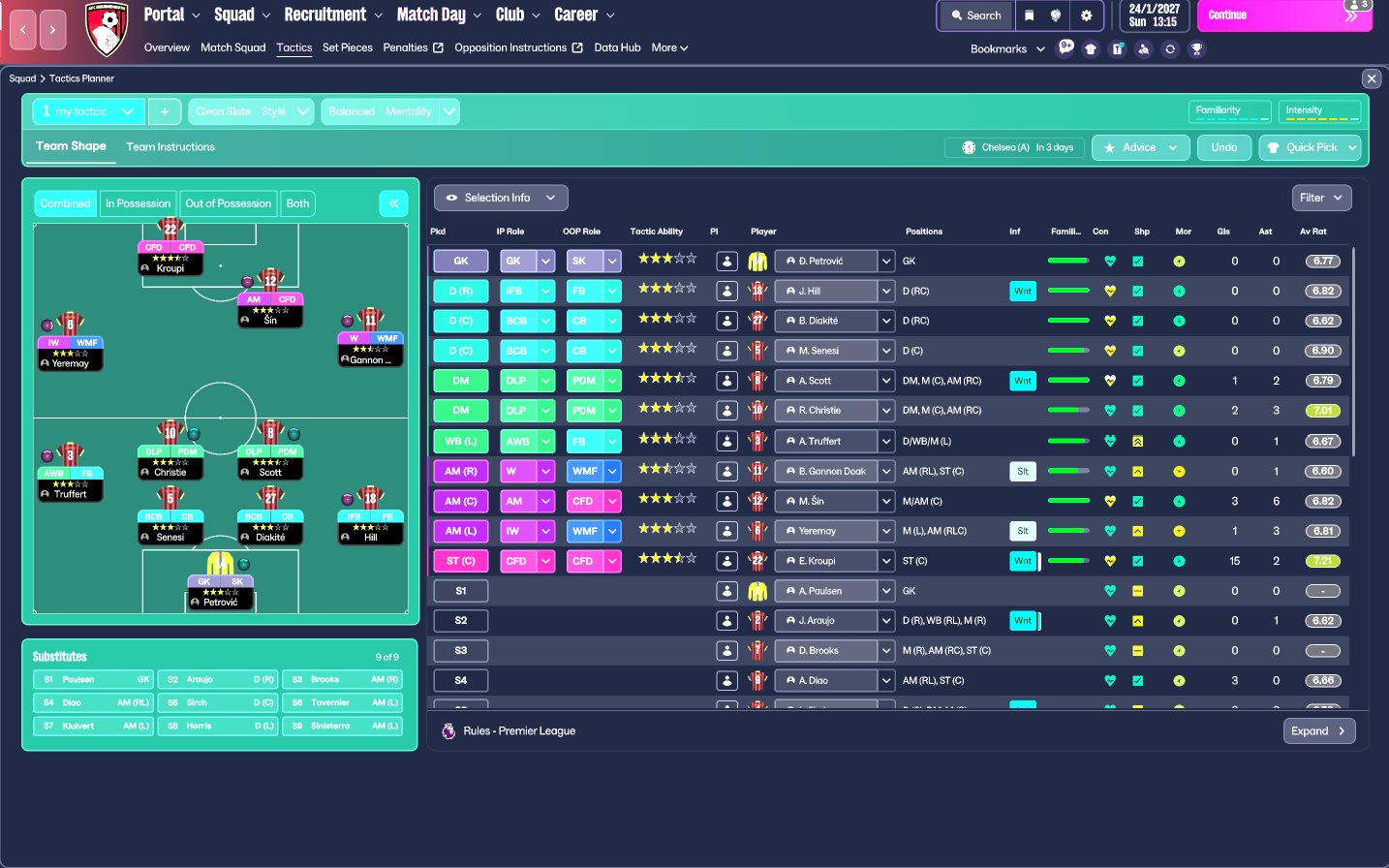
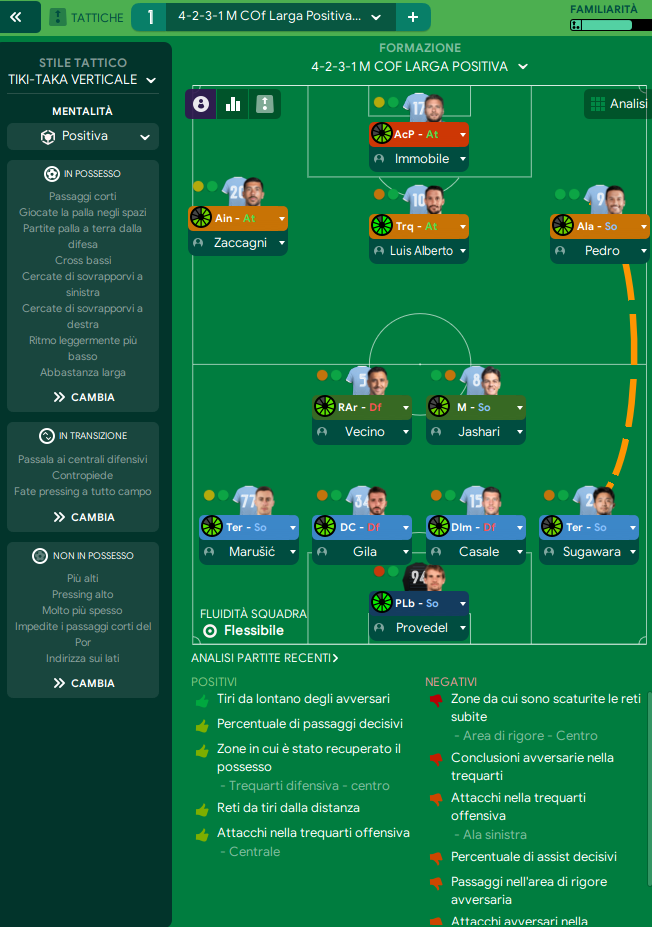
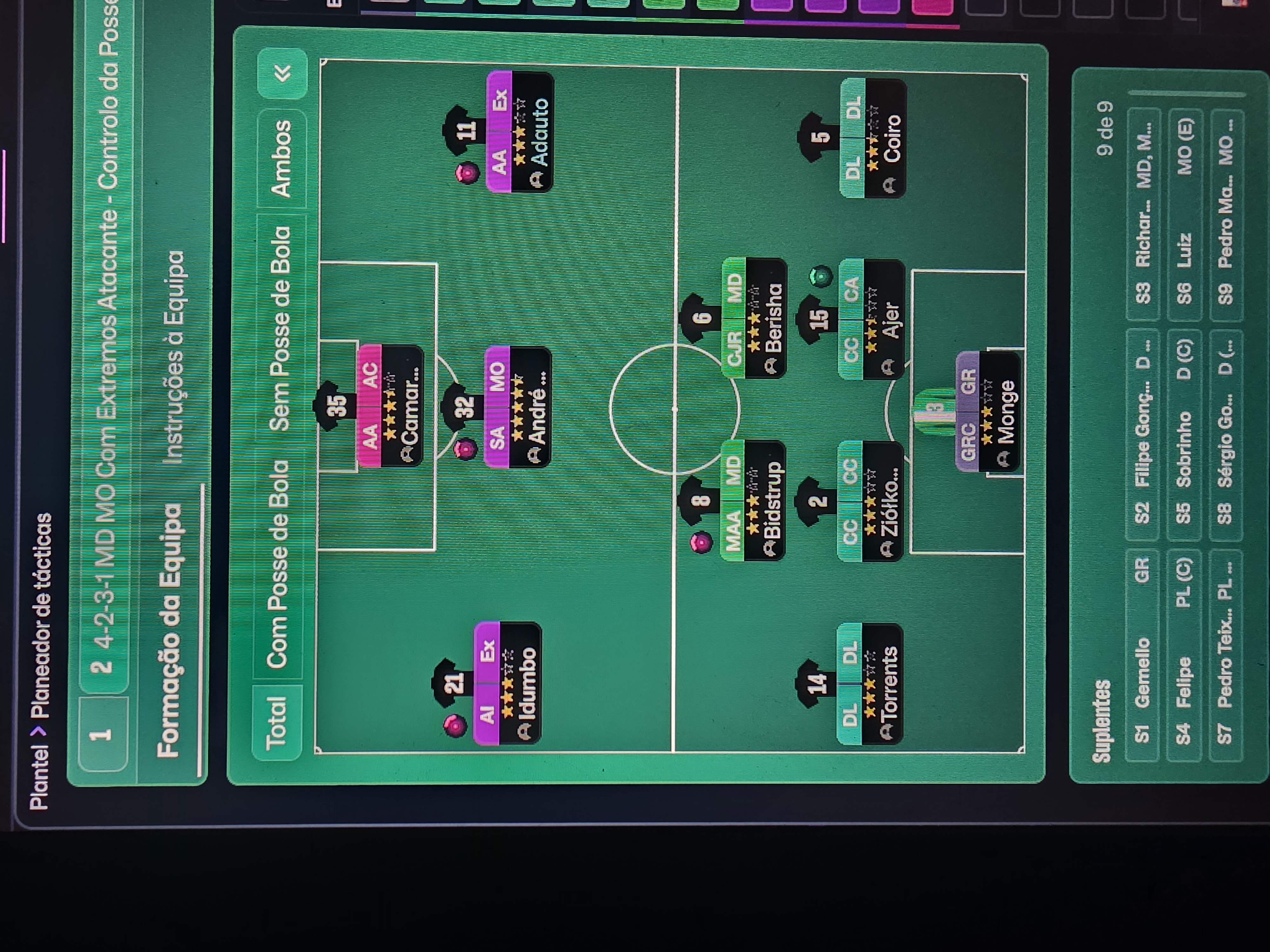
Guides for this formation
The tactical theory behind the 4-2-3-1: roles, instructions, and the trade-offs that decide whether the system holds up.
Player pairings
Midfield Pairs in 4-2-3-1 and 4-4-2
Double pivots and flat pairs in 4-2-3-1 and 4-4-2: when each pairing works, when it collapses, and the AMC unicorn that rescues both.
Read guide
Playing styles
Gegenpressing: A Full Guide
Klopp-style gegenpressing in FM, including squad profile, line-and-press pairing, sustainable workload, and the antipatterns to avoid.
Read guide