Uploaded Tactic
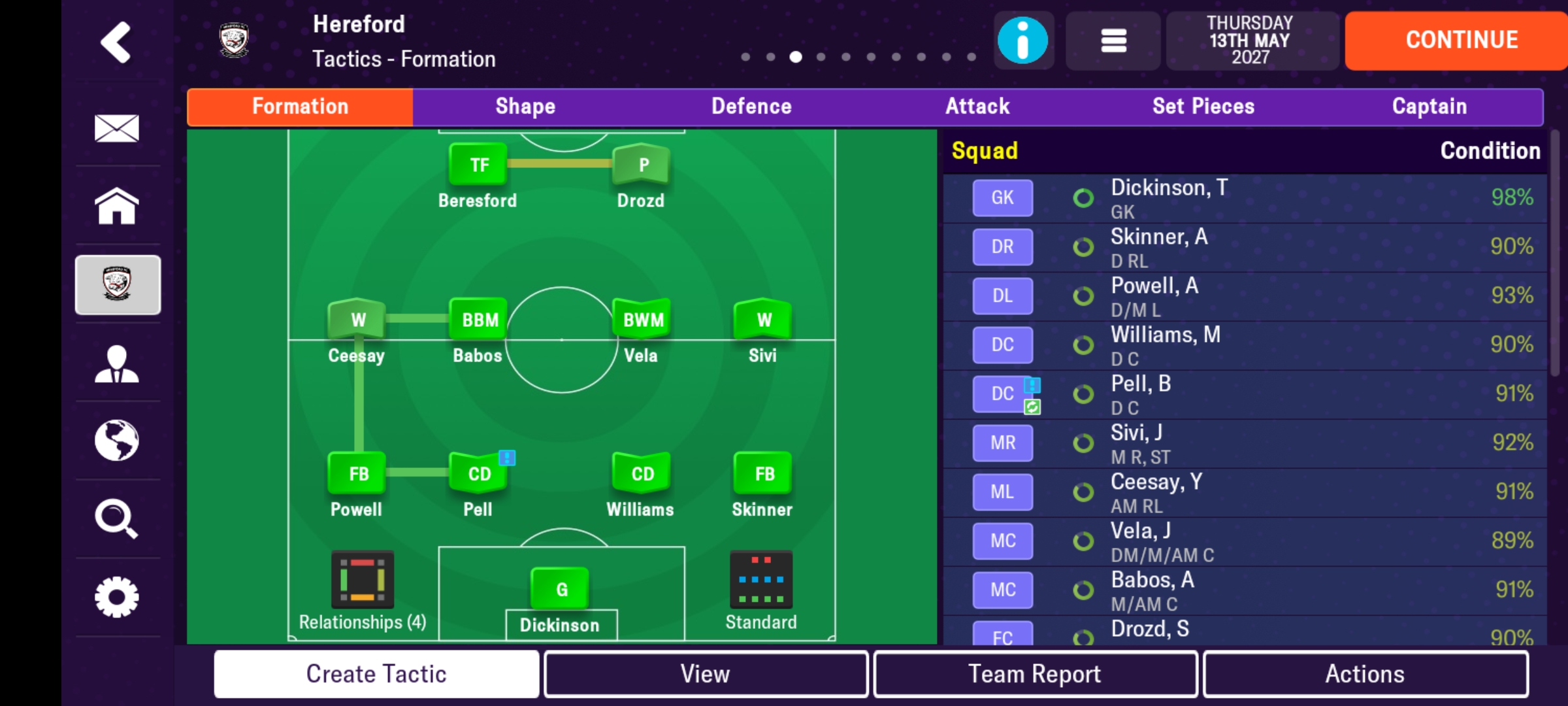
Formation & Style
Tactical Style:Balanced
Mentality:Positive
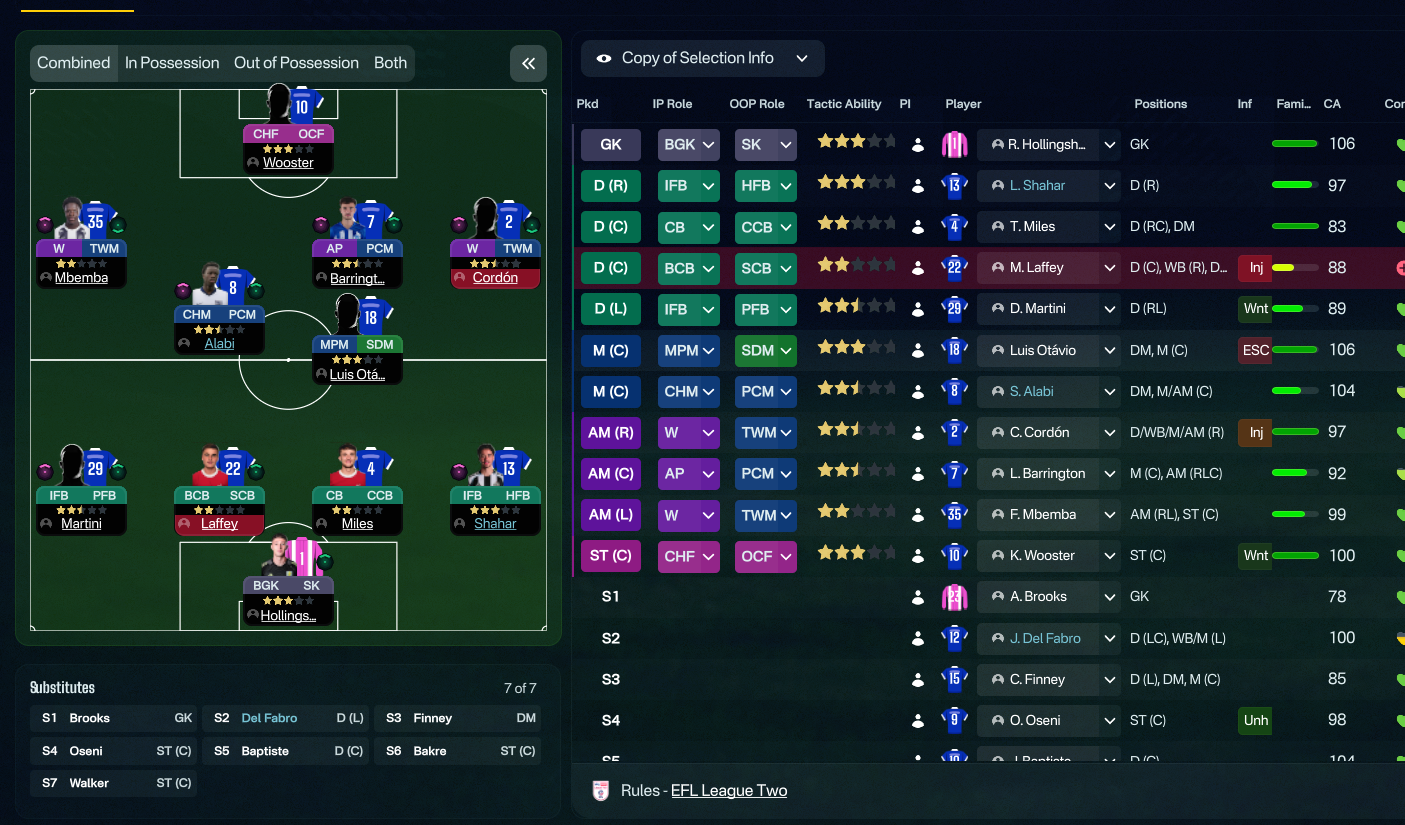
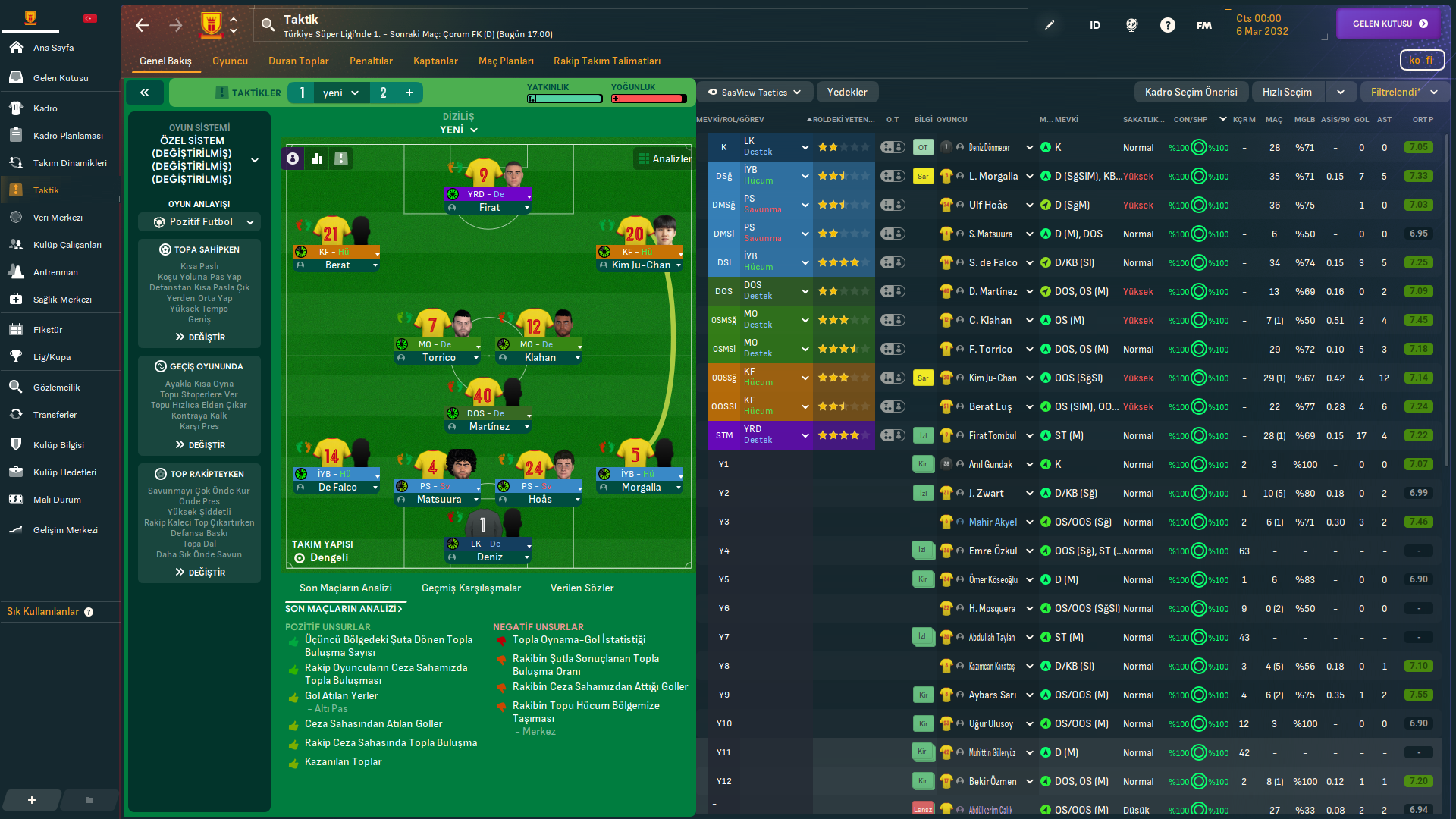
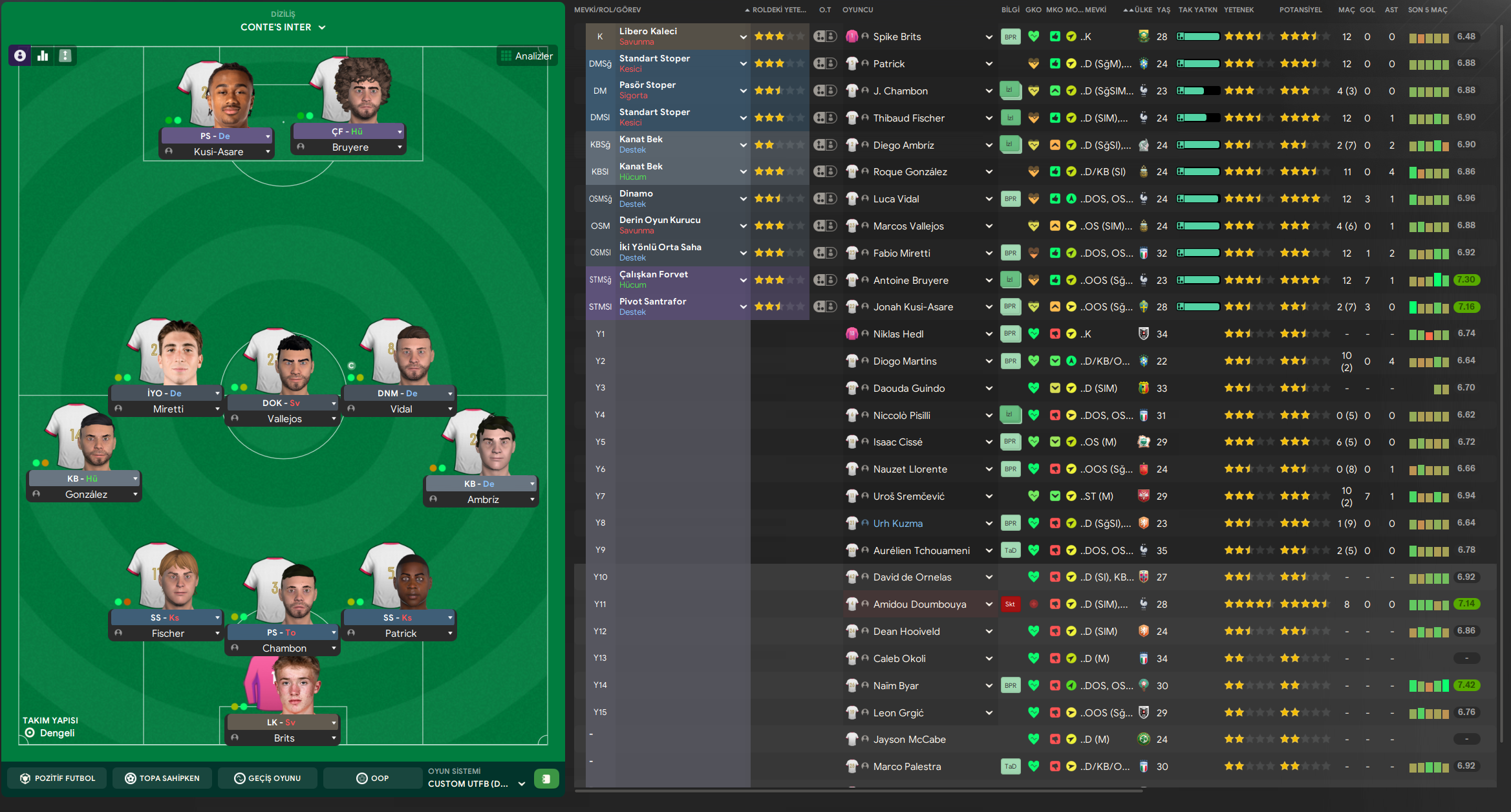
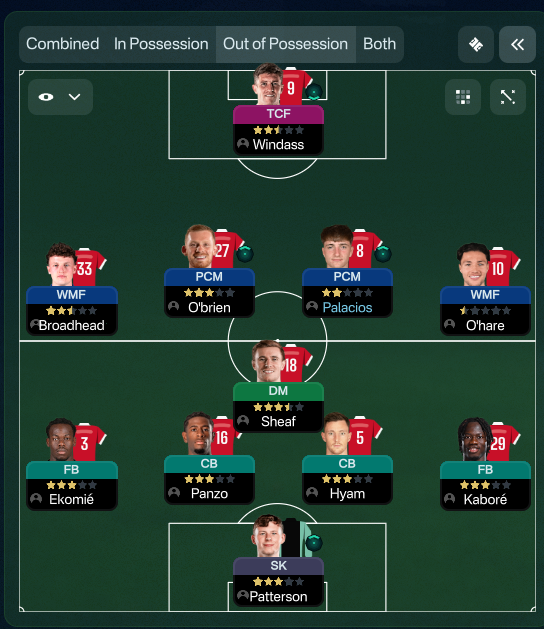
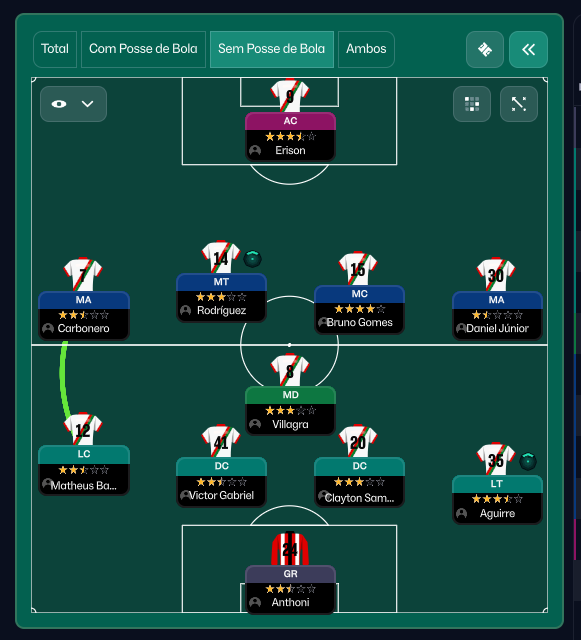
Formation:4-2-3-1
Team Fluidity:Structured
In Possession
Play Out Of Defence
In Transition
Counter
Out of Possession
More Often Prevent Short GK Distribution
Team Shape Without Ball
Shape:Compact
Description:The team maintains a compact shape defensively to limit space for the opponent.
Evidence:FBs at [2,1] and [2,5] supporting central defenders.
Team Shape With Ball
Shape:Wide
Description:Attack focuses on exploiting the flanks with wingers creating crossing opportunities.
Evidence:Wingers (W) positioned at [6,1] and [6,5] stretching the opposition.
Phase Description
Attacking Play
Focus on using width provided by wingers while central midfielders support the attack.
Defensive Transition
Transition quickly to counter pressing when possession is lost.
Main Focus
Leverage wingers for pace and width in the attacking phase.
Key Strengths
Wing Play
Strong use of width from wingers creates space for attacking players.
Midfield Balance
Effective midfield pairing with BWM and BBM allows for both defensive stability and attacking support.
Compact Defence
Defensive shape is compact which minimizes gaps for opponents.
Conflicting Directions
Vulnerable to Counter-Attacks
While pressing high, midfielders may be caught out of position if the ball is lost.
Dependent on Winger Performance
Heavy reliance on wingers to create chances can stifle the attack if they are neutralized.
Weak Central Striking Options
With only one striker, the team may lack depth in the attacking central zone.
Tactical Suggestions
Increase Central Support
Consider adding a more dynamic attacker in the central channel to assist the lone striker.
Adjust Defensive Line
Consider lowering the defensive line to avoid being exposed by fast counter-attacks.
Switch to a 4-3-3
Adopting a third midfielder could improve ball retention and provide more support in buildup phases.
Ask Questions About Your Lineup
Related Tactics
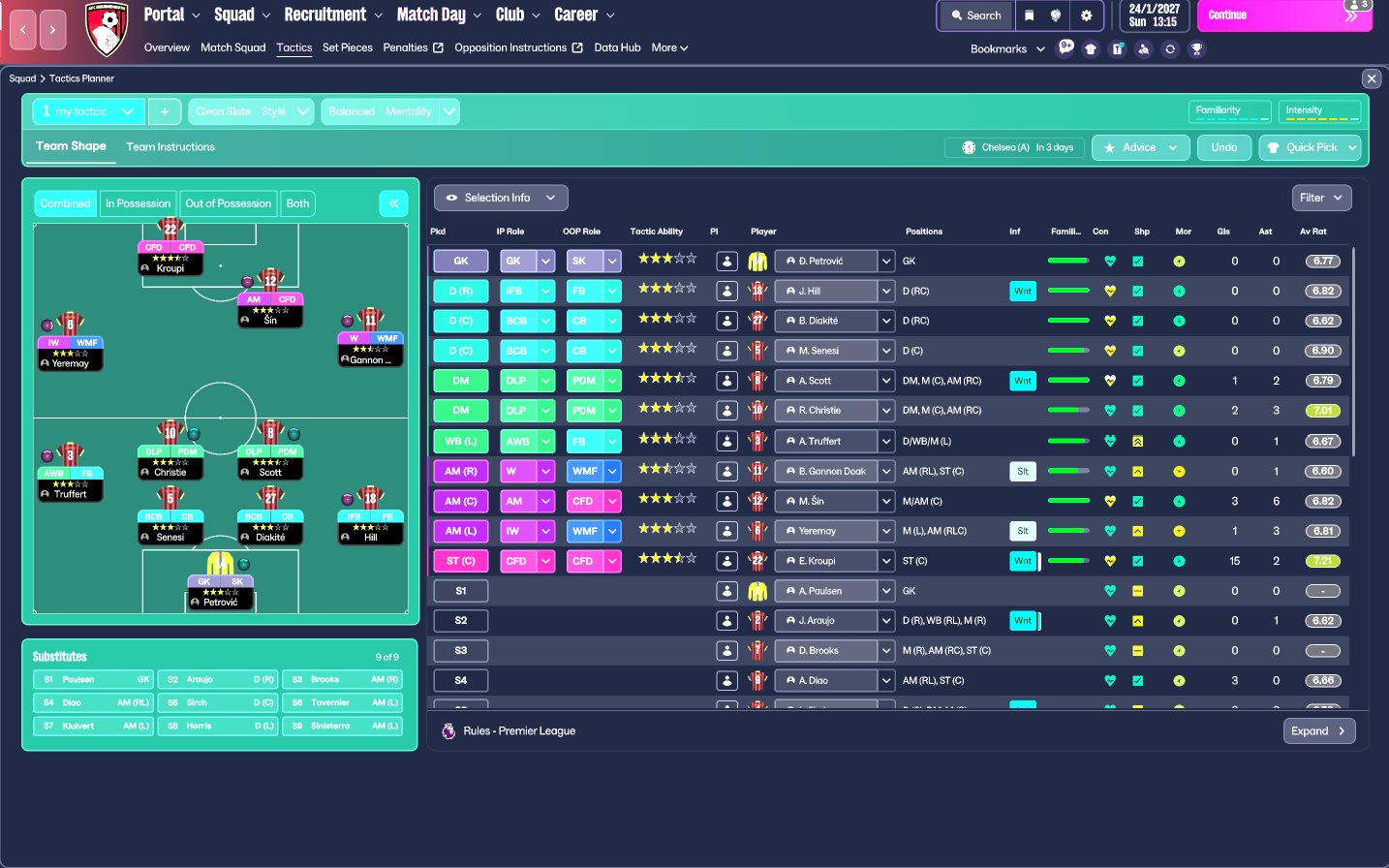
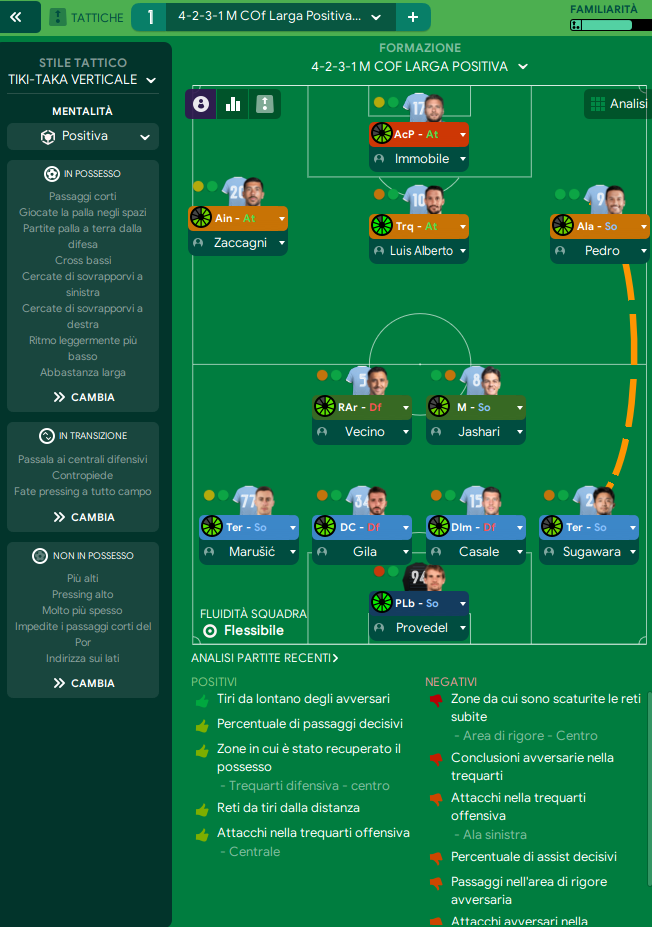
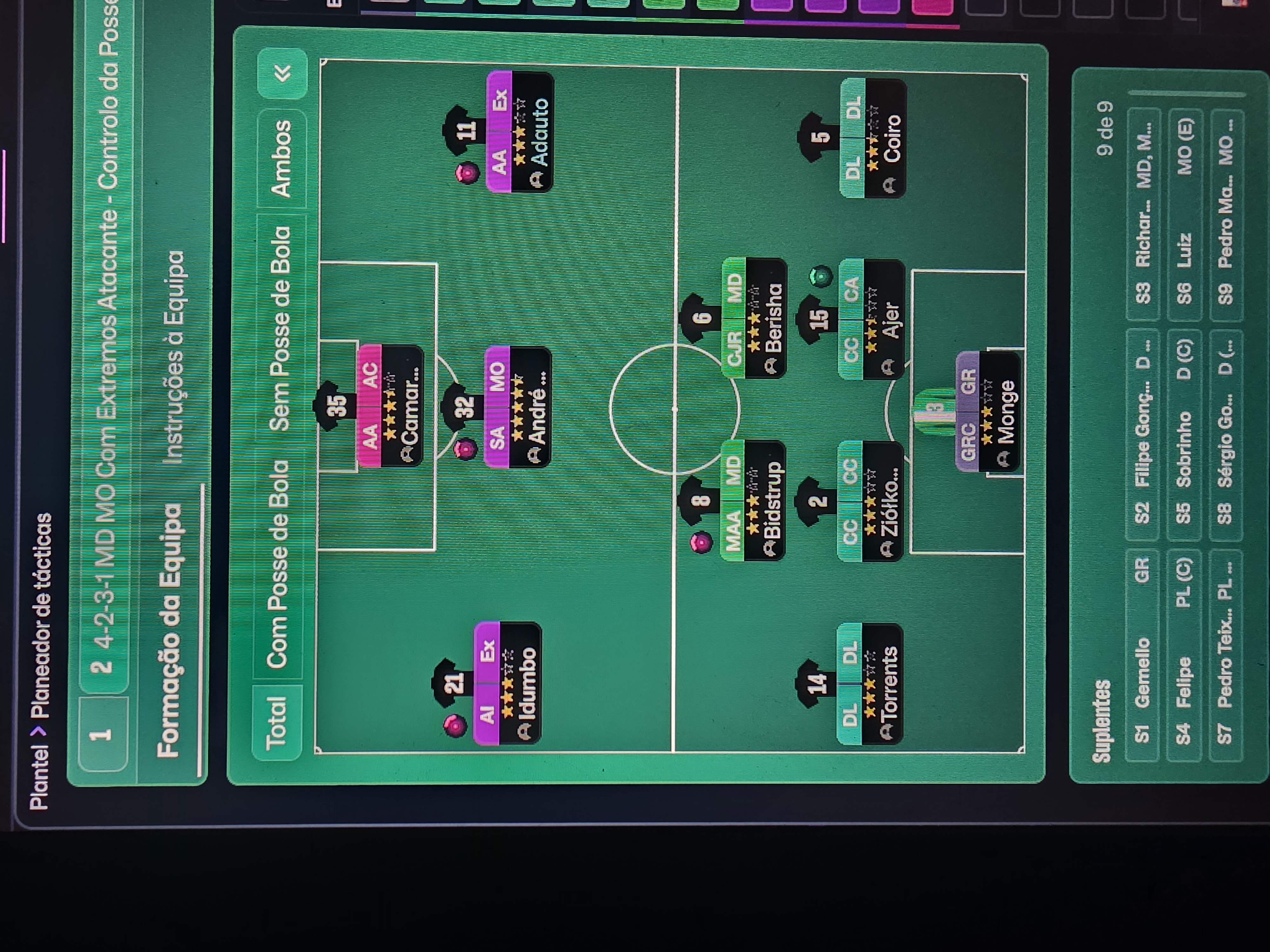
Guides for this formation
The tactical theory behind the 4-2-3-1: roles, instructions, and the trade-offs that decide whether the system holds up.
Player pairings
Midfield Pairs in 4-2-3-1 and 4-4-2
Double pivots and flat pairs in 4-2-3-1 and 4-4-2: when each pairing works, when it collapses, and the AMC unicorn that rescues both.
Read guide
Playing styles
Gegenpressing: A Full Guide
Klopp-style gegenpressing in FM, including squad profile, line-and-press pairing, sustainable workload, and the antipatterns to avoid.
Read guide