Uploaded Tactic
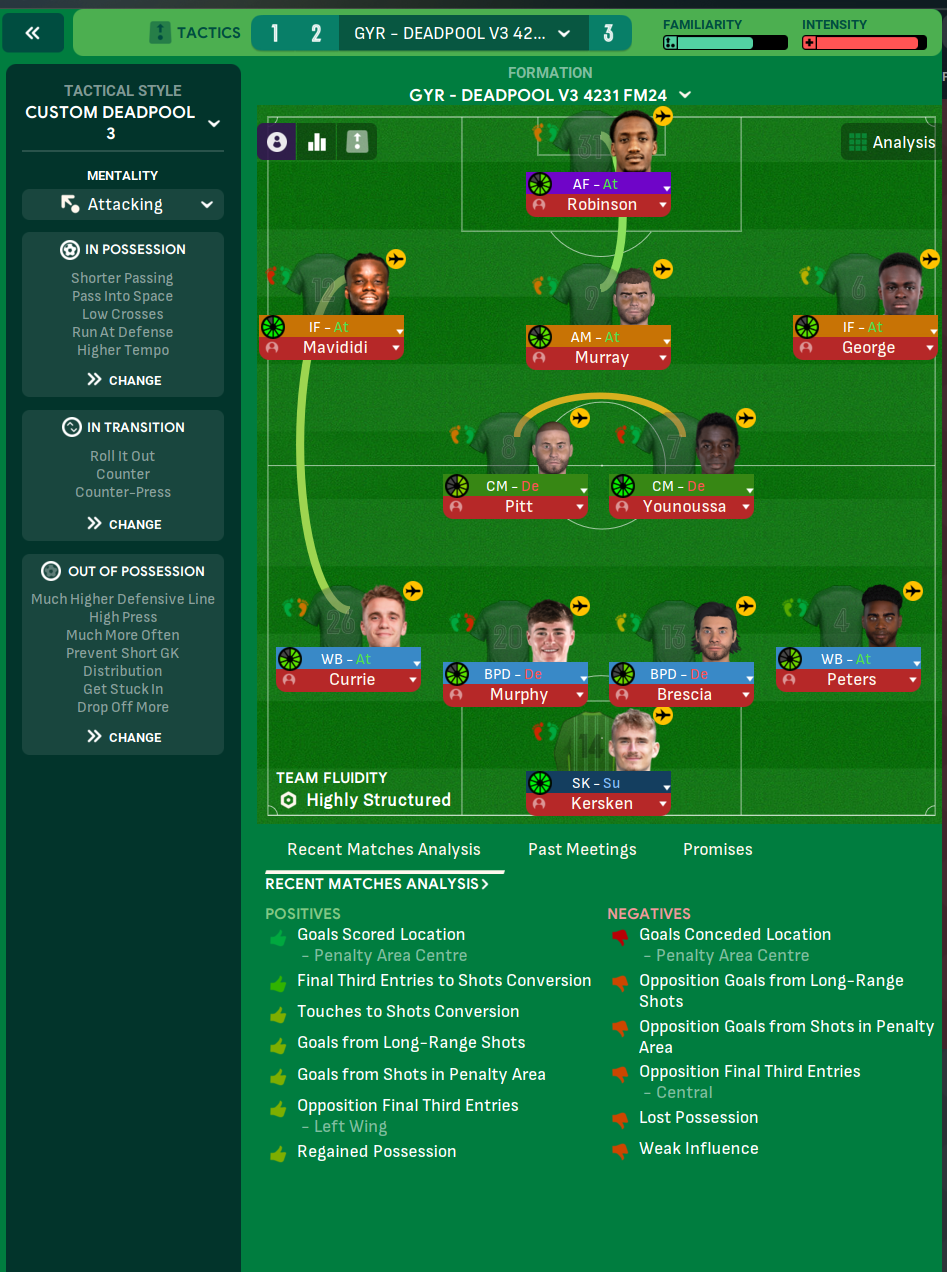
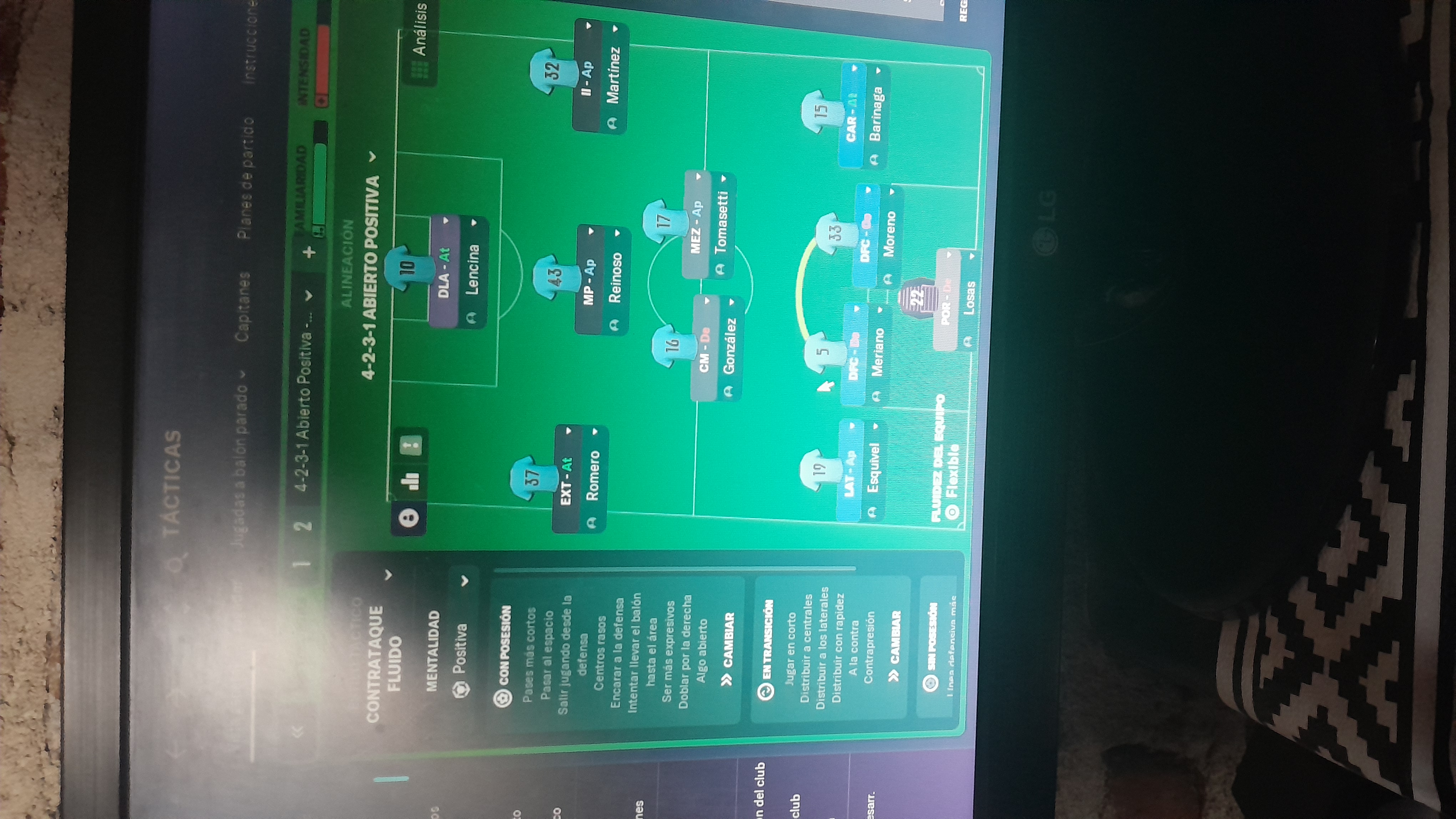
Formation & Style
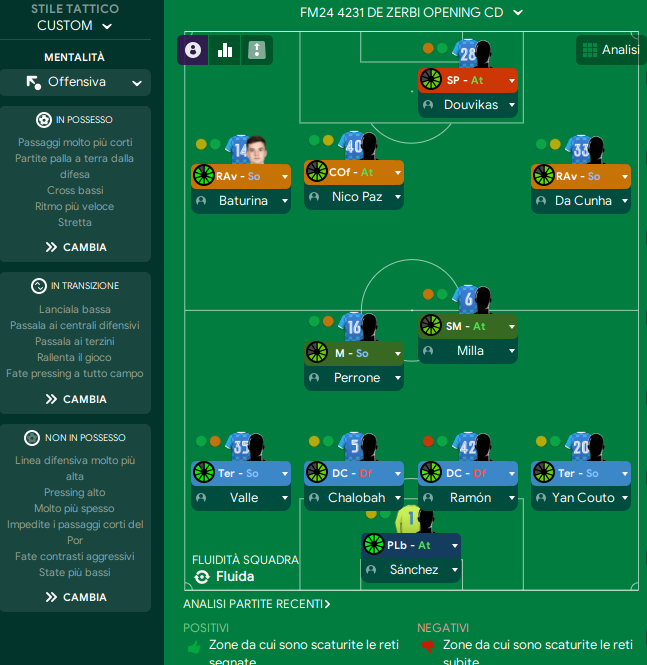
Tactical Style:Custom Deadpool
Mentality:Attacking
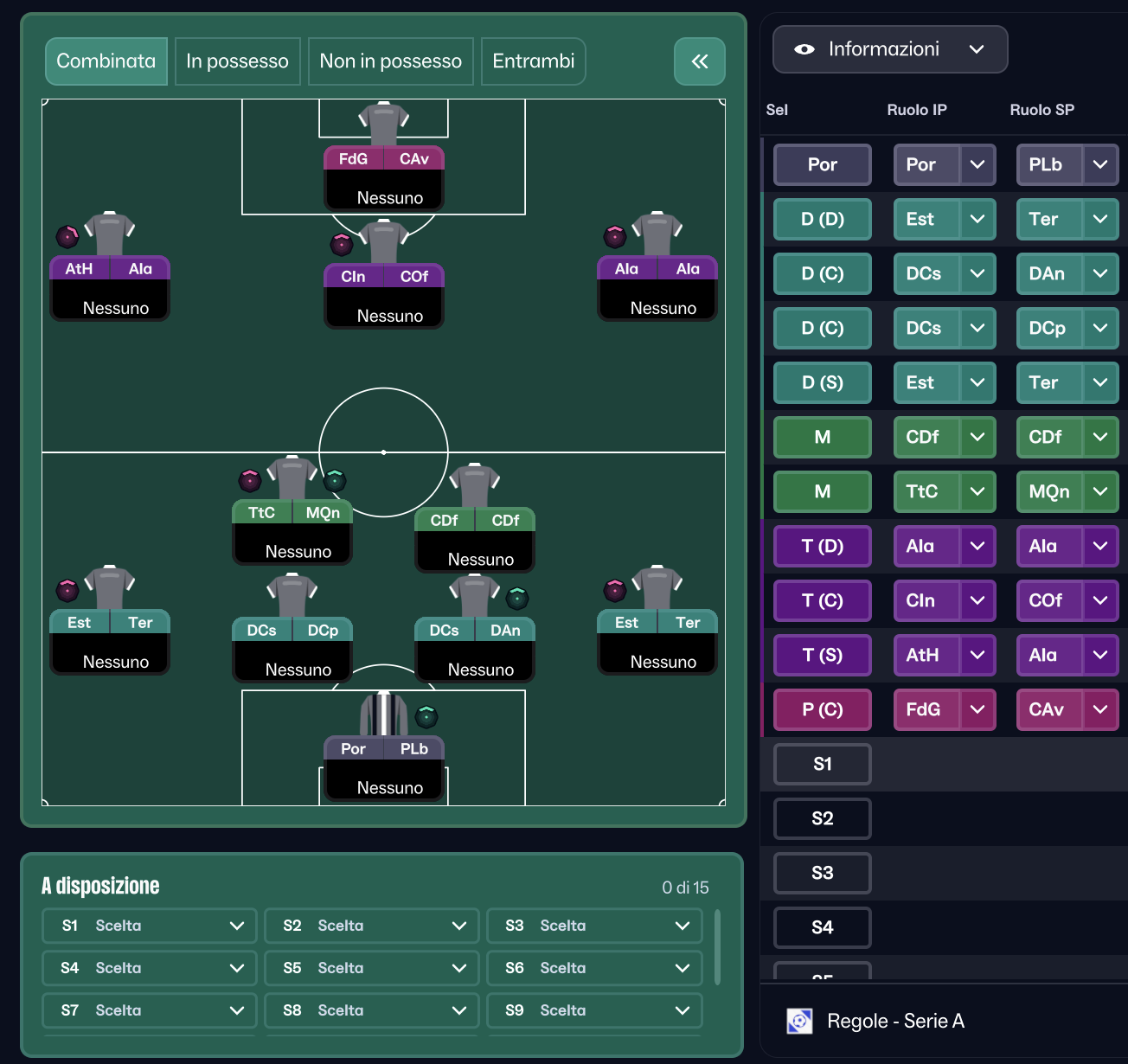
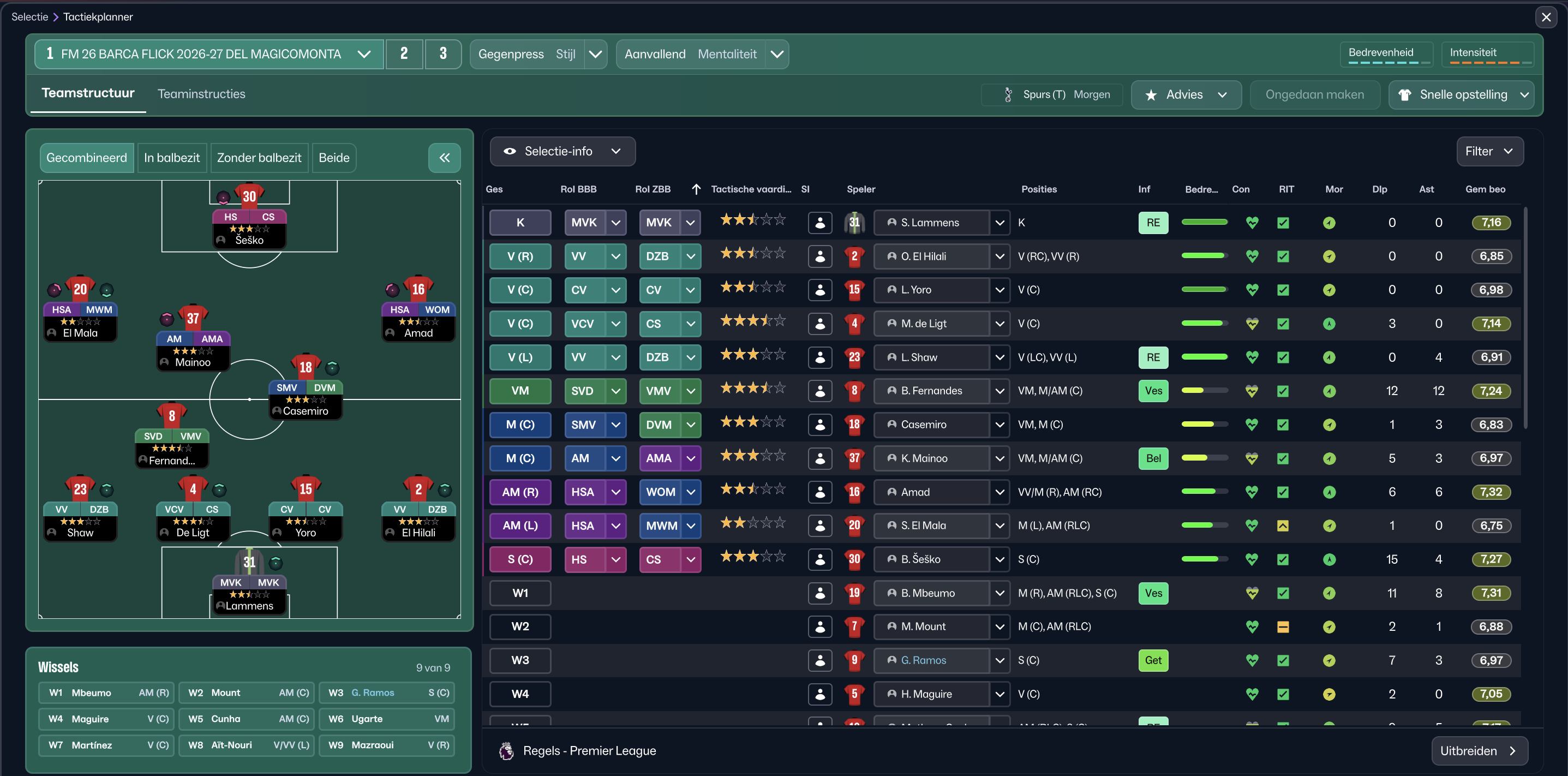
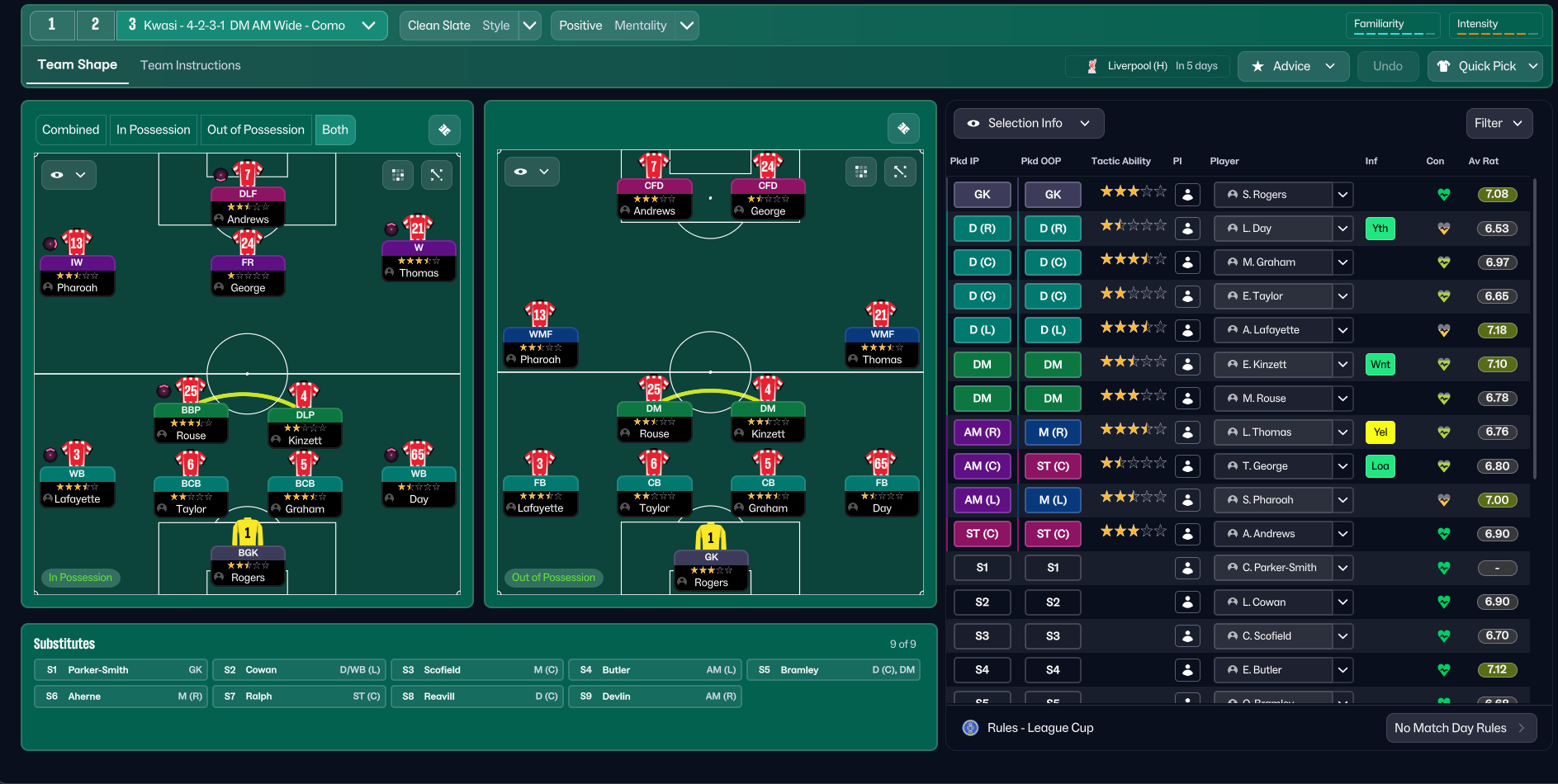
Formation:4-2-3-1
Team Fluidity:Highly Structured
In Possession
Shorter Passing
Pass Into Space
Low Crosses
Run At Defense
Higher Tempo
In Transition
Roll It Out
Counter
Counter-Press
Out of Possession
Much Higher Defensive Line
Much More Often Prevent Short GK Distribution
Get Stuck In
Drop Off More
Team Shape Without Ball
Shape:High Defensive Line
Description:The team pushes forward, looking to reduce space for opposition attackers while compacting the space.
Evidence:According to the out of possession instructions, the commitment to a high press suggests aggressive defensive actions.
Team Shape With Ball
Shape:Fluid 4-2-3-1
Description:Players interchange positions, with inside forwards cutting in to create goal-scoring opportunities while wing-backs provide width.
Evidence:The formation emphasizes flexibility with the five attacking players creating various angles for penetration.
Phase Description
Attacking Play
Utilizes high tempo and direct play to penetrate defenses, focusing on combination play and making use of width from wing-backs.
Defensive Transition
Quickly shifts to a pressing style, aiming to regain possession immediately upon losing the ball.
Main Focus
Maintain attacking momentum through quick ball movement and high pressing.
Key Strengths
Effective Penetration
The tactical setup successfully utilizes inside forwards who attract defenders, allowing more space for the advanced forward.
Strong Central Control
With a double pivot in midfield, the construction and retention of play in central areas is enhanced.
Defensive Structure
The high pressing and compact defensive setup offers resistance to opponent attacks.
Conflicting Directions
Potential Overcommitment
High pressing can lead to defensive vulnerabilities if not managed carefully.
Wing-Backs Exposure
Attacking duties for wing-backs can leave the defense susceptible to counter-attacks.
Defensive Midfielder Duty
Having only one defensive-minded midfielder may expose the backline under pressure.
Tactical Suggestions
Adjust Wing-Back Duties
Consider switching one wing-back to a more defensive role to provide balance in transitions.
Widen Playing Width
Encourage wider play to spread opposing defenders and create more room in the middle.
Manage Defensive Line
Consider adjusting the defensive line height to avoid vulnerability against fast attackers.
Ask Questions About Your Lineup
Related Tactics
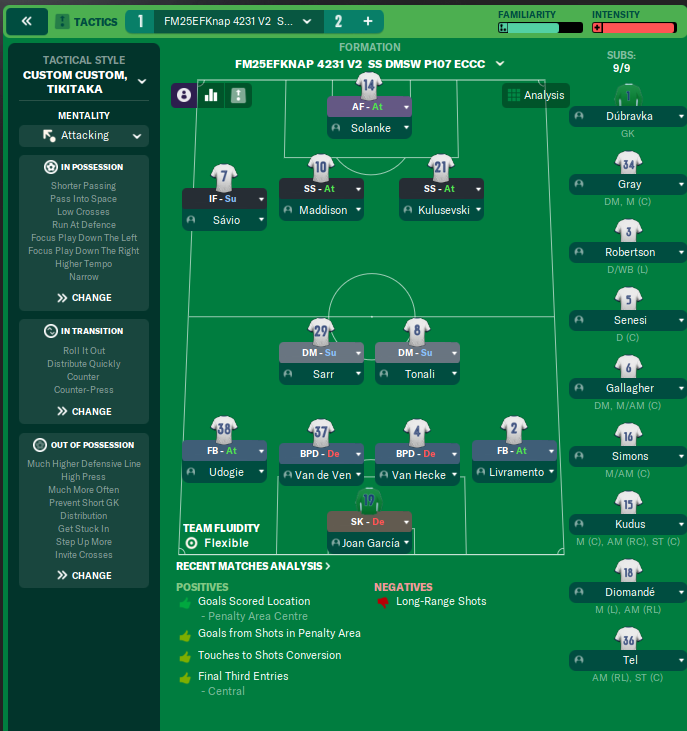
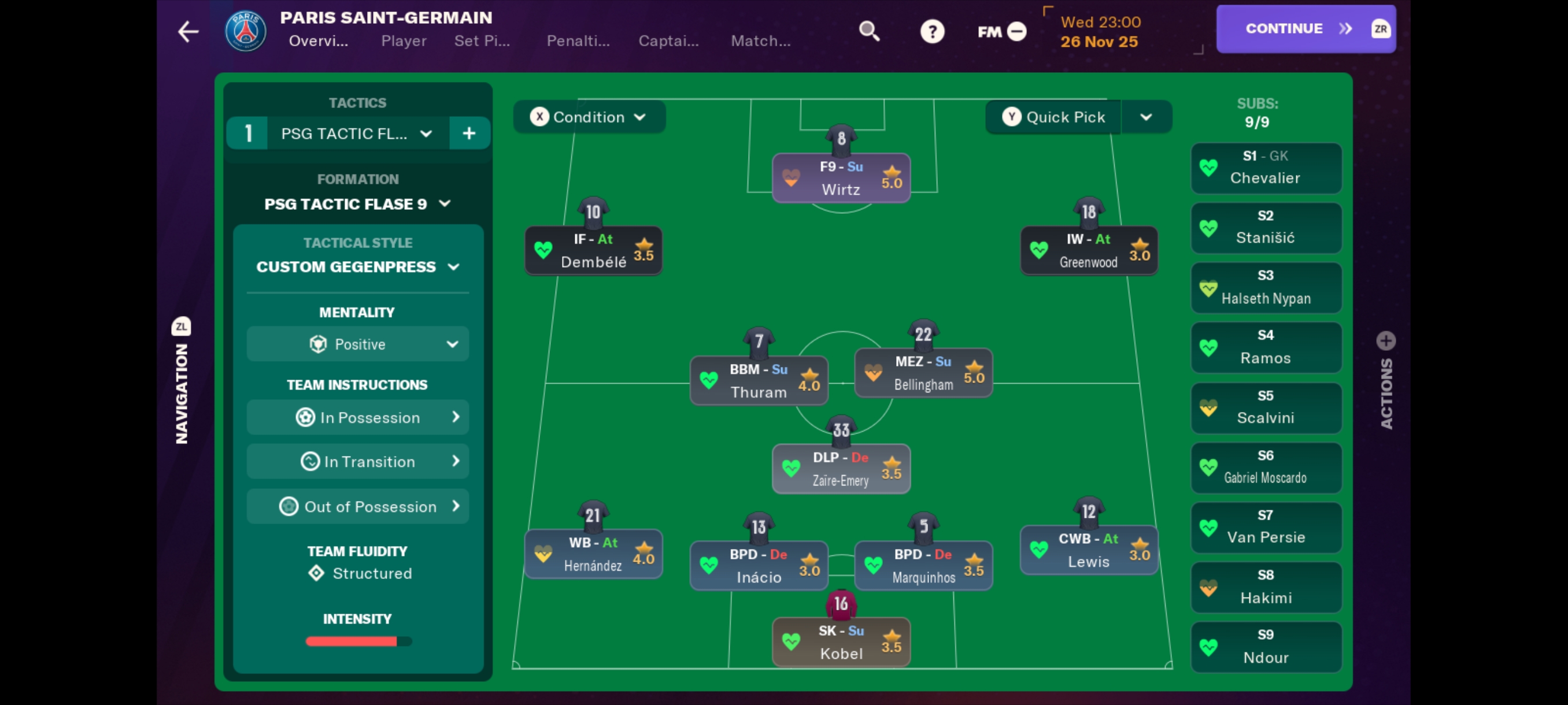
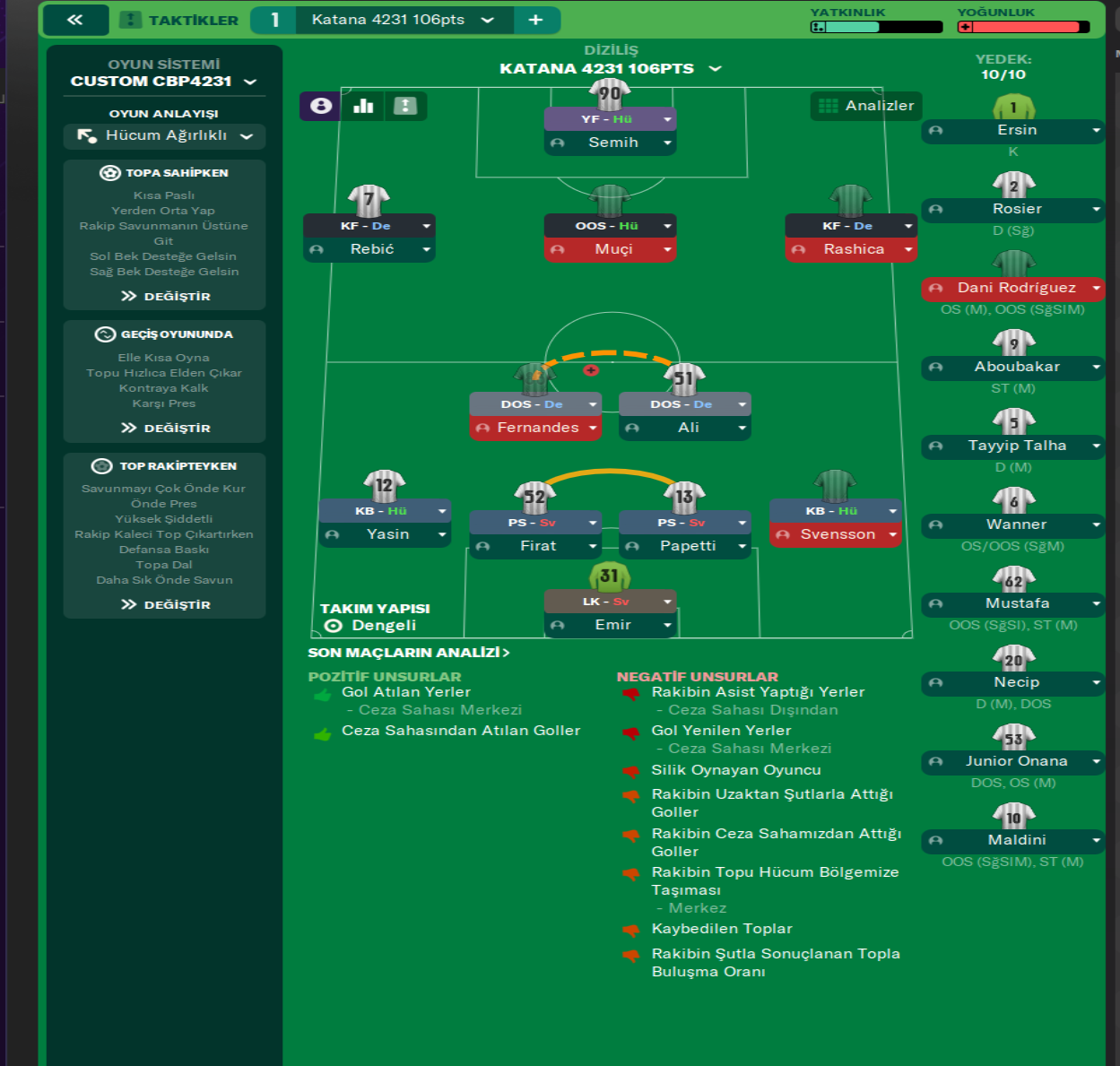
Guides for this formation
The tactical theory behind the 4-2-3-1: roles, instructions, and the trade-offs that decide whether the system holds up.
Player pairings
Midfield Pairs in 4-2-3-1 and 4-4-2
Double pivots and flat pairs in 4-2-3-1 and 4-4-2: when each pairing works, when it collapses, and the AMC unicorn that rescues both.
Read guide
Playing styles
Gegenpressing: A Full Guide
Klopp-style gegenpressing in FM, including squad profile, line-and-press pairing, sustainable workload, and the antipatterns to avoid.
Read guide