Uploaded Tactic
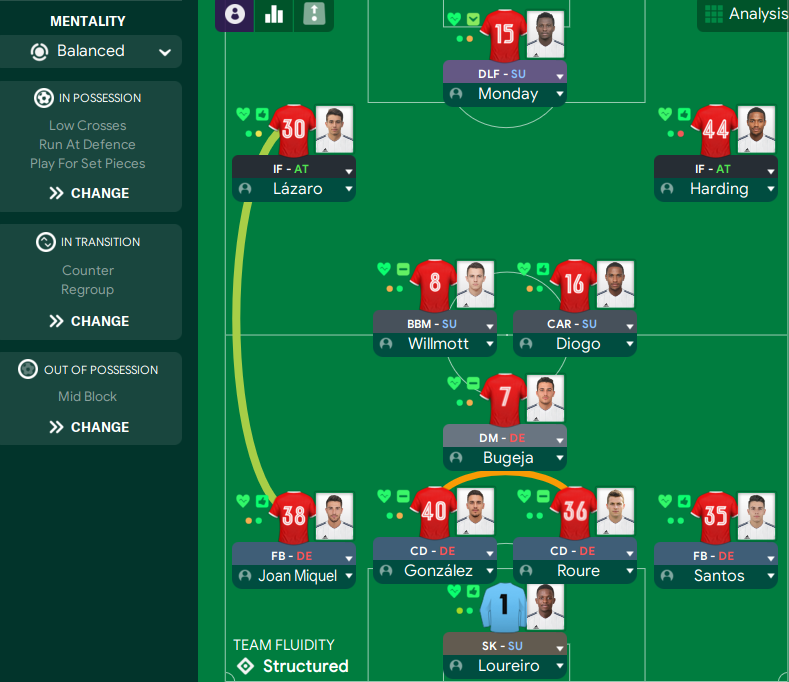
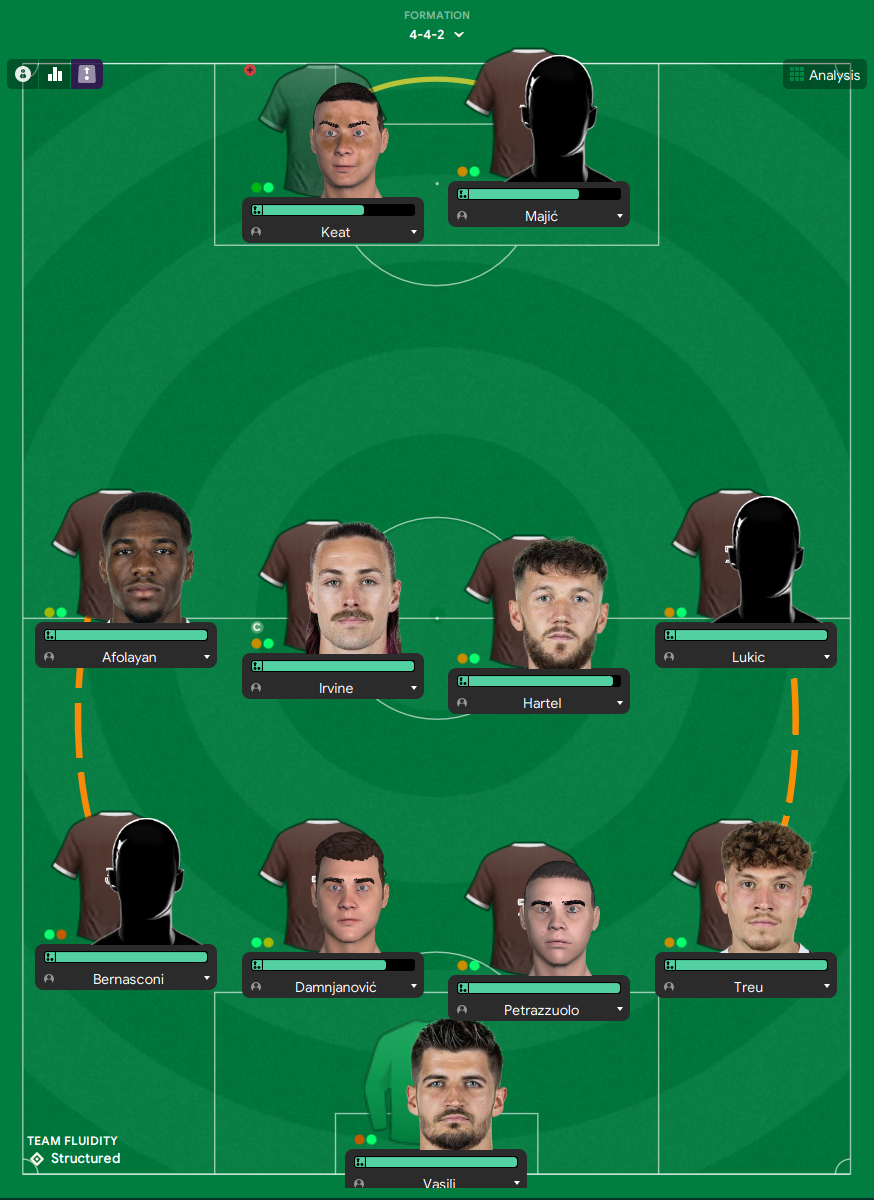
Formation & Style
Tactical Style:Structured
Mentality:Balanced
Formation:4-2-3-1
Team Fluidity:Structured
In Possession
Low Crosses
Run At Defence
Play For Set Pieces
In Transition
Counter
Regroup
Out of Possession
Mid Block
Team Shape Without Ball
Shape:4-2
Description:A solid defensive shape with full-backs going wide and the central defenders staying compact.
Evidence:DF at [2,1], [2,2], [2,4], [2,5] supporting the defensive setup.
Team Shape With Ball
Shape:4-3
Description:An attacking front using three players to stretch defenses with overlapping runs from the full-backs.
Evidence:IF-A at [6,1] and [6,5] with DLF-S at [6,3] for varied attacking options.
Phase Description
Attacking Play
The attacking players are all focused on penetrating the defense through runs and low crosses, maximizing set-piece opportunities.
Defensive Transition
The team aims to regroup quickly after losing possession, transitioning into a mid-block to disrupt the opponent's build-up.
Main Focus
Utilizing width and a strong midfield presence to support the attacks while keeping a balanced defensive shape.
Key Strengths
Dynamic Midfield Control
The combination of a Box-to-Box Midfielder and a Carrilero provides fluidity and control in the midfield.
Width in Attack
Utilizing Inside Forwards allows the team to exploit wide areas while maintaining central presence.
Defensive Stability
A solid back four complemented by a Defensive Midfielder provides a strong defensive foundation.
Conflicting Directions
Wide Play Style
The focus on low crosses may become predictable against teams with well-structured defenses.
Countering Weakness
A mid-block may invite pressure, which could be exploited if facing high-possession teams.
Transition Vulnerabilities
Counter transitions rely heavily on regaining possession quickly, which might leave the team exposed if unsuccessful.
Tactical Suggestions
Consider Increasing Aggression in Pressing
An increased pressing intensity could regain possession higher up the pitch.
Varying Attacking Width
Exploring varying widths in attacking scenarios could help disrupt tightly packed defenses.
Focus on Set Pieces
With a structured team fluidity, maximizing set pieces can exploit defensive weaknesses of opponents.
Ask Questions About Your Lineup
Related Tactics
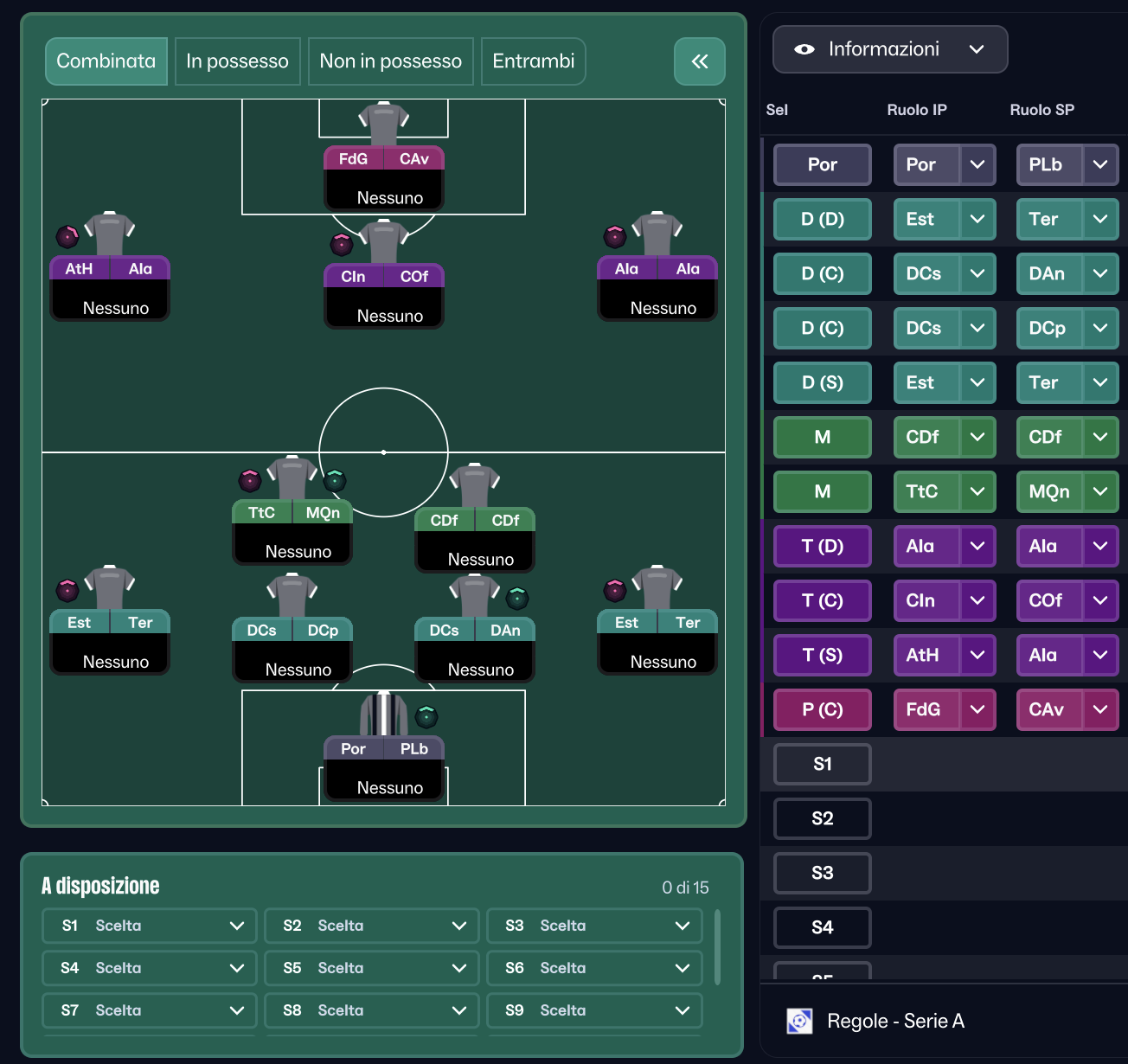
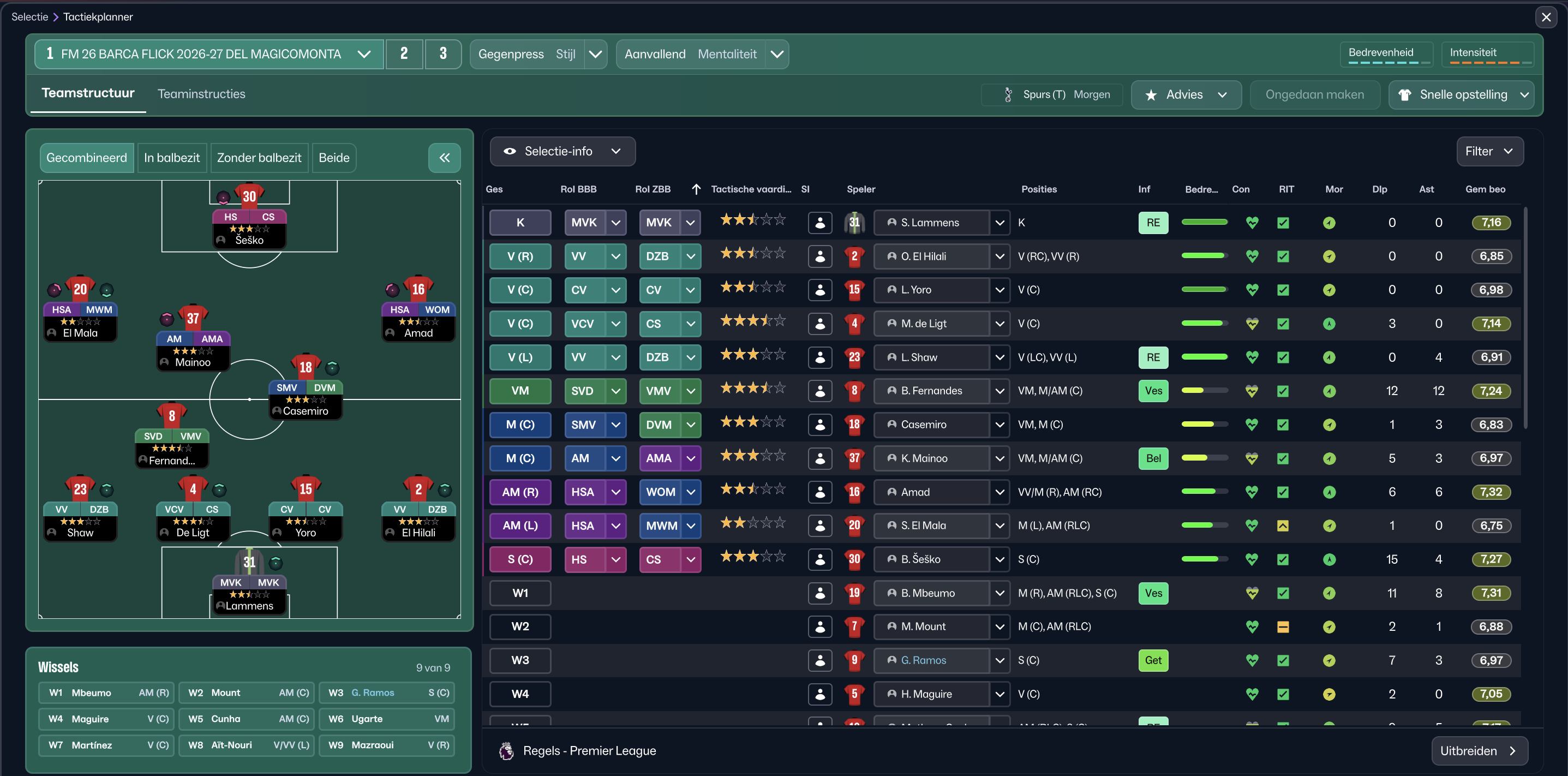
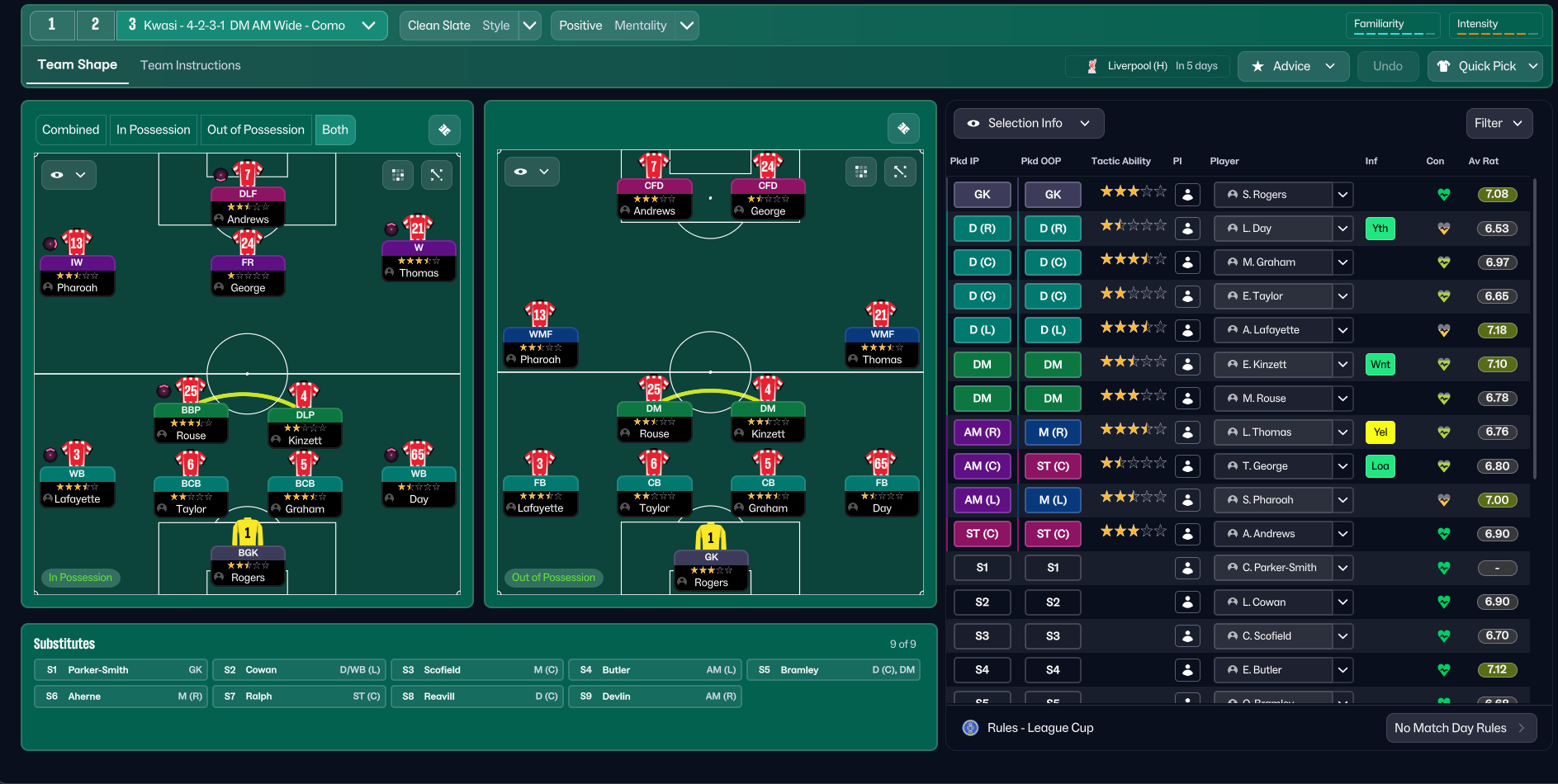
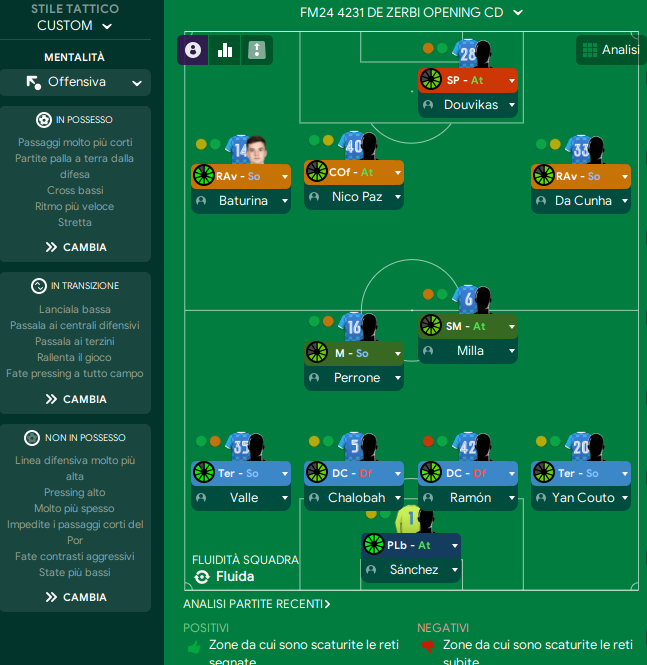
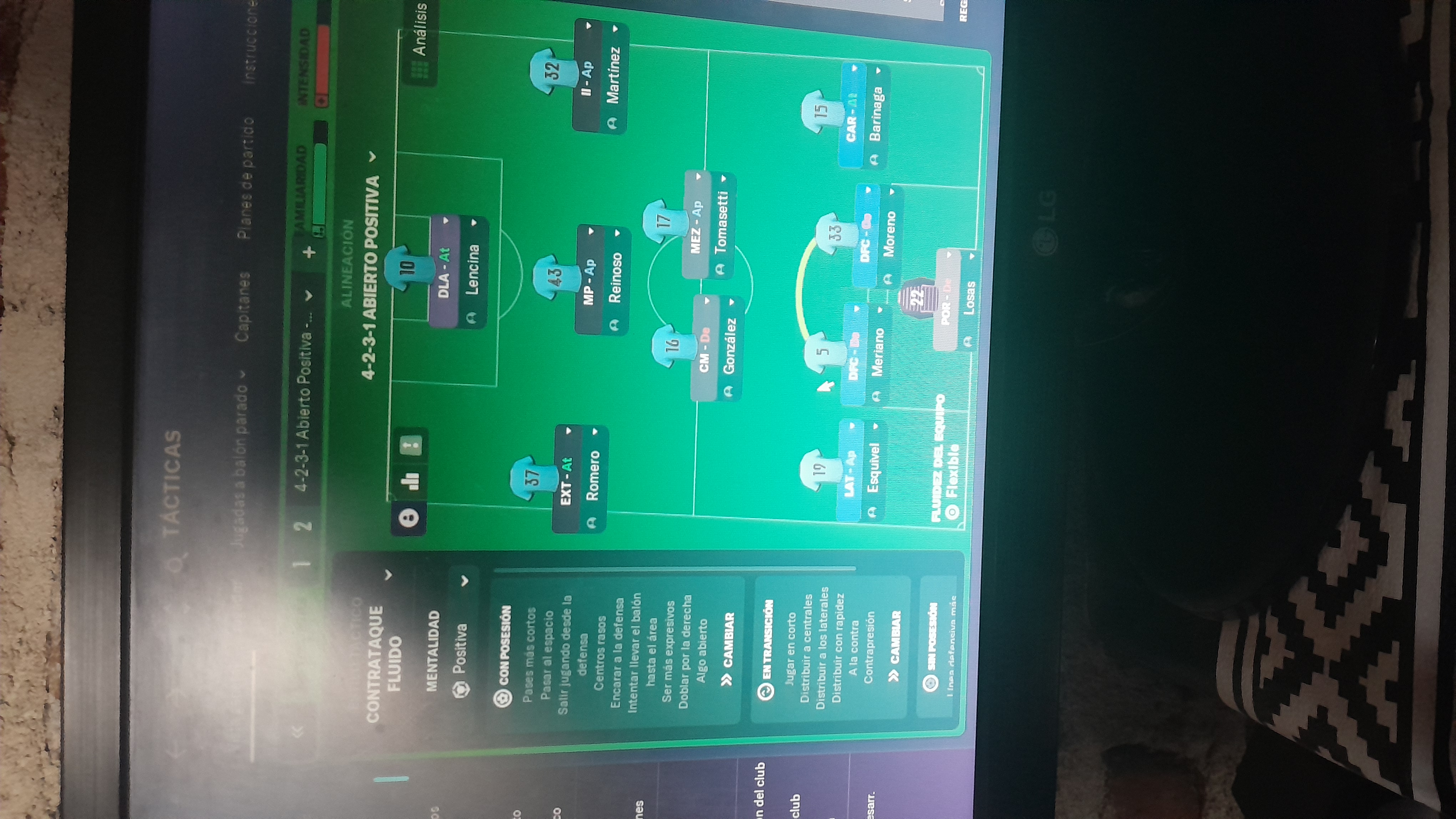
More Structured tactics
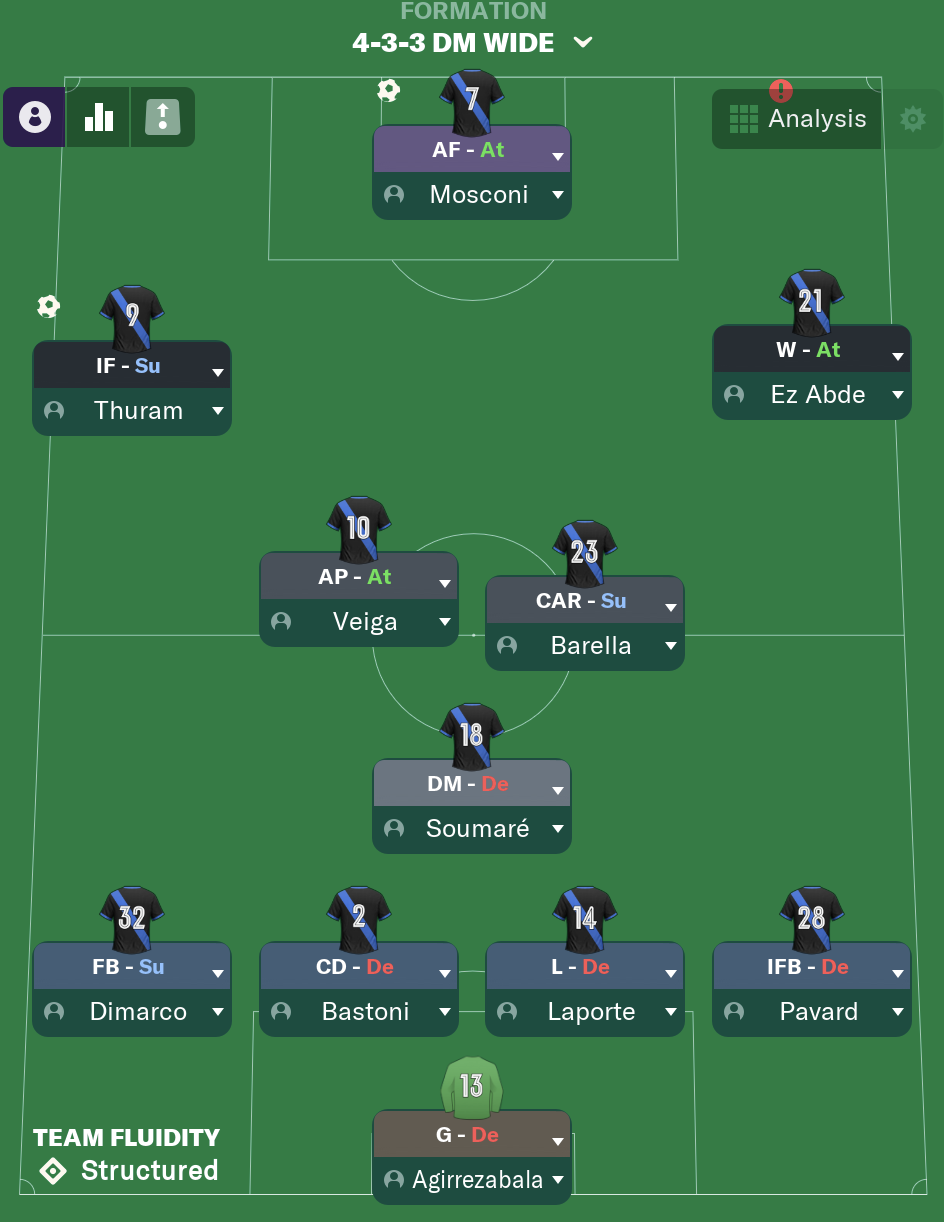
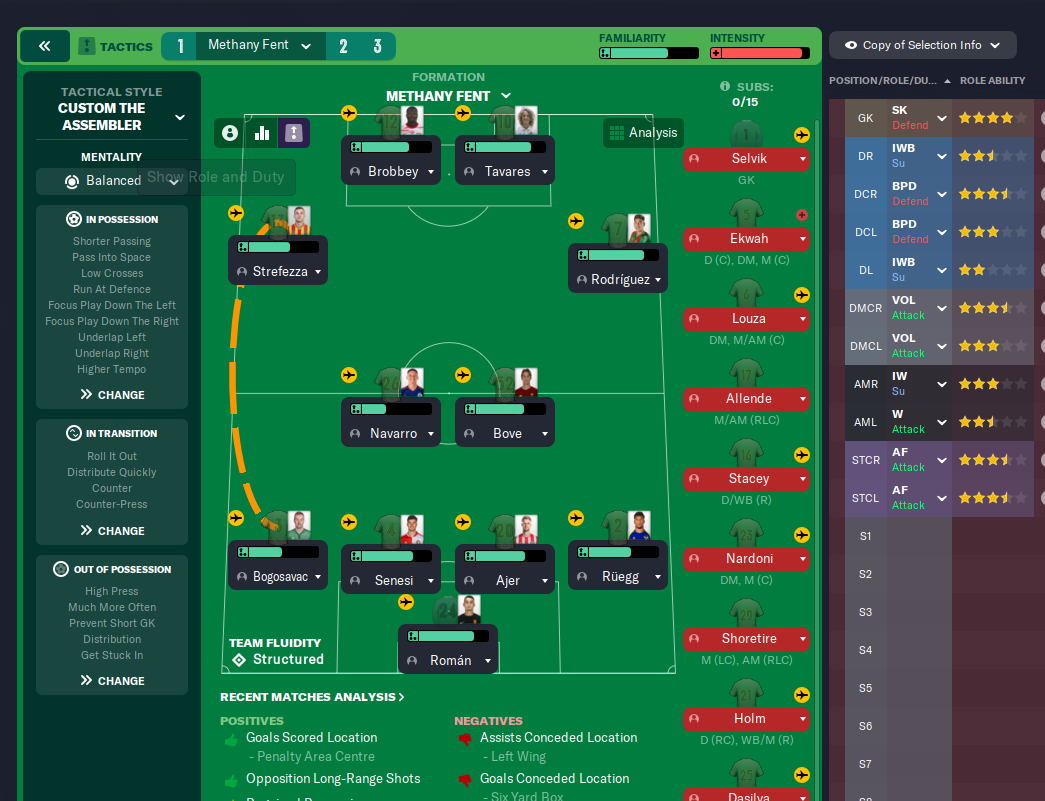
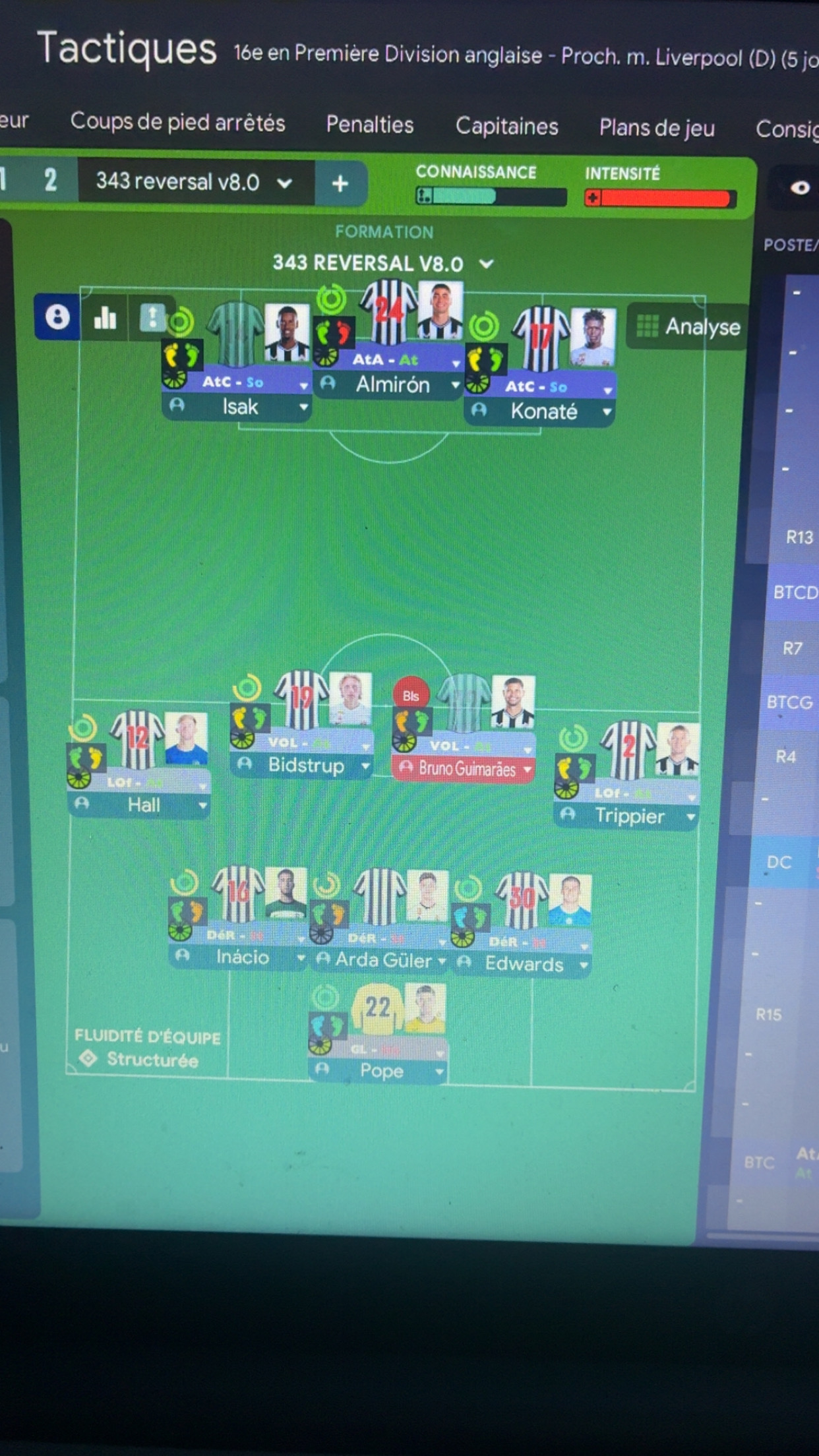
Guides for this formation
The tactical theory behind the 4-2-3-1: roles, instructions, and the trade-offs that decide whether the system holds up.
Player pairings
Midfield Pairs in 4-2-3-1 and 4-4-2
Double pivots and flat pairs in 4-2-3-1 and 4-4-2: when each pairing works, when it collapses, and the AMC unicorn that rescues both.
Read guide
Playing styles
Gegenpressing: A Full Guide
Klopp-style gegenpressing in FM, including squad profile, line-and-press pairing, sustainable workload, and the antipatterns to avoid.
Read guide