Uploaded Tactic
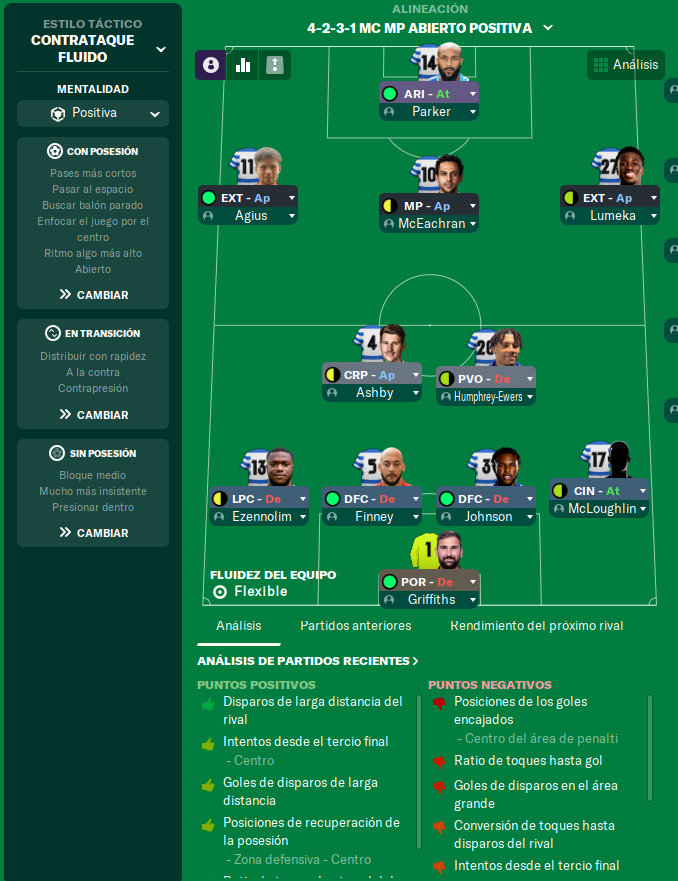
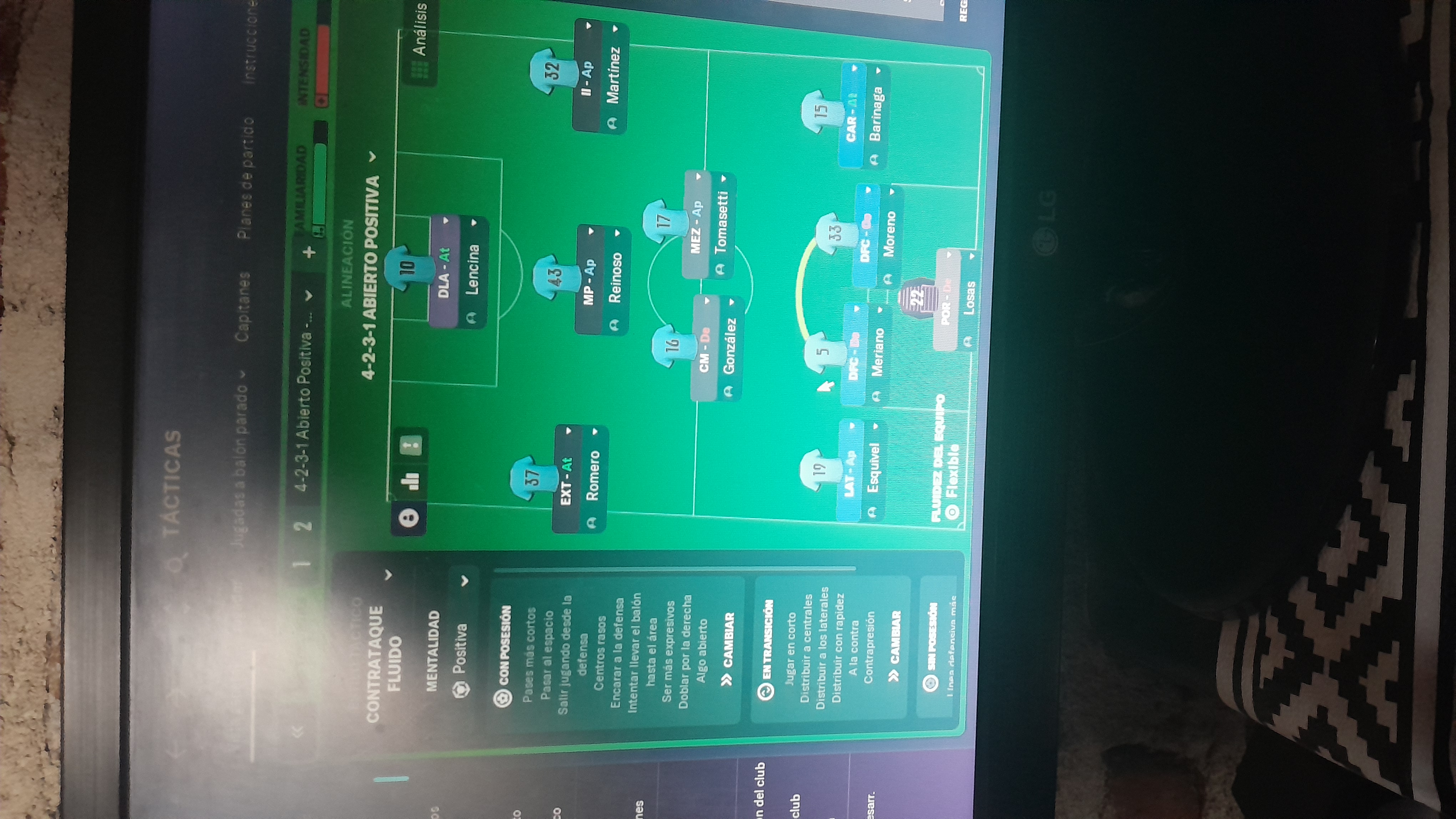
Formation & Style
Tactical Style:Counter-attacking
Mentality:Positive
Formation:4-2-3-1
Team Fluidity:Flexible
In Possession
Shorter passes
Look for space
Focus play down the middle
Higher tempo
In Transition
Distribute quickly
Counter press
Out of Possession
Mid block
Much more urgent pressing
Team Shape Without Ball
Shape:4-2
Description:A compact mid-block that seeks to control the space between the lines while pressing with urgency when losing possession.
Evidence:DM (CDM) at [3,3] provides cover, while the back four and midfielders maintaining a close shape enhance defensive solidity.
Team Shape With Ball
Shape:4-3
Description:A focused attacking shape utilizing the width from the wing-backs and combination play from midfielders.
Evidence:Wing-backs (CWB) at [2,1] and [2,5] pushing forward along with two attacking midfielders creating overloads.
Phase Description
Attacking Play
Utilizing width provided by the wing-backs and inside forwards to stretch the opposition and create spaces for central combinations.
Defensive Transition
Quickly transitioning into a compact shape, looking to press the opposition high and regain possession swiftly.
Main Focus
Creating goal-scoring opportunities through quick movements and utilizing space both centrally and wide.
Key Strengths
Attacking Width
The use of complete wing-backs and inside forwards provides ample width, creating space for central players.
Defensive Stability
Two ball-playing defenders enhance both defensive solidity and the ability to build play from the back.
Midfield Creativity
Having an advanced playmaker allows for creative play which can unlock defenses.
Conflicting Directions
Heavy Defensive Press
An overly aggressive pressing style could leave gaps in the midfield and expose the back line.
Narrow Attacking Play
Excessive focus on central play may be counterproductive against teams with strong central defenses.
Inconsistent Defensive Line
A misaligned back four can lead to vulnerabilities against pacey attackers.
Tactical Suggestions
Increase Width in Attacks
Utilizing wing-backs effectively to stretch the opposition and create more 1v1 situations for forwards.
Choose Situational Pressing
Adjust pressing intensity based on opposition strength and situation to maintain shape.
Monitor Defensive Depth
Ensure the back line remains cohesive, adjusting their positions based on the ball's location.
Ask Questions About Your Lineup
Related Tactics
Guides for this formation
The tactical theory behind the 4-2-3-1: roles, instructions, and the trade-offs that decide whether the system holds up.
Player pairings
Midfield Pairs in 4-2-3-1 and 4-4-2
Double pivots and flat pairs in 4-2-3-1 and 4-4-2: when each pairing works, when it collapses, and the AMC unicorn that rescues both.
Read guide
Playing styles
Gegenpressing: A Full Guide
Klopp-style gegenpressing in FM, including squad profile, line-and-press pairing, sustainable workload, and the antipatterns to avoid.
Read guide