Uploaded Tactic
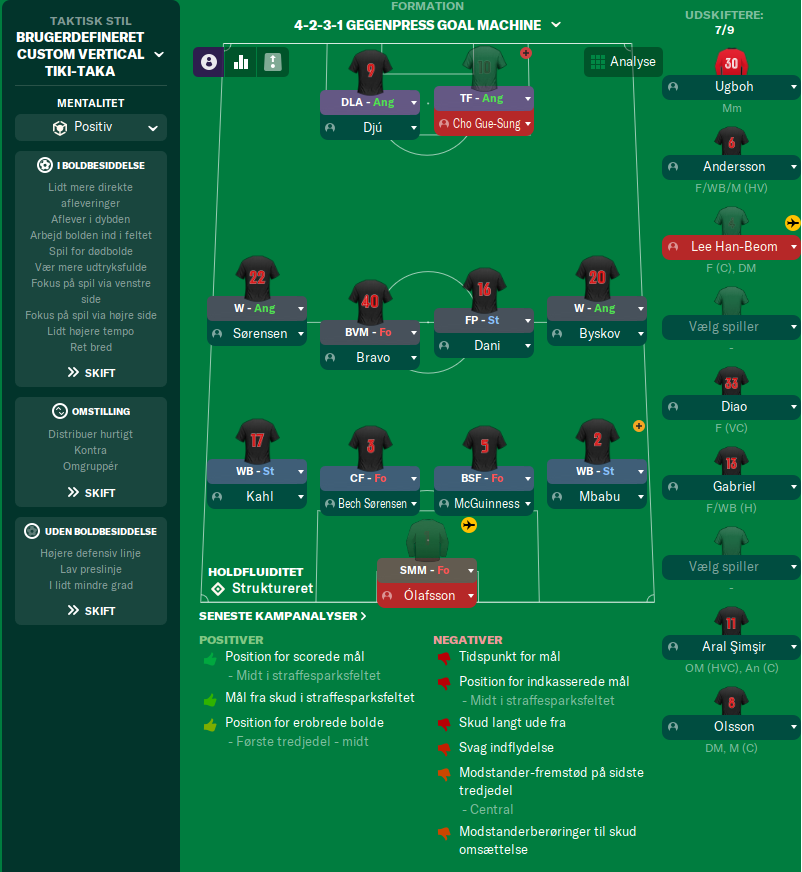
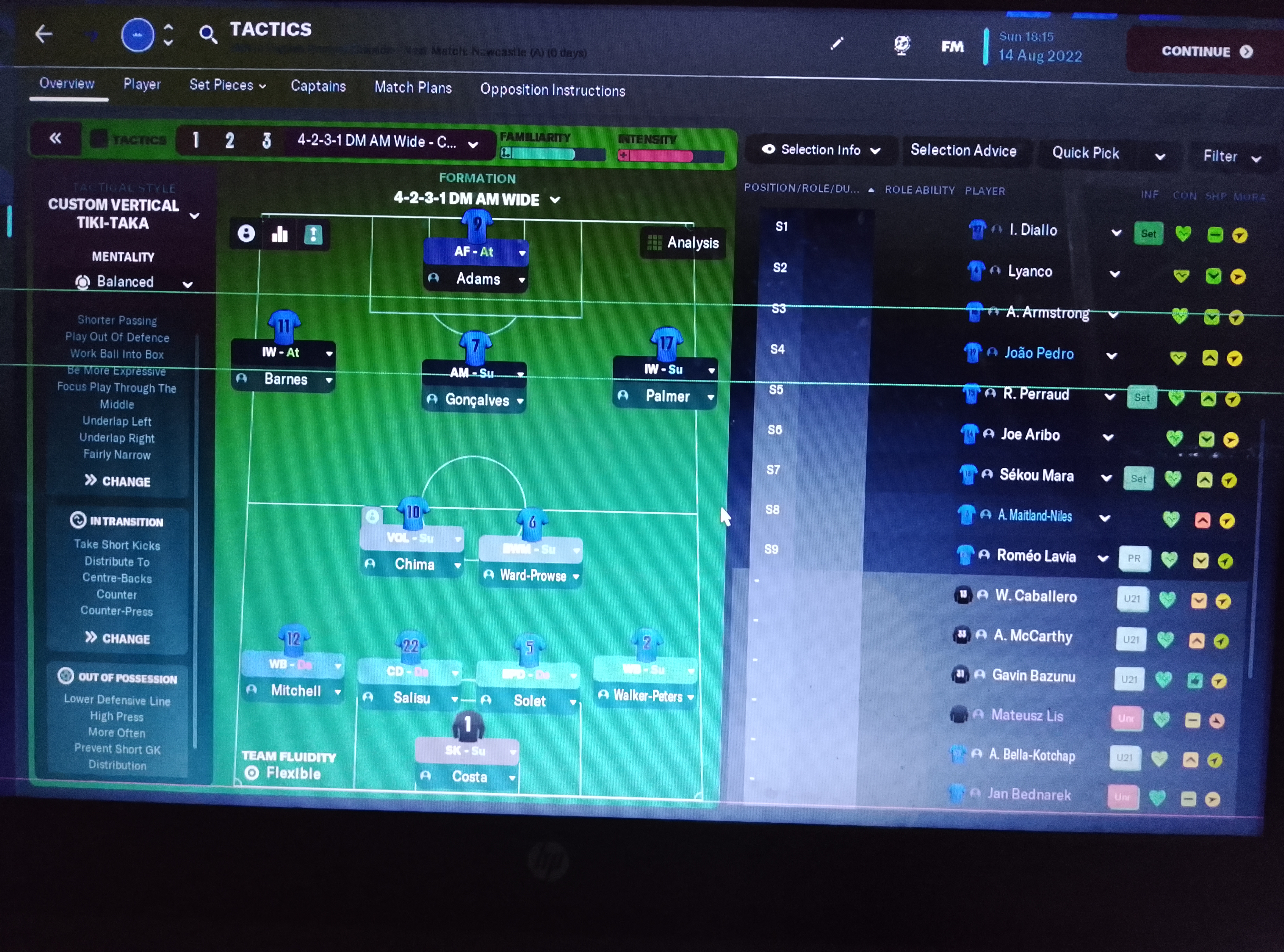
Formation & Style
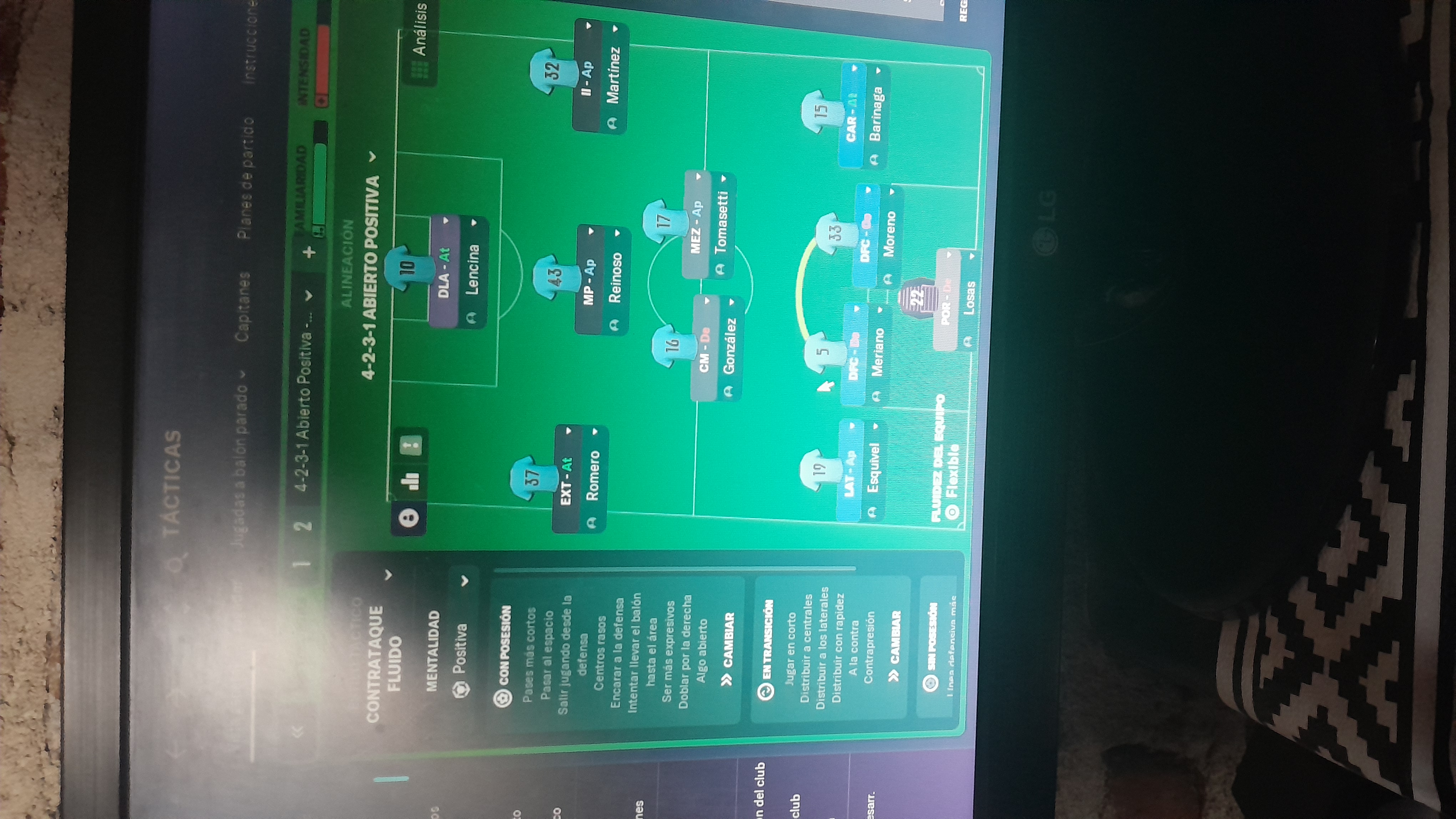
Tactical Style:Custom Vertical Tiki-Taka
Mentality:Positive
Formation:4-2-3-1
Team Fluidity:Structured
In Possession
Distribute quickly
Play wider
In Transition
Counter
Out of Possession
Higher defensive line
Low pressing
Team Shape Without Ball
Shape:4-2
Description:Defensive shape that maintains compactness and supports pressing when necessary.
Evidence:Two defensive midfielders provide a barrier in front of the back four.
Team Shape With Ball
Shape:4-3
Description:Wider attacking shape facilitating the use of wing-backs and overlapping runs.
Evidence:Wide midfielders and overlapping full-backs support the front line.
Phase Description
Attacking Play
Fluid movement with emphasis on retaining possession and creating spaces.
Defensive Transition
Pressing after loss in a more structured manner to regain possession.
Main Focus
Utilizing width to stretch the opposition and create crossing opportunities.
Key Strengths
Effective Width
Utilizing wide players creates space for dynamic attacks.
Strong Midfield Control
Two central midfielders can dominate possession and dictate play.
Versatile Frontline
Different attacking roles create unpredictable threats.
Conflicting Directions
Low Pressing
Inconsistent with a high defensive line strategy.
Fluidity vs Structure
Potential rigidity in structured fluidity may hinder unpredictability.
Quick Transition Conflict
Quick distribution may counter structured build-up play.
Tactical Suggestions
Improve Pressing Intensity
Consider a more aggressive pressing strategy to regain possession higher up the pitch.
Adjust Team Fluidity
Experiment with slightly higher fluidity to enhance attacking unpredictability.
Utilize Playmaker Effectively
Encourage more involvement from the Advanced Playmaker to link midfield with attack.
Ask Questions About Your Lineup
Related Tactics
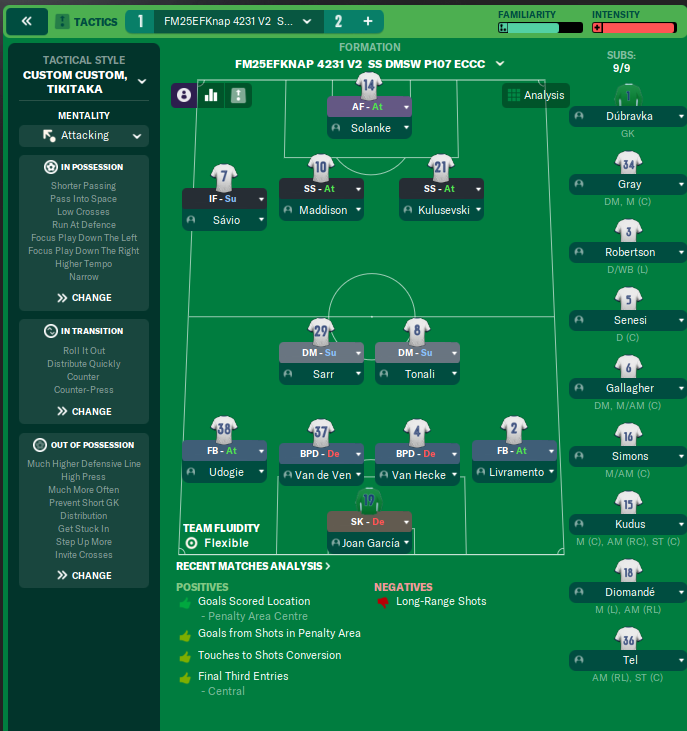
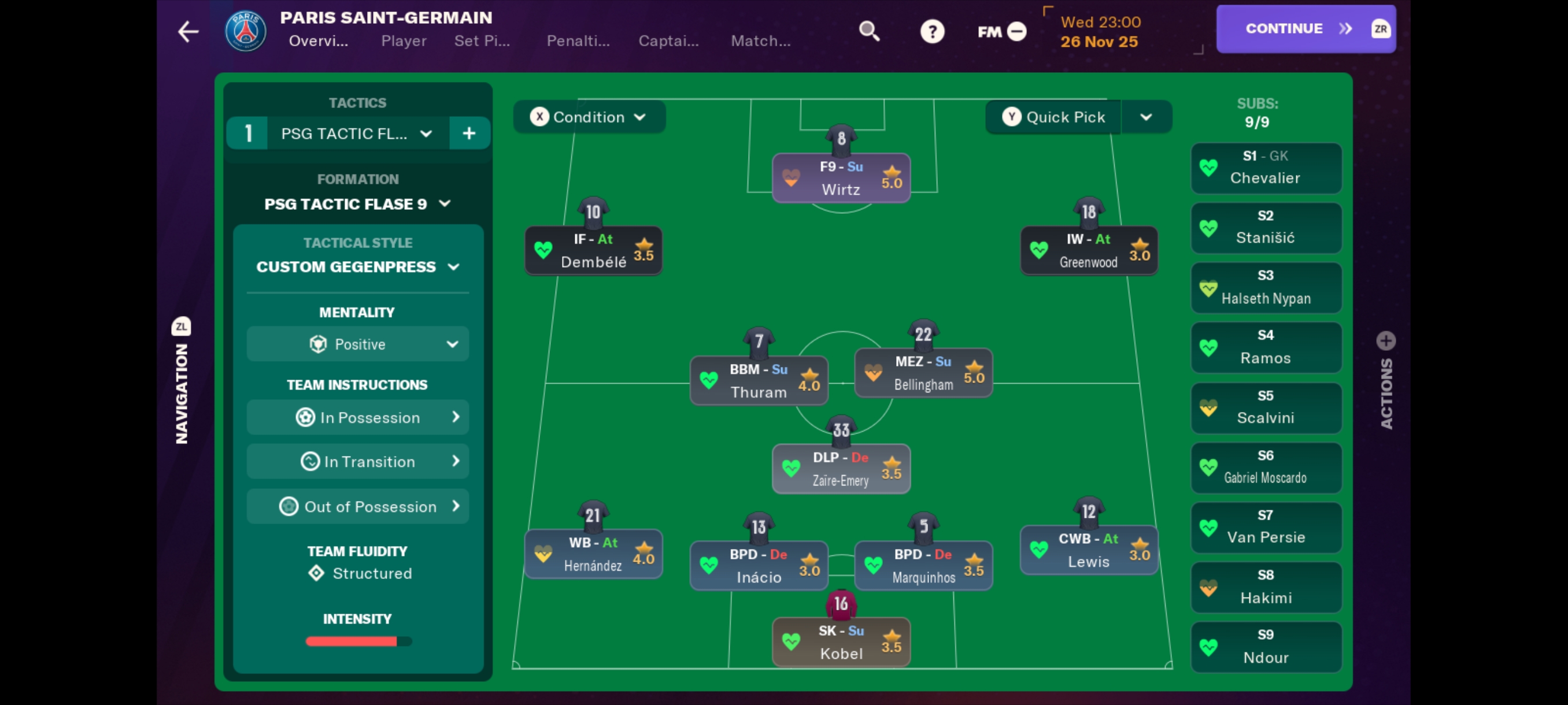
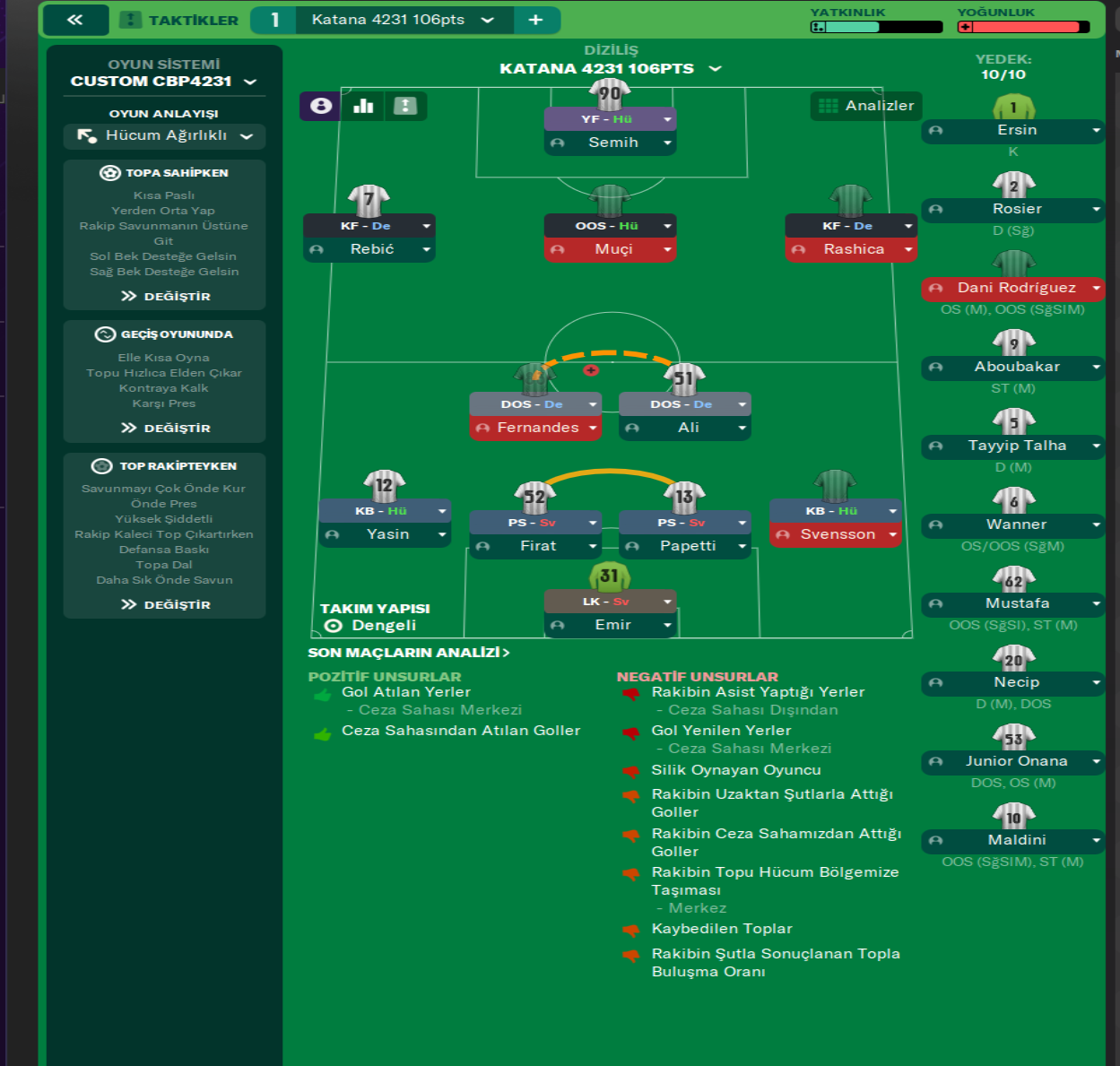
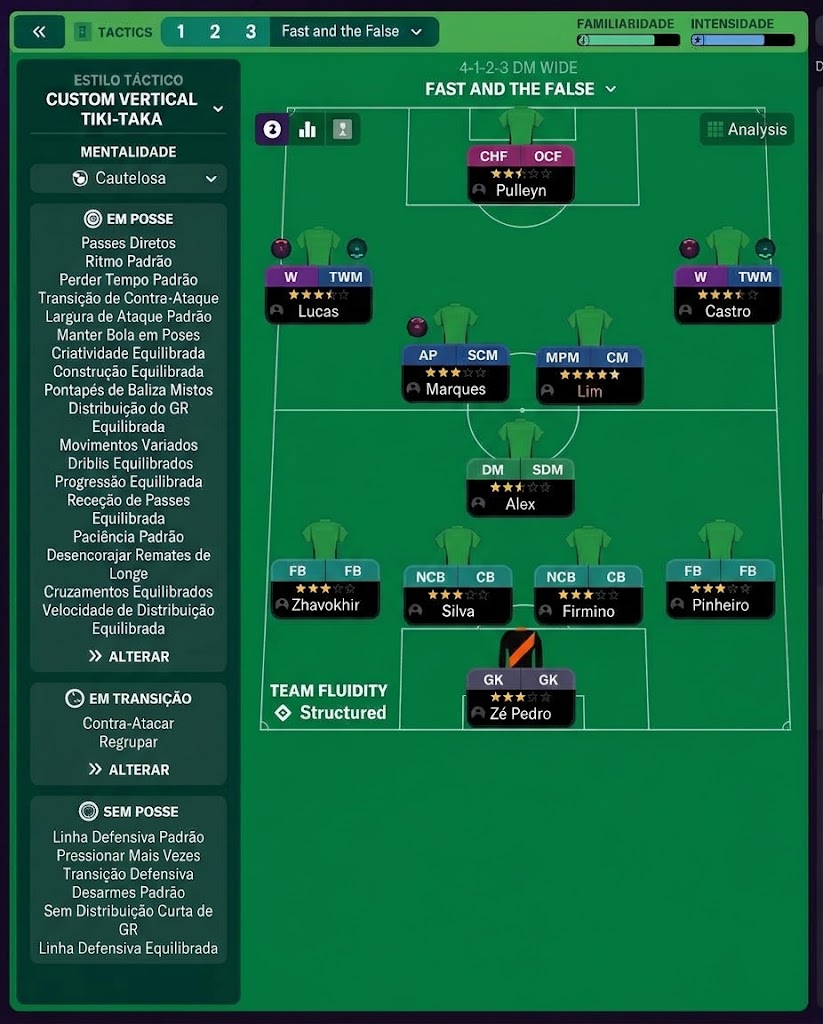
More Custom Vertical Tiki-Taka tactics
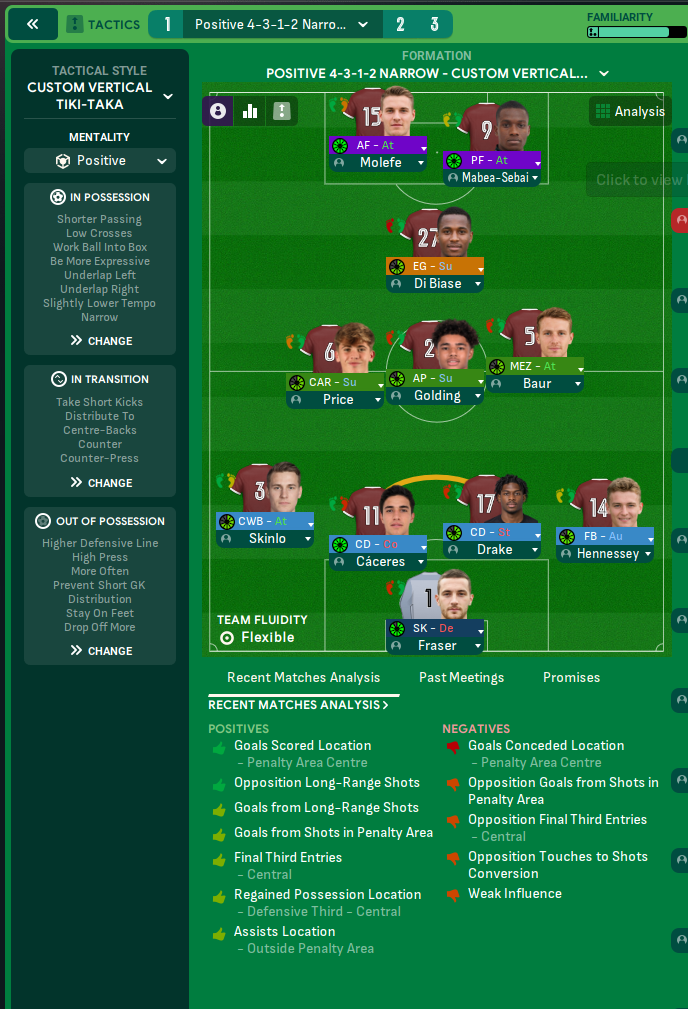
Guides for this formation
The tactical theory behind the 4-2-3-1: roles, instructions, and the trade-offs that decide whether the system holds up.
Player pairings
Midfield Pairs in 4-2-3-1 and 4-4-2
Double pivots and flat pairs in 4-2-3-1 and 4-4-2: when each pairing works, when it collapses, and the AMC unicorn that rescues both.
Read guide
Playing styles
Gegenpressing: A Full Guide
Klopp-style gegenpressing in FM, including squad profile, line-and-press pairing, sustainable workload, and the antipatterns to avoid.
Read guide