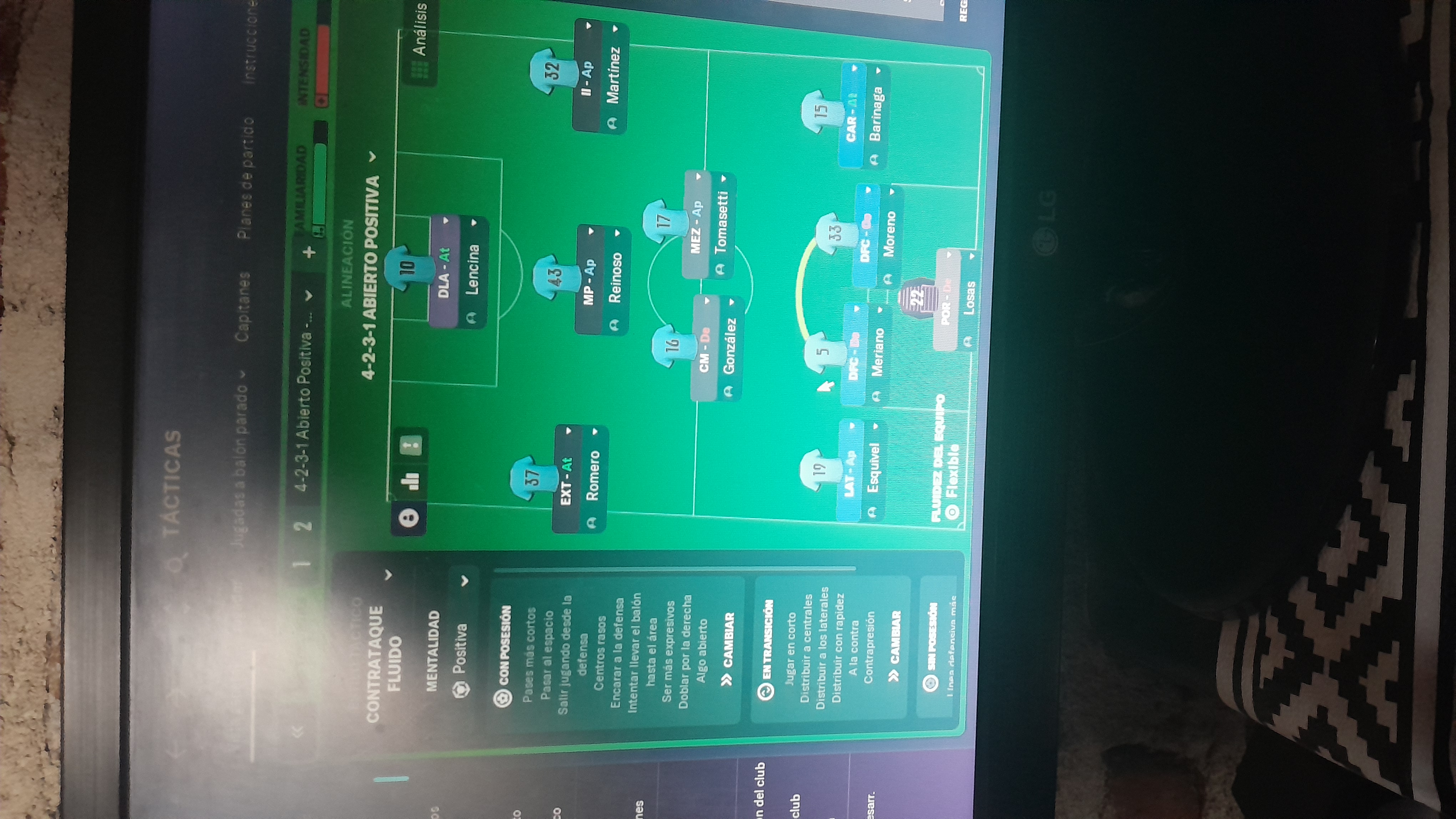
Uploaded Tactic
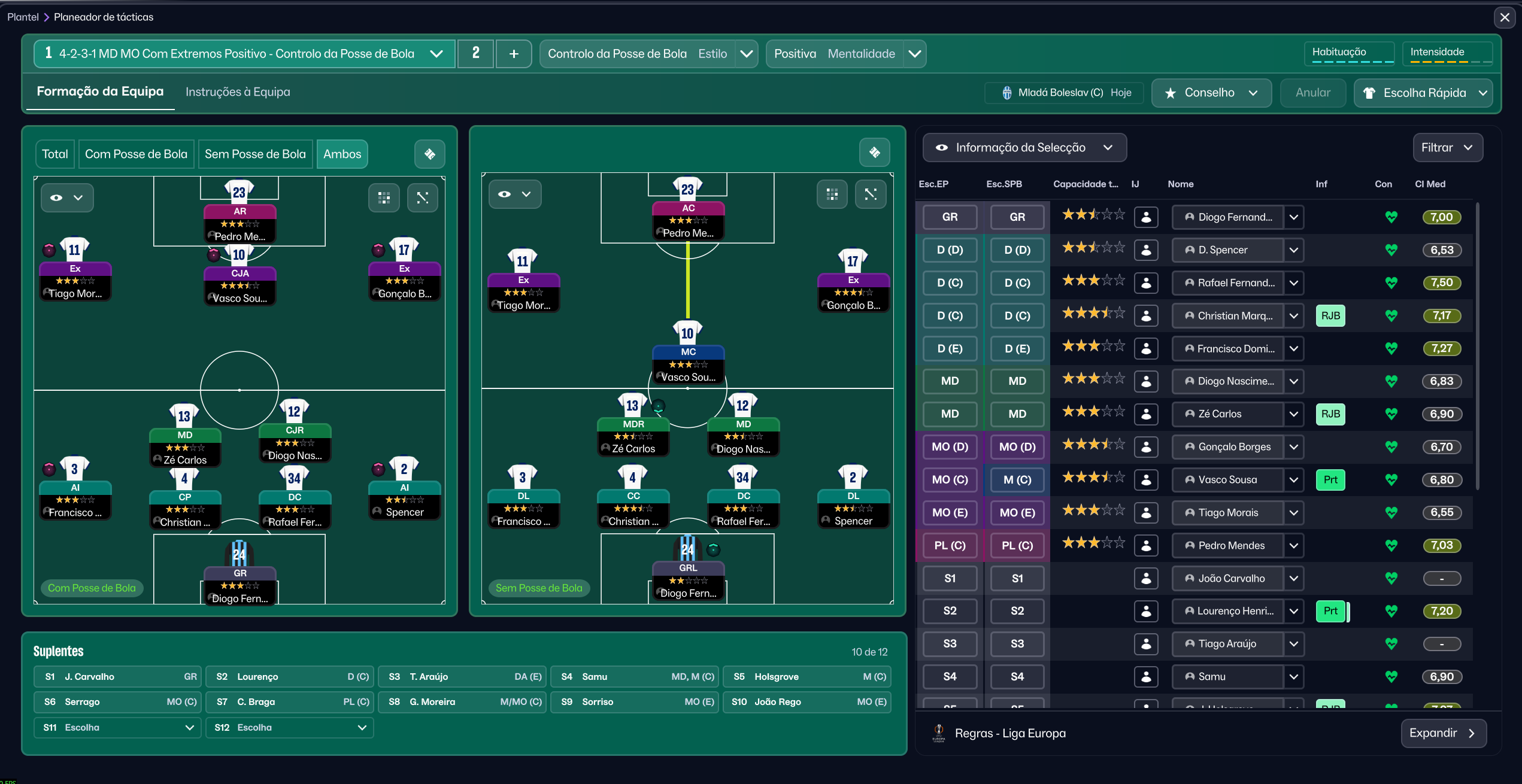
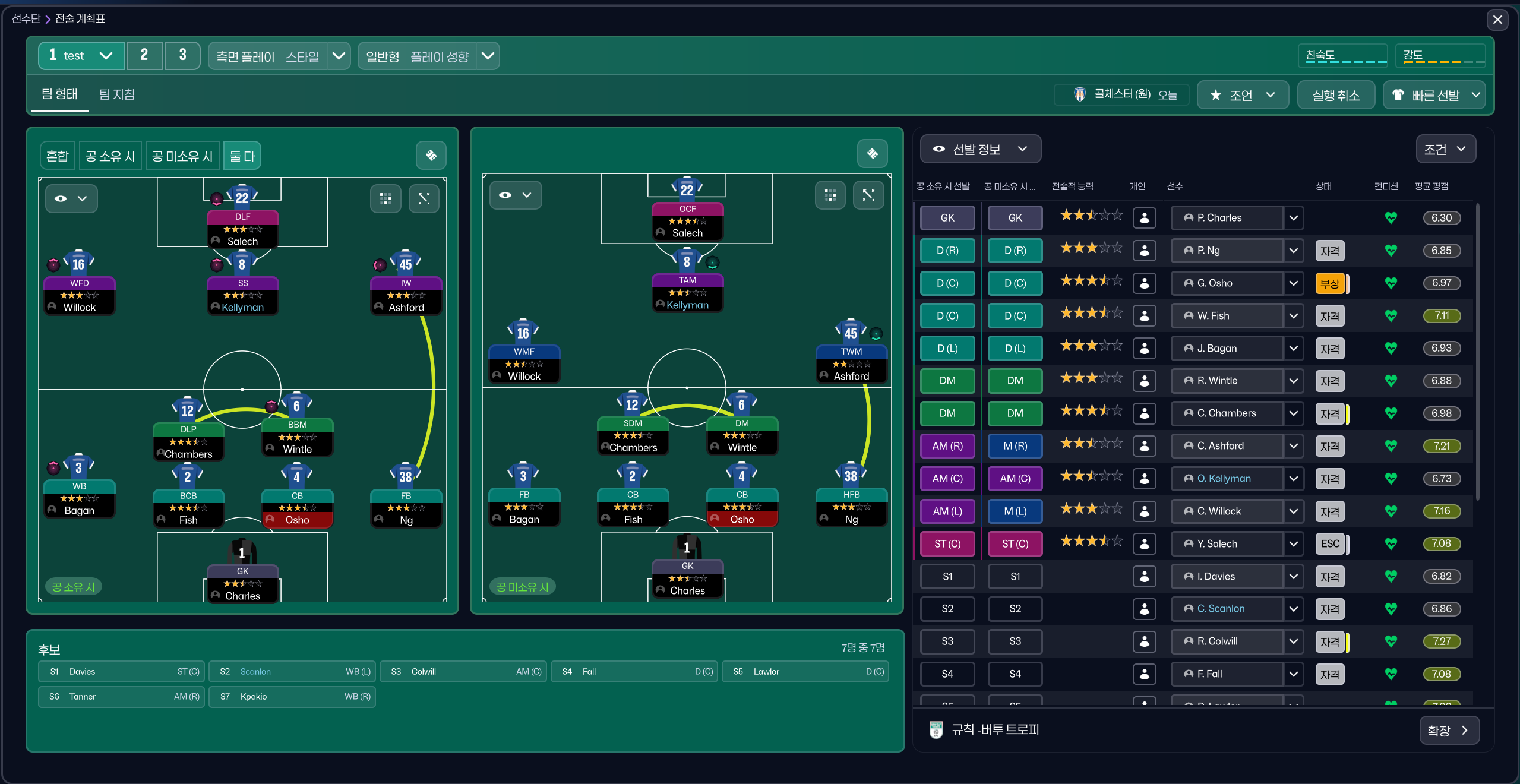
Formation & Style
Tactical Style:Control Possession
Mentality:Positive
Formation:4-2-3-1
Team Fluidity:Fluid
In Possession
Focus on short passing and maintaining possession.
Utilize width with positive wingers and advanced central players.
Encourage overlapping runs from full-backs.
In Transition
Counter-press immediately after losing possession.
Prioritize recovery positioning to maintain shape.
Out of Possession
Implement a high defensive line to compact the space.
Maintain a standard line of engagement.
Team Shape Without Ball
Shape:4-4-2
Description:The team transitions to a compact and organized 4-4-2 shape when out of possession.
Evidence:Solid pairing of two banks of four with central midfielders supporting during defensive actions.
Team Shape With Ball
Shape:4-2-3-1
Description:In attack, the team utilizes a flexible 4-2-3-1 shape emphasizing width and penetration via the wings.
Evidence:Wingers stretching the play while the attacking midfielder supports the striker.
Phase Description
Attacking Play
The team moves the ball quickly through the midfield, utilizing flanks with overlapping full-backs and cutting inside wingers.
Defensive Transition
Upon losing possession, immediate pressing is applied to regain ball control quickly.
Main Focus
Creating goal-scoring opportunities through patient build-up play.
Key Strengths
Wide Play Potential
Wingers provide width, drawing defenders and creating space.
Dynamic Midfield Play
Combination of playmakers and a holding midfielder facilitates effective transition.
Balanced Defensive Structure
Four solid defenders ensure stability and protection against counter-attacks.
Conflicting Directions
High Defensive Line vs Fast Counter-Attacks
Vulnerability to quick counter-attacks exists due to high defensive line placement.
Over-reliance on Wingers
The tactical setup significantly depends on wingers for width.
Inconsistent Support from Full-Backs
Full-backs may become isolated if wingers occupy wider positions.
Tactical Suggestions
Adjust Defensive Line
Consider lowering the defensive line to reduce counter-attack vulnerabilities.
Diversify Attack Options
Encourage central midfielders to make forward runs to offer additional attacking outlets.
Utilize Overlaps More Frequently
Push full-backs to make overlapping runs to support attacking plays.
Ask Questions About Your Lineup
Related Tactics
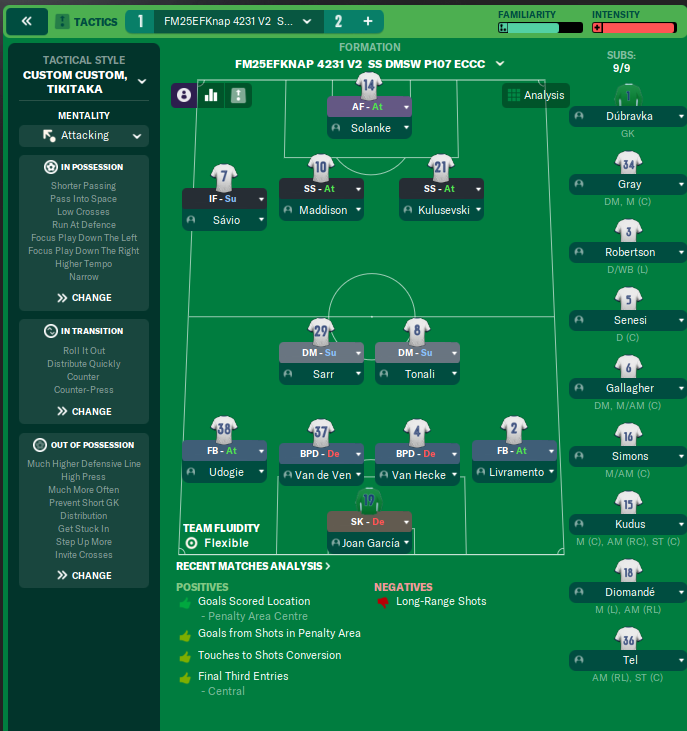
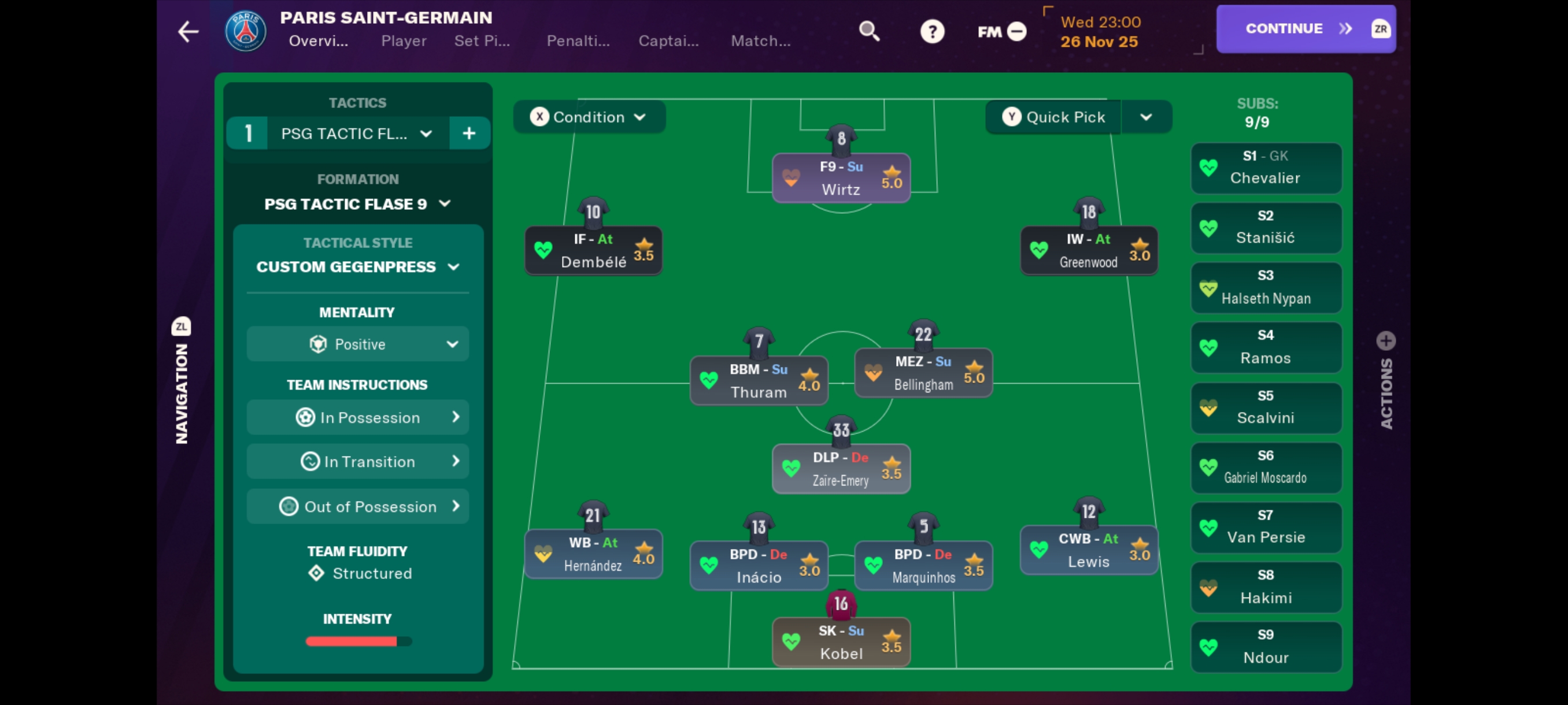
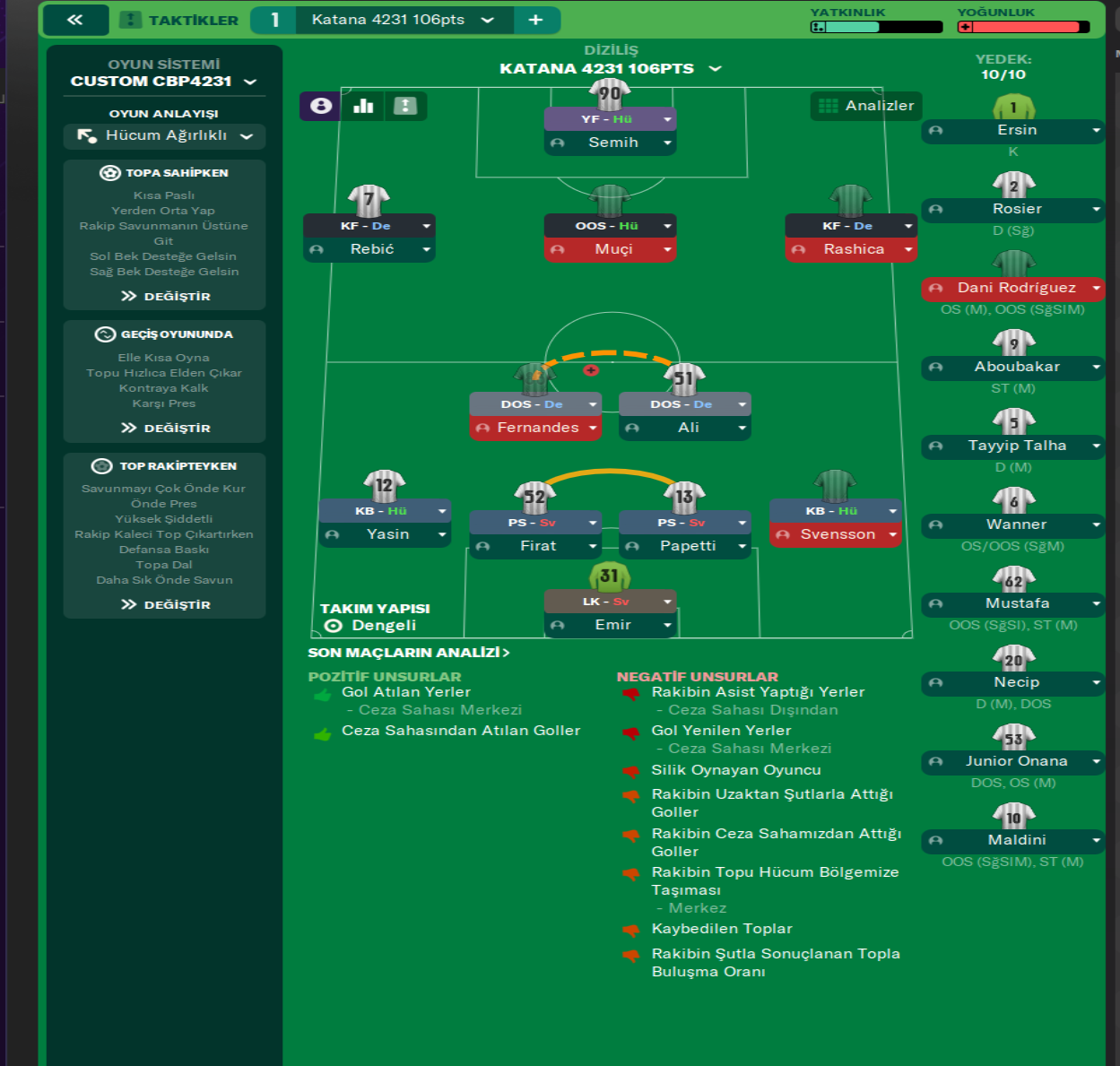
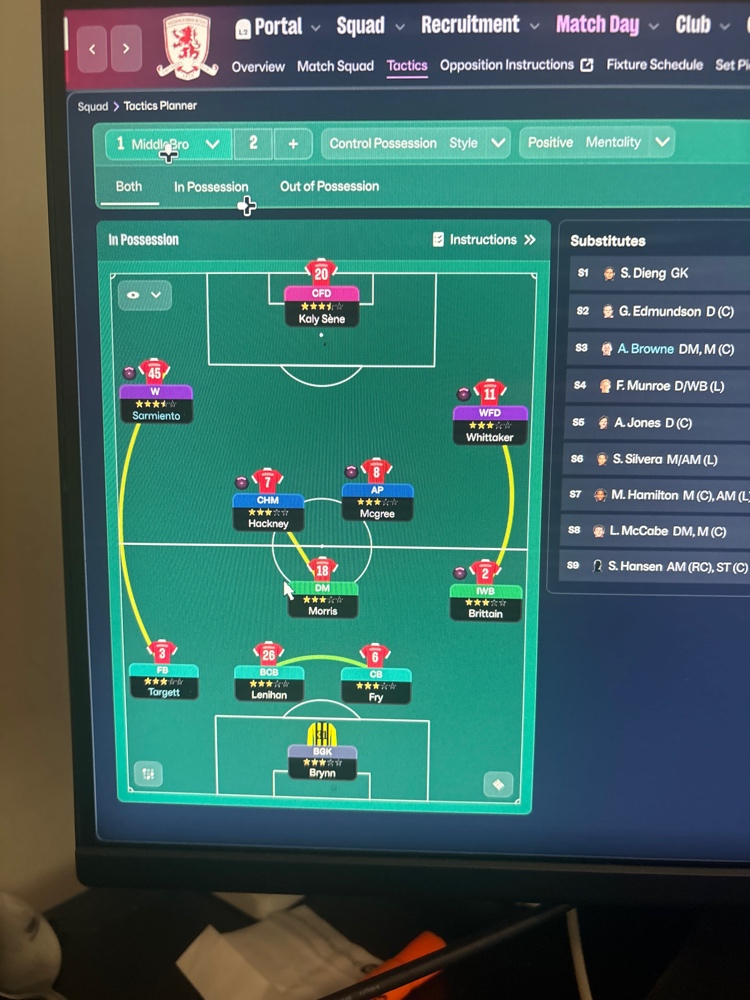
More Control Possession tactics
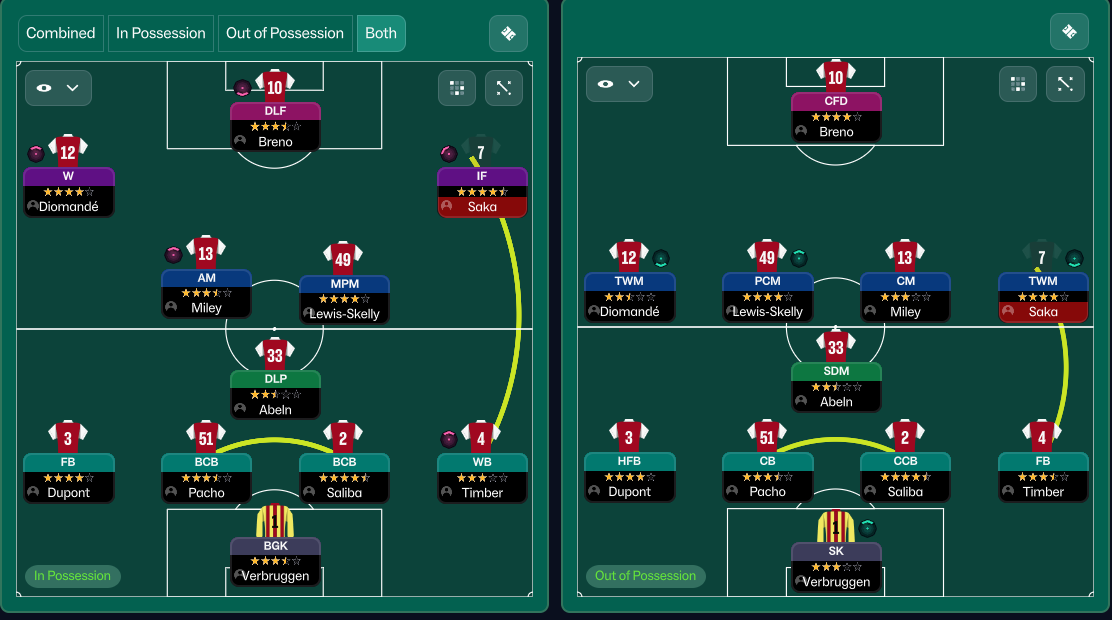
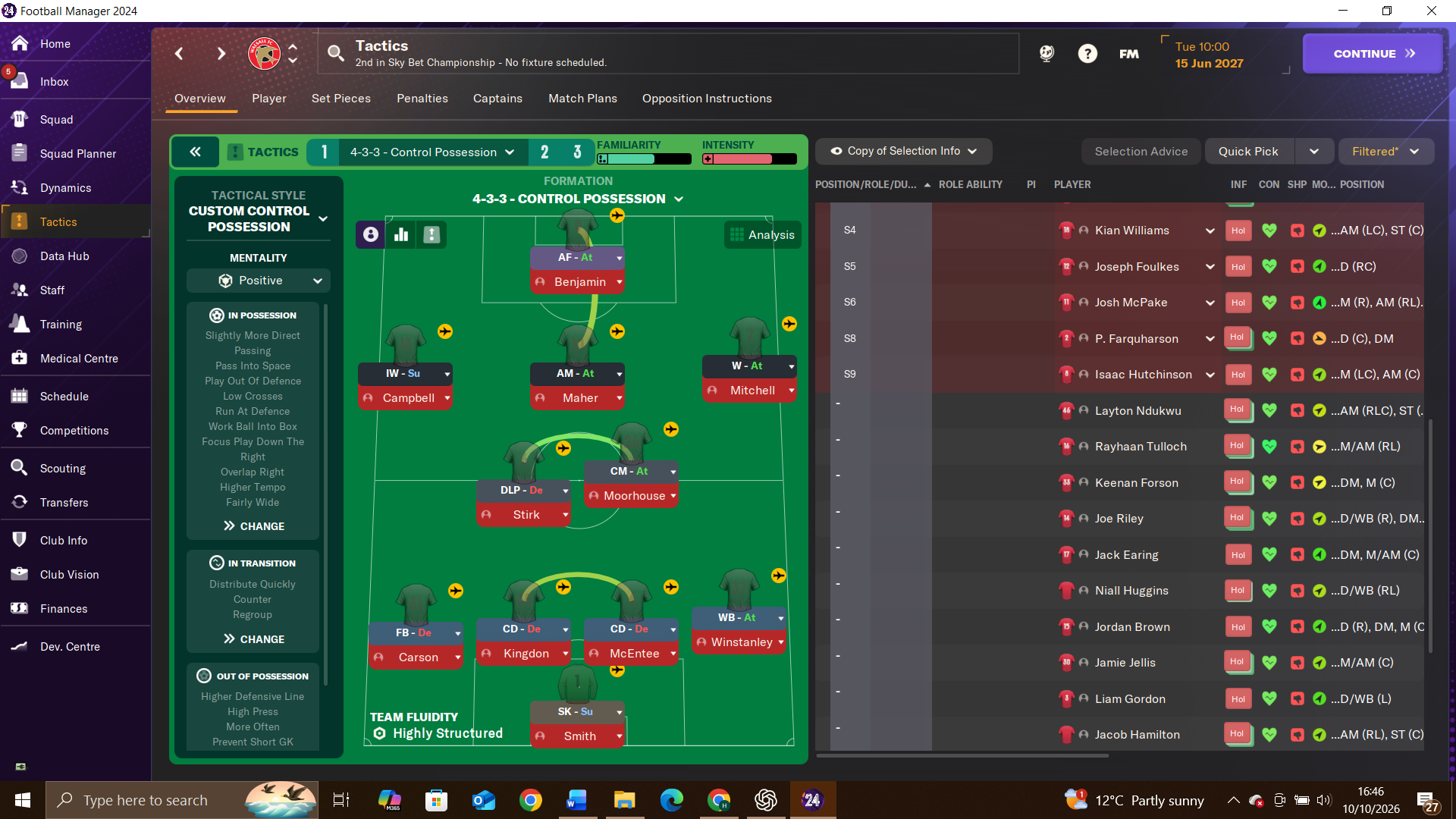
Guides for this formation
The tactical theory behind the 4-2-3-1: roles, instructions, and the trade-offs that decide whether the system holds up.
Player pairings
Midfield Pairs in 4-2-3-1 and 4-4-2
Double pivots and flat pairs in 4-2-3-1 and 4-4-2: when each pairing works, when it collapses, and the AMC unicorn that rescues both.
Read guide
Playing styles
Gegenpressing: A Full Guide
Klopp-style gegenpressing in FM, including squad profile, line-and-press pairing, sustainable workload, and the antipatterns to avoid.
Read guide