Uploaded Tactic
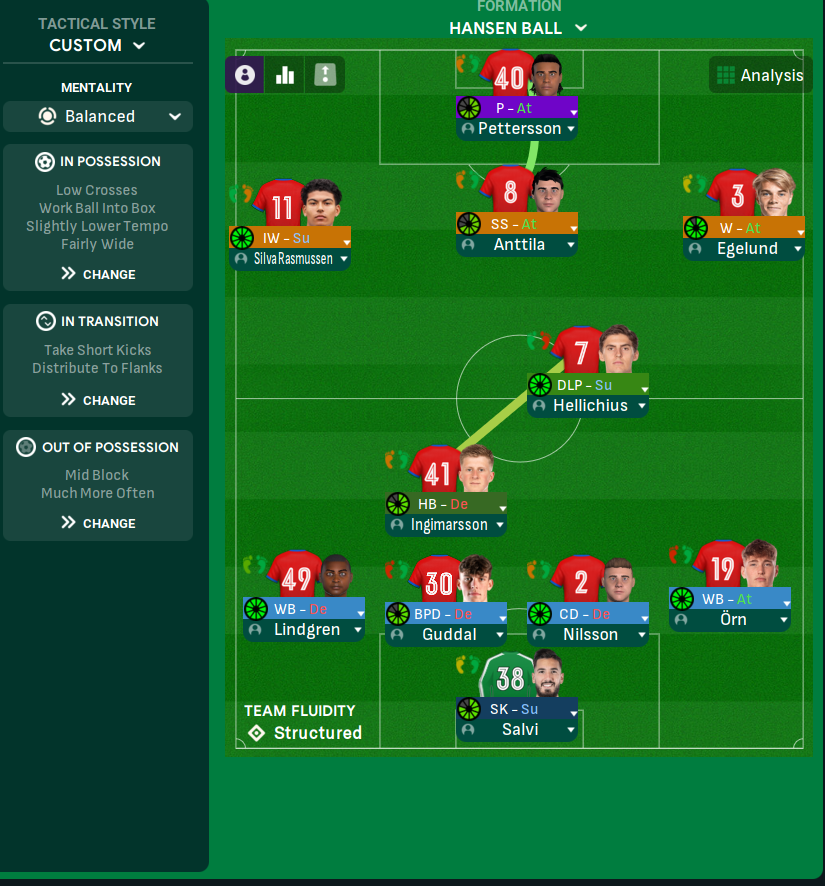
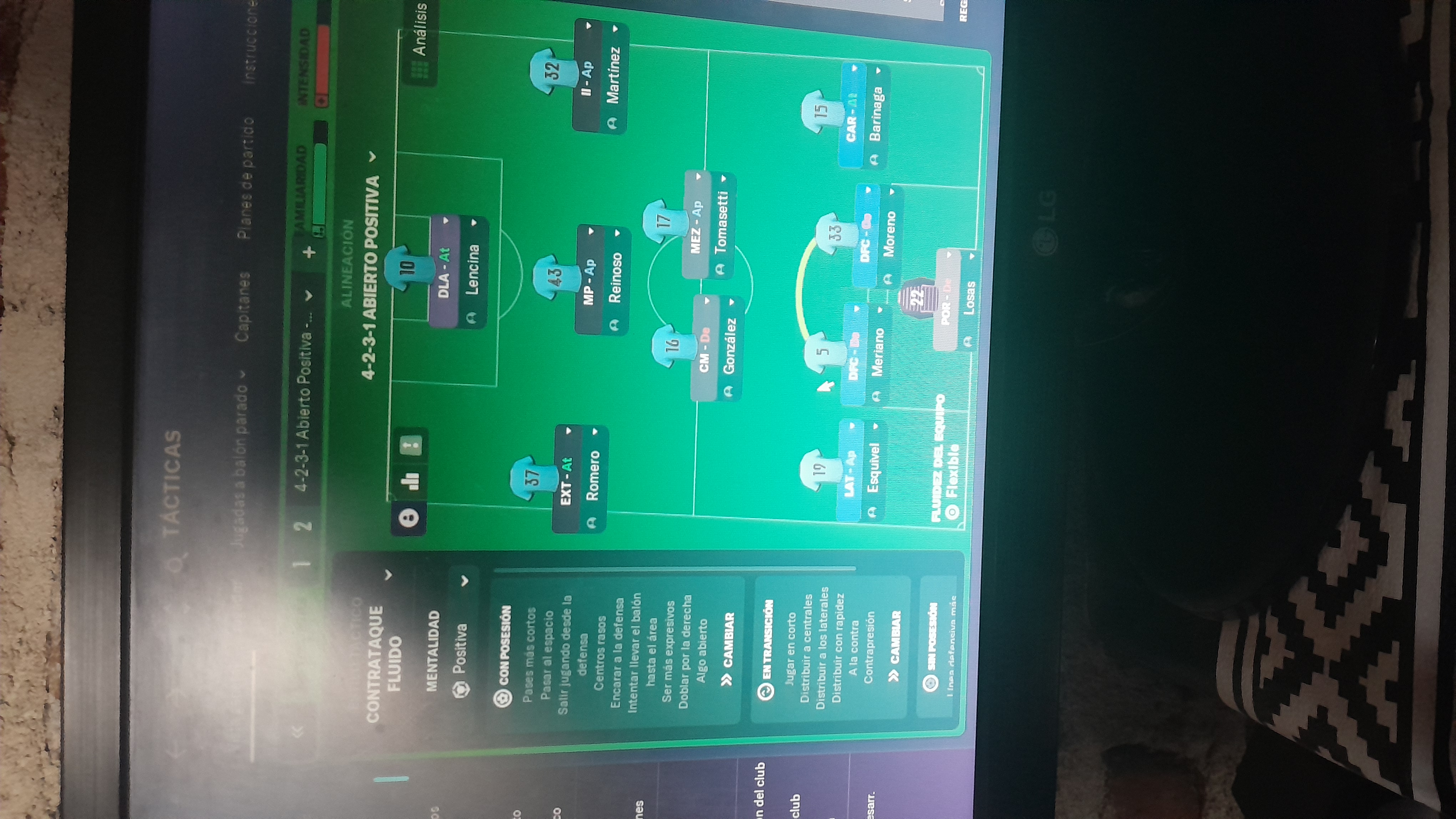
Formation & Style
Tactical Style:Custom
Mentality:Balanced
Formation:4-2-3-1
Team Fluidity:Structured
In Possession
Low Crosses
Work Ball Into Box
Slightly Lower Tempo
Fairly Wide
In Transition
Take Short Kicks
Distribute To Flanks
Out of Possession
Mid Block
Much More Often
Team Shape Without Ball
No team shape without ball data available
Team Shape With Ball
No team shape with ball data available
Key Strengths
Possession Control
The 'Work Ball Into Box' instruction, combined with a structured team fluidity, enhances control over possession and allows for methodical build-up plays.
Dynamic Attacking Options
Utilizing both wingers and an inside forward provides varied attacking channels, making it difficult for opposition defenses to predict the attacking flow.
Mid Block Pressing
The mid-block approach allows the team to compactly defend, maintaining shape while being positioned to spring counter-attacks effectively.
Complementary Player Roles
Roles like the Shadow Striker and Advanced Forward create overlapping movements, which can exploit spaces left by opposing defenders.
Conflicting Directions
High Defensive Line vs. Mid Block
A high defensive line can conflict with a mid-block strategy; if the team pushes too high, it may create gaps for fast opposing forwards.
Tempo Control
The 'Slightly Lower Tempo' instruction may conflict with the attacking intent of the Advanced Forward; a more urgent tempo might better suit the attacking style.
Role Conflicts
The Half Back role generally suggests deeper positioning, which might conflict with the playmaking responsibilities of the Deep-Lying Playmaker.
Wing Play with Central Focus
While the team is set up to use width, the focus on the central roles may leave the wide areas underutilized, potentially reducing overall attacking effectiveness.
Tactical Suggestions
Adjust Defensive Line
Consider a slight adjustment to the defensive line to balance defensive solidity with attacking support while maintaining the mid-block strategy.
Increase Tempo
Review the possibility of increasing tempo to enhance quick transitions and capitalize on defensive vulnerabilities of opponents.
Consider Flank Utilization
Encourage the Wing Backs to push higher or adjust their roles to be more attacking to complement the Inside Winger's style.
Explore Versatile Player Roles
Experiment with changing the Deep-Lying Playmaker to a Central Midfielder to add more dynamism in midfield.
Ask Questions About Your Lineup
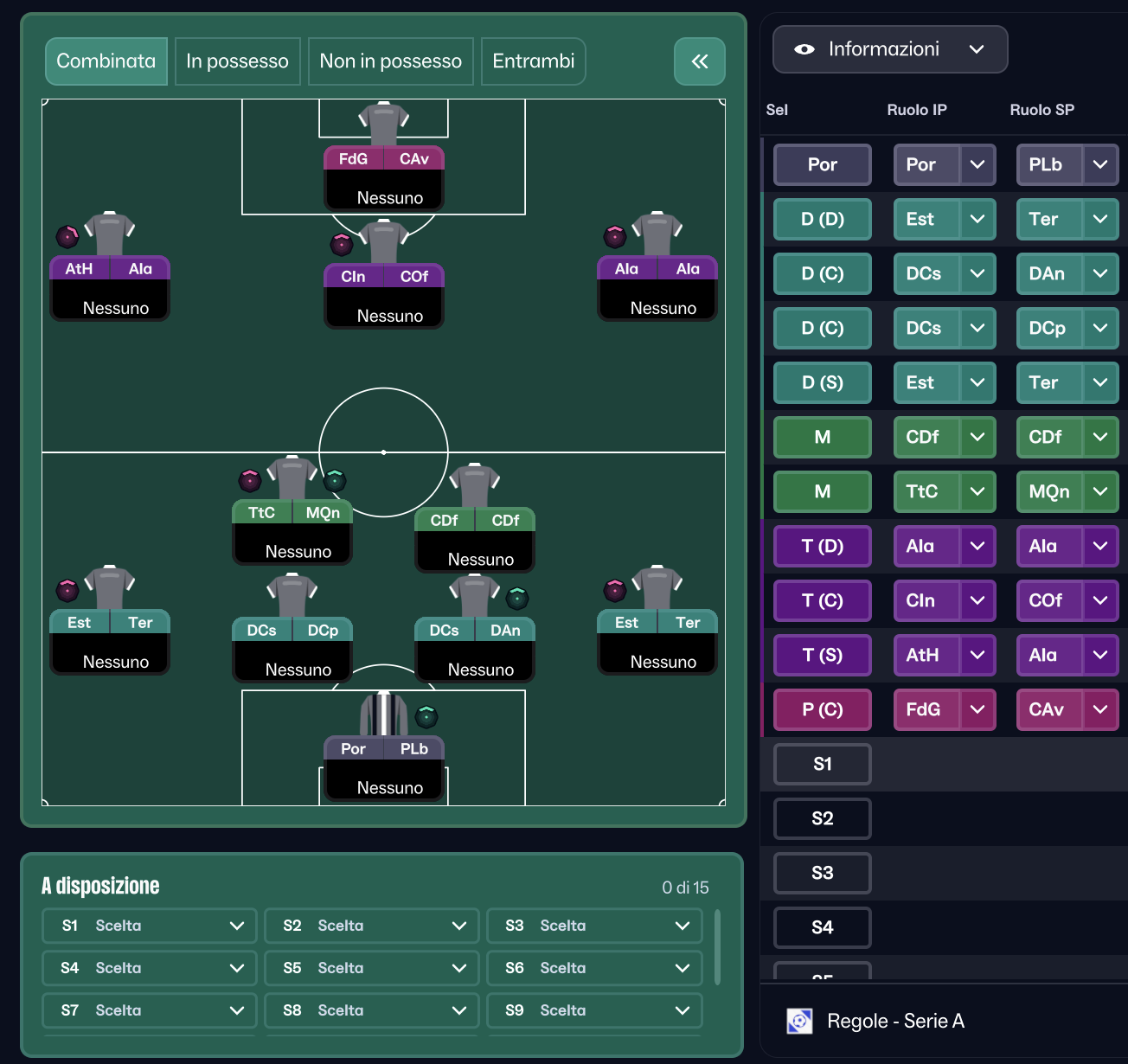
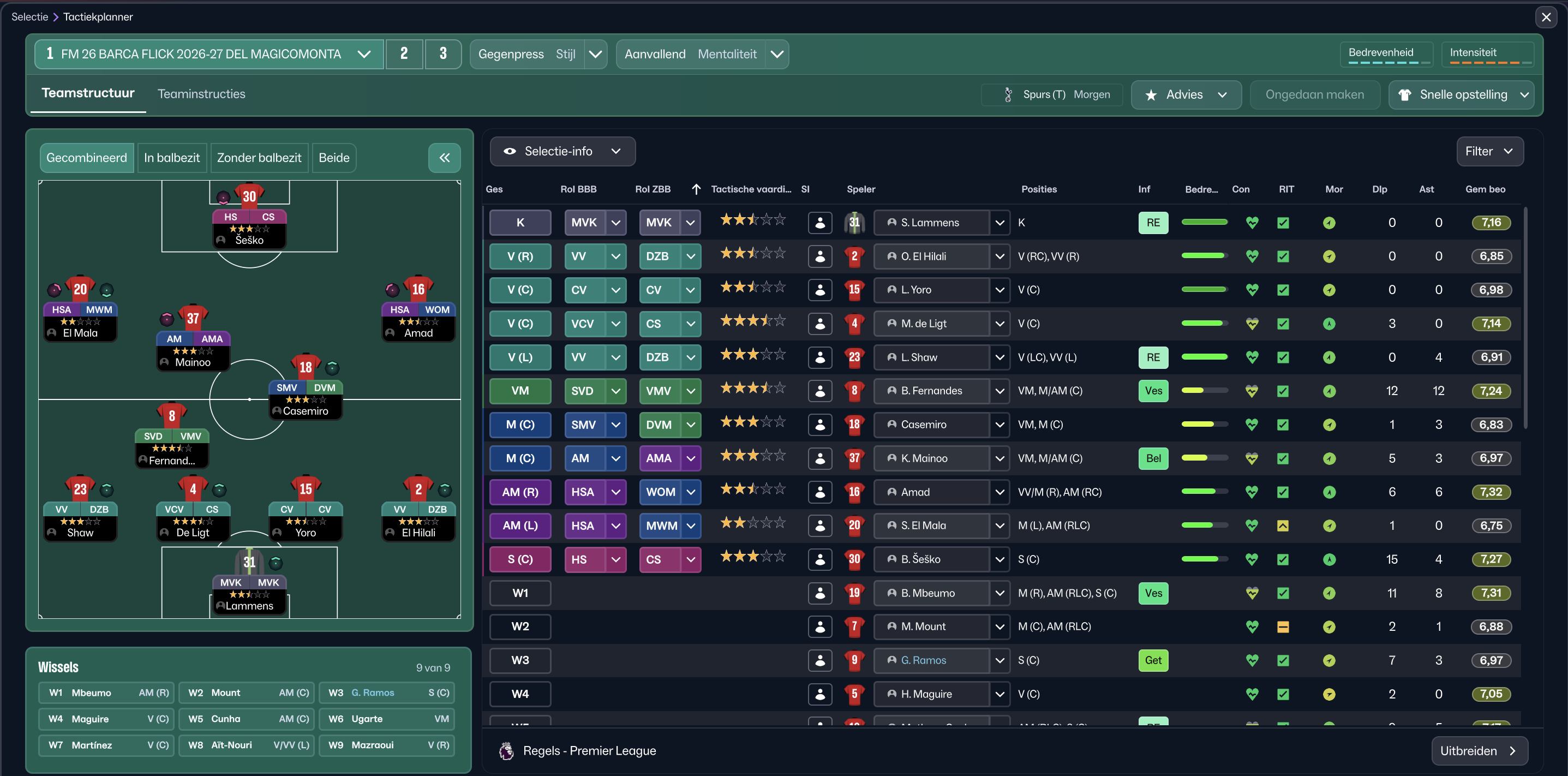
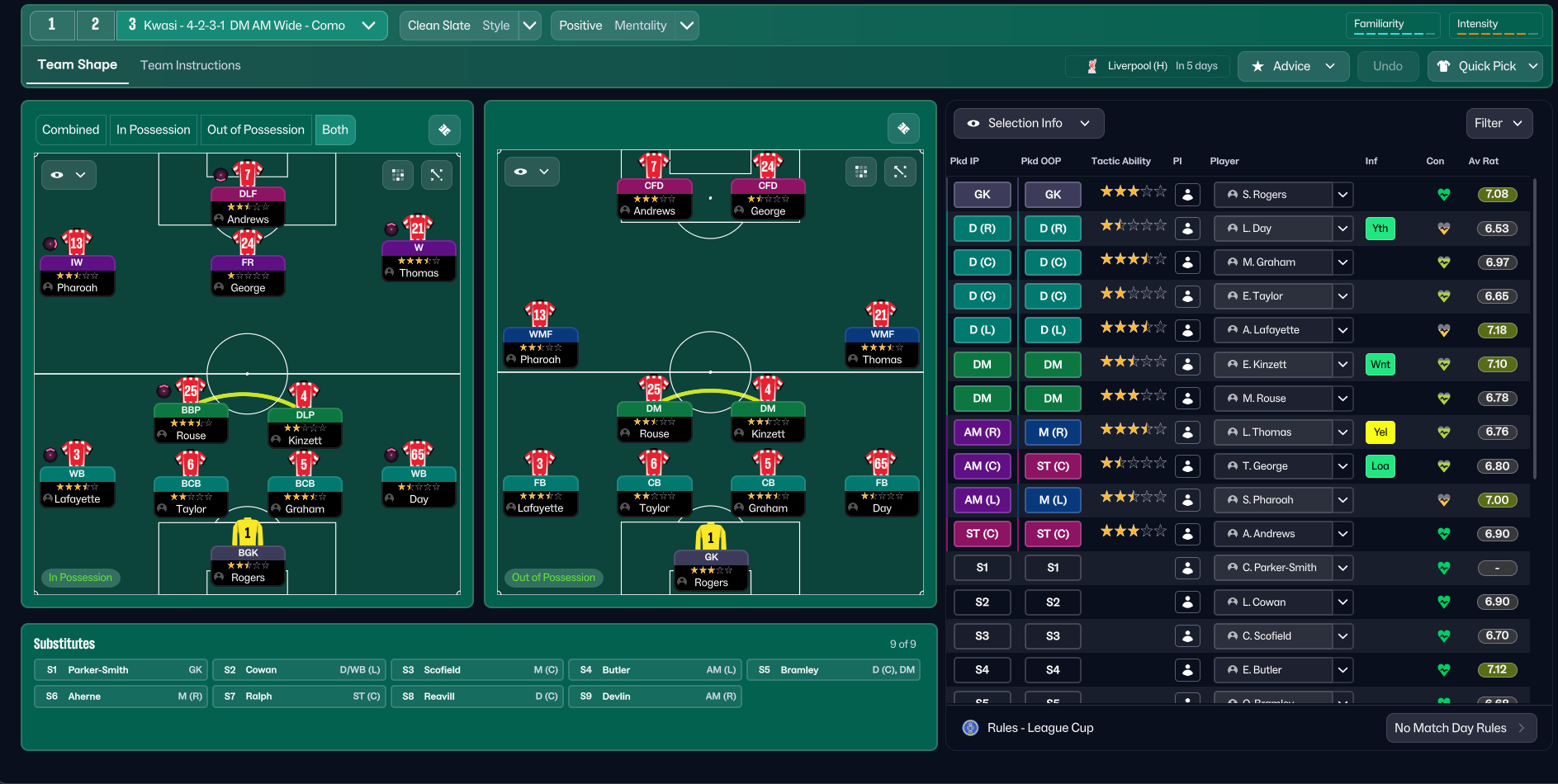
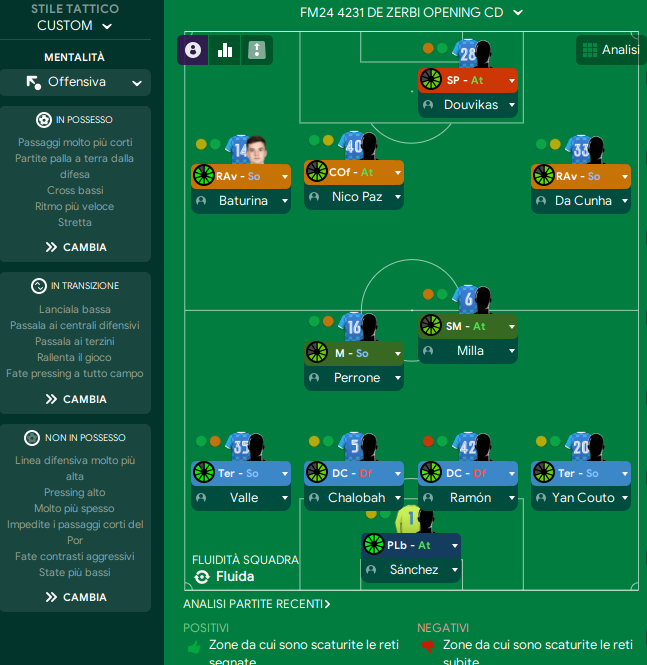
Related Tactics
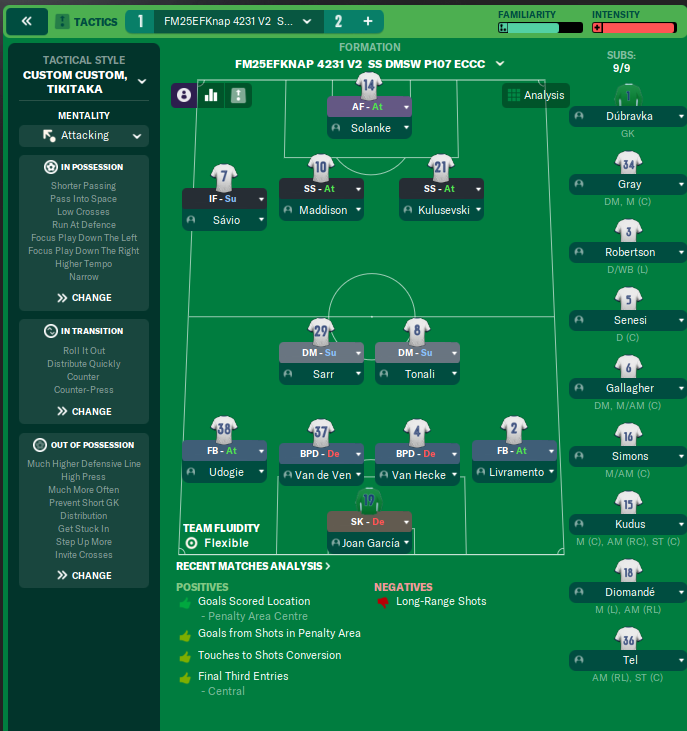
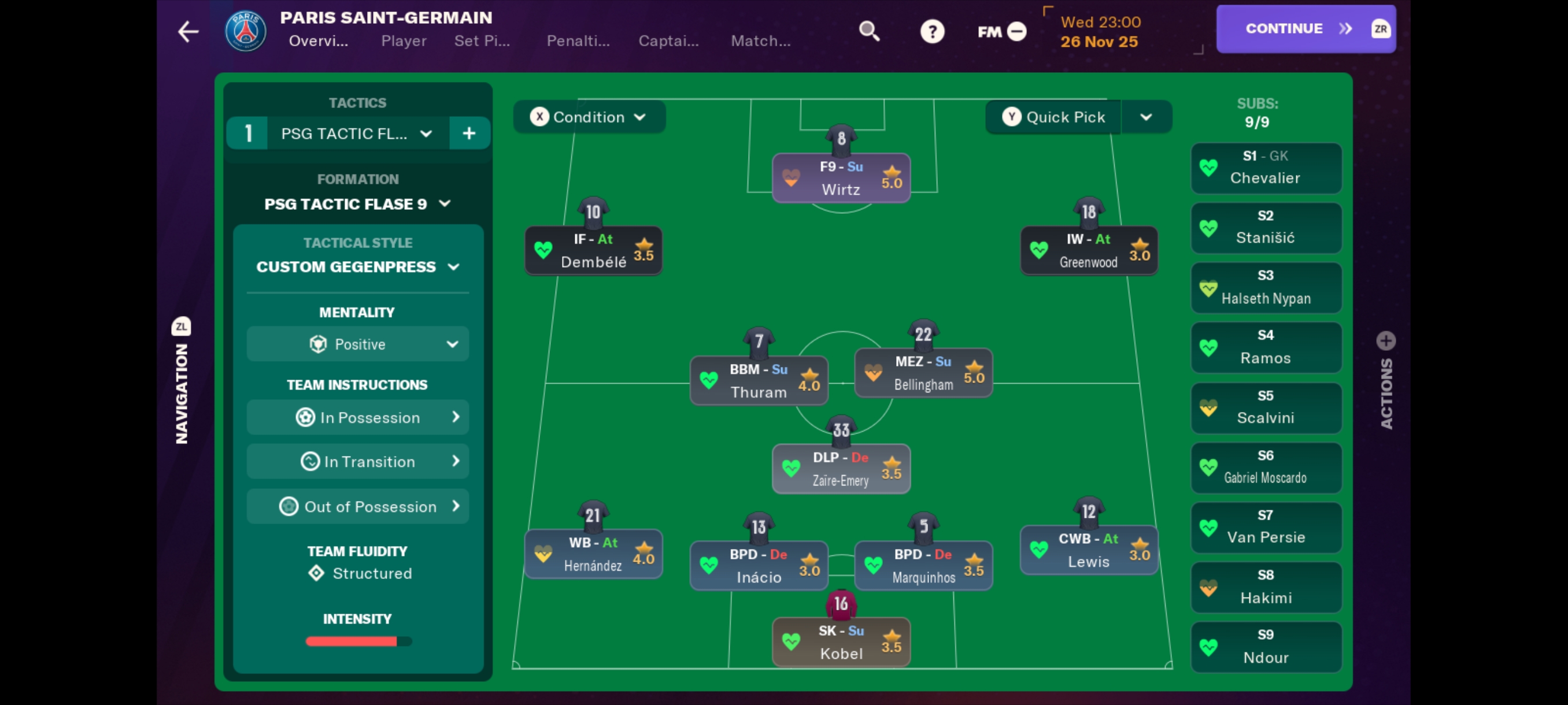
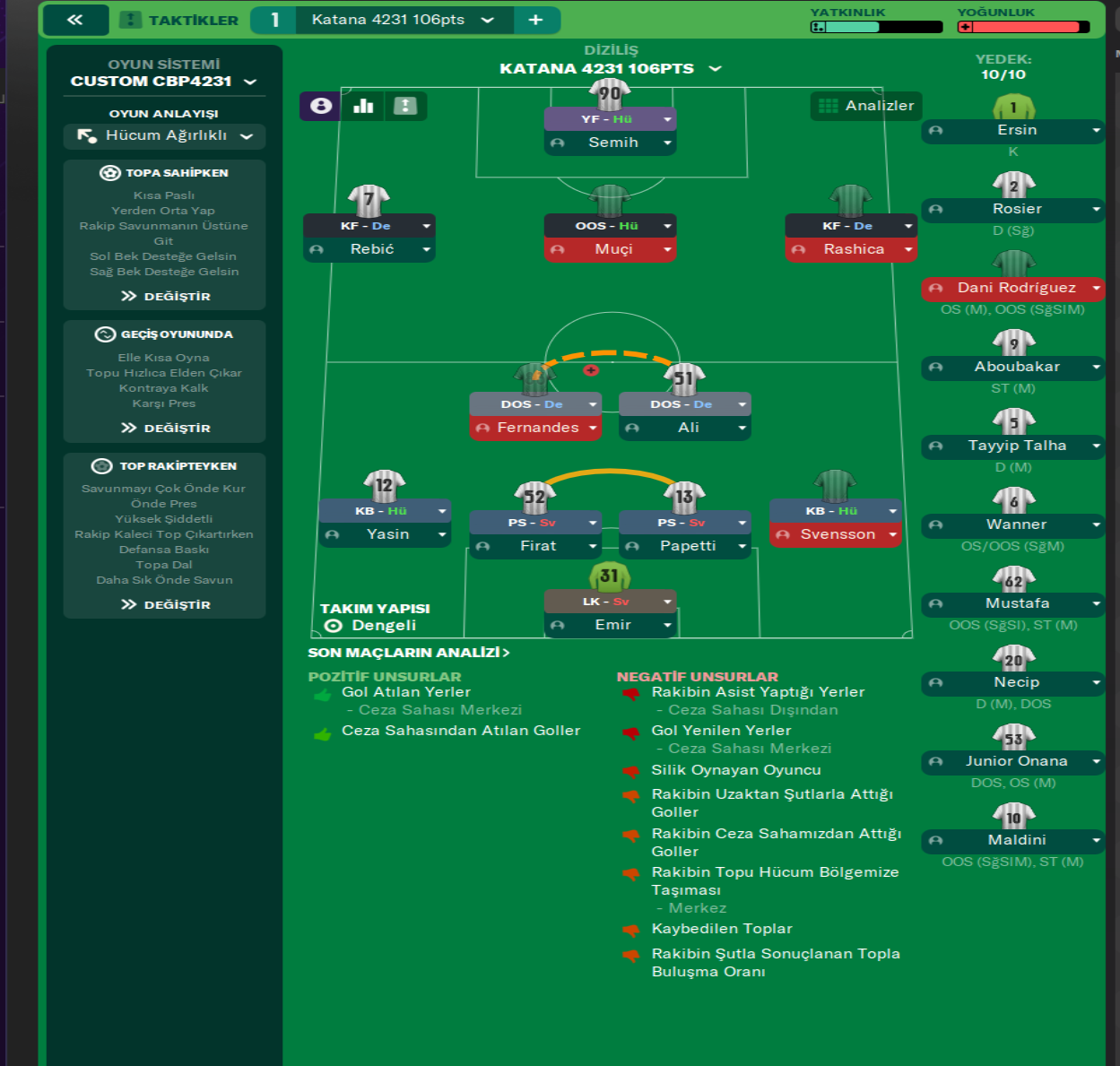
Guides for this formation
The tactical theory behind the 4-2-3-1: roles, instructions, and the trade-offs that decide whether the system holds up.
Player pairings
Midfield Pairs in 4-2-3-1 and 4-4-2
Double pivots and flat pairs in 4-2-3-1 and 4-4-2: when each pairing works, when it collapses, and the AMC unicorn that rescues both.
Read guide
Playing styles
Gegenpressing: A Full Guide
Klopp-style gegenpressing in FM, including squad profile, line-and-press pairing, sustainable workload, and the antipatterns to avoid.
Read guide