Uploaded Tactic
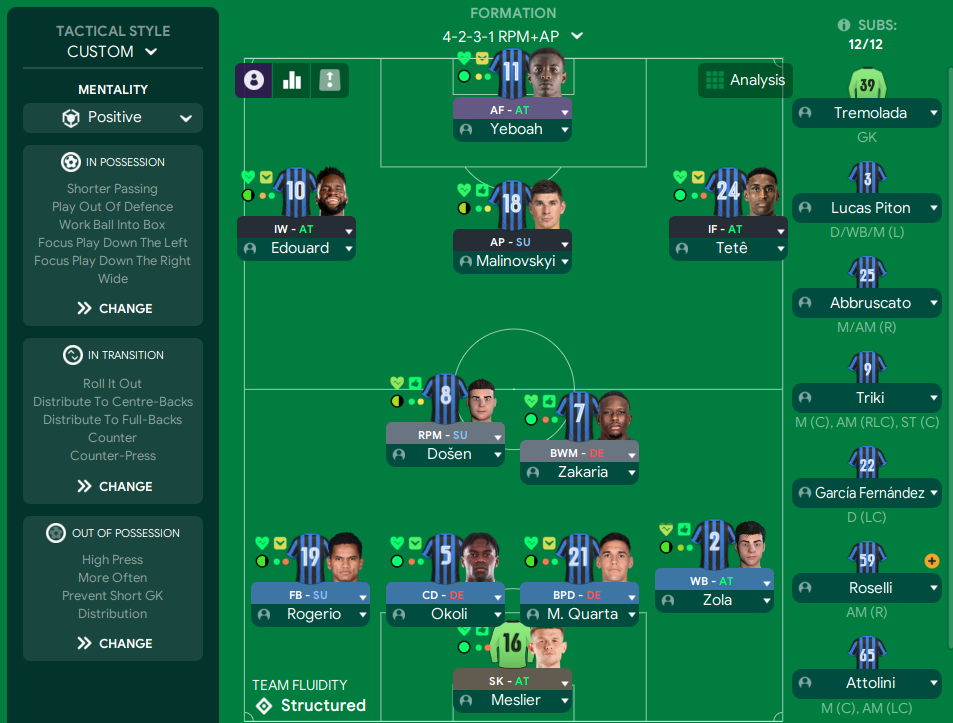
Formation & Style
Tactical Style:Custom
Mentality:Positive
Formation:4-2-3-1
Team Fluidity:Structured
In Possession
Shorter Passing
Play Out Of Defence
Work Ball Into Box
Focus Play Down The Left
Focus Play Down The Right
Wide
In Transition
Roll It Out
Distribute To Centre-Backs
Distribute To Full-Backs
Counter
Counter-Press
Out of Possession
High Press
More Often
Prevent Short GK Distribution
Team Shape Without Ball
Shape:4-2
Description:Compact midfield support with a line of defence focused on blocking passing lanes.
Evidence:BWM-D at [3,2] and BPD-D at [2,3] providing coverage with FB-S at [2,1]
Team Shape With Ball
Shape:3-3-1
Description:Wide play with advanced options exploiting space created by forwards.
Evidence:IF-A at [5,3] and AF-A at [6,3] offering varied attacking threats supported by AP-S at [4,3]
Phase Description
Attacking Play
Utilizes width effectively, with Inside Forward and Advanced Players drawing defenders and creating space.
Defensive Transition
Emphasis on immediate pressure following ball loss, helping to regain possession quickly.
Main Focus
Maintaining possession through shorter passes while working the ball into the box.
Key Strengths
Versatile Attacking Options
With an Inside Forward and an Advanced Forward, the setup is dynamic, providing varied attacking threats.
Strong Midfield Control
The combination of a Roaming Playmaker and Ball-Winning Midfielder allows for both defensive stability and creative support.
High Pressing Game
The high pressing style demands quick ball recovery and exploits opponent's mistakes.
Conflicting Directions
Inverted Winger Role
Positioning an Inside Forward may restrict the overlap of the Full-Back on that side.
Distribution Choices
Rolling the ball out while actively pressing might conflict with the defensive structure if not executed carefully.
Fluidity Impacts Width
A structured fluidity may limit the natural interplay between Wing-Backs and forwards.
Tactical Suggestions
Experiment with Fluidity
Consider adjusting to a more fluid setup to enhance player interconnections, particularly in the attacking phases.
Adjust Defender Roles Against Teams with Strong Press
If facing an aggressive offense, consider shifting the BPD role to ensure better ball retention.
Widening the Midfield
Try deploying a Wide Midfielder or Box-to-Box Midfielder to create more width and support wing play.
Ask Questions About Your Lineup
Related Tactics
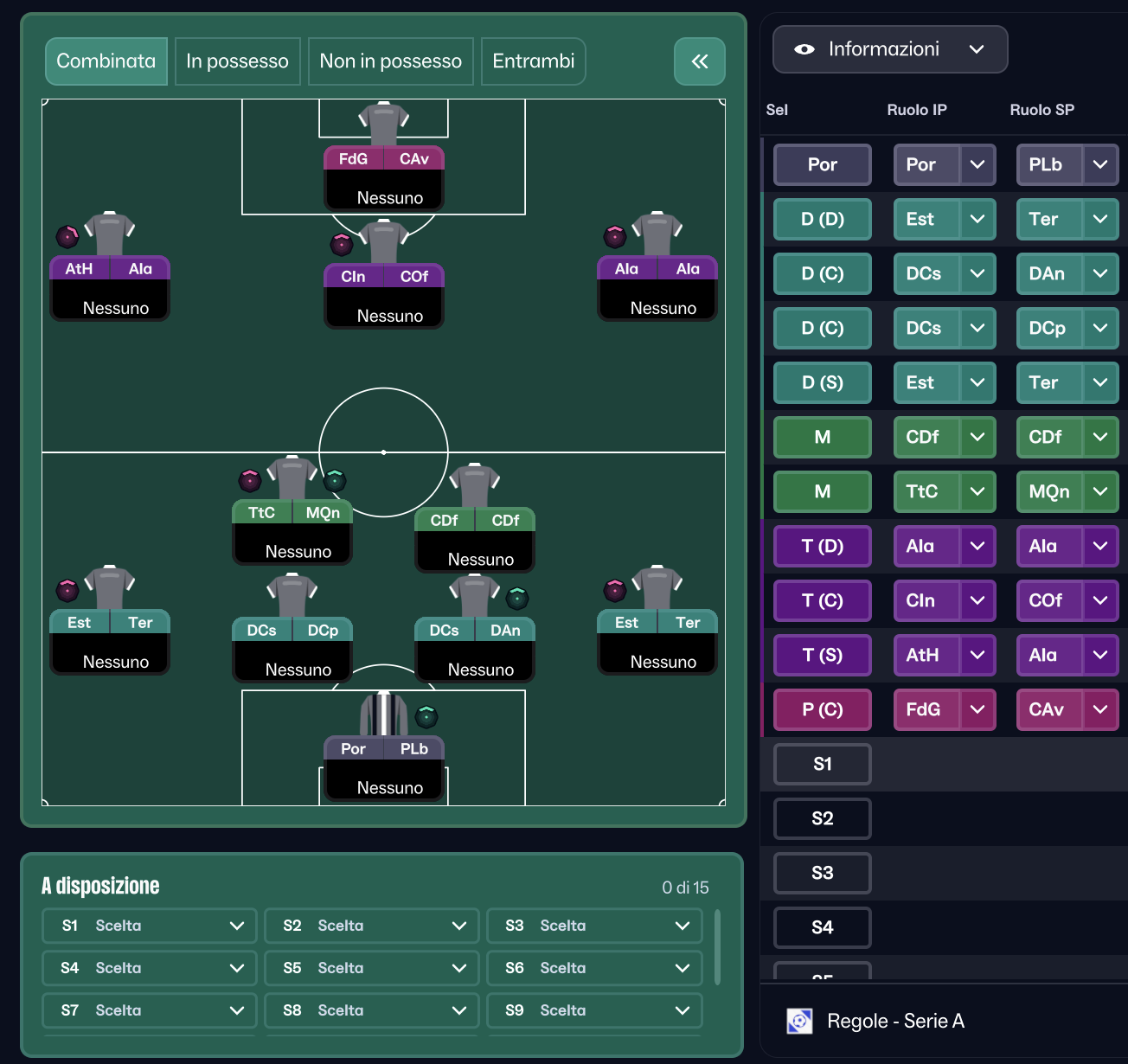
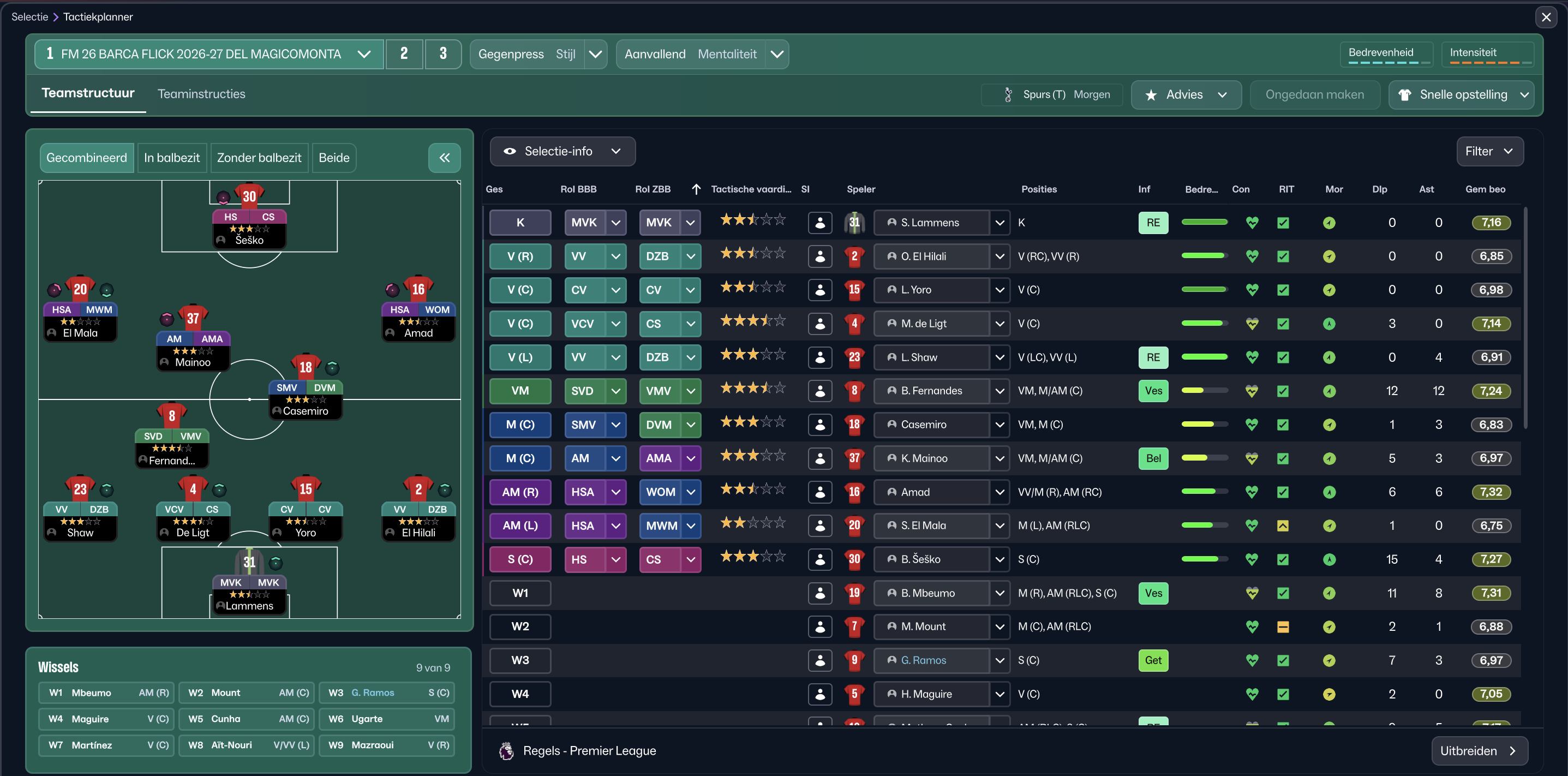
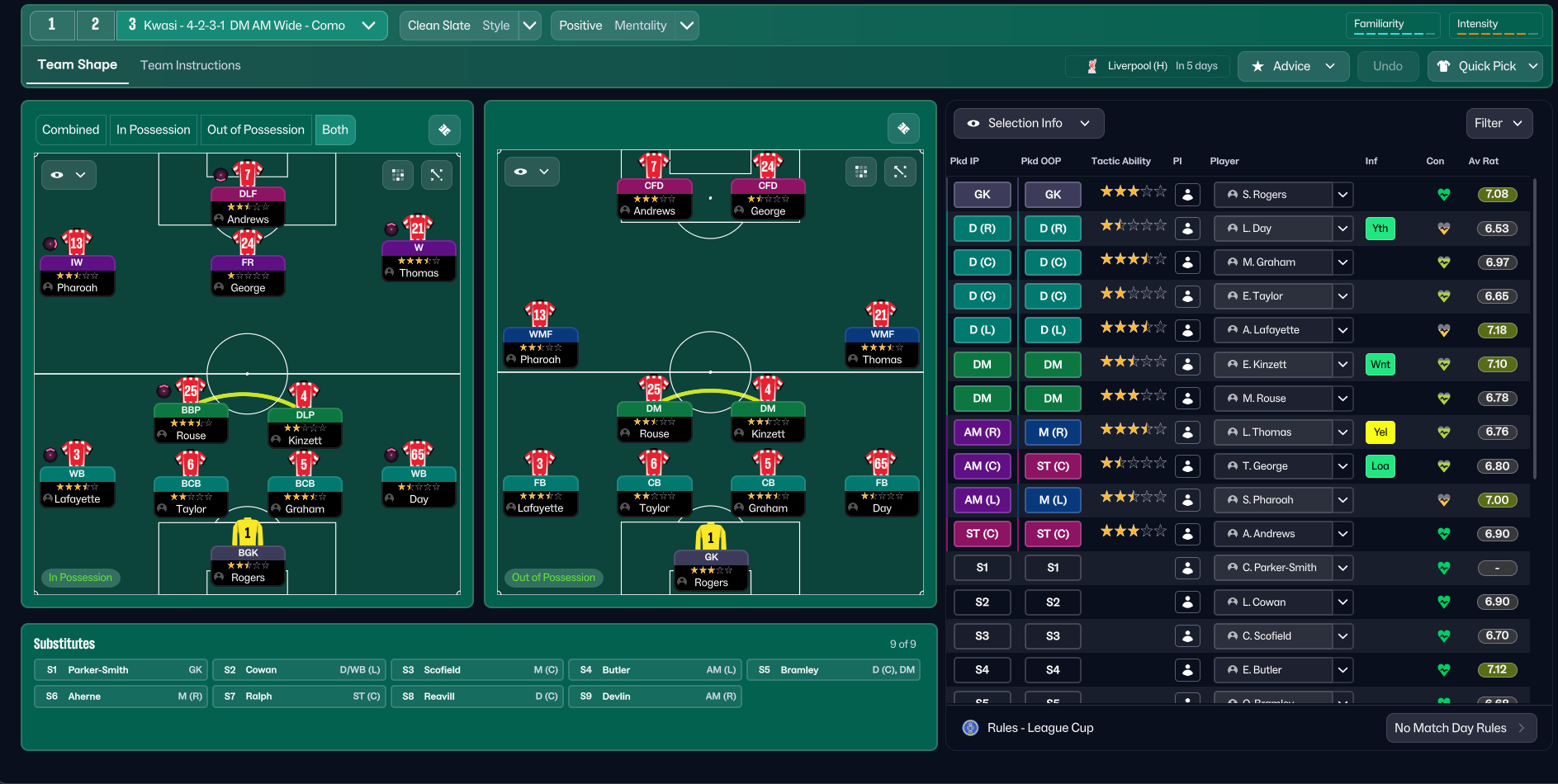
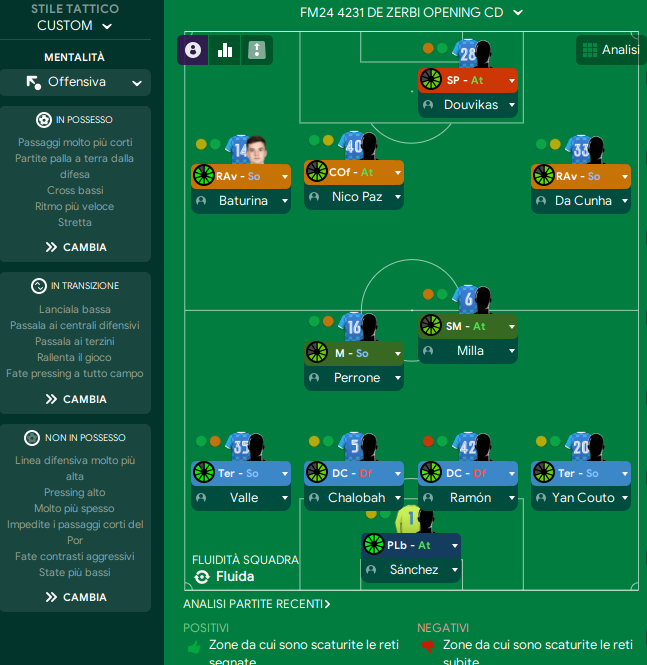
Guides for this formation
The tactical theory behind the 4-2-3-1: roles, instructions, and the trade-offs that decide whether the system holds up.
Player pairings
Midfield Pairs in 4-2-3-1 and 4-4-2
Double pivots and flat pairs in 4-2-3-1 and 4-4-2: when each pairing works, when it collapses, and the AMC unicorn that rescues both.
Read guide
Playing styles
Gegenpressing: A Full Guide
Klopp-style gegenpressing in FM, including squad profile, line-and-press pairing, sustainable workload, and the antipatterns to avoid.
Read guide