Uploaded Tactic
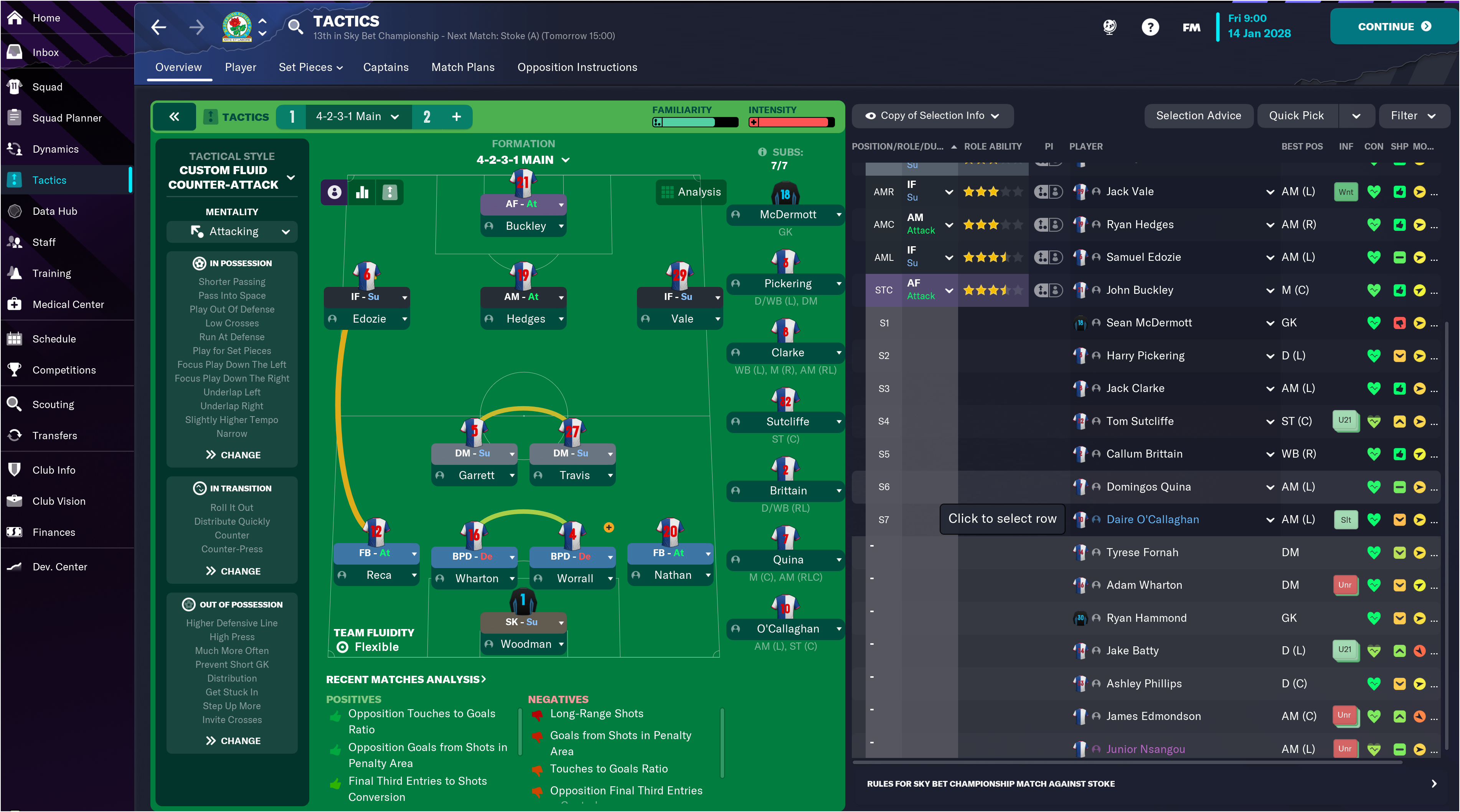
Formation & Style
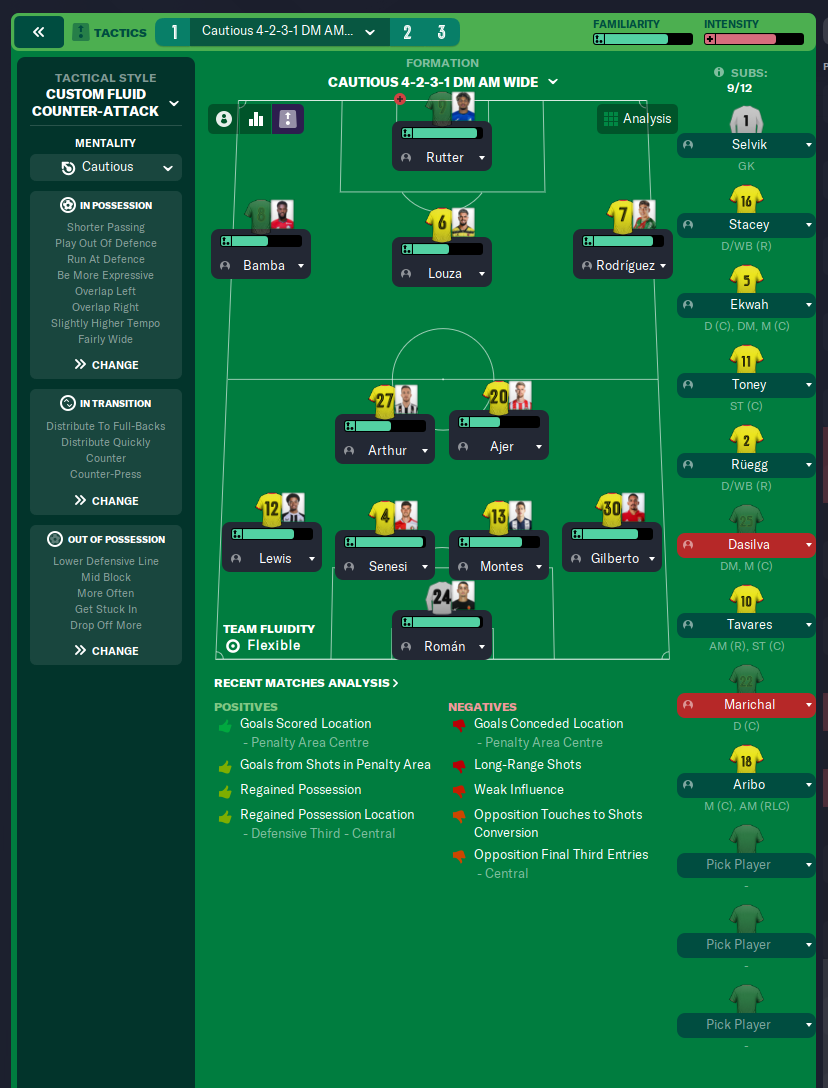
Tactical Style:Custom Fluid Counter-Attack
Mentality:Attacking
Formation:4-2-3-1
Team Fluidity:Flexible
In Possession
Shorter Passing
Pass Into Space
Play Out Of Defence
Low Crosses
Run At Defence
Play for Set Pieces
Focus Play Down The Left
Focus Play Down The Right
Underlap Right
Slightly Higher Tempo
Narrow
In Transition
Roll It Out
Distribute Quickly
Counter
Counter-Press
Out of Possession
Higher Defensive Line
High Press
Much More Often Prevent Short GK Distribution
Get Stuck In
Step Up More
Invite Crosses
Team Shape Without Ball
Shape:4-2
Description:Defensive shape is effective against transitions, with the full-backs encouraged to push up while the DMs protect the back four.
Evidence:Two BPD roles at [2,2] and [2,4] help in progressing play while providing defensive stability.
Team Shape With Ball
Shape:4-3
Description:The attacking shape maintains width from the two inside forwards while allowing the central attacking midfielder to link the play effectively.
Evidence:AM-A at [5,3] supported by IF-Su's at [6,2] and [6,4] create a formidable attack.
Phase Description
Attacking Play
The team will use shorter passing to build from the back, look to exploit wide areas with overlapping full-backs, and make quick penetrating runs into spaces created by the movement of the front three.
Defensive Transition
Upon losing possession, players will look to immediately counter-press to regain possession, utilizing their high pressing setup to restrict the opposition's ability to play out.
Main Focus
To maintain an attacking approach while utilizing counter-attacking opportunities when they arise.
Key Strengths
Dynamic Attack
With several players that can switch positions and create overloads, the attacking front is unpredictable.
Positional Fluidity
The combination of roles allows for quick transitions and adaptability during matches.
Defensive Stability
Two BPDs provide coverage while maintaining the ability to start attacks.
Conflicting Directions
Potential Overexpansion
With a high defensive line and pressing, the team risks leaving space behind that can be exploited.
Limited Width on Attack
Relying heavily on inside forwards could result in a narrow attack.
Vulnerability to Counter-Attacks
The pressing and higher line leaves the defense exposed during rapid opposition counter-attacks.
Tactical Suggestions
Consider an Additional Winger
Incorporating a traditional winger can stretch the opposition defenses, providing better options.
Adjust Defensive Line to Moderate
To decrease vulnerabilities, consider lowering the defensive line slightly.
Utilize Sweeper Keeper Role
Changing to a Sweeper Keeper can enhance defensive stability and support high pressing.
Ask Questions About Your Lineup
Related Tactics
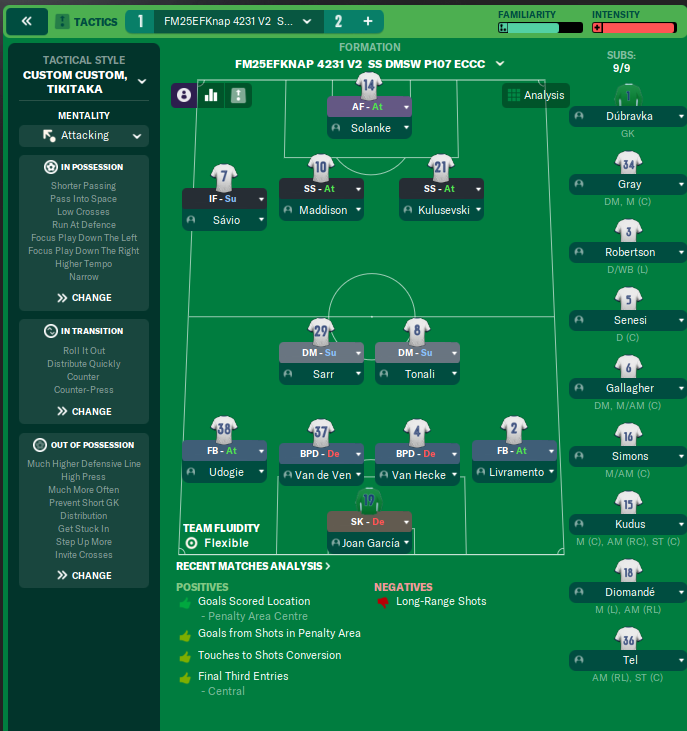
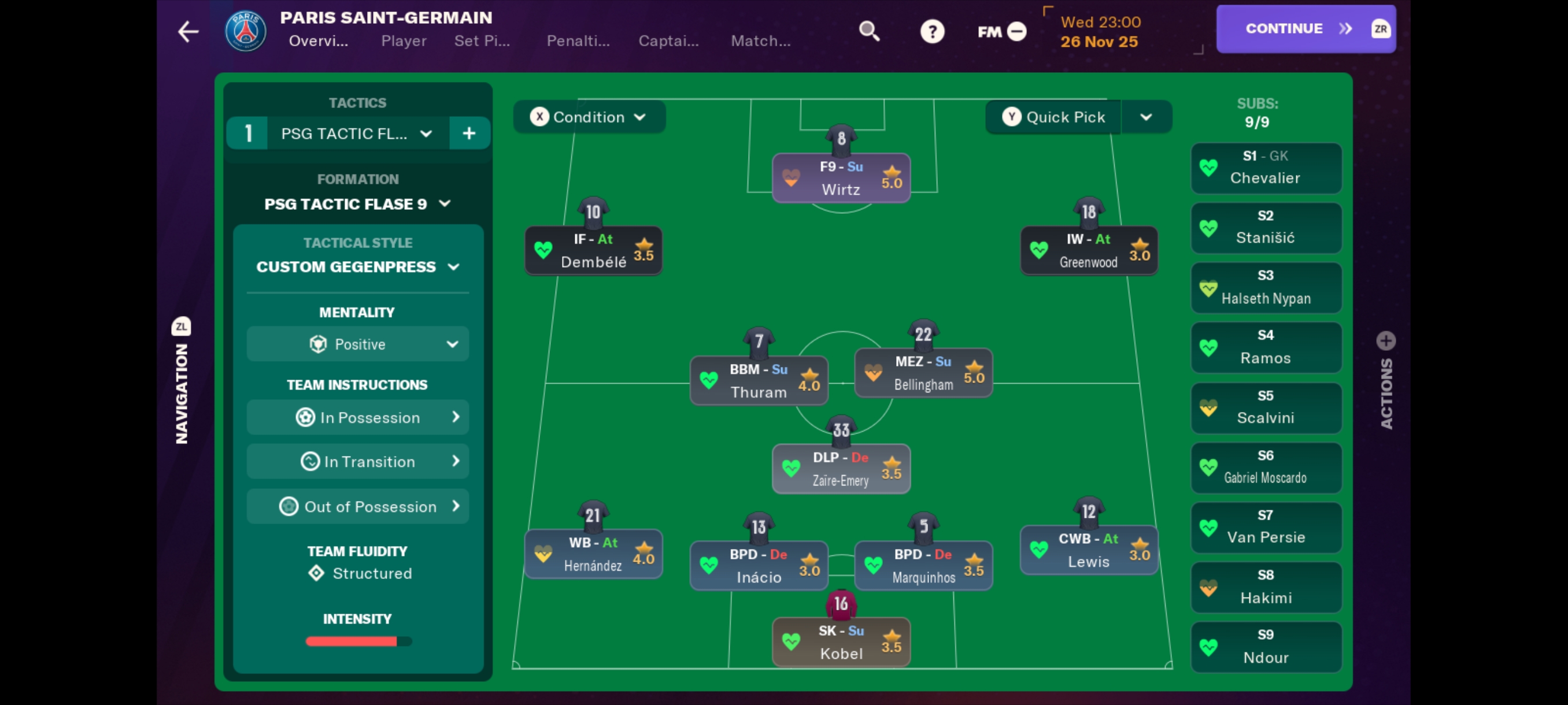
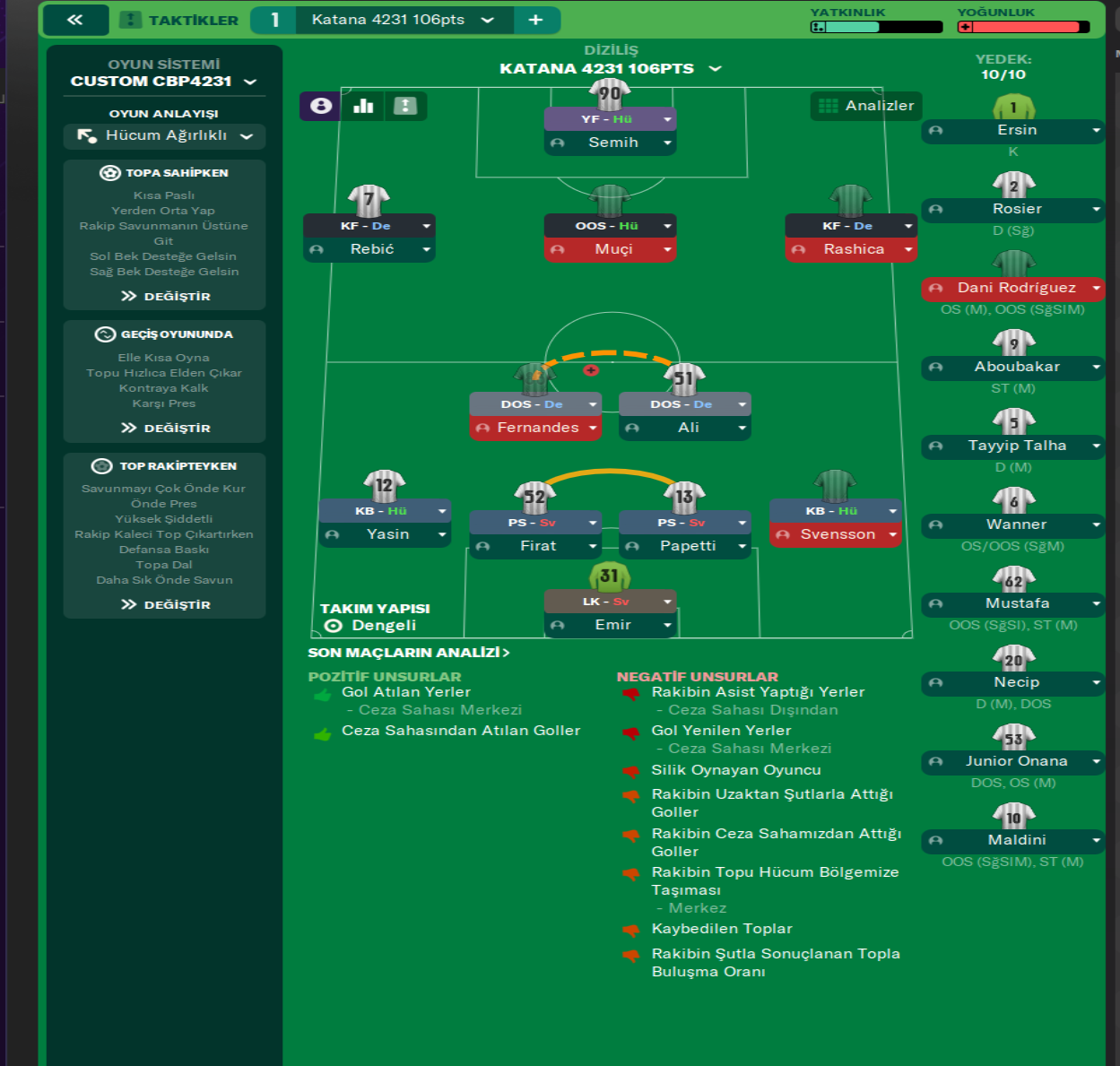
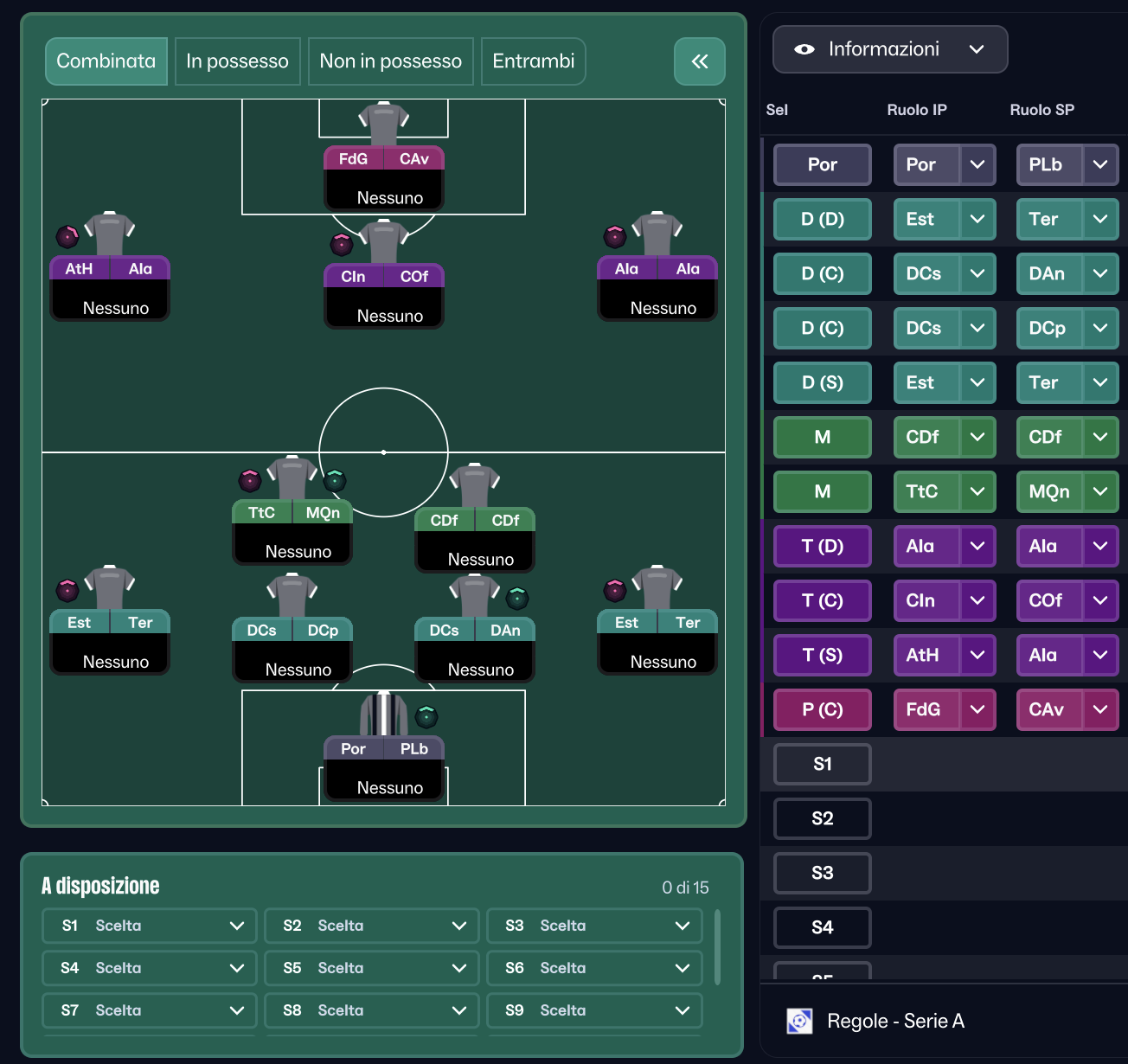
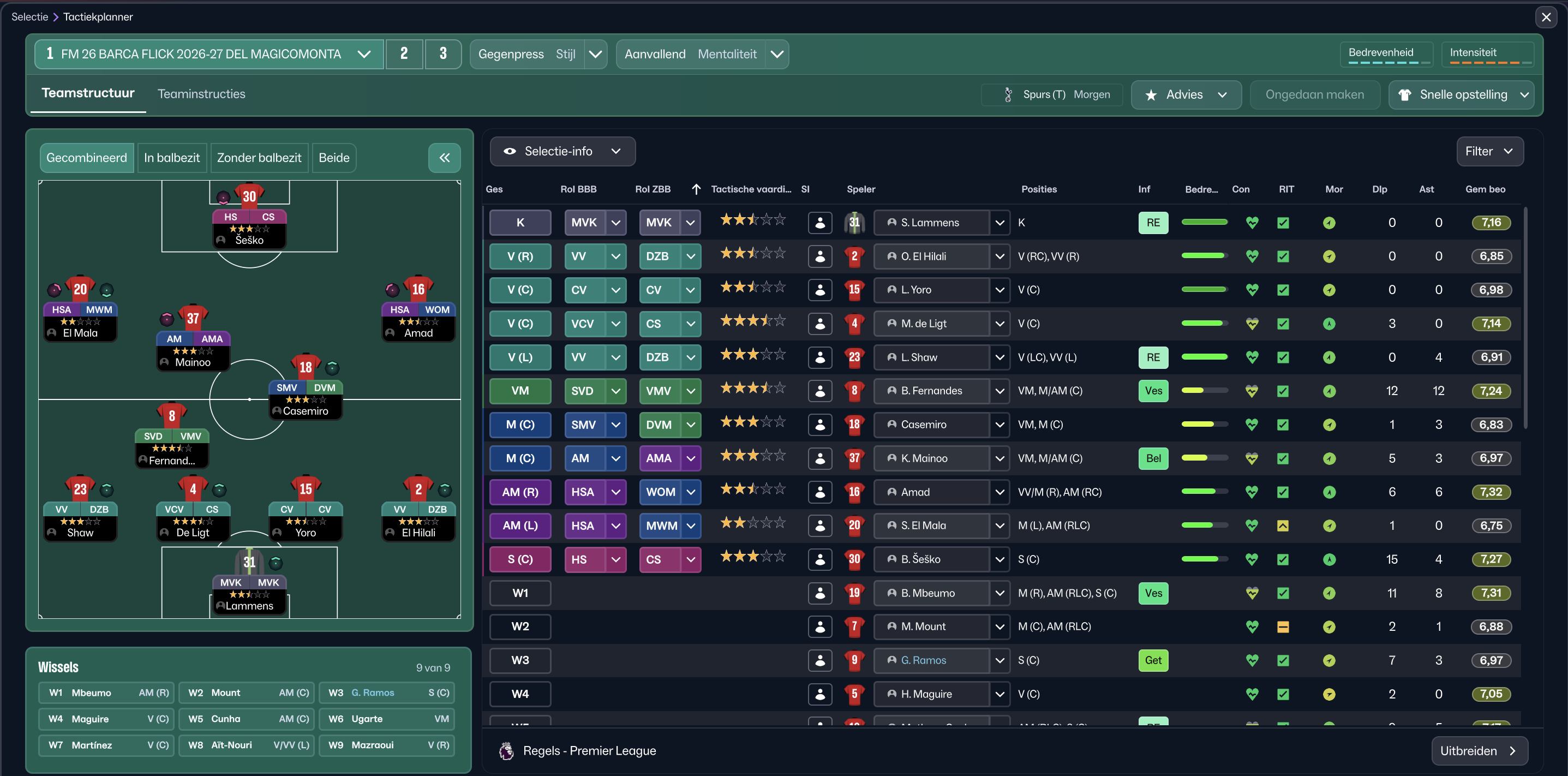
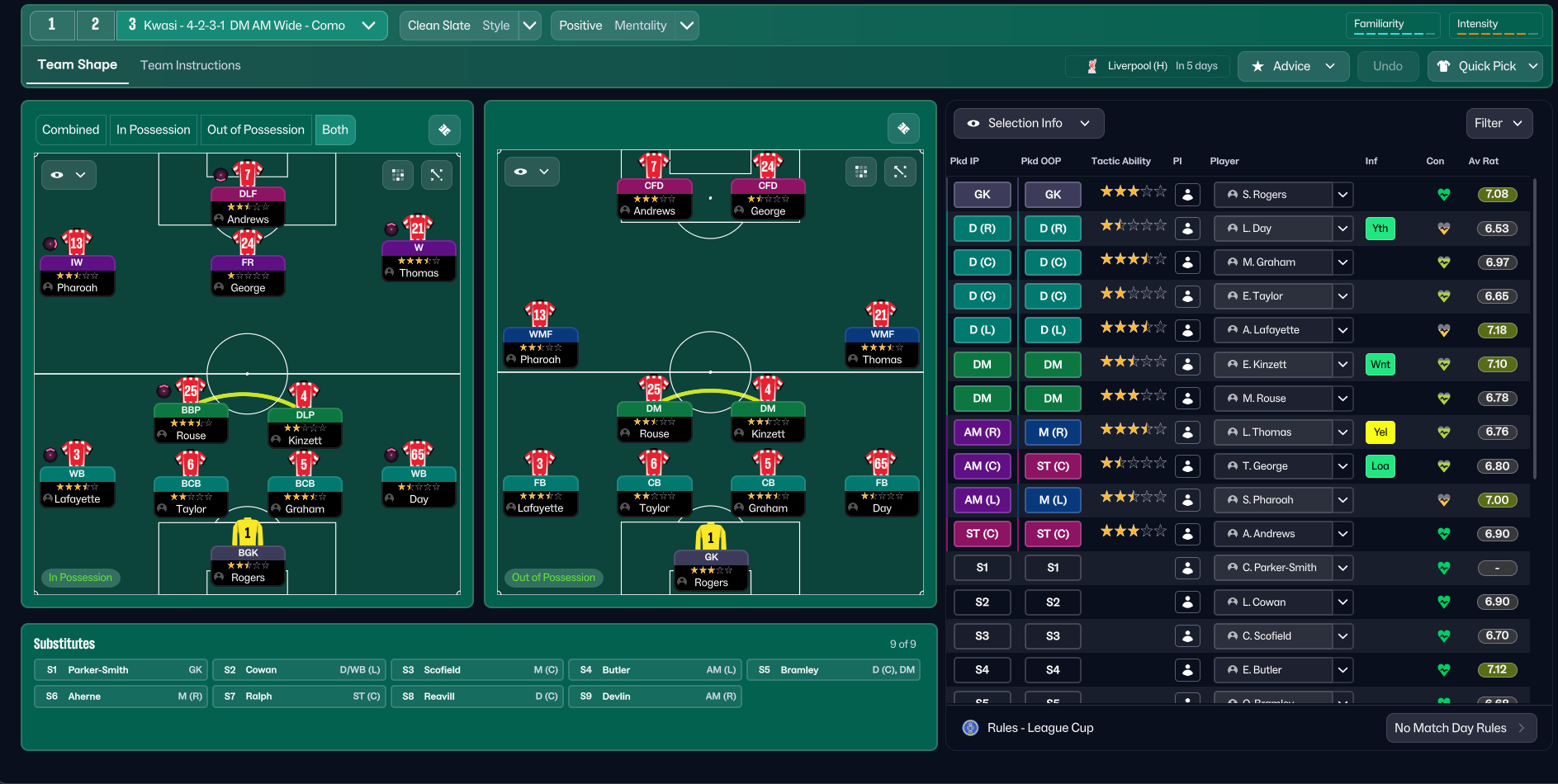
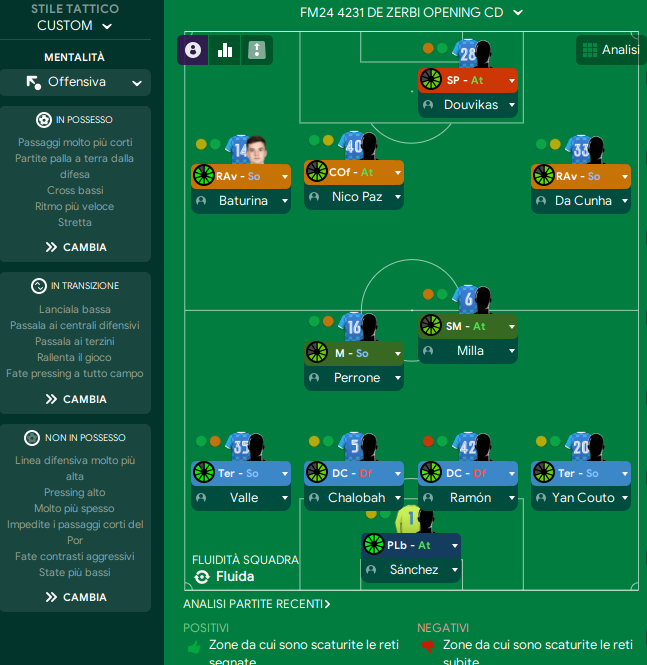
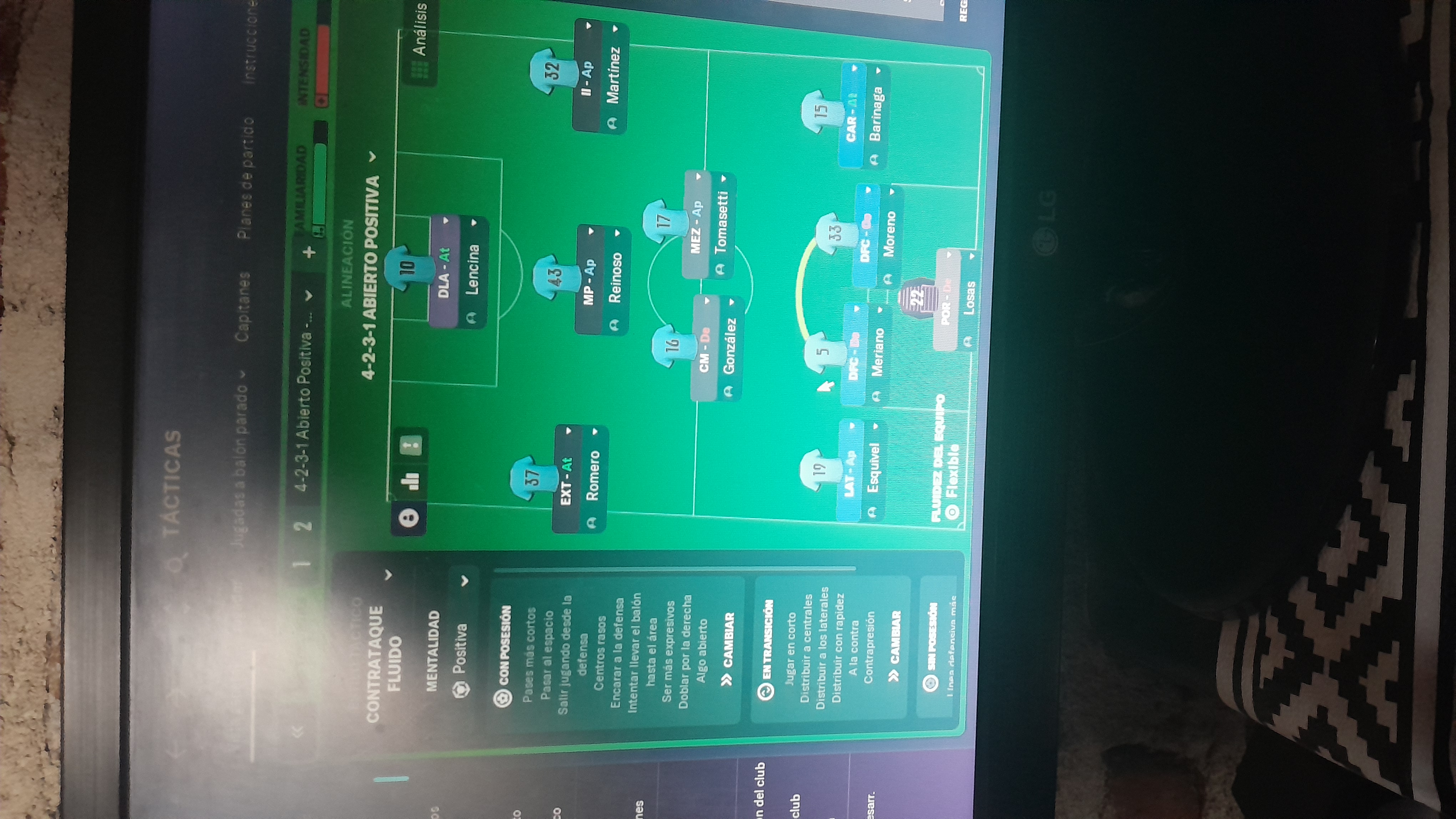
More Custom Fluid Counter-Attack tactics
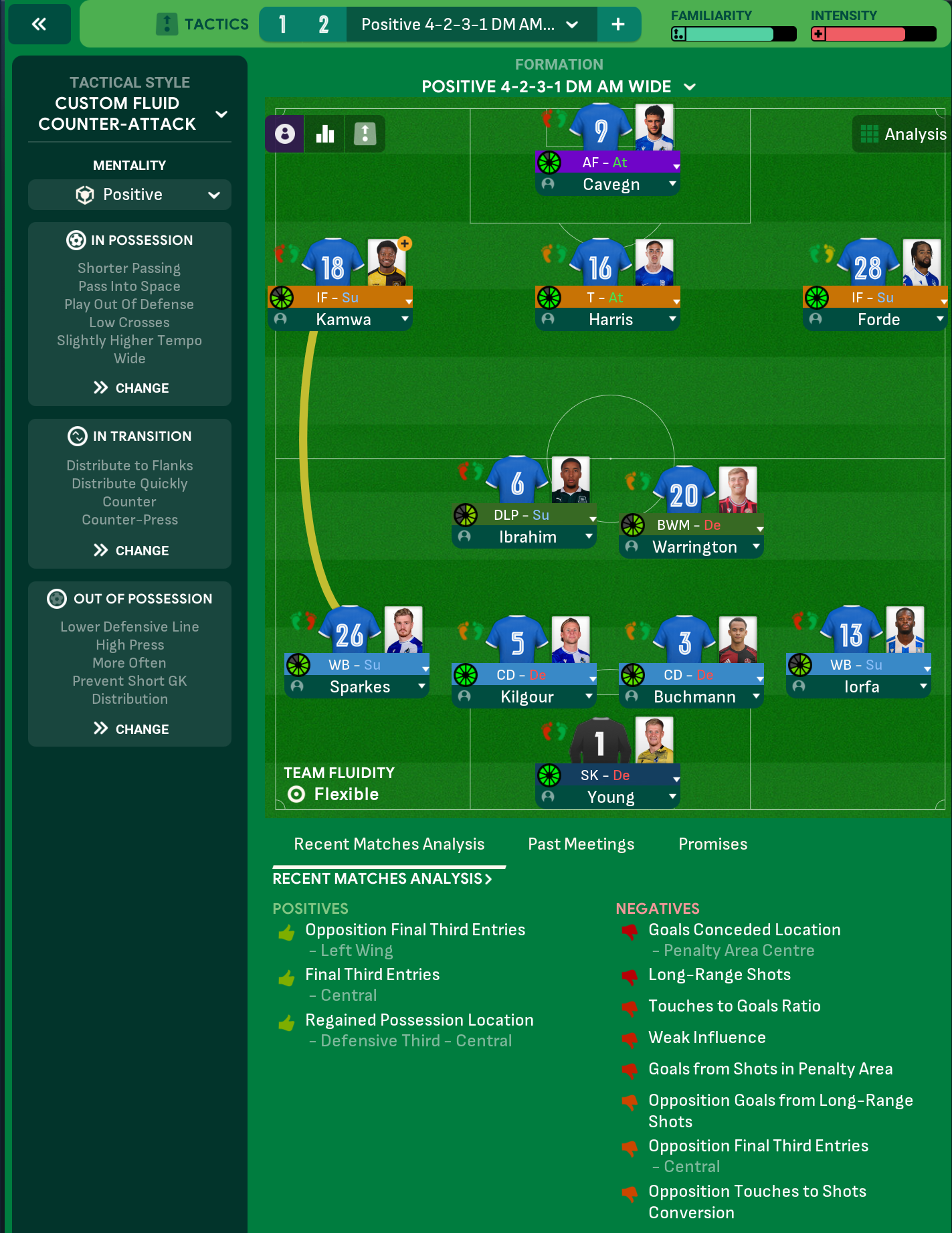
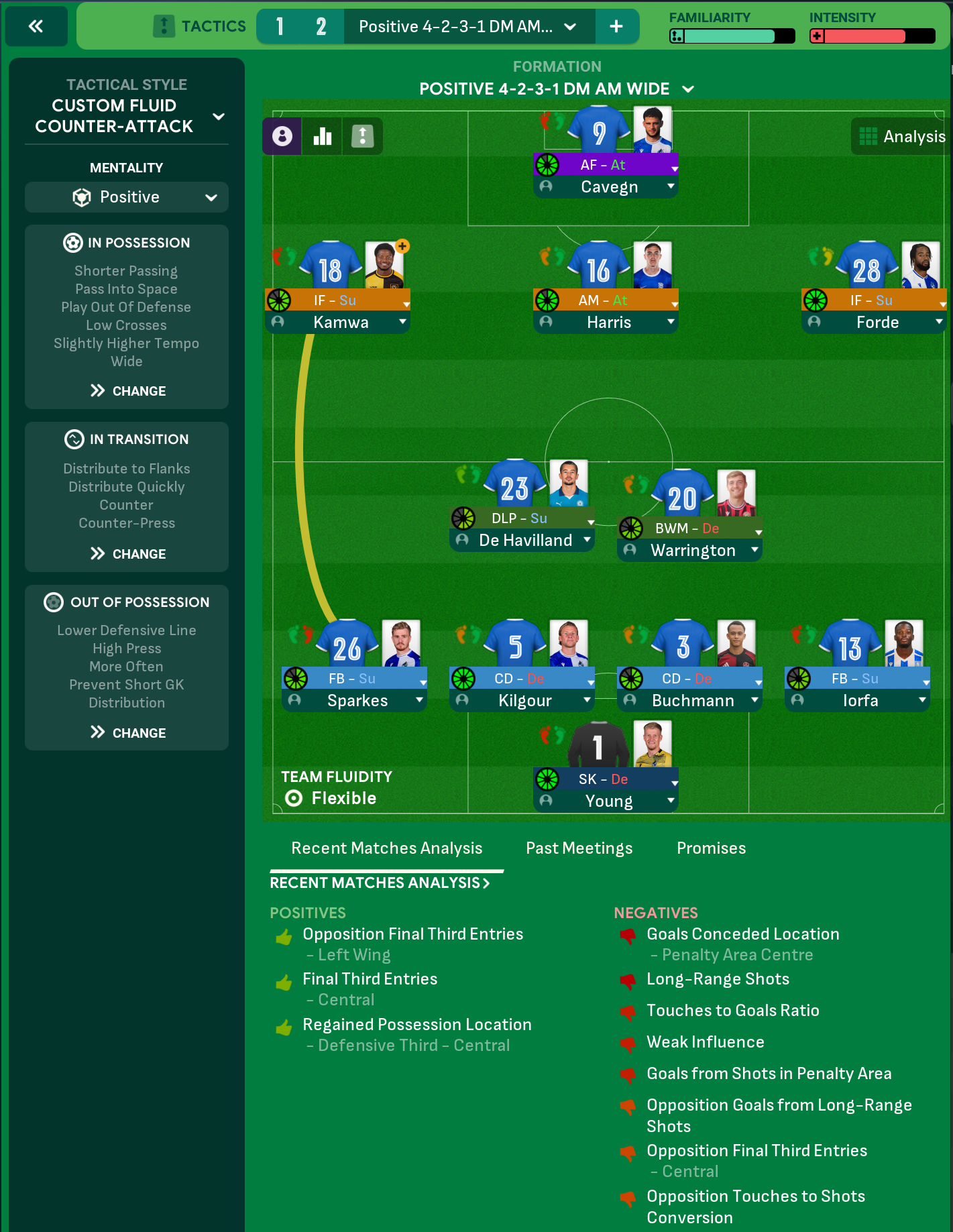
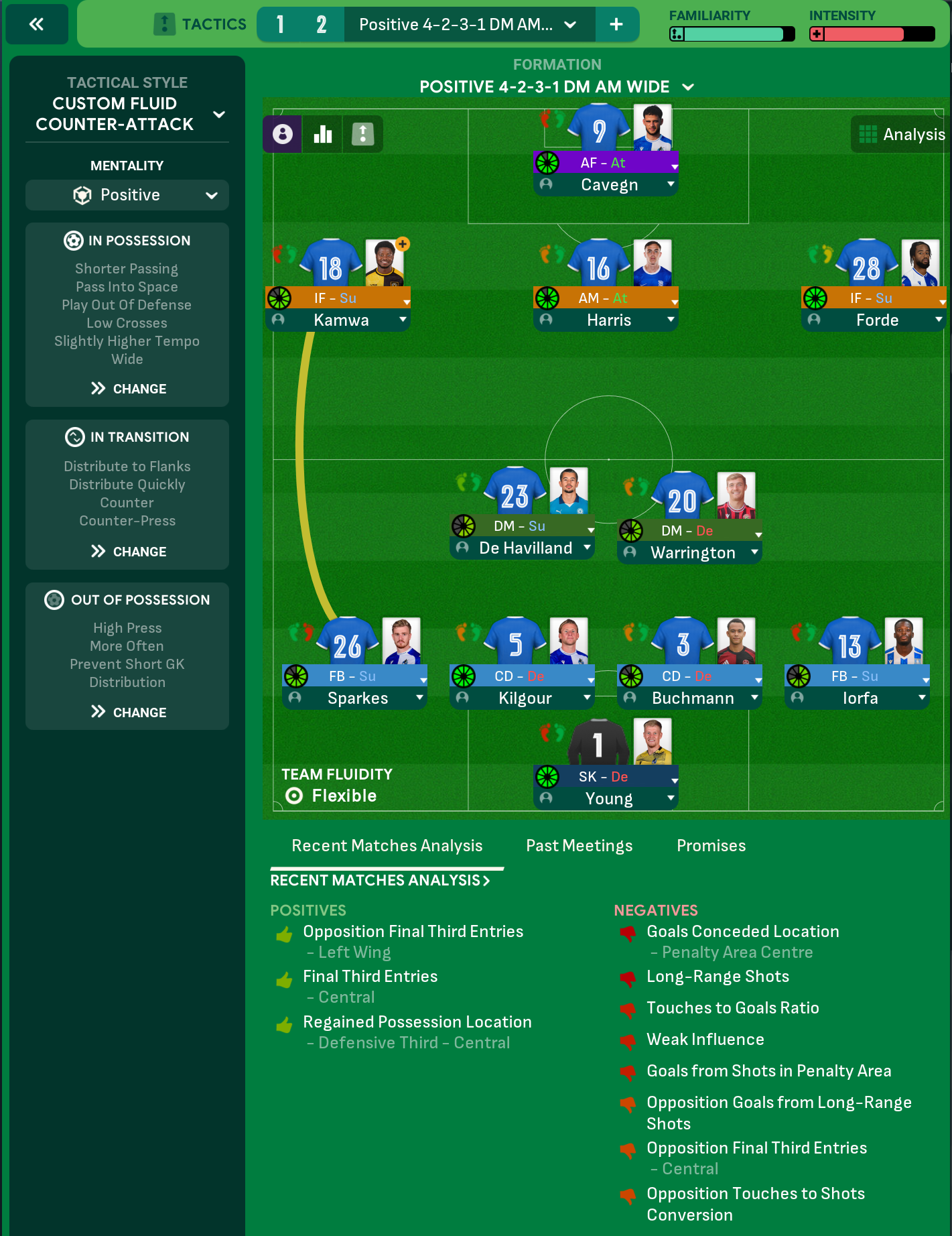
Guides for this formation
The tactical theory behind the 4-2-3-1: roles, instructions, and the trade-offs that decide whether the system holds up.
Player pairings
Midfield Pairs in 4-2-3-1 and 4-4-2
Double pivots and flat pairs in 4-2-3-1 and 4-4-2: when each pairing works, when it collapses, and the AMC unicorn that rescues both.
Read guide
Playing styles
Gegenpressing: A Full Guide
Klopp-style gegenpressing in FM, including squad profile, line-and-press pairing, sustainable workload, and the antipatterns to avoid.
Read guide