Uploaded Tactic
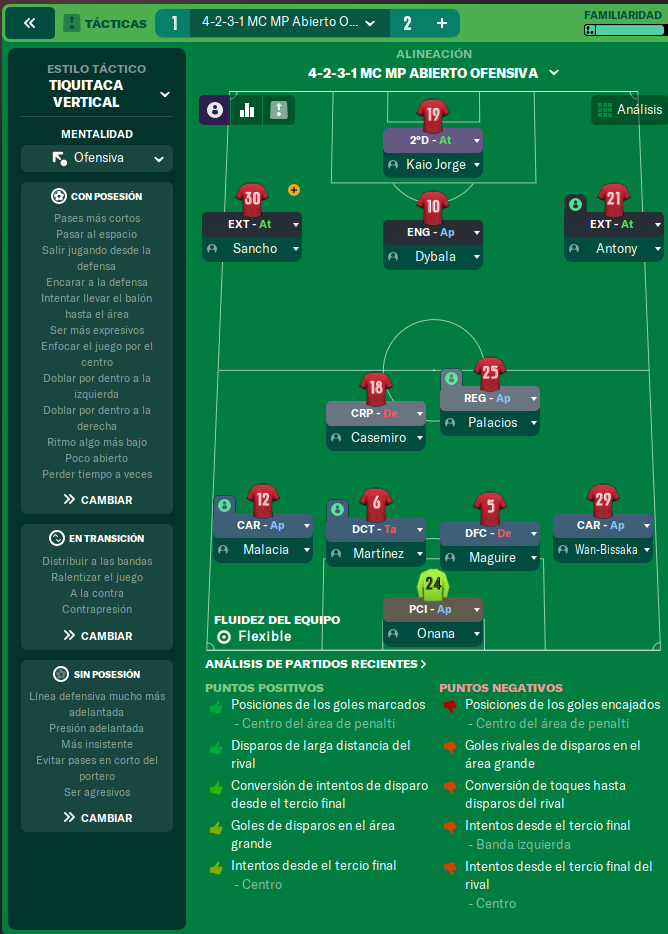
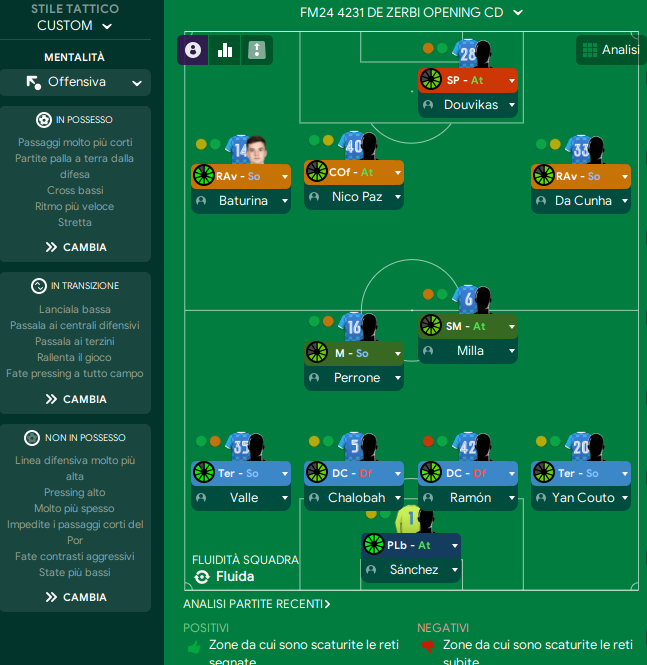
Formation & Style
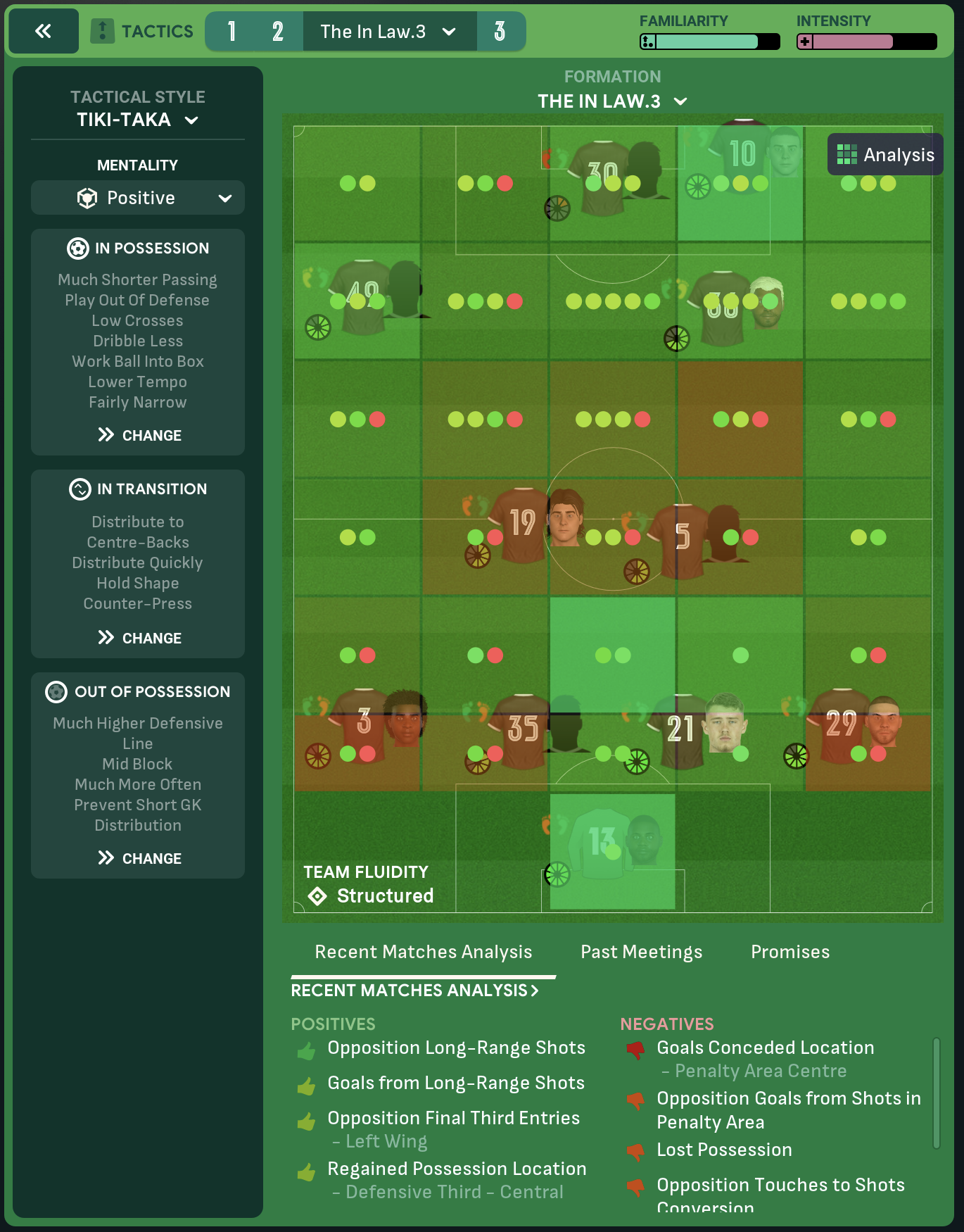
Tactical Style:Tiki-Taka
Mentality:Offensive
Formation:4-2-3-1
Team Fluidity:Flexible
In Possession
Shorter passing
Positional play
Attempt to carry the ball into the area
In Transition
Distribute to the flanks
Slow down the play
Counter-press
Out of Possession
High defensive line
More pressing
Avoid pressing the goalkeeper
Team Shape Without Ball
Shape:4-4-2
Description:Defensive shape becomes compact and organized with emphasis on preventing central penetration.
Evidence:High line with pressing indicates a proactive defensive approach.
Team Shape With Ball
Shape:4-3-3
Description:Attacking shape aims for width and central overloads, facilitating varied attacks.
Evidence:Wingers and an advanced playmaker create horizontal and vertical movement.
Phase Description
Attacking Play
Utilizes width with wingers to stretch the opposition, focusing on quick, short passes.
Defensive Transition
Engages in counter-pressing to recover possession quickly.
Main Focus
Create overloads on the flanks while maintaining central support.
Key Strengths
Width of Attack
Utilizing wingers enhances attacking breadth, allowing for space creation.
Midfield Control
The combination of a Regista and a Ball-Winning Midfielder ensures possession retention and defensive cover.
Fluid Transition
Quick transitions enable dynamic attacks and defensive stability.
Conflicting Directions
Presence in Central Areas
While the system emphasizes width, it occasionally leaves central areas vulnerable.
High Defensive Line Risks
A high defensive line invites risks against speedy counter-attacks.
Over-reliance on Flanks
Heavy reliance on wings may become predictable without central penetration.
Tactical Suggestions
Add a Central Playmaker
Introduce a dedicated central playmaker to exploit central openings.
Adjust Defensive Line Height
Lowering the defensive line may help mitigate risks against pacey attackers.
Focus on Set-Pieces
Utilize set-pieces to exploit aerial advantages given a tall center-back.
Ask Questions About Your Lineup
Related Tactics
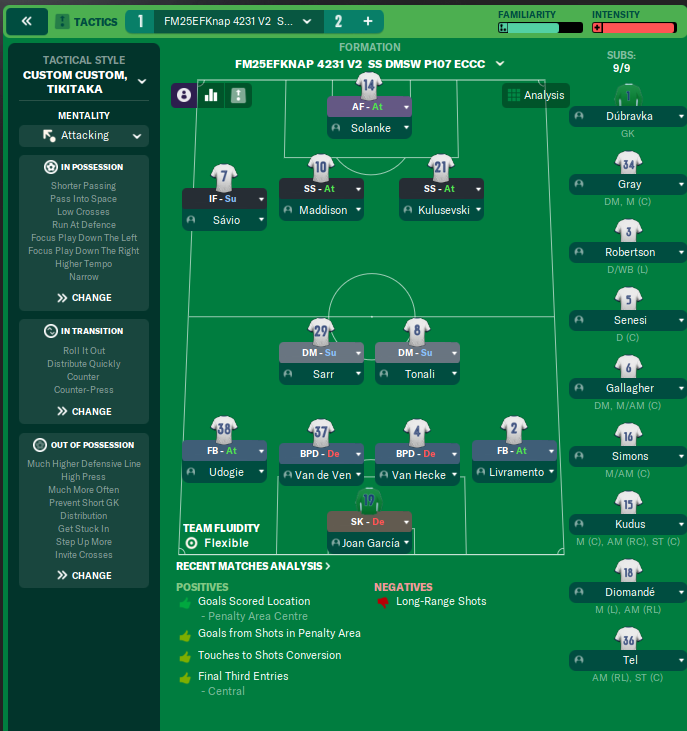
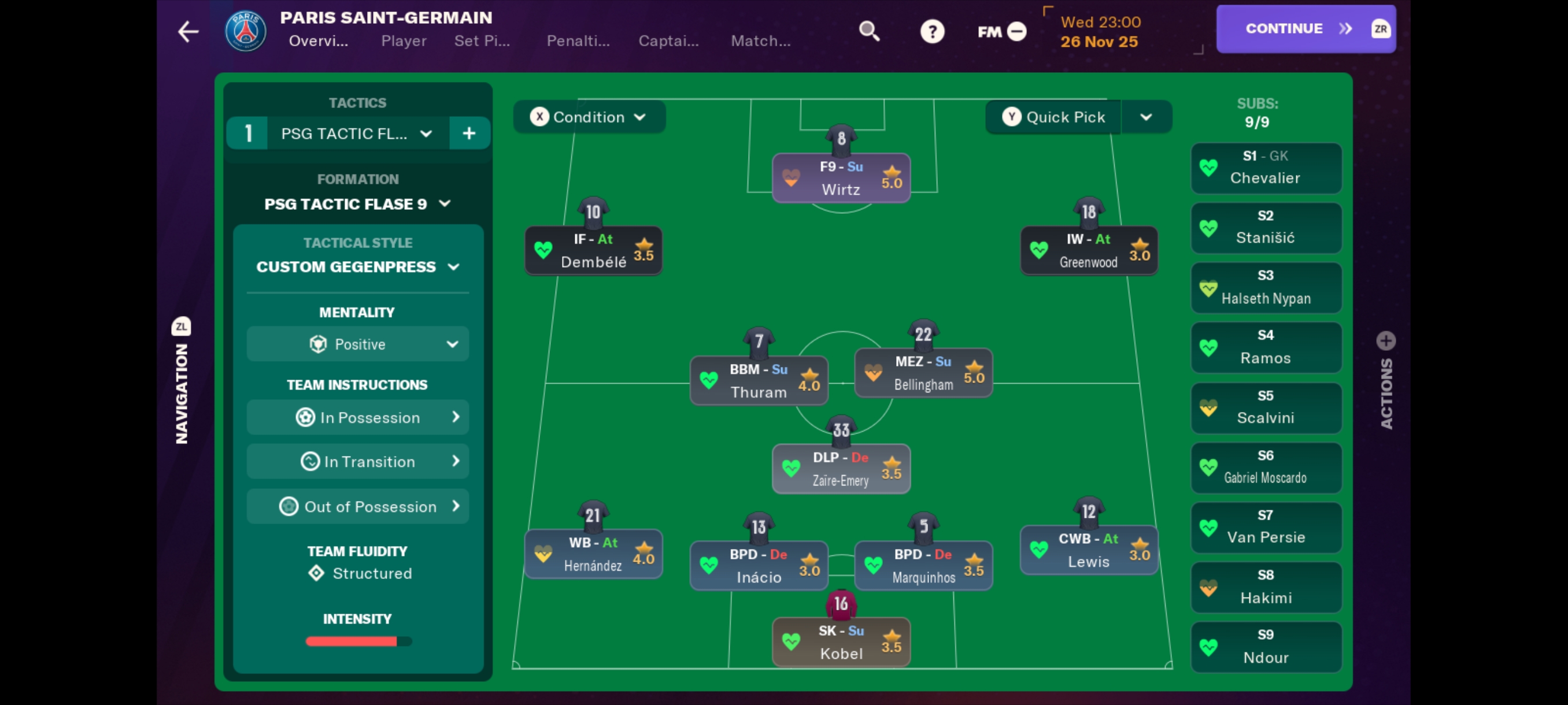
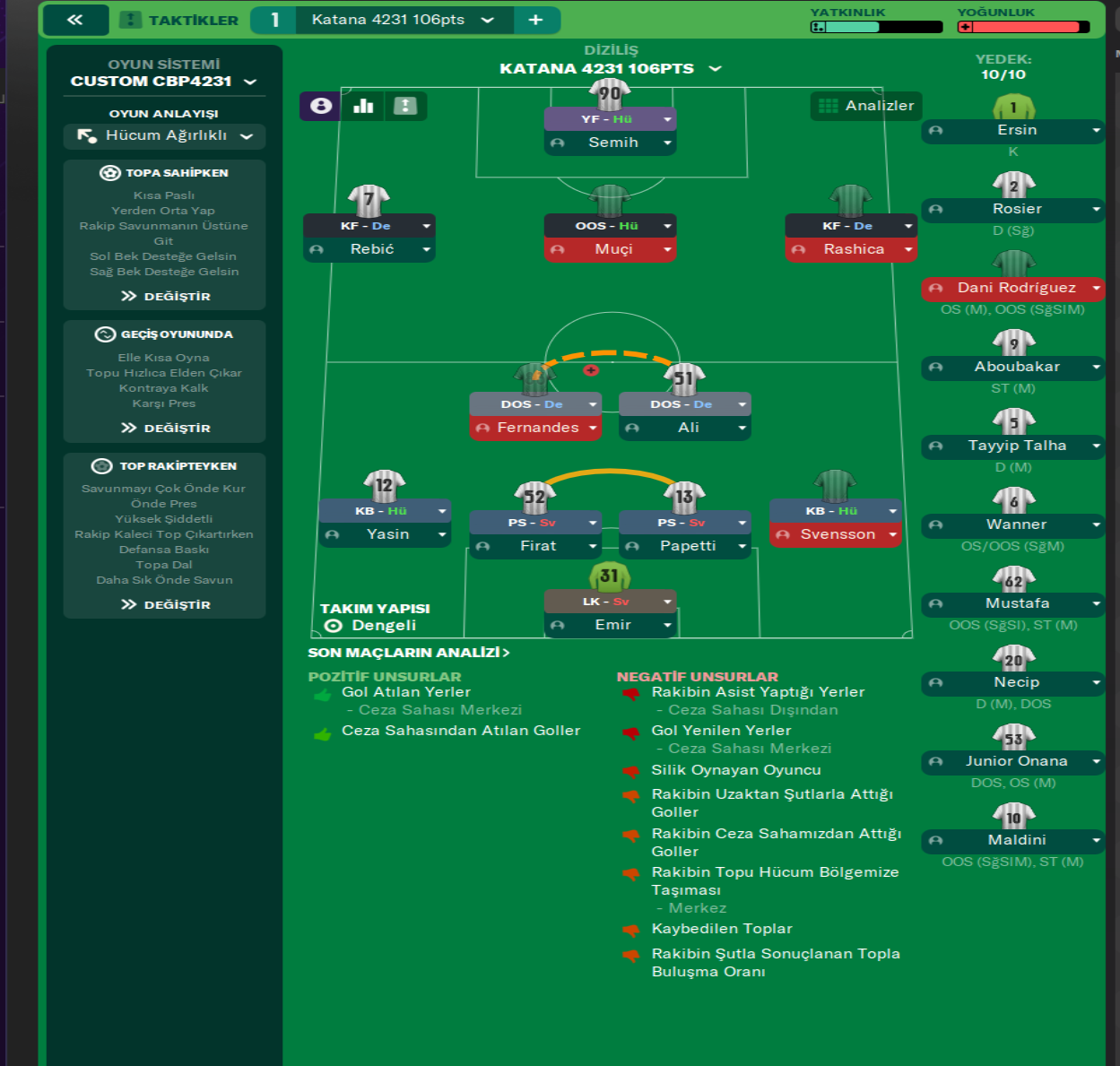
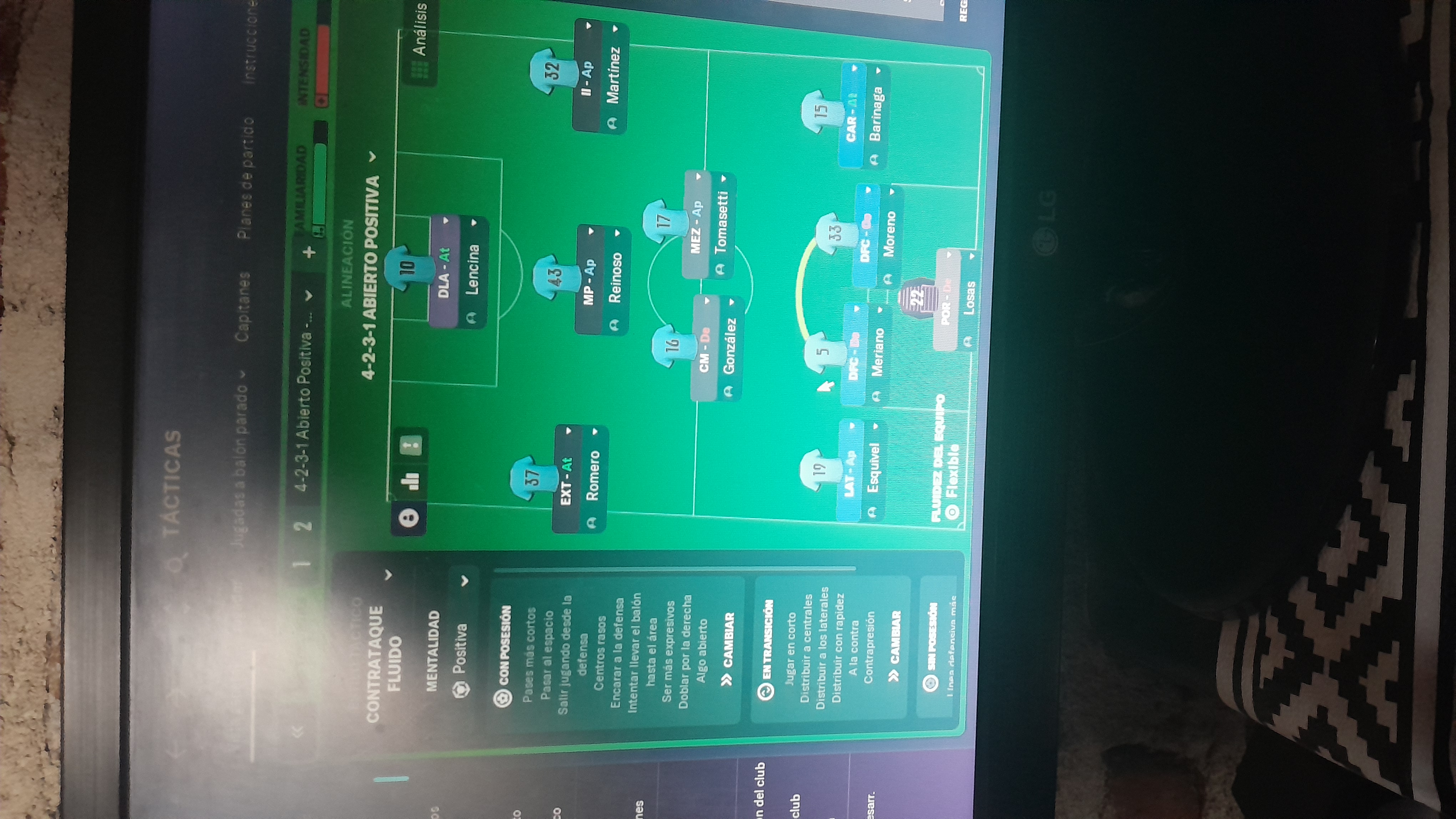
More Tiki-Taka tactics
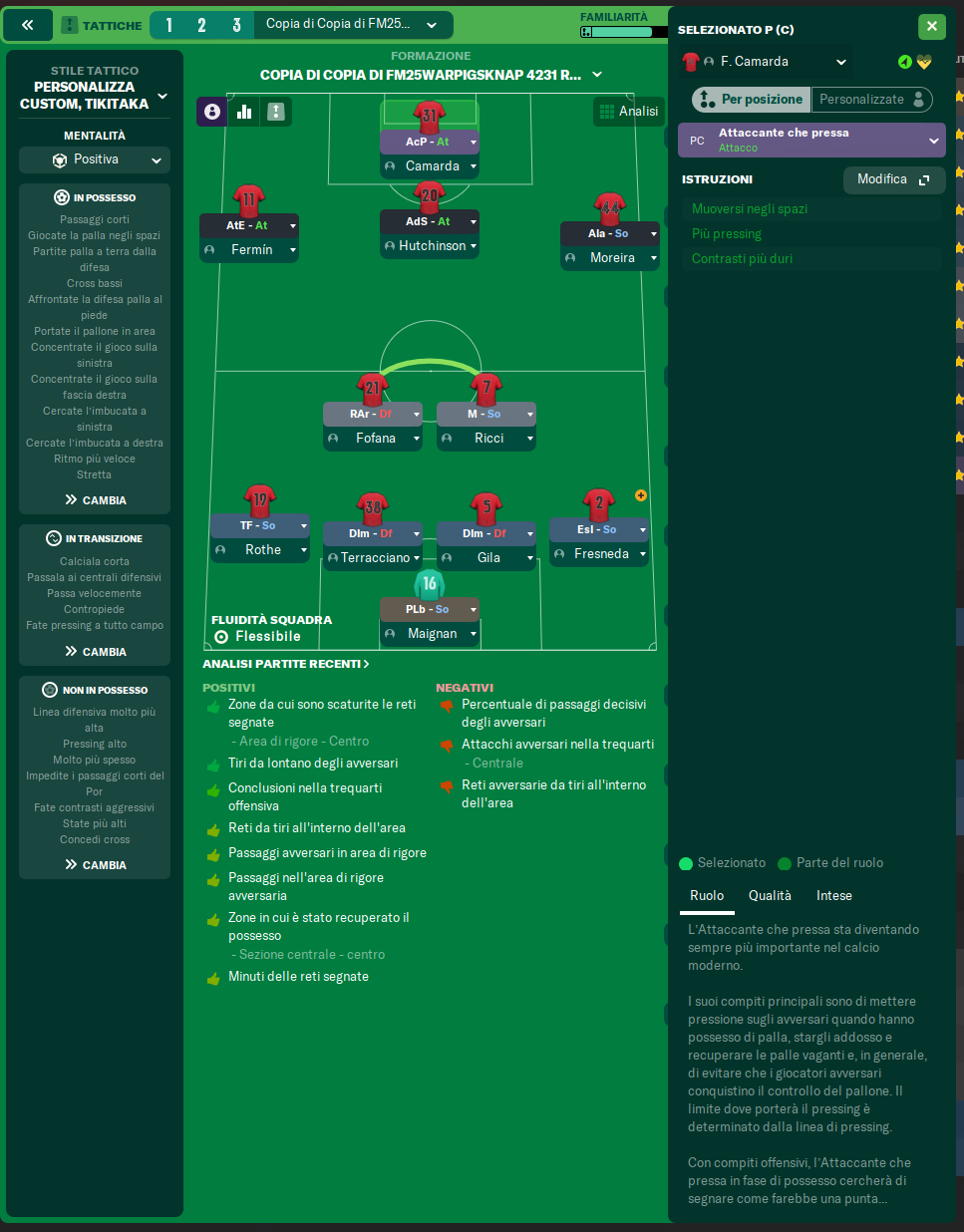
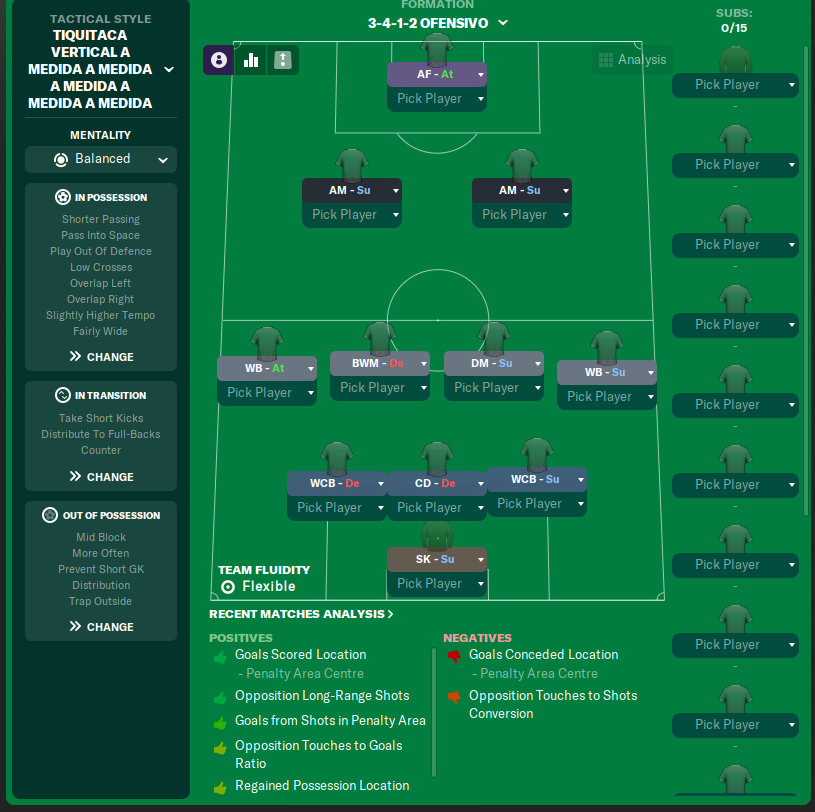
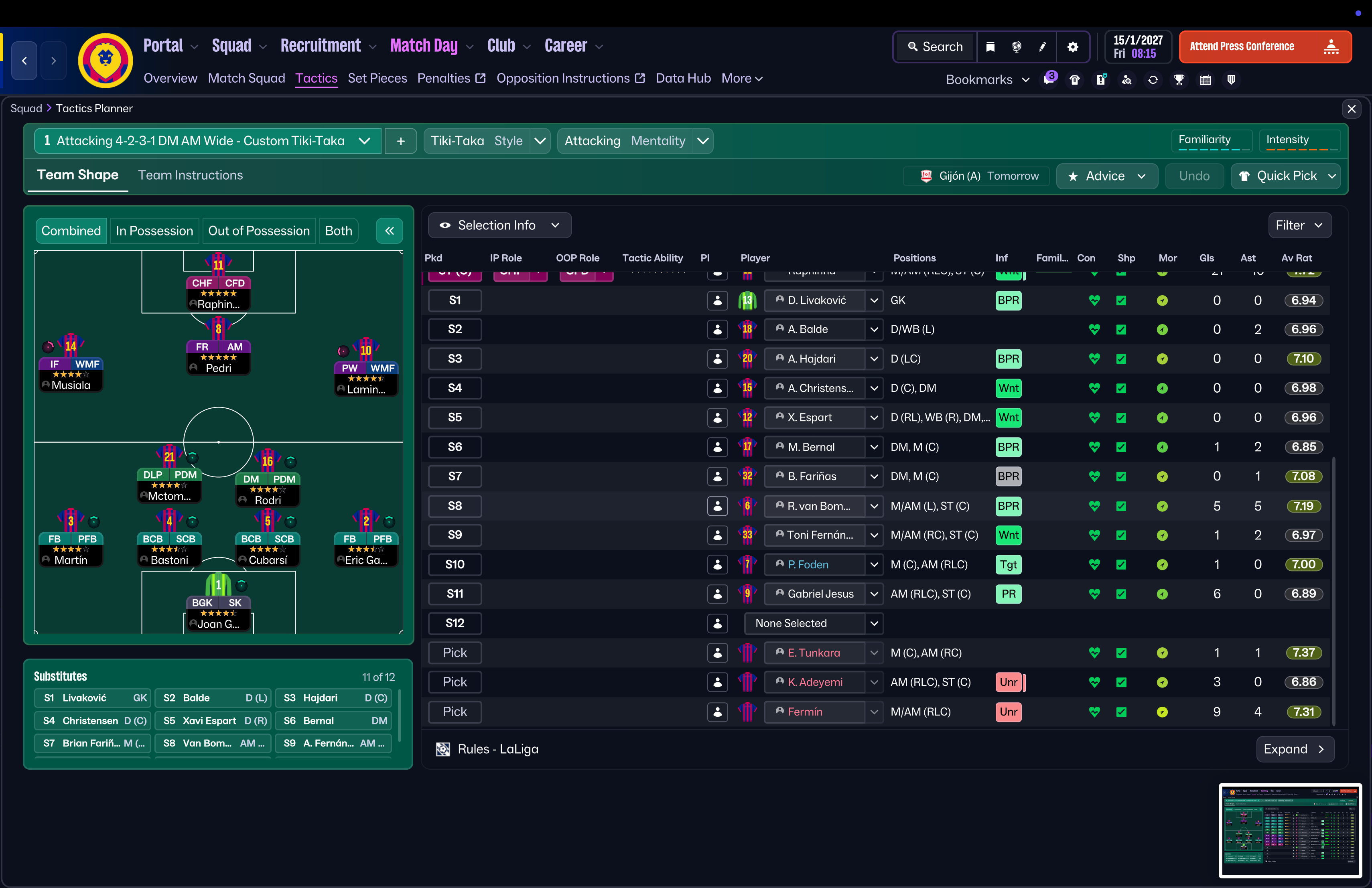
Guides for this formation
The tactical theory behind the 4-2-3-1: roles, instructions, and the trade-offs that decide whether the system holds up.
Player pairings
Midfield Pairs in 4-2-3-1 and 4-4-2
Double pivots and flat pairs in 4-2-3-1 and 4-4-2: when each pairing works, when it collapses, and the AMC unicorn that rescues both.
Read guide
Playing styles
Gegenpressing: A Full Guide
Klopp-style gegenpressing in FM, including squad profile, line-and-press pairing, sustainable workload, and the antipatterns to avoid.
Read guide