Uploaded Tactic
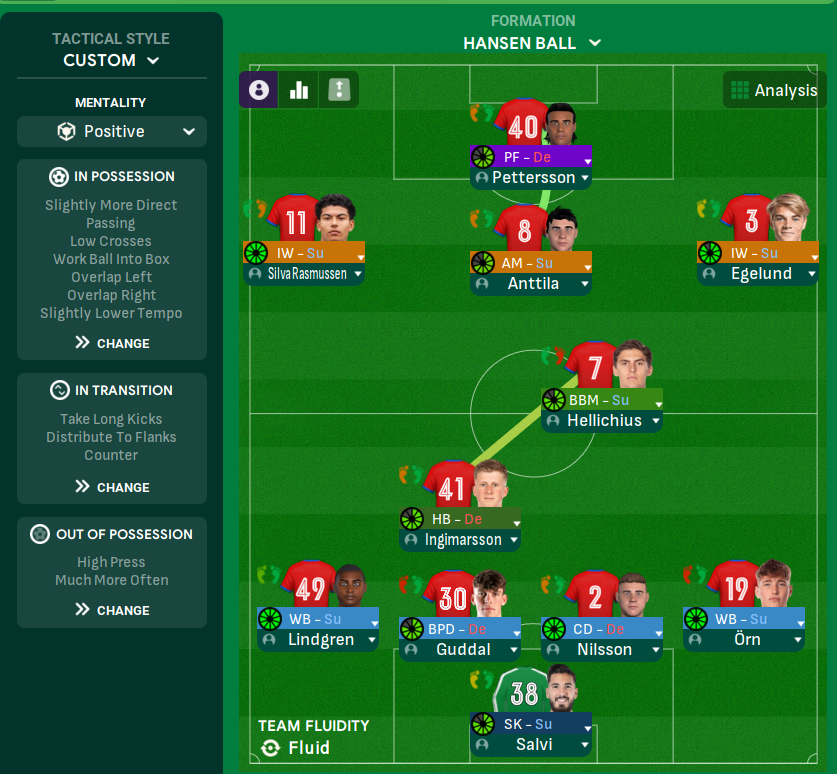
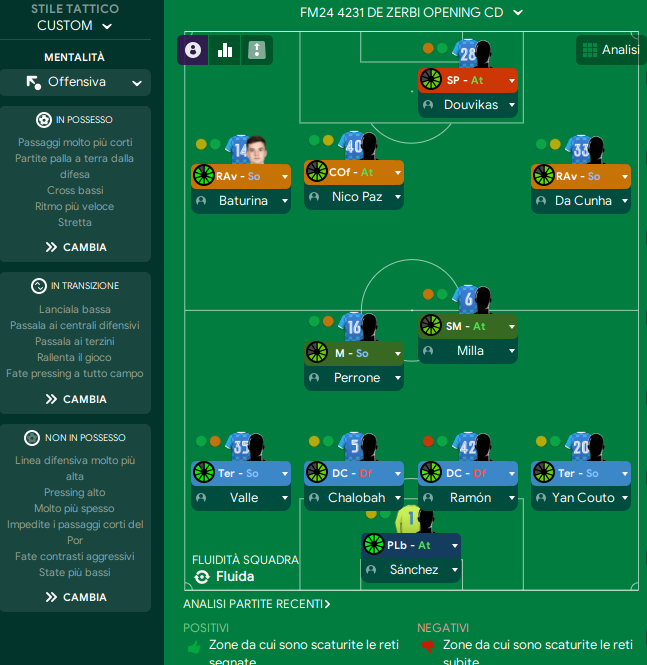
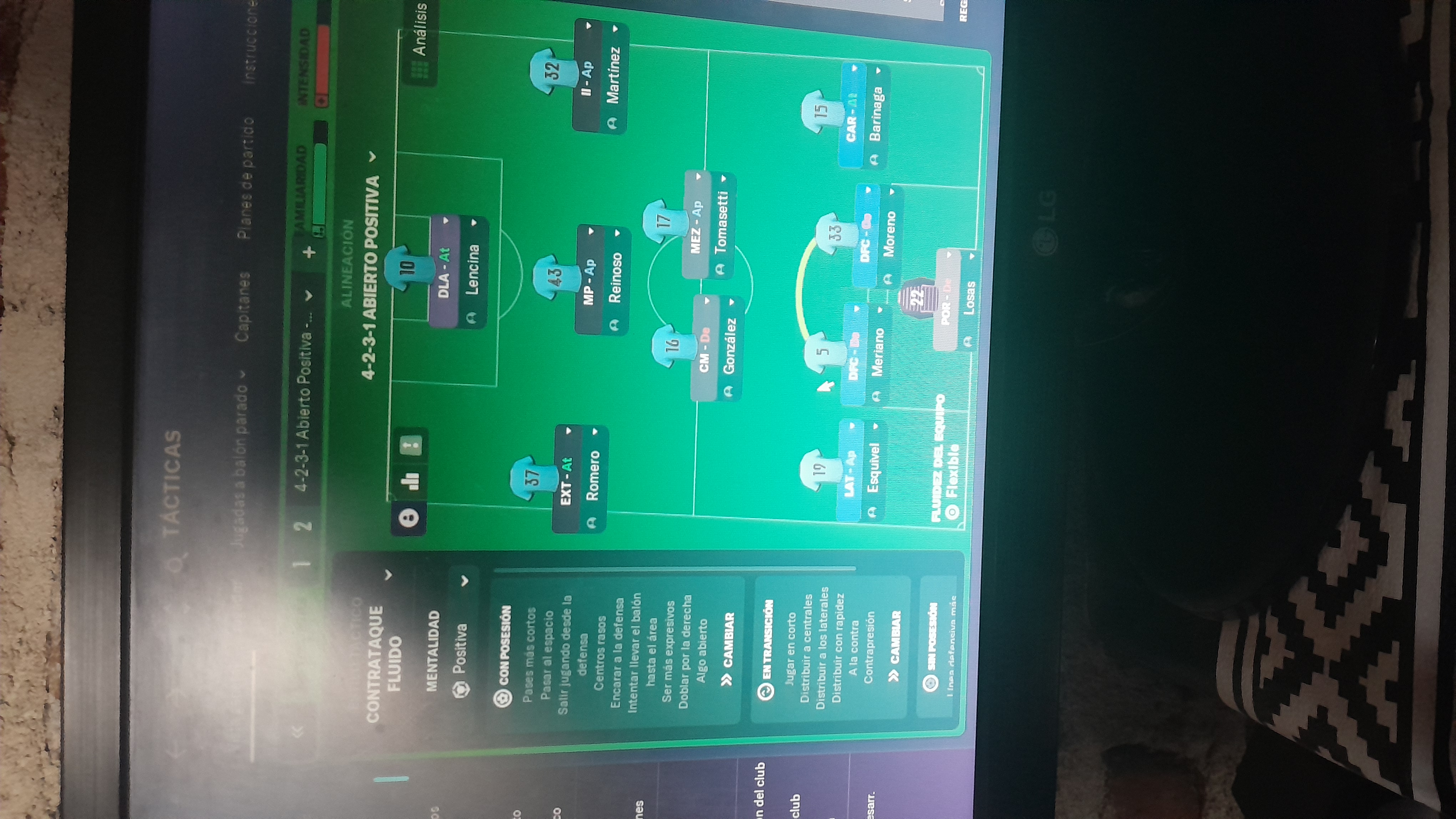
Formation & Style
Tactical Style:Custom
Mentality:Positive
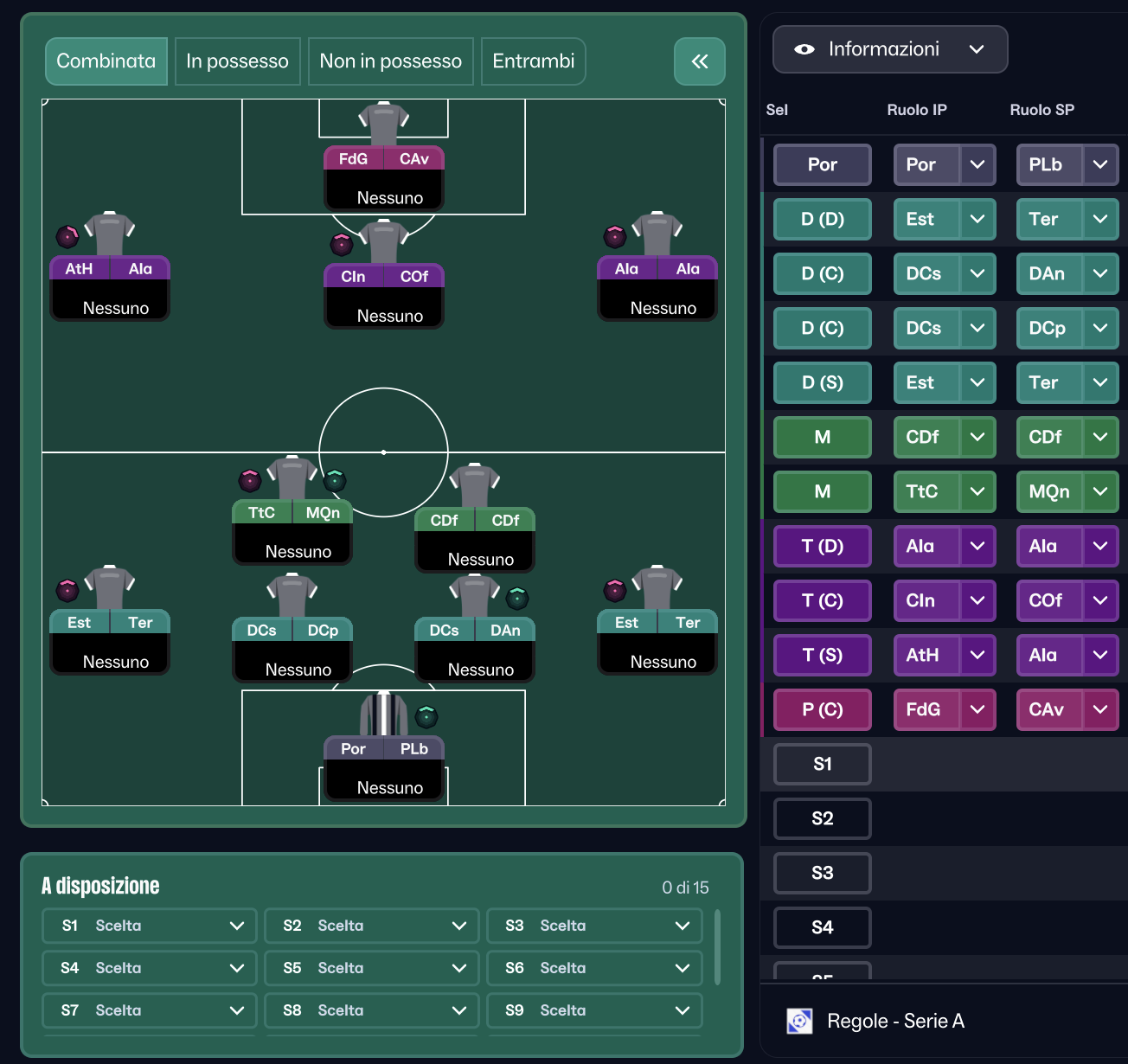
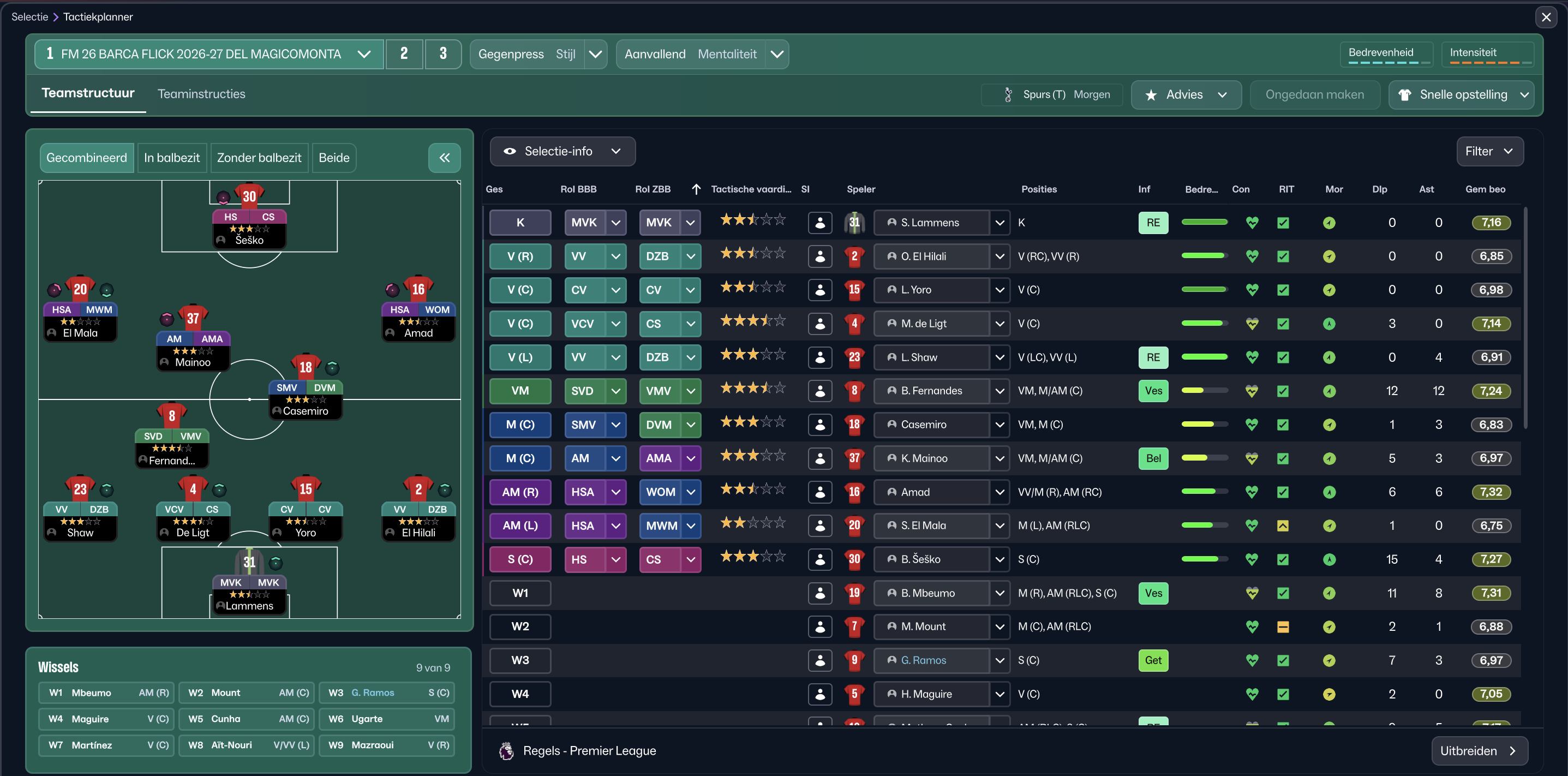
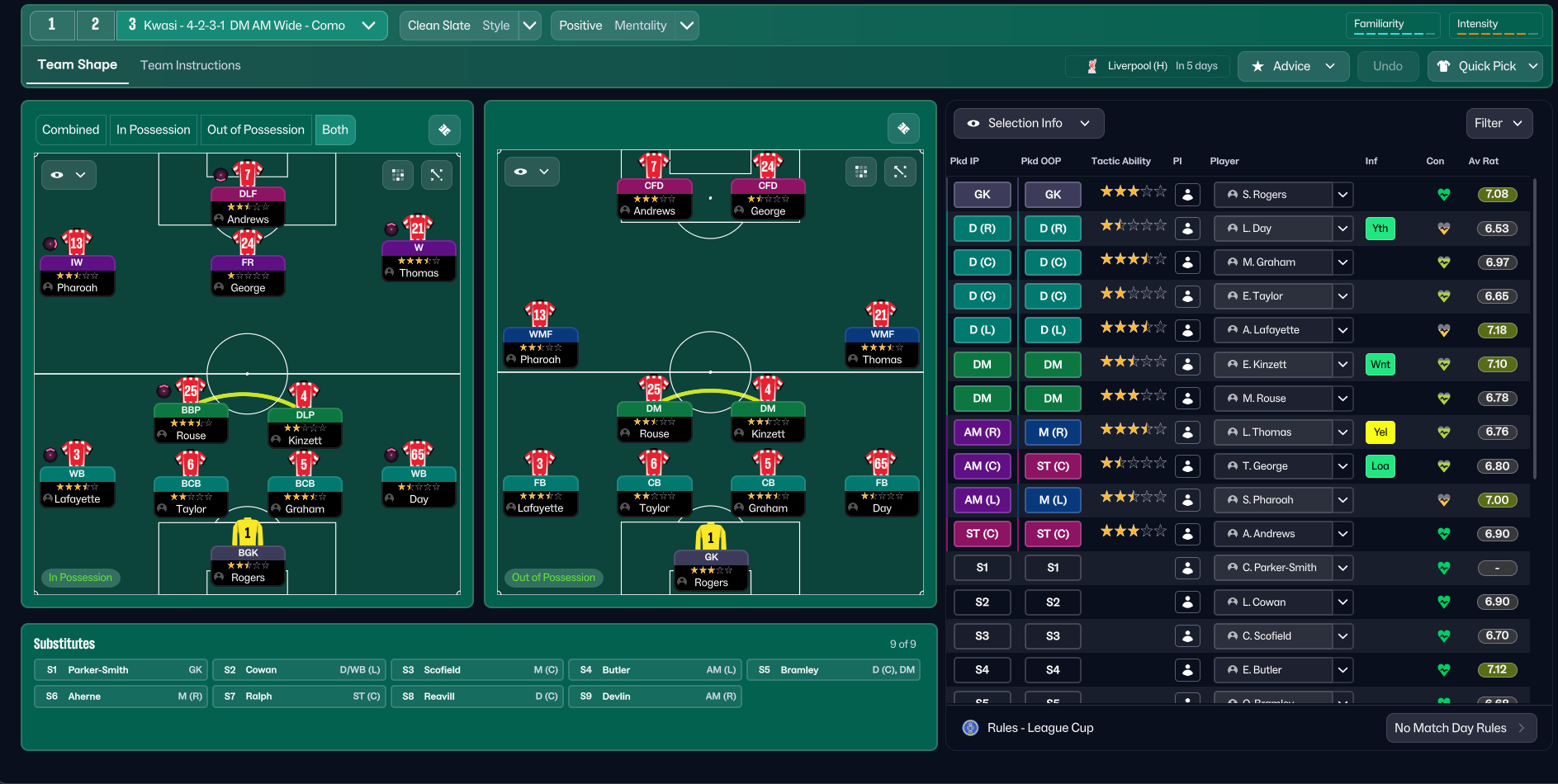
Formation:4-2-3-1
Team Fluidity:Fluid
In Possession
Slightly More Direct Passing
Low Crosses
Work Ball Into Box
Overlap Left
Overlap Right
Slightly Lower Tempo
In Transition
Take Long Kicks
Distribute To Flanks
Counter
Out of Possession
High Press
Much More Often
Team Shape Without Ball
No team shape without ball data available
Team Shape With Ball
No team shape with ball data available
Key Strengths
Dynamic Width
With overlapping instructions on both flanks and inside forwards, the tactics create space for attacking movements and help stretch the opponent's defense.
Pressing Ability
A higher pressing intensity can force opponents into mistakes, particularly effective when positioned in advanced territories.
Possession Play
The focus on working the ball into the box and slightly more direct passing encourages a possession-based style that seeks high-quality chances.
Fluid Midfield Movement
The combination of an advanced playmaker and box-to-box midfielder keeps the opposition defenders guessing, leading to potential mismatches in their midfield.
Conflicting Directions
High Defensive Line with Pressing
While pressing high can win the ball back quickly, it may leave space in behind if defenders are not quick enough to react after losing possession.
Overlap vs. Inside Forward Roles
Having inside forwards and overlapping wing-backs can lead to congestion in wide areas, potentially limiting effectiveness if not managed properly.
Tempo and Directness
A slightly lower tempo may clash with more direct passing intention, possibly leading to confusion in decision-making by players trying to manage both aspects.
Countering Strategy Conflicts
Implementing a counter strategy alongside a high press can be counterproductive, as recovering after an attack may cause delays in defensive shape.
Tactical Suggestions
Adjust Player Duties
Consider changing the ‘BBM’ duty to ‘Attack’ to increase goal-scoring potential from the midfield while ensuring fluid movement and numbers in the box.
Refine Pressing Triggers
Set specific triggers for pressing to avoid being caught out of shape; this enables the team to transition more effectively into defensive organization.
Consider a More Balanced Mentality
Depending on opponent strength, switching to a 'Balanced' mentality can help maintain defensive stability while still being offensive-minded.
Add More Defensive Cover
Positioning one of the wingers as a more traditional winger instead of an inside forward could add width and defensive cover during transitions.
Ask Questions About Your Lineup
Related Tactics
Guides for this formation
The tactical theory behind the 4-2-3-1: roles, instructions, and the trade-offs that decide whether the system holds up.
Player pairings
Midfield Pairs in 4-2-3-1 and 4-4-2
Double pivots and flat pairs in 4-2-3-1 and 4-4-2: when each pairing works, when it collapses, and the AMC unicorn that rescues both.
Read guide
Playing styles
Gegenpressing: A Full Guide
Klopp-style gegenpressing in FM, including squad profile, line-and-press pairing, sustainable workload, and the antipatterns to avoid.
Read guide