Uploaded Tactic
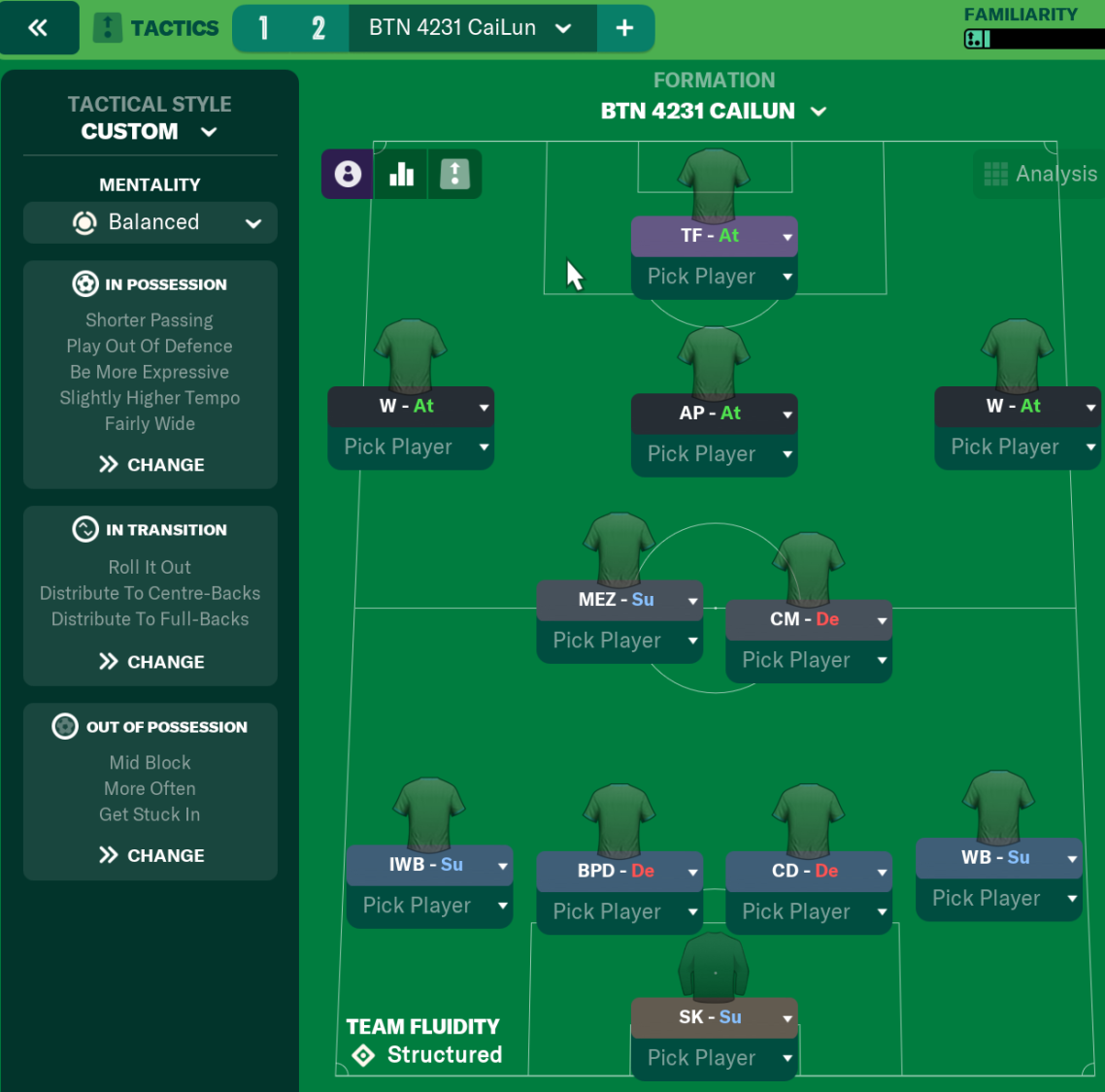
Formation & Style
Tactical Style:Custom
Mentality:Balanced
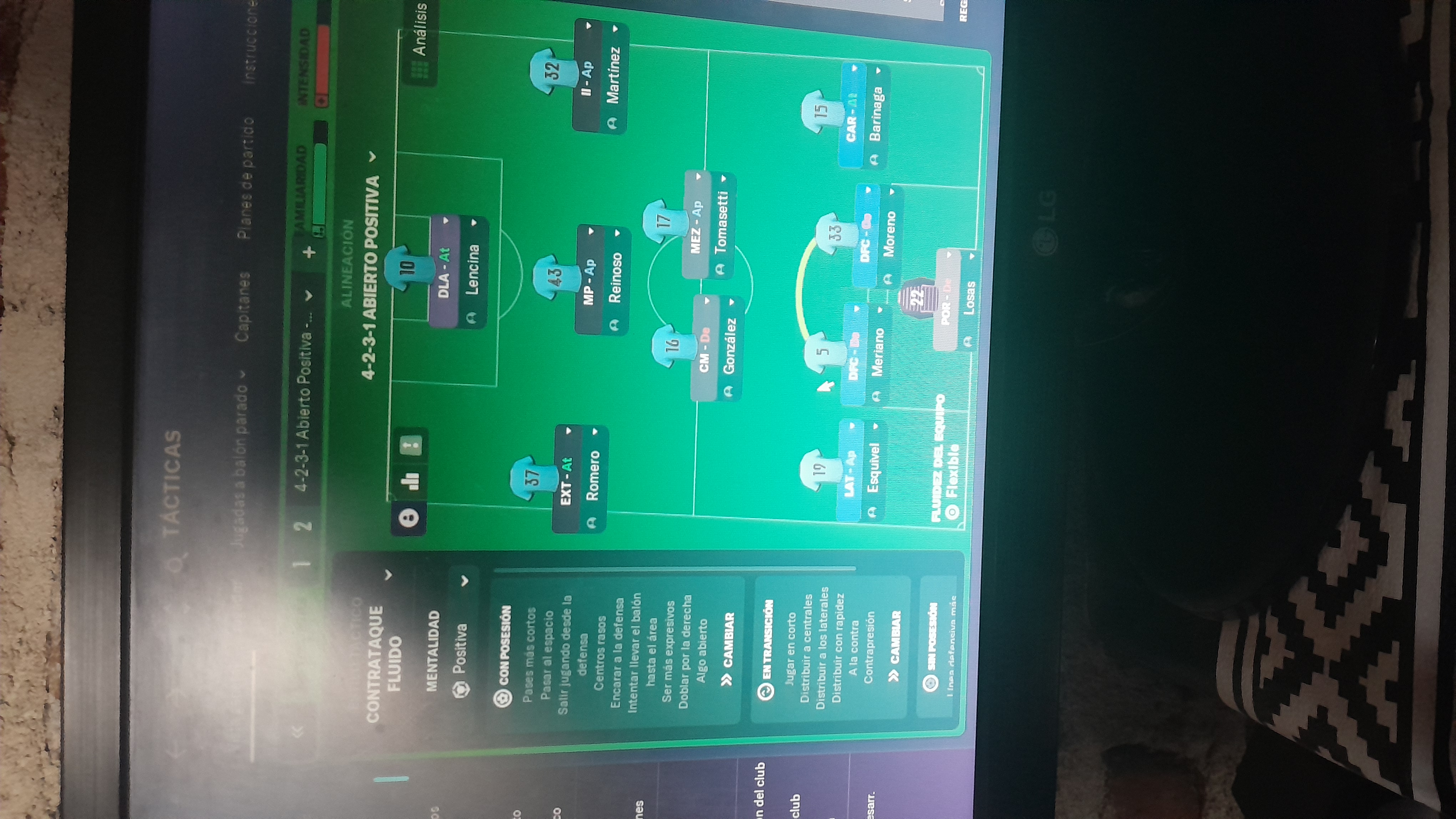
Formation:4-2-3-1
Team Fluidity:Structured
In Possession
Shorter Passing
Play Out Of Defence
Be More Expressive
Slightly Higher Tempo
Fairly Wide
In Transition
Roll It Out
Distribute To Centre-Backs
Distribute To Full-Backs
Out of Possession
Mid Block
More Often
Get Stuck In
Team Shape Without Ball
Shape:4-4-2
Description:Compact mid-block with units staying close to each other, focusing on intercepting passes.
Evidence:Use of 'Mid Block' and the structure of having a flat four in defense.
Team Shape With Ball
Shape:4-3-3
Description:Fluid attacking shape with width from wingers and central runs from the Mezzala and Advanced Playmaker.
Evidence:Wingers (W-A) at [6,1] and [6,5] stretching the play.
Phase Description
Attacking Play
Utilizes wing play to stretch defenses while combining with central play through the advanced playmaker.
Defensive Transition
Focus on structured pressing, regaining possession through midfield support.
Main Focus
Offering width through wingers and creating chances via the advanced playmaker.
Key Strengths
Width and Flexibility in Attack
Wingers provide width while the advanced playmaker centralizes play, creating dynamic passing options.
Solid Defensive Structure
Four defenders help in maintaining shape and control against counter-attacks.
Versatile Midfield Roles
The mix of Mezzala and Central Midfielder allows for fluid movement and both defensive stability and creative play.
Conflicting Directions
Reliance on Width May Isolate Central Players
Overemphasis on wing play could leave central attackers unsupported.
Mid Block vs Quick Counter-Attacks
Utilizing a mid-block may leave the team vulnerable to rapid counter-attacks.
Pressing Ineffectiveness
Inconsistent pressing from the midfield could lead to mismatches in tracking back.
Tactical Suggestions
Consider Adjusting Width
Adapting the width may provide better balance between central play and wing utilization.
Increase Defensive Support from Midfield
Adding a more defensive-minded role could help mitigate counter-attacks.
Enhance Pressing Strategy
More focused pressing in chosen areas could help minimize space for opposing attacks.
Ask Questions About Your Lineup
Related Tactics
Guides for this formation
The tactical theory behind the 4-2-3-1: roles, instructions, and the trade-offs that decide whether the system holds up.
Player pairings
Midfield Pairs in 4-2-3-1 and 4-4-2
Double pivots and flat pairs in 4-2-3-1 and 4-4-2: when each pairing works, when it collapses, and the AMC unicorn that rescues both.
Read guide
Playing styles
Gegenpressing: A Full Guide
Klopp-style gegenpressing in FM, including squad profile, line-and-press pairing, sustainable workload, and the antipatterns to avoid.
Read guide