Uploaded Tactic
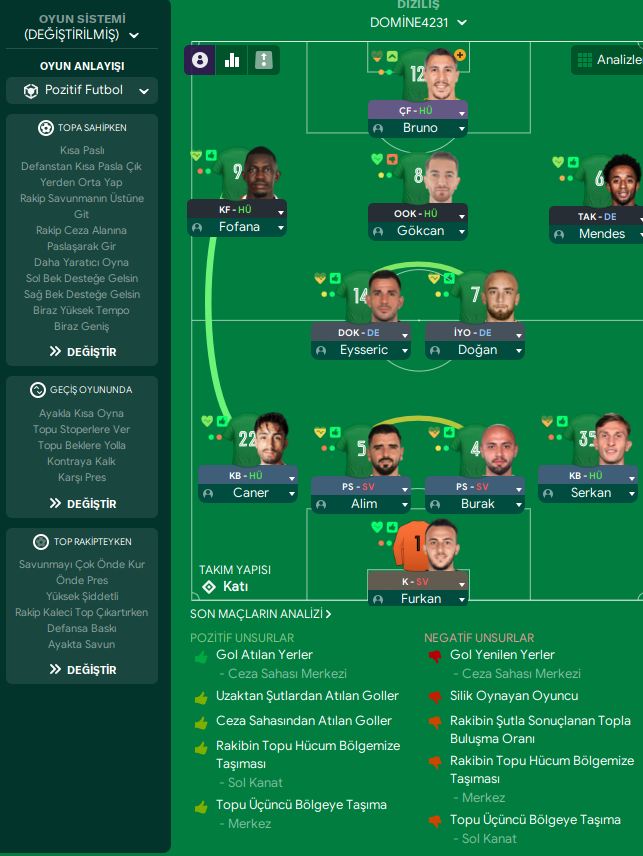
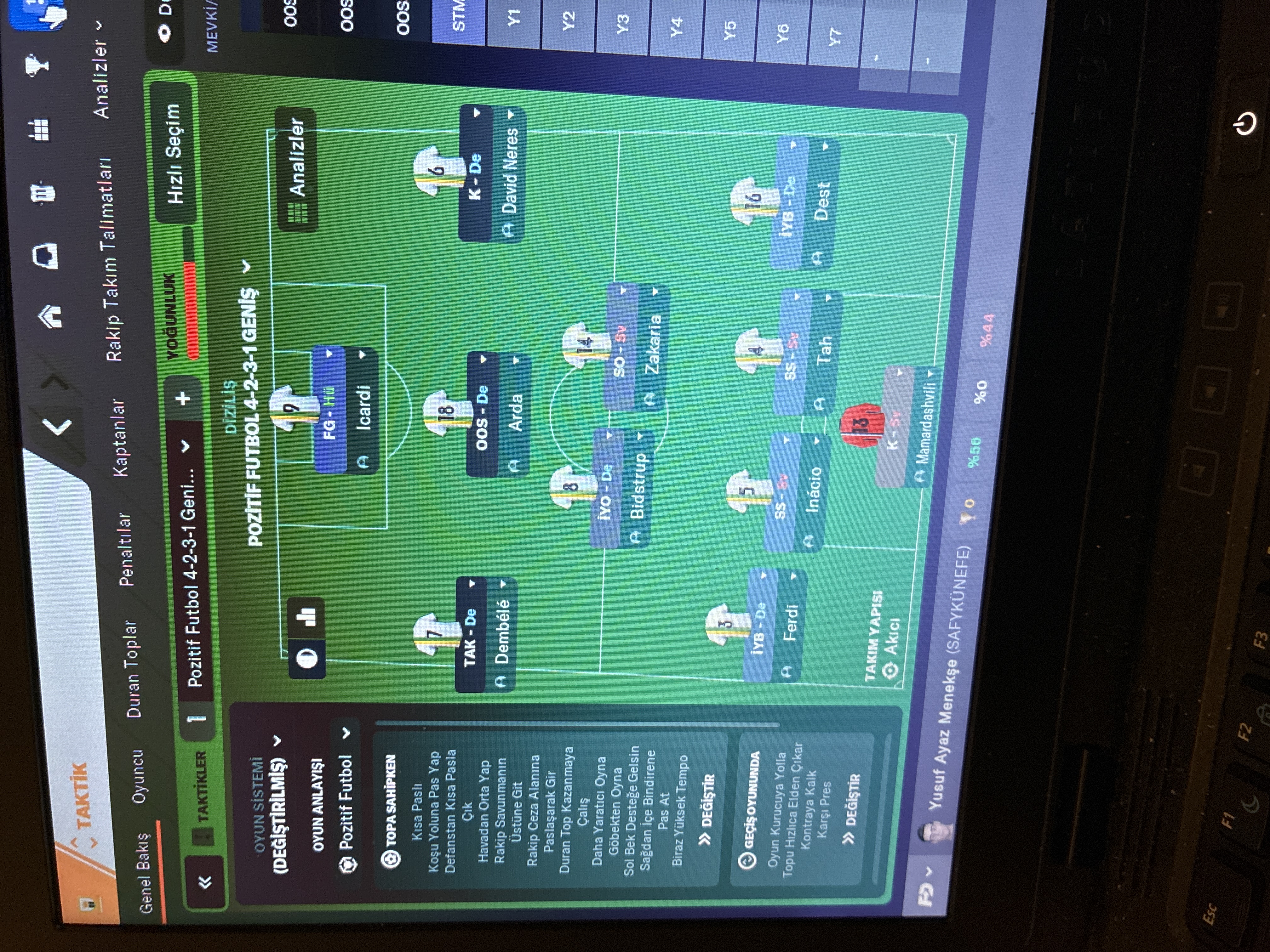
Formation & Style
Tactical Style:Pozitif Futbol
Mentality:Kati
Formation:4-2-3-1
Team Fluidity:Structured
In Possession
Kısa Pasla Oynama
Defansı Kısa Pasla Çık
Rakip Savunmanın Üstüne Git
In Transition
Topu Stoperlere Yolla
Kontraya Kalk
Out of Possession
Savunmayı Çok Önde Kur
Önde Pres
Yüksek Şiddet
Team Shape Without Ball
Shape:Compact
Description:Defensive shape aims to limit spaces for opposition attacking plays.
Evidence:Savunmayı Çok Önde Kur, Önde Pres
Team Shape With Ball
Shape:Flexible
Description:Allows for dynamic switching between positions, promoting fluidity in attacks.
Evidence:Kısa Pasla Oynama, Rakip Savunmanın Üstüne Git
Phase Description
Attacking Play
Fluid attacking movement utilizing short passes.
Defensive Transition
Quickly support counter-attacks when possession is lost.
Main Focus
Overload the opponent's half and increase pressure.
Key Strengths
Strong pressing
The team is set up to apply significant pressure higher up the pitch.
Creative midfield
Double pivot allows for both defensive and creative responsibilities.
Dynamic front line
The front three can interchange and create various attacking options.
Conflicting Directions
Vulnerability to counter-attacks
High pressing can leave spaces at the back when possession is lost.
Dependence on midfield coordination
Requires precise movements from midfielders to support forwards effectively.
Wide play reliance
Overreliance on wide areas can make the attack predictable.
Tactical Suggestions
Increase width in attack
Utilizing wide players to stretch the opposition will open more central channels.
Improve defensive cover during transitions
Utilizing a holding midfielder role could add more stability when losing possession.
Improve communication among midfielders
Ensure midfielders effectively understand their roles during transitions and build-up.
Ask Questions About Your Lineup
Related Tactics
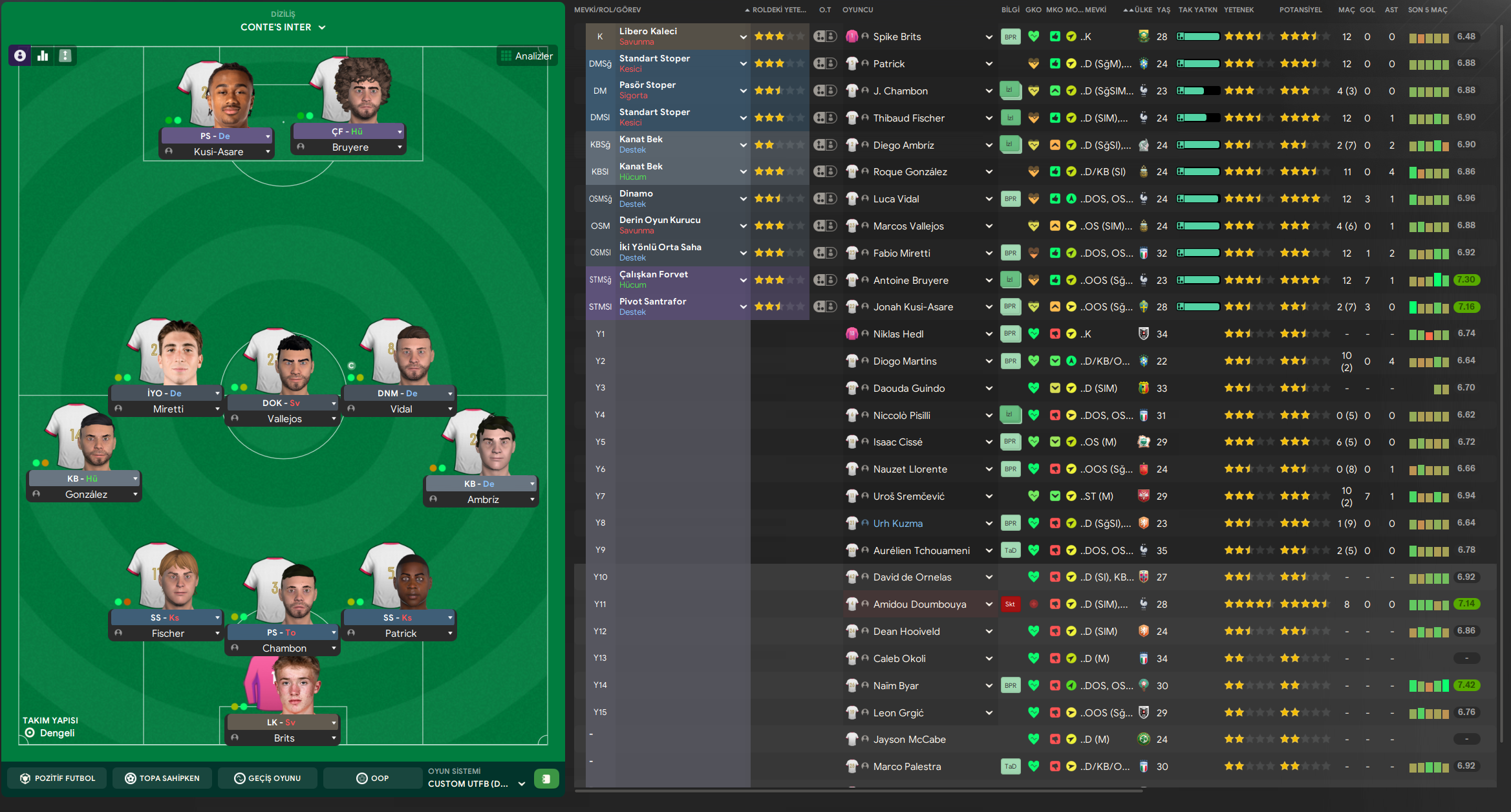
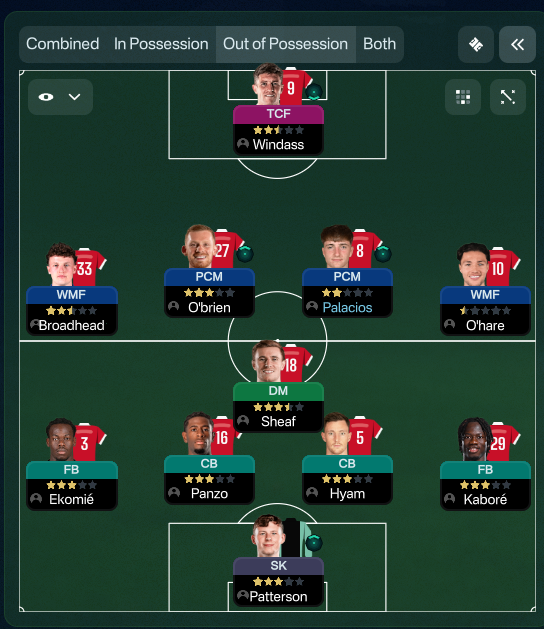
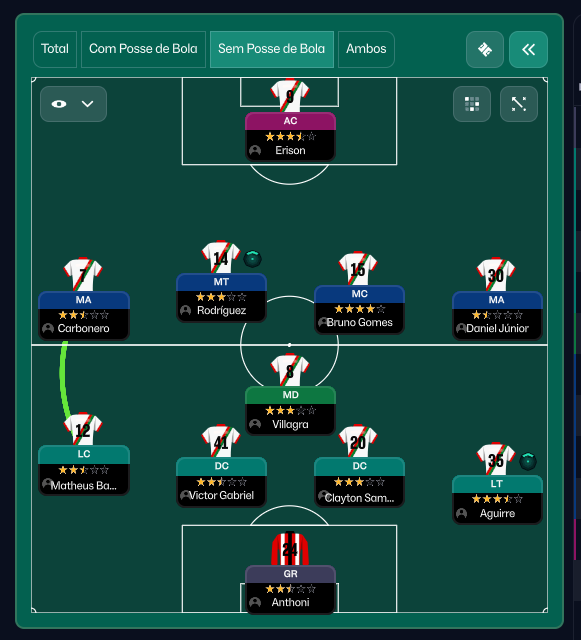
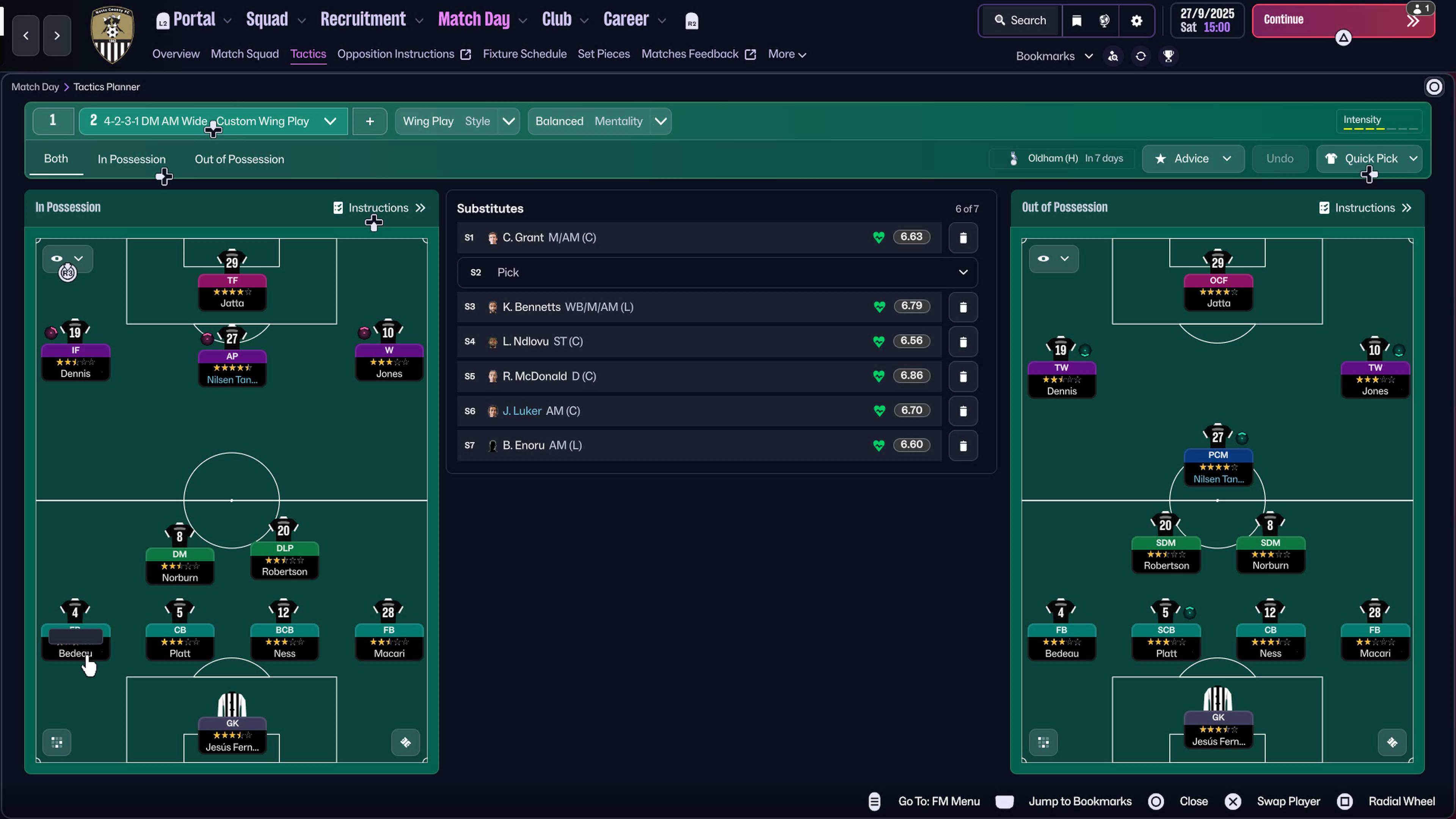
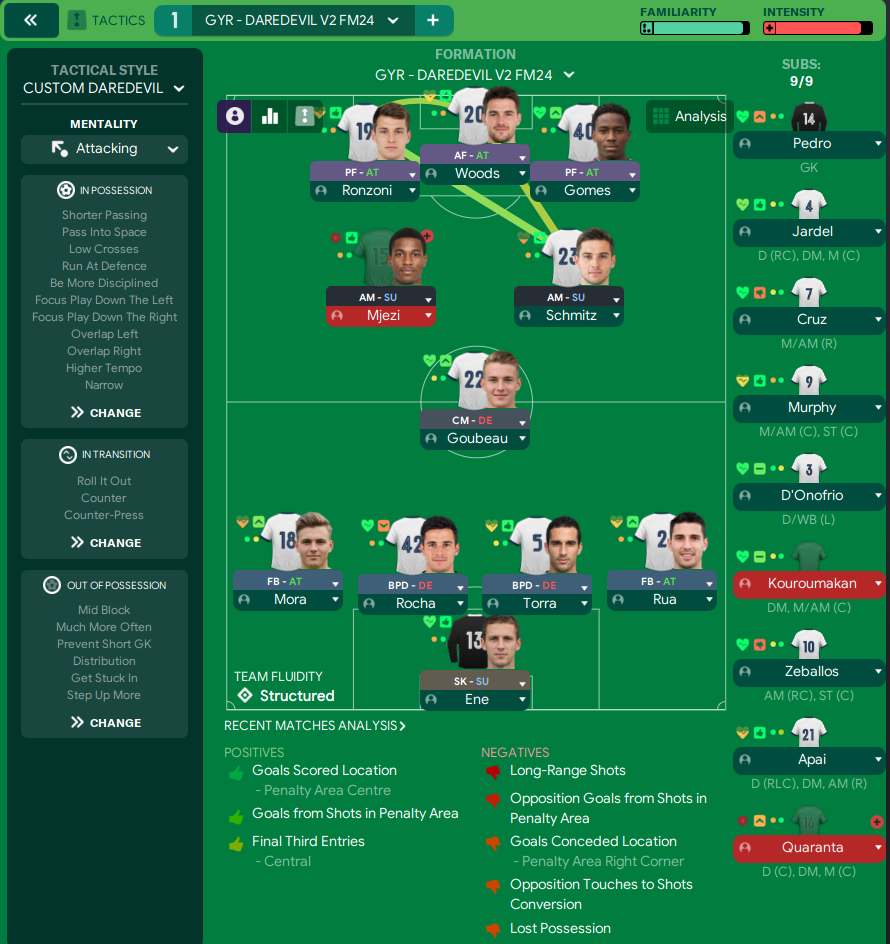
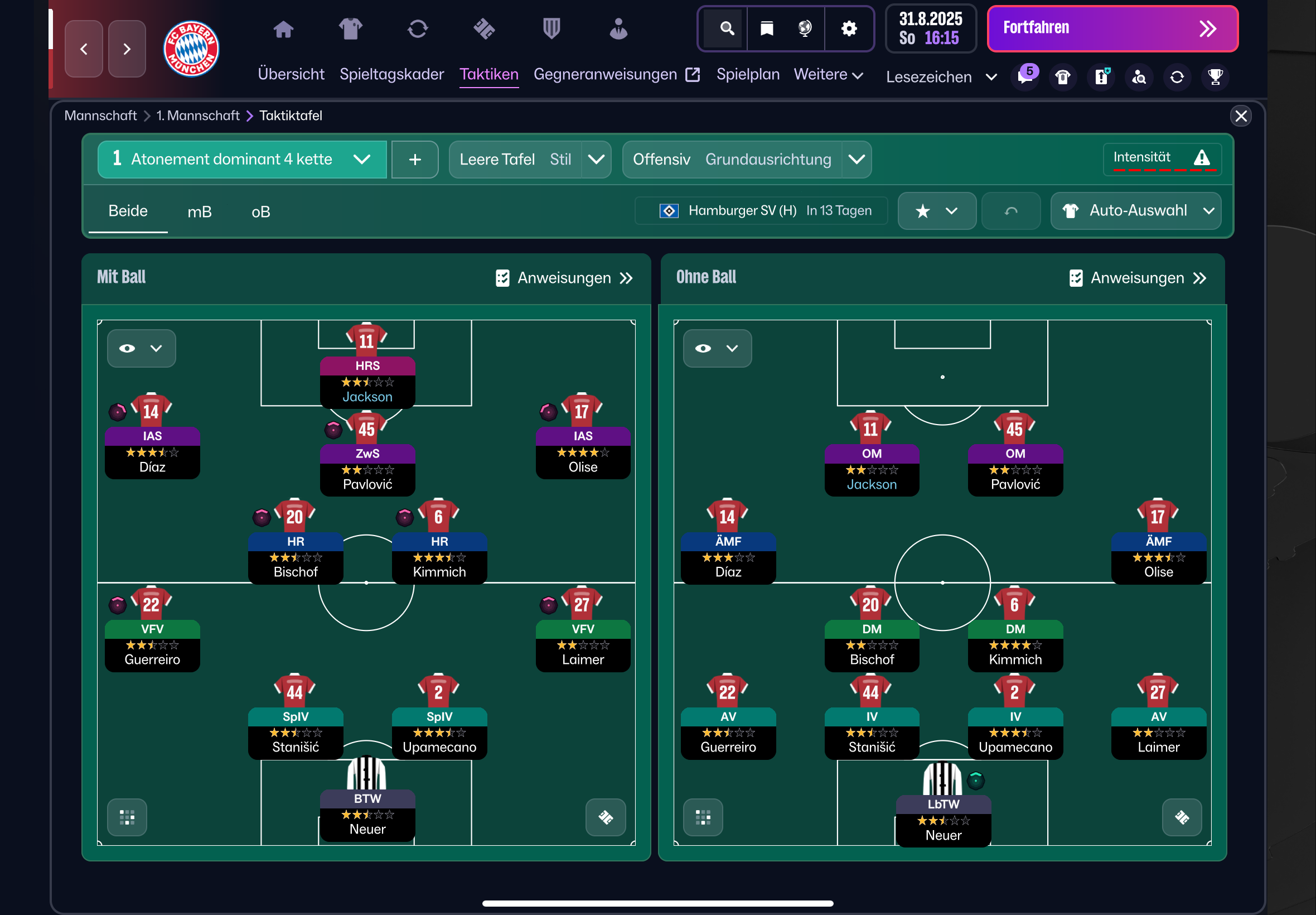
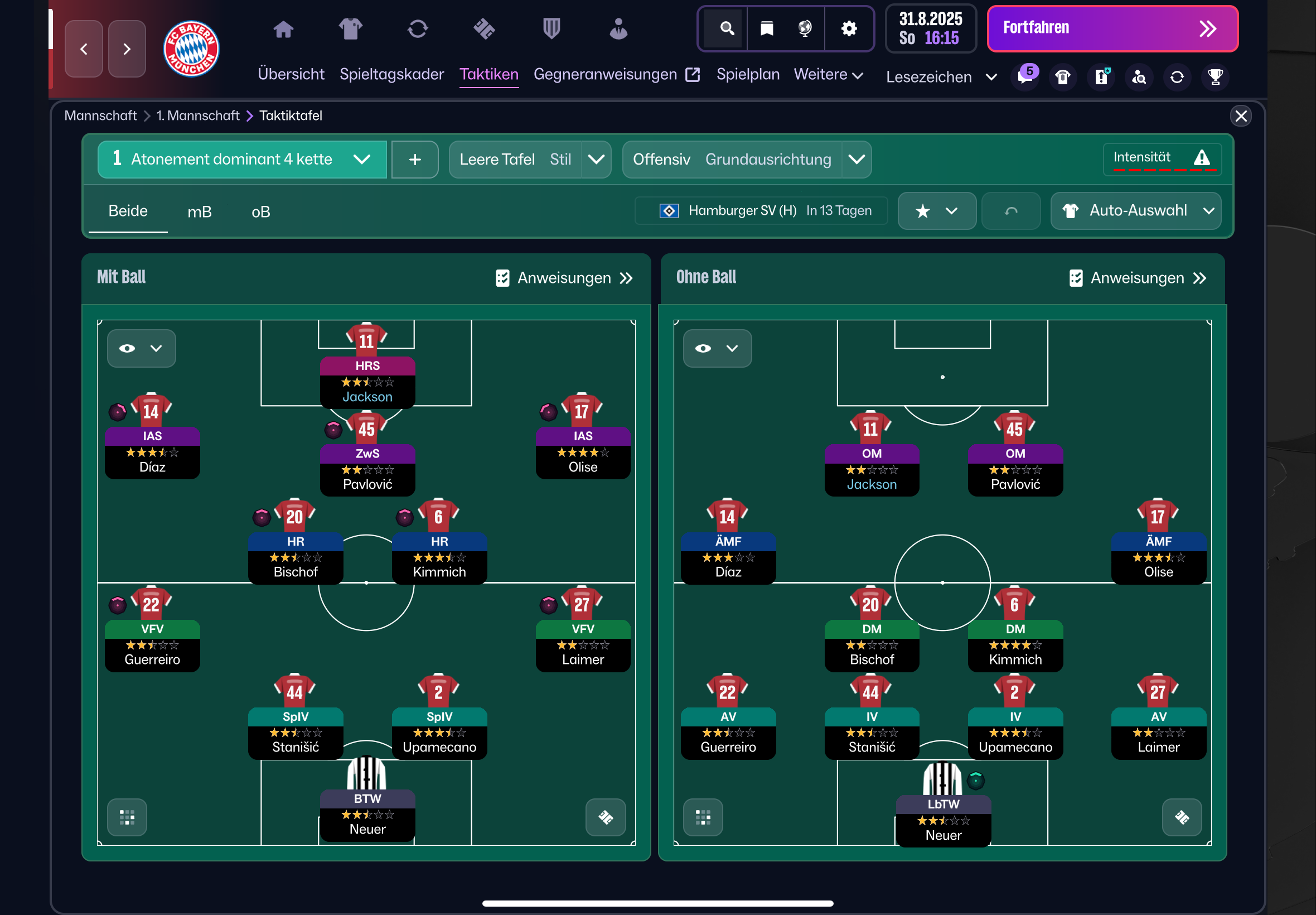
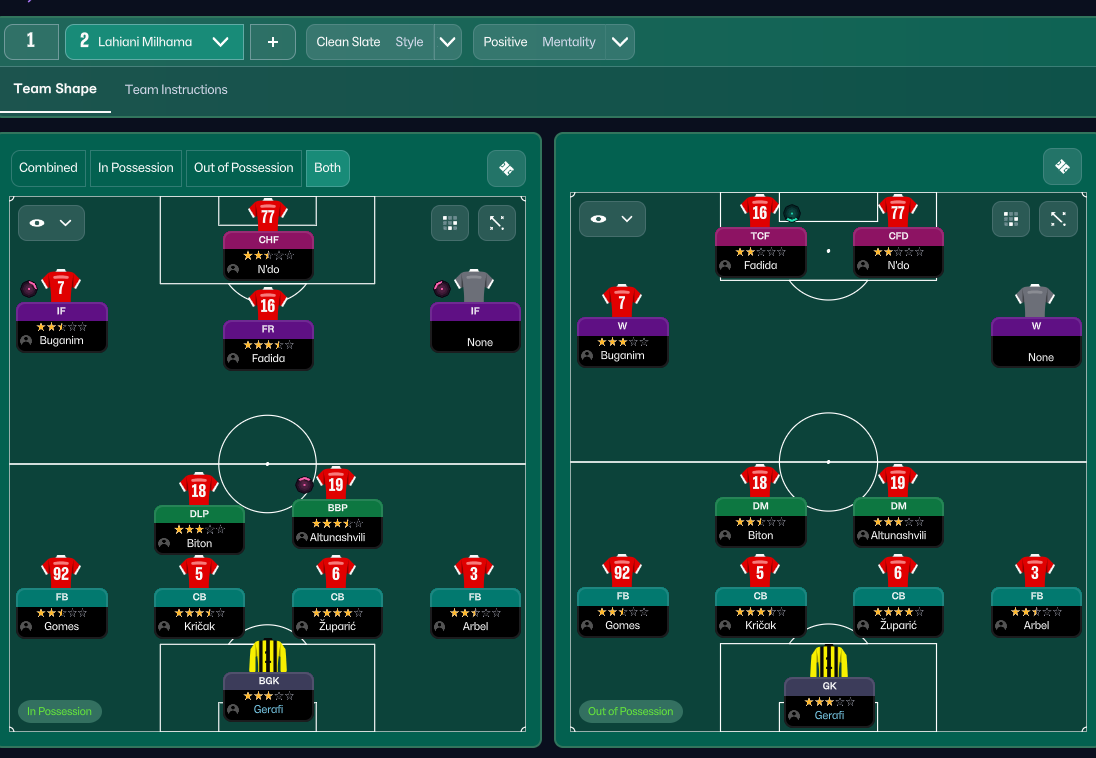
More Pozitif Futbol tactics
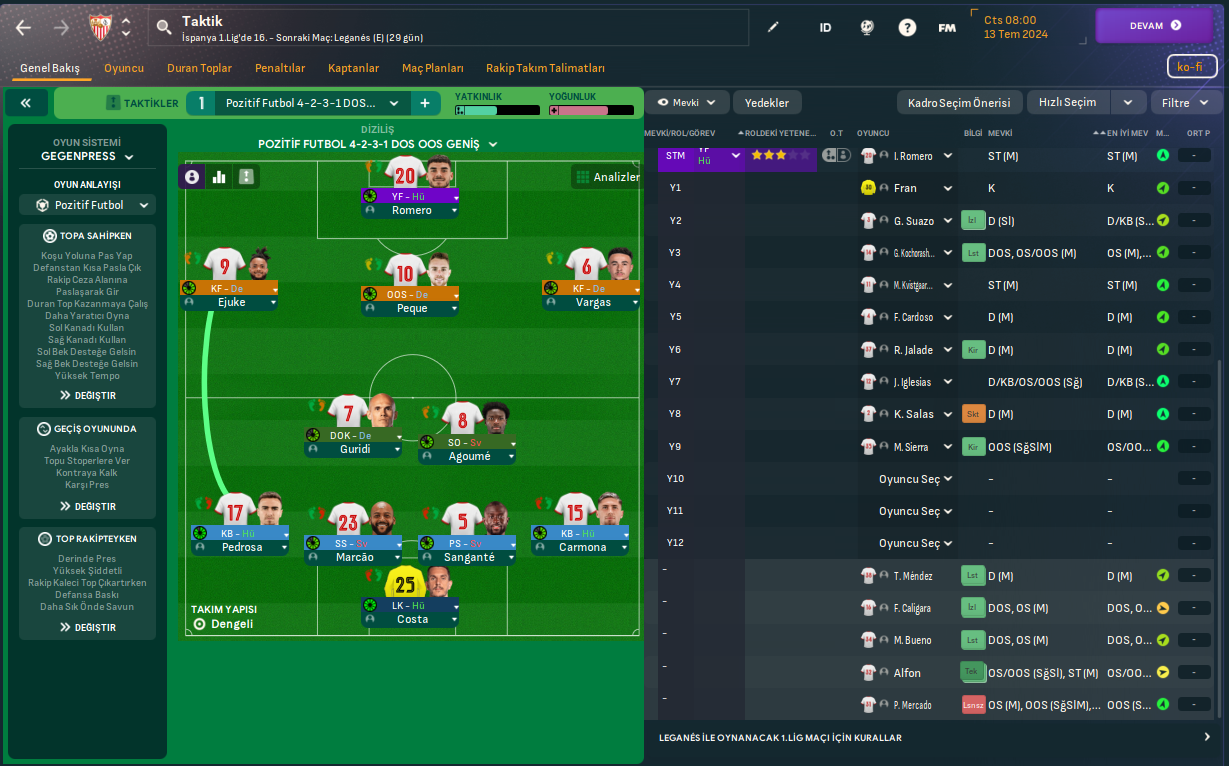
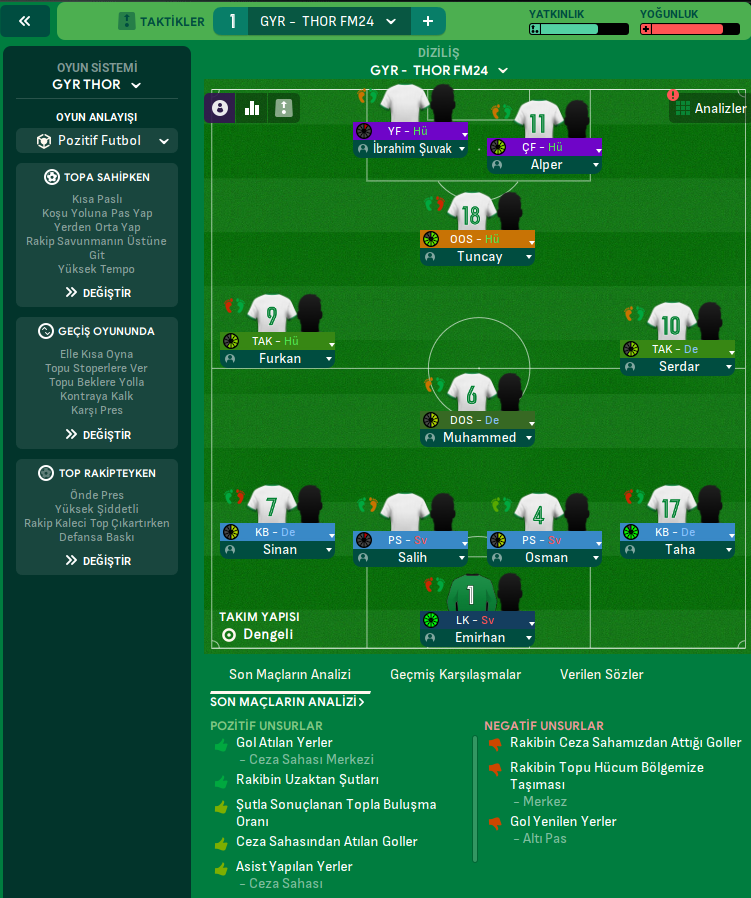
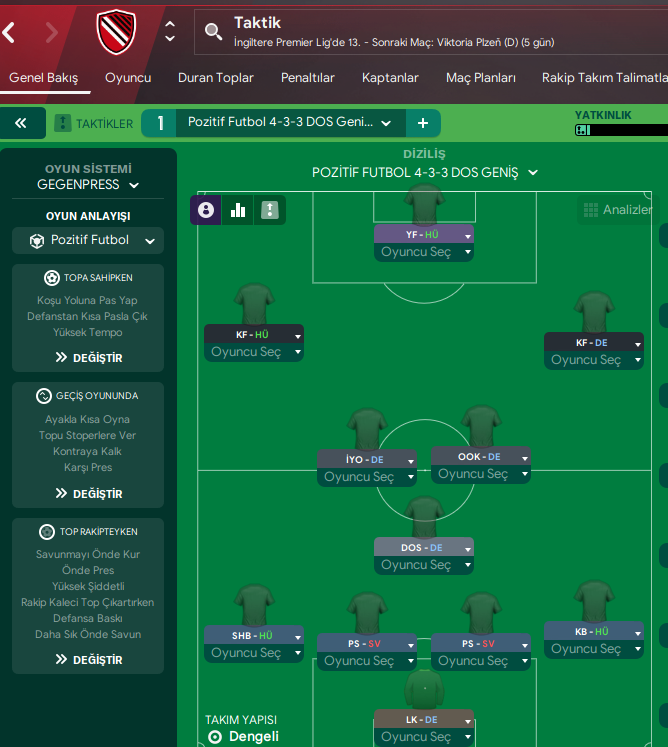
Guides for this formation
The tactical theory behind the 4-2-3-1: roles, instructions, and the trade-offs that decide whether the system holds up.
Player pairings
Midfield Pairs in 4-2-3-1 and 4-4-2
Double pivots and flat pairs in 4-2-3-1 and 4-4-2: when each pairing works, when it collapses, and the AMC unicorn that rescues both.
Read guide
Playing styles
Gegenpressing: A Full Guide
Klopp-style gegenpressing in FM, including squad profile, line-and-press pairing, sustainable workload, and the antipatterns to avoid.
Read guide