Uploaded Tactic
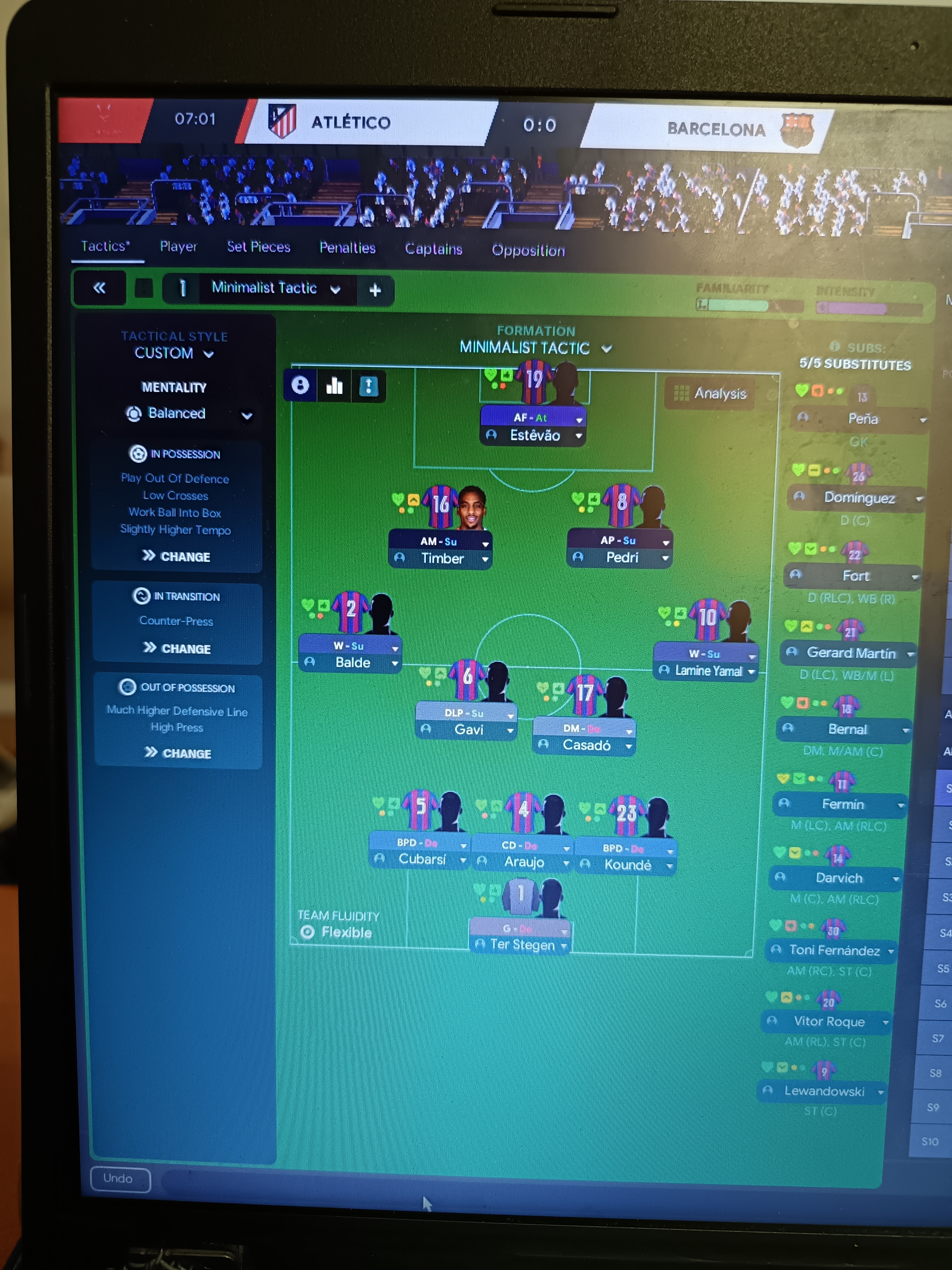
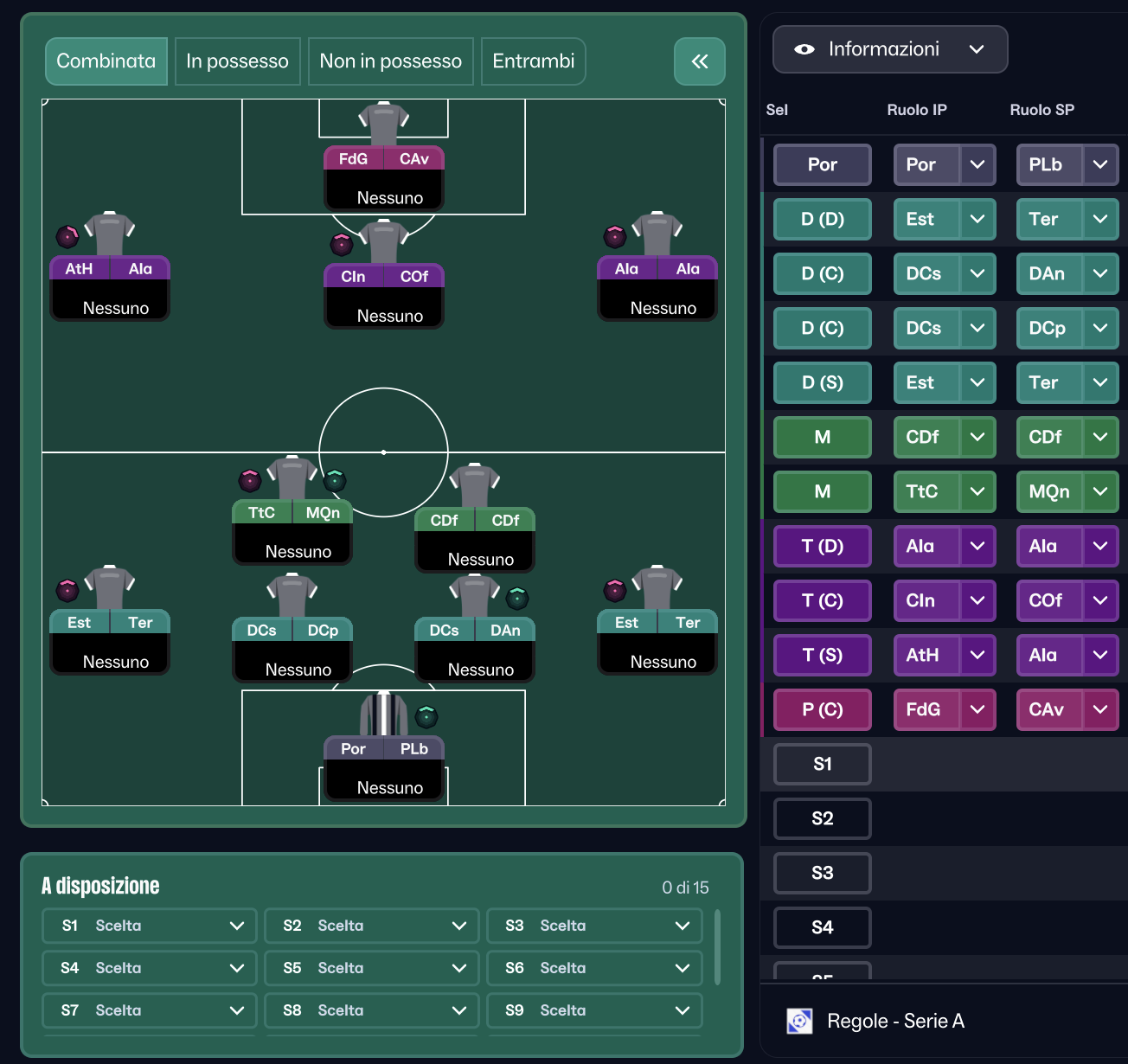
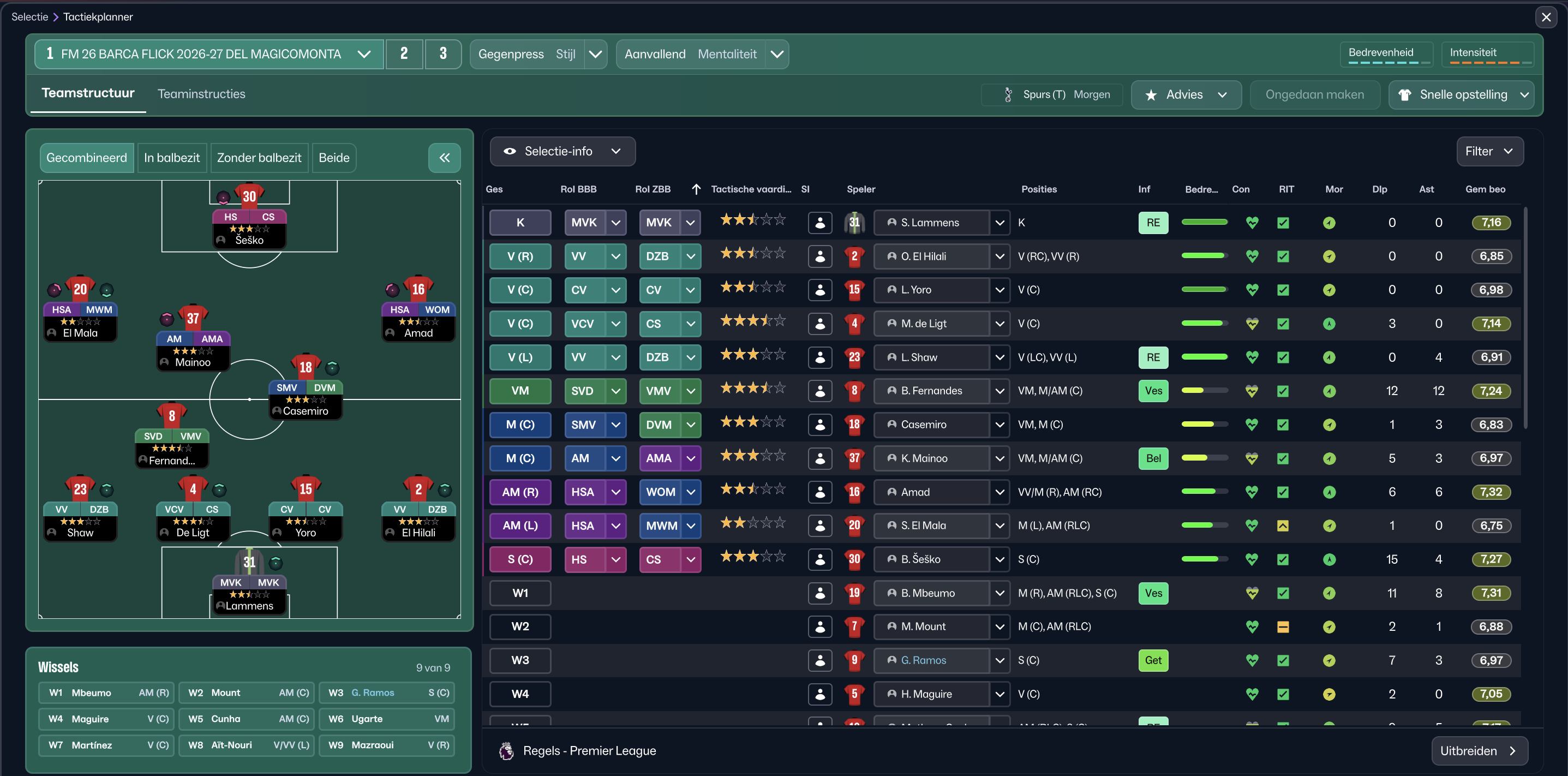
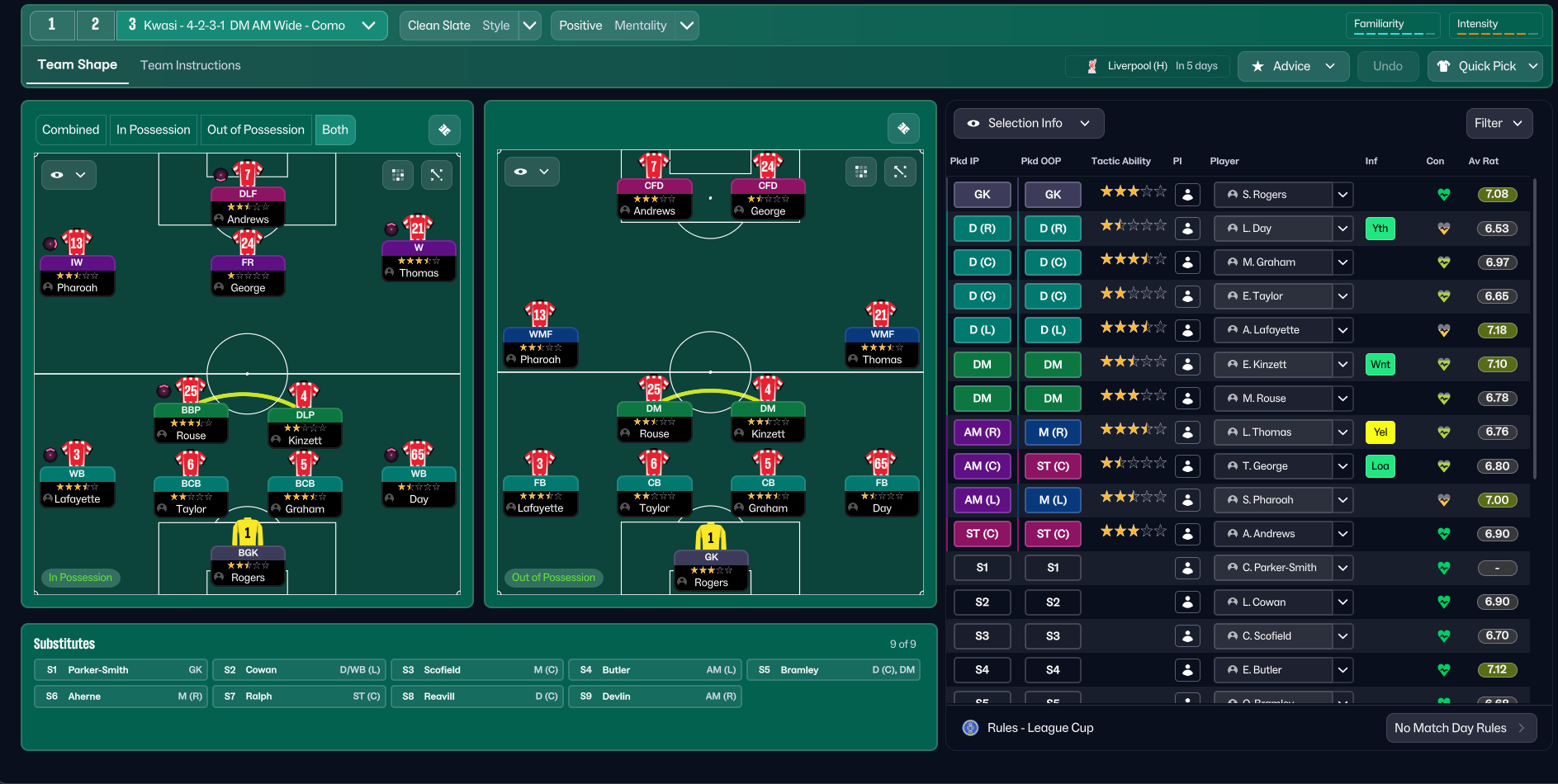
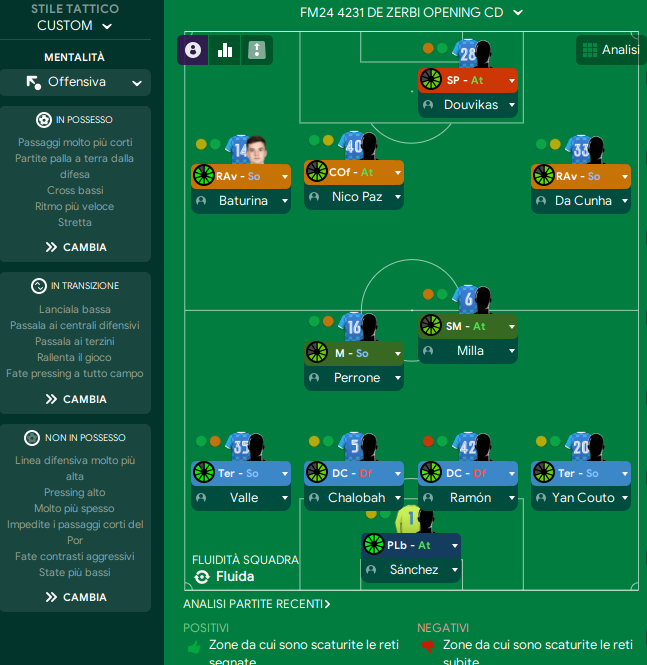
Formation & Style
Tactical Style:Minimalist
Mentality:Balanced
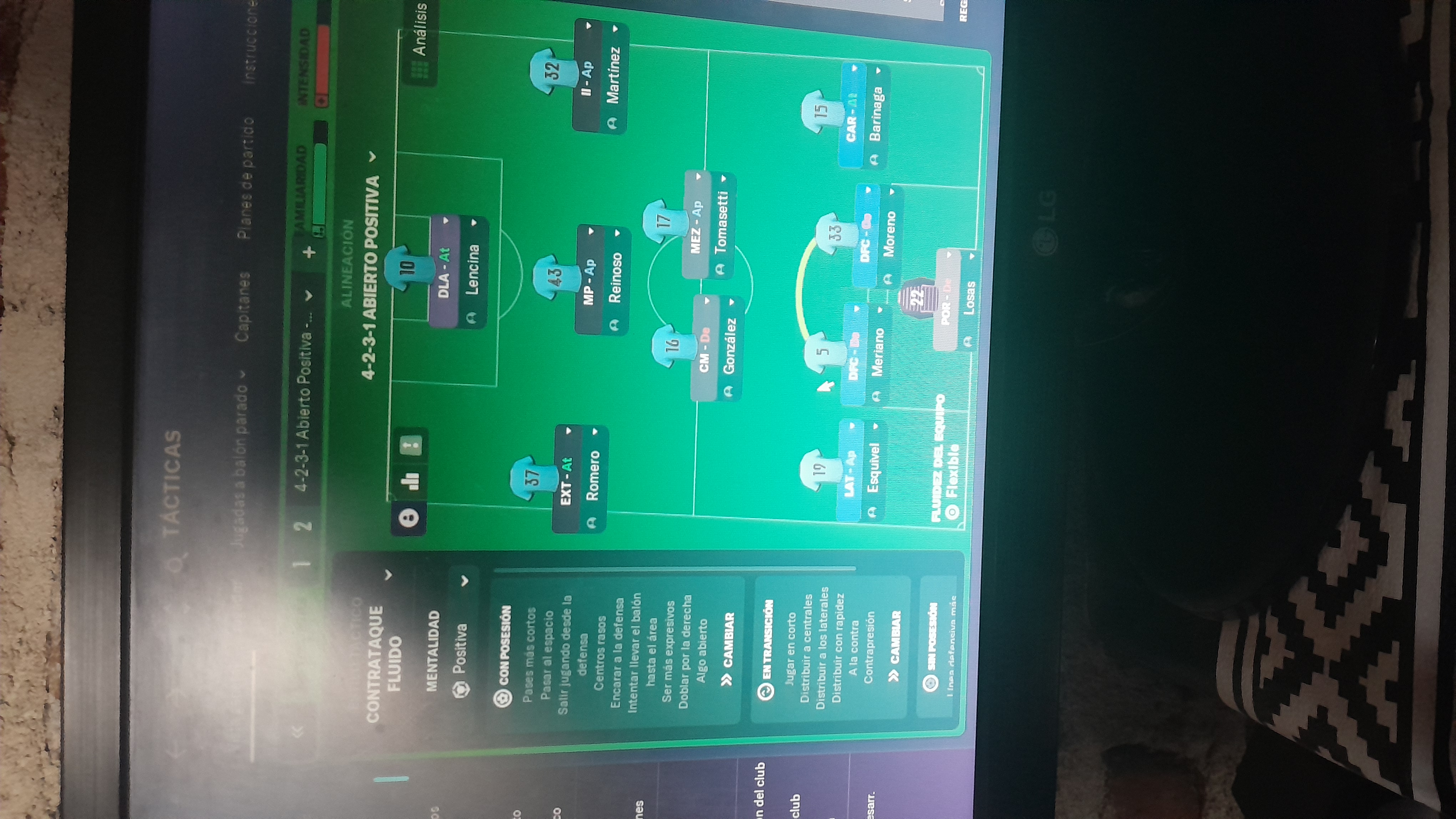
Formation:4-2-3-1
Team Fluidity:Flexible
In Possession
Play Out Of Defence
Low Crosses
Work Ball Into Box
Slightly Higher Tempo
In Transition
Counter-Attack:Enabled
Counter-Press:Immediate
Goalkeeper Distribution:Short
Throw-ins:Quick
Out of Possession
Much Higher Defensive Line
High Press
Team Shape Without Ball
No team shape without ball data available
Team Shape With Ball
No team shape with ball data available
Key Strengths
Balanced Approach
The balanced mentality allows for fluidity in both attack and defense, making the team adaptable to various match situations.
High Defensive Line
Utilizing a much higher defensive line can compress the space for the opposition, making it harder for them to progress the ball.
Possession-Based Play
The emphasis on playing out from the back and working the ball into the box promotes good build-up play and creates high-quality chances.
Dynamic Wide Play
With wingers on support duty, there is a balance of width and central penetration, allowing for versatility in attacking scenarios.
Conflicting Directions
High Defensive Line with High Press
While a high defensive line allows for pressure, it may create vulnerabilities if opposing teams possess fast attackers capable of exploiting the space left behind.
Low Tempo Inconsistency
The instruction for slightly higher tempo may conflict with a tendency to work the ball into the box, potentially causing an imbalance in attacking fluidity.
Support Duties in Midfield
Having multiple support duties in midfield may hinder the team's ability to create a strong attacking presence, leading to possible congestion in central areas.
Minimalist Style Limitations
The minimalist setup could lead to a lack of creative options in crucial moments if not properly managed, especially against well-organized defenses.
Tactical Suggestions
Adjust Defensive Line
Consider slightly lowering the defensive line to provide more security against counter-attacks and to reduce space for speedy opponents.
Vary Tempo
Experiment with varying the tempo in different phases of the match to enhance unpredictability in attacking transitions.
Increase Central Creativity
Consider using a more attacking role for one of the midfielders, such as a Box-to-Box midfielder, to increase goal threat from the center.
Flexibility in Player Roles
Ensure player roles are adaptable during the match, allowing players to switch duties based on the flow of the game.
Ask Questions About Your Lineup
Related Tactics
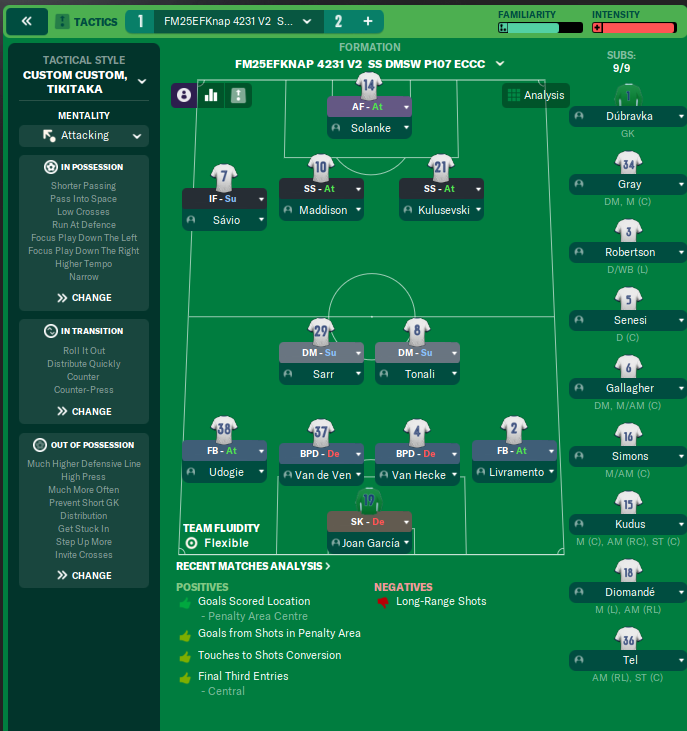
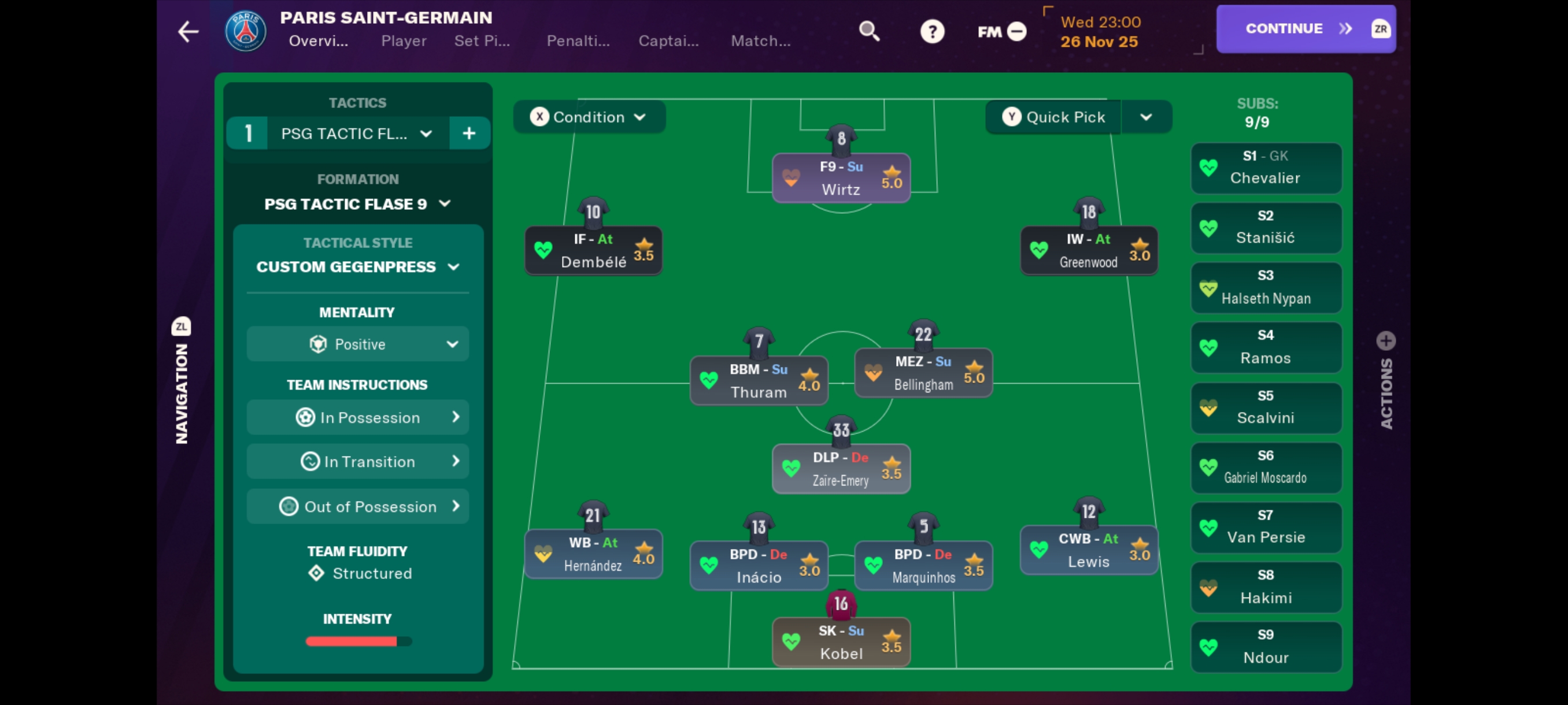
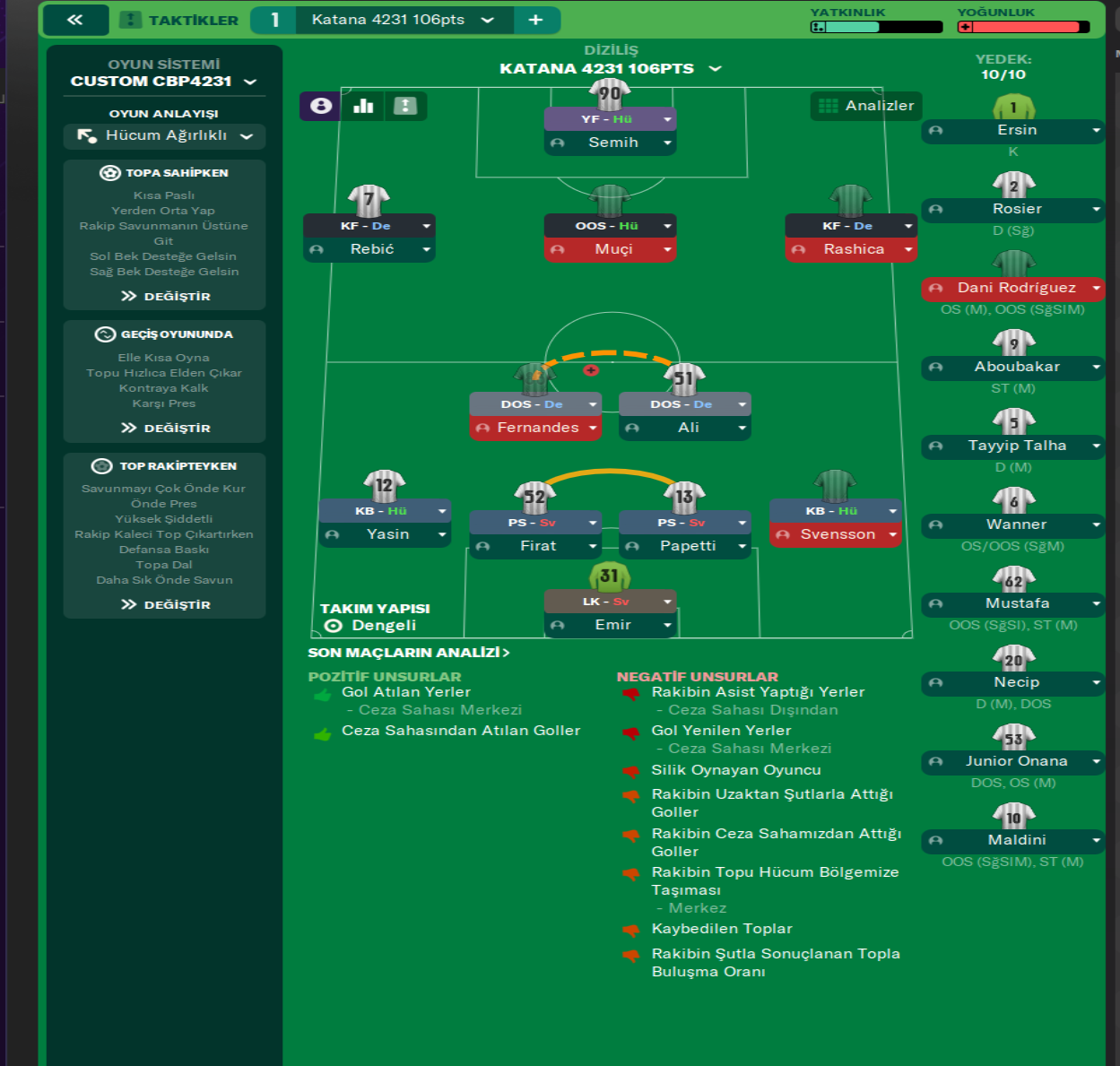
Guides for this formation
The tactical theory behind the 4-2-3-1: roles, instructions, and the trade-offs that decide whether the system holds up.
Player pairings
Midfield Pairs in 4-2-3-1 and 4-4-2
Double pivots and flat pairs in 4-2-3-1 and 4-4-2: when each pairing works, when it collapses, and the AMC unicorn that rescues both.
Read guide
Playing styles
Gegenpressing: A Full Guide
Klopp-style gegenpressing in FM, including squad profile, line-and-press pairing, sustainable workload, and the antipatterns to avoid.
Read guide