Uploaded Tactic
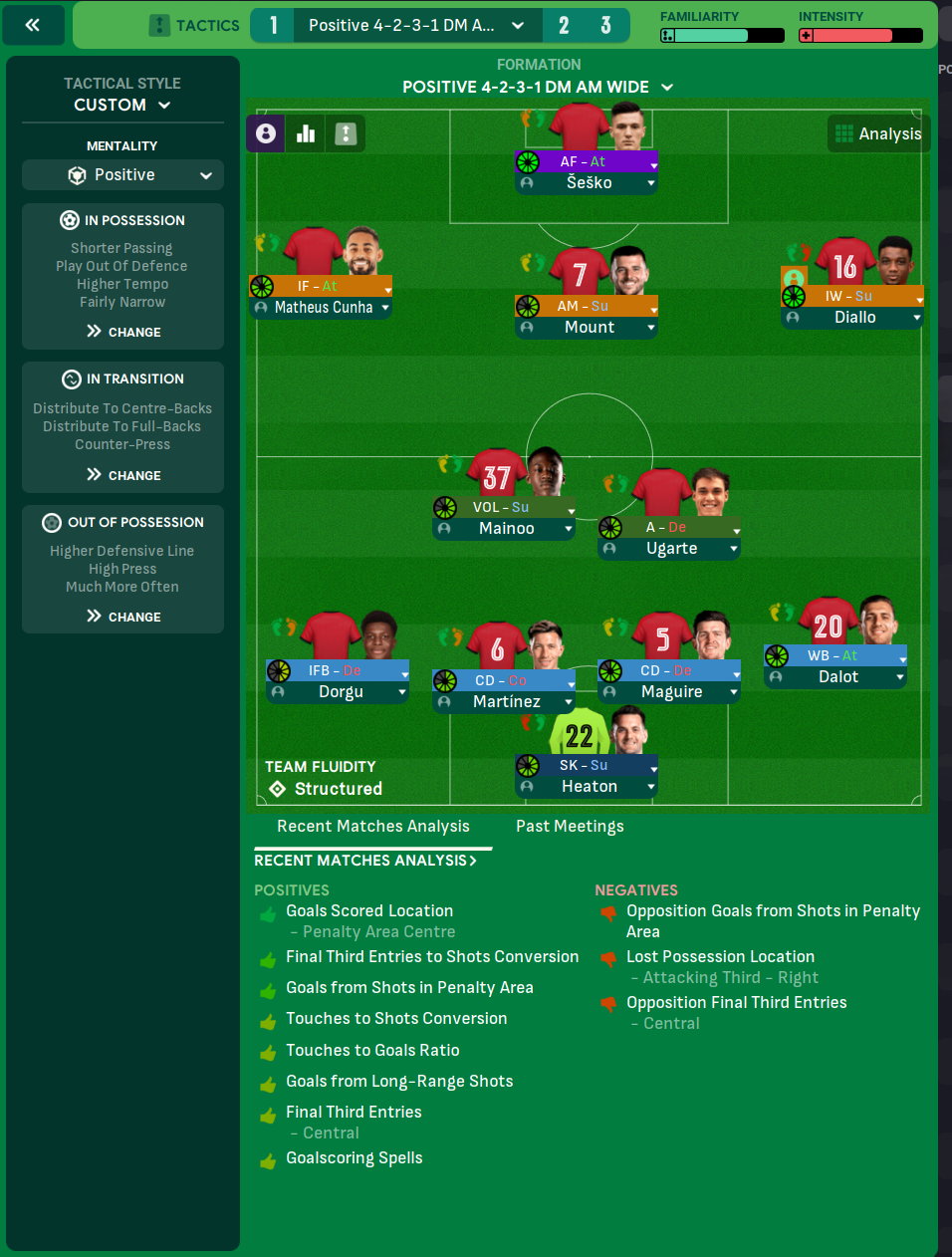
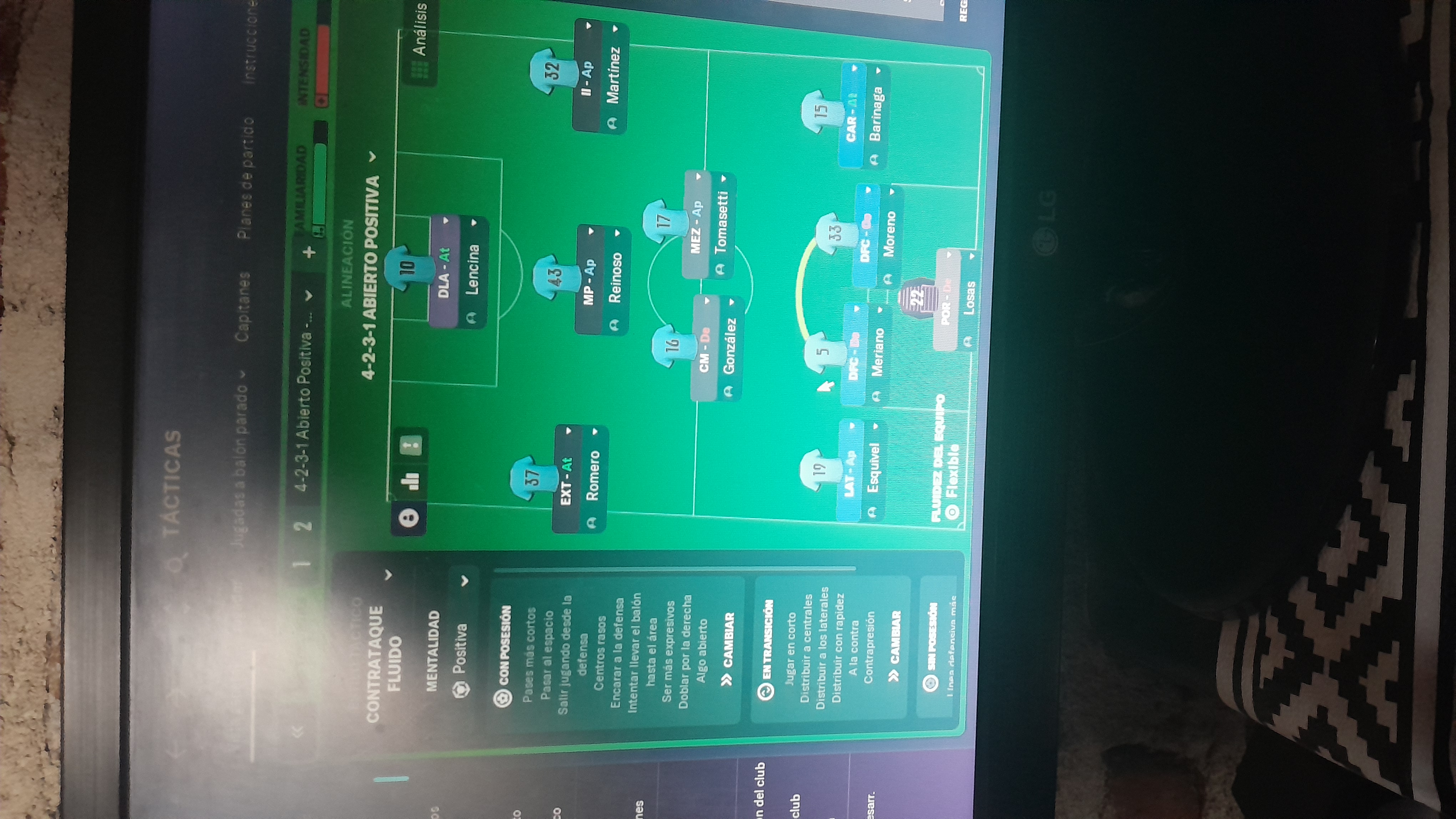
Formation & Style
Tactical Style:Custom
Mentality:Positive
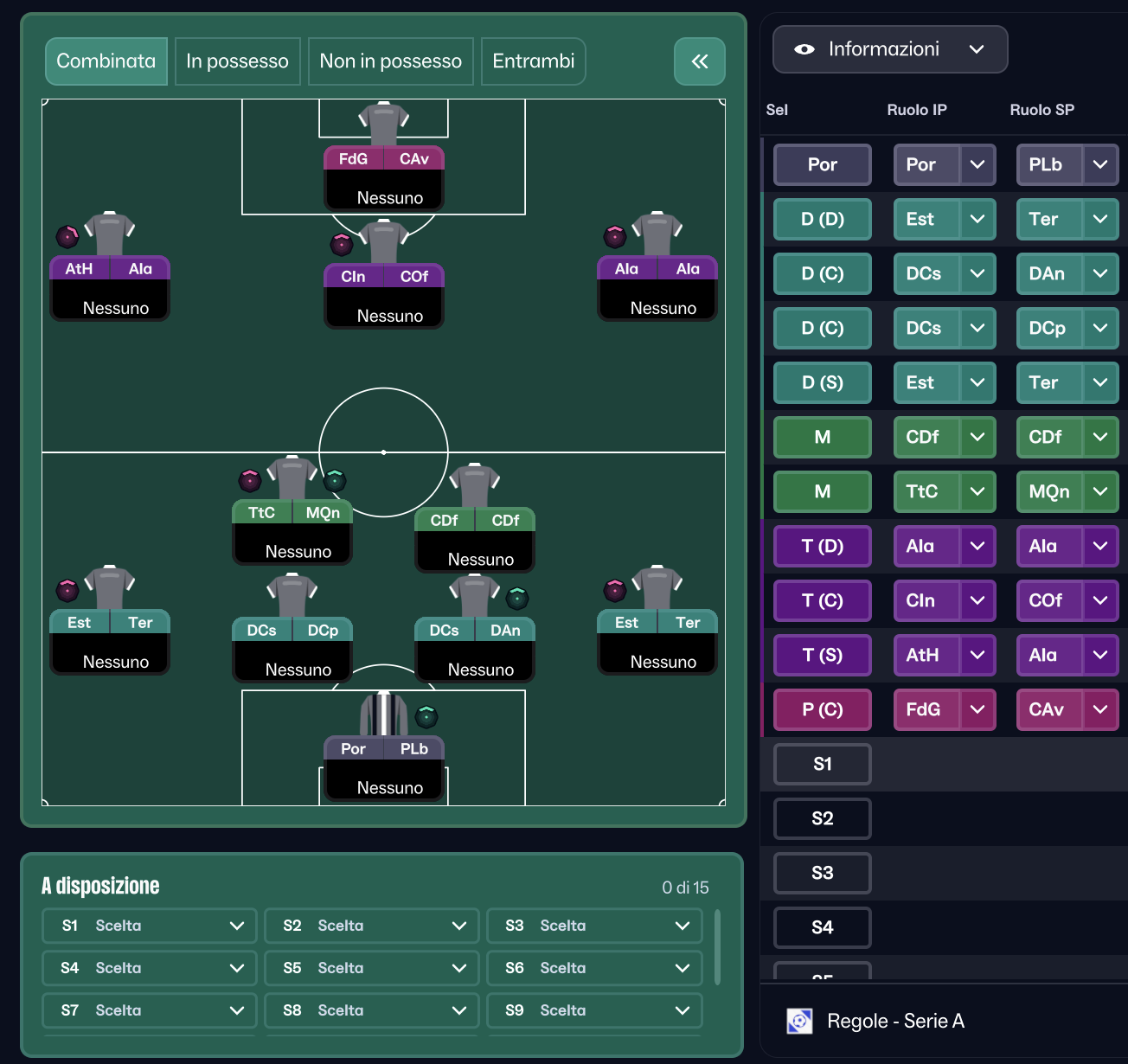
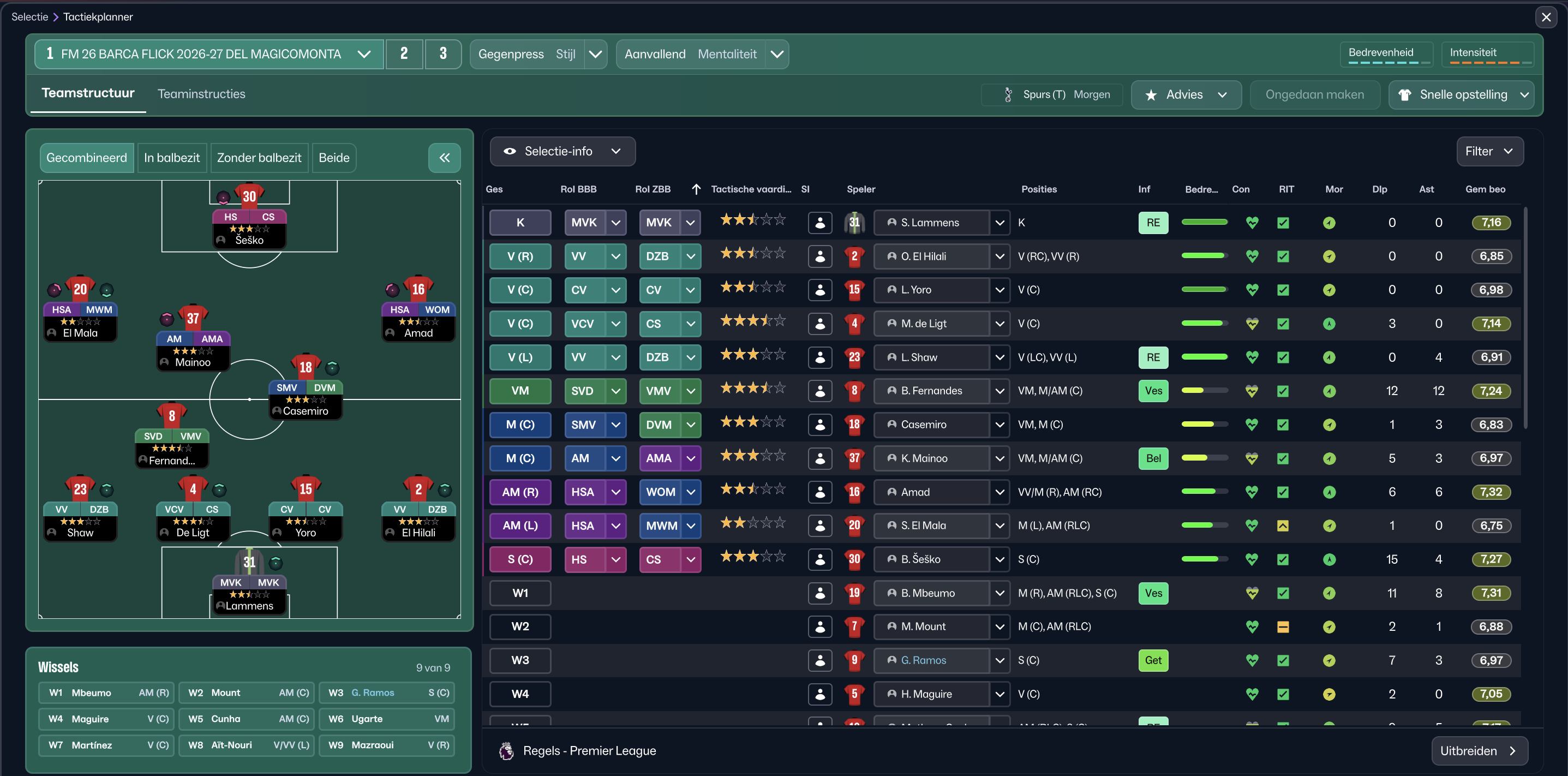
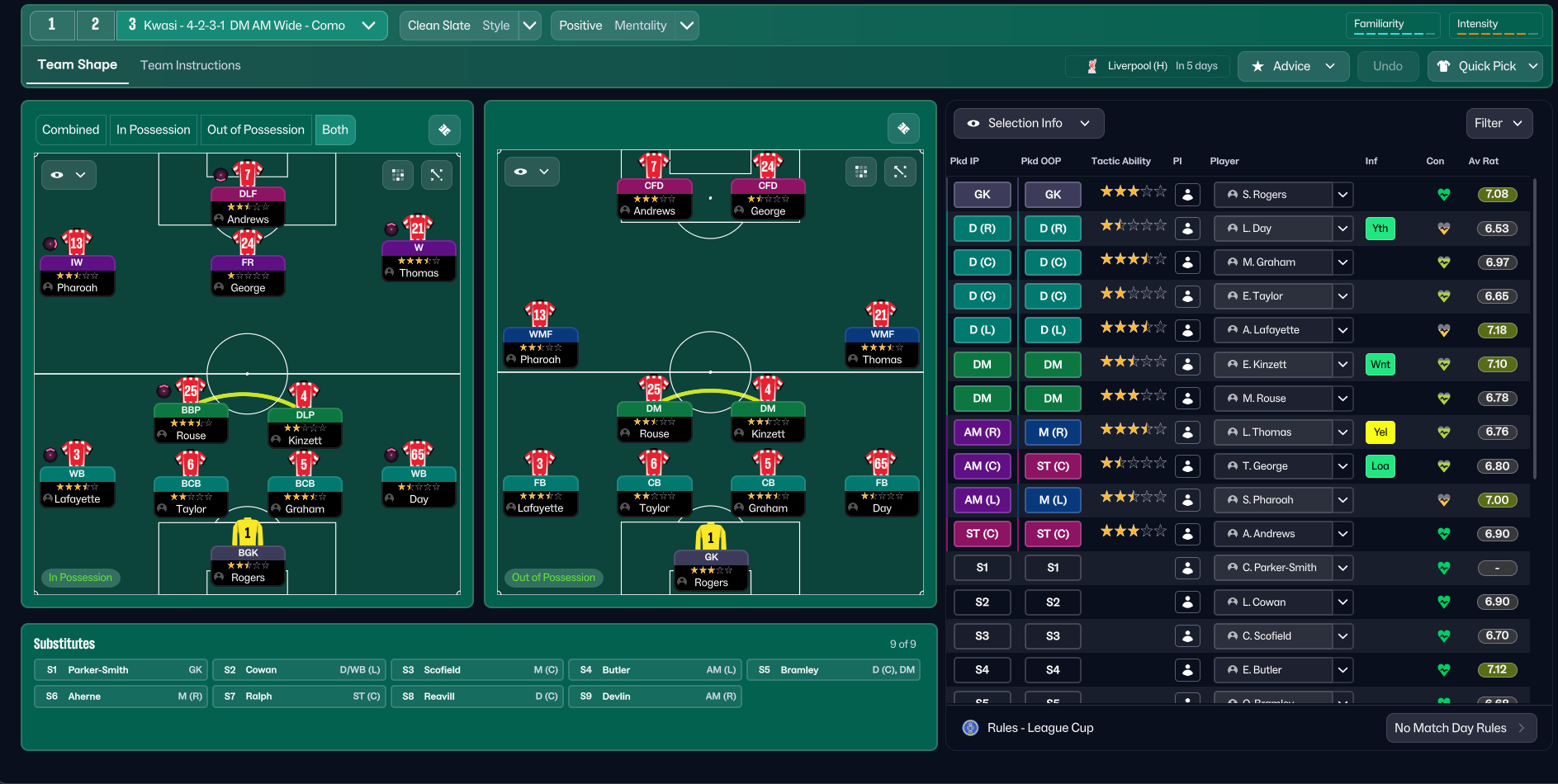
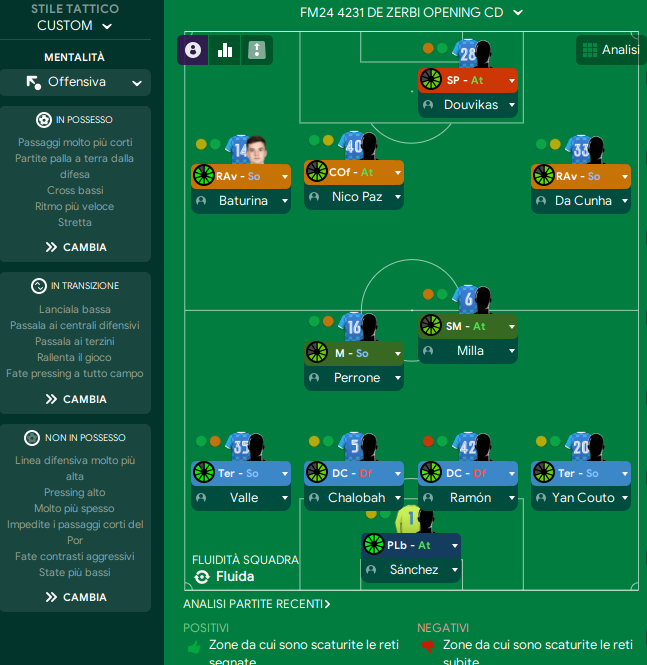
Formation:4-2-3-1
Team Fluidity:Structured
In Possession
Shorter Passing
Play Out Of Defence
Higher Tempo
Fairly Narrow
In Transition
Distribute To Centre-Backs
Distribute To Full-Backs
Counter-Press
Out of Possession
Higher Defensive Line
High Press
Much More Often
Team Shape Without Ball
Shape:4-2-3-1
Description:Compact shape with a narrow focus preventing central penetrations while applying a high press.
Evidence:High Press with Higher Defensive Line combined with 2 CBs and 2 support roles in DM.
Team Shape With Ball
Shape:4-2-3-1
Description:Focus on width, with attacking outputs primarily from the wing-back and inverted winger.
Evidence:Use of Wing Back (A) at [2,4] and Inside Forward (A) at [5,1] to stretch the opponent's defense.
Phase Description
Attacking Play
Utilizes width through the inverted winger and wing-back, allowing inside space for the attacking midfielder.
Defensive Transition
Transitioning quickly from attack to defense is emphasized through counter-pressing.
Main Focus
Getting the ball into the penalty area efficiently using short passing and higher tempo.
Key Strengths
Effective Central Penetration
The role of the Attacking Midfielder (AM-S) facilitates playmaking and supports the Advanced Forward.
Diverse Attacking Options
Combination of an Inside Forward (IF-A) and a Wing Back (WB-A) adds unpredictability on the flanks.
Compact Midfield Structure
The dual midfield setup helps in retaining possession and transitioning smoothly.
Conflicting Directions
Defensive Vulnerabilities
High defensive line paired with a high press may leave gaps if countered effectively.
Dependency on Flanks
Heavy reliance on wide play can become predictable leading to congested areas.
Counter-Press Overreliance
Counter-pressing can lead to fatigue if overused and may leave gaps in transition.
Tactical Suggestions
Consider Slightly Lower Defensive Line
A slightly deeper line may reduce vulnerabilities against quick counters.
Increase Width in Attack
Expanding the width further may stretch the opponent's defensive lines, creating more opportunities.
Diversify Midfield Roles
Consider a more dynamic midfield role, like a Box-to-Box Midfielder, to increase transition speed.
Ask Questions About Your Lineup
Related Tactics
Guides for this formation
The tactical theory behind the 4-2-3-1: roles, instructions, and the trade-offs that decide whether the system holds up.
Player pairings
Midfield Pairs in 4-2-3-1 and 4-4-2
Double pivots and flat pairs in 4-2-3-1 and 4-4-2: when each pairing works, when it collapses, and the AMC unicorn that rescues both.
Read guide
Playing styles
Gegenpressing: A Full Guide
Klopp-style gegenpressing in FM, including squad profile, line-and-press pairing, sustainable workload, and the antipatterns to avoid.
Read guide