Uploaded Tactic
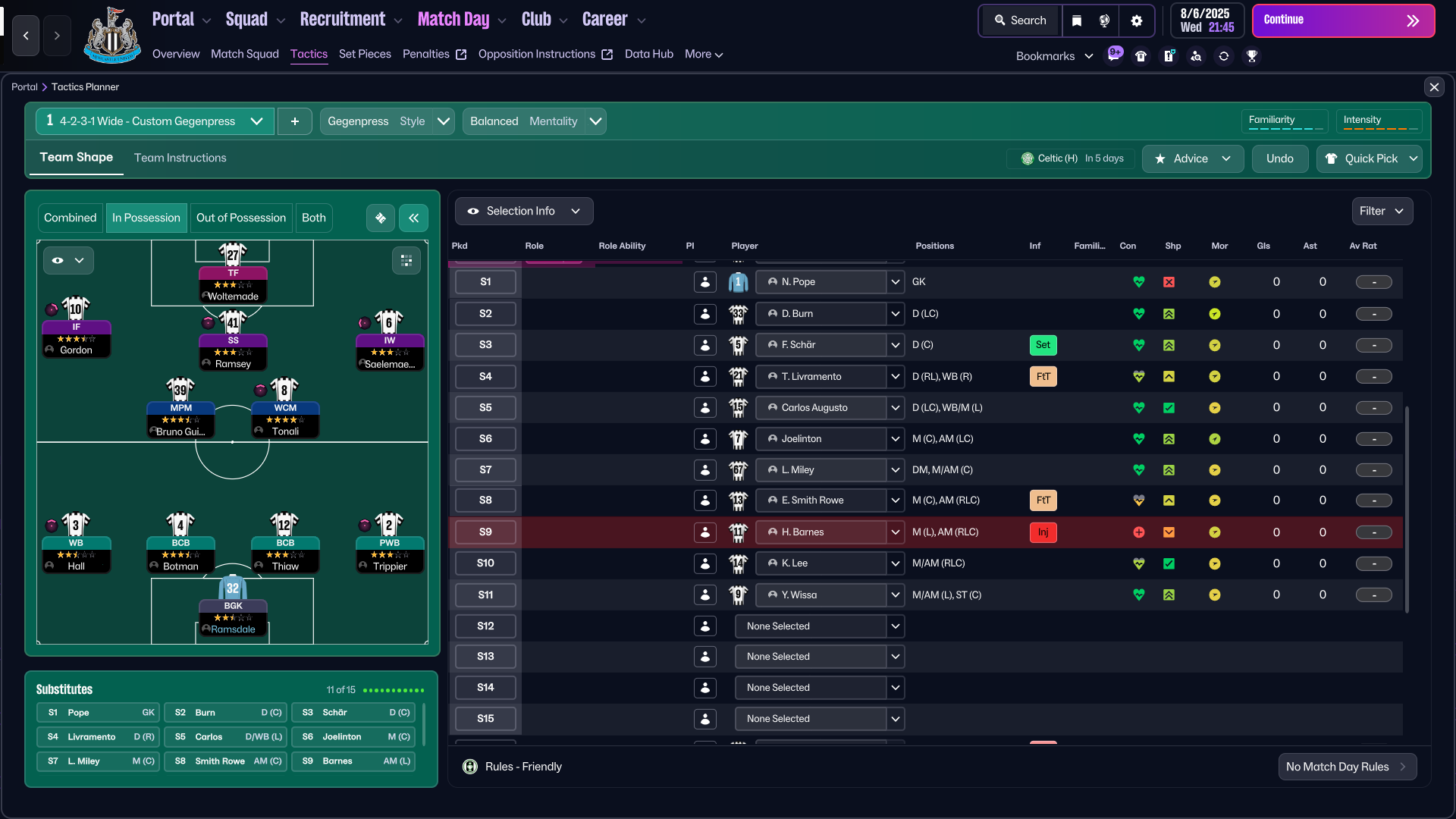
Formation & Style
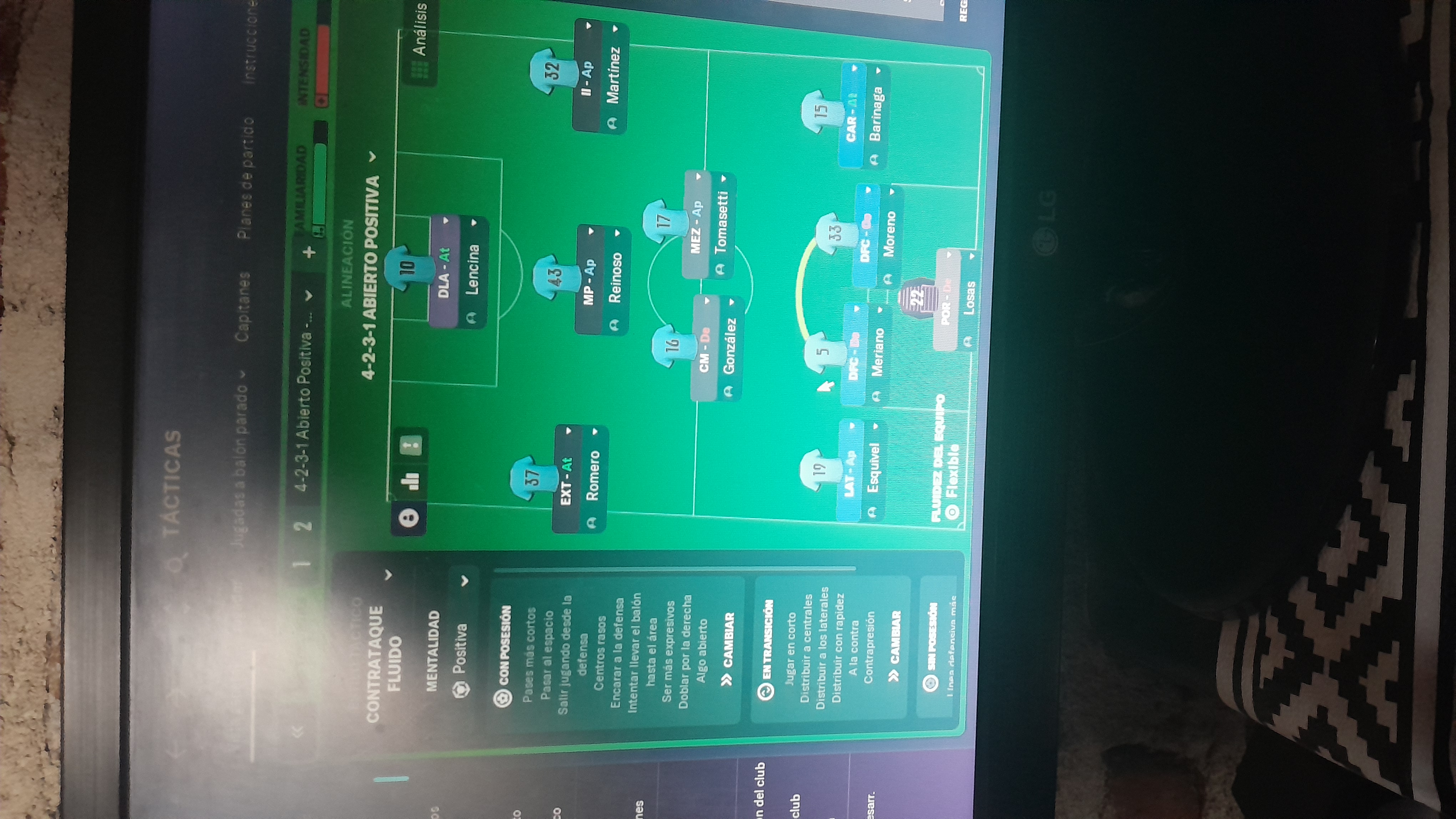
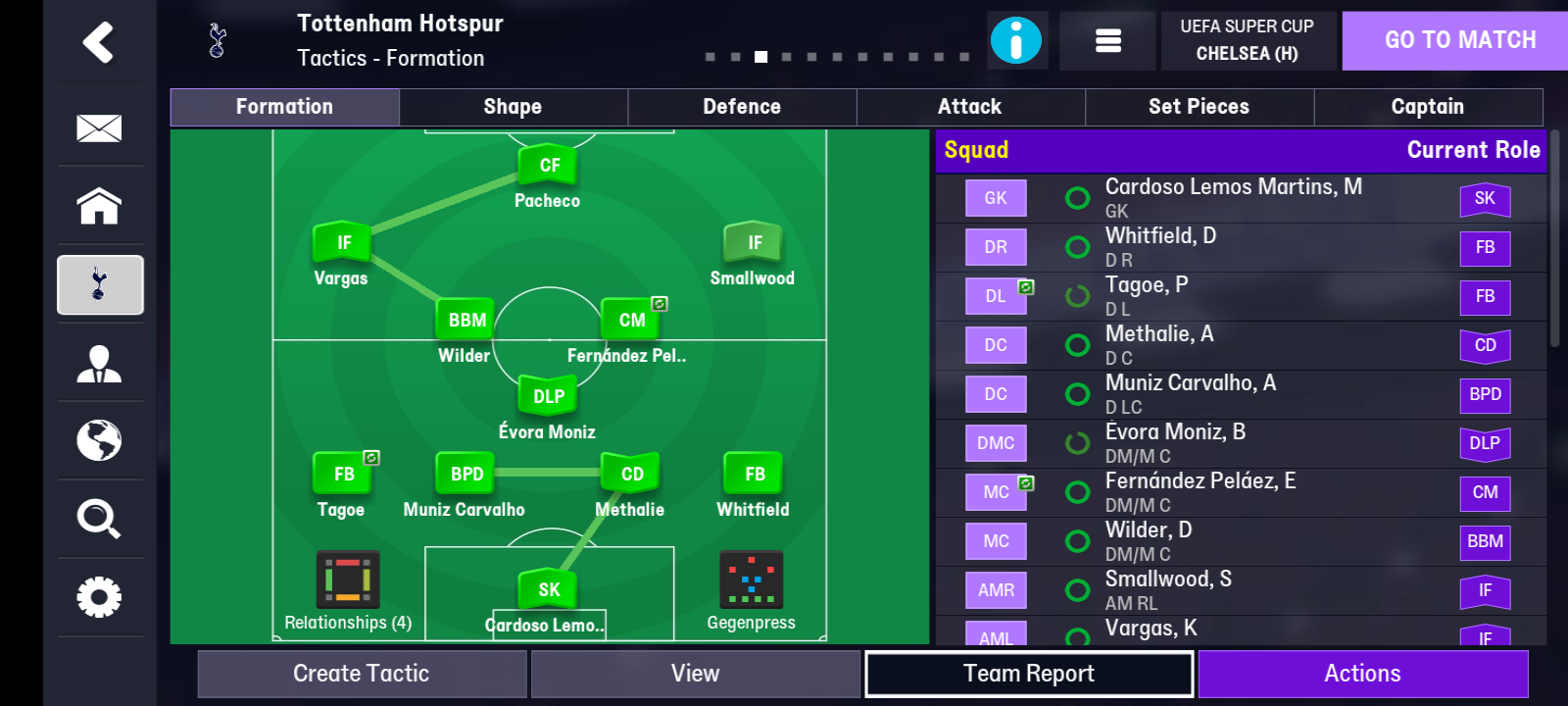
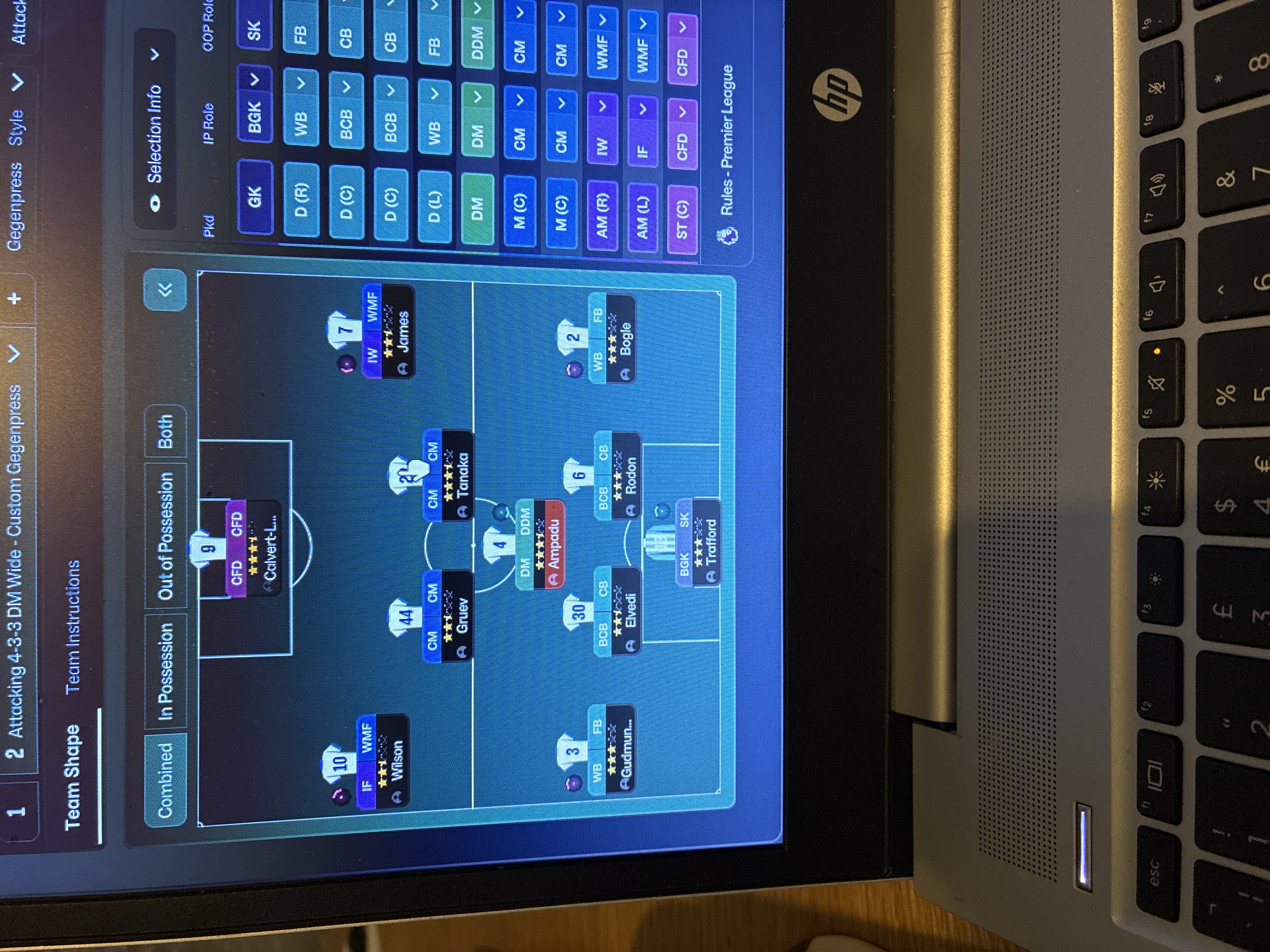
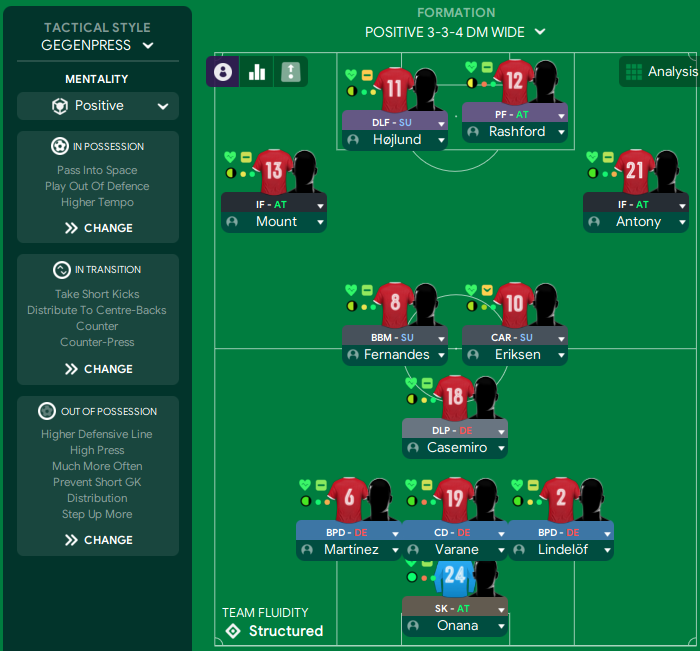
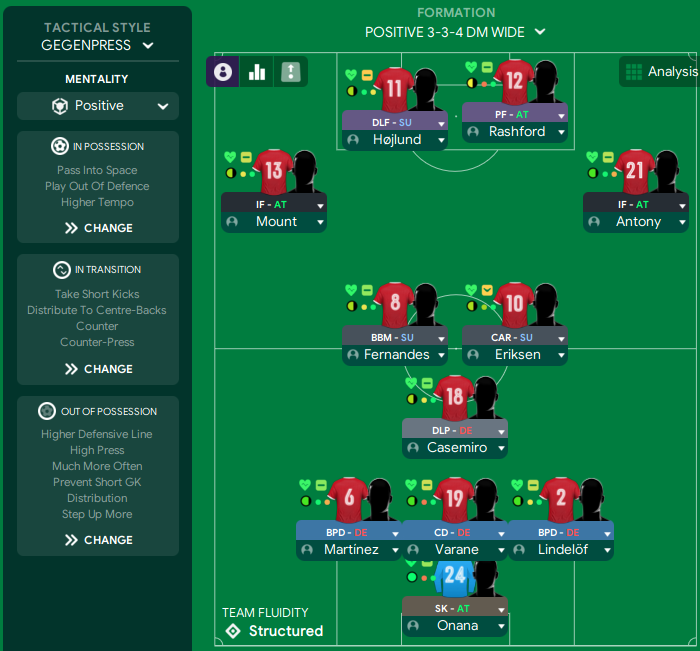
Tactical Style:Gegenpress
Mentality:Balanced
Formation:4-2-3-1
Team Fluidity:Custom
In Possession
Use width to stretch the opposition
Focus on short passing
Create overloads in central areas
In Transition
Counter-press immediately upon losing possession
Quick transitions towards the attacking third
Out of Possession
High pressing to win the ball back quickly
Defensive shape maintains compactness
Team Shape Without Ball
Shape:4-2-3-1
Description:Defensive line holds a traditional 4-man shape reflecting strong central coverage and support from full-backs.
Evidence:Back four consisting of D, DC, D, and WB with midfield support from WCM and MPM.
Team Shape With Ball
Shape:4-3-3
Description:Attacking structure emphasizes width and quick ball movement with a central striker supported by inside forwards.
Evidence:Formation allows for fluidity with TF supported by IF and IW positions.
Phase Description
Attacking Play
The team focuses on quick, incisive passing, creating chances through combination play and utilizing the width provided by wingers.
Defensive Transition
Upon losing possession, immediate pressing commences, targeting the opposition's ball carriers.
Main Focus
Maintaining possession while exerting pressure on the opposition to regain the ball quickly.
Key Strengths
Attacking Width
Utilizing wingers in the IF and IW roles stretches defenses, creating space for central players.
Counter-Pressing Strategy
Effective counter-pressing helps in winning back possession quickly after losing it.
Dynamic Midfield Roles
Mix of MPM and WCM allows flexibility in both attack and defense.
Conflicting Directions
Over-reliance on Width
Heavy use of width might leave central areas exposed against compact defenses.
Potential Counter-Attack Vulnerability
High pressing can lead to vulnerabilities if players are caught out of position.
Injuries Impacting Structure
Injuries to key players affect tactical consistency and depth of options.
Tactical Suggestions
Consider Adding a Playmaker Role
Incorporating a deeper playmaker could help control the game's tempo further.
Evaluate Defensive Solidity
Perhaps use a more defensive positioning for full-backs against stronger opponents.
Rotate Players Regularly
Managing fitness levels and avoiding injuries through regular rotations is crucial.
Ask Questions About Your Lineup
Related Tactics
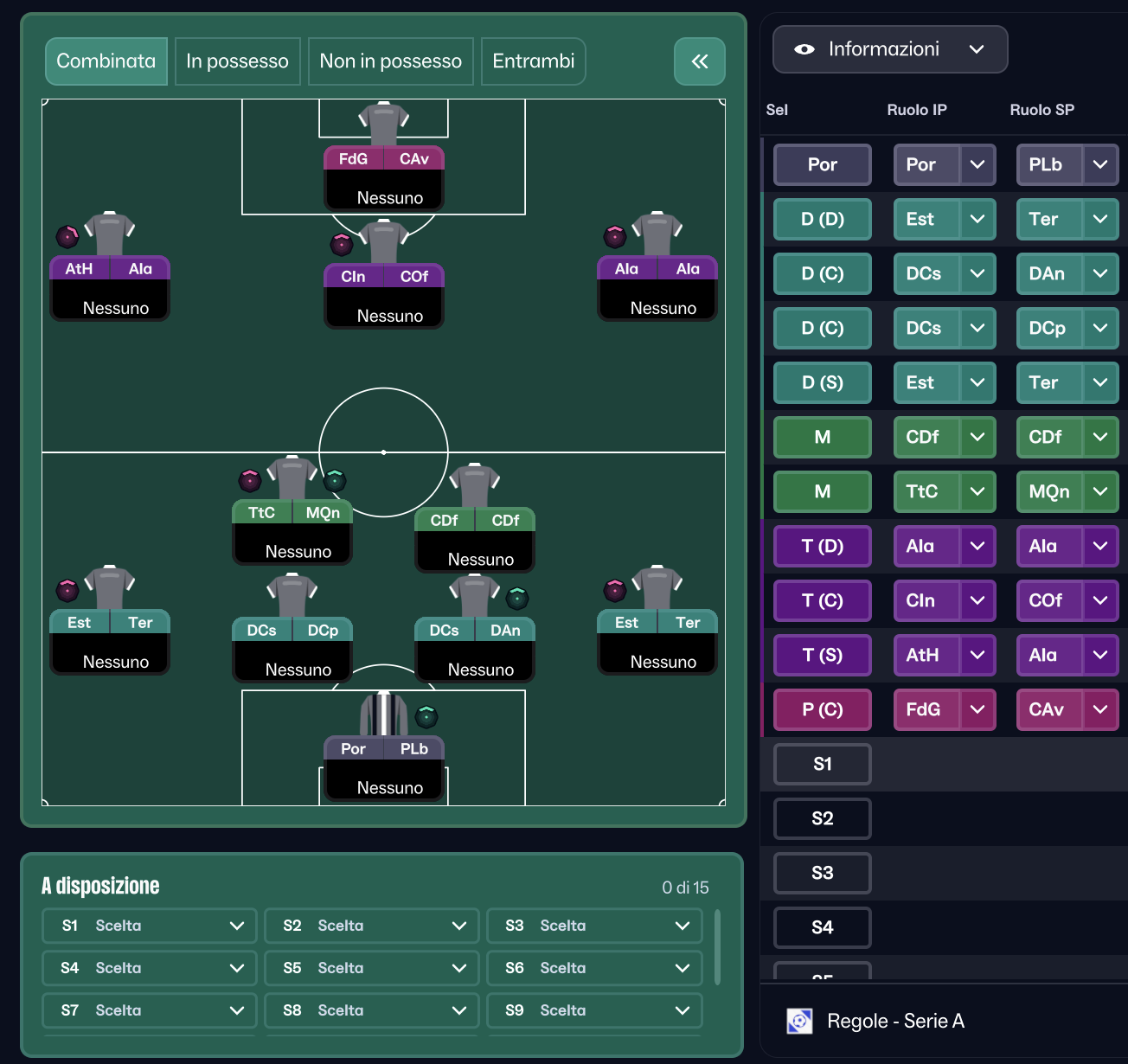
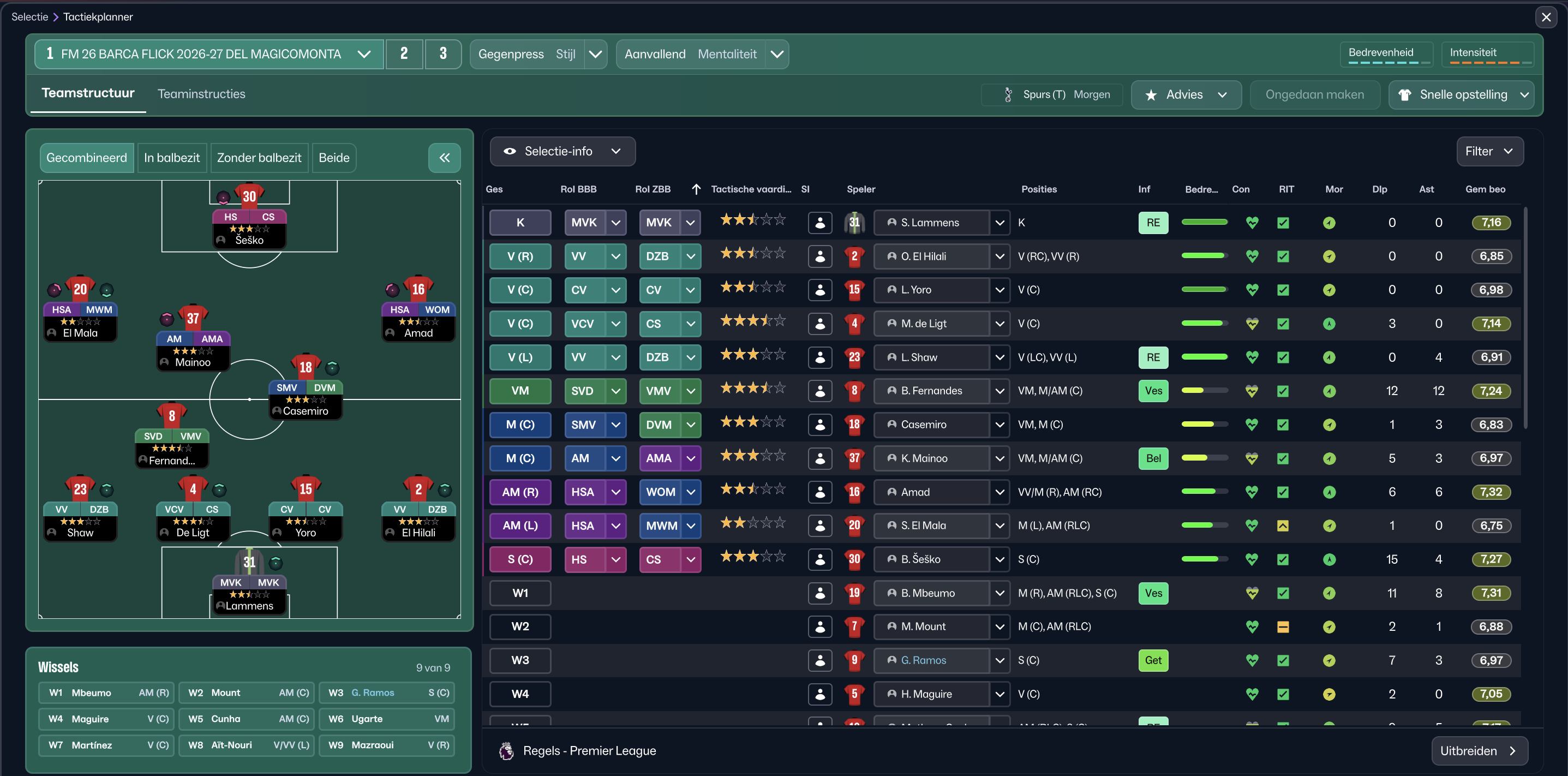
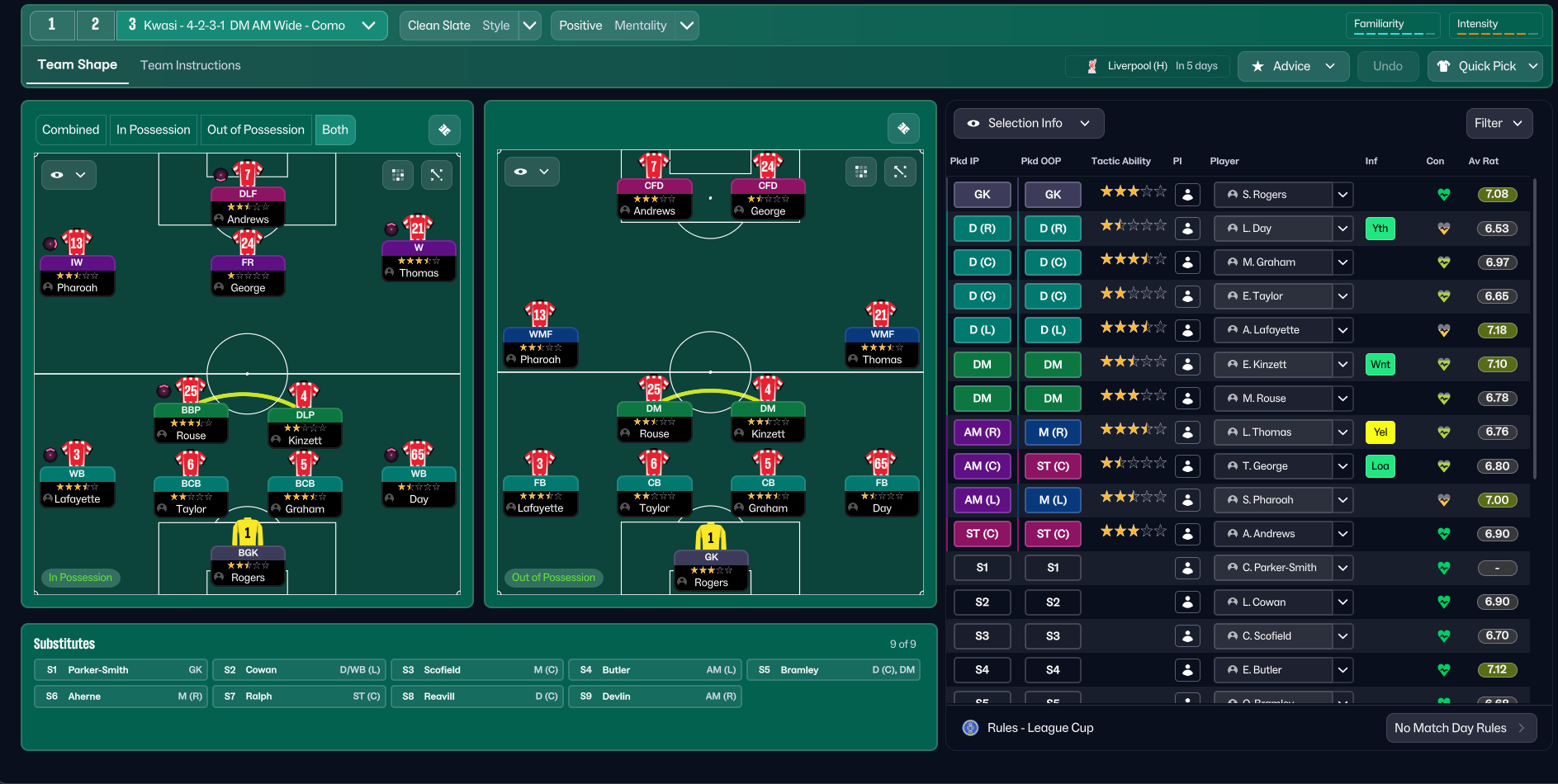
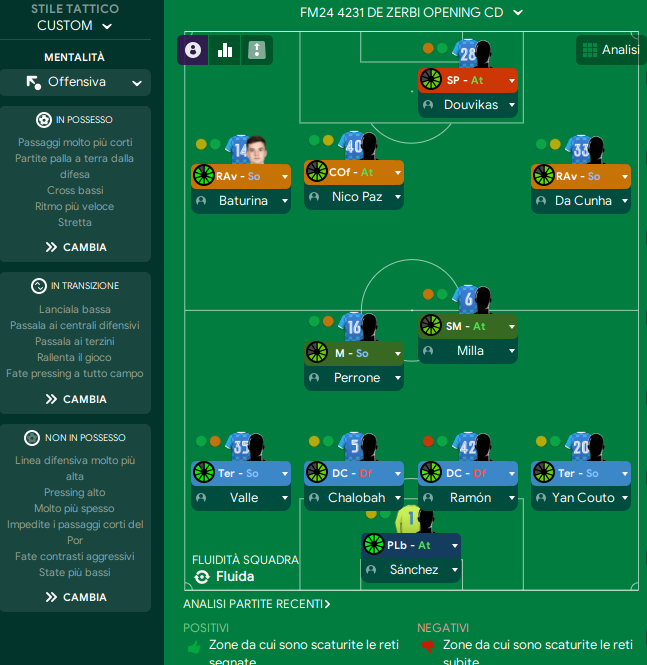
More Gegenpress tactics
Guides for this formation
The tactical theory behind the 4-2-3-1: roles, instructions, and the trade-offs that decide whether the system holds up.
Player pairings
Midfield Pairs in 4-2-3-1 and 4-4-2
Double pivots and flat pairs in 4-2-3-1 and 4-4-2: when each pairing works, when it collapses, and the AMC unicorn that rescues both.
Read guide
Playing styles
Gegenpressing: A Full Guide
Klopp-style gegenpressing in FM, including squad profile, line-and-press pairing, sustainable workload, and the antipatterns to avoid.
Read guide