Uploaded Tactic
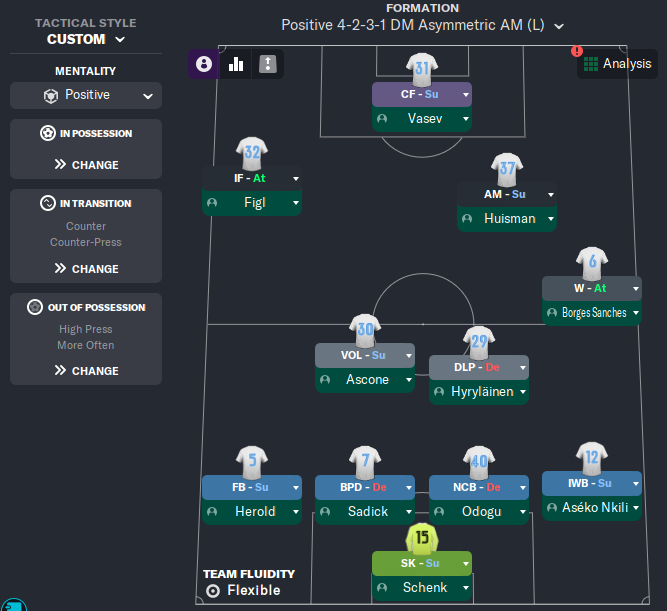
Formation & Style
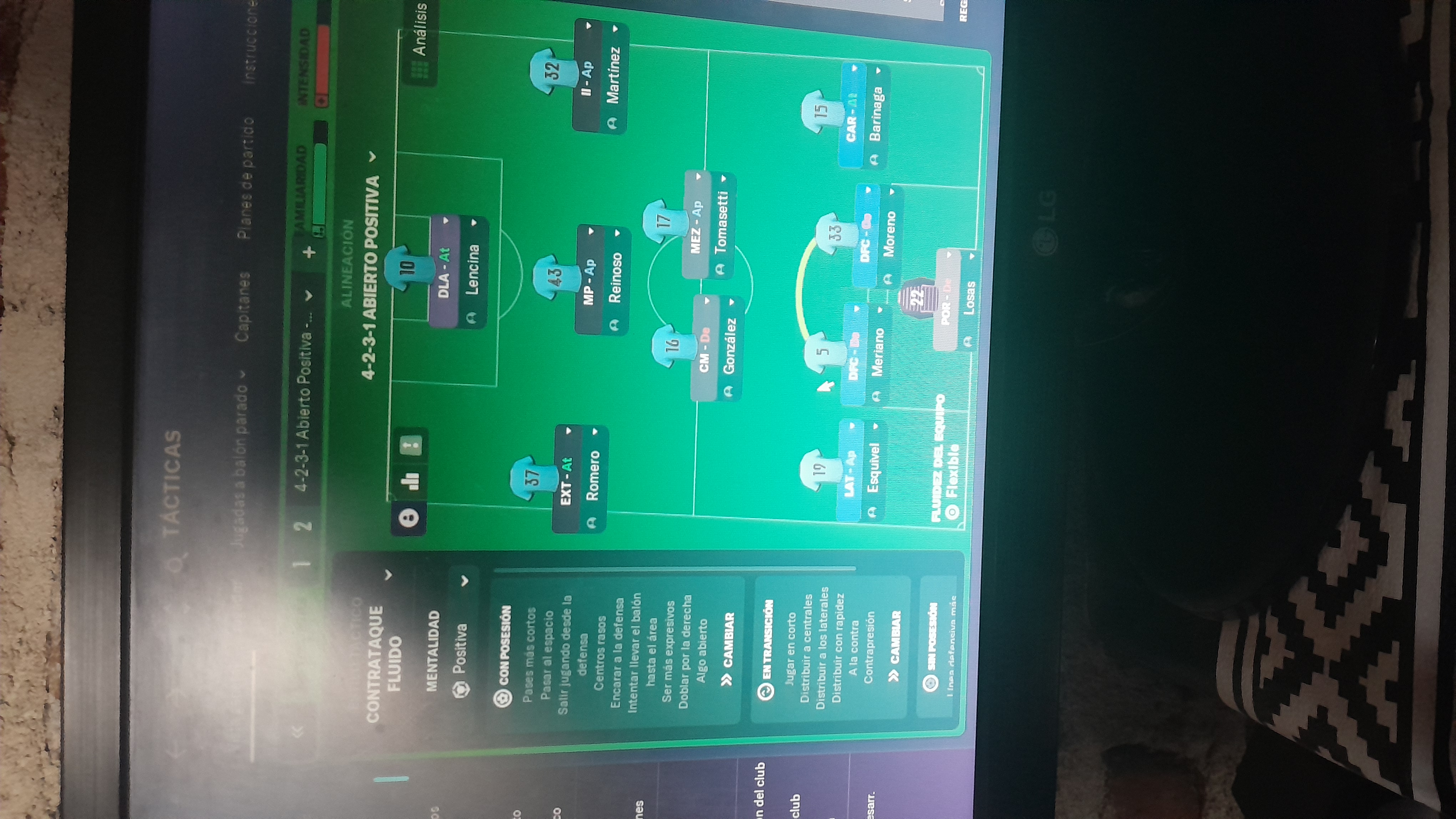
Tactical Style:Positive 4-2-3-1 DM Asymmetric AM (L)
Mentality:Positive
Formation:4-2-3-1
Team Fluidity:Flexible
In Possession
Focus On Shorter Passing
Play Out Of Defence
Exploit The Flanks
In Transition
Counter
Counter-Press
Out of Possession
High Press
More Often Prevent Short GK Distribution
Team Shape Without Ball
Shape:4-2
Description:Compact defensive stance with a low block when out of possession, focusing on denying space to opponents.
Evidence:NCB at [2,2] and BPD at [2,3] support the structure, with FB and IWB providing width.
Team Shape With Ball
Shape:4-3
Description:Attacking shape creates width and depth through the inside forward and winger, supported by attacking midfielders.
Evidence:IF at [5,2] and W at [6,4] allow for varied attacking routes while the CF pulls defenders out of position.
Phase Description
Attacking Play
The team looks to build from the back, utilizing the ball-playing defender and the DLP to orchestrate play while the inside forward and winger stretch the opposition.
Defensive Transition
The team utilizes a counter-press strategy to regain possession quickly as soon as they lose the ball, aiming for quick turnovers.
Main Focus
Create overloads on the flanks while maintaining possession and looking for opportunities to exploit space.
Key Strengths
Balanced Midfield
The combination of a Volante and a Deep-Lying Playmaker allows for both transition and stability.
Dynamic Wing Play
Presence of both an inside forward and an attacking winger creates multiple threats.
Counter-Press Strength
High pressing can quickly disrupt the opposition's build-up and regain possession.
Conflicting Directions
Inverted Wing-Back Role
While the IWB can contribute to midfield, it may reduce width on the left flank.
Heavy Reliance on Pressing
High Press can leave gaps in defense if not managed properly.
Ambiguous Roles in Attack
Multiple players with attacking roles can lead to confusion regarding movement.
Tactical Suggestions
Consider Role Adjustments
Changing IWB to a more conventional FB could provide more width.
Enhance Defensive Coordination
Ensure that pressing instructions are aligned with defensive roles to prevent counter-attacks.
Utilize Target Man
Incorporating a target man could provide more aerial threat and hold-up play.
Ask Questions About Your Lineup
Related Tactics
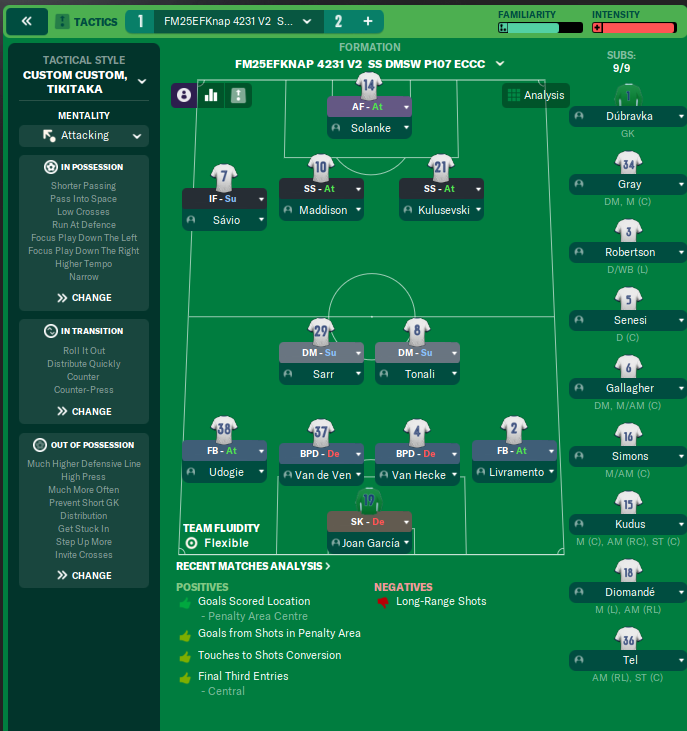
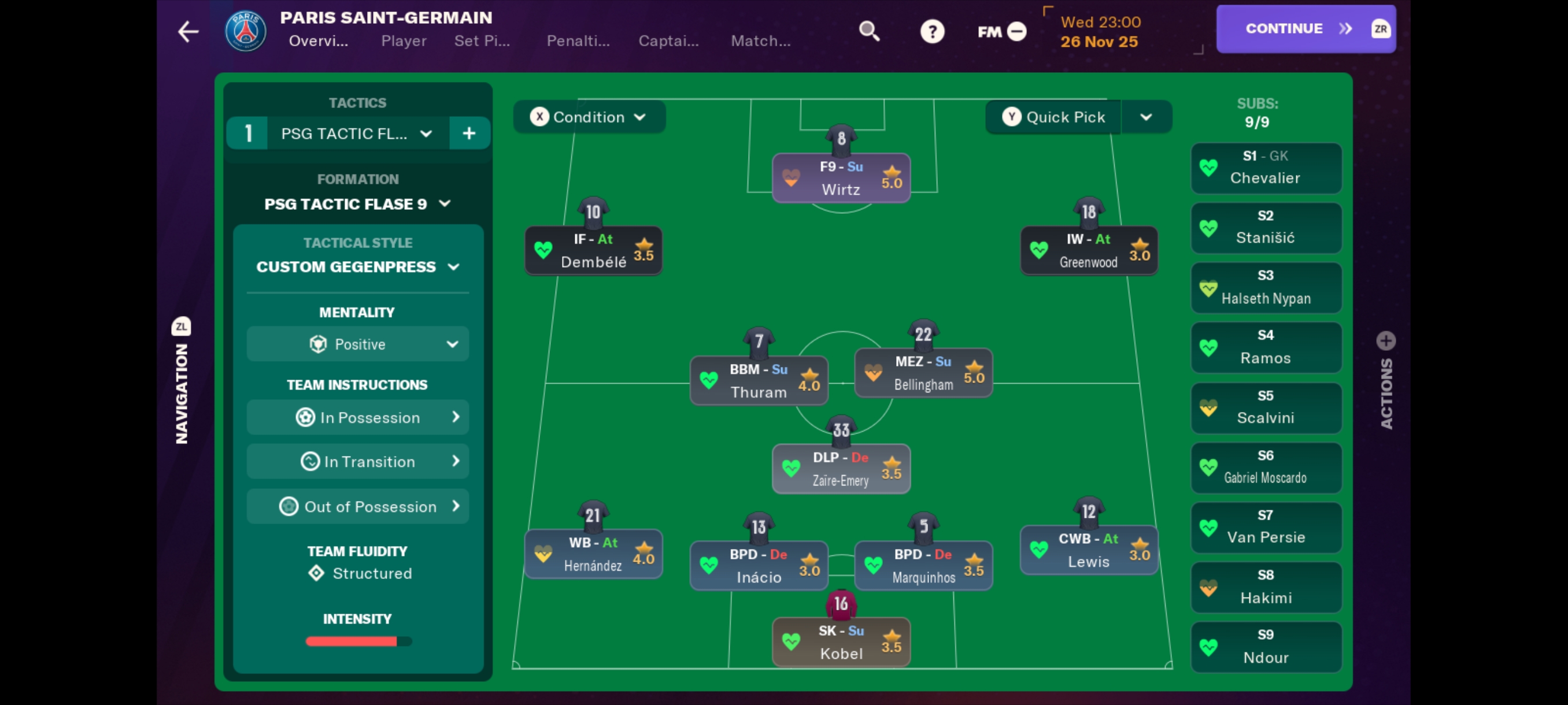
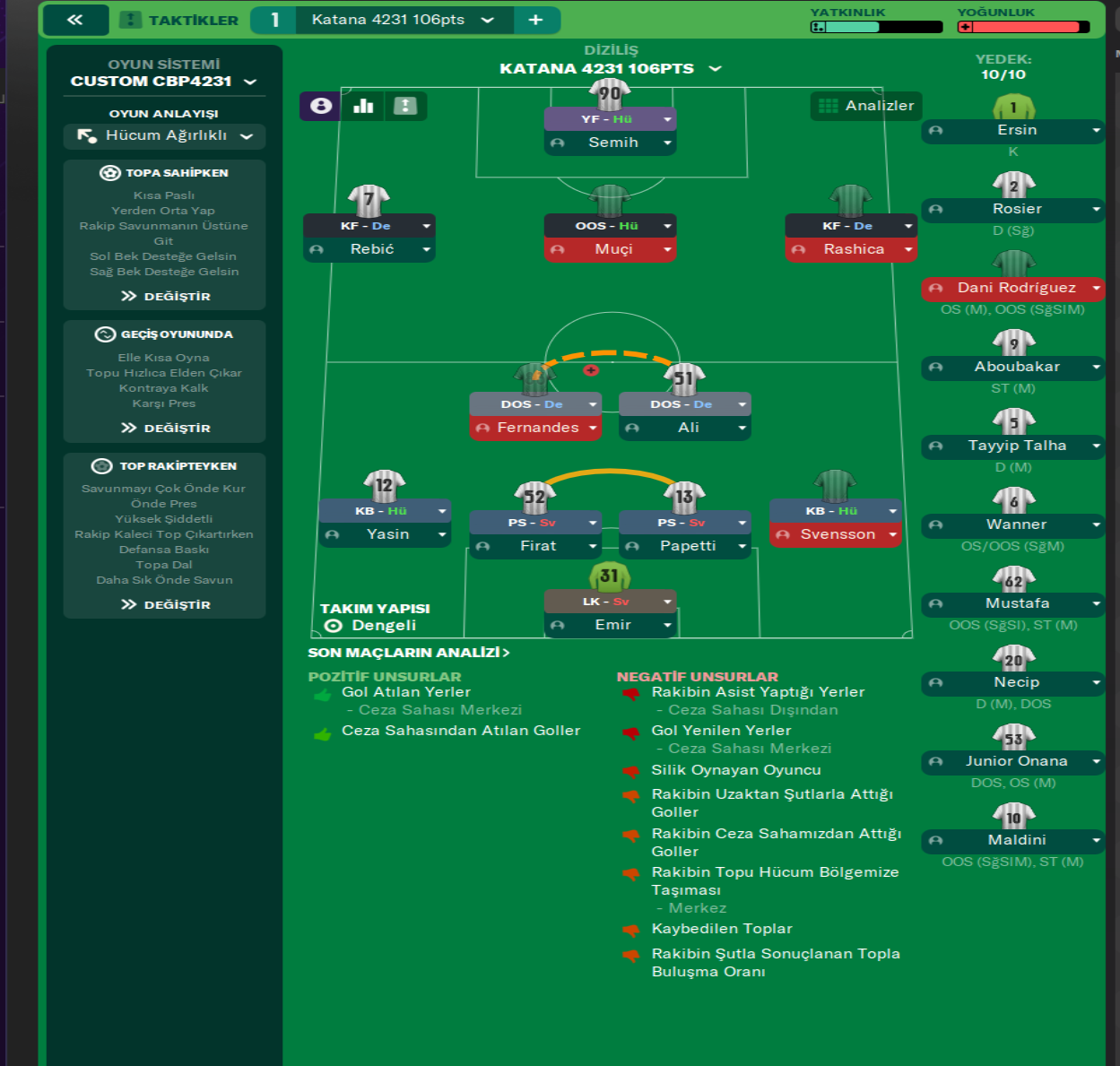
Guides for this formation
The tactical theory behind the 4-2-3-1: roles, instructions, and the trade-offs that decide whether the system holds up.
Player pairings
Midfield Pairs in 4-2-3-1 and 4-4-2
Double pivots and flat pairs in 4-2-3-1 and 4-4-2: when each pairing works, when it collapses, and the AMC unicorn that rescues both.
Read guide
Playing styles
Gegenpressing: A Full Guide
Klopp-style gegenpressing in FM, including squad profile, line-and-press pairing, sustainable workload, and the antipatterns to avoid.
Read guide