Uploaded Tactic
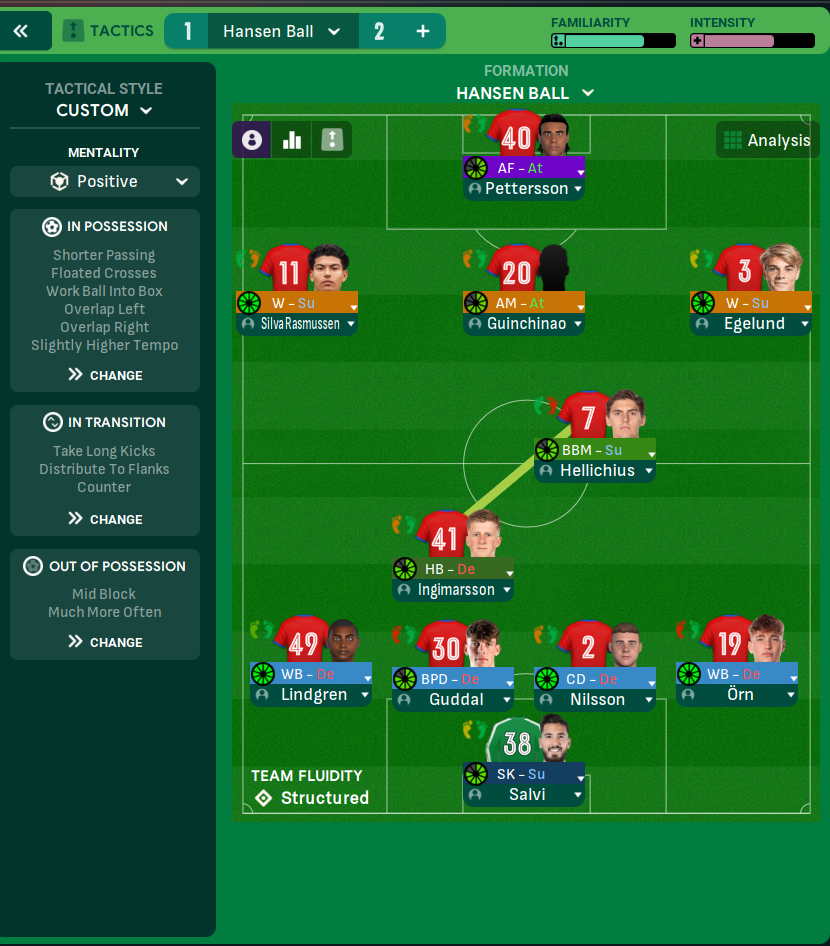
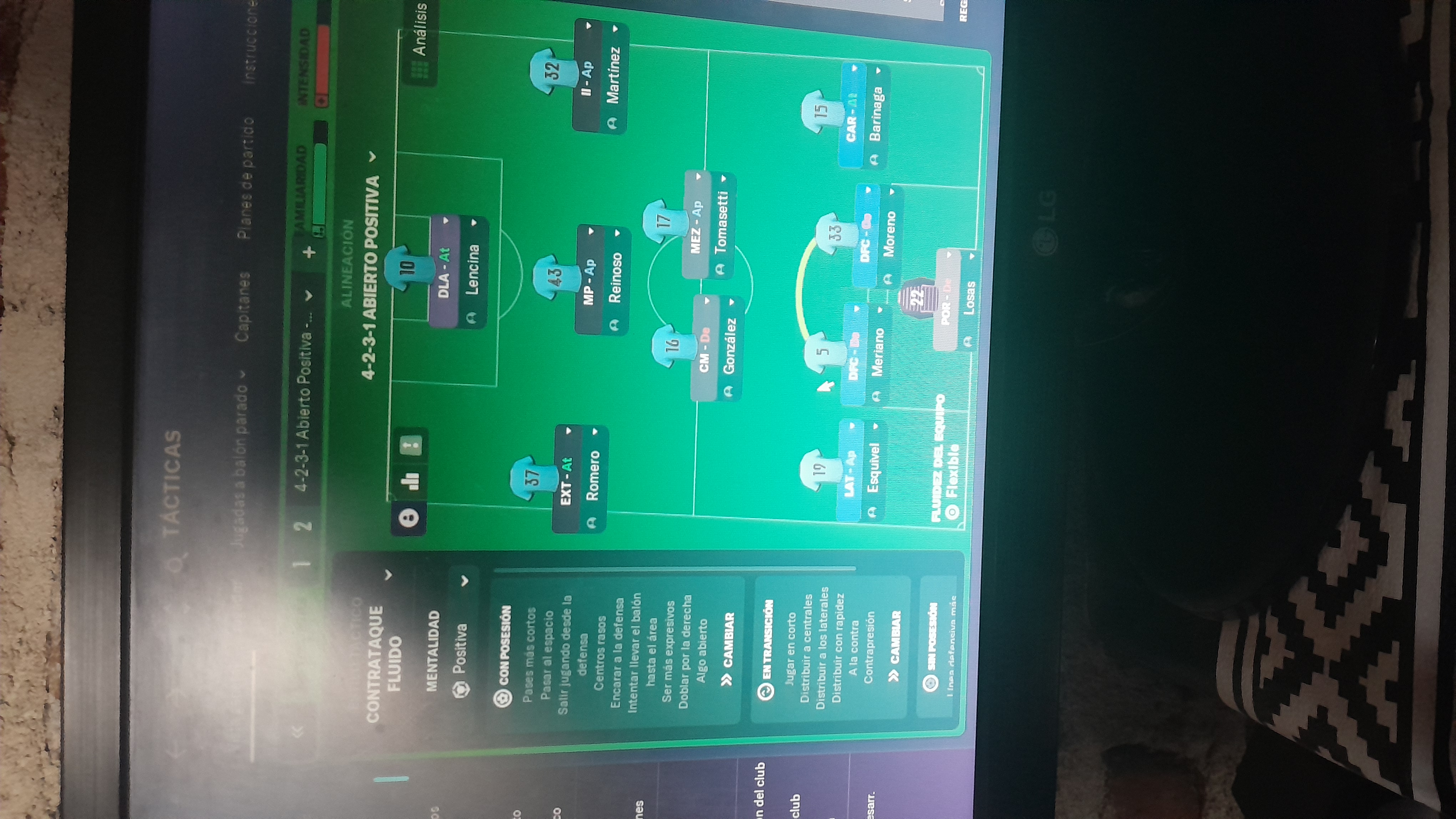
Formation & Style
Tactical Style:Custom
Mentality:Positive
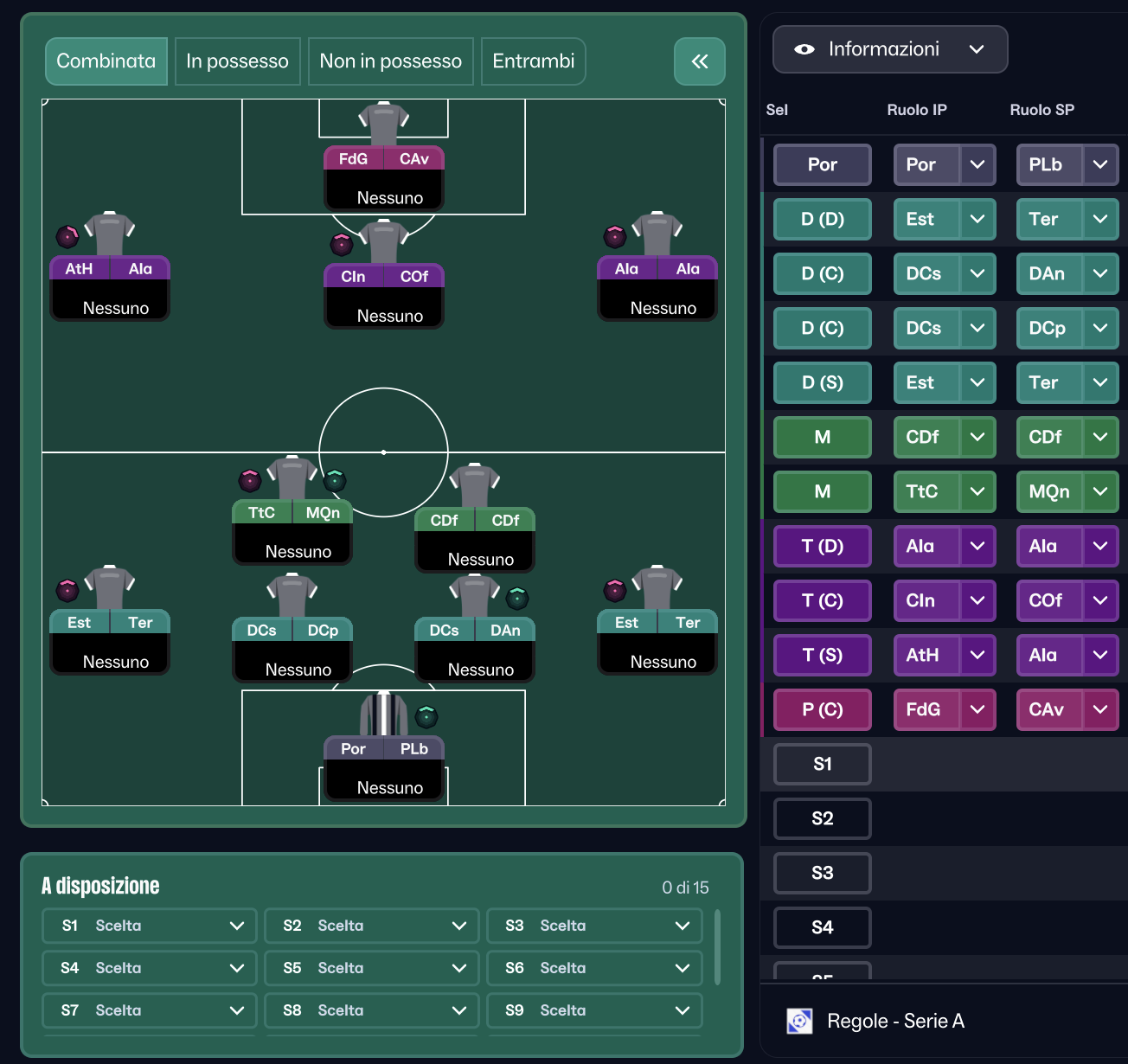
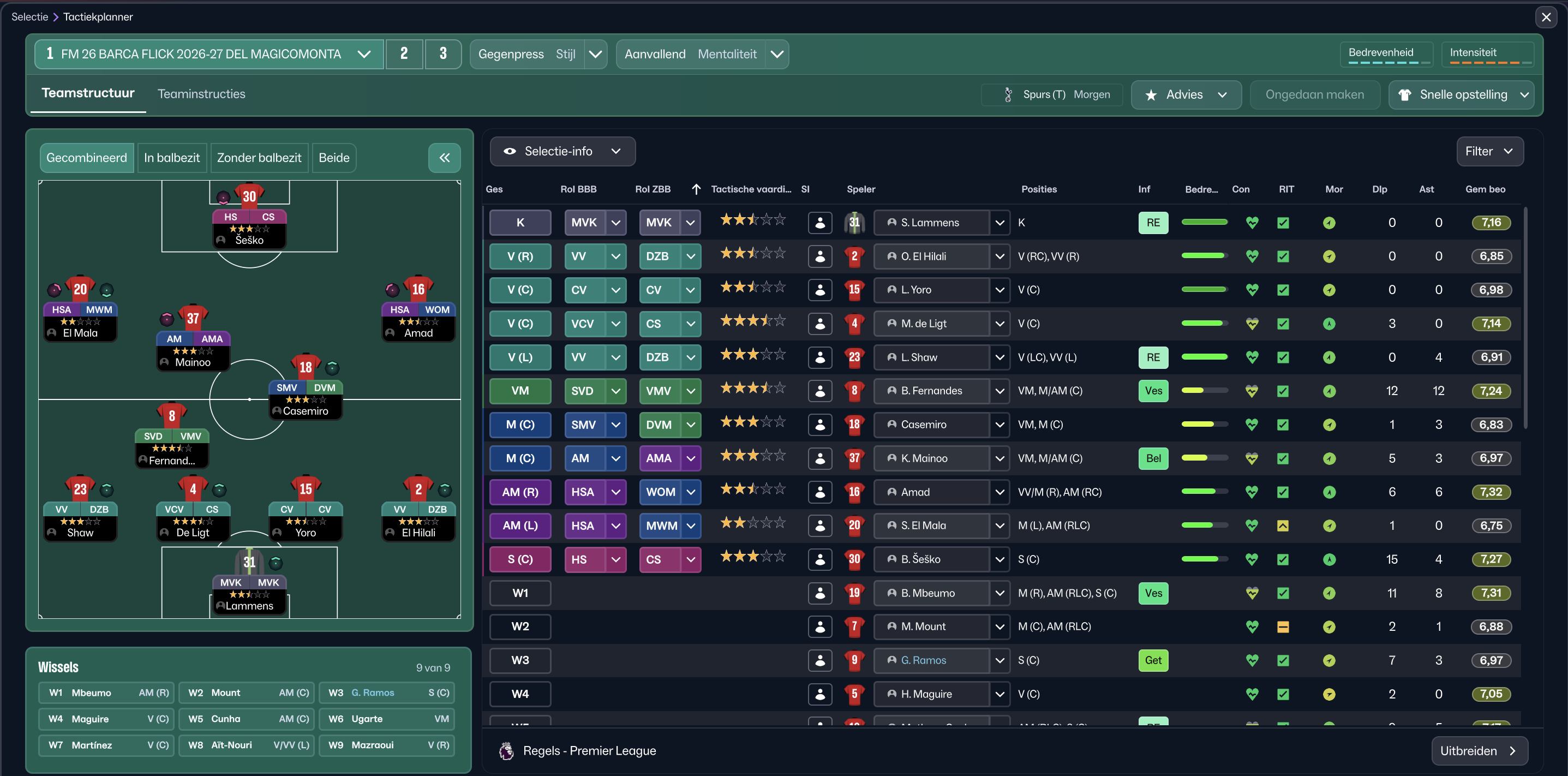
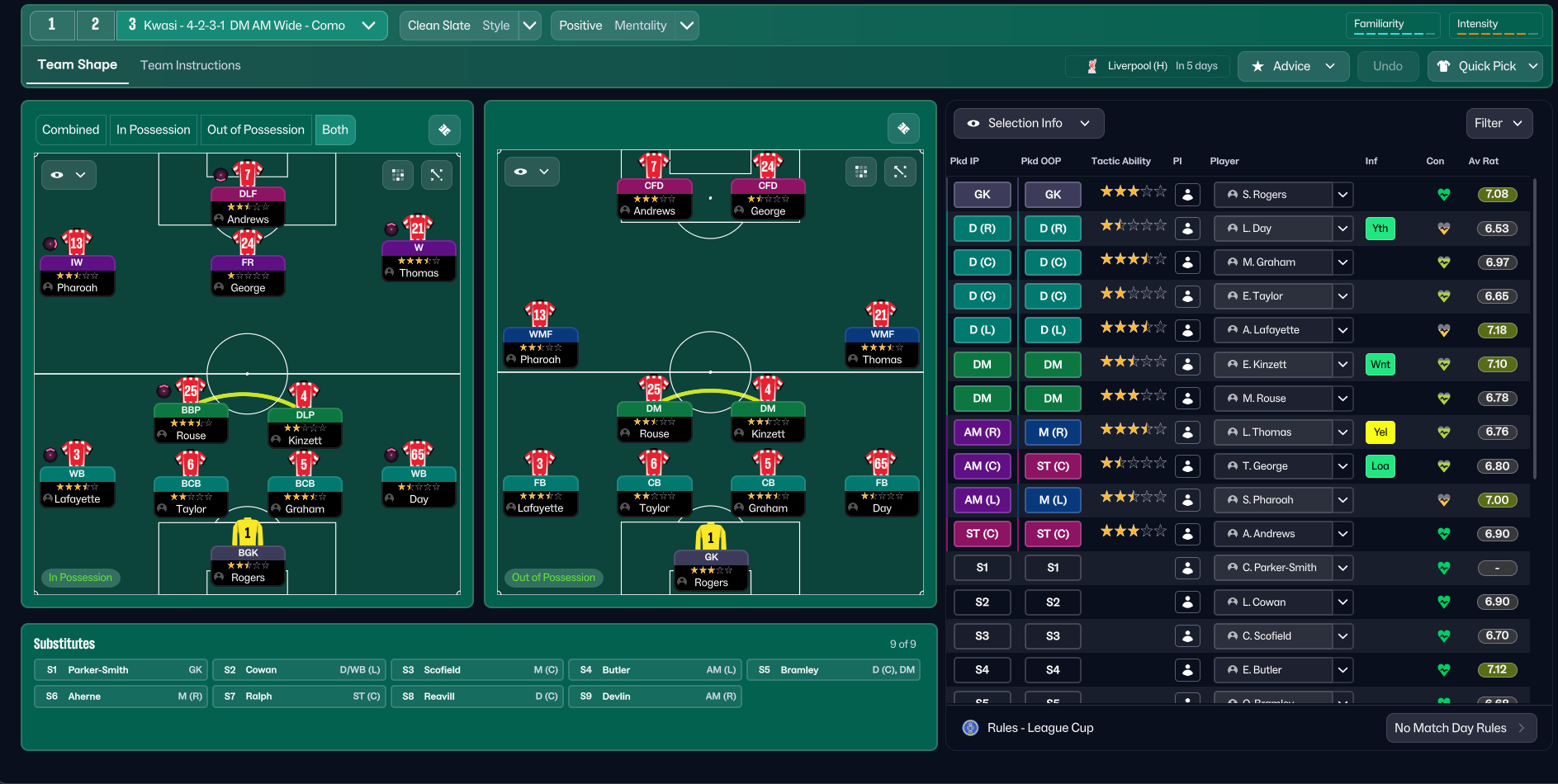
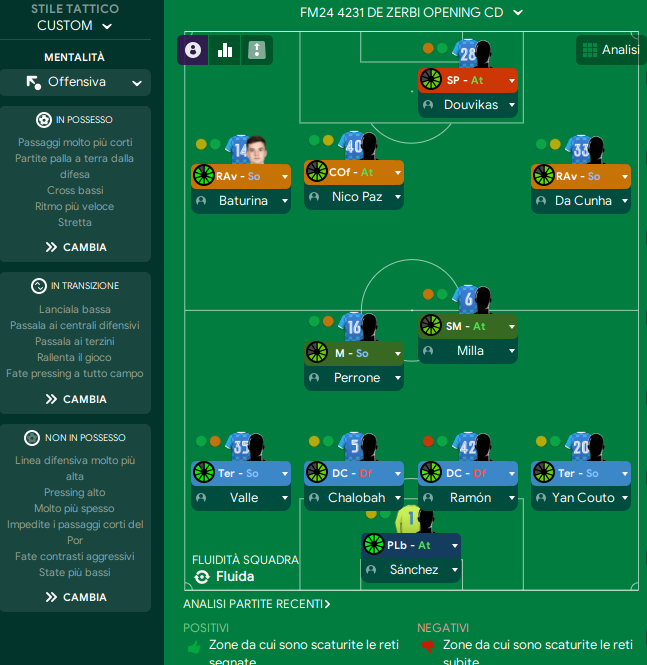
Formation:4-2-3-1
Team Fluidity:Structured
In Possession
Shorter Passing
Work Ball Into Box
Overlap Left
Slightly Higher Tempo
In Transition
Take Long Kicks
Distribute To Flanks
Counter
Out of Possession
Mid Block
Much More Often
Team Shape Without Ball
No team shape without ball data available
Team Shape With Ball
No team shape with ball data available
Key Strengths
Creative Midfield Setup
The use of an attacking midfielder and a box-to-box midfielder enhances creativity and adaptability in midfield, allowing for effective transition between attack and defense.
Width and Overlaps
With wing-backs instructed to overlap, the formation stretches the opposition, creating space for attackers and facilitating crossing opportunities.
Positive Mentality
Adopting a positive mentality encourages proactive play and greater attacking intent, which can lead to higher goal-scoring opportunities.
Solid Defensive Shape
The mid block and structured fluidity contribute to a solid defensive formation, making it difficult for opponents to penetrate the defensive line.
Conflicting Directions
Counter vs Build-Up
Encouraging both counterattacks and a shorter passing strategy may confuse players. Focusing on one approach could improve overall cohesion.
High Tempo with Short Passing
Shorter passing might contradict the slightly higher tempo, as quick transitions can lead to imprecise passing. Clarifying the tempo could enhance effectiveness.
Wing-Back Role Clarity
The defensive duties of the wing-backs could limit their attacking contributions. Consider adjusting their roles to enhance attacking potential significantly.
Half Back's Defensive Focus
The half-back role might not fully utilize the team's positive mentality. A more aggressive role could better suit the attacking intent.
Tactical Suggestions
Refine Tactical Approach
Decide whether to prioritize short passing and build-up play or fast-paced counterattacks for a more unified tactical strategy.
Adjust Wing-Back Roles
Consider changing wing-backs to attacking duties to enhance width in attack and better leverage overlaps.
Experiment with Midfield Roles
Explore different roles for the box-to-box midfielder and half-back to either add more stability or creativity depending on match context.
Clarify Set-Piece Roles
Ensure the players involved in set pieces, especially crosses, know their responsibilities, maximizing scoring chances from dead-ball situations.
Ask Questions About Your Lineup
Related Tactics
Guides for this formation
The tactical theory behind the 4-2-3-1: roles, instructions, and the trade-offs that decide whether the system holds up.
Player pairings
Midfield Pairs in 4-2-3-1 and 4-4-2
Double pivots and flat pairs in 4-2-3-1 and 4-4-2: when each pairing works, when it collapses, and the AMC unicorn that rescues both.
Read guide
Playing styles
Gegenpressing: A Full Guide
Klopp-style gegenpressing in FM, including squad profile, line-and-press pairing, sustainable workload, and the antipatterns to avoid.
Read guide