Uploaded Tactic
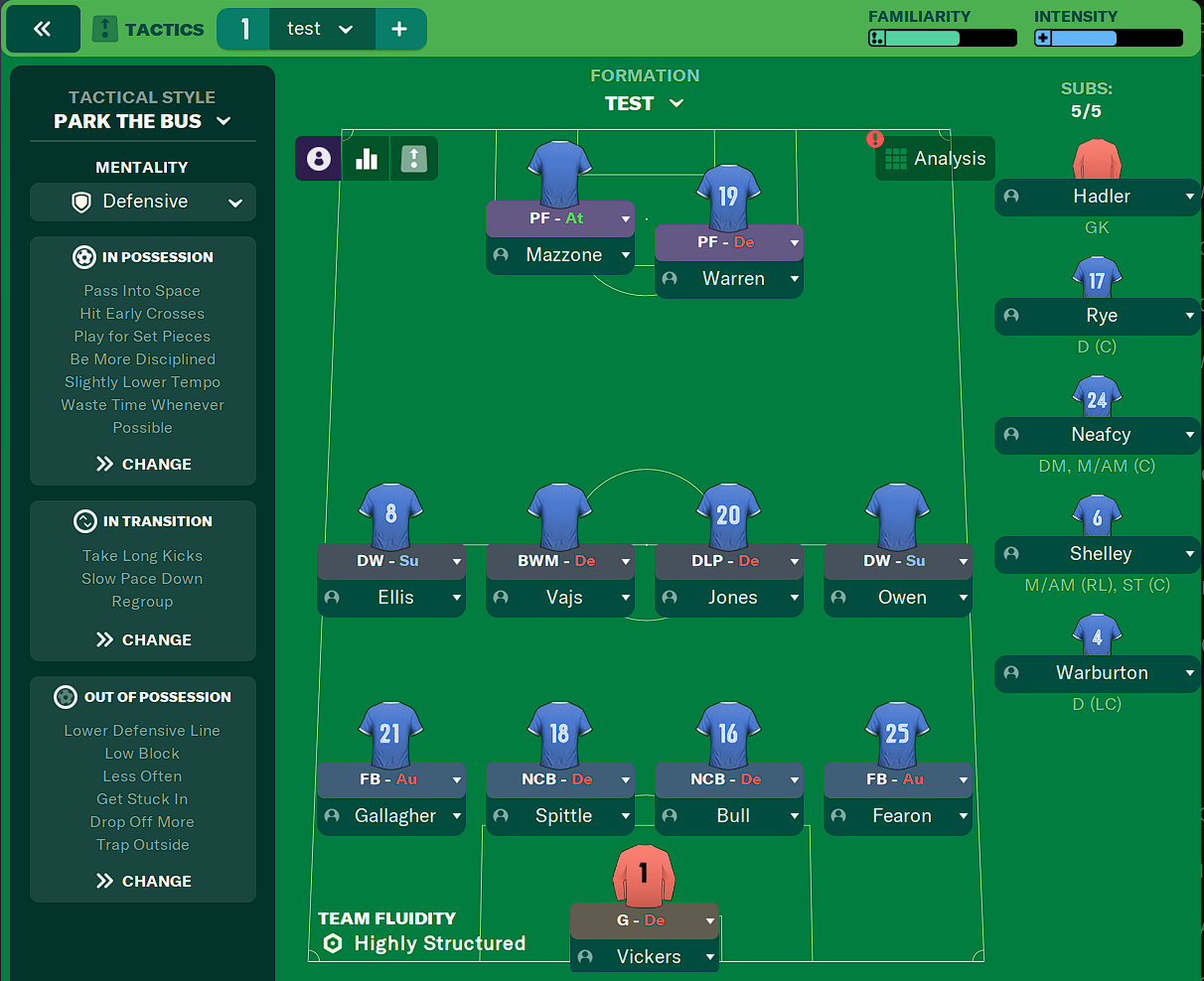
Formation & Style
Tactical Style:Park The Bus
Mentality:Defensive
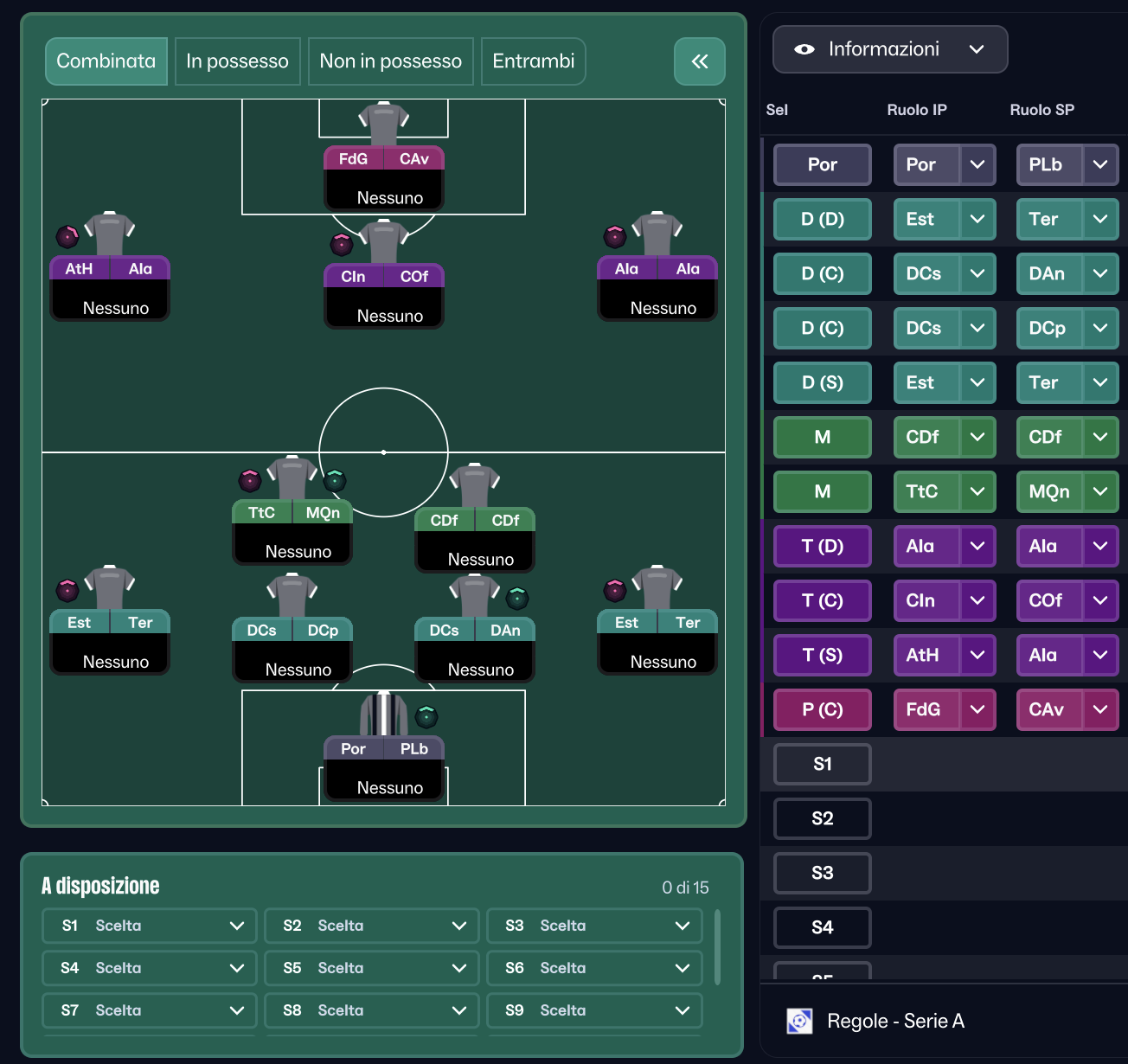
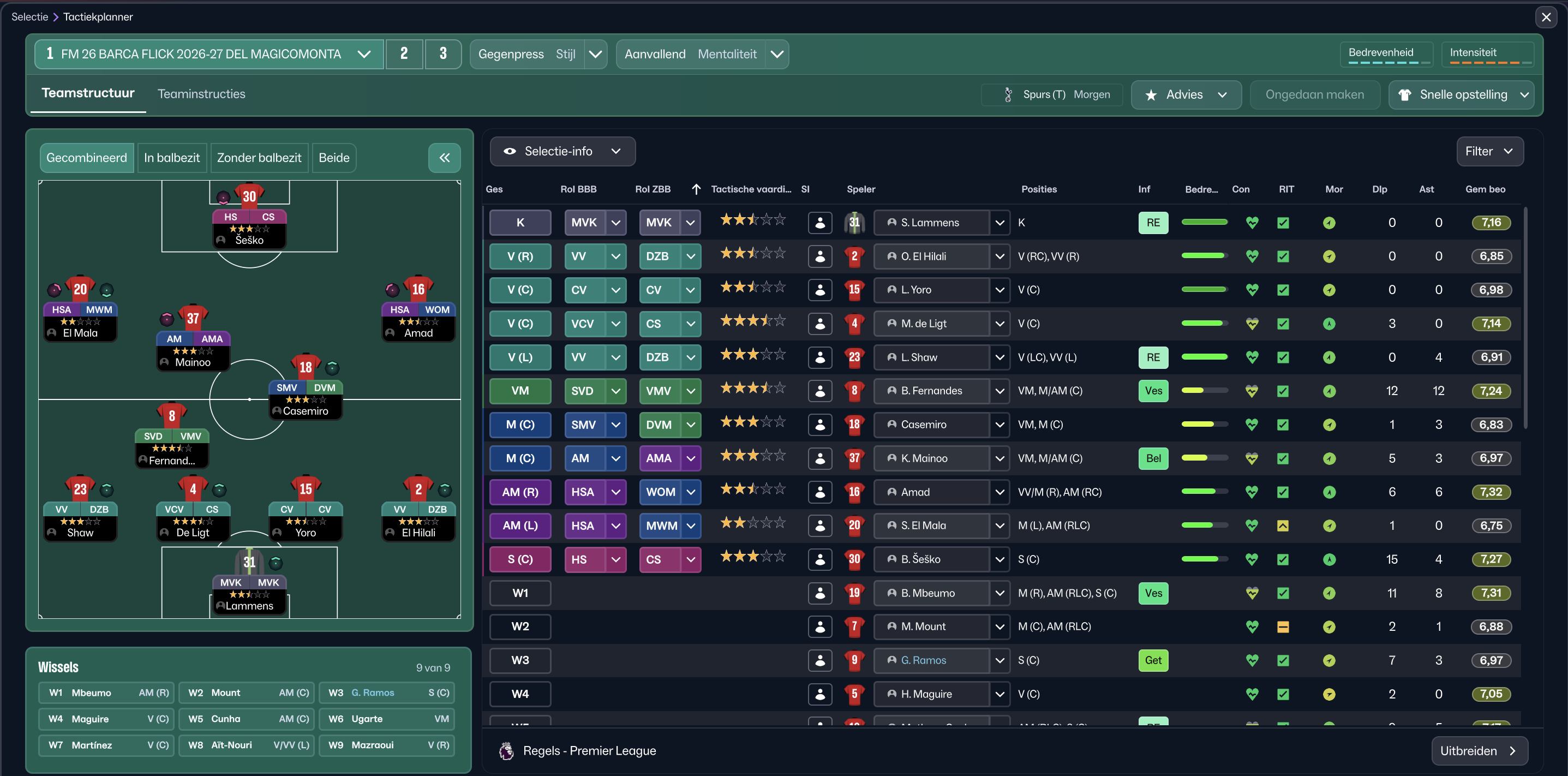
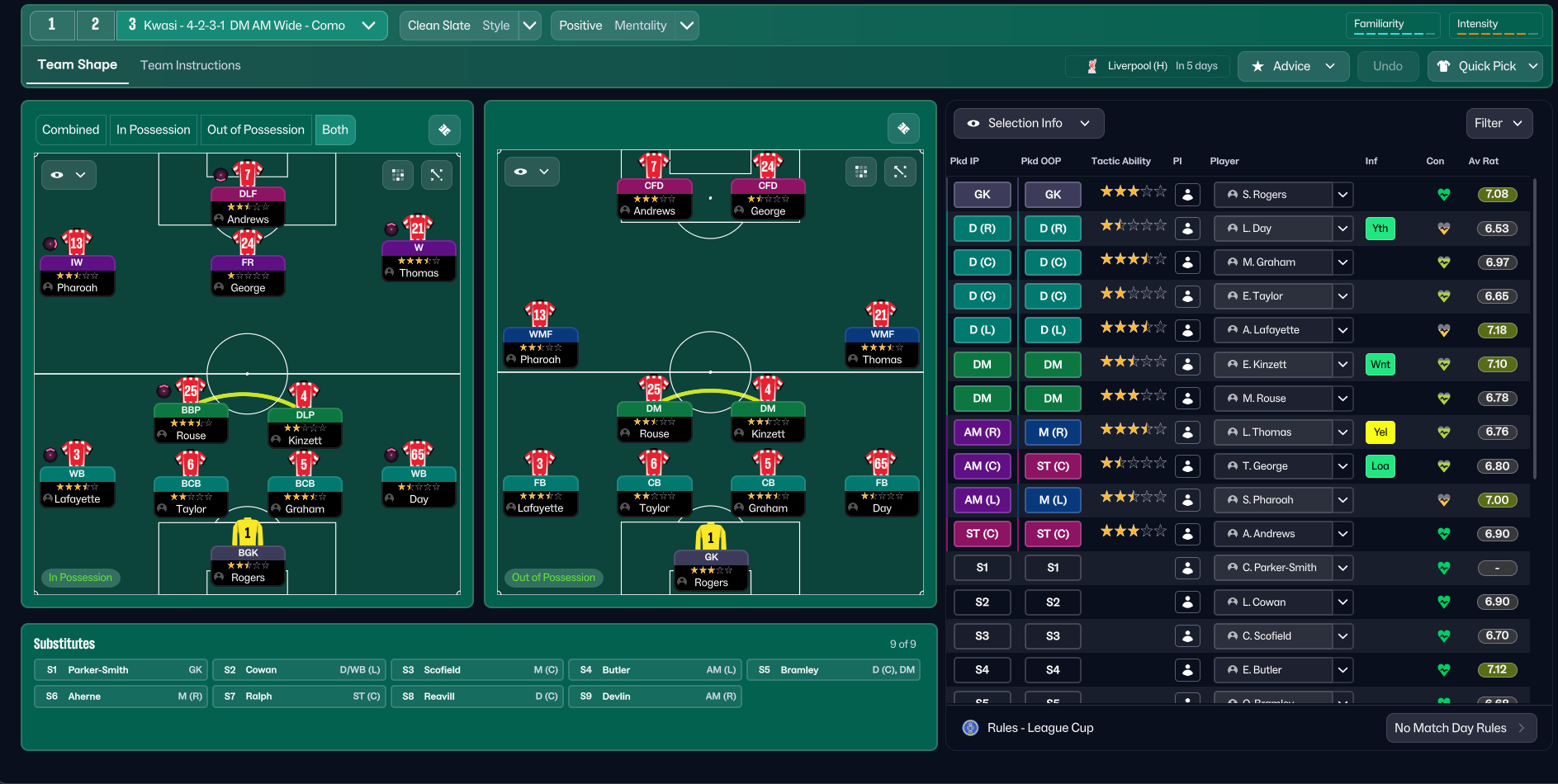
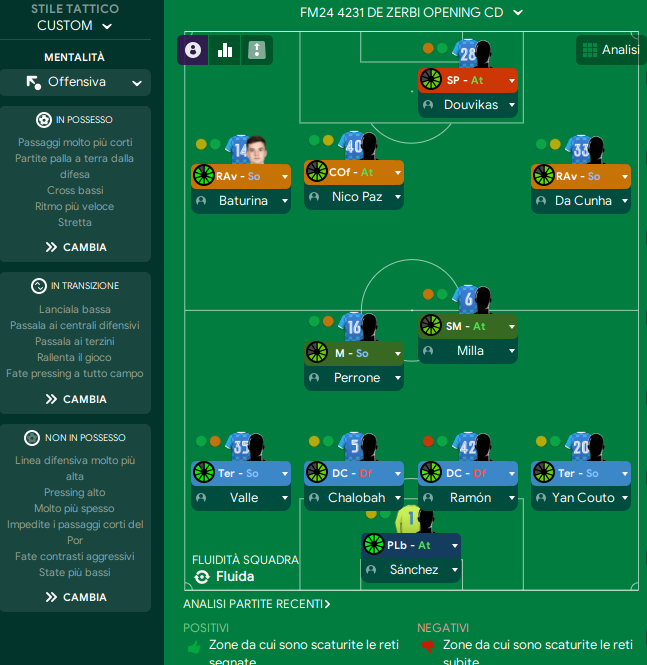
Formation:4-2-3-1
Team Fluidity:Highly Structured
In Possession
Pass Into Space
Hit Early Crosses
Play For Set Pieces
Be More Disciplined
Slightly Lower Tempo
Waste Time Whenever Possible
In Transition
Take Long Kicks
Slow Pace Down
Regroup
Out of Possession
Lower Defensive Line
Low Block
Less Often
Get Stuck In
Drop Off More
Trap Outside
Team Shape Without Ball
Shape:4-2
Description:Defensive setup that prioritizes area control rather than pressing opponents.
Evidence:Low block and Get Stuck In instructions indicate a clear aim for defensive solidity.
Team Shape With Ball
Shape:4-3-1
Description:Attacking shape aimed at creating chances via wing play and a central striker.
Evidence:Use of DWs to stretch the defense and a PF as a focal point indicates emphasis on wing and central penetration.
Phase Description
Attacking Play
Focus on quick transitions and exploiting spaces left by opponent during counter-attacks.
Defensive Transition
Quickly regroup to form a compact defensive line after losing possession.
Main Focus
Defend strongly and look for opportunities to counter.
Key Strengths
Compact Defensive Block
The low block and defensive players combine to create a resolute defensive structure.
Wide Play Options
DW roles extend the pitch and can provide width, allowing for penetration around defensive units.
Strong Midfield Control
The combination of BWM and DLP allows for ball retention and distribution.
Conflicting Directions
Lack of Pressing
The low block and less often pressing may invite pressure from opponents.
Potential Striker Isolation
The central striker may lack support if wing players don't track back.
Slow Transition Play
The regroup instruction may slow counter-attacks.
Tactical Suggestions
Increase Pressing Intensity
Consider a higher pressing strategy to disrupt opponent’s buildup.
Encourage Full-Back Overlaps
Encouraging full-backs to overlap could add another dimension to the attack.
Utilize Counter Attacks More Aggressively
Adjusted tactical instructions to allow for more aggressive counter-play.
Ask Questions About Your Lineup
Related Tactics
Guides for this formation
The tactical theory behind the 4-2-3-1: roles, instructions, and the trade-offs that decide whether the system holds up.
Player pairings
Midfield Pairs in 4-2-3-1 and 4-4-2
Double pivots and flat pairs in 4-2-3-1 and 4-4-2: when each pairing works, when it collapses, and the AMC unicorn that rescues both.
Read guide
Playing styles
Gegenpressing: A Full Guide
Klopp-style gegenpressing in FM, including squad profile, line-and-press pairing, sustainable workload, and the antipatterns to avoid.
Read guide