Uploaded Tactic
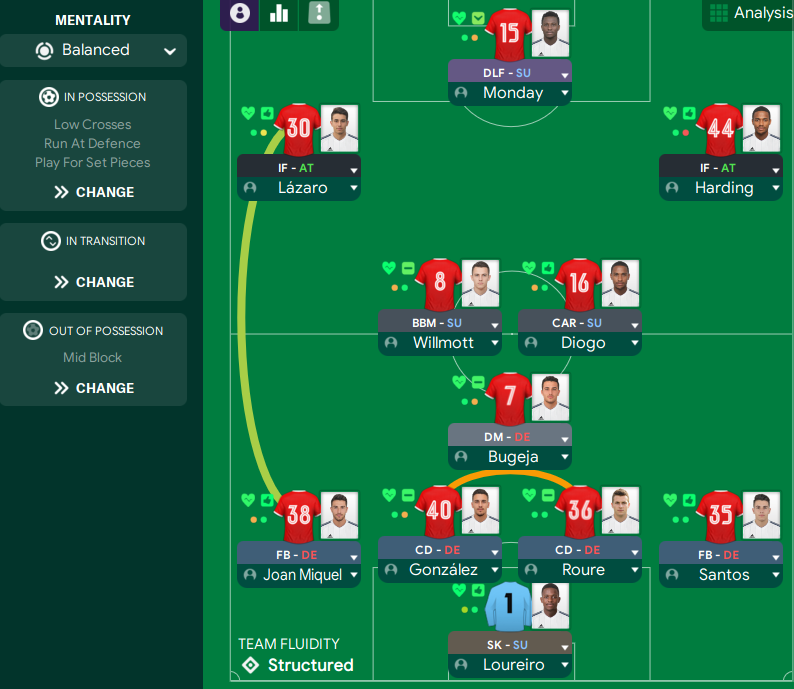
Formation & Style
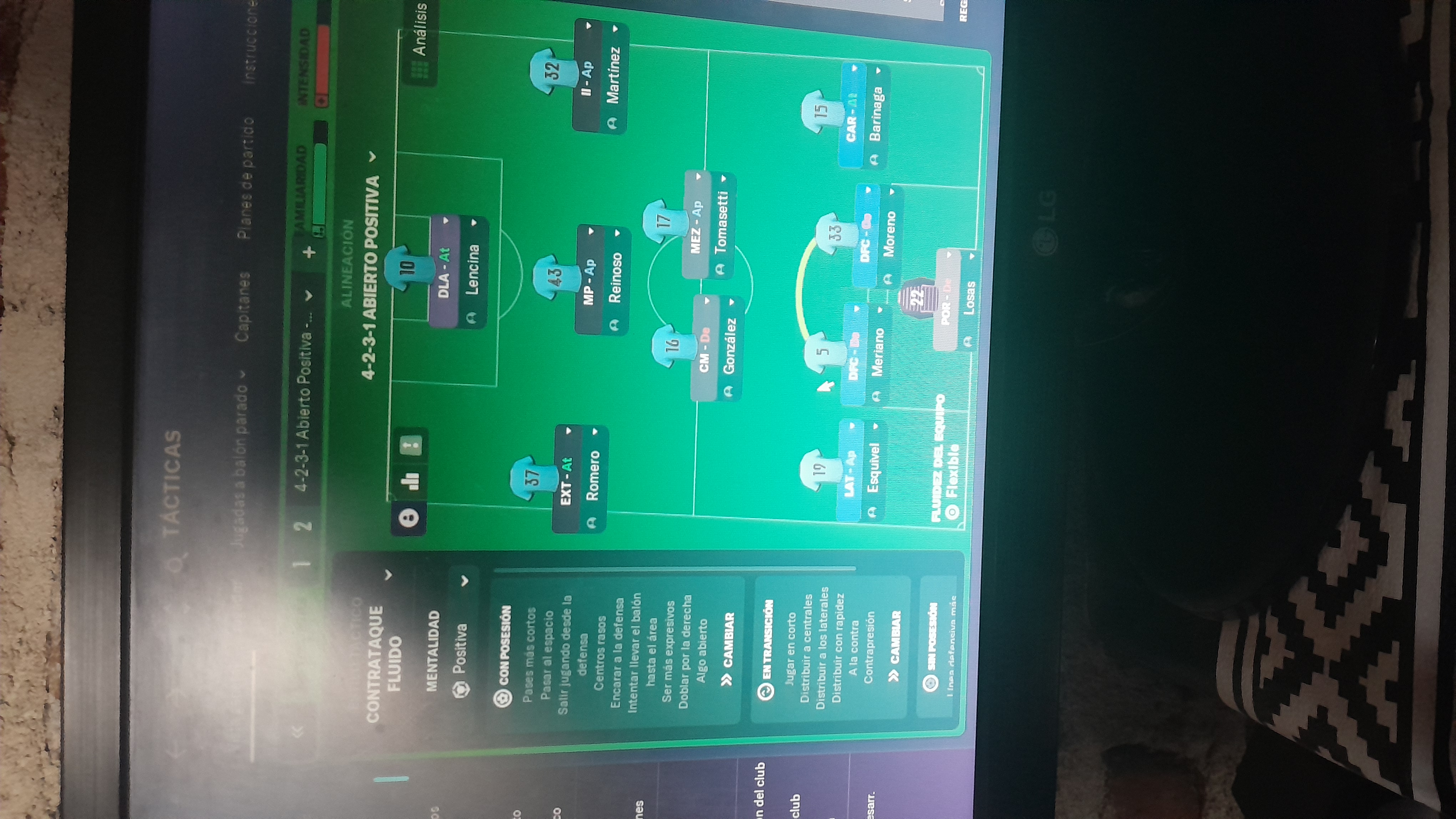
Tactical Style:Balanced
Mentality:Balanced
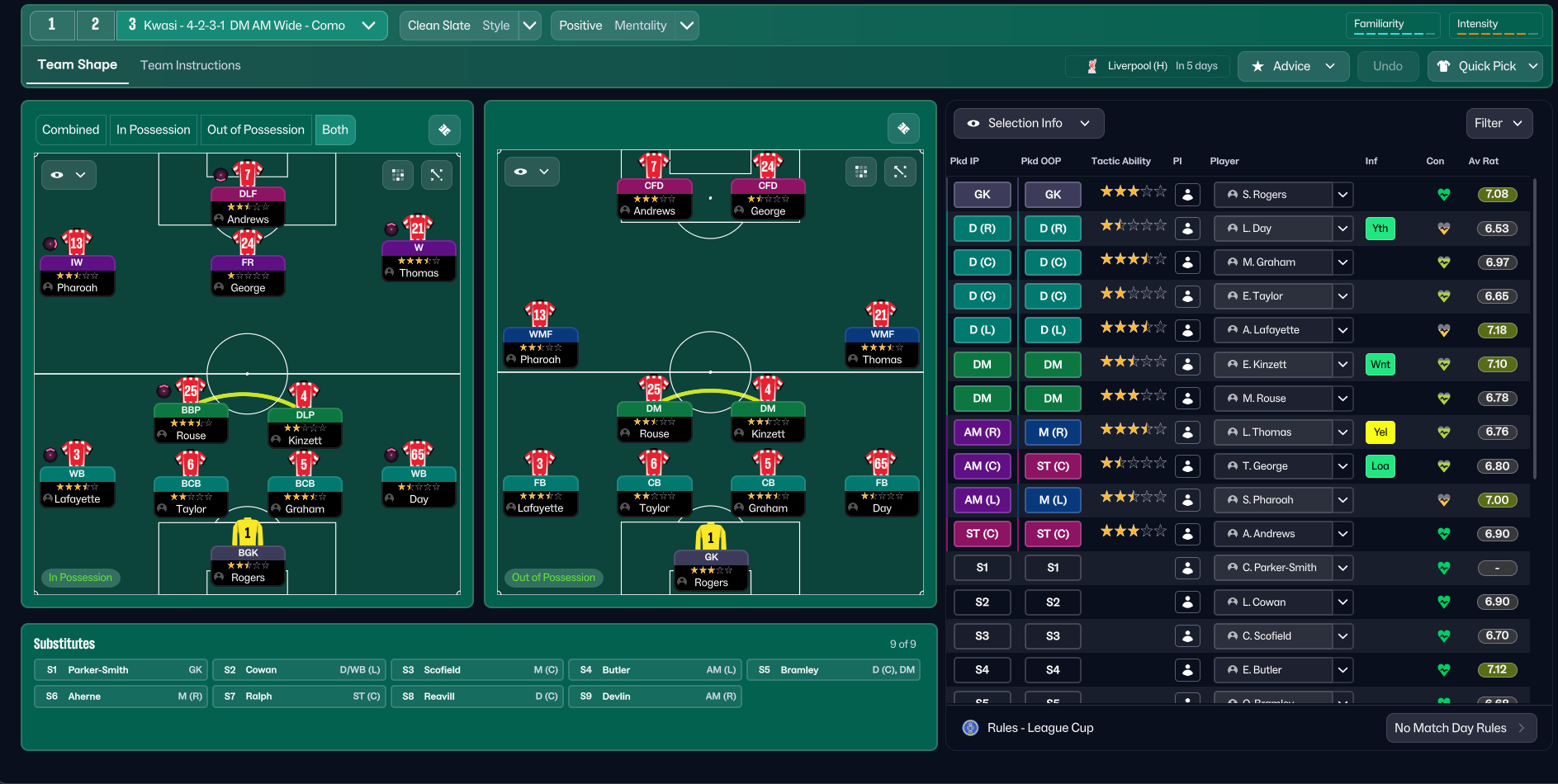
Formation:4-2-3-1
Team Fluidity:Structured
In Possession
Low Crosses
Run At Defence
Play For Set Pieces
In Transition
Counter-Attack:Enabled
Counter-Press:Immediate
Goalkeeper Distribution:Short
Throw-ins:Quick
Out of Possession
Mid Block
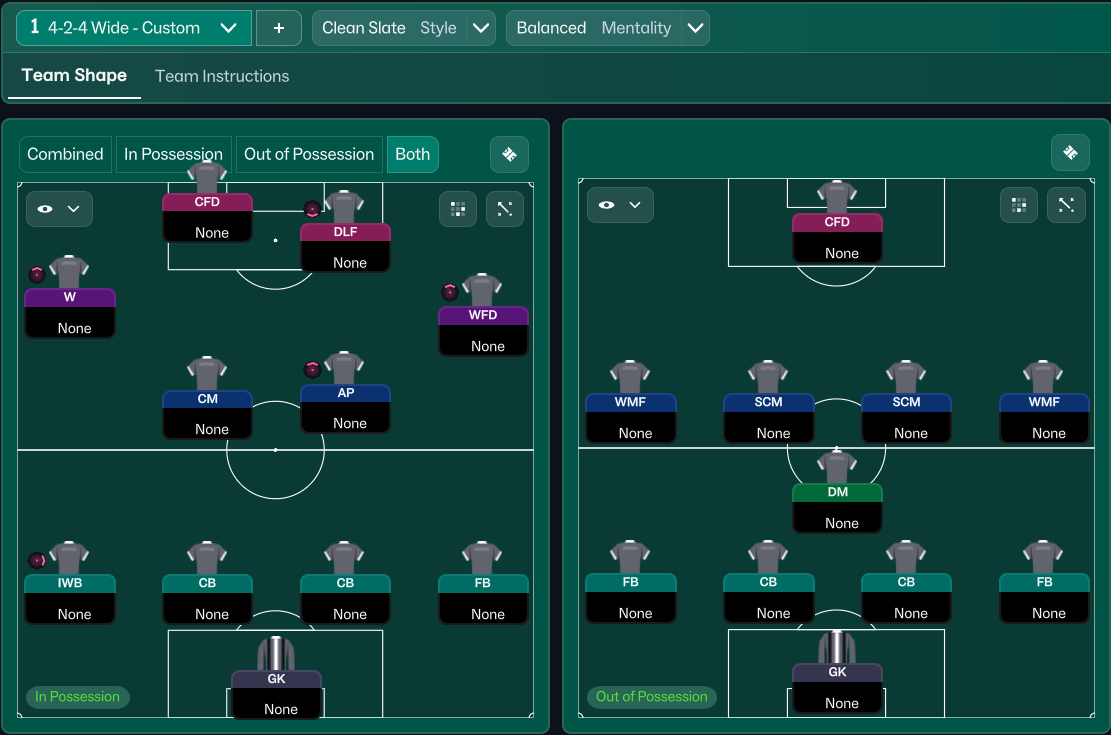
Team Shape Without Ball
Shape:Mid Block
Description:Defenders maintain a compact shape while pressing opponents in midfield.
Evidence:Mid Block instruction indicates a focus on controlling space without committing too far forward.
Team Shape With Ball
Shape:Flexible with Width
Description:Inside forwards cut inside while full-backs support the attack on the flanks.
Evidence:Low crosses and running at defenders indicate targeting chances wide and centrally.
Phase Description
Attacking Play
Utilizes width through inside forwards while allowing the DLF to link up play.
Defensive Transition
Transition is focused on recovering quickly to maintain the mid-block.
Main Focus
Creating chances through fast ball progression and exploiting flanks.
Key Strengths
Offensive Width
Inside forwards stretch the defense, creating space.
Midfield Control
A solid midfield triangle supports both defense and attack.
Defensive Stability
A compact back four with a DM offers protection against counterattacks.
Conflicting Directions
Defensive Pressing
Mid block may weaken efforts to press high, limiting recovery opportunities.
Excess Width vs. Central Play
While emphasizing width, the setup may lead to overcrowding in central areas.
Low Cross Intentions
Reliance on low crosses could be thwarted by teams with strong aerial defenders.
Tactical Suggestions
Increase Pressing Intensity
Consider adjusting to a higher block to pressure the opponent more effectively.
Utilize a Target Forward
Introducing a more physical presence in the striking role may compliment the attacking dynamic.
Explore Wider Playing Styles
Incorporating play through flanks could create more space for dynamic midfield movements.
Ask Questions About Your Lineup
Related Tactics
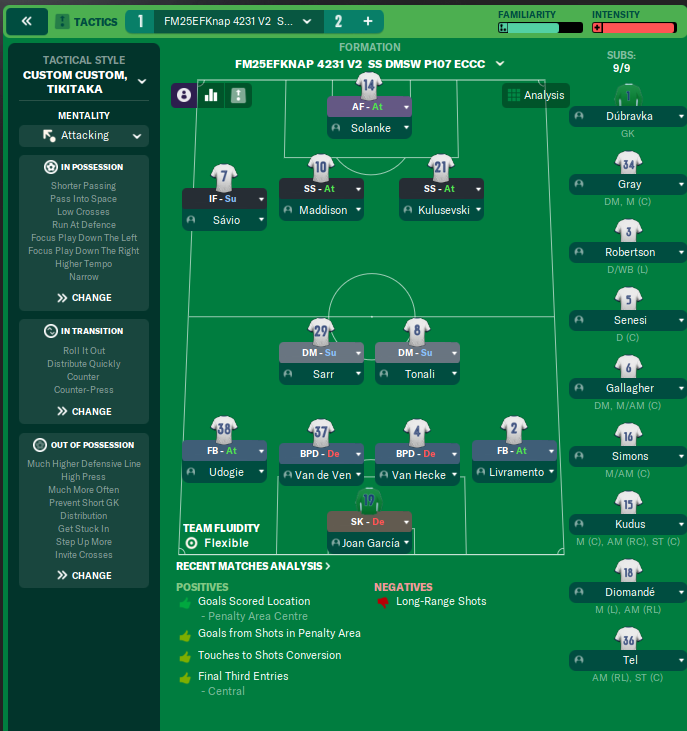
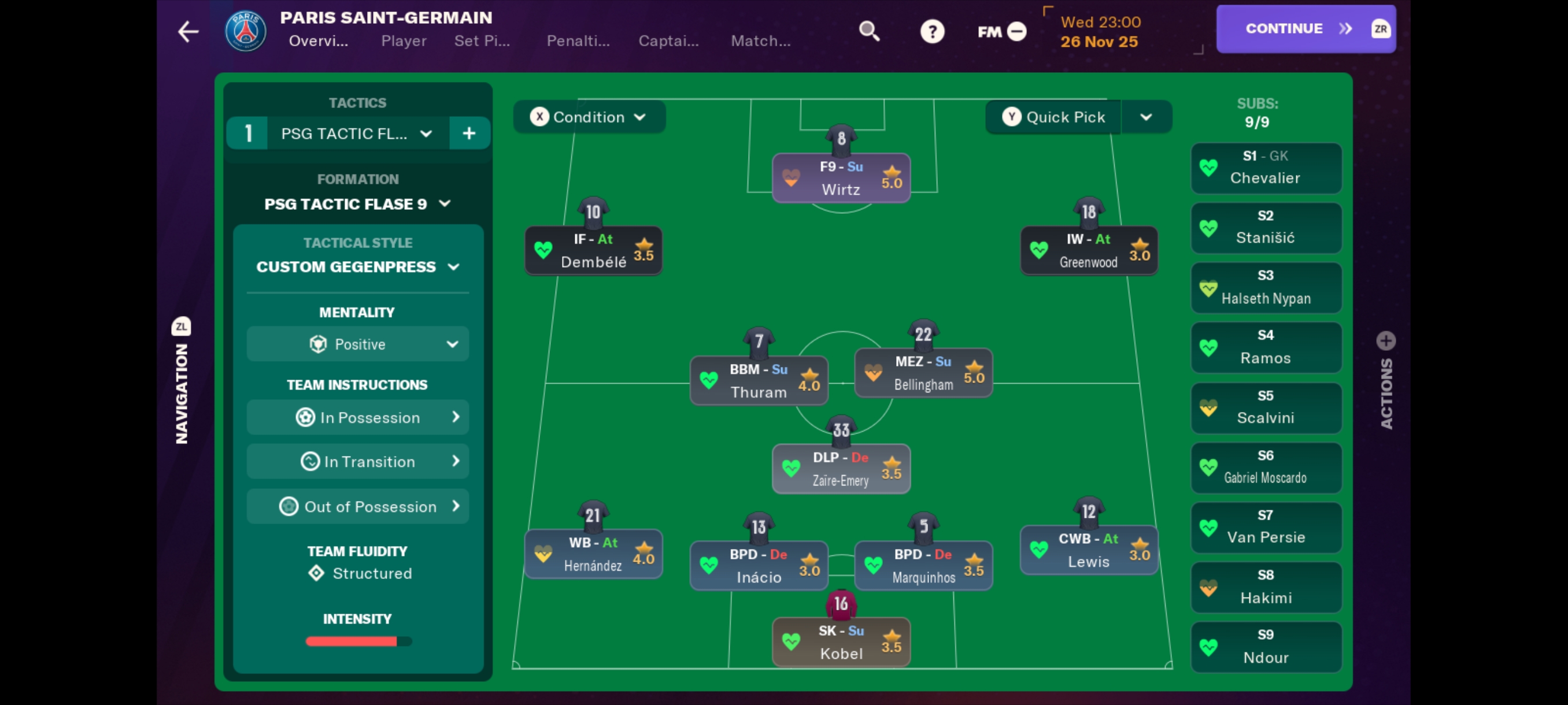
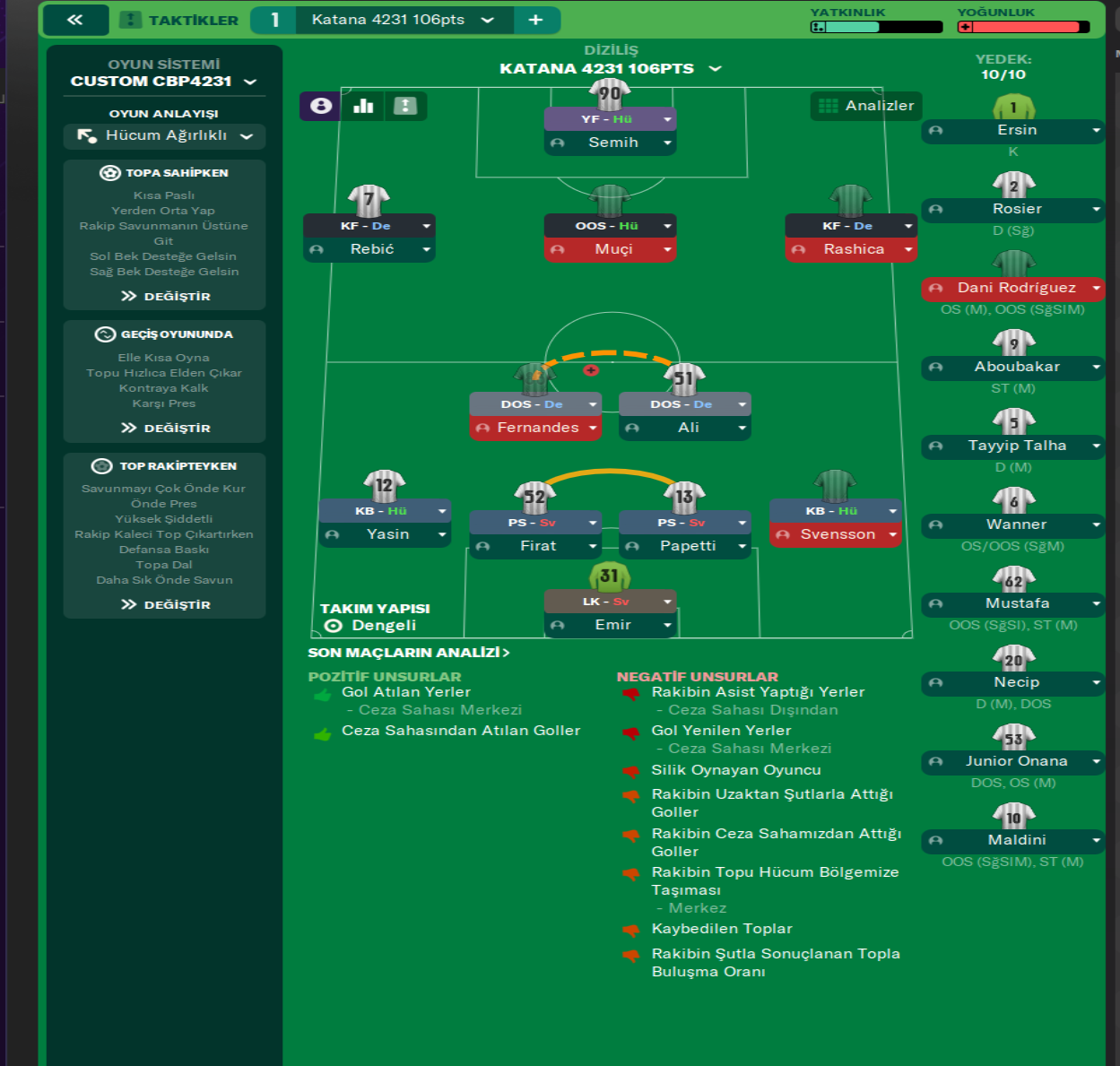
More Balanced tactics
Guides for this formation
The tactical theory behind the 4-2-3-1: roles, instructions, and the trade-offs that decide whether the system holds up.
Player pairings
Midfield Pairs in 4-2-3-1 and 4-4-2
Double pivots and flat pairs in 4-2-3-1 and 4-4-2: when each pairing works, when it collapses, and the AMC unicorn that rescues both.
Read guide
Playing styles
Gegenpressing: A Full Guide
Klopp-style gegenpressing in FM, including squad profile, line-and-press pairing, sustainable workload, and the antipatterns to avoid.
Read guide