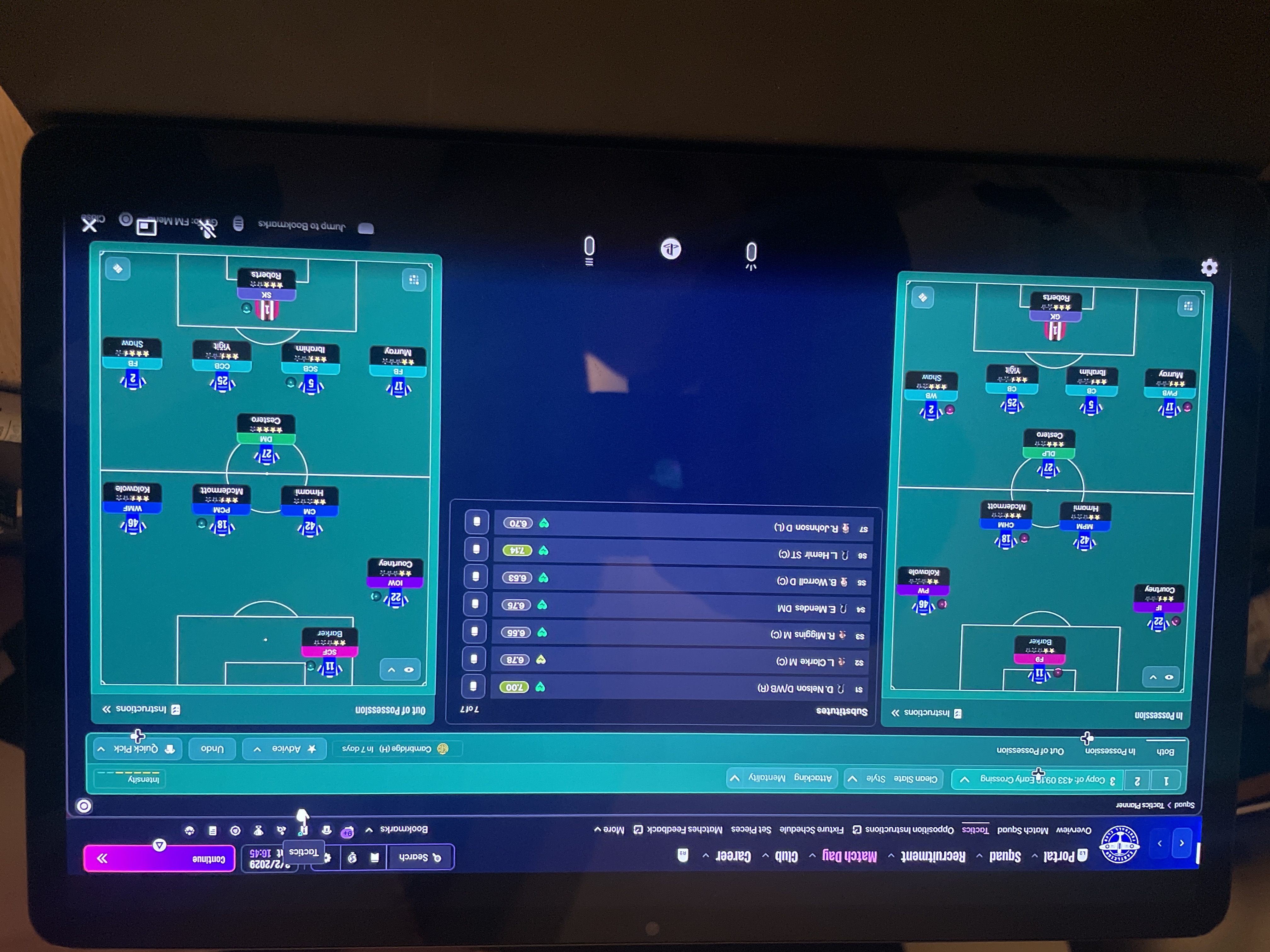
Uploaded Tactic
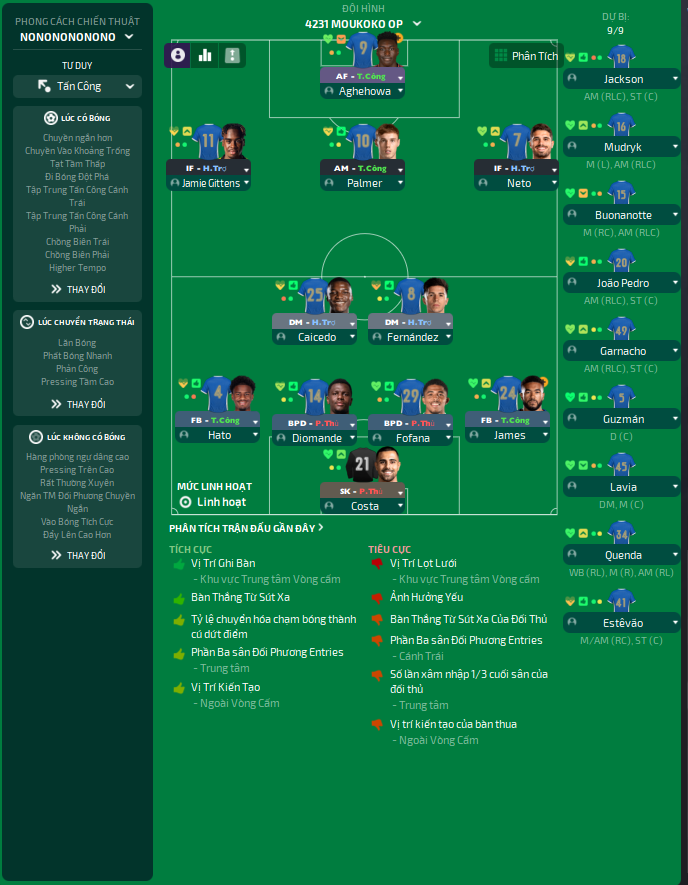
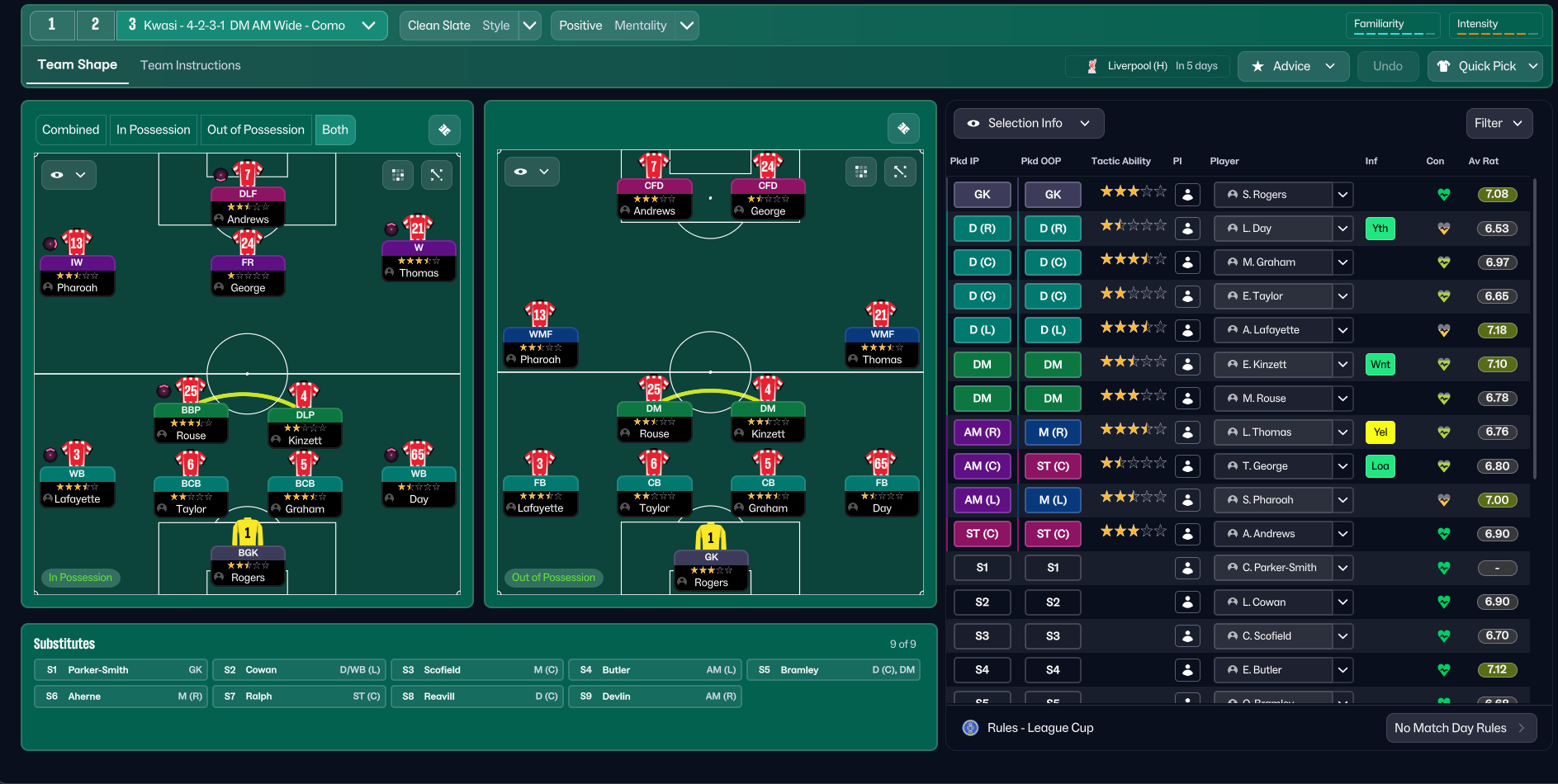
Formation & Style
Tactical Style:Attacking
Mentality:Positive
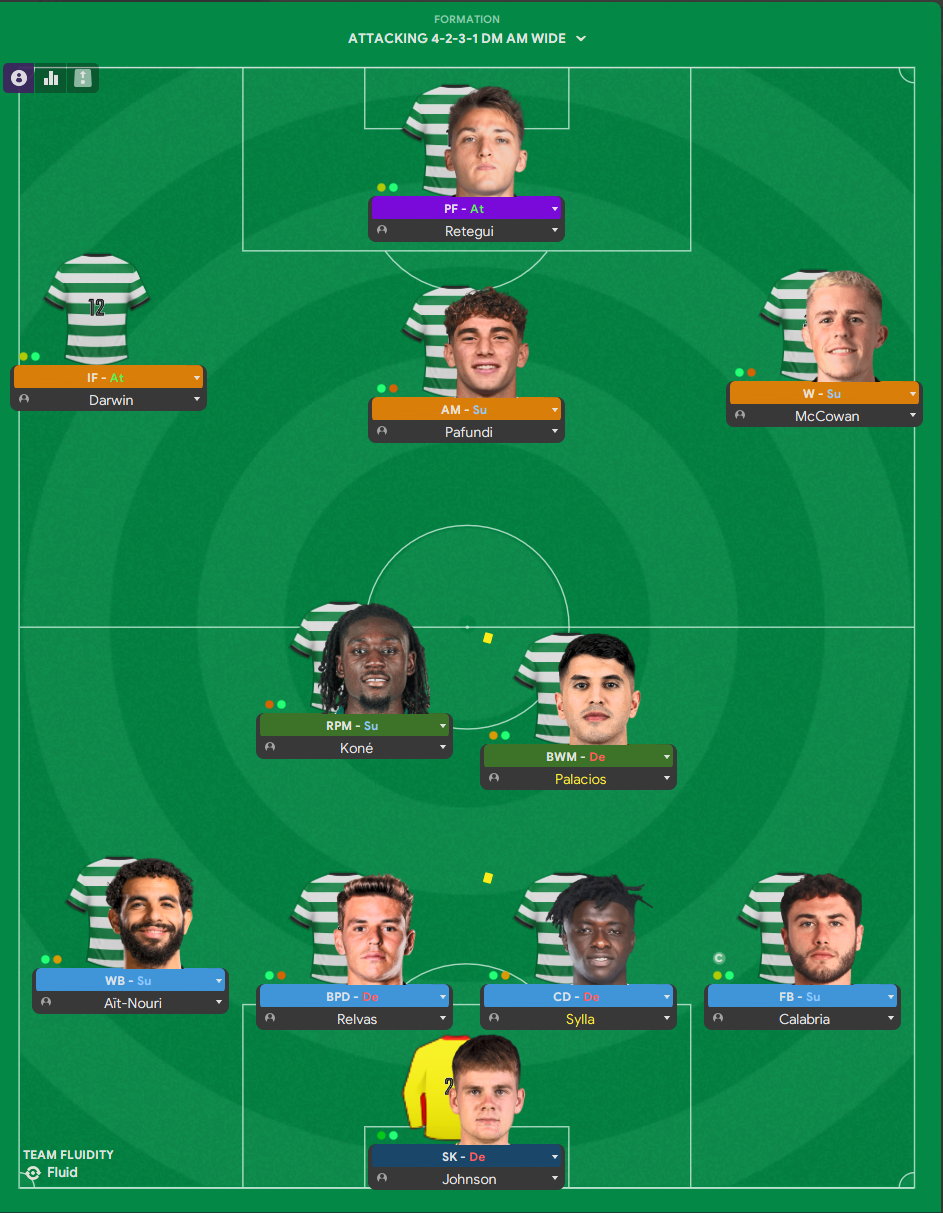
Formation:4-2-3-1
Team Fluidity:Fluid
In Possession
Focus play down both flanks
Play out of defence
Pass into space
In Transition
Counter-press
Counter
Out of Possession
Higher defensive line
More intense pressing
Prevent short GK distribution
Team Shape Without Ball
Shape:Compact
Description:Maintains a solid shape with two banks of four, ready to press.
Evidence:Players positioned with CBs and full-backs offering support at defensive transitions.
Team Shape With Ball
Shape:Fluid
Description:Fluid movement with wing-backs pushing up alongside inside forwards and attackers.
Evidence:Wide positioning of wing-backs and inside forwards with the advanced forward supported centrally.
Phase Description
Attacking Play
Utilizes width via wing-backs and inside forwards to create space and opportunities.
Defensive Transition
Emphasizes quick recovery and pressing after losing possession.
Main Focus
Beating opponents through quick passing and exploiting spaces created in wide areas.
Key Strengths
Fluid Attacking Play
The positioning of the wing-backs and inside forwards creates overloads in wide areas.
Defensive Versatility
A mix of ball-playing and defensive roles in defense allows for varied play.
Midfield Balance
The combination of deep-lying playmaker and box-to-box midfielder offers stability and dynamism.
Conflicting Directions
Counter-Pressing Risks
Intense pressing might leave the team exposed at the back if the press is bypassed.
Over-Reliance on Width
Over-emphasis on flanks may result in central vulnerabilities, especially during transitions.
Energy Depletion
The high pressing style may quickly deplete player stamina, leading to performance drop-off.
Tactical Suggestions
Balance Pressing Intensity
Consider moderating the pressing intensity to maintain team shape and reduce gaps.
Add Central Options
Including a player with playmaking capabilities in the central midfield can enrich control.
Vary Attacking Approaches
Incorporate more direct passing options to stretch defenses.
Ask Questions About Your Lineup
Related Tactics
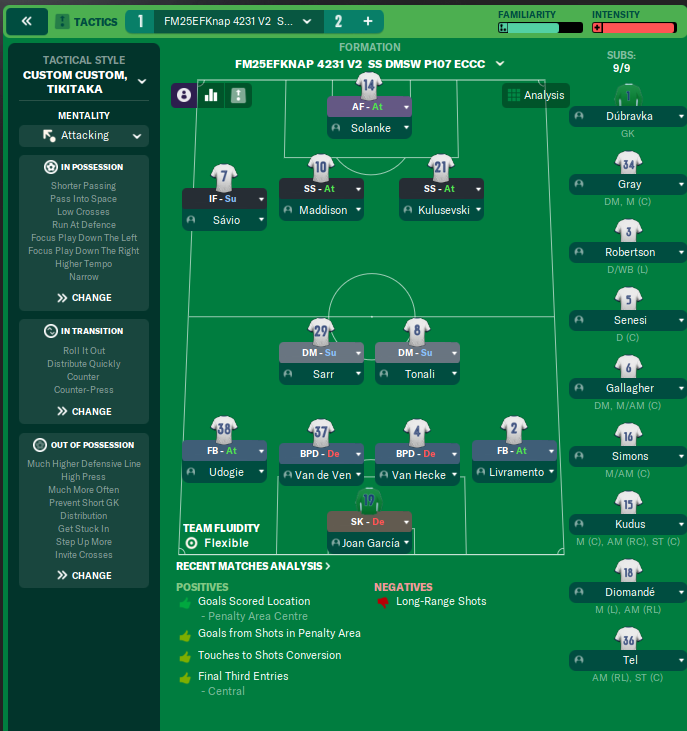
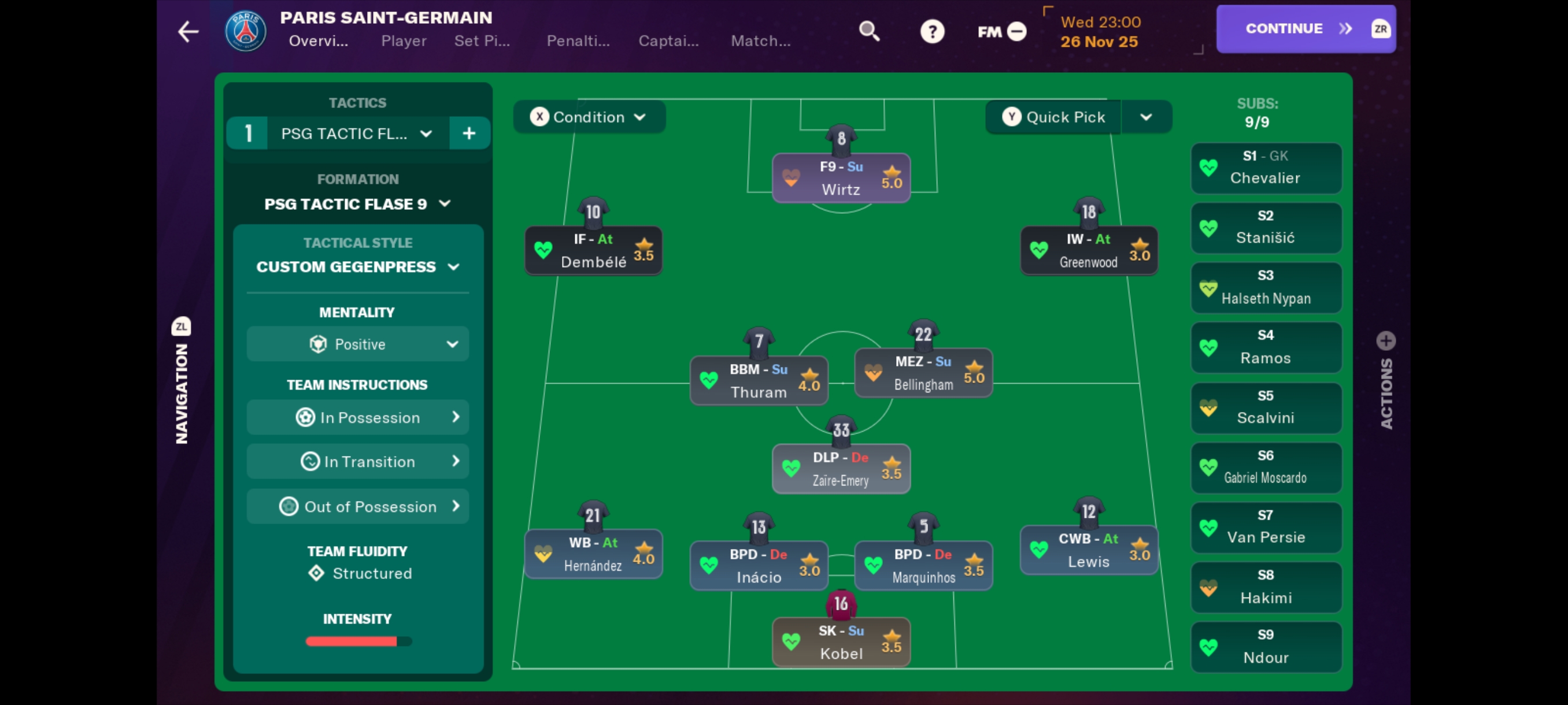
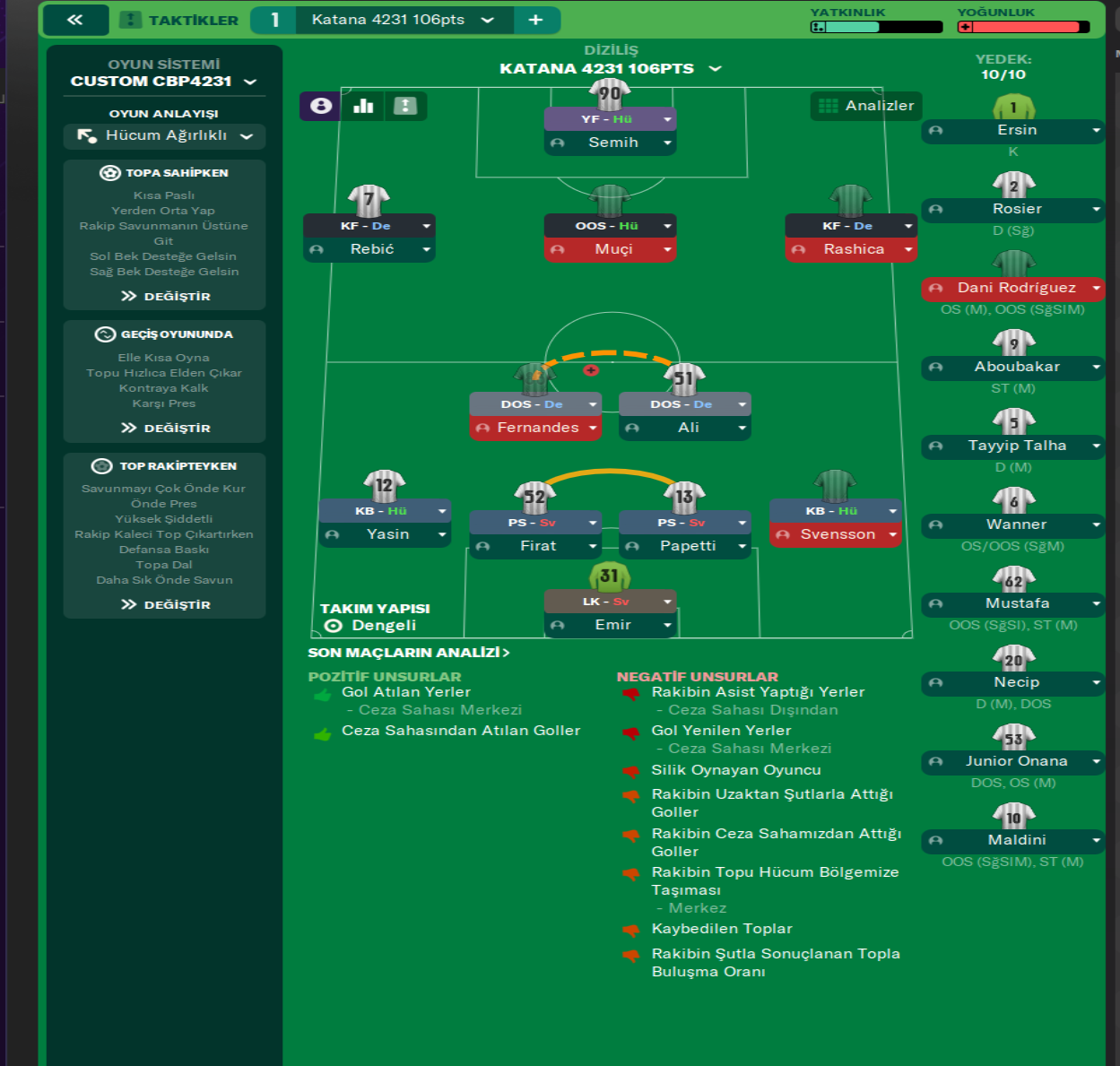
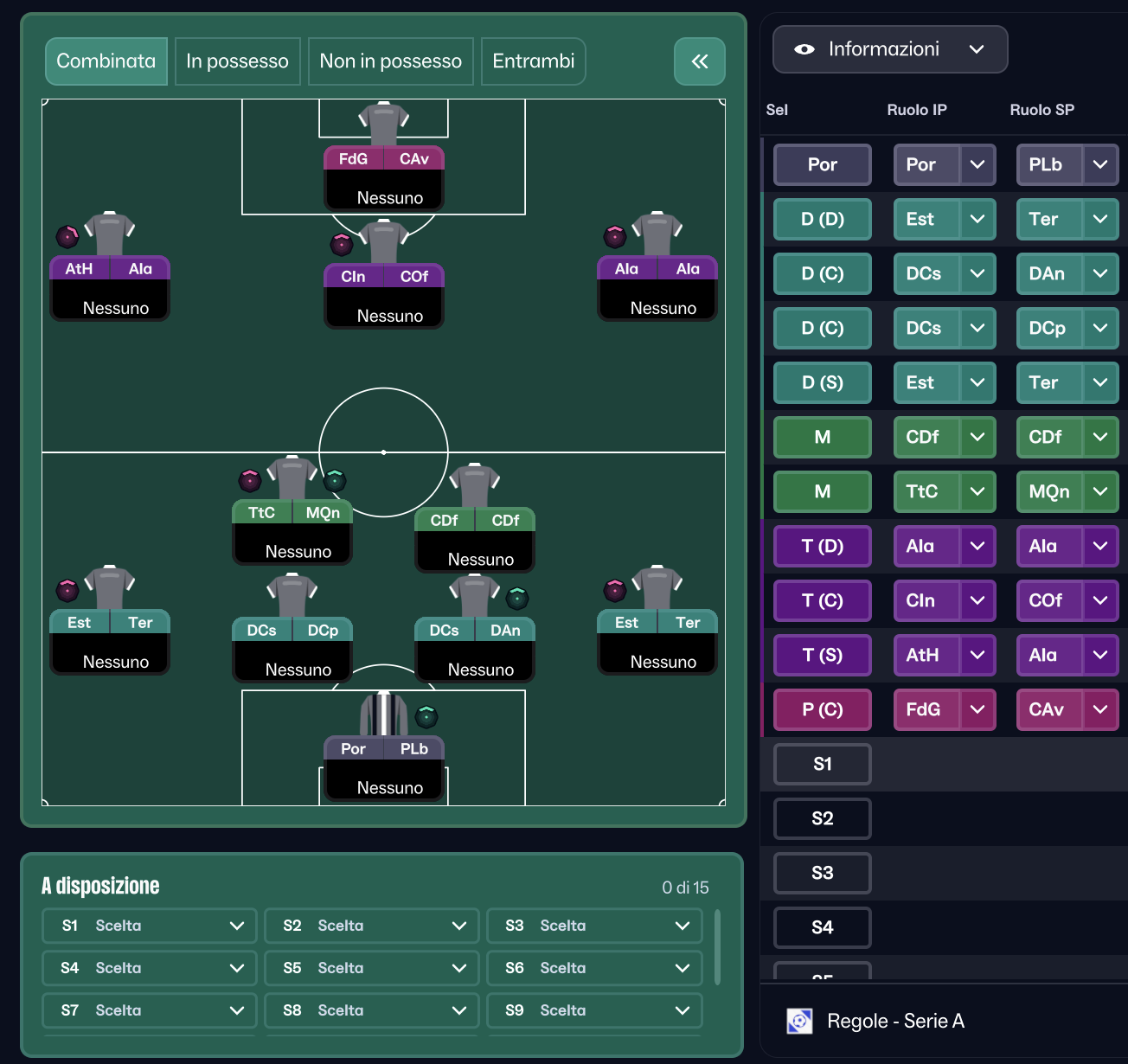
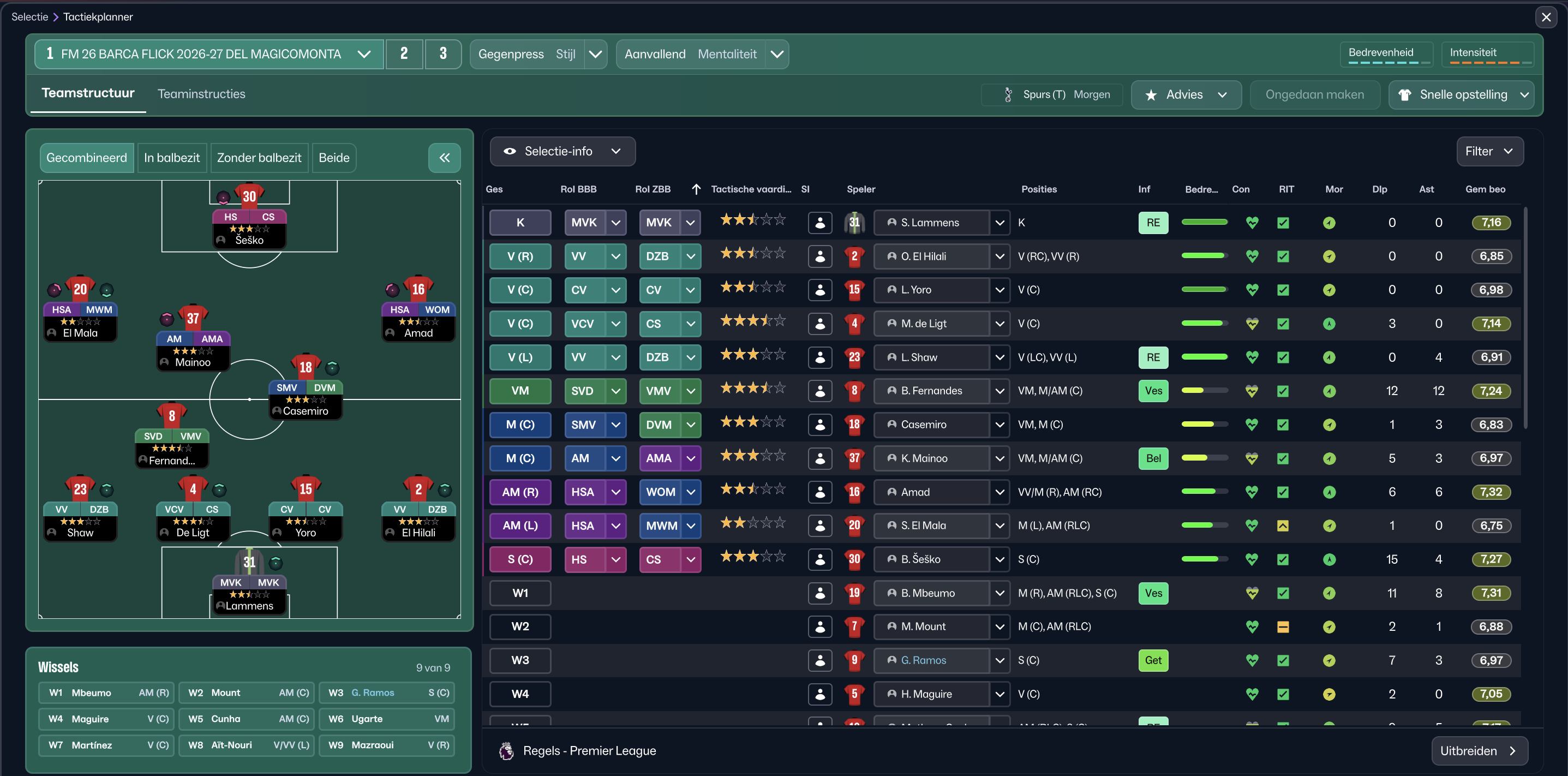
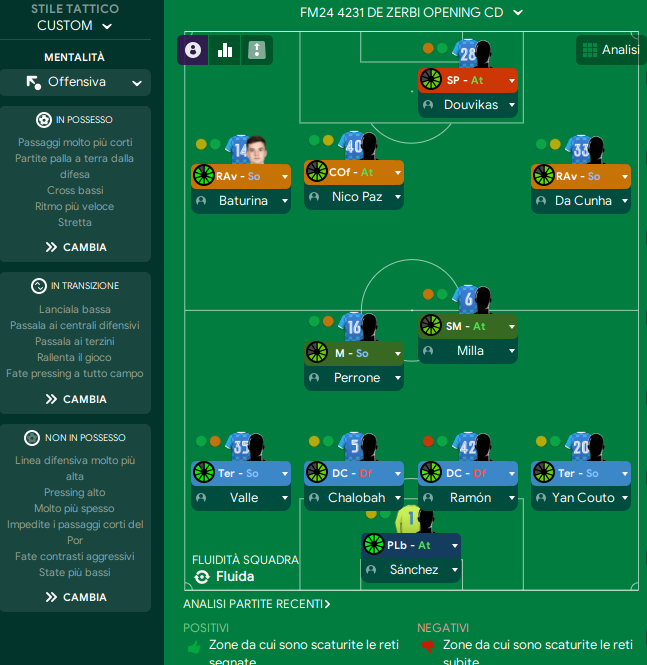
More Attacking tactics
Guides for this formation
The tactical theory behind the 4-2-3-1: roles, instructions, and the trade-offs that decide whether the system holds up.
Player pairings
Midfield Pairs in 4-2-3-1 and 4-4-2
Double pivots and flat pairs in 4-2-3-1 and 4-4-2: when each pairing works, when it collapses, and the AMC unicorn that rescues both.
Read guide
Playing styles
Gegenpressing: A Full Guide
Klopp-style gegenpressing in FM, including squad profile, line-and-press pairing, sustainable workload, and the antipatterns to avoid.
Read guide