Uploaded Tactic
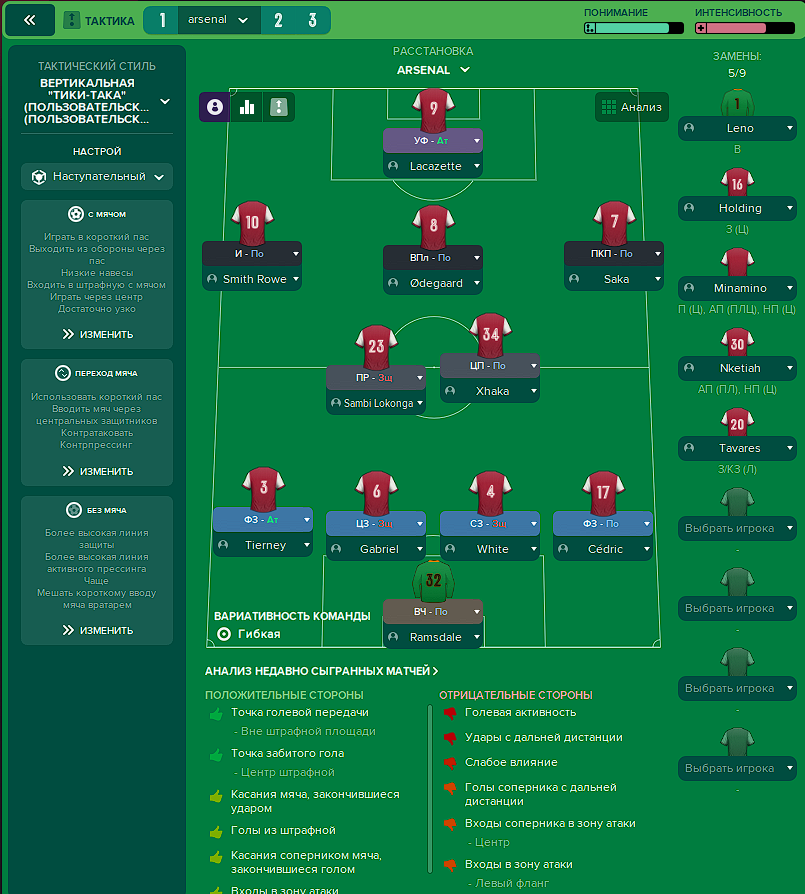
Formation & Style
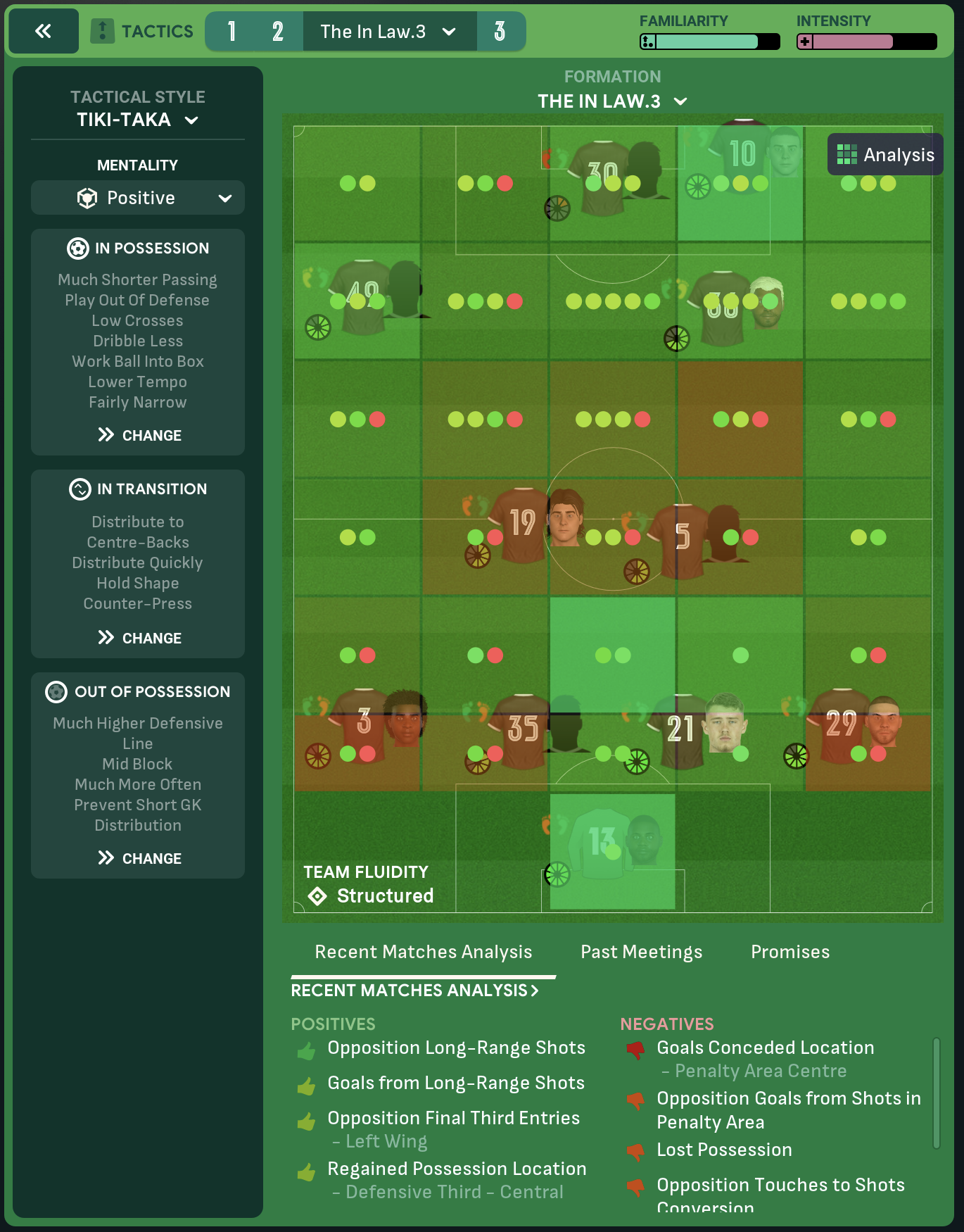
Tactical Style:Tiki-Taka
Mentality:Attacking
Formation:4-2-3-1
Team Fluidity:Flexible
In Possession
Short passing
Balanced width
Focus play through the middle
In Transition
Counter-press
Counter-attack
Out of Possession
High press
Prevent short GK distribution
Team Shape Without Ball
Shape:4-4-2 Defensive Block
Description:The team maintains a solid block shape to limit space for the opposition.
Evidence:The back four and two defensive midfielders provide robustness against attacks.
Team Shape With Ball
Shape:4-2-3-1 Formation
Description:Players interchange positions to create overloads in the midfield and attacking areas.
Evidence:The inside forwards and advance playmaker stretch and destabilize opposition defenses.
Phase Description
Attacking Play
Utilizes short passes and quick movement to create opportunities, focusing on maintaining possession.
Defensive Transition
Quick recovery and pressure on the ball after losing possession.
Main Focus
Controlling the game through possession and quick passing.
Key Strengths
Possession Control
The tiki-taka style promotes short, fast passes, aiding in maintaining possession.
Dynamic Attack
The presence of versatile attacking players allows for varied attacking options.
Defensive Solidity
Strong midfield support and a solid backline minimize defensive vulnerabilities.
Conflicting Directions
Overcommitment in Attack
Players may push too far forward, leaving gaps in defense during transitions.
Reliance on Player Attributes
Dependence on specific players' skill level may hurt adaptability.
Defensive Transition Anxiety
Quick turnovers can lead to unstructured defense and goals conceded.
Tactical Suggestions
Increase Width in Attack
Enhancing width can stretch defenses and create better passing lanes.
Adjust Defensive Line
A higher defensive line could disrupt opposition forward play but must be aligned with pacy defenders.
Consider Rotation of Roles
Rotating players like AM-S to create space and confuse the opposition may improve attacking fluidity.
Ask Questions About Your Lineup
Related Tactics
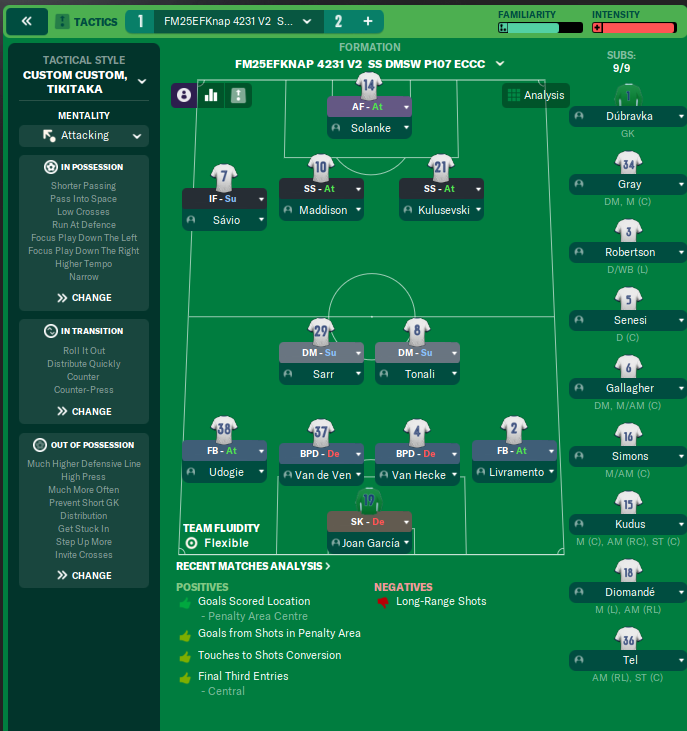
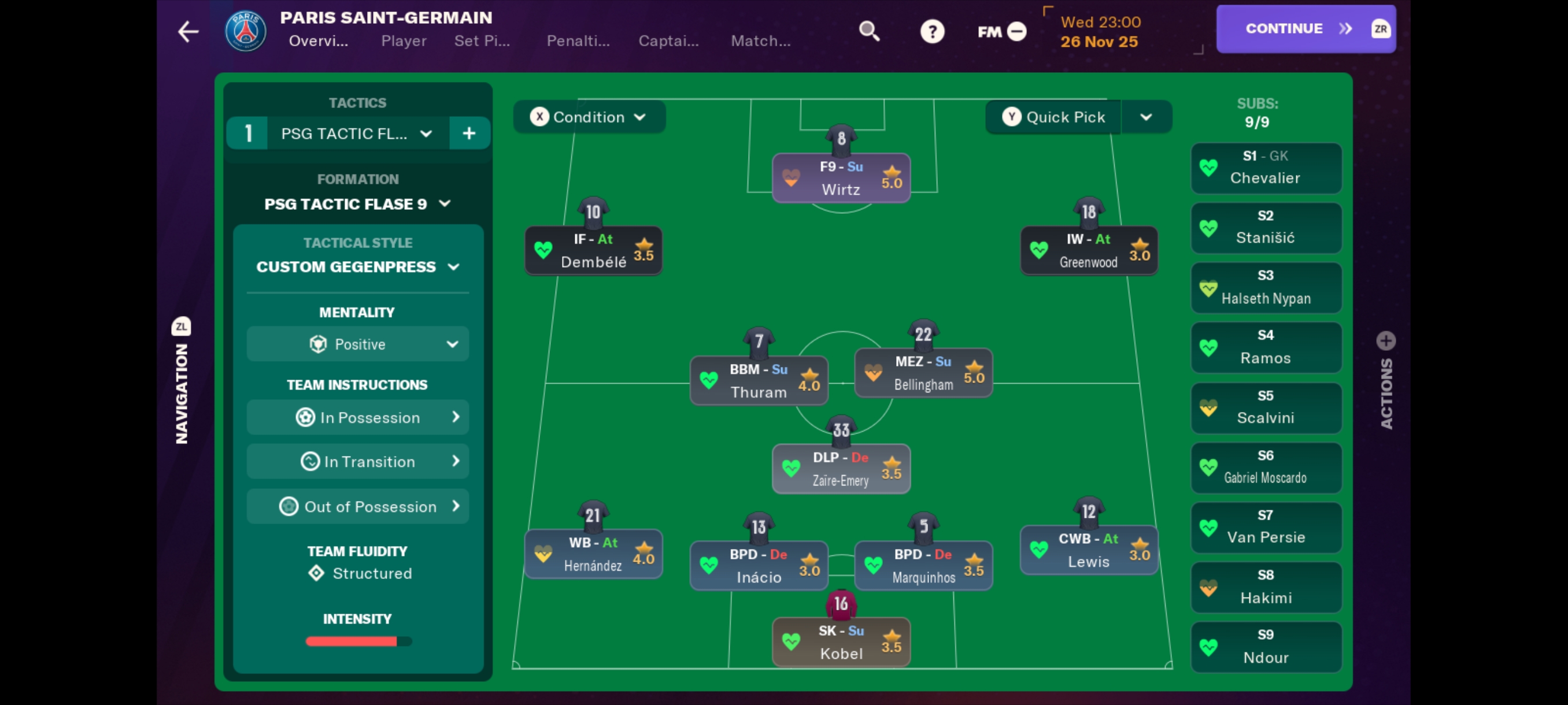
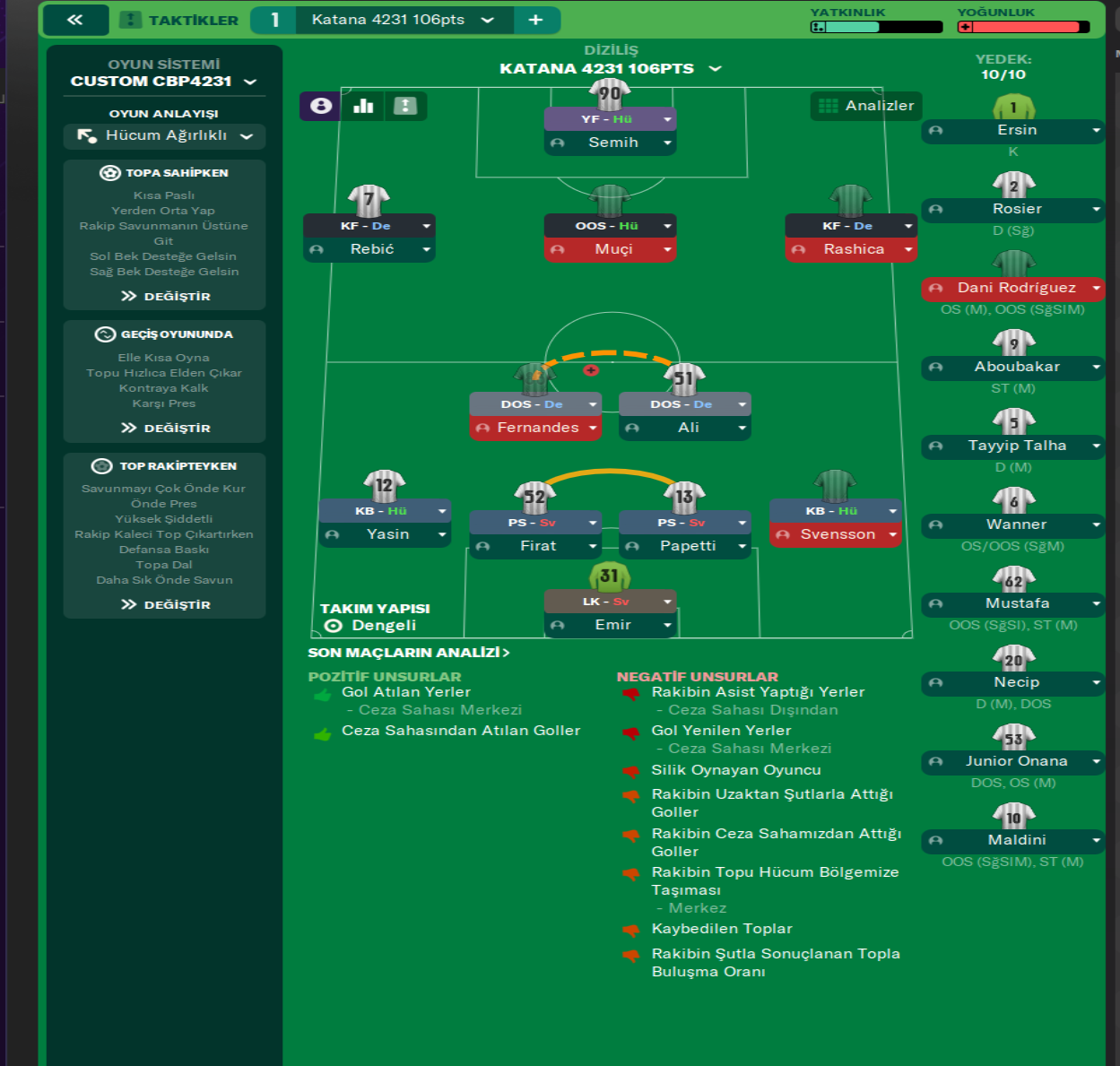
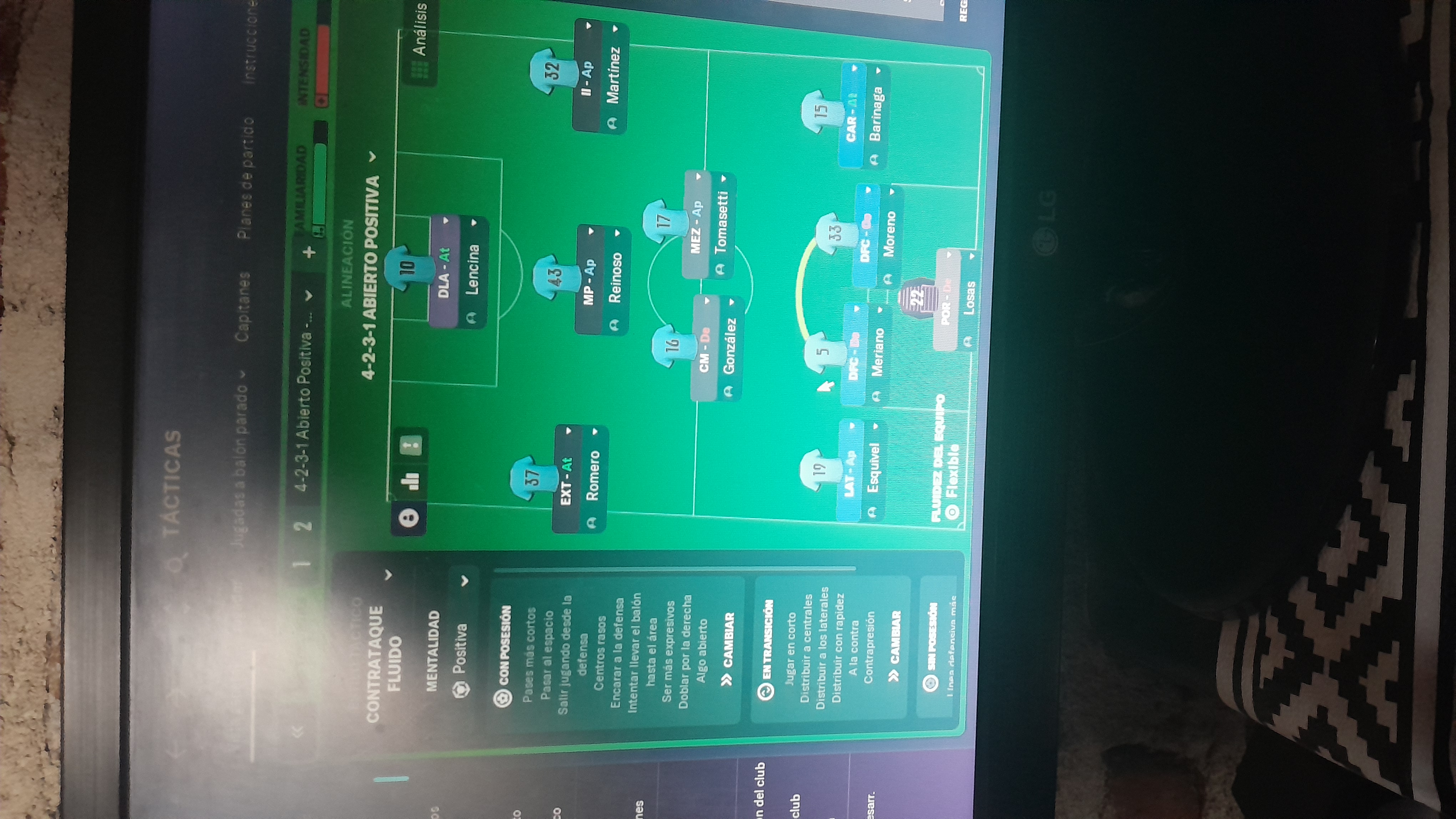
More Tiki-Taka tactics
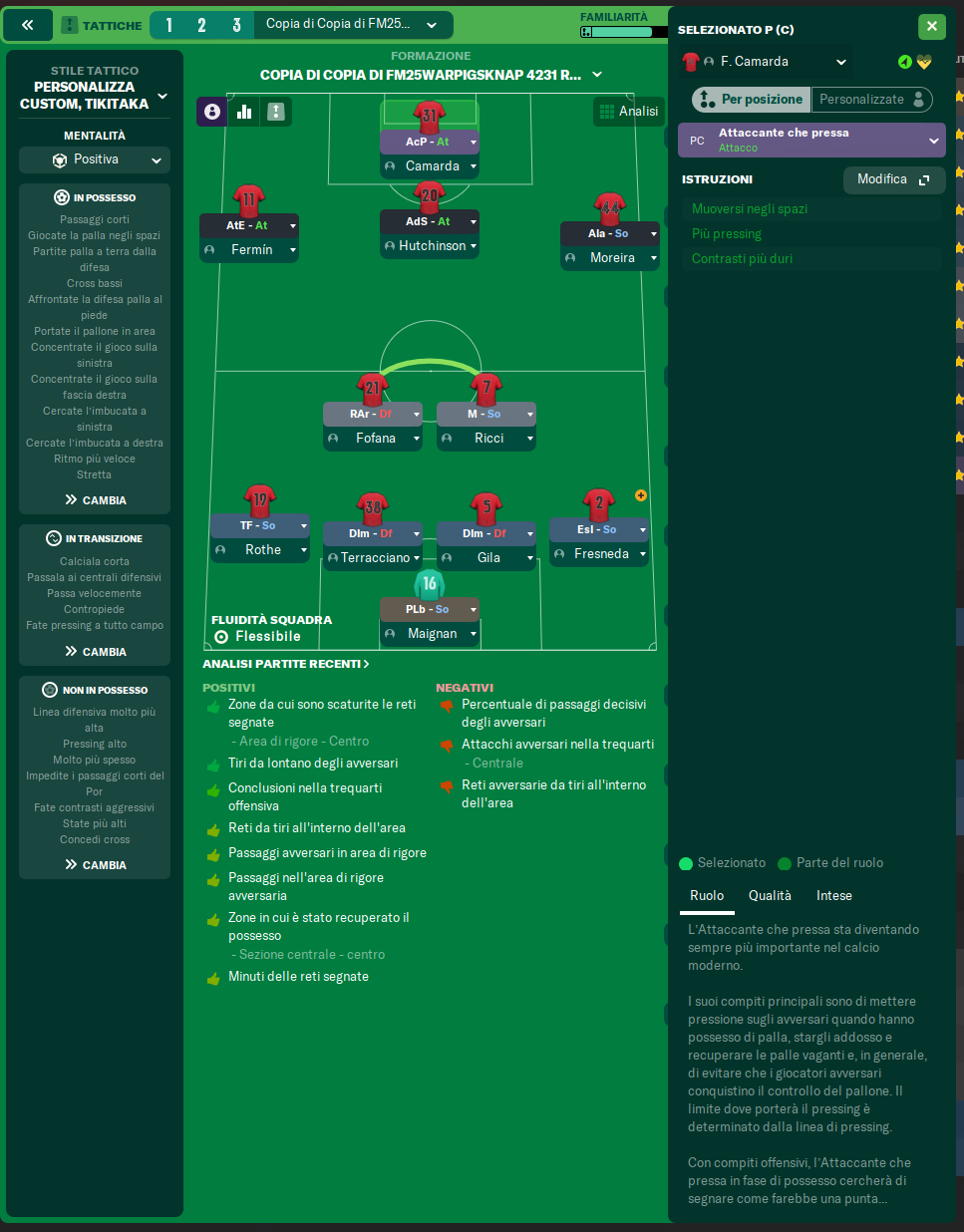
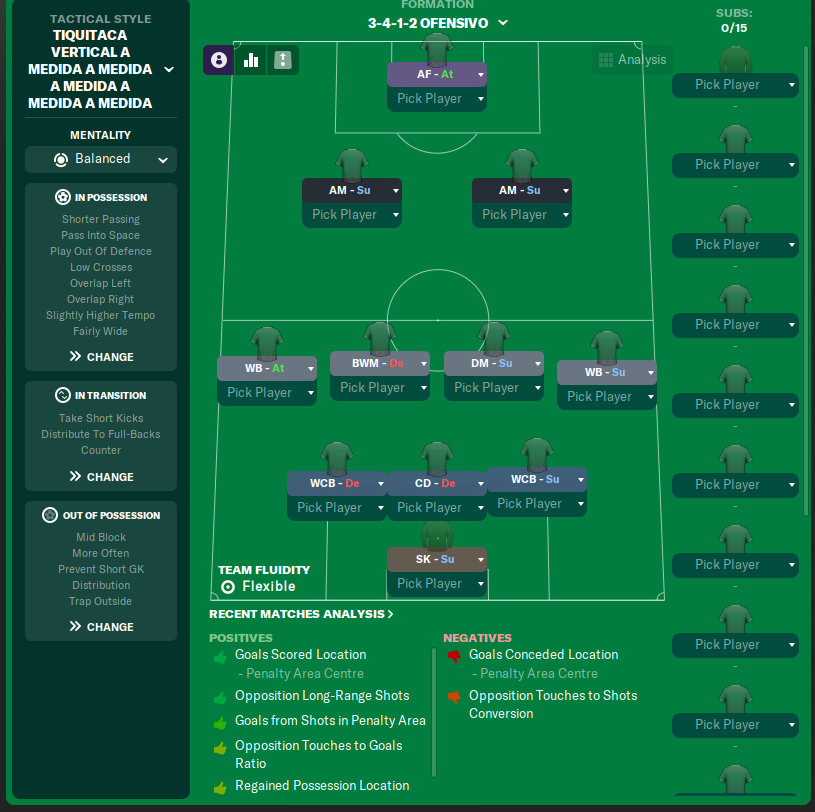
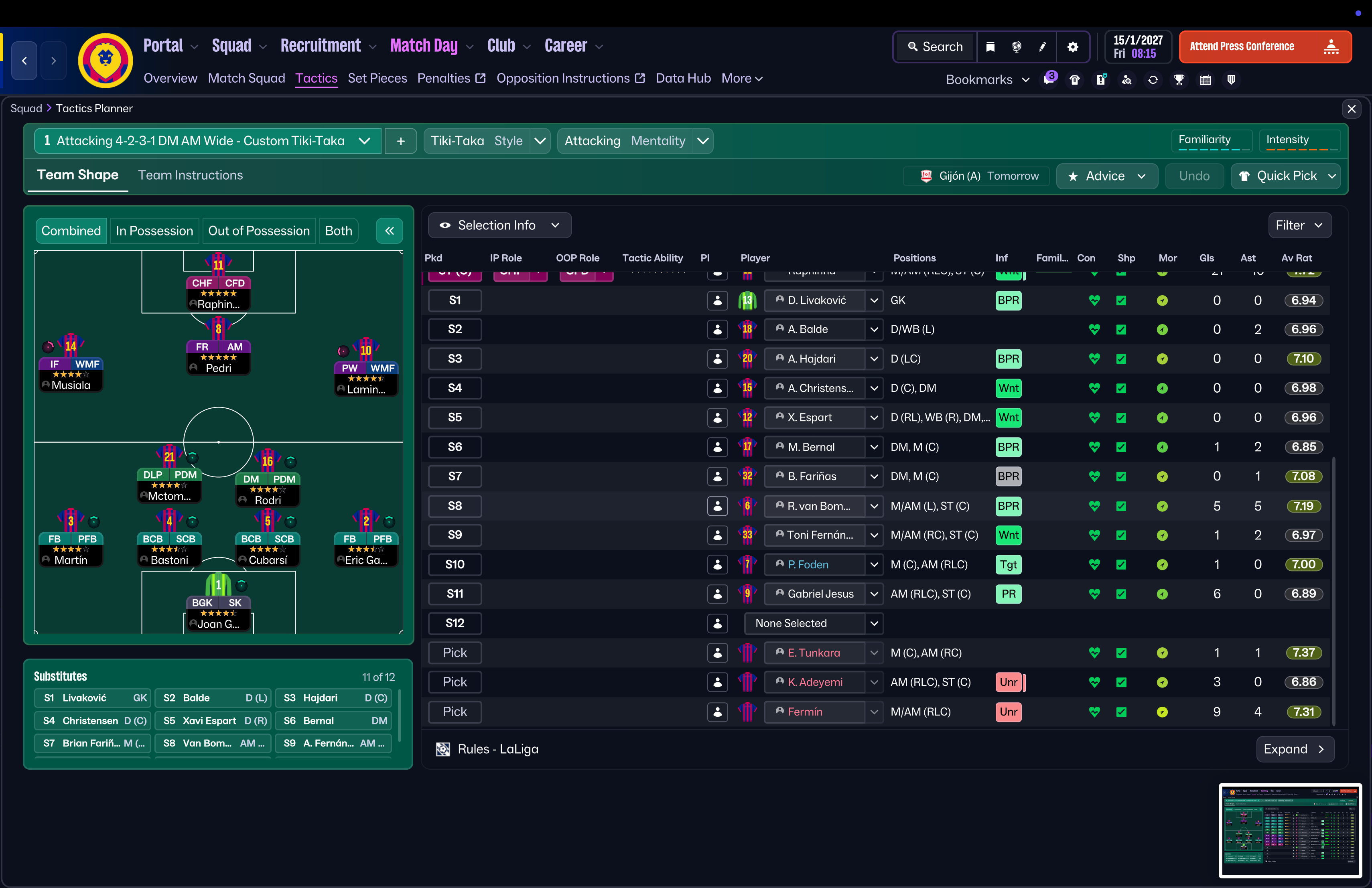
Guides for this formation
The tactical theory behind the 4-2-3-1: roles, instructions, and the trade-offs that decide whether the system holds up.
Player pairings
Midfield Pairs in 4-2-3-1 and 4-4-2
Double pivots and flat pairs in 4-2-3-1 and 4-4-2: when each pairing works, when it collapses, and the AMC unicorn that rescues both.
Read guide
Playing styles
Gegenpressing: A Full Guide
Klopp-style gegenpressing in FM, including squad profile, line-and-press pairing, sustainable workload, and the antipatterns to avoid.
Read guide