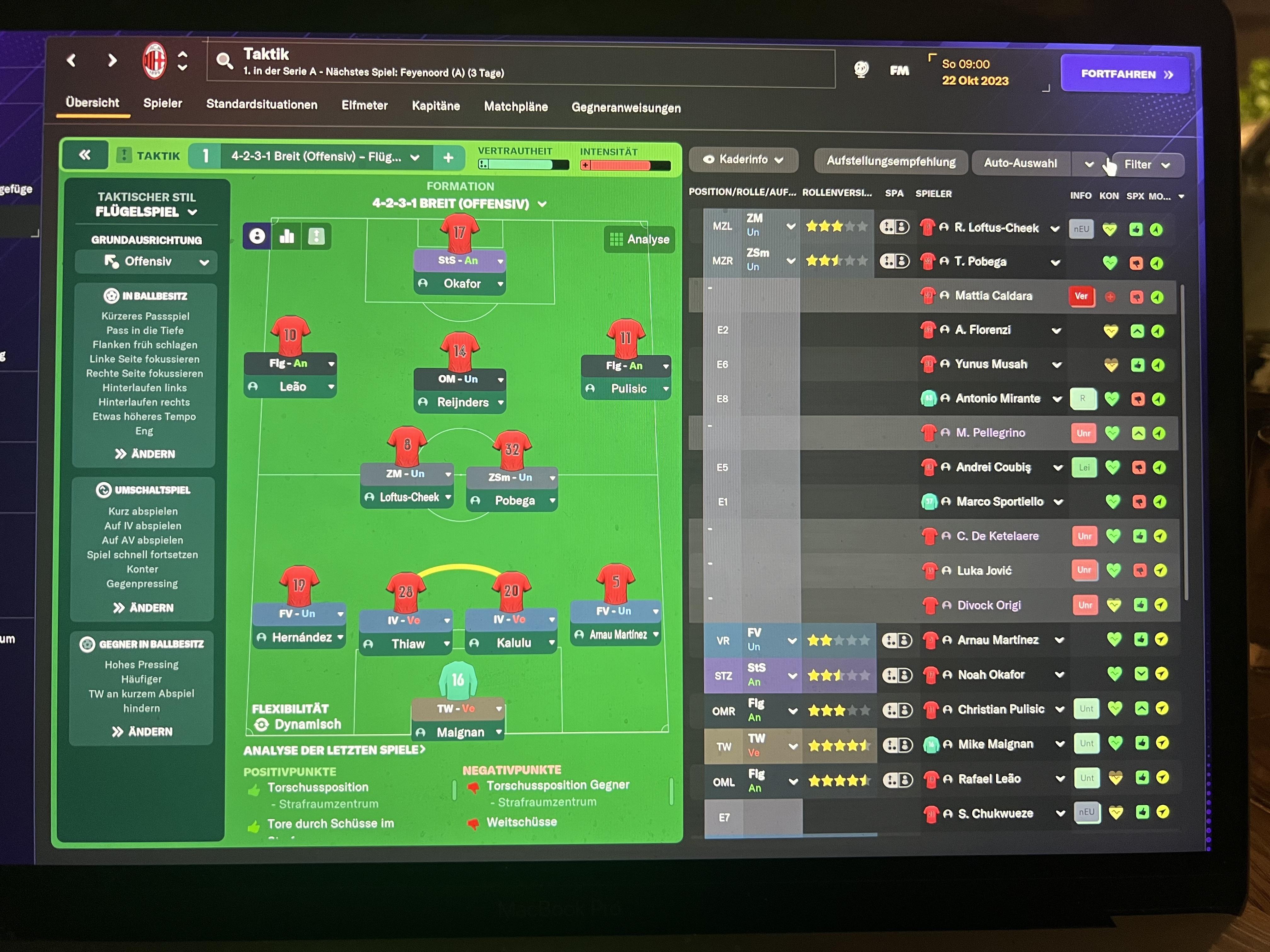
Uploaded Tactic
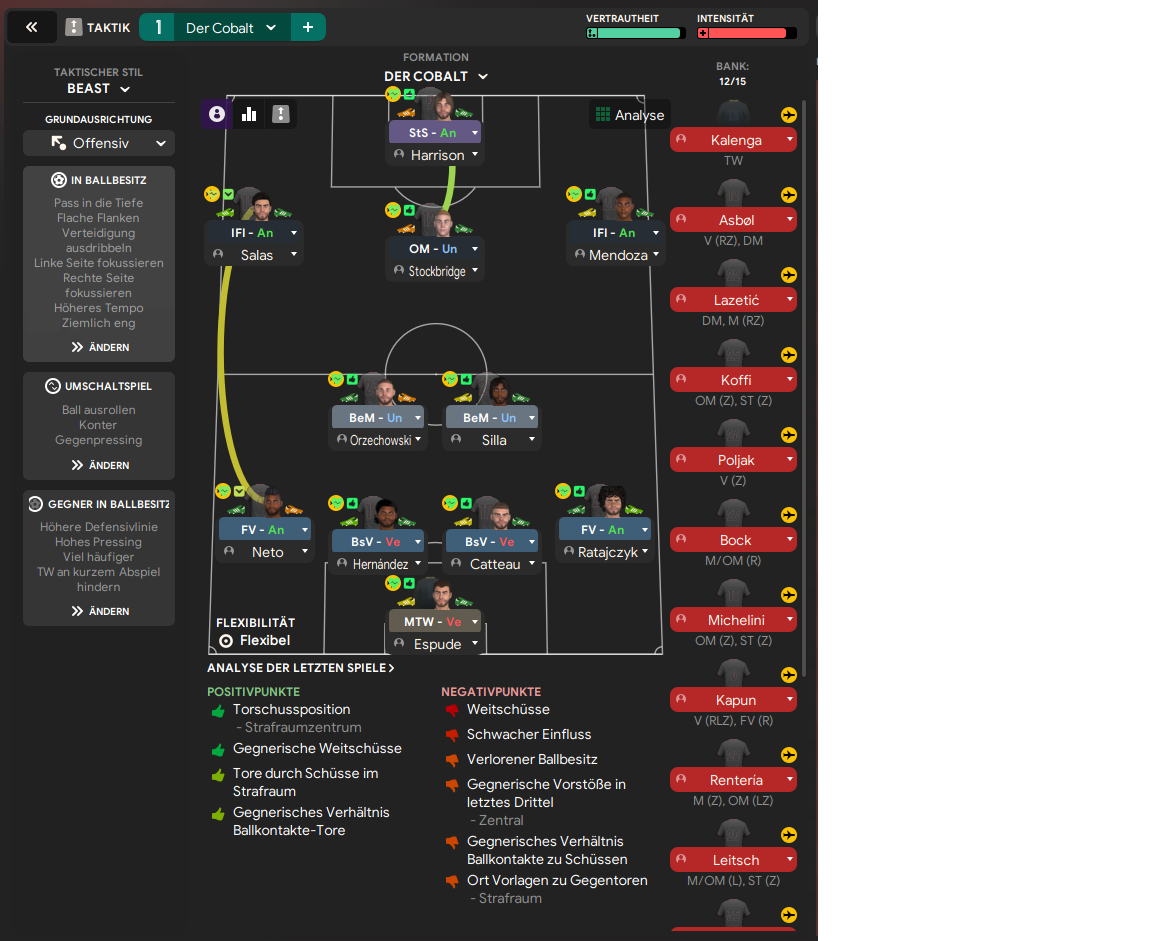
Formation & Style
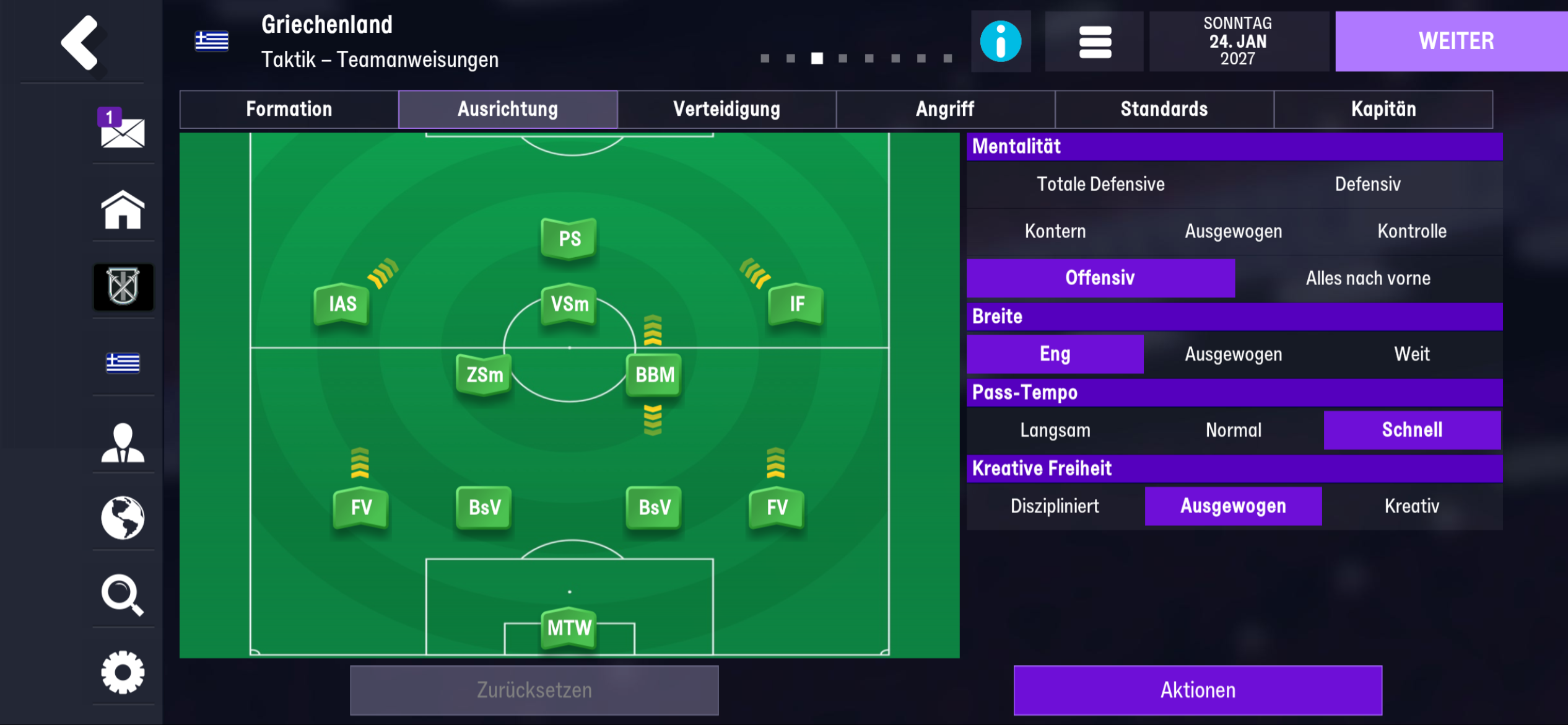
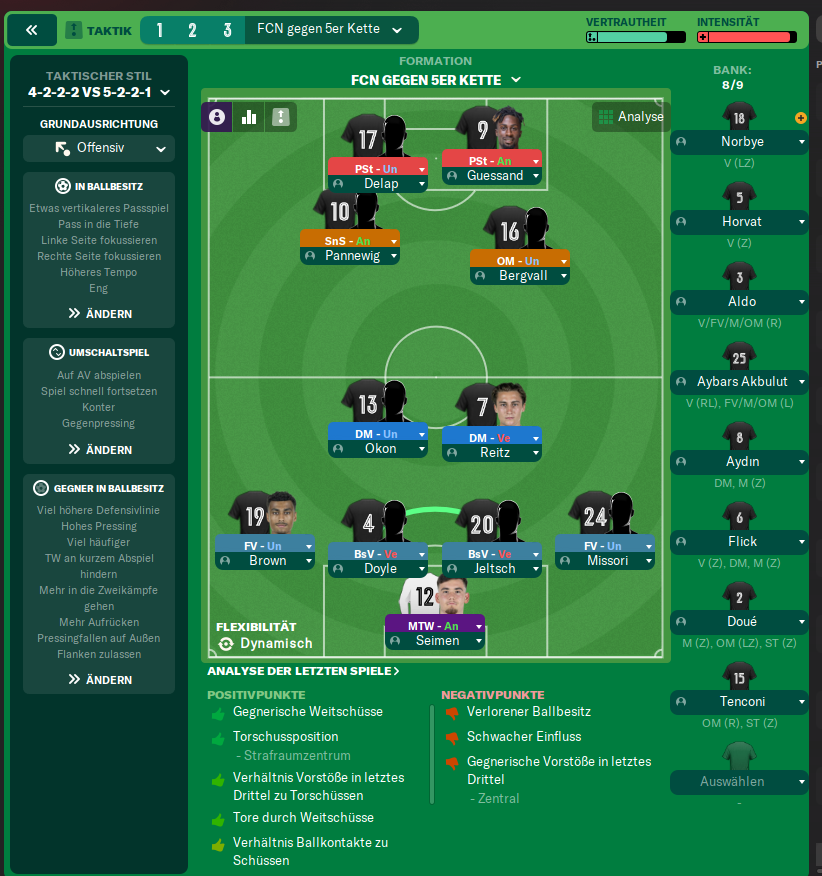
Tactical Style:Offensiv
Mentality:Beast
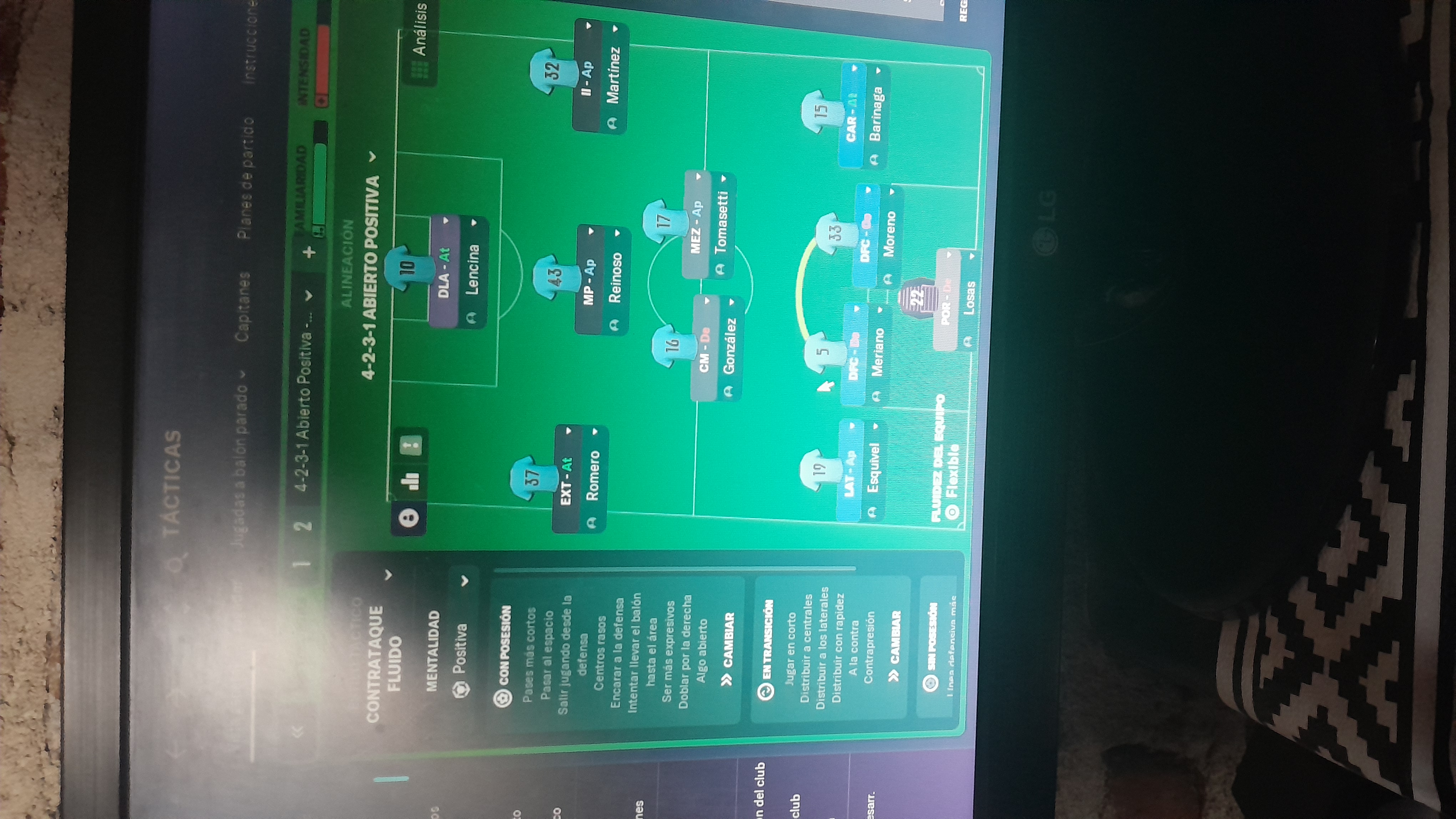
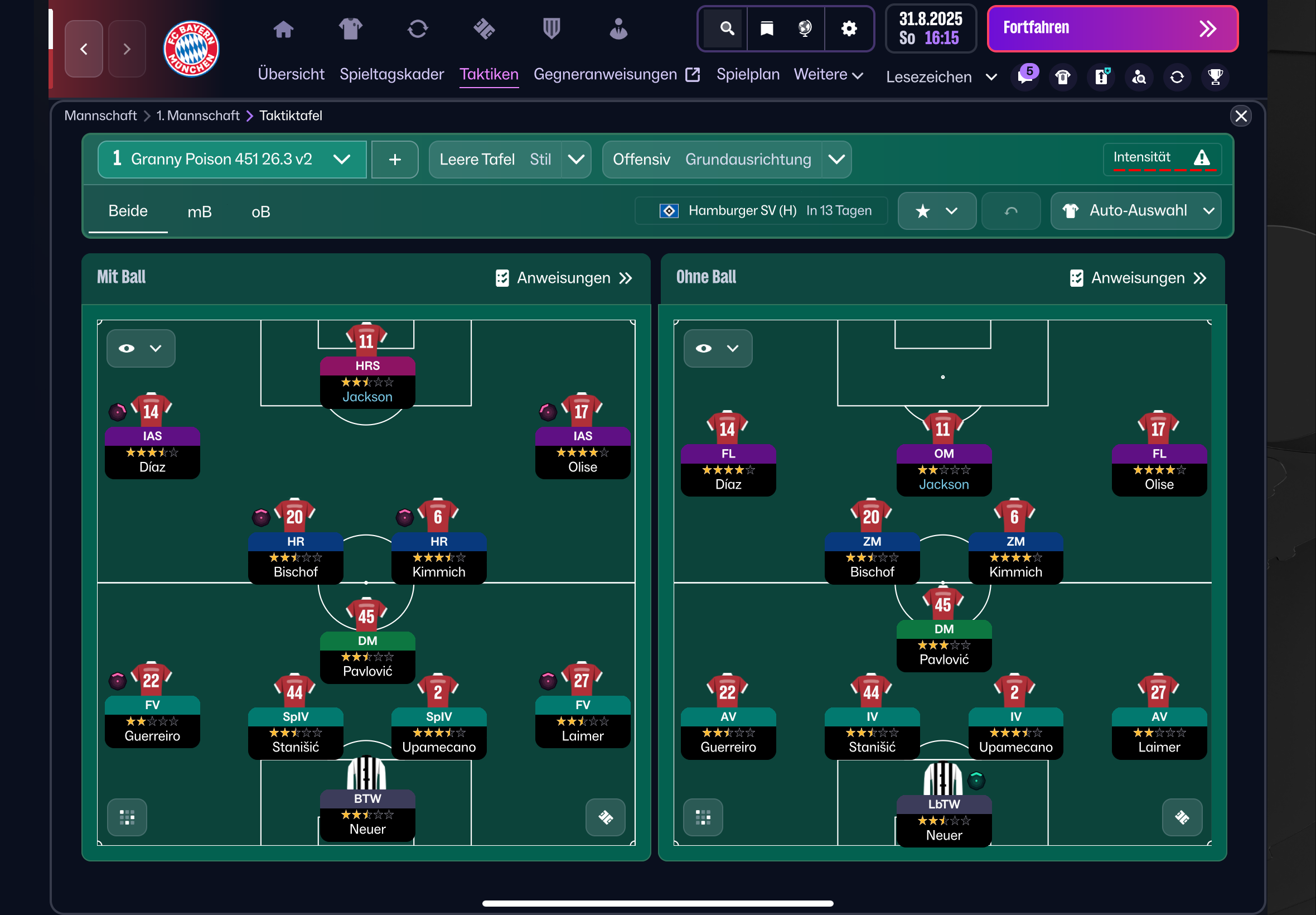
Formation:4-2-3-1
Team Fluidity:Flexibel
In Possession
Pass in die Tiefe
Flache Flanken
Vertikales Spiele aufbauen
Linke Seite fokussieren
Rechte Seite fokussieren
In Transition
Ball ausrollen
Konter
Gegenpressing
Out of Possession
Höhere Defensivlinie
Hohes Pressing
Team Shape Without Ball
Shape:4-2-3-1
Description:A structured formation with two holding midfielders providing cover.
Evidence:Two DMs (BeM-Un) positioned to secure central areas while the back four maintains shape.
Team Shape With Ball
Shape:4-2-3-1
Description:Utilizes width from the wingers and central creativity from the playmaker.
Evidence:Wingers (FV-An) and CAM (OM-Un) engage opposition and create spacing.
Phase Description
Attacking Play
The team focuses on width through the wingers and central play through the creative midfielder.
Defensive Transition
The team sets up for quick pressing to regain possession once losing the ball.
Main Focus
Attacking through flanks while allowing flexibility for central penetration.
Key Strengths
Width in Attack
The use of wingers stretches the defense and opens up central spaces.
Defensive Stability
Two defensive midfielders offer balance and support to the backline.
Counter-Attacking Ability
The formation is set for quick transitions and exploiting spaces left by opponents.
Conflicting Directions
Gegenpressing vs. High Defensive Line
The aggressive high line can be exposed by quick counter-attacks if possession is lost.
Player Roles at Risk
If pressing is overly aggressive, role duties may become exposed.
Attacking Depth Management
With wide players pushing high, central support can be lacking.
Tactical Suggestions
Solidify Defensive Midfield
Consider more supportive duties for DMs to enhance defensive transitions.
Balanced Attacking Width
Instruct wingers for more mixed responsibilities to adapt to defensive setups.
Adjust Pressing Intensity
Ensure pressing does not leave backline exposed, particularly on counter situations.
Ask Questions About Your Lineup
Related Tactics
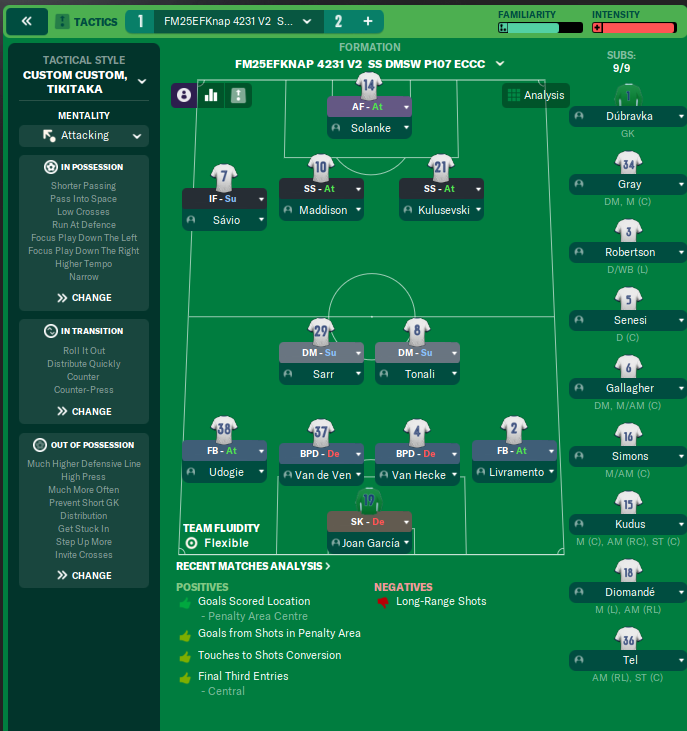
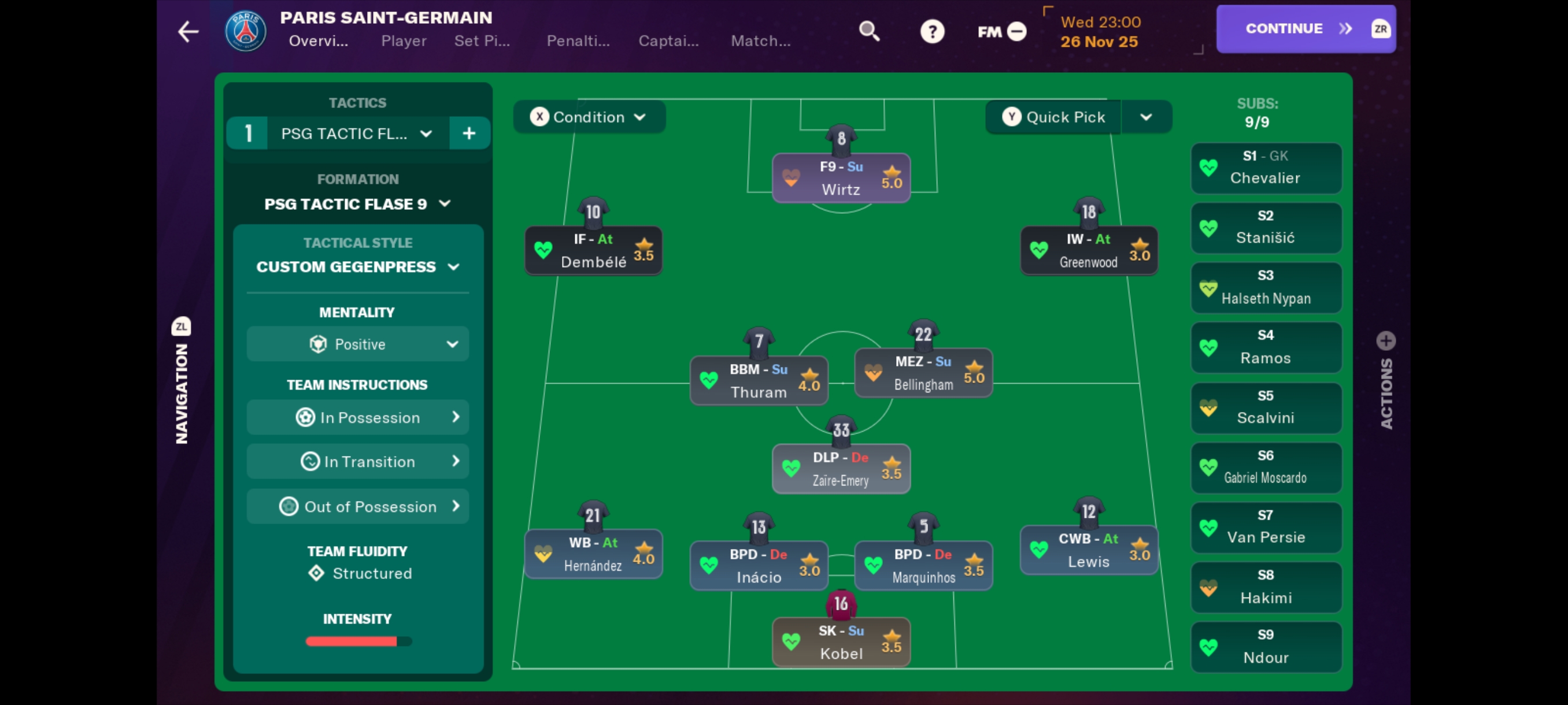
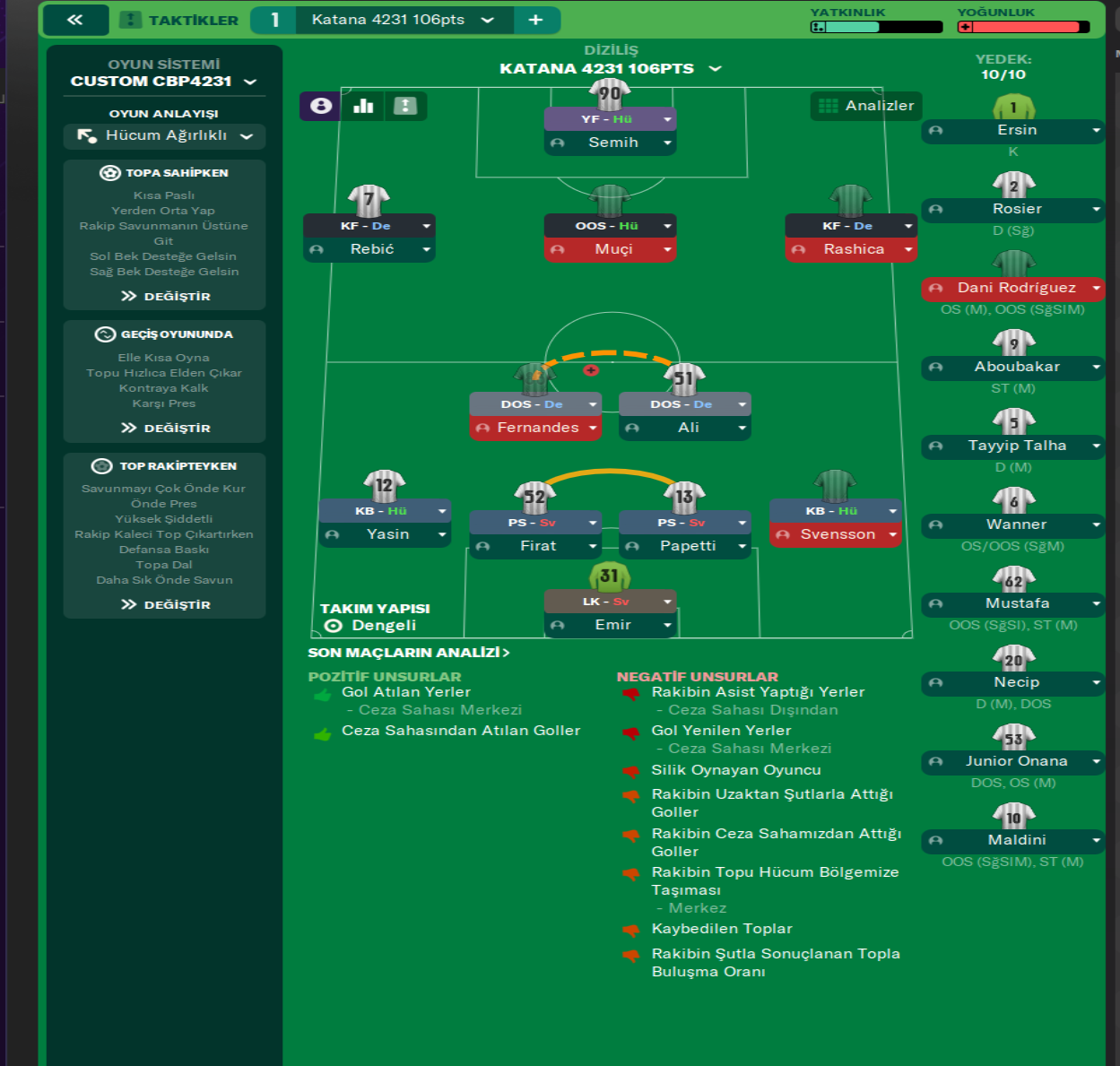
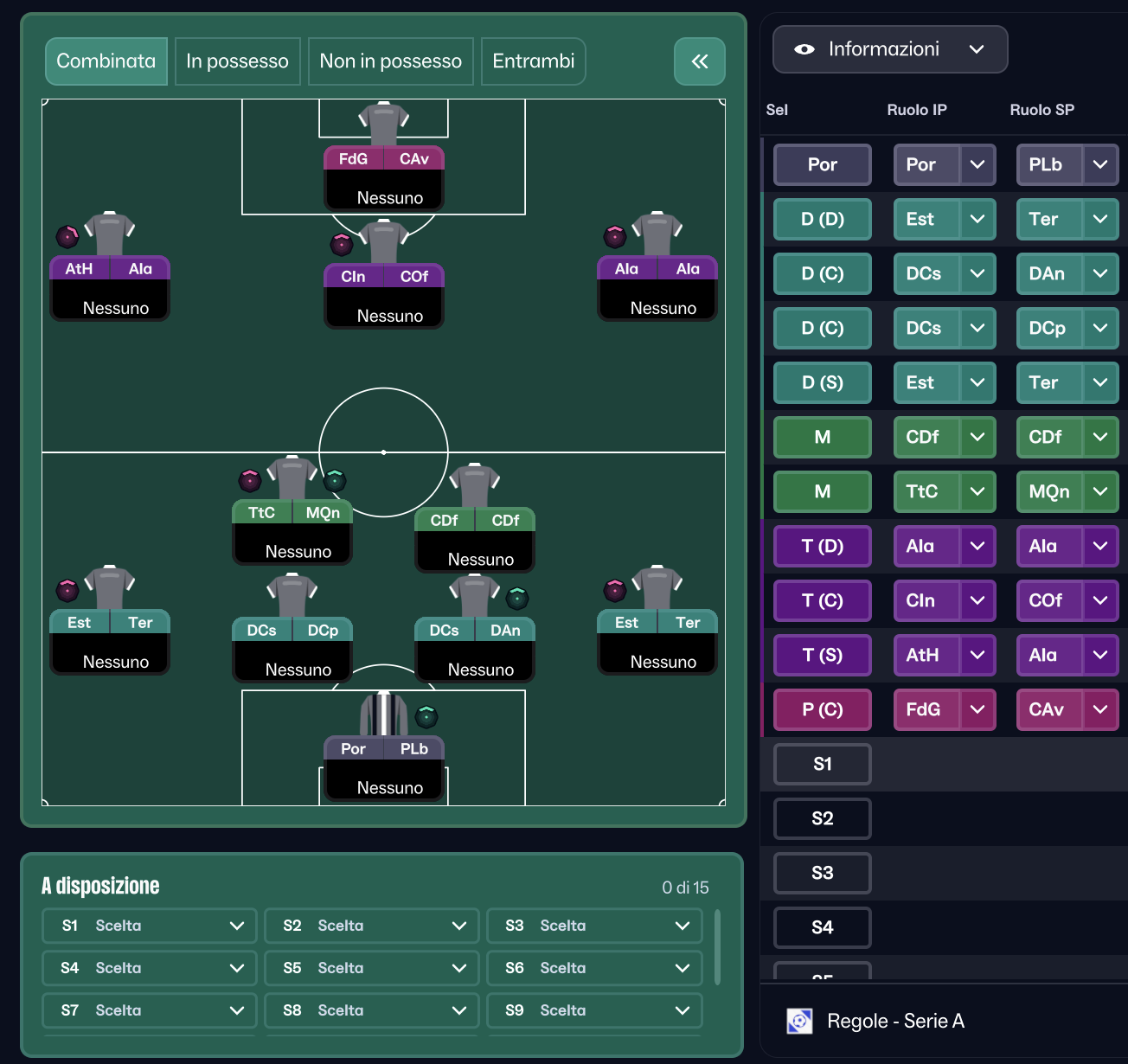
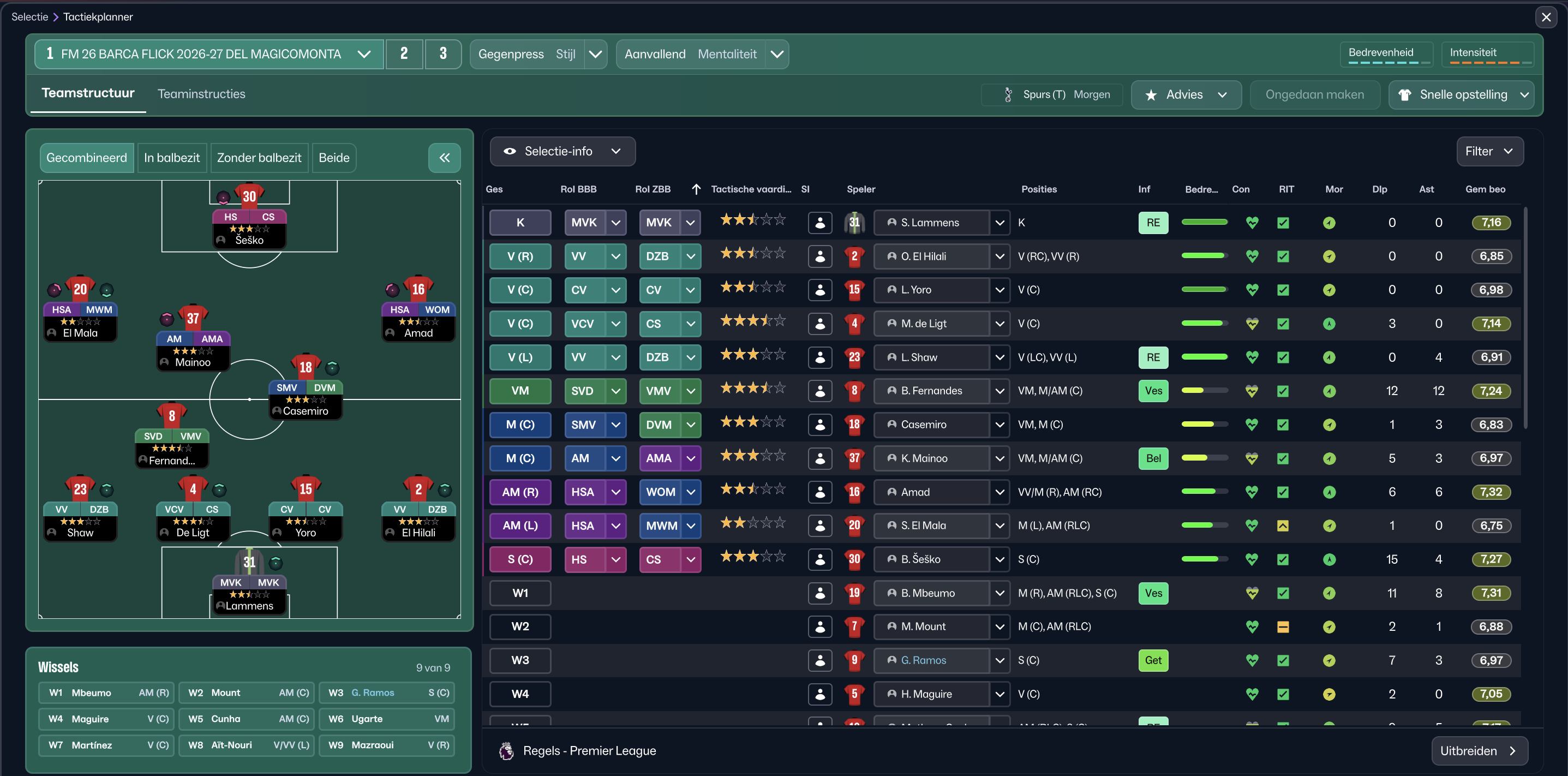
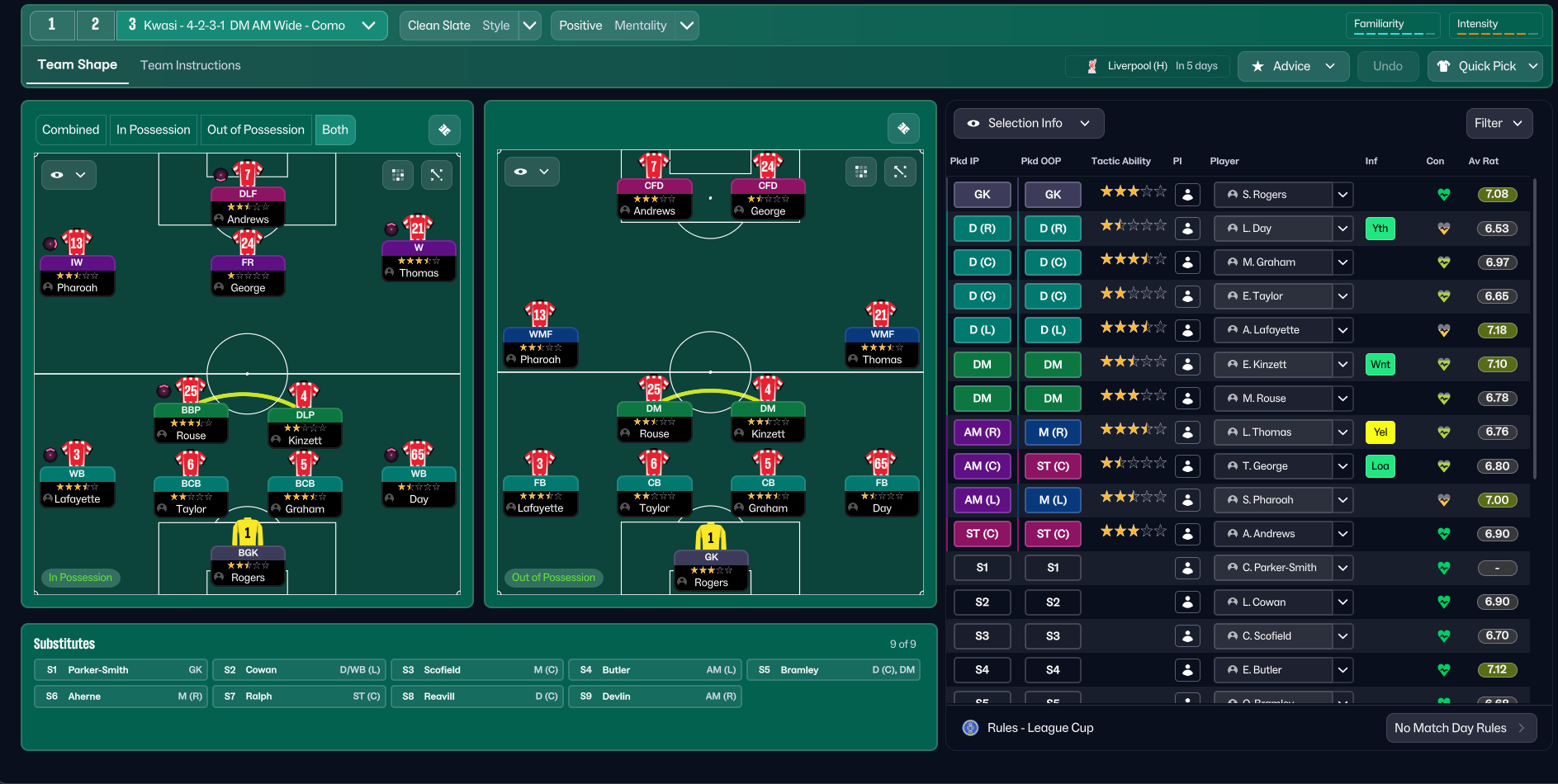
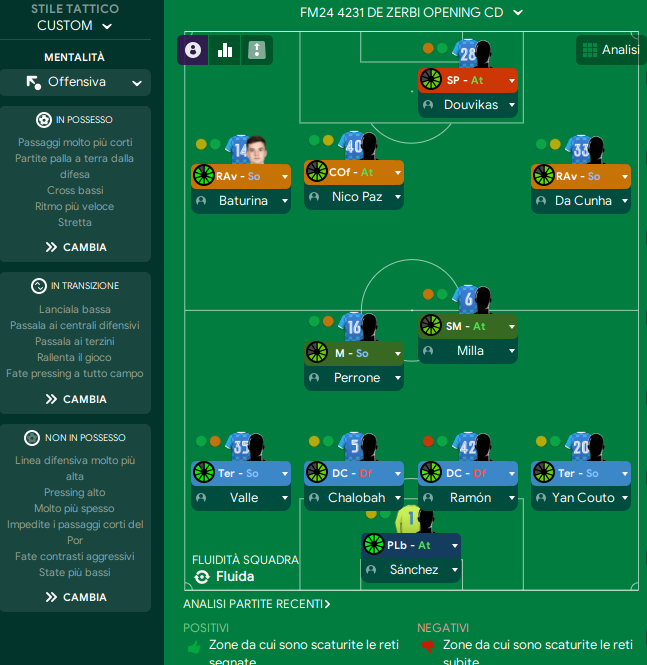
More Offensiv tactics
Guides for this formation
The tactical theory behind the 4-2-3-1: roles, instructions, and the trade-offs that decide whether the system holds up.
Player pairings
Midfield Pairs in 4-2-3-1 and 4-4-2
Double pivots and flat pairs in 4-2-3-1 and 4-4-2: when each pairing works, when it collapses, and the AMC unicorn that rescues both.
Read guide
Playing styles
Gegenpressing: A Full Guide
Klopp-style gegenpressing in FM, including squad profile, line-and-press pairing, sustainable workload, and the antipatterns to avoid.
Read guide