Uploaded Tactic
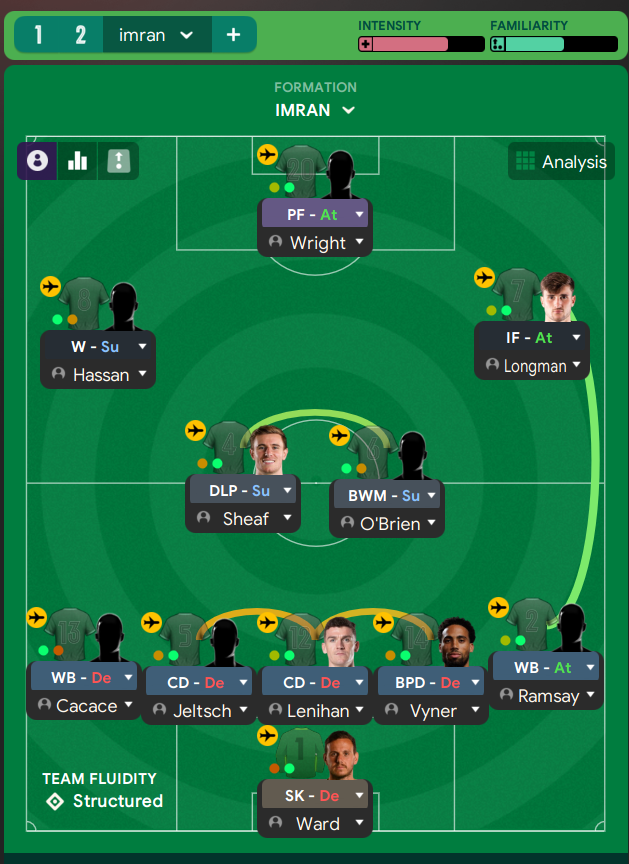
Formation & Style
Tactical Style:Balanced
Mentality:Positive
Formation:4-2-3-1 Wide
Team Fluidity:Structured
In Possession
Play Out of Defence
Work Ball Into Box
In Transition
Counter-Press
Counter
Out of Possession
Higher Defensive Line
Higher Line of Engagement
Trigger Press More Often
Team Shape Without Ball
Shape:Compact
Description:A compact block with emphasis on winning the ball back quickly.
Evidence:Higher Defensive Line at [2,2] and Trigger Press More Often
Team Shape With Ball
Shape:Width
Description:Wide shape with emphasis on wing-backs pushing forward to stretch the opposition.
Evidence:Wing-Backs at [2,1] and [2,5] provide width
Phase Description
Attacking Play
Utilizes width with wing-backs and inside forwards, aiming to create space for central play.
Defensive Transition
Focuses on quickly regaining possession through counter-pressing tactics.
Main Focus
Building play through the midfield and exploiting wide areas.
Key Strengths
Strong Midfield Control
The combination of DLP-S and BWM-S offers both creativity and defensive solidity.
Effective Use of Width
Wing-backs create space for inside forwards, enhancing attacking options.
Dynamic Forward Line
A mix of pressing and attacking roles keeps the opposition's defense under pressure.
Conflicting Directions
Potential Vulnerability to Counterattacks
High defensive line and pressing may expose the team to quick counterattacks.
Dependence on Wing-Backs
Heavy reliance on wing-backs for width may leave central areas crowded.
Risk of Midfield Overload
With only two central midfielders, the team may struggle against three-man midfield setups.
Tactical Suggestions
Consider Depth in Midfield
Switch one midfielder to a more defensive role to bolster central solidity.
Adjust Wing-Back Duties
Consider changing the duty of one wing-back to defend to maintain shape during transitions.
Enhance Counterattack Readiness
Allow more emphasis on counter-attacking play to exploit spaces left by high pressing.
Ask Questions About Your Lineup
Related Tactics

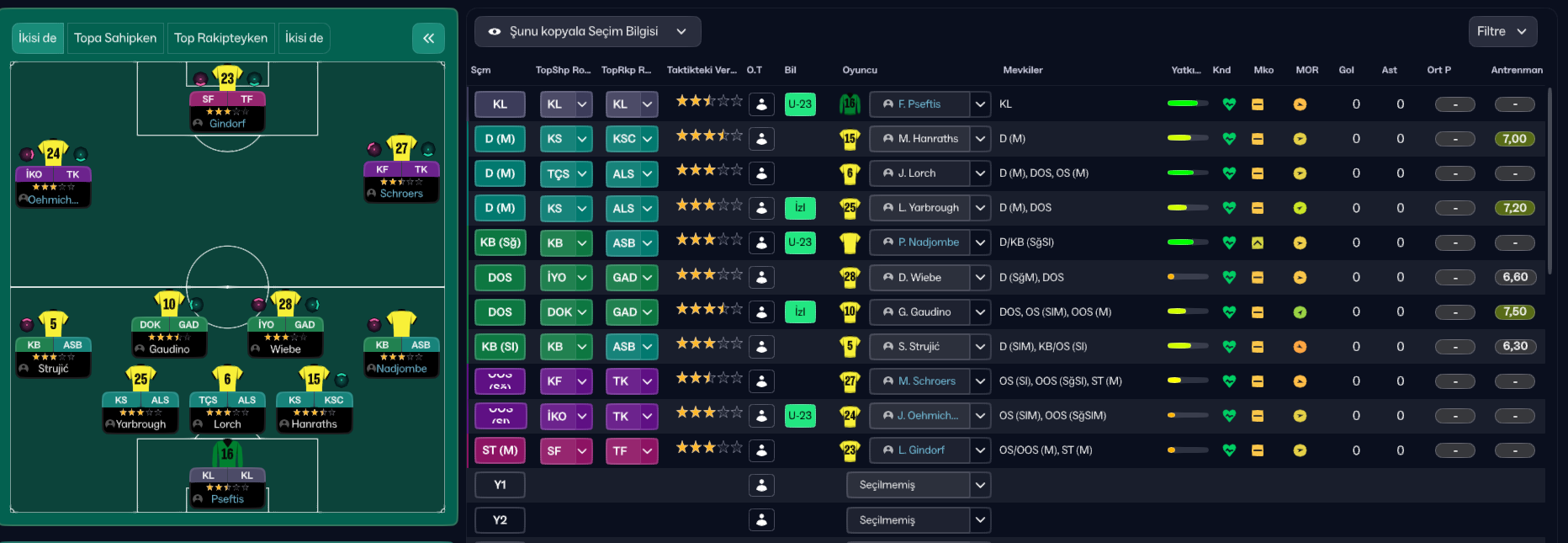
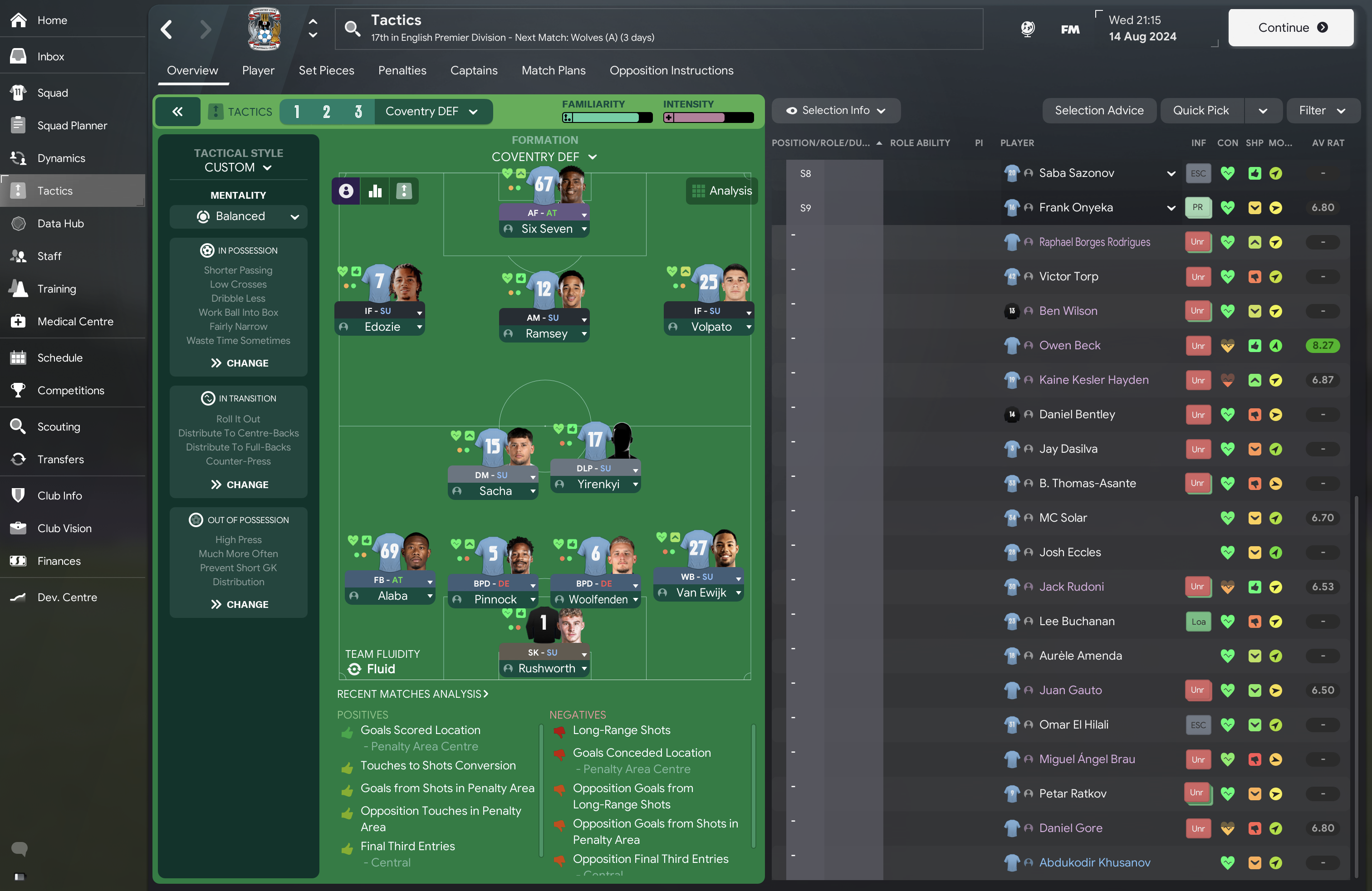
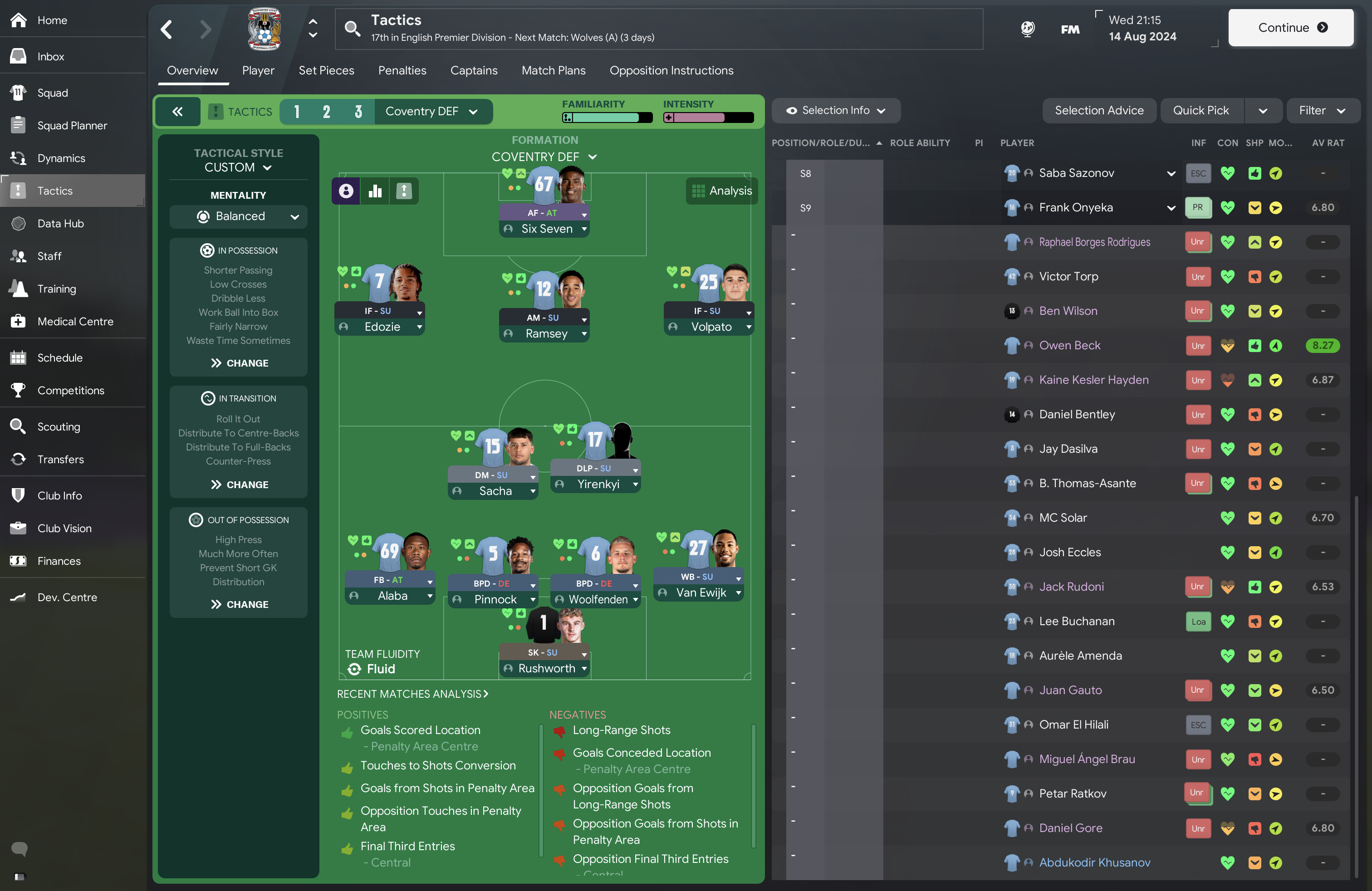
Guides for this formation
The tactical theory behind the 4-2-3-1 Wide: roles, instructions, and the trade-offs that decide whether the system holds up.
Player pairings
Midfield Pairs in 4-2-3-1 and 4-4-2
Double pivots and flat pairs in 4-2-3-1 and 4-4-2: when each pairing works, when it collapses, and the AMC unicorn that rescues both.
Read guide
Playing styles
Gegenpressing: A Full Guide
Klopp-style gegenpressing in FM, including squad profile, line-and-press pairing, sustainable workload, and the antipatterns to avoid.
Read guide