Uploaded Tactic
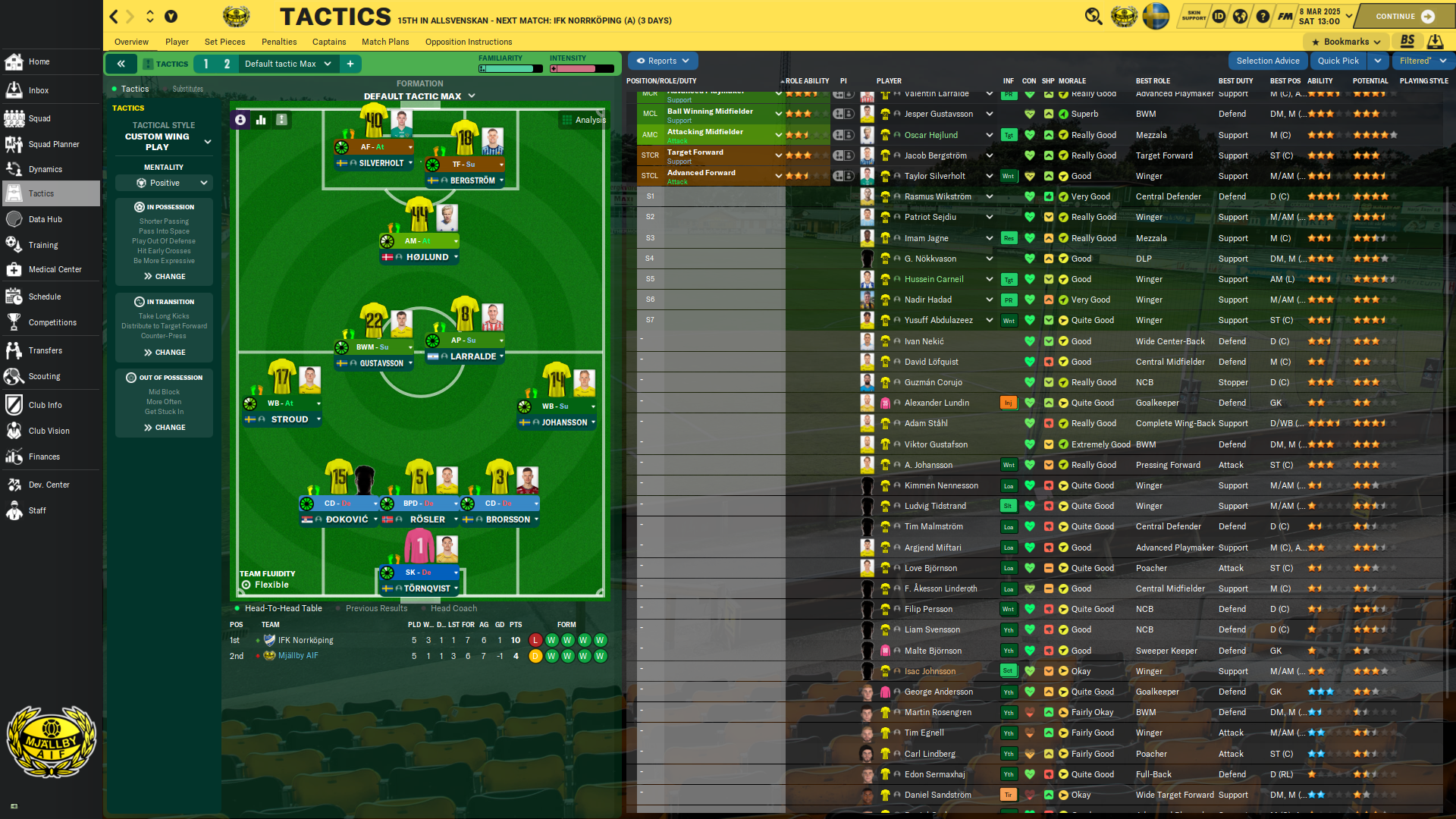
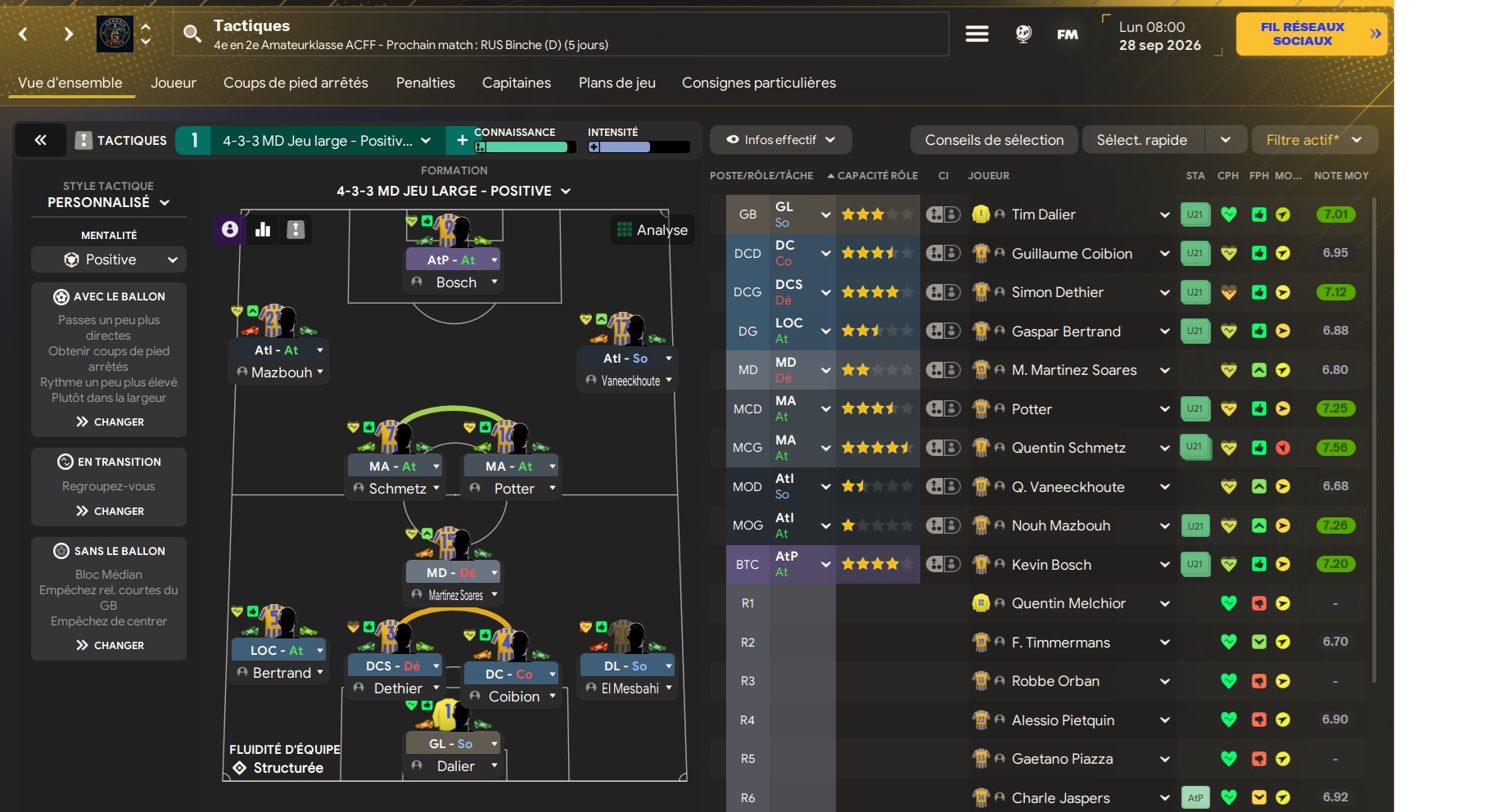
Formation & Style
Tactical Style:Positive
Mentality:Positive
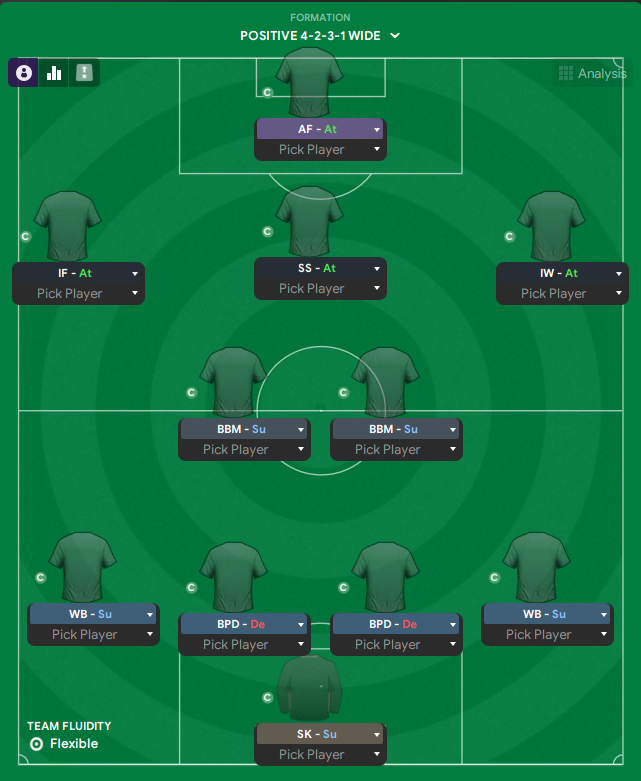
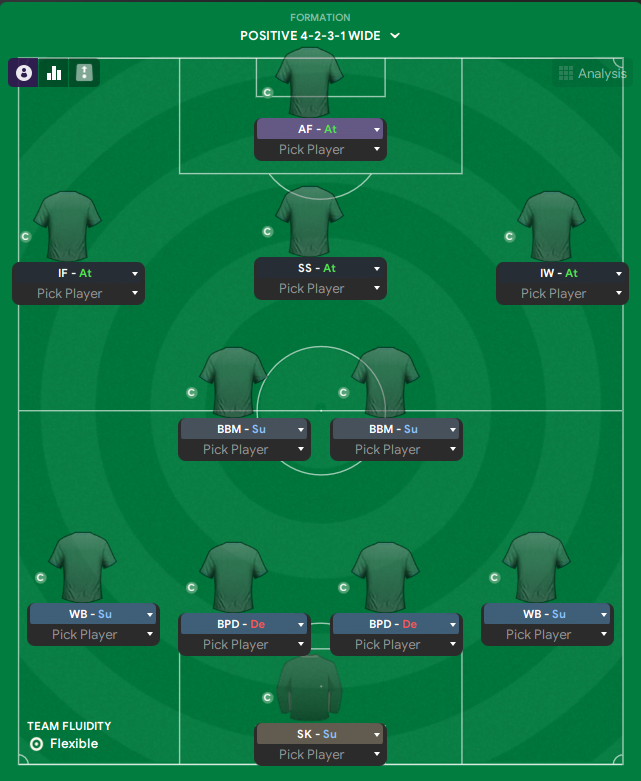
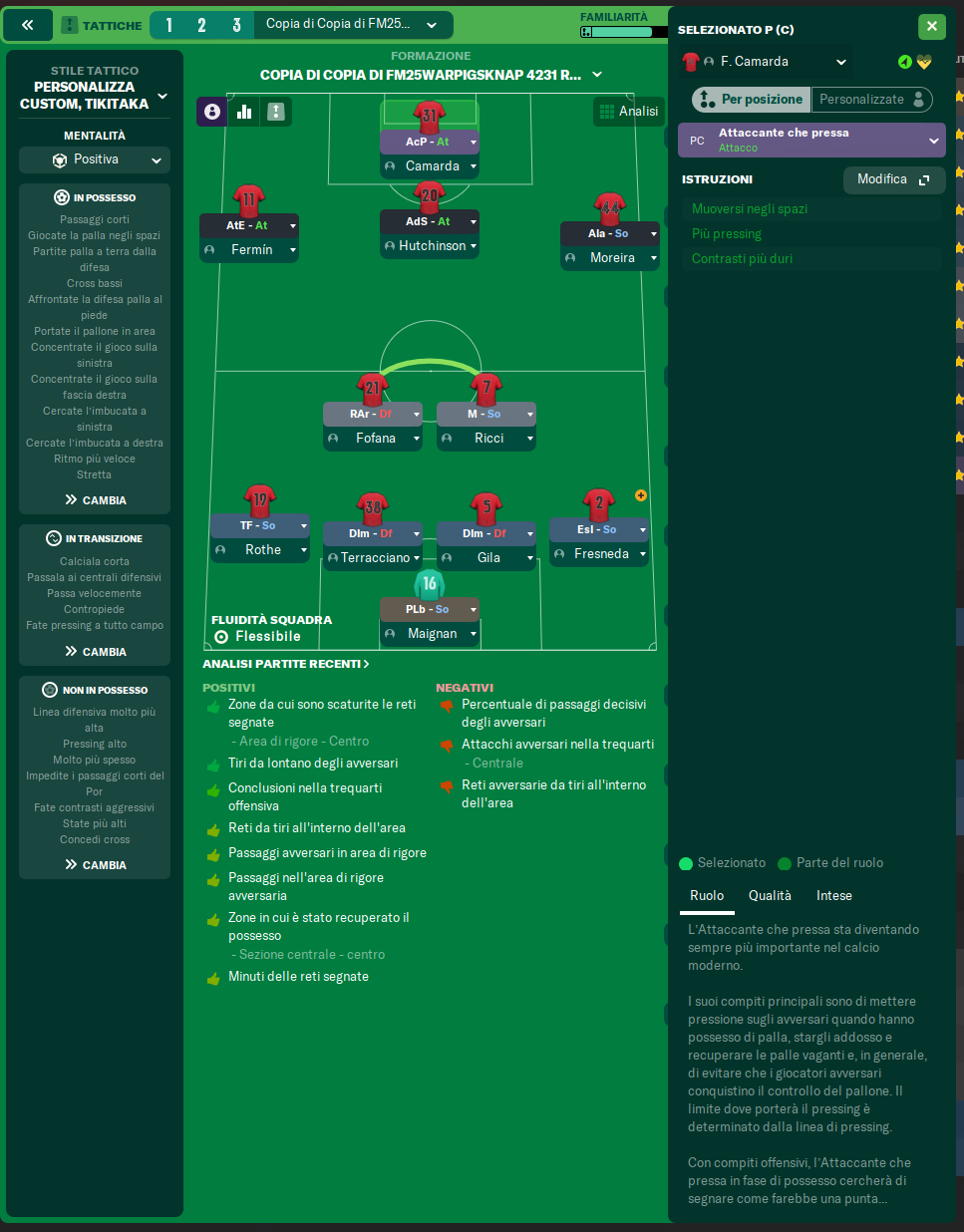
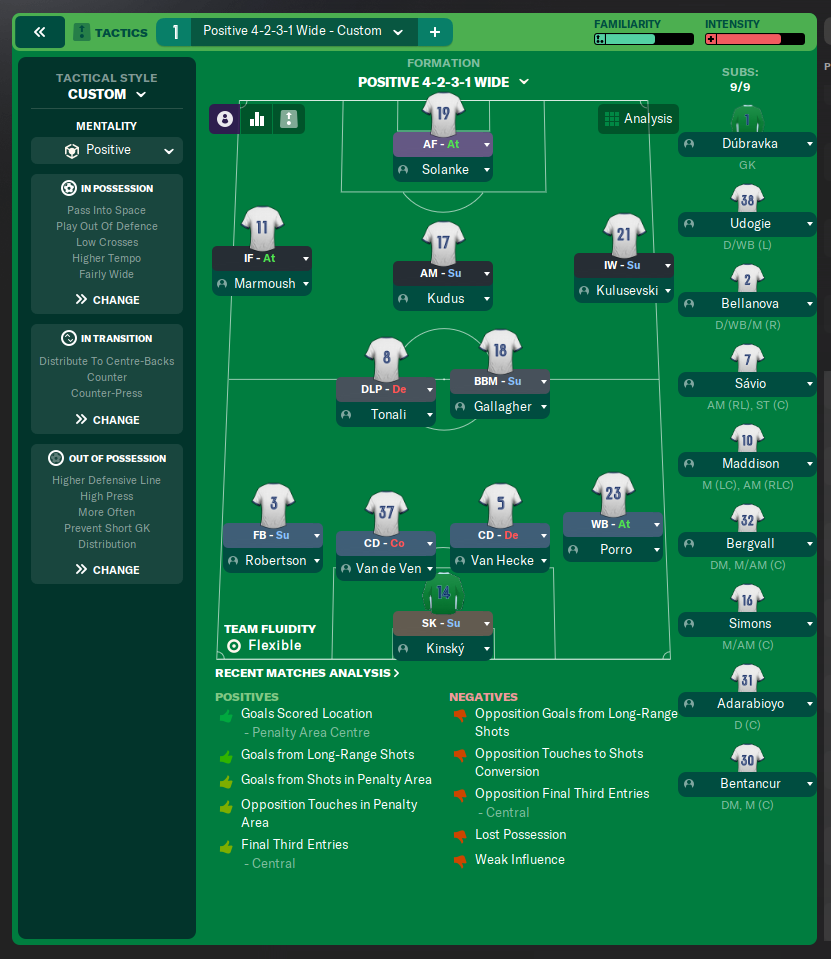
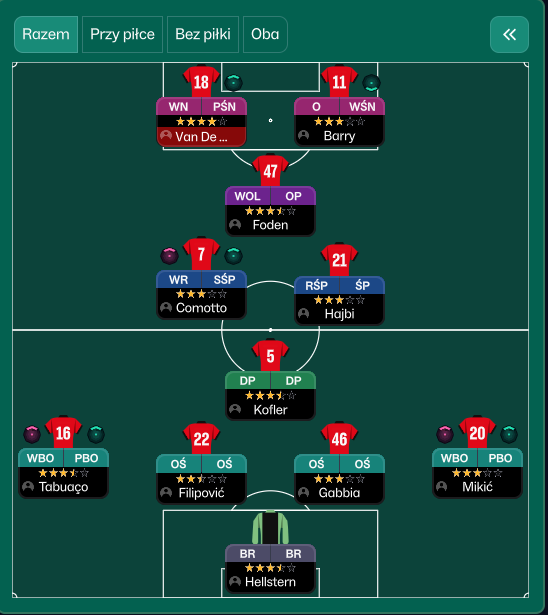
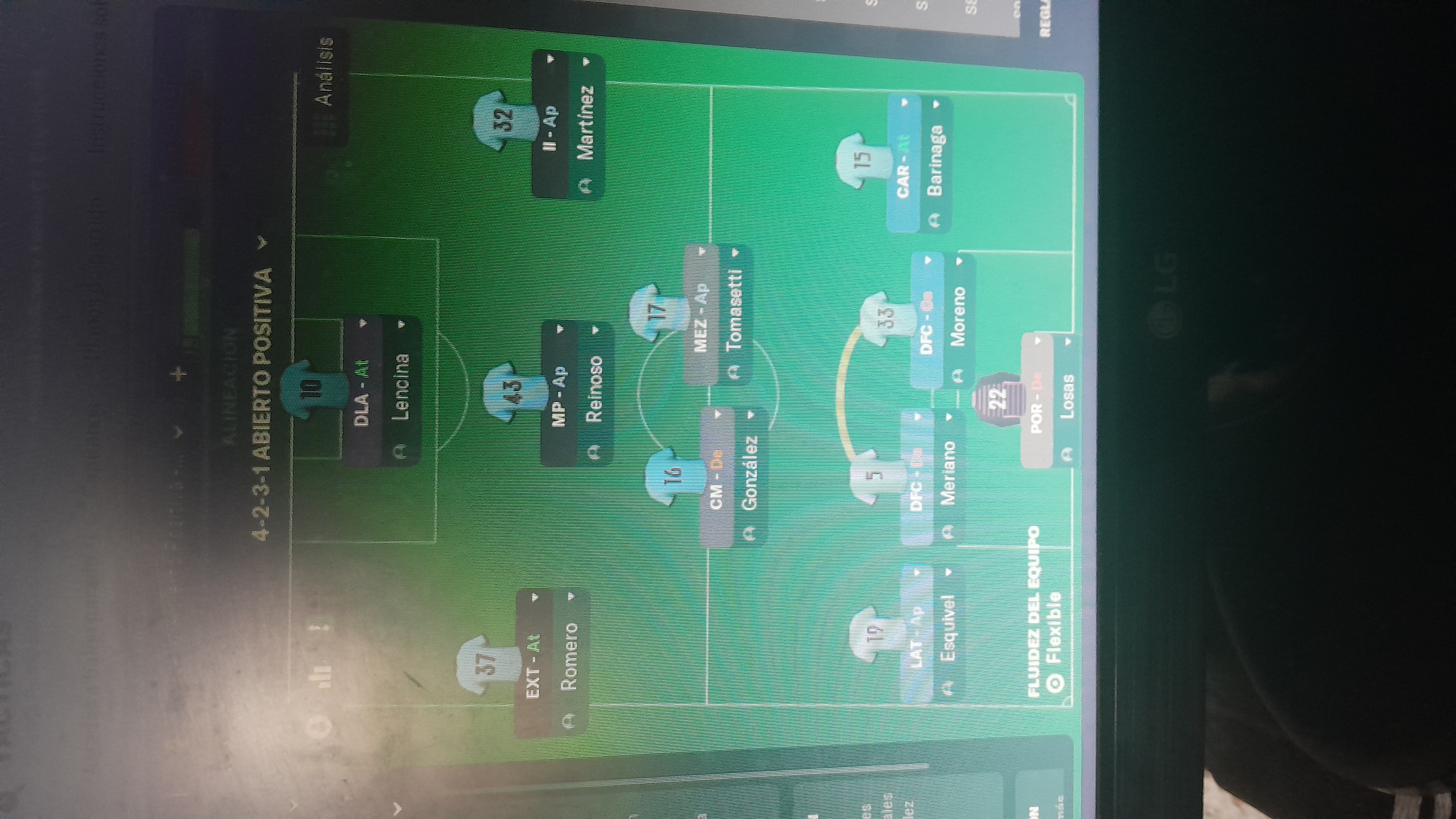
Formation:4-2-3-1 Wide
Team Fluidity:Flexible
In Possession
Shorter Passing
Focus Play Down The Left
Use Width
Take Long Kicks
In Transition
Distribute To Target Forward
Counter-Press
Out of Possession
More Often Prevent Short GK Distribution
High Defensive Line
Team Shape Without Ball
Shape:4-2
Description:Defensive shape provides solidity while allowing wing-backs to contribute.
Evidence:No-Nonsense Centre-Back at [2,1], Ball-Playing Defender at [2,2]
Team Shape With Ball
Shape:4-3-3
Description:Fluid attack with both wide and central options creating scoring opportunities.
Evidence:Winger at [5,1], Attacking Midfielder at [5,3], Target Forward at [6,3]
Phase Description
Attacking Play
Utilizes width through wingers and wing-backs, aiming for quick transitions into the final third.
Defensive Transition
Focuses on quick recovery with a high press to win back possession swiftly.
Main Focus
Employing a balanced attack with emphasis on exploiting the left flank.
Key Strengths
Fluidity in Attack
Strong attacking options through wingers and attacking midfielders increase goal-scoring potential.
Midfield Control
The combination of Ball-Winning Midfielder and Mezzala offers both defensive stability and offensive support.
Defensive Solidity
The inclusion of a No-Nonsense Centre-Back and a Ball-Playing Defender provides both stability and build-up capabilities.
Conflicting Directions
Defensive Line Height
A high defensive line may expose the back four to pacey attackers during counters.
Target Forward Role
The reliance on a Target Forward may hinder fluidity if not adequately supported by midfielders.
Overlapping Wing-Backs
While wing-backs add width, they can leave gaps defensively if caught out of position.
Tactical Suggestions
Adjust Defensive Line
Consider dropping the defensive line to reduce vulnerability against swift counter-attacks.
Use of Playmakers
Integrate more roles like Deep-Lying Playmaker to enhance build-up from defence.
Balance Overlaps
Employ caution with overlapping runs from wing-backs to maintain defensive integrity.
Ask Questions About Your Lineup
Related Tactics
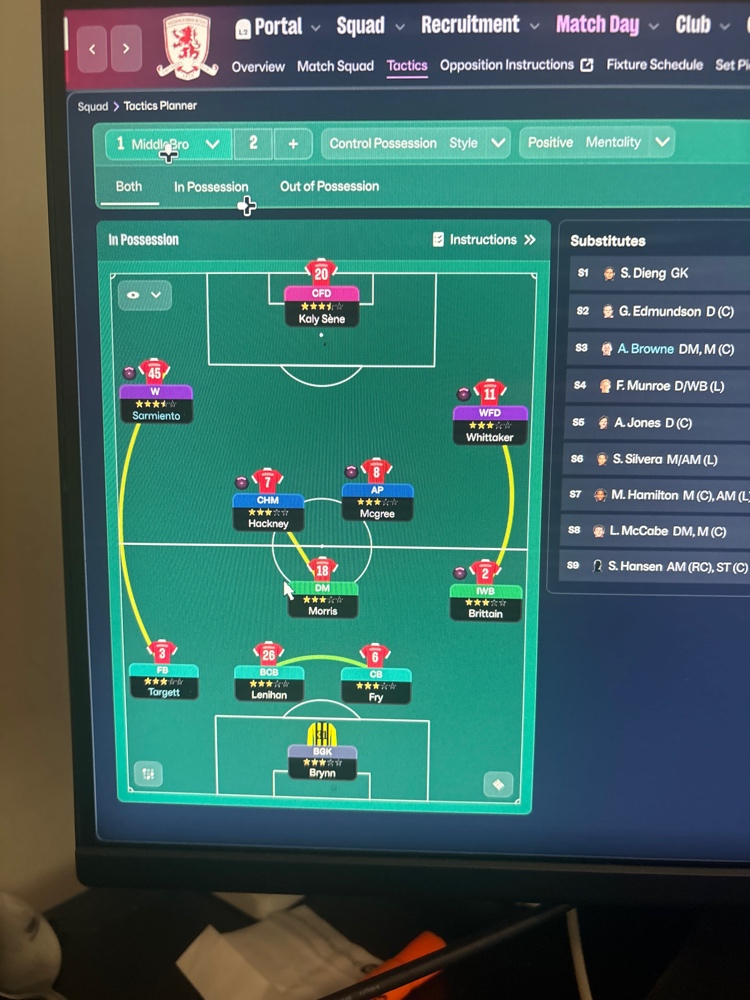
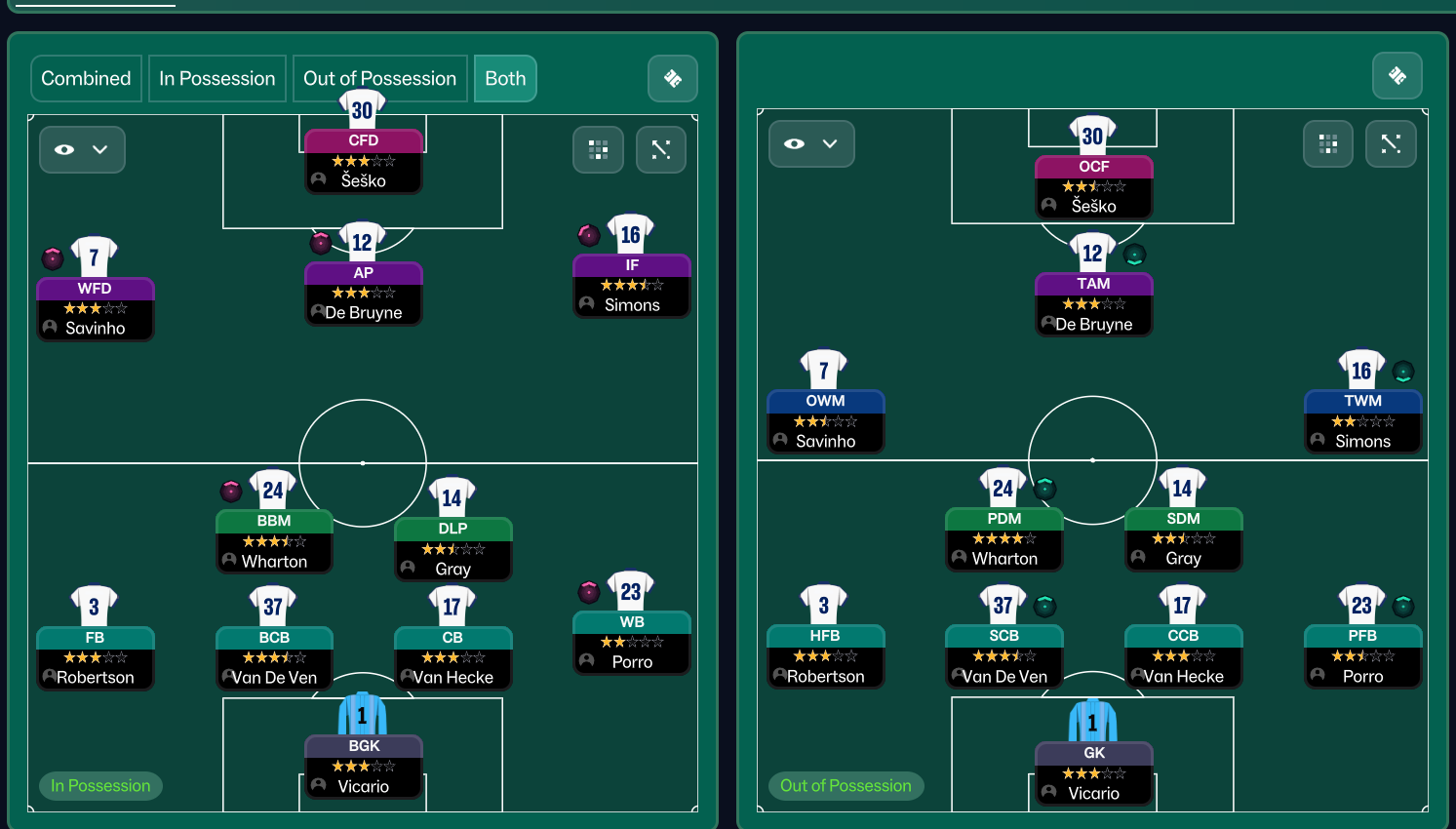
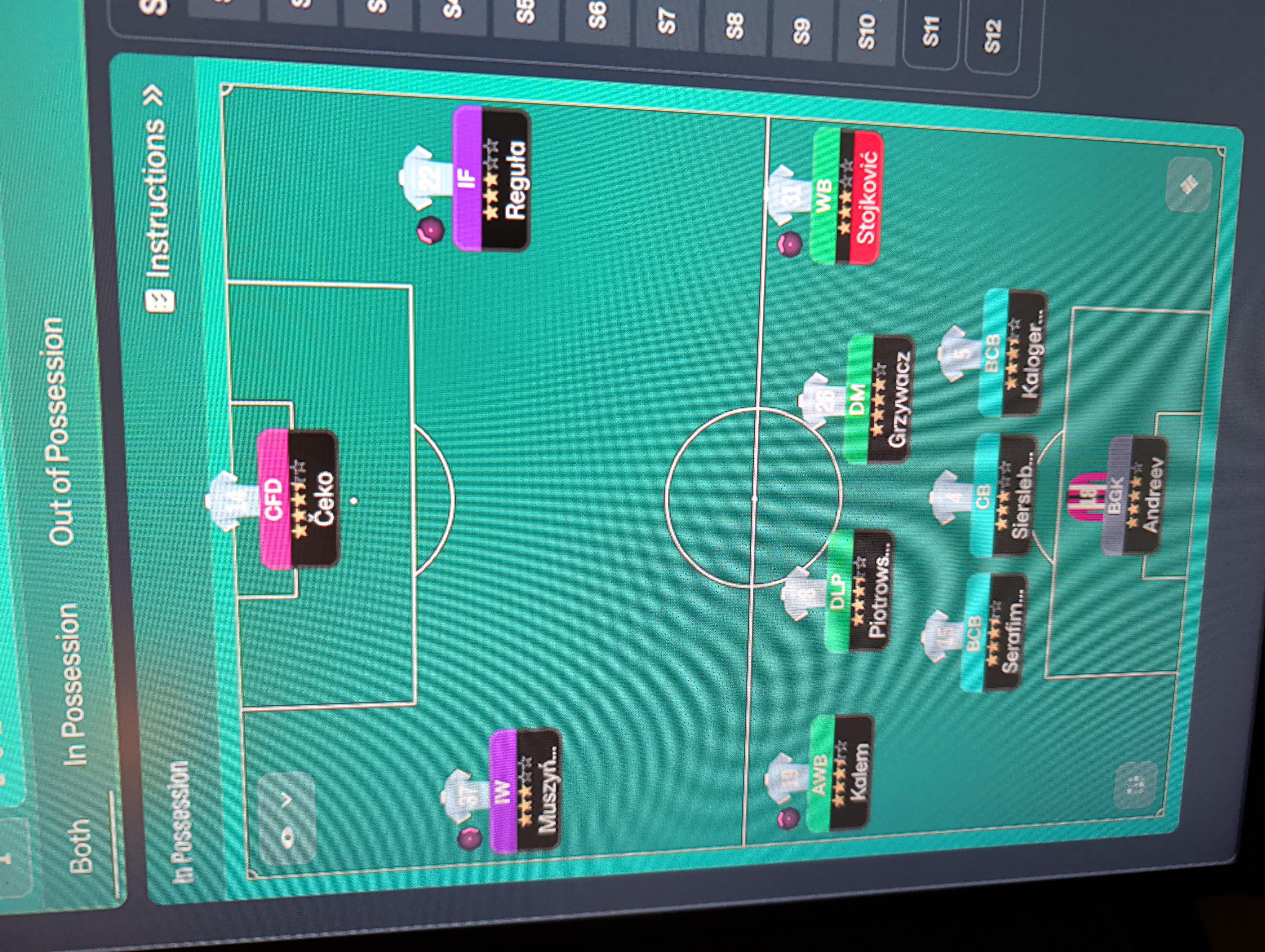
More Positive tactics
Guides for this formation
The tactical theory behind the 4-2-3-1 Wide: roles, instructions, and the trade-offs that decide whether the system holds up.
Player pairings
Midfield Pairs in 4-2-3-1 and 4-4-2
Double pivots and flat pairs in 4-2-3-1 and 4-4-2: when each pairing works, when it collapses, and the AMC unicorn that rescues both.
Read guide
Playing styles
Gegenpressing: A Full Guide
Klopp-style gegenpressing in FM, including squad profile, line-and-press pairing, sustainable workload, and the antipatterns to avoid.
Read guide