Uploaded Tactic
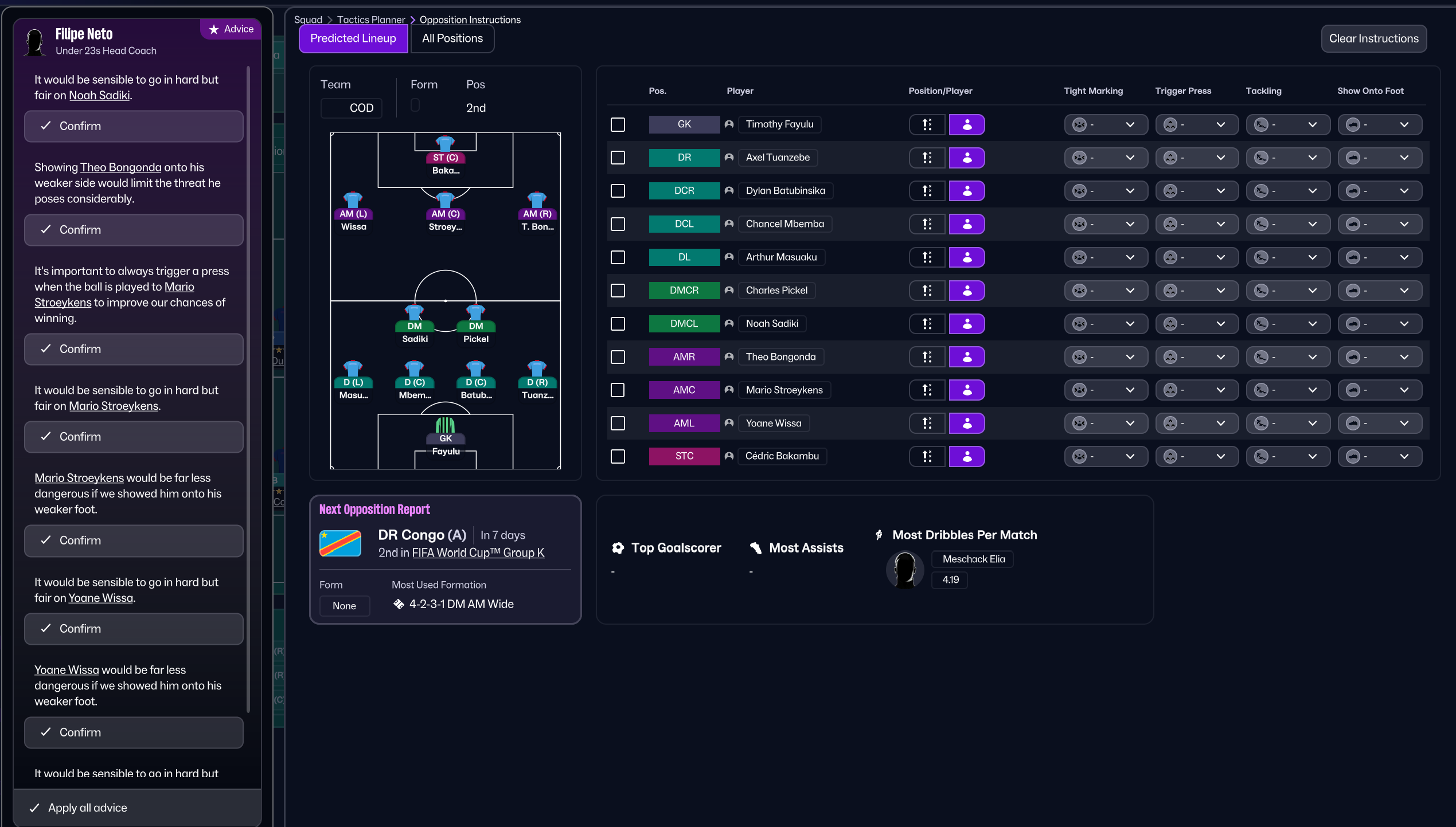
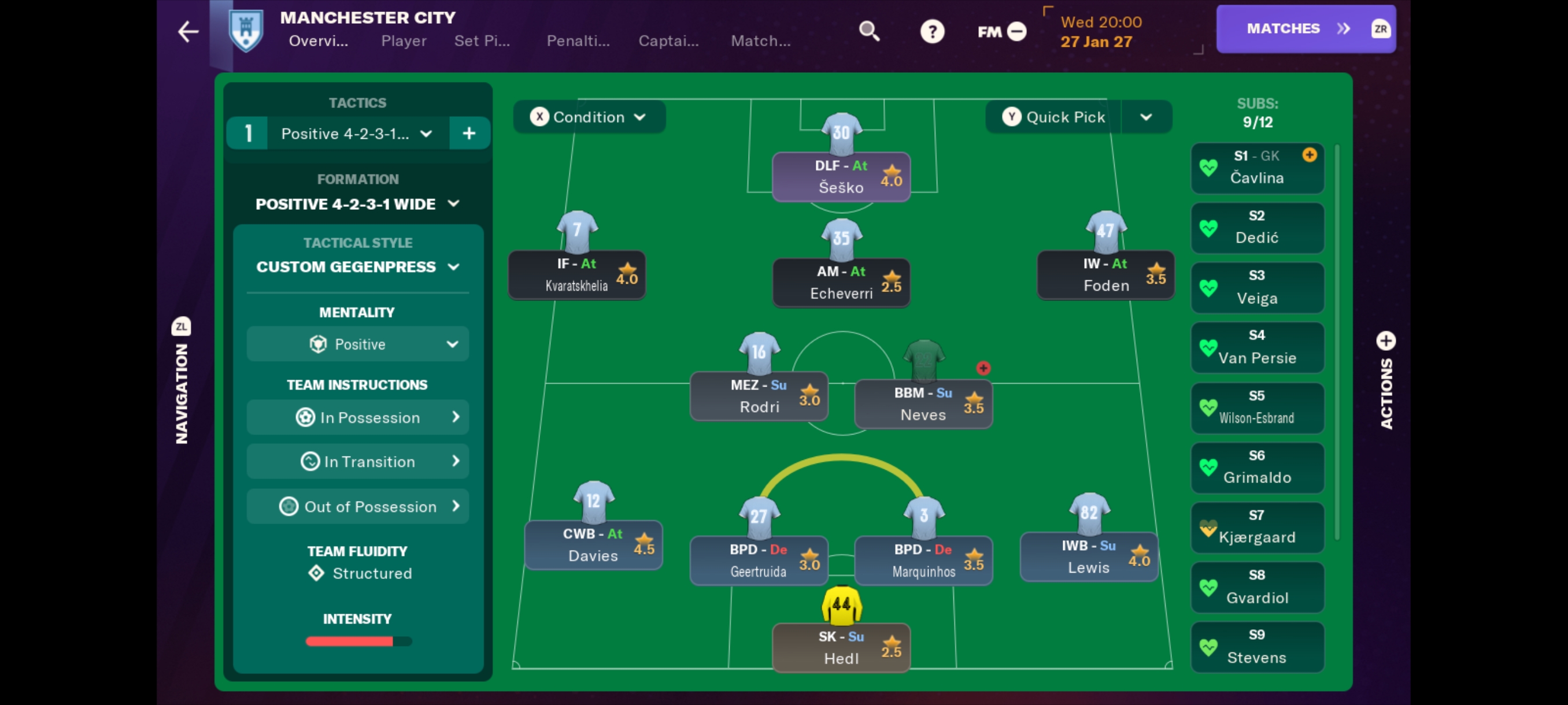
Formation & Style
Tactical Style:Balanced
Mentality:Positive
Formation:4-2-3-1 Wide
Team Fluidity:Structured
In Possession
Play out of Defence
Be more expressive
In Transition
Counter
Counter-Press
Out of Possession
Higher Line of Engagement
Trigger Press More Often
Team Shape Without Ball
Shape:Compact
Description:The team adopts a compact shape that seeks to limit space for the opposition.
Evidence:The use of a Ball-Winning Midfielder at DMCR and two solid centre-backs.
Team Shape With Ball
Shape:Fluid Width
Description:Utilizing the width provided by the inside forwards and full-backs for attacking play.
Evidence:The presence of two Inside Forwards and overlapping Full-Backs helps stretch the opposition.
Phase Description
Attacking Play
Focus on quick transitions and utilizing width through inside forwards.
Defensive Transition
Immediate pressing to regain possession after losing the ball.
Main Focus
Create scoring opportunities through overlapping full-backs and dribbling from the inside forwards.
Key Strengths
Midfield Control
The combination of a Deep-Lying Playmaker and a Ball-Winning Midfielder in central areas provides both creativity and defensive cover.
Width in Attack
Employing Inside Forwards allows for a multi-directional attacking threat while maintaining width.
Defensive Solidity
A compact defensive unit that can limit the effective space for the opposition.
Conflicting Directions
Offensive Vulnerability with Inside Forwards
While Inside Forwards provide attack, they may neglect defensive duties, leaving the full-backs exposed.
DMCR's Role Limitations
A Ball-Winning Midfielder's focus on retrieval might limit progressive passing options.
Reliance on Full-Backs
Dependence on full-backs for width could create issues if they are caught out of position.
Tactical Suggestions
Enhance Full-Back Support
Encouraging overlapping runs from full-backs can create overloads on the flanks.
Consider a Fluid Formation
Switching to a more fluid formation such as 4-2-2-2 could provide additional attacking support.
Utilize Counter-Attacking Opportunities
Leverage the speed of inside forwards for counters, ensuring the midfield quickly transitions possession.
Ask Questions About Your Lineup
Related Tactics

Guides for this formation
The tactical theory behind the 4-2-3-1 Wide: roles, instructions, and the trade-offs that decide whether the system holds up.
Player pairings
Midfield Pairs in 4-2-3-1 and 4-4-2
Double pivots and flat pairs in 4-2-3-1 and 4-4-2: when each pairing works, when it collapses, and the AMC unicorn that rescues both.
Read guide
Playing styles
Gegenpressing: A Full Guide
Klopp-style gegenpressing in FM, including squad profile, line-and-press pairing, sustainable workload, and the antipatterns to avoid.
Read guide