Uploaded Tactic
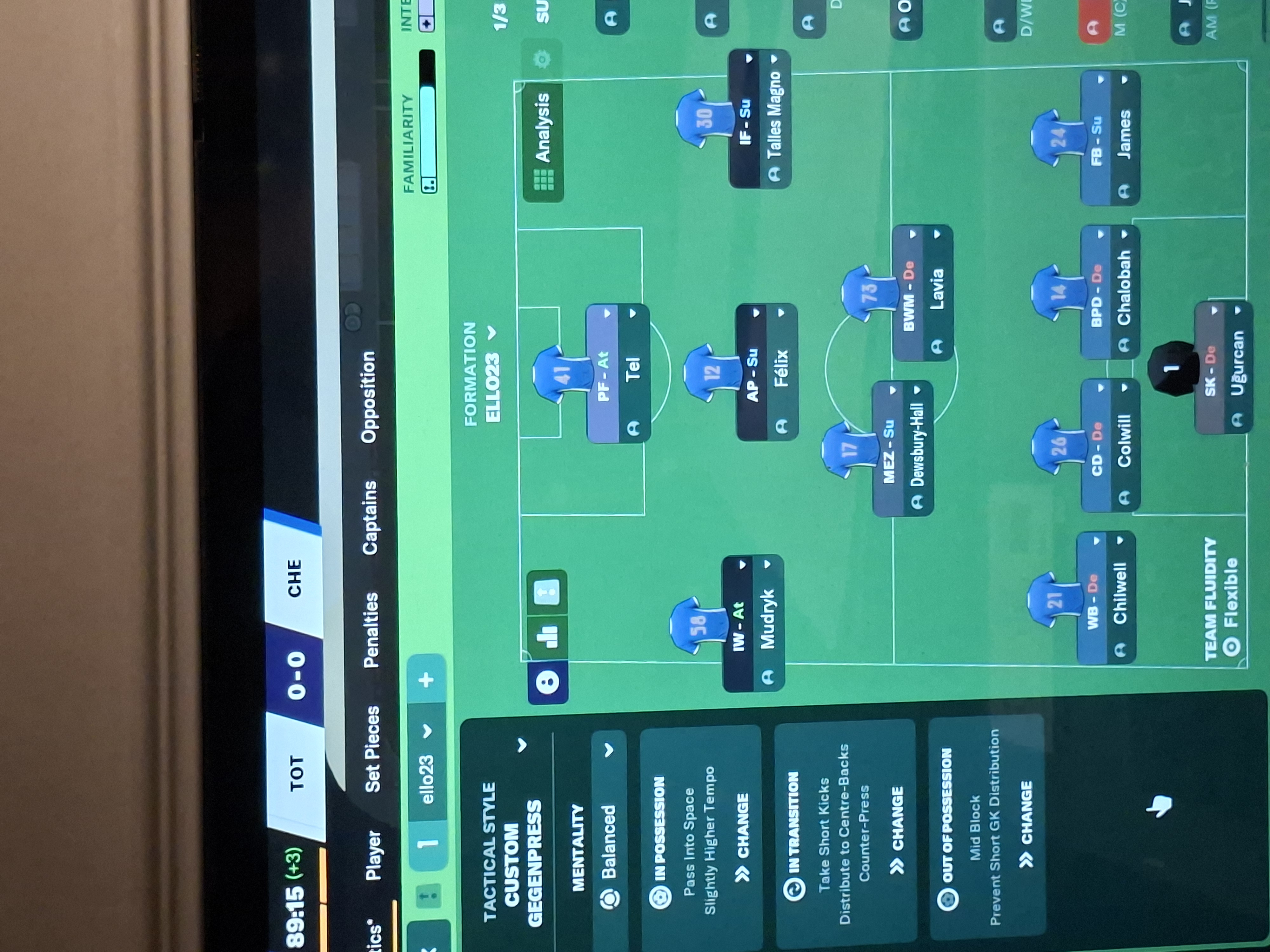
Formation & Style
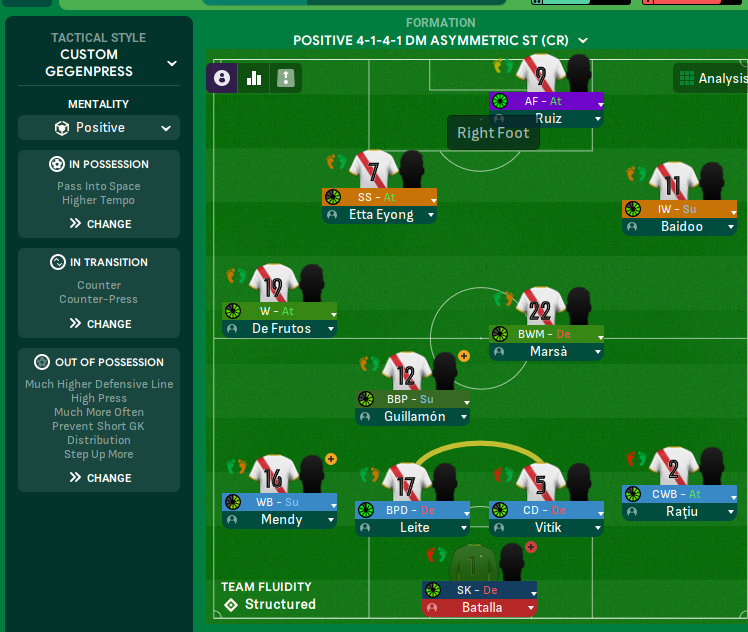
Tactical Style:Custom Gegenpress
Mentality:Balanced
Formation:4-2-3-1 Wide
Team Fluidity:Flexible
In Possession
Pass Into Space
Slightly Higher Tempo
In Transition
Take Short Kicks
Distribute to Centre-Backs
Counter-Press
Out of Possession
Mid Block
Prevent Short GK Distribution
Team Shape Without Ball
Shape:Mid Block
Description:The shape balances out the team's defensive posture, allowing for compactness while pressing effectively.
Evidence:Mid Block with shape observed in teams with players like BWM-D at [4,3] and DLP-S at [3,3].
Team Shape With Ball
Shape:Fluid
Description:Encourages fluid movement across attacking positions with players frequently interchanging roles.
Evidence:Fluidity supported by PF-A at [6,3] and IF-A at [6,4] along with support from AP-S at [5,3].
Phase Description
Attacking Play
Utilizes quick transitions with a focus on exploiting spaces behind the opposition.
Defensive Transition
Emphasizes a counter-pressing strategy to win the ball back quickly.
Main Focus
Breaking down opposing defenses through intricate passing and movement.
Key Strengths
Counter-Press Strategy
The team excels in winning the ball immediately after losing it, applying pressure effectively.
Dynamic Midfield Setup
Flexibility with roles allows for both defensive stability and creative play.
Wide Play Exploitation
Utilizing width through wing play with the presence of attacking wing-backs.
Conflicting Directions
Fluid vs Rigid Attack
The uniform tasks of forwards may lead to overcrowding in central areas.
High Defensive Line with Mid Block
A high line may conflict with a mid block strategy, creating gaps.
Inconsistent Width
Inconsistencies in wing pressure can leave full-backs exposed.
Tactical Suggestions
Increase Width in Attack
Adopting a wider formation could stretch defenses better.
Adjust Pressing Intensity
Tuning the pressing from moderate to aggressive may recover the ball faster.
Enhance Midfield Density
Adding another midfield player can strengthen control and stability.
Ask Questions About Your Lineup
Related Tactics
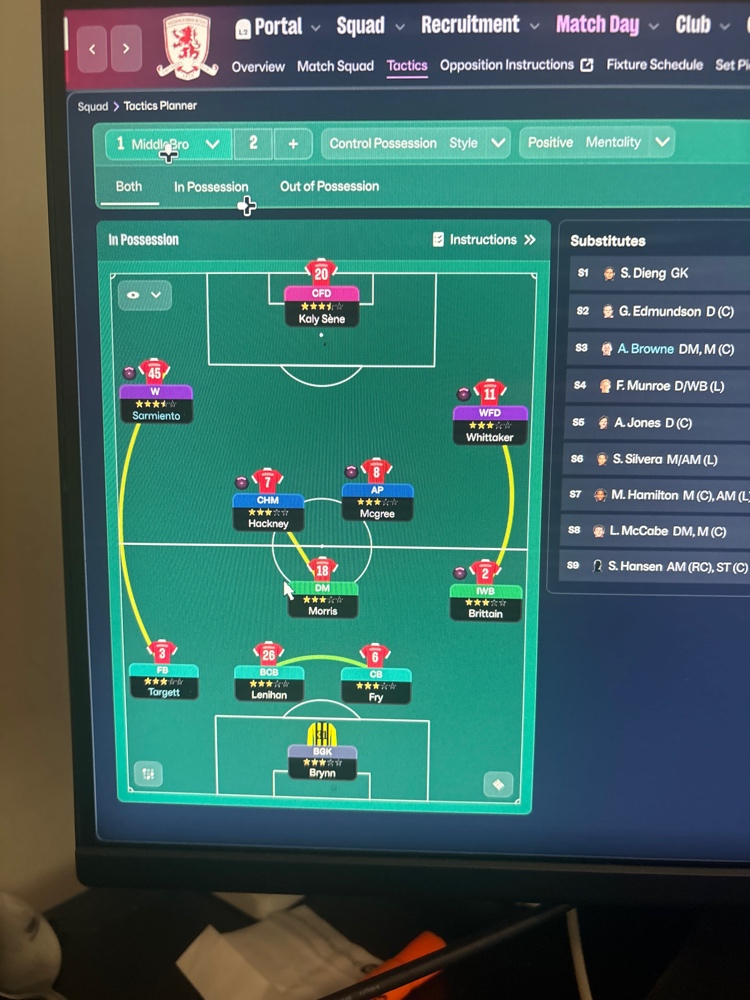
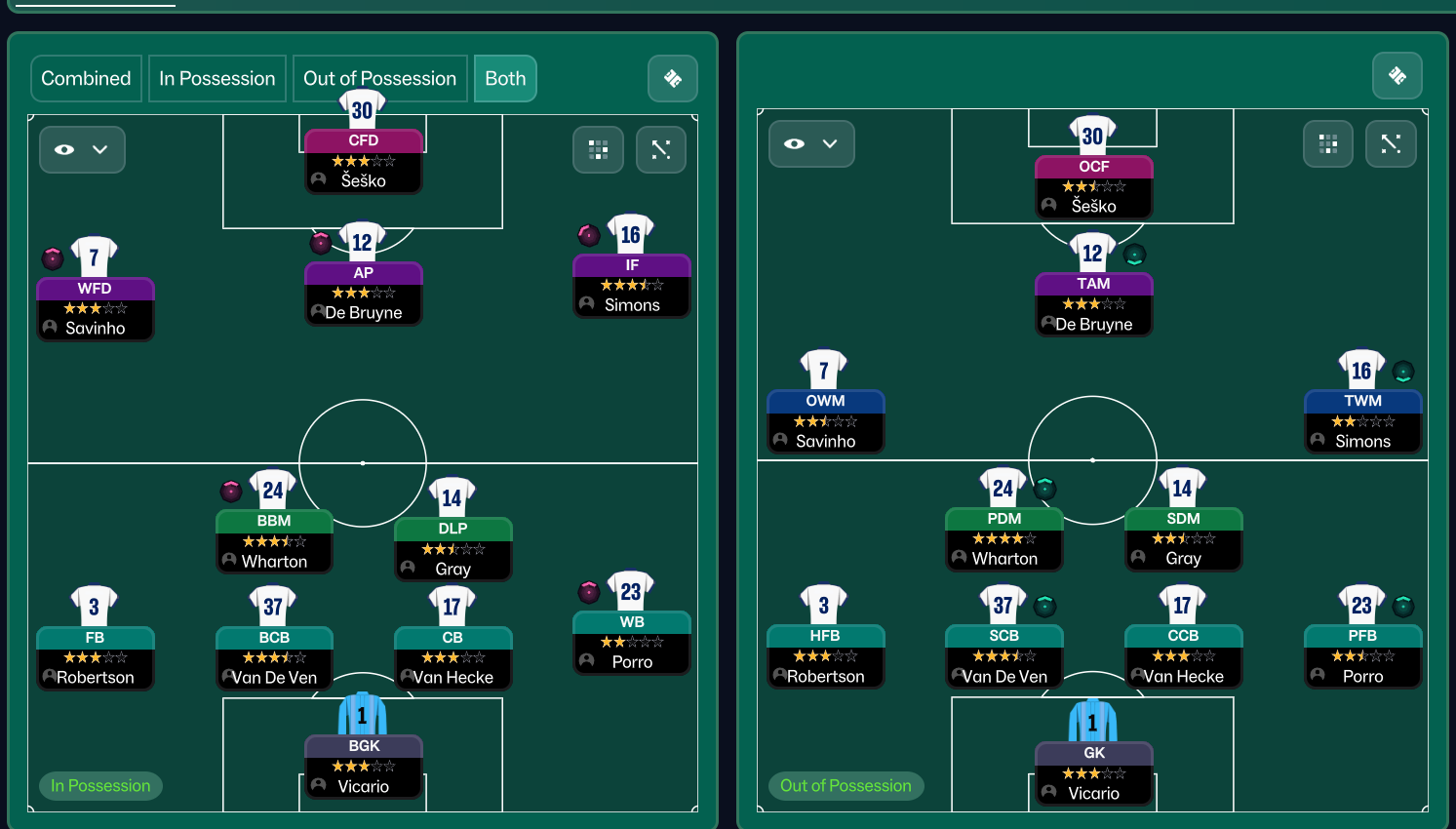
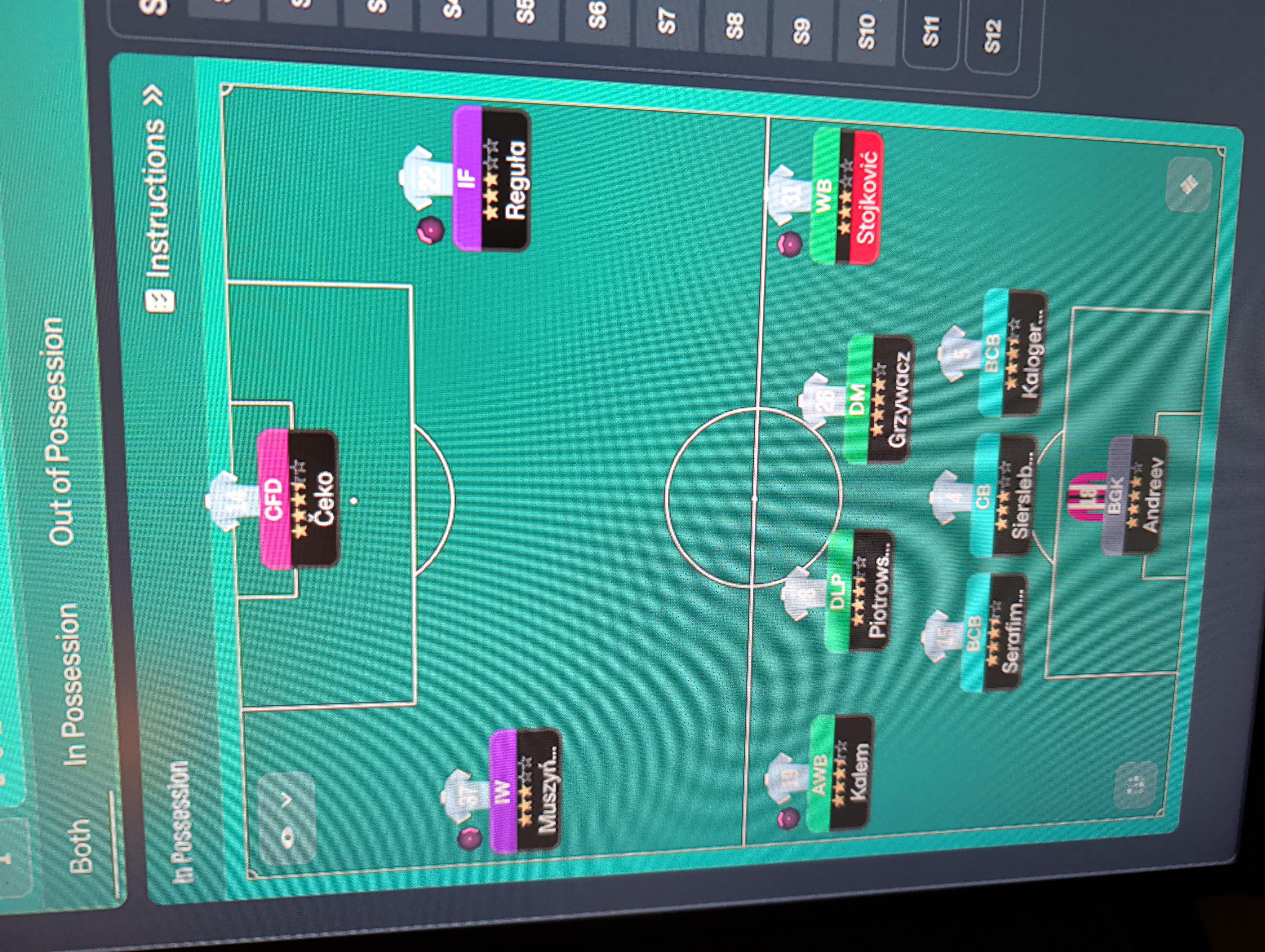
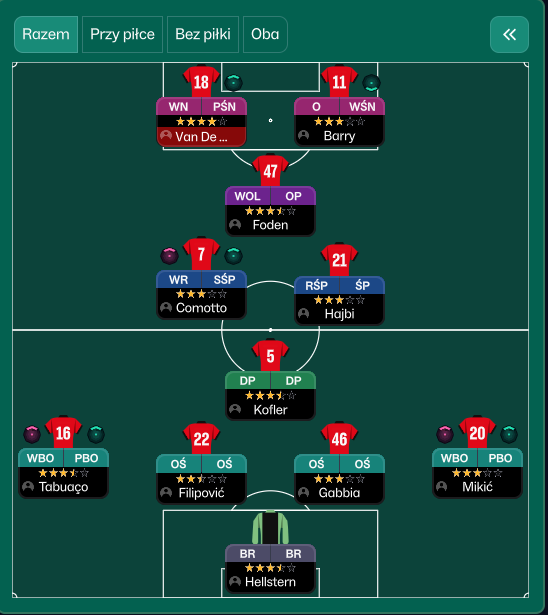
More Custom Gegenpress tactics
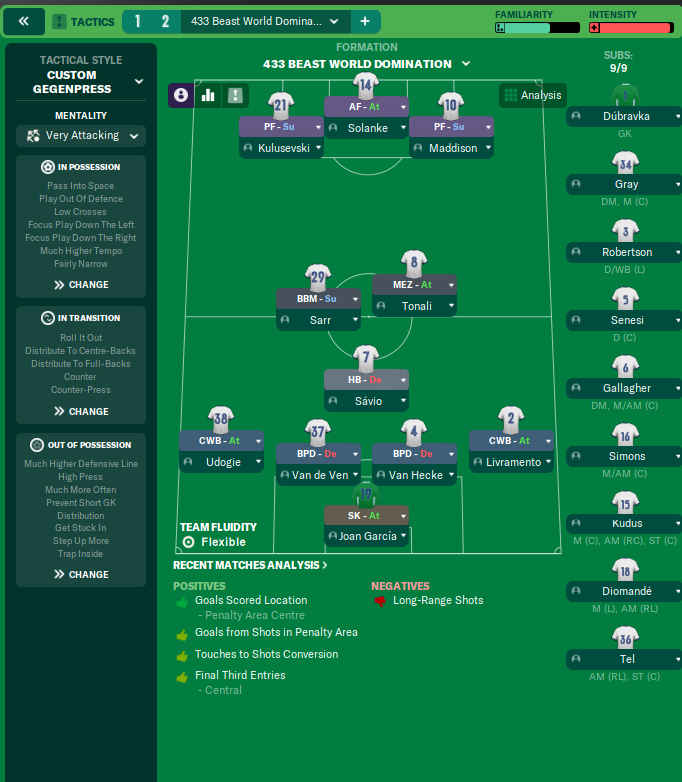
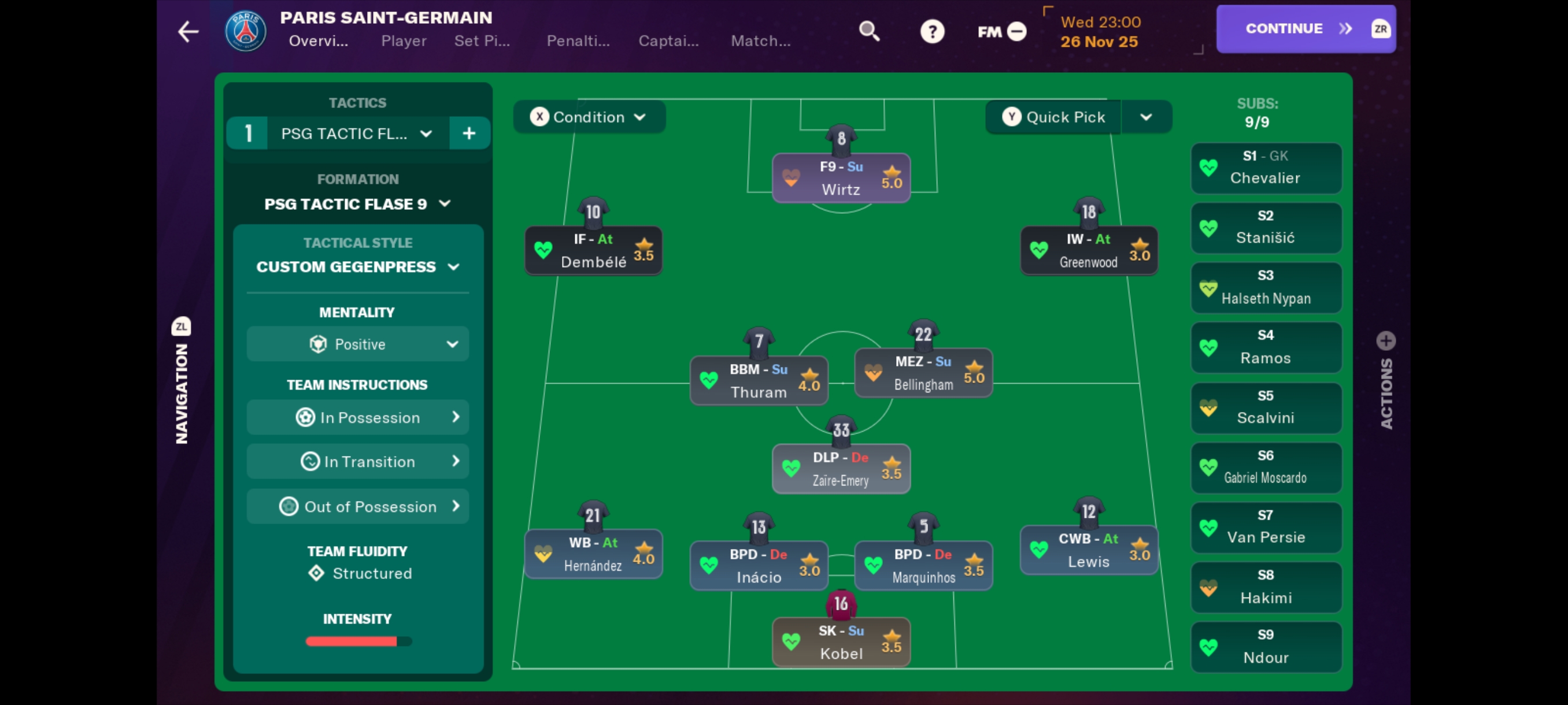
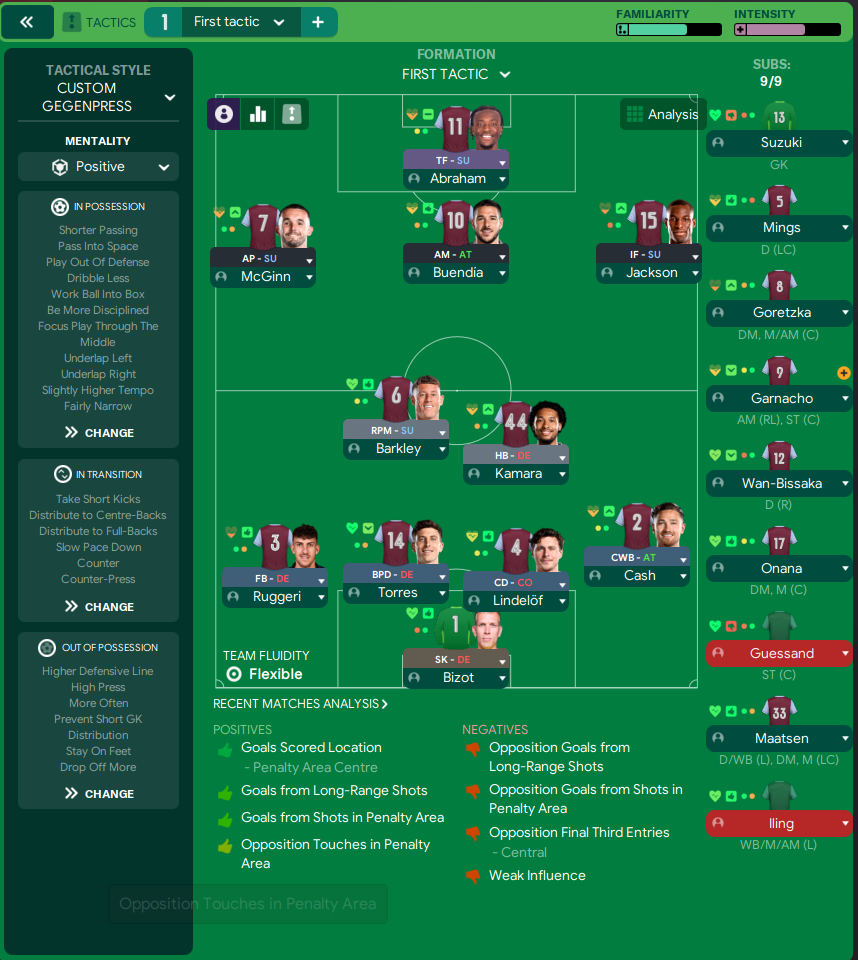
Guides for this formation
The tactical theory behind the 4-2-3-1 Wide: roles, instructions, and the trade-offs that decide whether the system holds up.
Player pairings
Midfield Pairs in 4-2-3-1 and 4-4-2
Double pivots and flat pairs in 4-2-3-1 and 4-4-2: when each pairing works, when it collapses, and the AMC unicorn that rescues both.
Read guide
Playing styles
Gegenpressing: A Full Guide
Klopp-style gegenpressing in FM, including squad profile, line-and-press pairing, sustainable workload, and the antipatterns to avoid.
Read guide