Uploaded Tactic
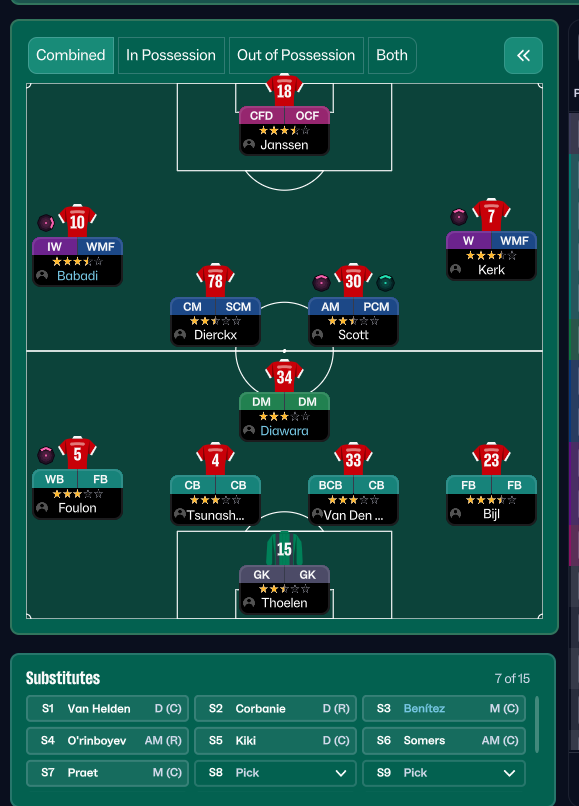
Formation & Style
Tactical Style:Balanced
Mentality:Positive
Formation:4-2-3-1 Wide
Team Fluidity:Structured
In Possession
Play out of defence
Spread out
Pass into space
In Transition
Counter
Counter-Press
Out of Possession
Higher defensive line
More urgent pressing
Team Shape Without Ball
Shape:Compact
Description:The team remains narrow, making it difficult for opponents to penetrate centrally while using width effectively.
Evidence:DMs at [3,3] and [3,4] provide cover for the centre-back pairing, while full-backs tuck in when needed.
Team Shape With Ball
Shape:Fluid
Description:A shape that utilizes wingers and central playmakers to create space for attackers.
Evidence:Wide midfielders at [6,1] and [6,5] stretch the play, allowing space for the central midfielder and forward.
Phase Description
Attacking Play
The team utilizes width through WM and overlapping full-backs, aiming to exploit space behind defenders.
Defensive Transition
Quick transitions with a focus on regaining possession immediately after losing the ball.
Main Focus
Creating goal-scoring opportunities through passing combinations in the final third.
Key Strengths
Utilization of Width
Wingers provide width, stretching opponent's defenses and creating opportunities.
Defensive Stability
Double pivot acts as a barrier for opponents, offering defensive cover and ball recovery.
Dynamic Attacking Play
Chances are created effectively through a varied attacking approach.
Conflicting Directions
Defensive Vulnerability on Flanks
With attacking full-backs, there’s a risk of exposure to counter-attacks.
Reliance on Wingers
Heavy dependency on wide players can lead to predictability in attacking plays.
Midfield Overload
Two central midfielders may lead to congestion against teams with three in midfield.
Tactical Suggestions
Increase Pressing Intensity
Adopting a higher pressing strategy can help regain possession more effectively.
Utilize Inverted Wingers
Inverted wingers could exploit spaces created by the full-backs advancing.
Flexibility in Formation
Adapting formation based on opponent can improve adaptability.
Ask Questions About Your Lineup
Related Tactics
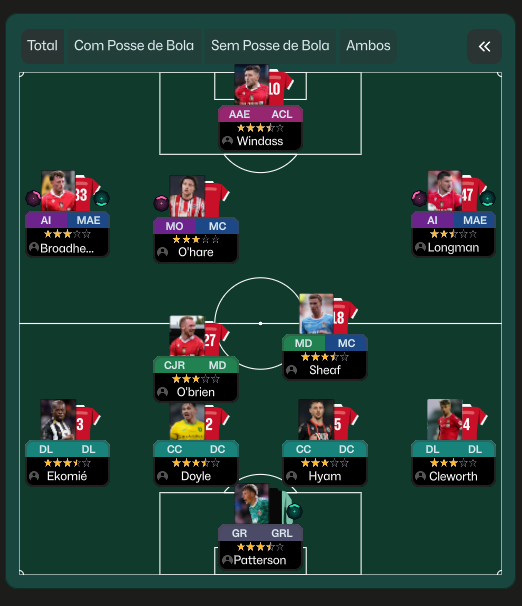
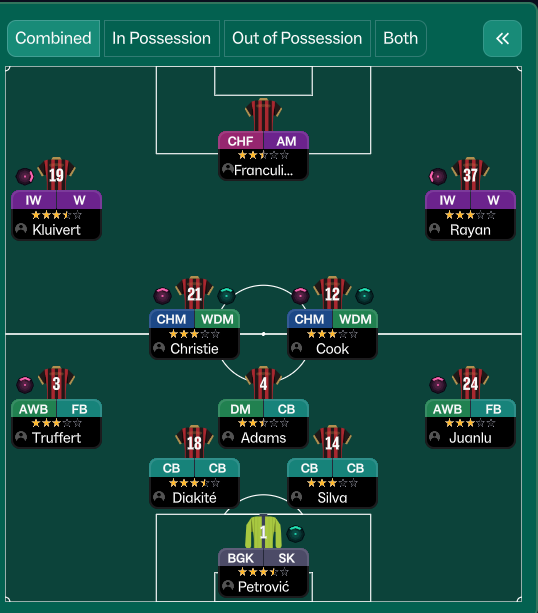
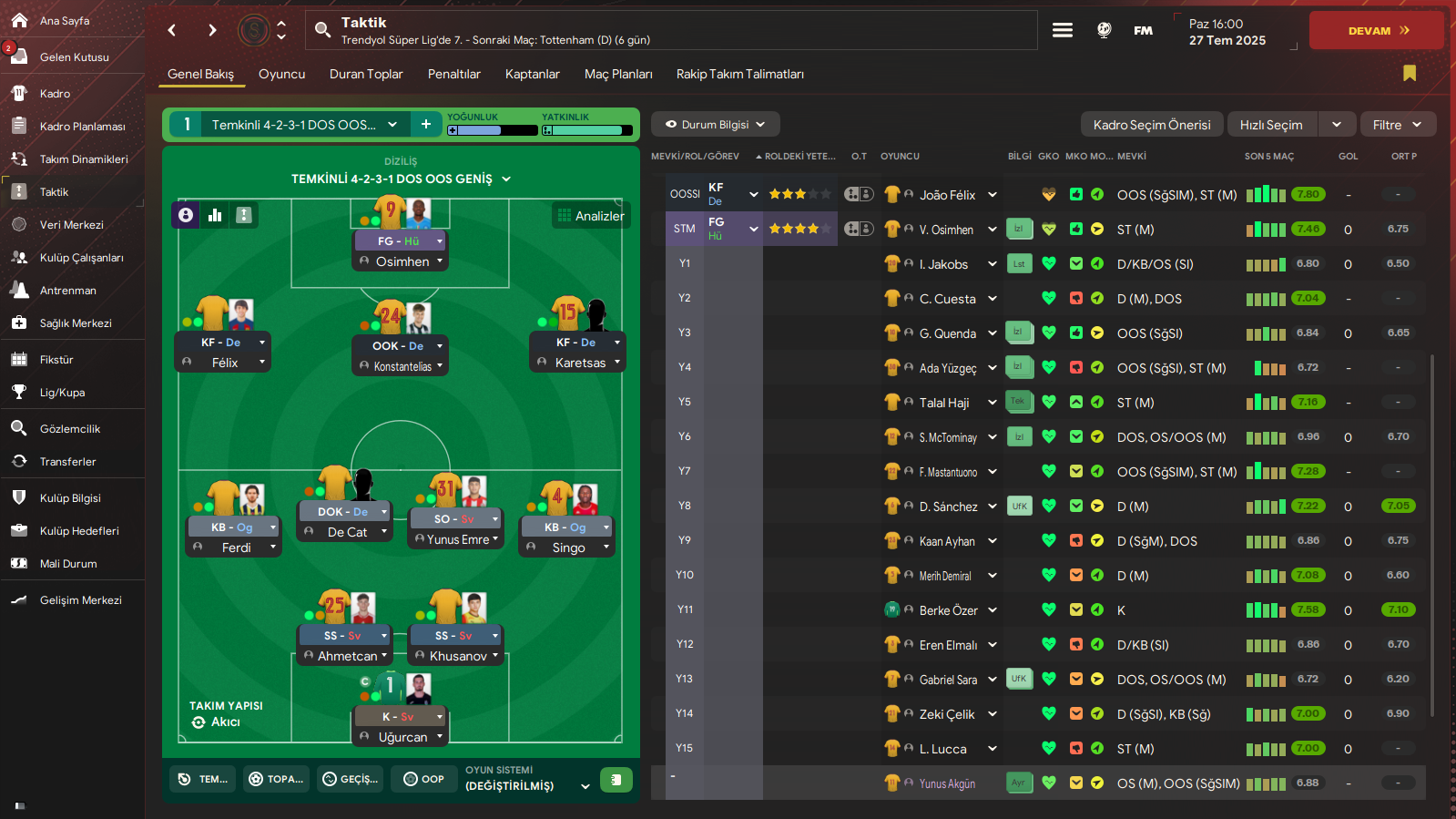

Guides for this formation
The tactical theory behind the 4-2-3-1 Wide: roles, instructions, and the trade-offs that decide whether the system holds up.
Player pairings
Midfield Pairs in 4-2-3-1 and 4-4-2
Double pivots and flat pairs in 4-2-3-1 and 4-4-2: when each pairing works, when it collapses, and the AMC unicorn that rescues both.
Read guide
Playing styles
Gegenpressing: A Full Guide
Klopp-style gegenpressing in FM, including squad profile, line-and-press pairing, sustainable workload, and the antipatterns to avoid.
Read guide