Uploaded Tactic
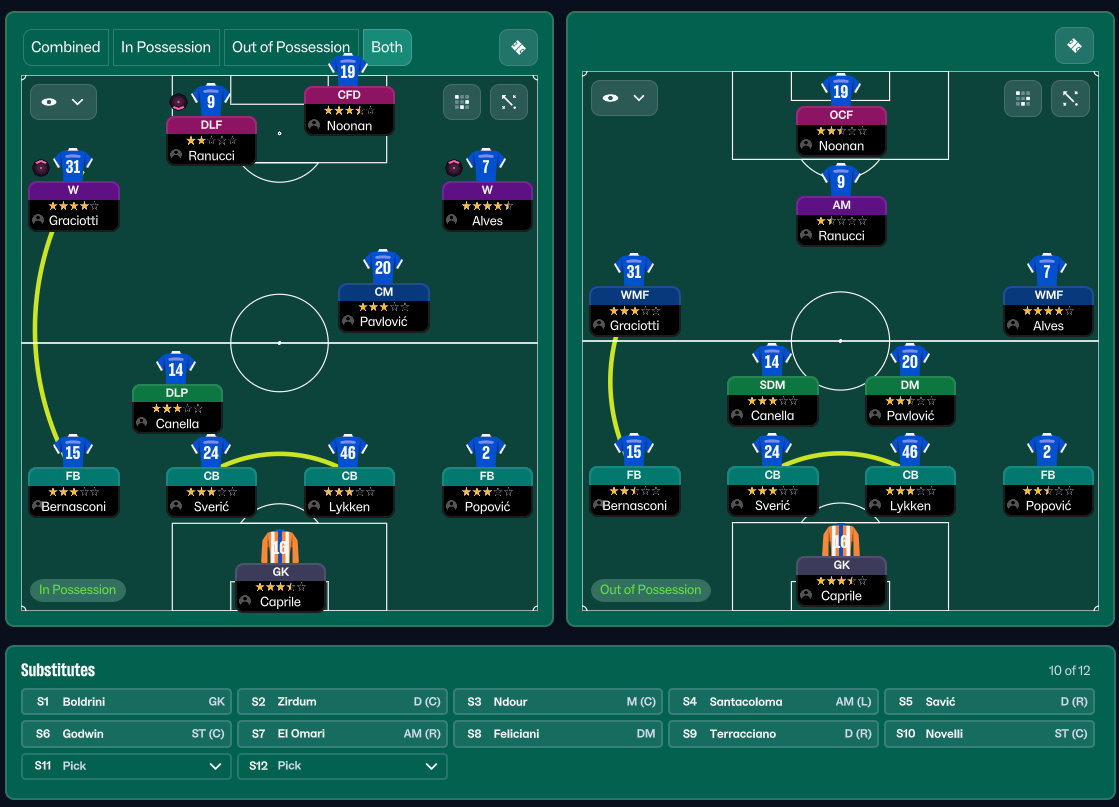
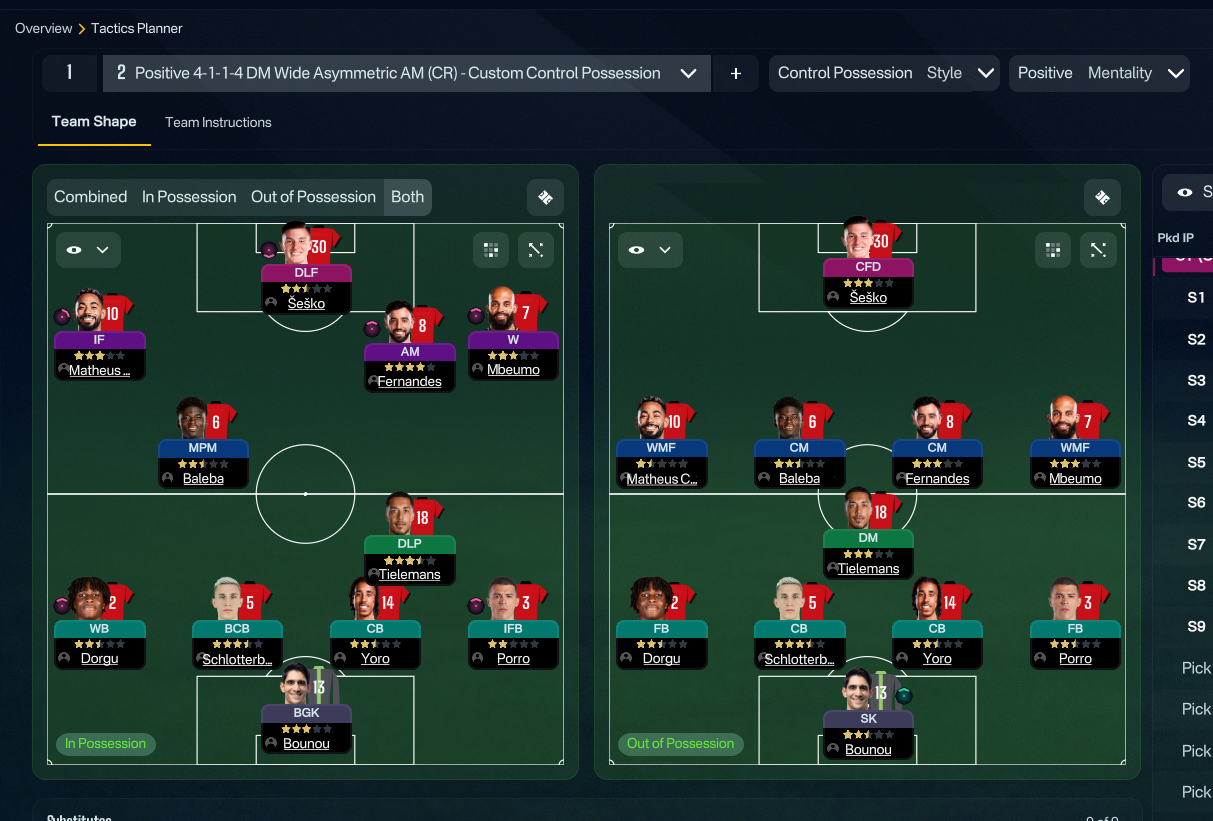
Formation & Style
Tactical Style:Control Possession
Mentality:Positive
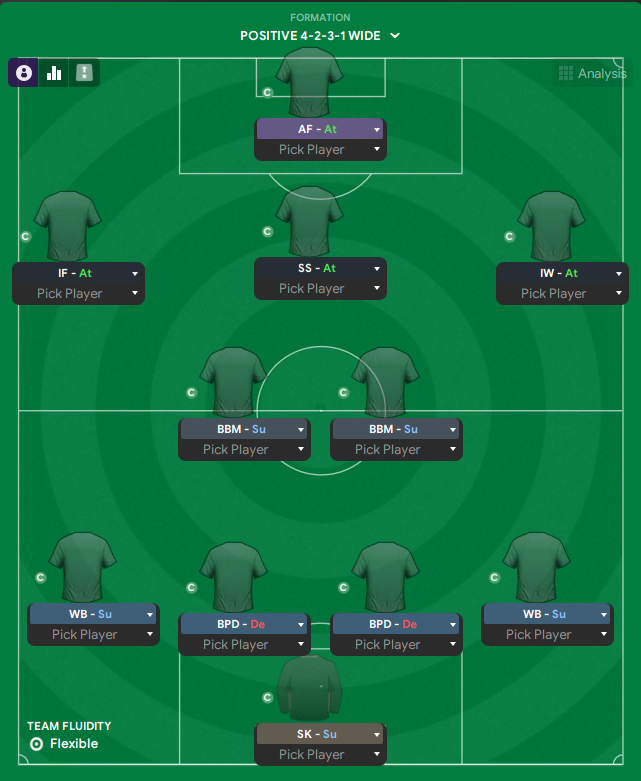
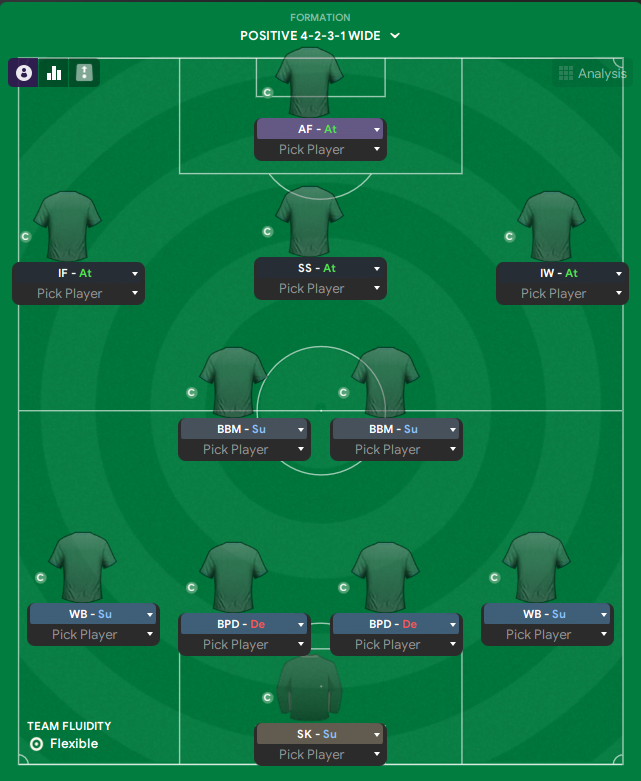
Formation:4-2-3-1 Wide
Team Fluidity:Flexible
In Possession
Shorter Passing
Work Ball Into Box
Play Out Of Defence
In Transition
Counter-Press
Counter
Out of Possession
Higher Defensive Line
Standard Defensive Width
Much More Often Prevent Short GK Distribution
Team Shape Without Ball
Shape:4-2-3-1
Description:The team maintains a solid four-man defensive unit supported by two midfielders acting as a shield.
Evidence:CBs at [2,2] and [2,3] with full-backs at [2,1] and [2,5].
Team Shape With Ball
Shape:Fluid Wide Attack
Description:The wingers stretch the defensive line, providing width while the attack is led by the DLF and CFD.
Evidence:Wingers at [6,1] and [6,5] complementing the forward line.
Phase Description
Attacking Play
Focus on building from the back through possession with a combination of short passes and positioning to exploit gaps.
Defensive Transition
Quick shifts to regain possession through counter-pressing, preventing opposition from settling on the ball.
Main Focus
Control of the midfield and quick transitions to capitalize on defensive lapses.
Key Strengths
Fluid Transition Play
The combination of DLP-S at [3,3] and CM-S at [4,3] aids in quick ball distribution and maintaining possession.
Wide Threat
Utilizing WFs and FBs allows stretching opposition defenses, creating space for central players.
Defensive Solidity
Compact defensive shape minimizes gaps and is supported by the midfield pairing.
Conflicting Directions
High Press with Limited Resources
Relying solely on a high pressing game may exhaust players given their current physical conditions.
Over-reliance on Wingers
While wingers provide width, limited support from the central midfield may hinder attacking fluidity.
Lack of Direct Options
The build-up play prioritizes possession over direct advancing, which can stall attacks against well-organized defenses.
Tactical Suggestions
Increase Central Involvement
Encouraging more movements from CM to support the attack can create more passing lanes and options.
Consider Two Strikers
Deploying a second striker or altering the DLF's role to support could create defensive confusion.
Adjust Defensive Line
Depending on opposition speed, consider dropping offensive line slightly to mitigate counter-attacks.
Ask Questions About Your Lineup
Related Tactics
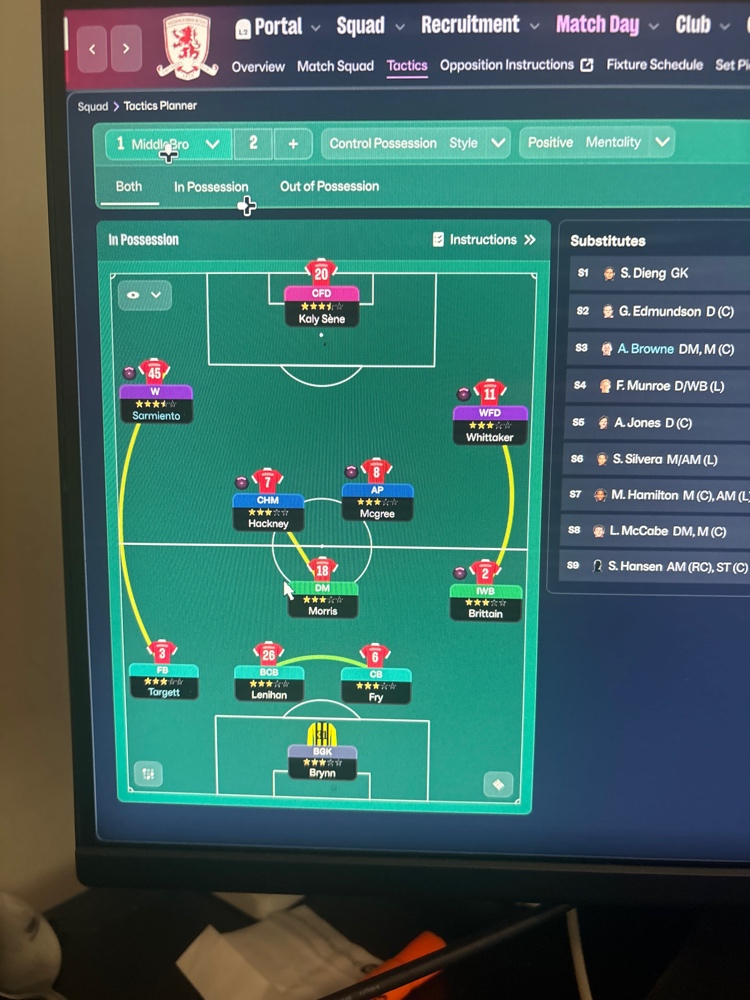
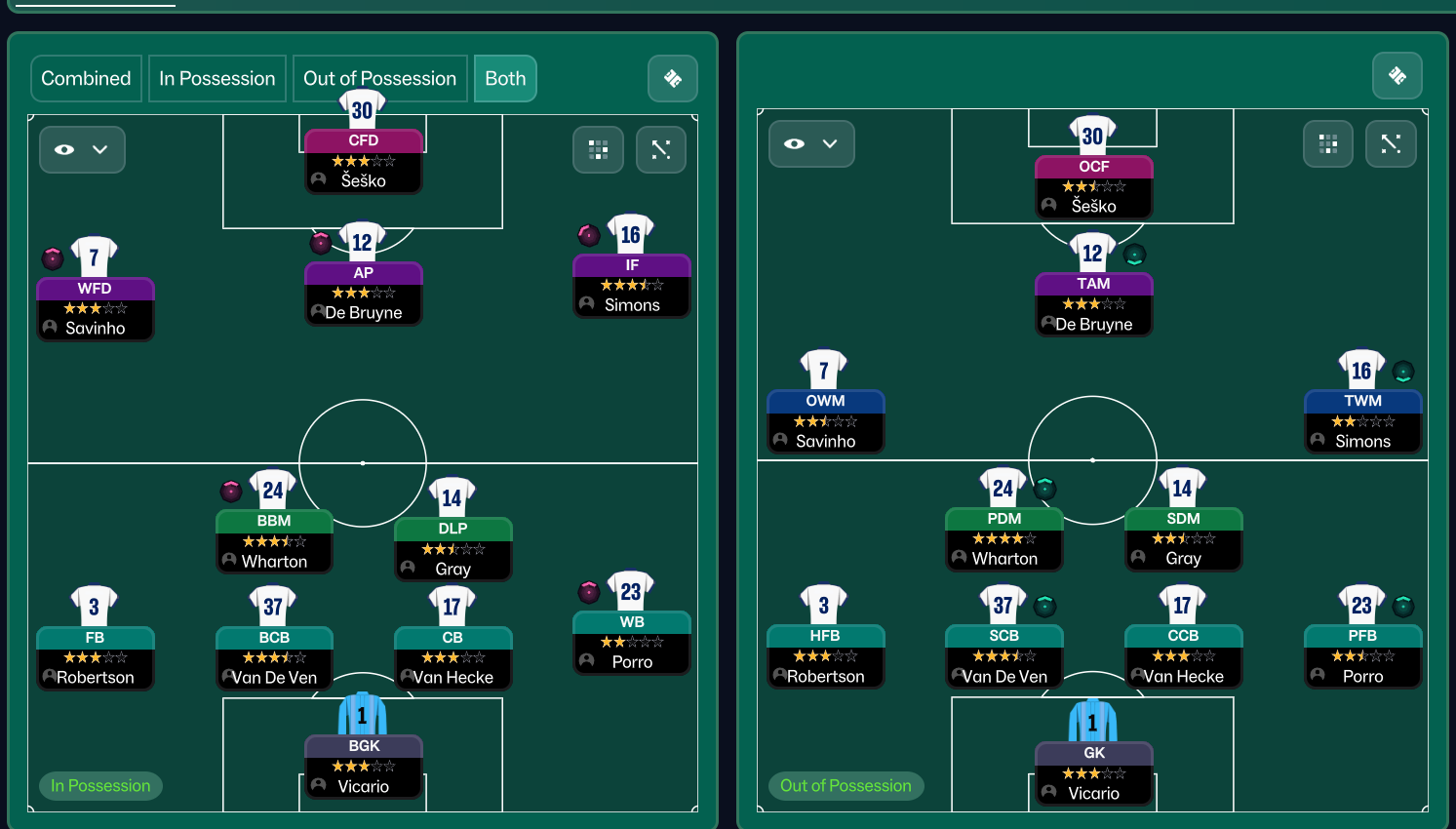
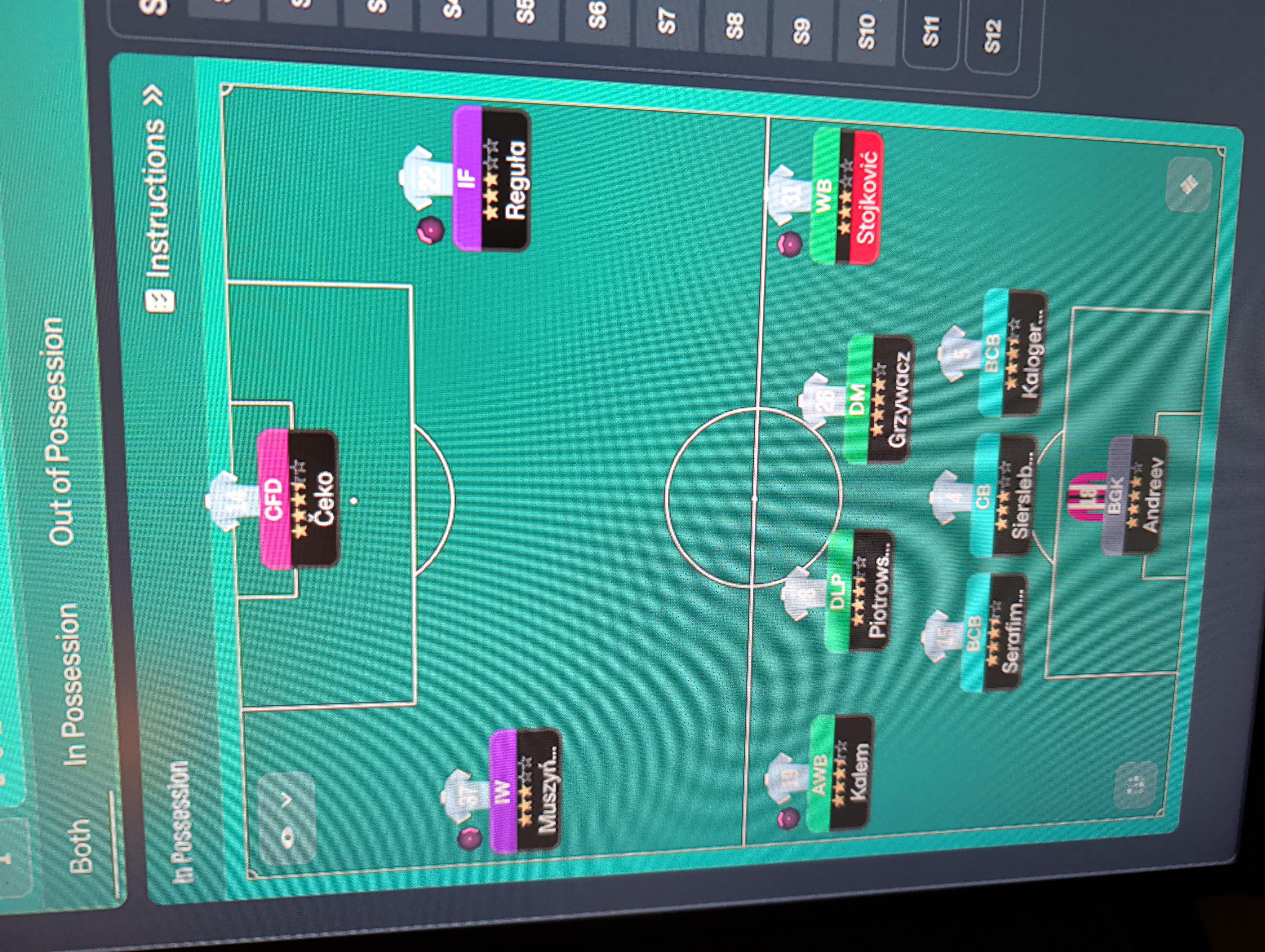
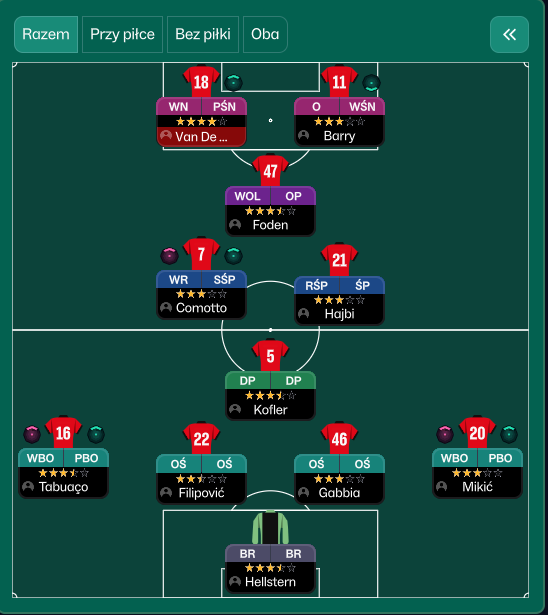
More Control Possession tactics
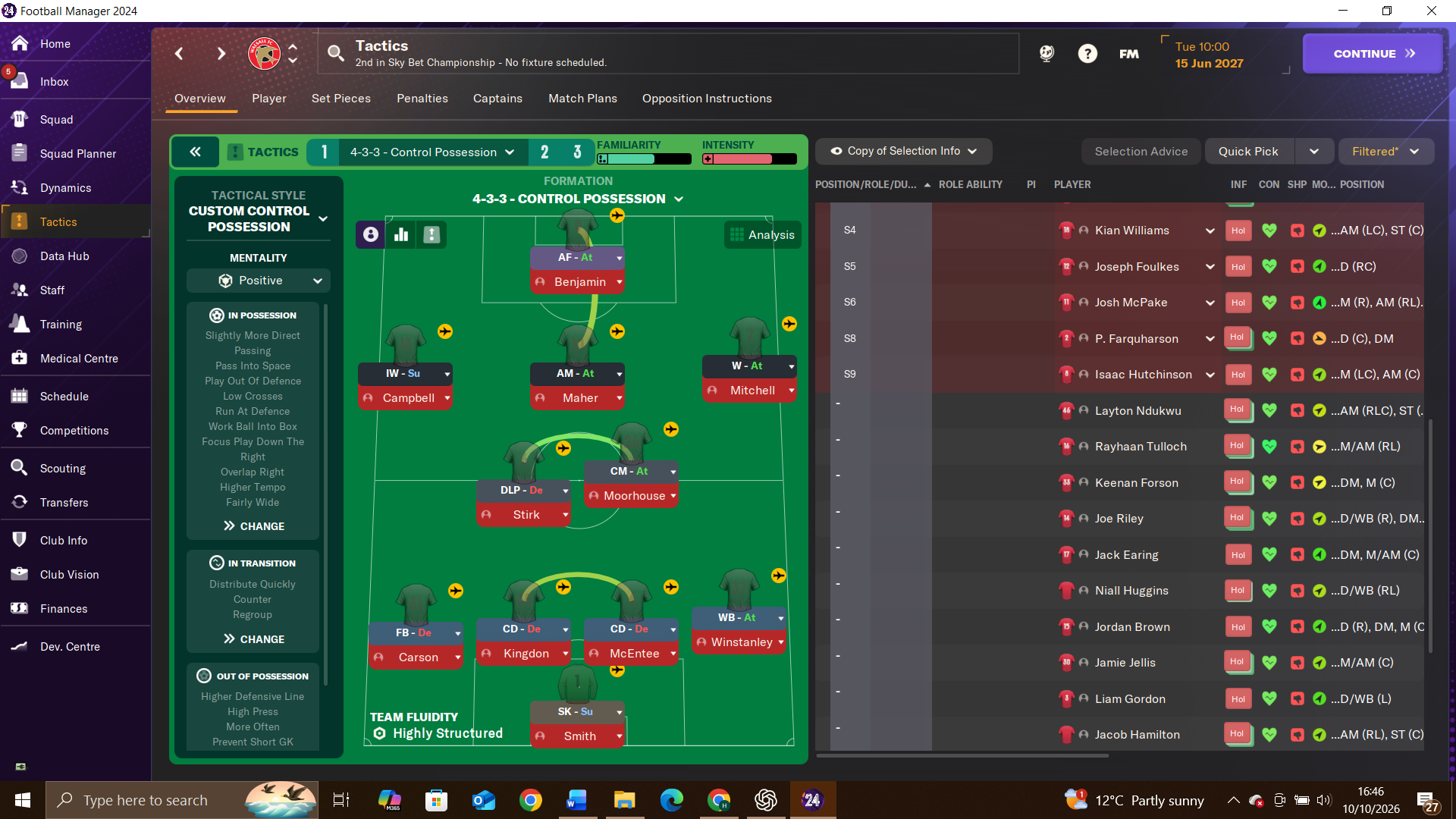
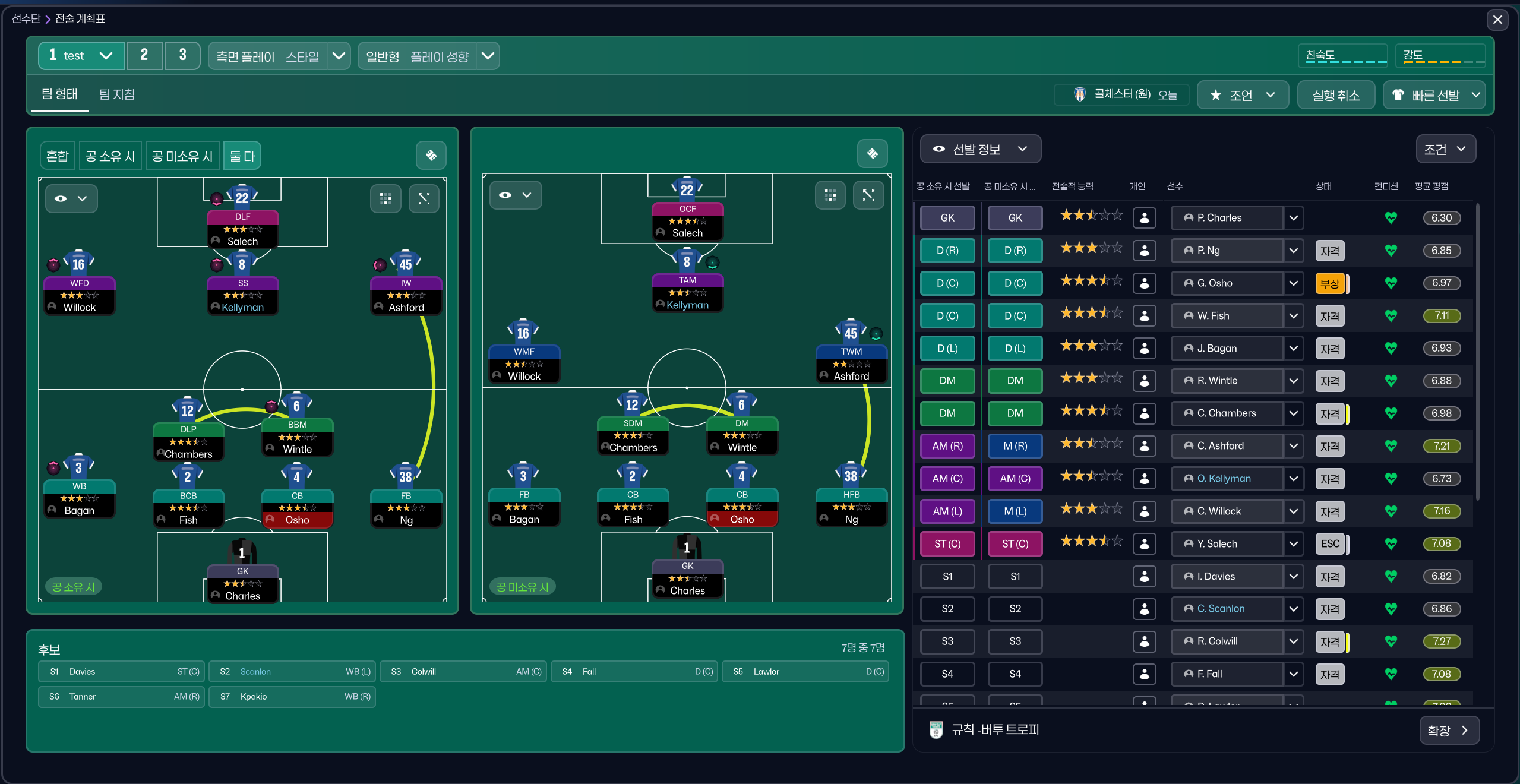
Guides for this formation
The tactical theory behind the 4-2-3-1 Wide: roles, instructions, and the trade-offs that decide whether the system holds up.
Player pairings
Midfield Pairs in 4-2-3-1 and 4-4-2
Double pivots and flat pairs in 4-2-3-1 and 4-4-2: when each pairing works, when it collapses, and the AMC unicorn that rescues both.
Read guide
Playing styles
Gegenpressing: A Full Guide
Klopp-style gegenpressing in FM, including squad profile, line-and-press pairing, sustainable workload, and the antipatterns to avoid.
Read guide