Uploaded Tactic
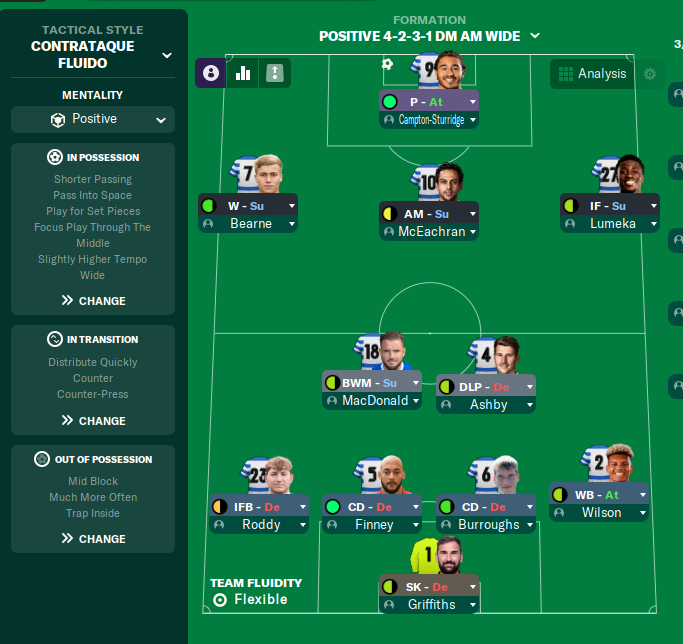
Formation & Style
Tactical Style:Contrataque
Mentality:Positive
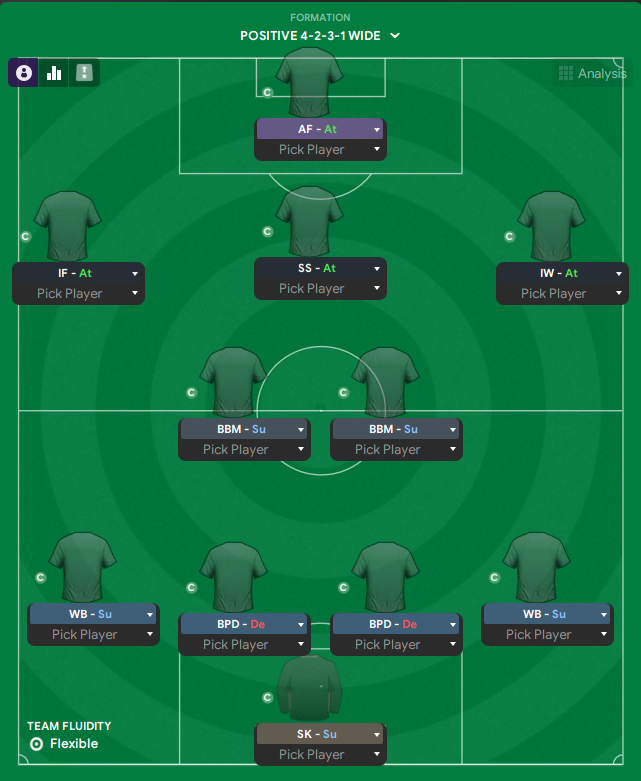
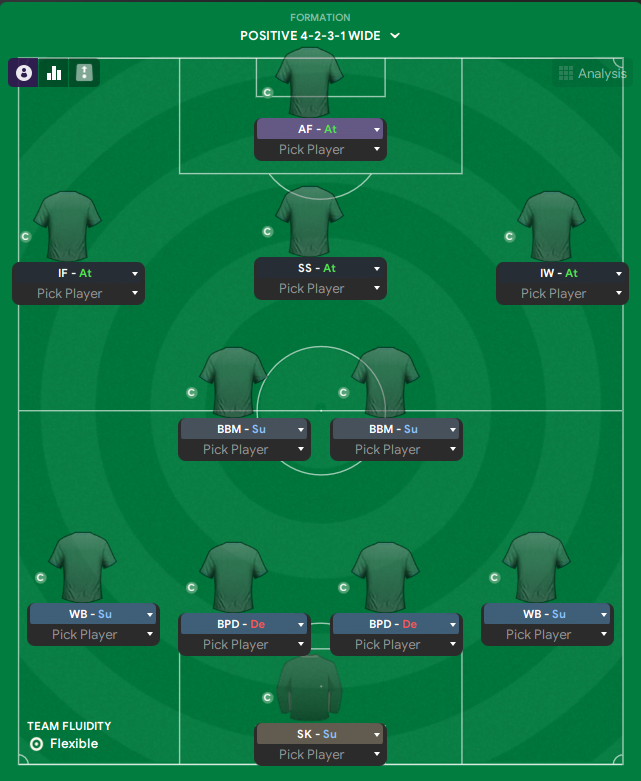
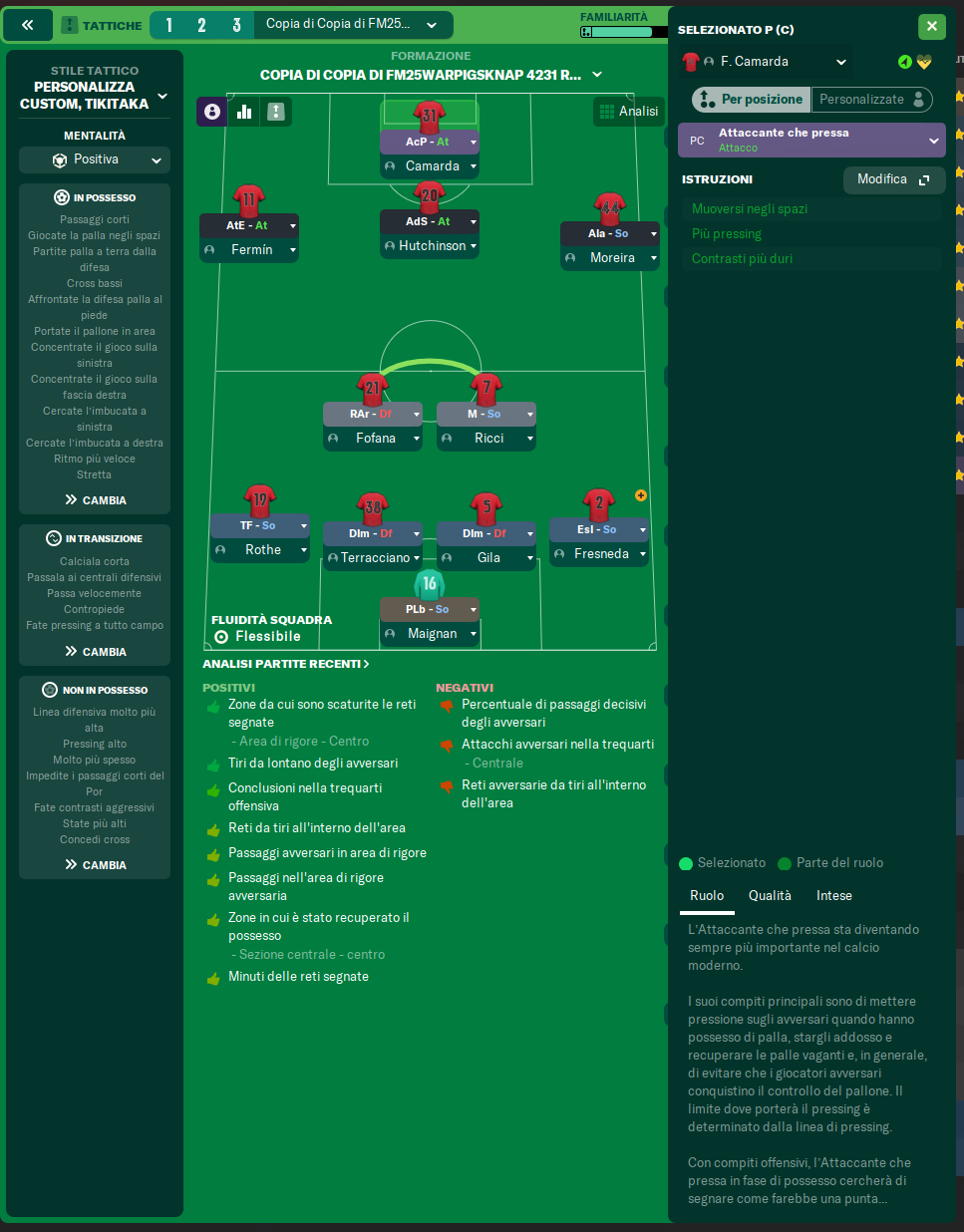
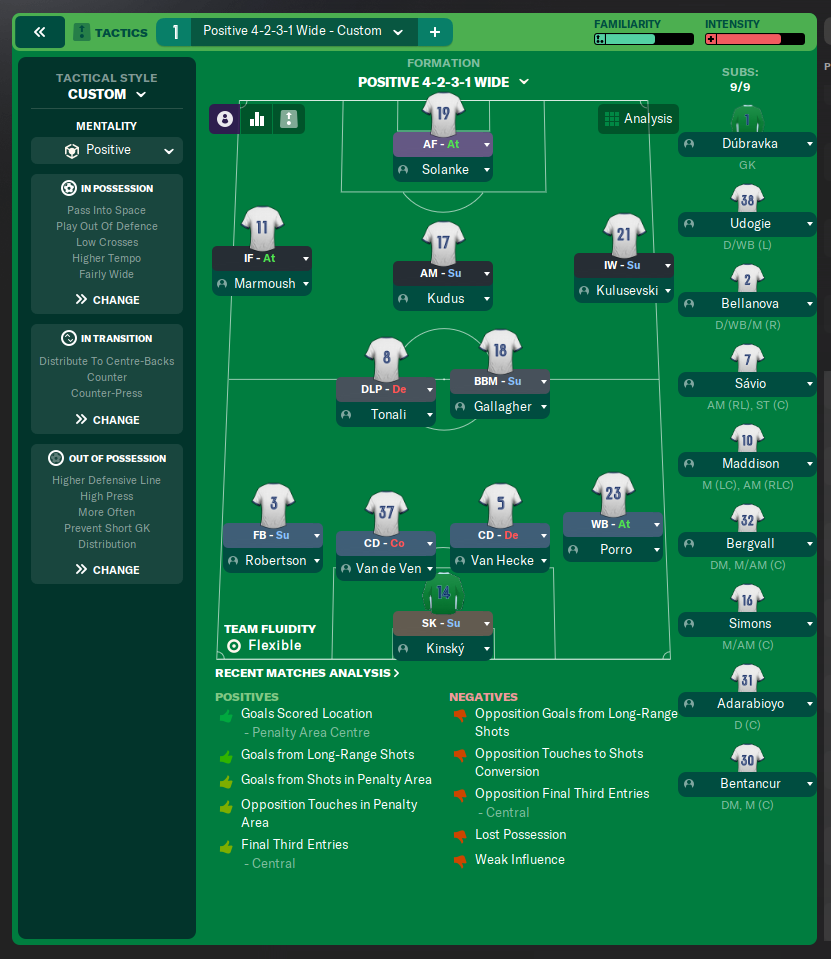
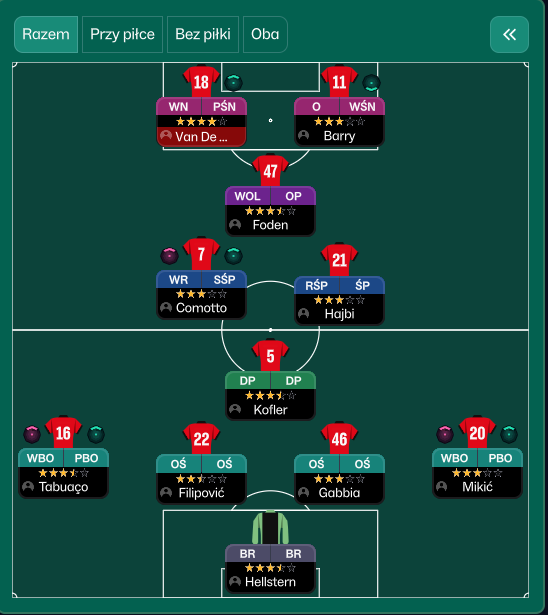
Formation:4-2-3-1 Wide
Team Fluidity:Flexible
In Possession
Shorter Passing
Pass Into Space
Play for Set Pieces
Focus Play Through The Middle
Slightly Higher Tempo Wide
In Transition
Distribute Quickly
Counter-Press
Out of Possession
Mid Block
Much More Often Trap Inside
Team Shape Without Ball
Shape:Mid Block
Description:Compact structure with emphasis on forcing opponents inside.
Evidence:Mid block strategy with 'Much More Often Trap Inside'.
Team Shape With Ball
Shape:Wide Play
Description:Utilizes width through inside forwards and wingers to stretch the opposition.
Evidence:Wingers and inside forwards support through wide play.
Phase Description
Attacking Play
Focus on quick transitions using shorter passes and players making runs into space is key.
Defensive Transition
Utilize quick distribution to transition into the attack while maintaining pressing.
Main Focus
Dominating possession through central channels while exploiting spaces with wide players.
Key Strengths
Dynamic Attacking Setup
The presence of an attacking midfielder flanked by wide players allows for fluid movement.
Defensive Solidity
Having two central defenders supported by a ball-winning midfielder provides strength in defense.
Counter-Attacking Potential
Quick transitions can exploit spaces left by opponents, especially with 'Counter-Press'.
Conflicting Directions
Width vs. Central Play
While using width, the team instructions focus on plays through the middle, which could conflict.
Mid Block Against Fast Attackers
The chosen mid-block may struggle if faced by fast opposing wingers or forwards.
Pressing Approach
A pressing approach could be diluted by the team’s use of a mid-block strategy.
Tactical Suggestions
Adjust Width in Midfield
Consider adjusting midfield width to better match wingers' positions.
Increase Defensive Aggressiveness
Consider increasing the aggressiveness or pressing frequency to complement 'Counter-Press'.
Utilize Depth from Wing Backs
Encourage the wing back to join the attack more frequently to provide width and support.
Ask Questions About Your Lineup
Related Tactics
Guides for this formation
The tactical theory behind the 4-2-3-1 Wide: roles, instructions, and the trade-offs that decide whether the system holds up.
Player pairings
Midfield Pairs in 4-2-3-1 and 4-4-2
Double pivots and flat pairs in 4-2-3-1 and 4-4-2: when each pairing works, when it collapses, and the AMC unicorn that rescues both.
Read guide
Playing styles
Gegenpressing: A Full Guide
Klopp-style gegenpressing in FM, including squad profile, line-and-press pairing, sustainable workload, and the antipatterns to avoid.
Read guide