Uploaded Tactic
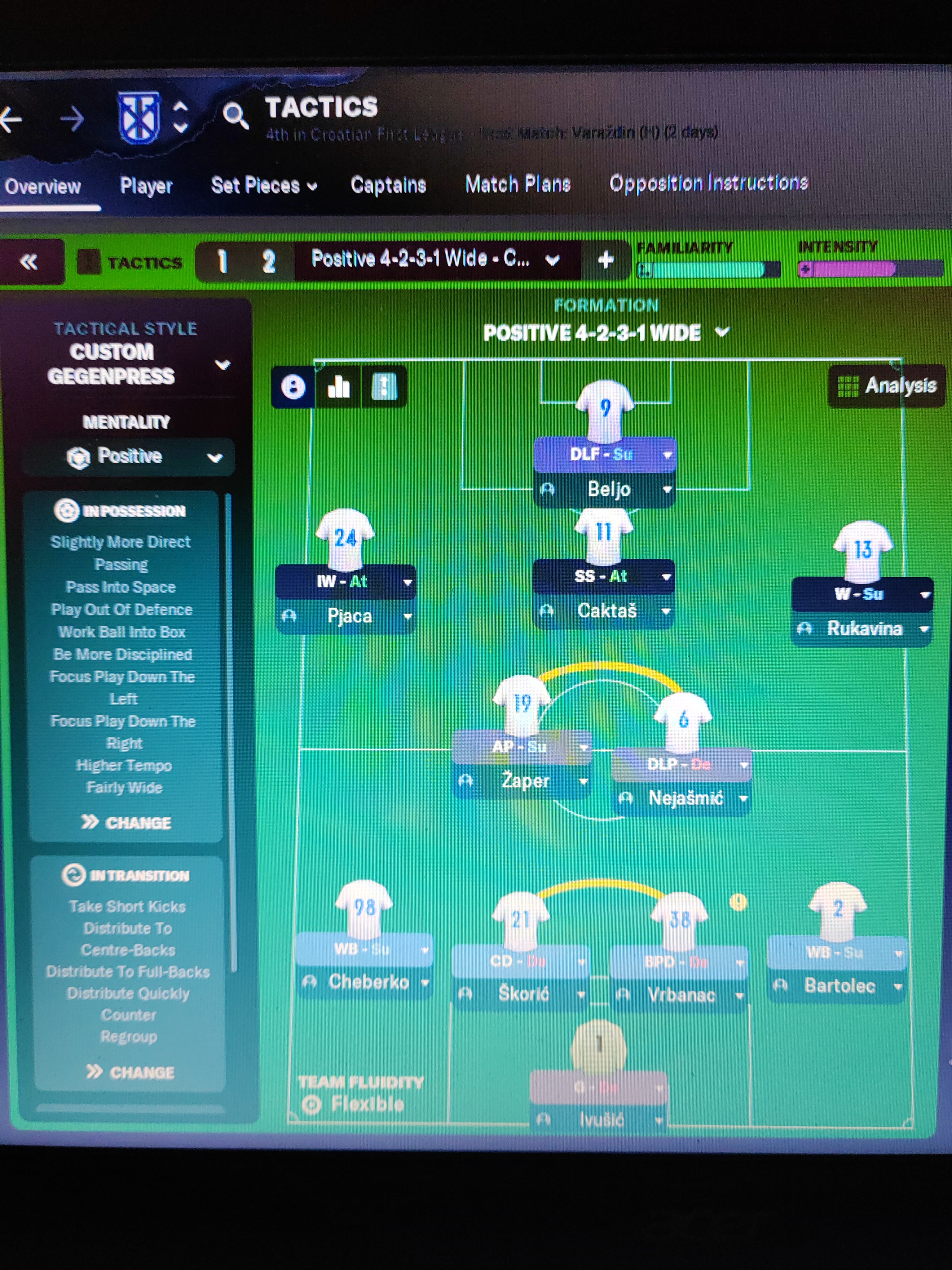
Formation & Style
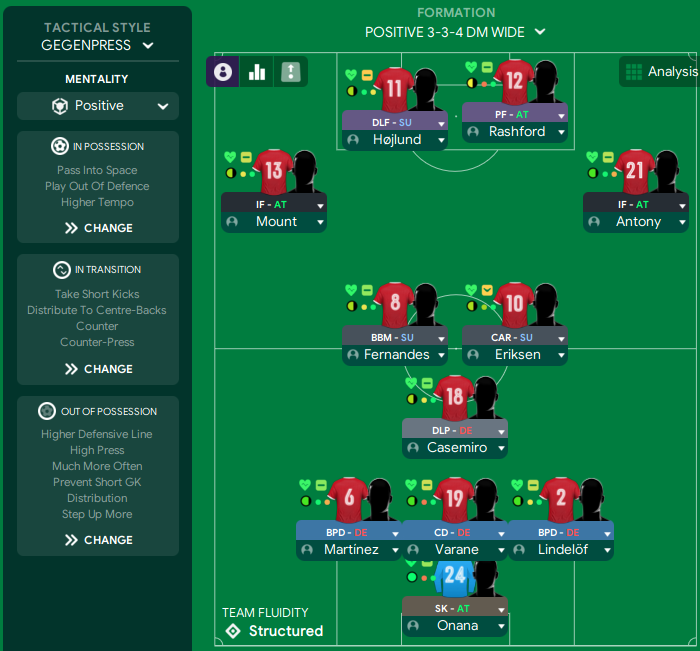
Tactical Style:Gegenpress
Mentality:Positive
Formation:4-2-3-1 Wide
Team Fluidity:Flexible
In Possession
Slightly More Direct Passing
Pass Into Space
Work Ball Into Box
Higher Tempo
Fairly Wide
In Transition
Take Short Kicks
Distribute To Centre-Backs
Distribute To Full-Backs
Counter
Regroup
Out of Possession
Be More Disciplined
Focus Play Down The Left
Focus Play Down The Right
Team Shape Without Ball
Shape:4-2
Description:Compact and disciplined formation allowing for quick counter-attacks.
Evidence:2 x DLP at [3,3] and DLP at [3,3] with 'Be More Disciplined'.
Team Shape With Ball
Shape:4-3
Description:Wingers provide width while the advanced playmaker and shadow striker create central threats.
Evidence:AP at [4,3], IW at [6,2], and SS at [5,3] with 'Higher Tempo'.
Phase Description
Attacking Play
Focus on quick transitions and exploiting space through the width provided by wing-backs and inside forwards.
Defensive Transition
Immediate pressure to regain possession with a focus on structured defensive discipline.
Main Focus
Utilize the strengths of the attacking midfield and forwards to capitalize on defensive gaps.
Key Strengths
Flexible Attack
The formation allows for multiple attacking avenues through dynamic movement and varied player roles.
Solid Midfield Structure
The combination of DLP and AP ensures both defensive stability and attacking creativity.
Disciplined Defensive Shape
Using a BPD and CD setup provides flexibility in building from the back while maintaining defensive solidity.
Conflicting Directions
Counter-Press vs. Build-Up
Aggressive pressing may disrupt build-up play, necessitating balance in transitions.
Player Discipline vs. Fluidity
High-tempo and fluid play may be at odds with a 'Be More Disciplined' instruction.
Wide Play Confusion
While wing play is emphasized, player roles may limit central penetration.
Tactical Suggestions
Adjust Discipline Instructions
Consider relaxing the discipline instruction to allow for more fluid attacking transitions.
Enhance Central Attacking Coordination
Incorporate a third central midfielder to improve link-up and support for the forwards.
Explore Additional Width
Utilizing inverted wing-backs might create more overlapping opportunities in wide areas.
Ask Questions About Your Lineup
Related Tactics
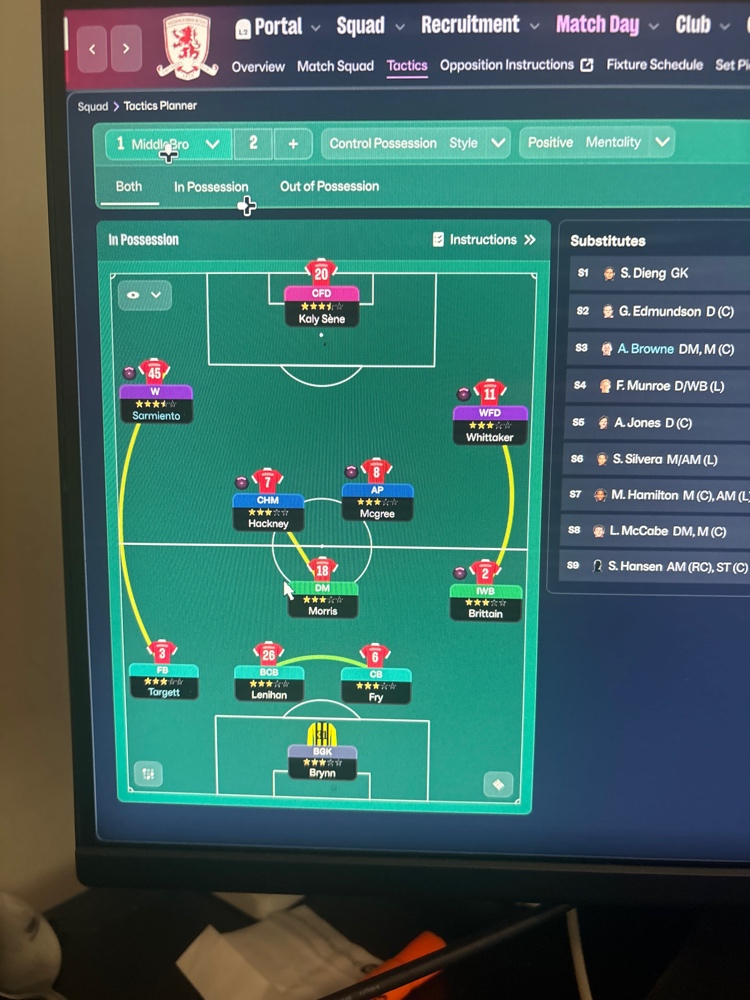
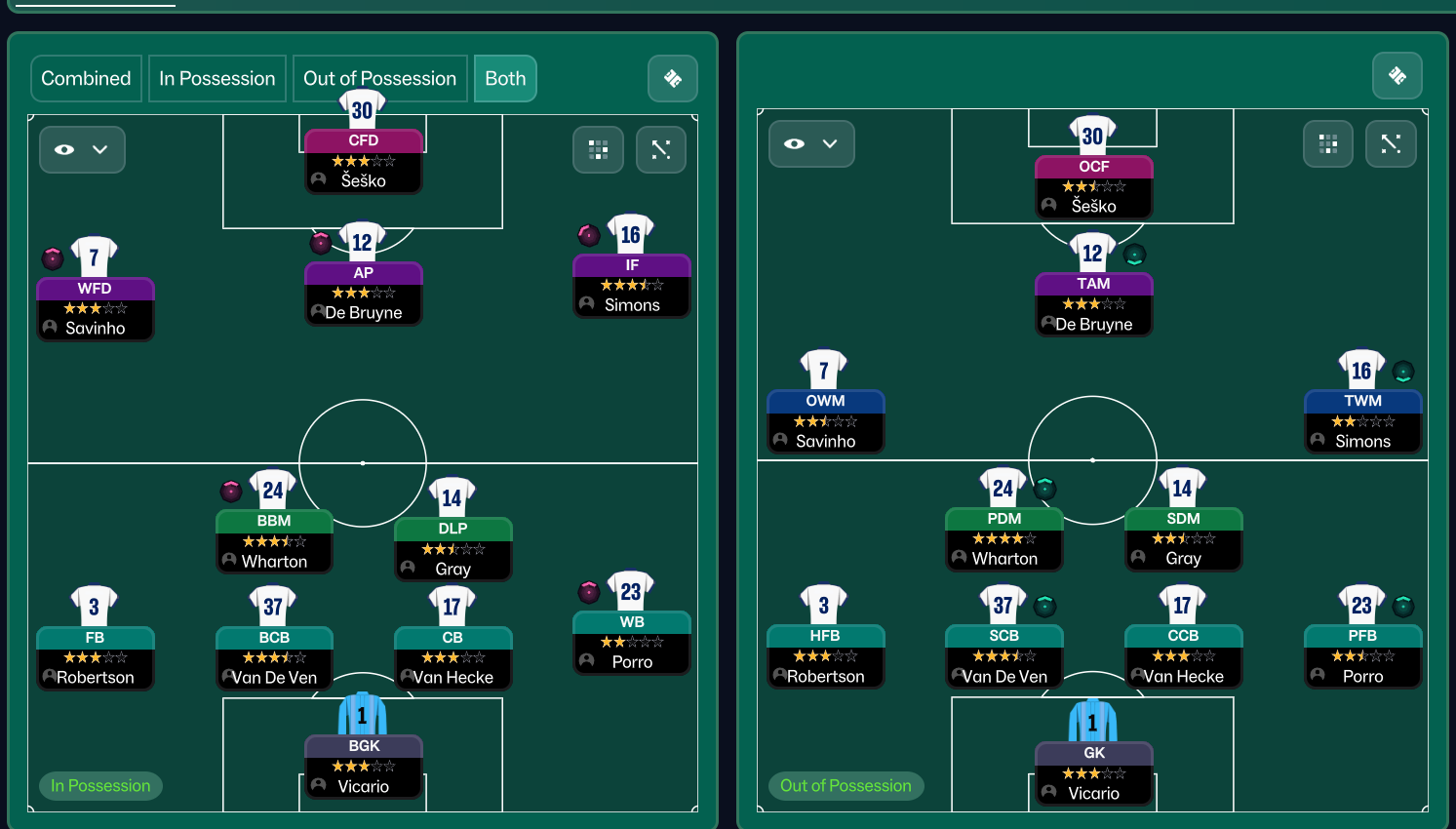
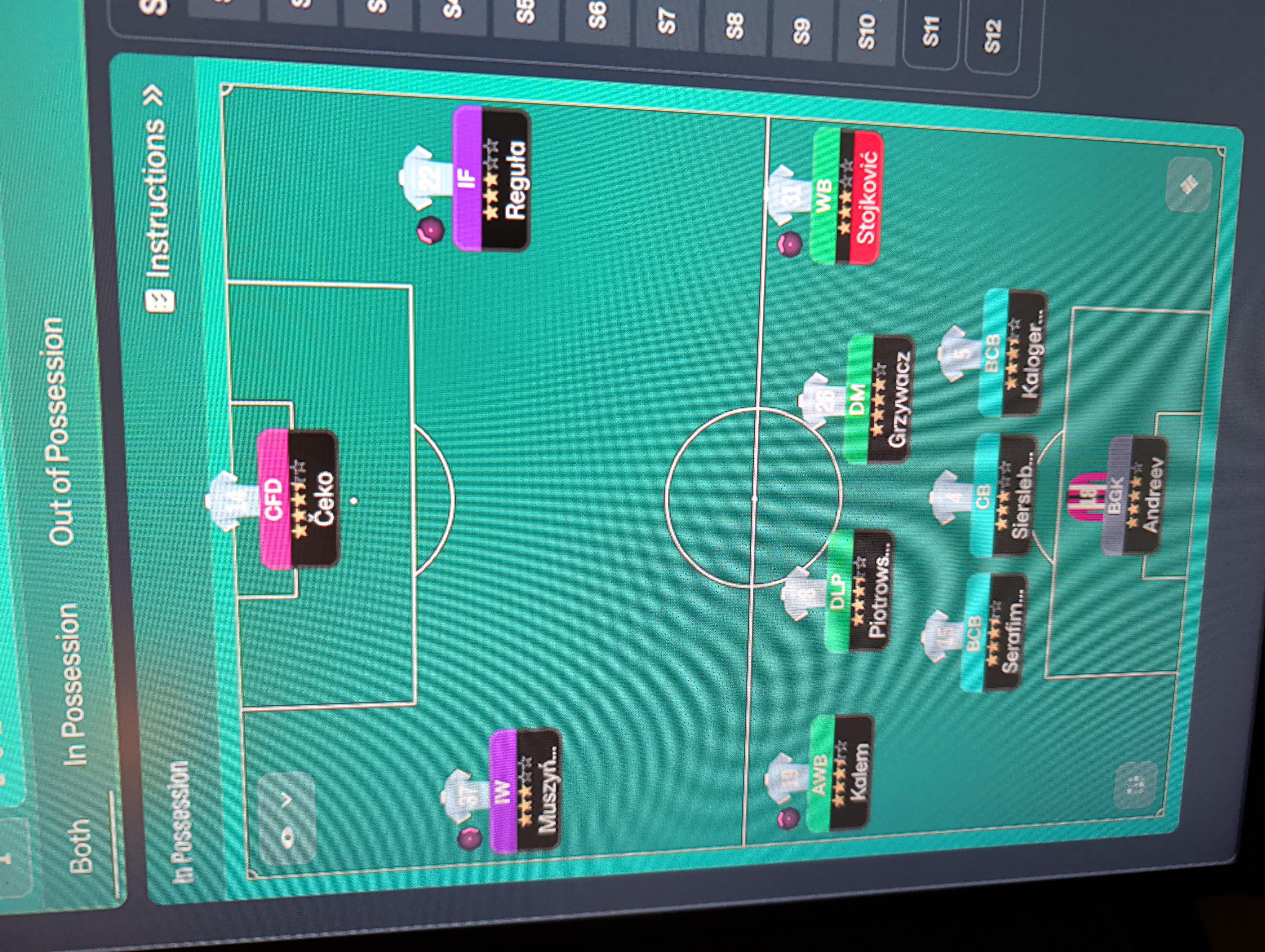
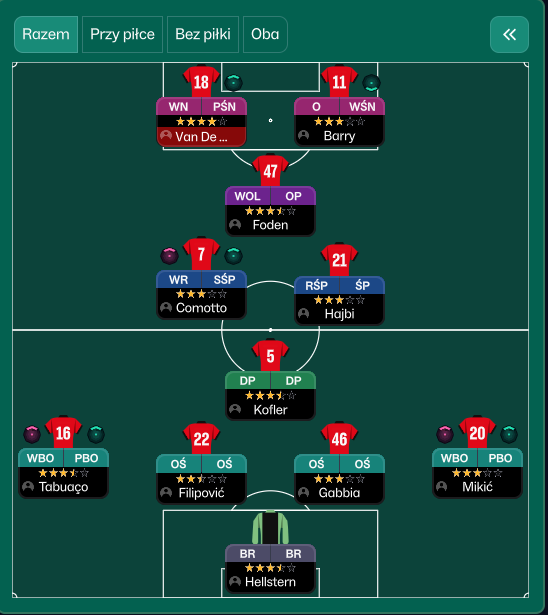
More Gegenpress tactics
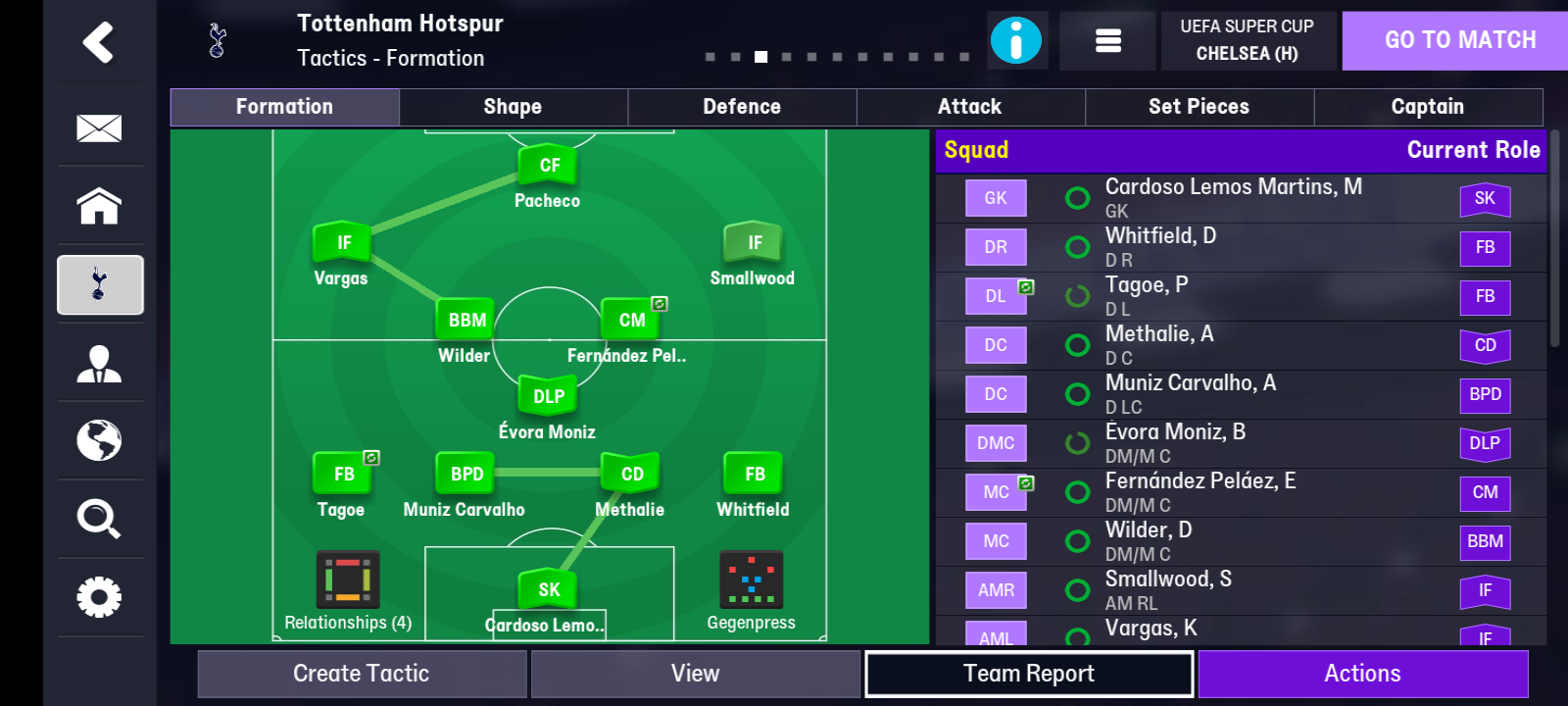
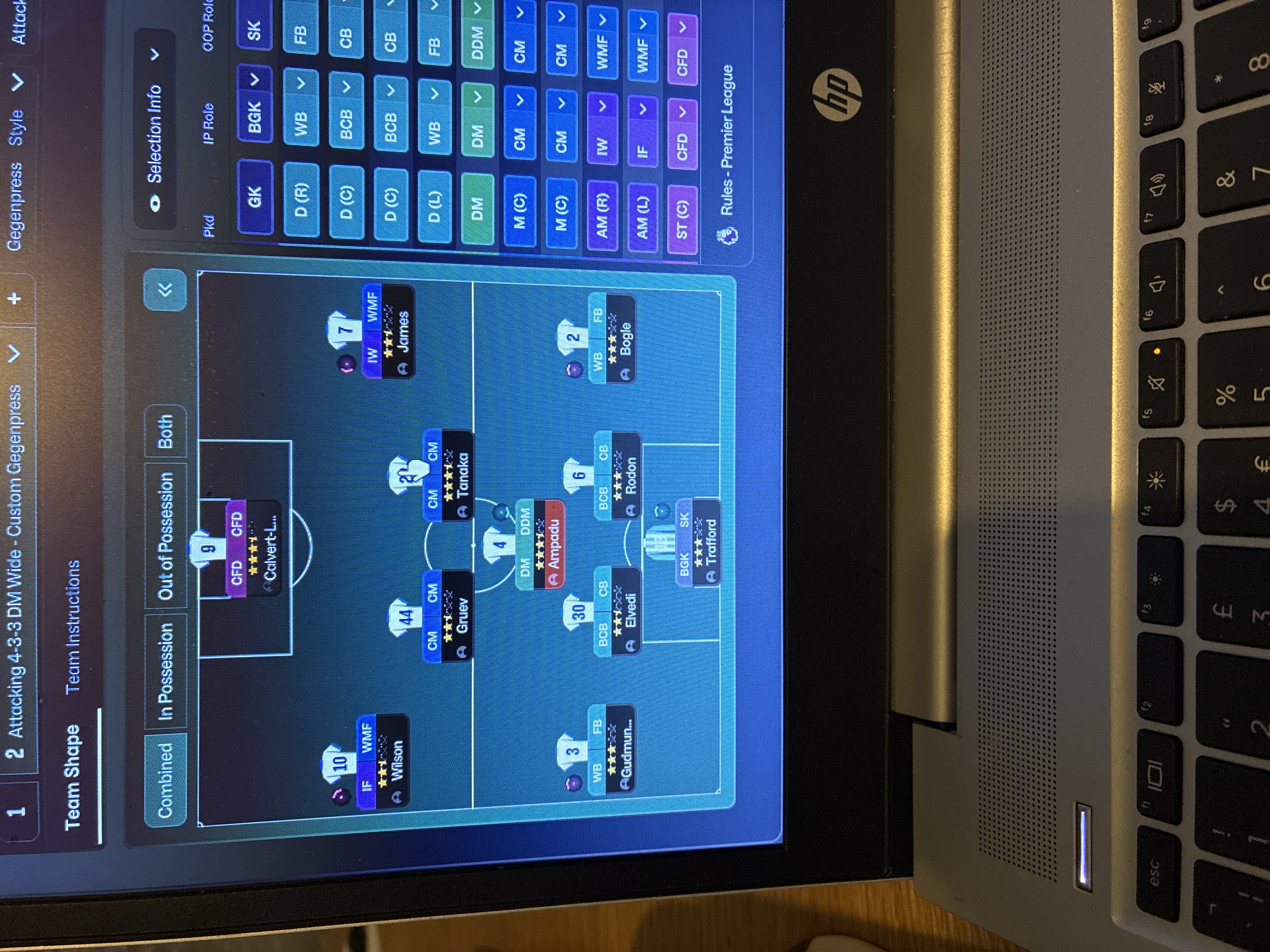
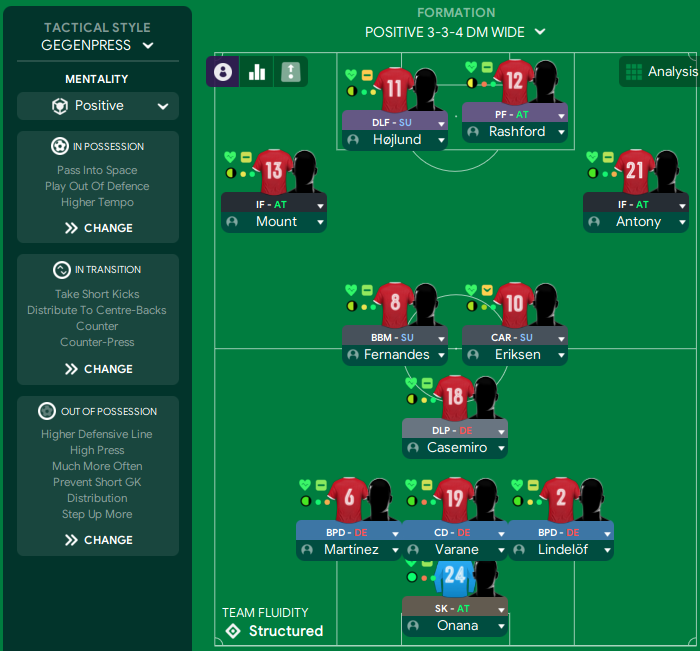
Guides for this formation
The tactical theory behind the 4-2-3-1 Wide: roles, instructions, and the trade-offs that decide whether the system holds up.
Player pairings
Midfield Pairs in 4-2-3-1 and 4-4-2
Double pivots and flat pairs in 4-2-3-1 and 4-4-2: when each pairing works, when it collapses, and the AMC unicorn that rescues both.
Read guide
Playing styles
Gegenpressing: A Full Guide
Klopp-style gegenpressing in FM, including squad profile, line-and-press pairing, sustainable workload, and the antipatterns to avoid.
Read guide