Uploaded Tactic
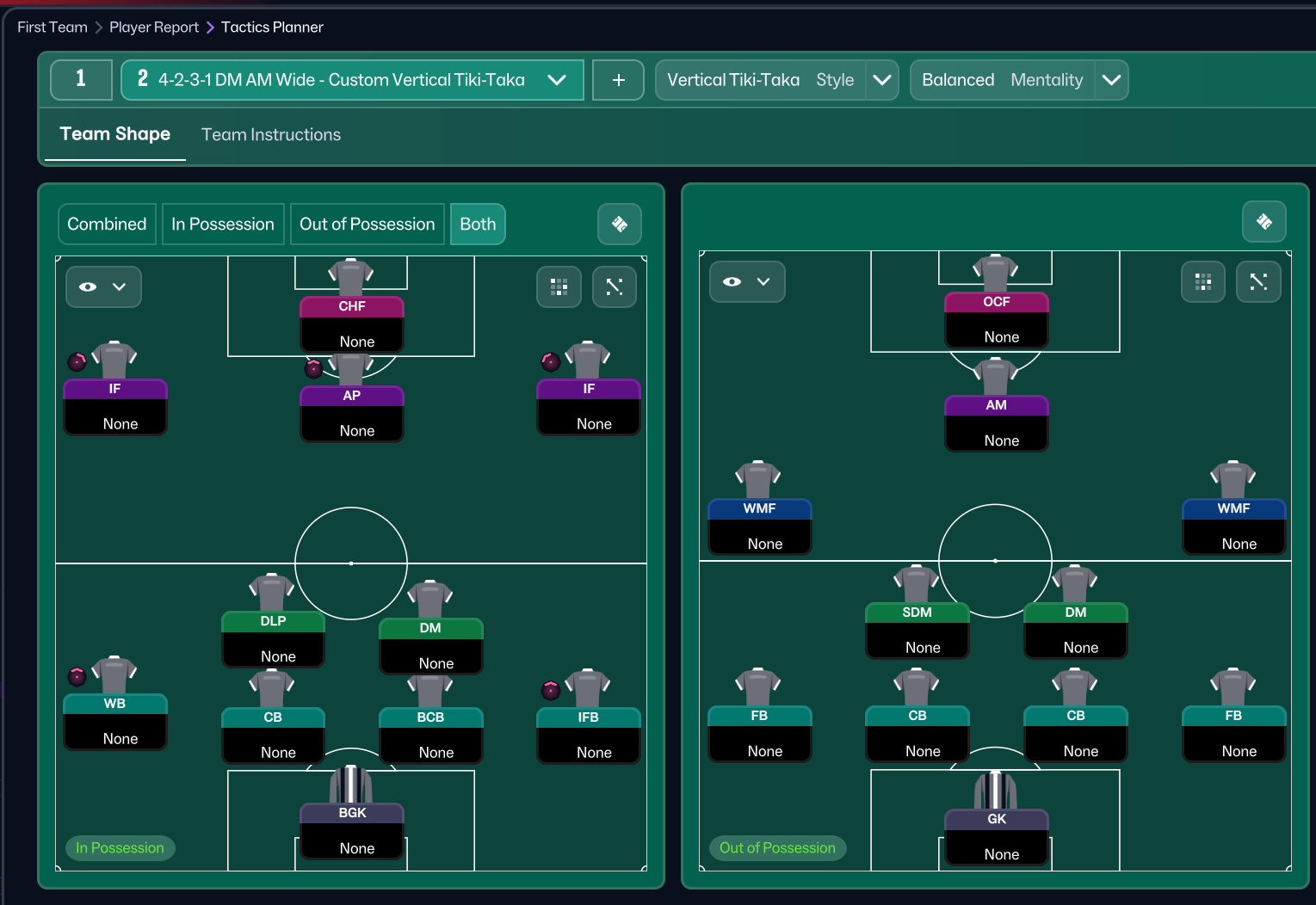
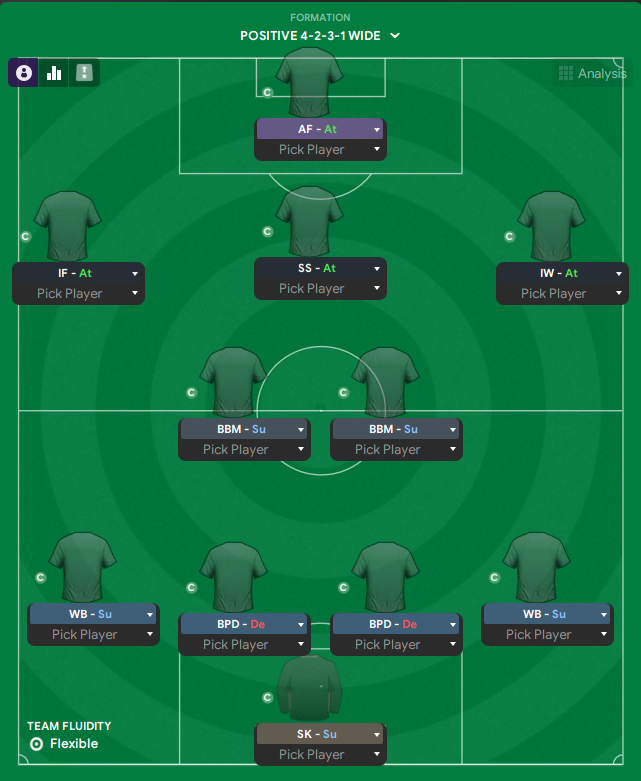
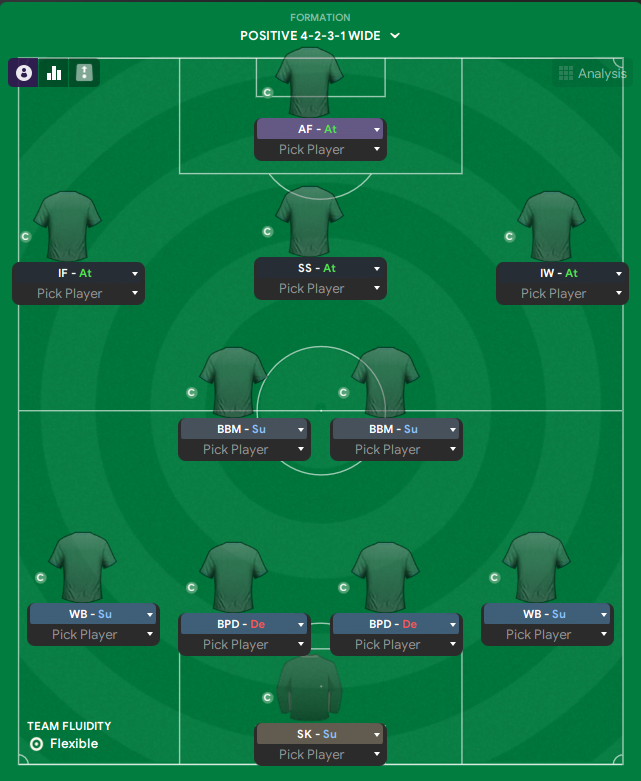
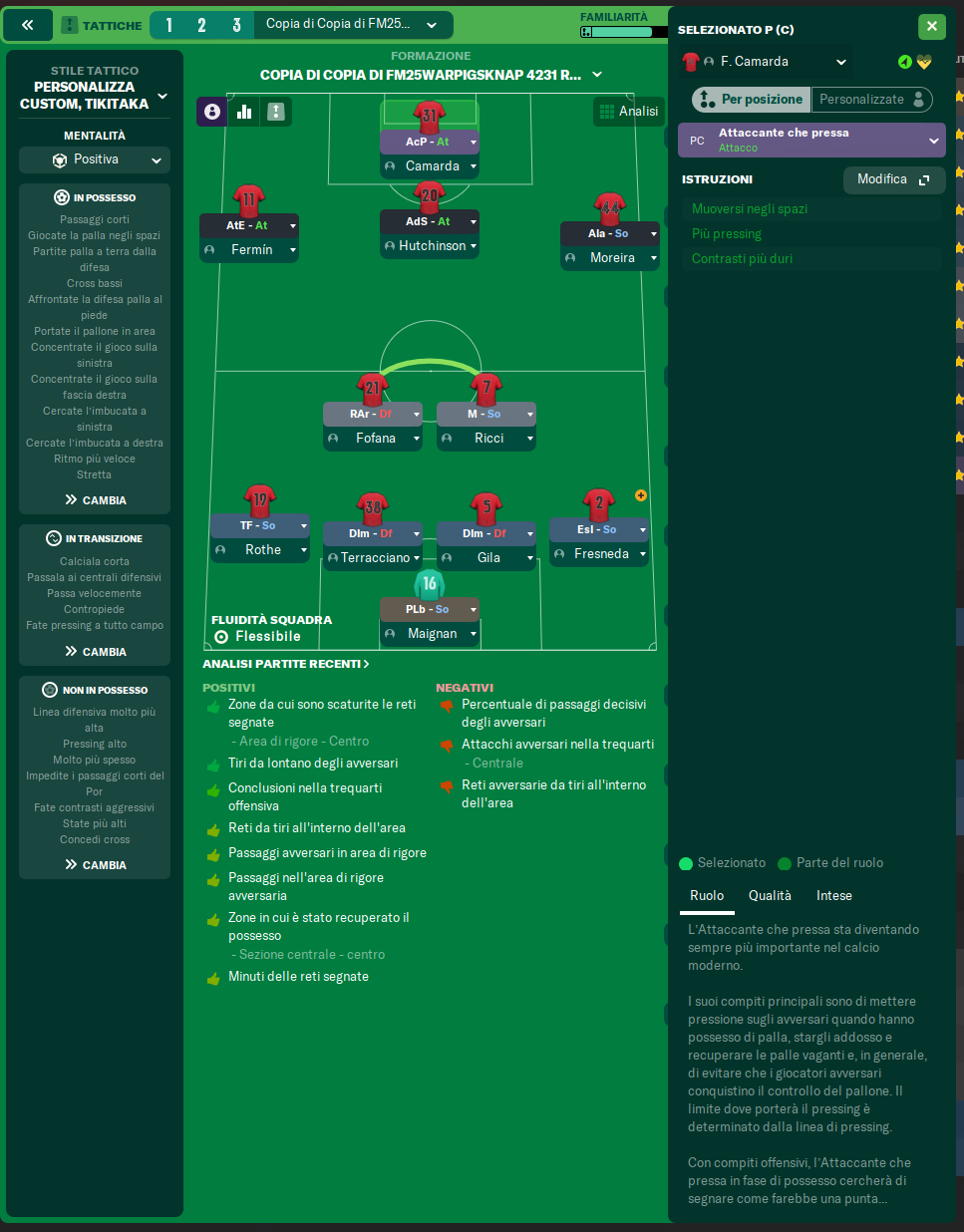
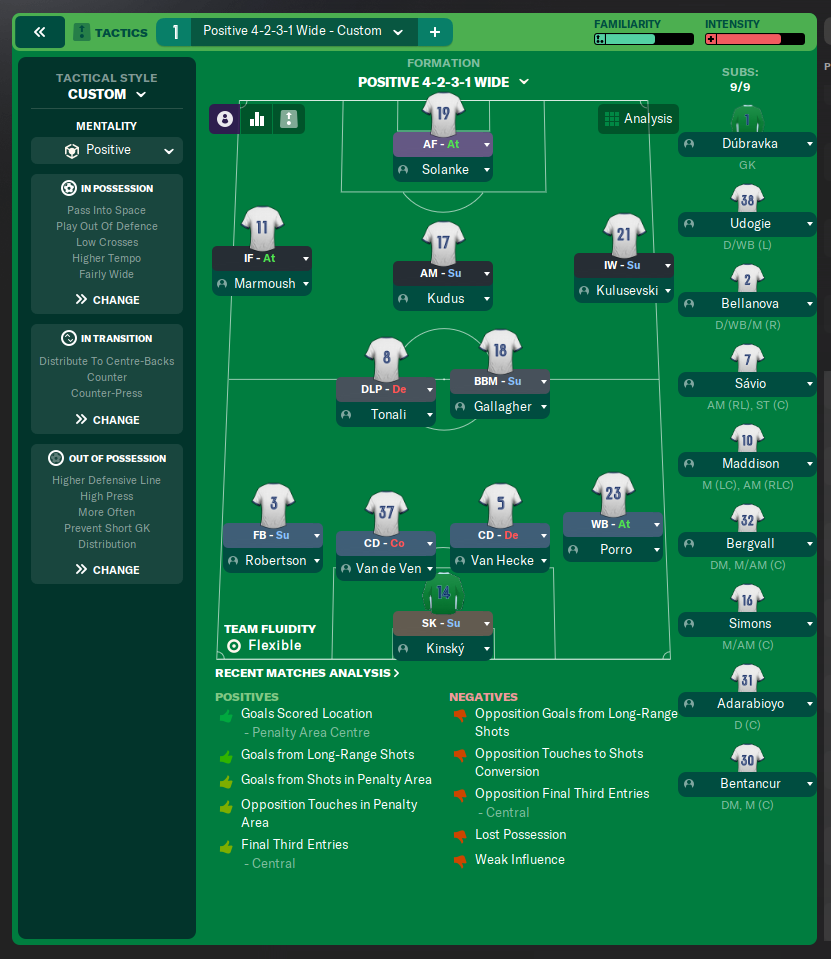
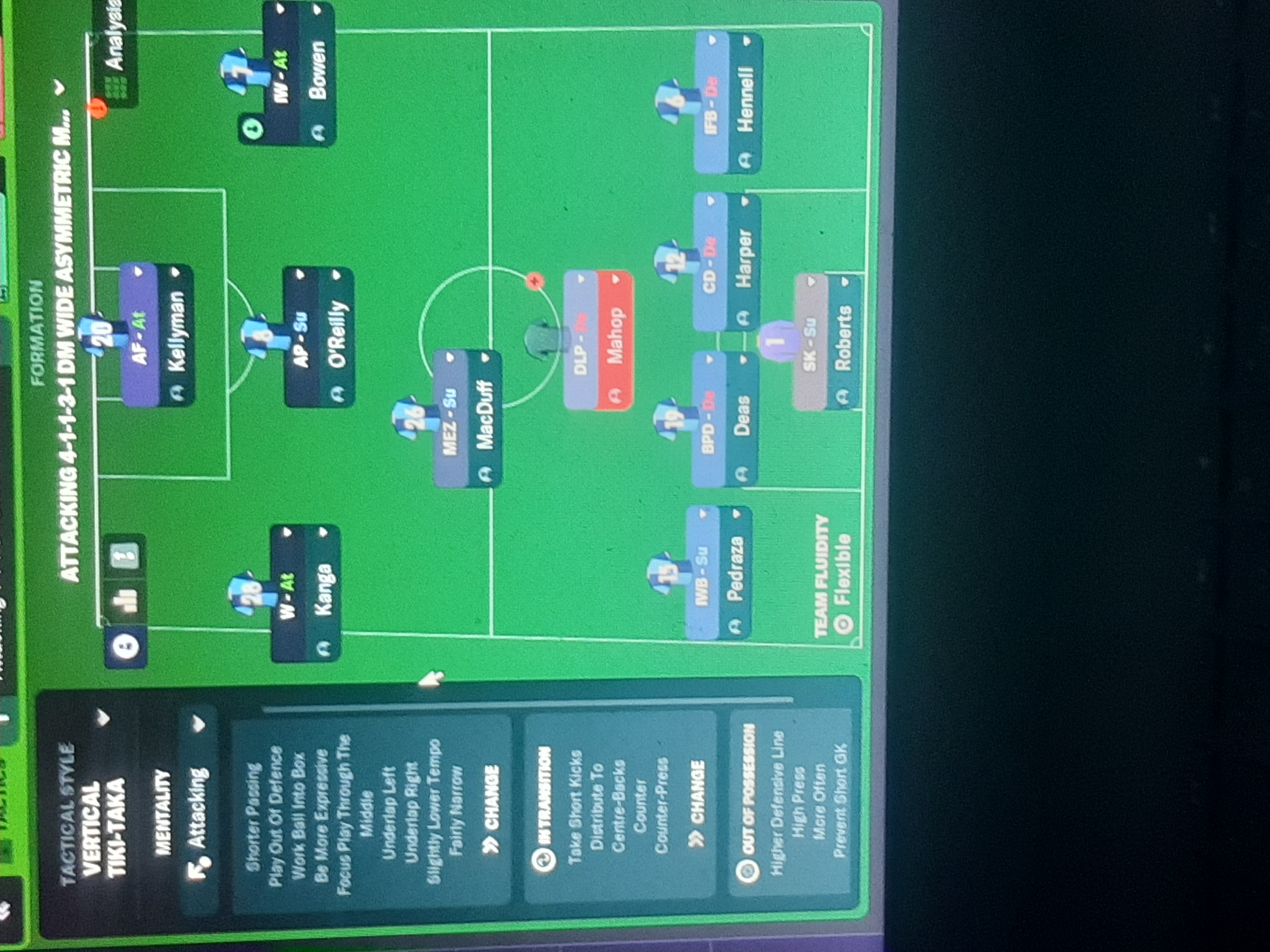
Formation & Style
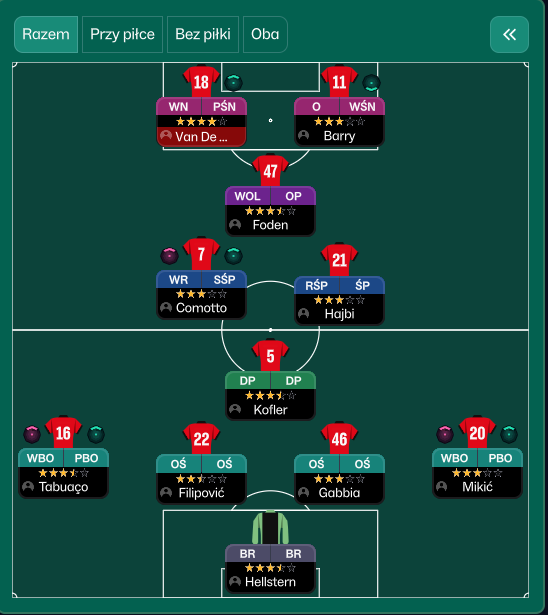
Tactical Style:Vertical Tiki-Taka
Mentality:Balanced
Formation:4-2-3-1 Wide
Team Fluidity:Structured
In Possession
Shorter Passing
Work Ball Into Box
Higher Tempo
In Transition
Counter
Counter-Press
Out of Possession
Higher Defensive Line
Much More Often Prevent Short GK Distribution
Tighter Marking
Team Shape Without Ball
Shape:4-2-3-1
Description:A compact and structured defensive formation, focusing on maintaining shape and closing down spaces.
Evidence:Four defenders tasked with marking and two midfielders providing support, creating a well-organized defensive block.
Team Shape With Ball
Shape:4-2-3-1
Description:Utilizes width and quick interplay through the wings, with inside forwards cutting inside to create goal-scoring opportunities.
Evidence:Two inside forwards supporting a complete forward while the advanced playmaker links up play.
Phase Description
Attacking Play
Focuses on short passes and maintaining possession while creating chances through intricate passing in the final third.
Defensive Transition
Quickly transitions to a counter-press when possession is lost, aiming to regain control rapidly.
Main Focus
Control of possession and creating overloads in midfield.
Key Strengths
Possession Retention
With a focus on shorter passing and a high tempo, the team can maintain possession effectively.
Flexible Attack
The combination of inside forwards and an advanced playmaker allows for adaptable attacking pathways.
High Pressing Ability
The implementation of a counter-press encourages regaining possession quickly.
Conflicting Directions
Aggressive Defensive Approach
High defensive line might leave the team vulnerable to counterattacks.
Reliance on Wing Play
Excessive focus on wide players may lead to predictability in attack.
Balance between Attack and Defense
The current setup may not effectively support both winning the ball and transitioning into attack.
Tactical Suggestions
Adjust Defensive Line
Lowering the defensive line may reduce vulnerability to counterattacks.
Introduce More Forward Runs
Encouraging midfielders to push forward could enhance attacking options.
Enhance Width Option
Incorporate a dedicated wide midfielder or winger to add depth to attacks.
Ask Questions About Your Lineup
Related Tactics
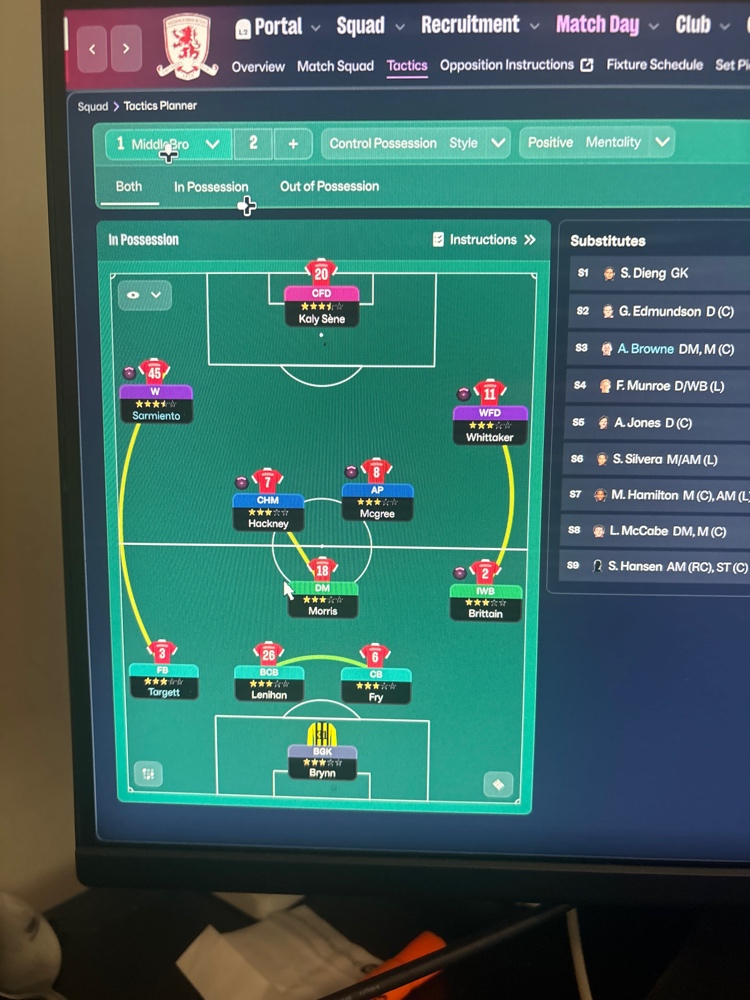
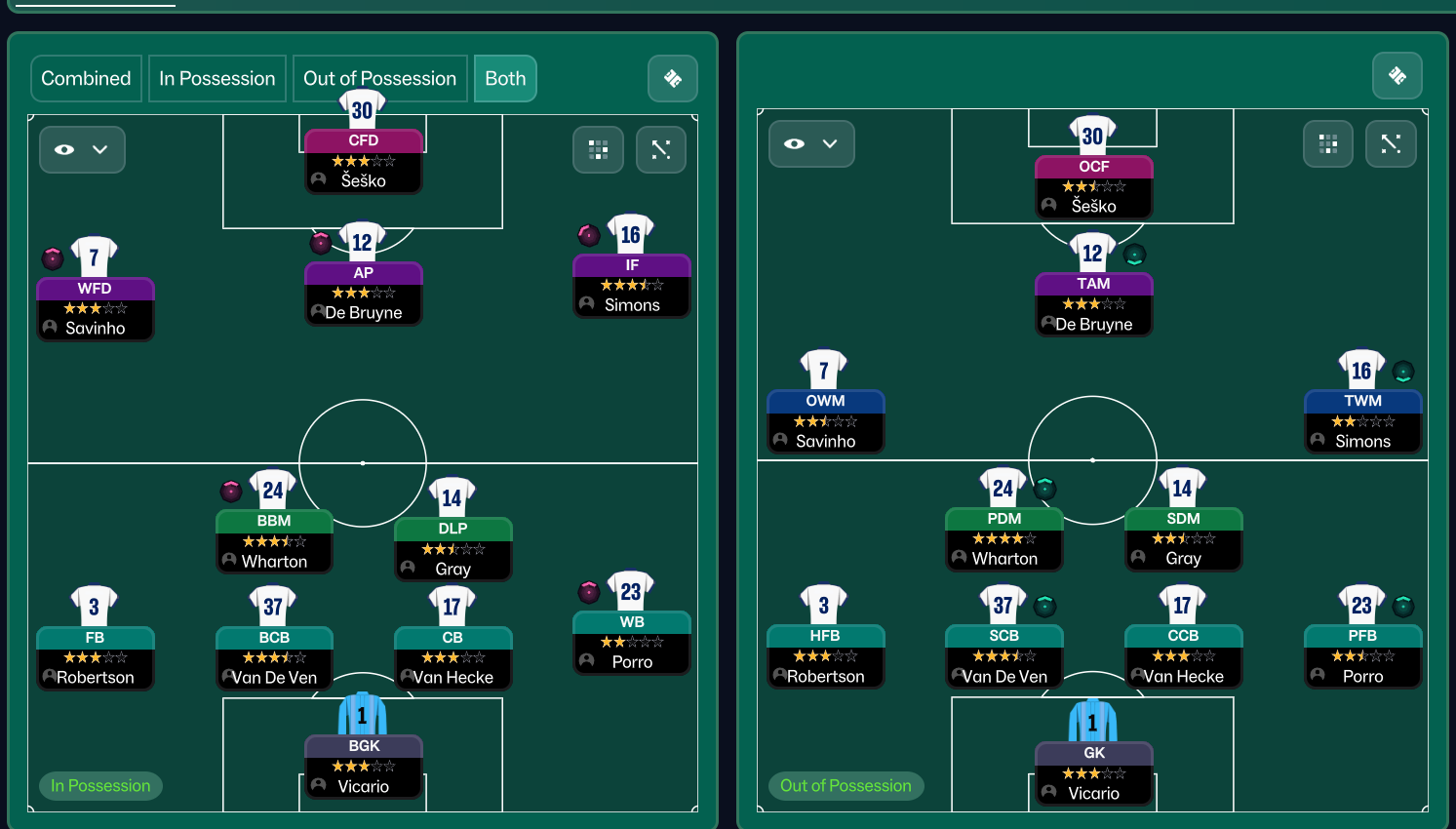
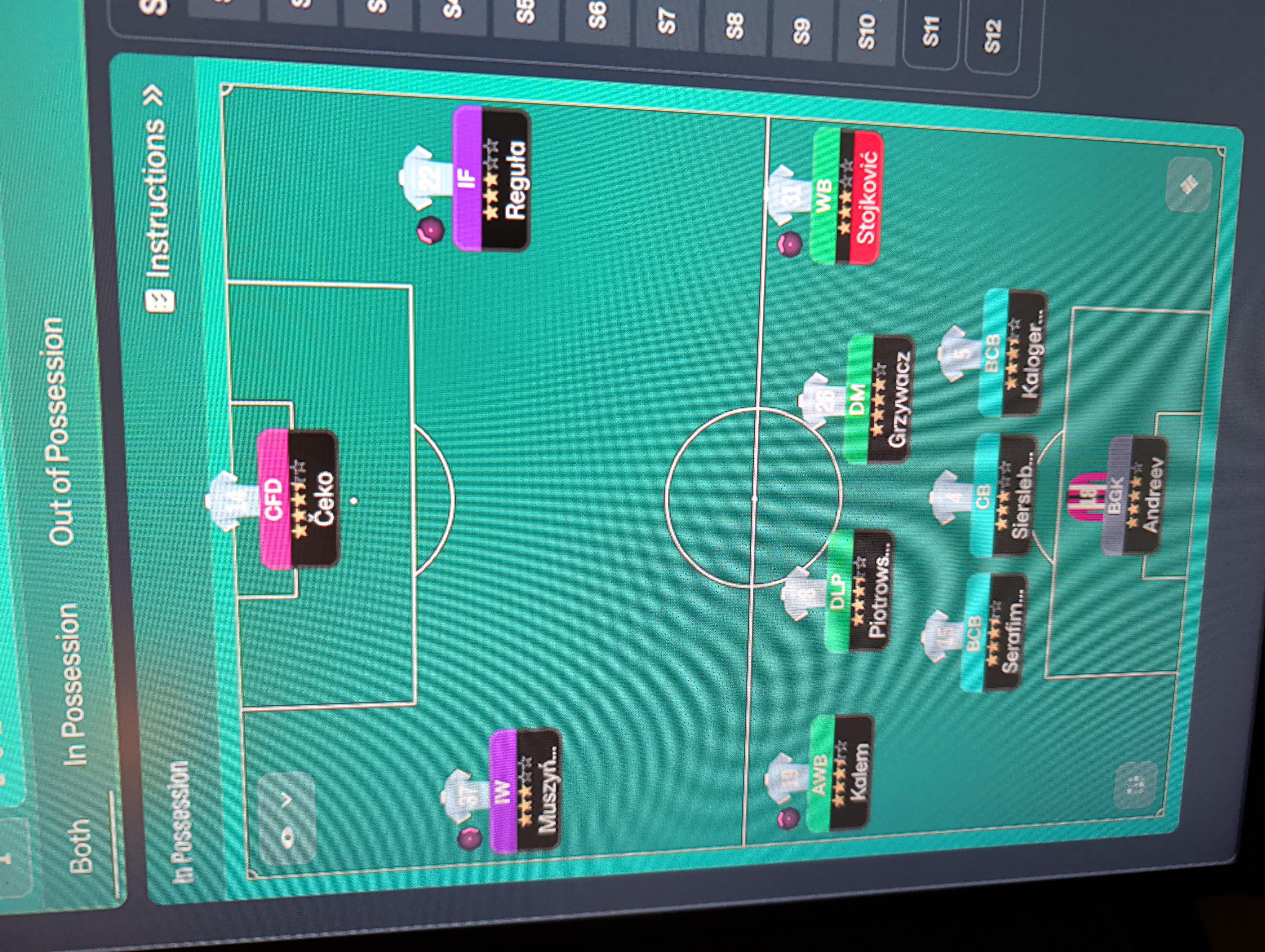
More Vertical Tiki-Taka tactics
Guides for this formation
The tactical theory behind the 4-2-3-1 Wide: roles, instructions, and the trade-offs that decide whether the system holds up.
Player pairings
Midfield Pairs in 4-2-3-1 and 4-4-2
Double pivots and flat pairs in 4-2-3-1 and 4-4-2: when each pairing works, when it collapses, and the AMC unicorn that rescues both.
Read guide
Playing styles
Gegenpressing: A Full Guide
Klopp-style gegenpressing in FM, including squad profile, line-and-press pairing, sustainable workload, and the antipatterns to avoid.
Read guide