Uploaded Tactic
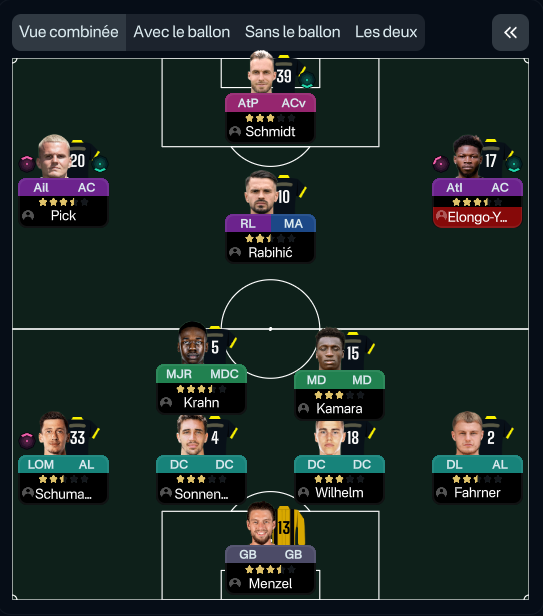
Formation & Style
Tactical Style:Fluid Counter Attack
Mentality:Positive
Formation:4-2-3-1 Wide
Team Fluidity:Structured
In Possession
Focus on quick transitions through counter-attacks.
Utilize wide play through wingers (Rabić and Elongo-Yamé) to stretch the opposition's defense.
Encourage overlapping runs from the full-backs (Fahrner and Schumann) to create space.
In Transition
Counter quickly when possession is won to exploit opponent's disorganization.
Drop into a compact midfield shape when possession is lost.
Out of Possession
Press aggressively in the attacking third to regain possession quickly.
Utilize a high defensive line to compress the space available to the opponent.
Team Shape Without Ball
Shape:Compact 4-2-3-1
Description:The team defends with a strong midfield presence while maintaining a traditional back four.
Evidence:Flat four of defenders with two midfielders supporting from behind.
Team Shape With Ball
Shape:Dynamic 4-2-3-1
Description:Wide play from attacking midfielders with overlapping full-backs creating space.
Evidence:Wide Midfielder (Rabić) and Inside Forward (Pick) working in tandem with advancing full-backs.
Phase Description
Attacking Play
Focused on quick transitions through the midfield, seeking to exploit overlaps and space in wide areas.
Defensive Transition
Drop back quickly to form a compact defensive structure, pressing to recover possession.
Main Focus
Utilizing width and speed in attack while maintaining defensive solidity.
Key Strengths
Dynamic Wing Play
Utilization of wingers (Rabić and Elongo-Yamé) adds width, creating spaces for midfielders and strikers.
Solid Midfield Control
Presence of Ball-Winning Midfielder (Krahn) ensures recovery of possession and supports defense.
Versatile Attacking Options
With an Advanced Forward (Schmidt) leading the line, the team has multiple goal-scoring avenues.
Conflicting Directions
Pressing Vulnerabilities
High press can leave the defense exposed to counter-attacks if the ball is lost quickly.
Squashed Midfield
Double pivot might become congested, limiting creativity if both midfielders are too static.
Reliance on Full-Backs
Heavy dependence on full-backs for width may lead to imbalances if they are caught upfield.
Tactical Suggestions
Increase Midfield Mobility
Introducing a more dynamic midfielder allows better ball progression and creativity.
Balance Full-Back Duties
Ensure one full-back stays back while the other goes forward to maintain defensive solidity.
Adjust Pressing Strategy
Consider a less aggressive pressing strategy to prevent countering threats.
Ask Questions About Your Lineup
Related Tactics
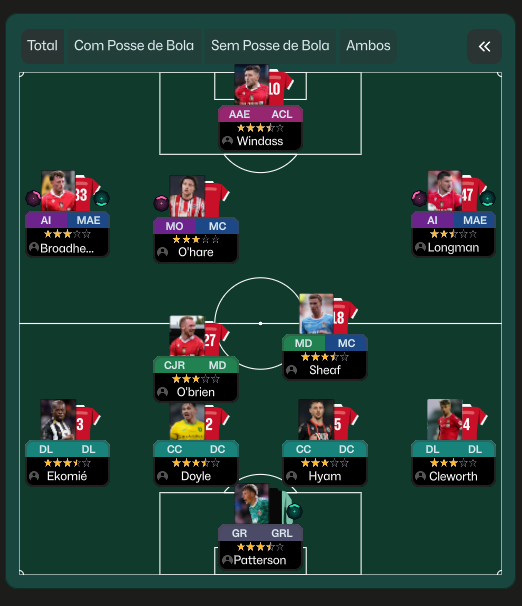
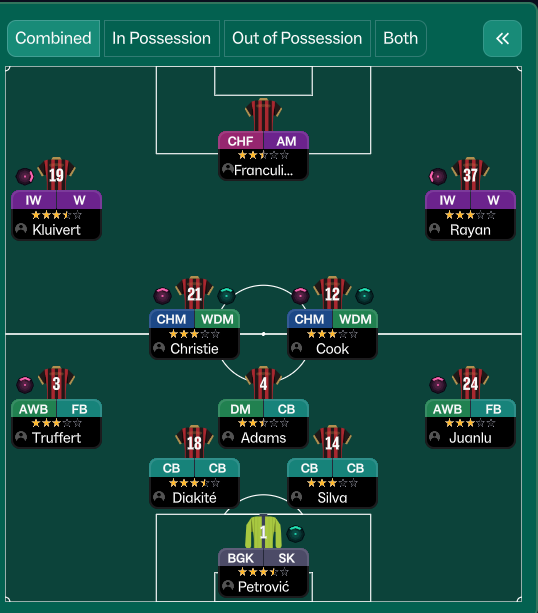
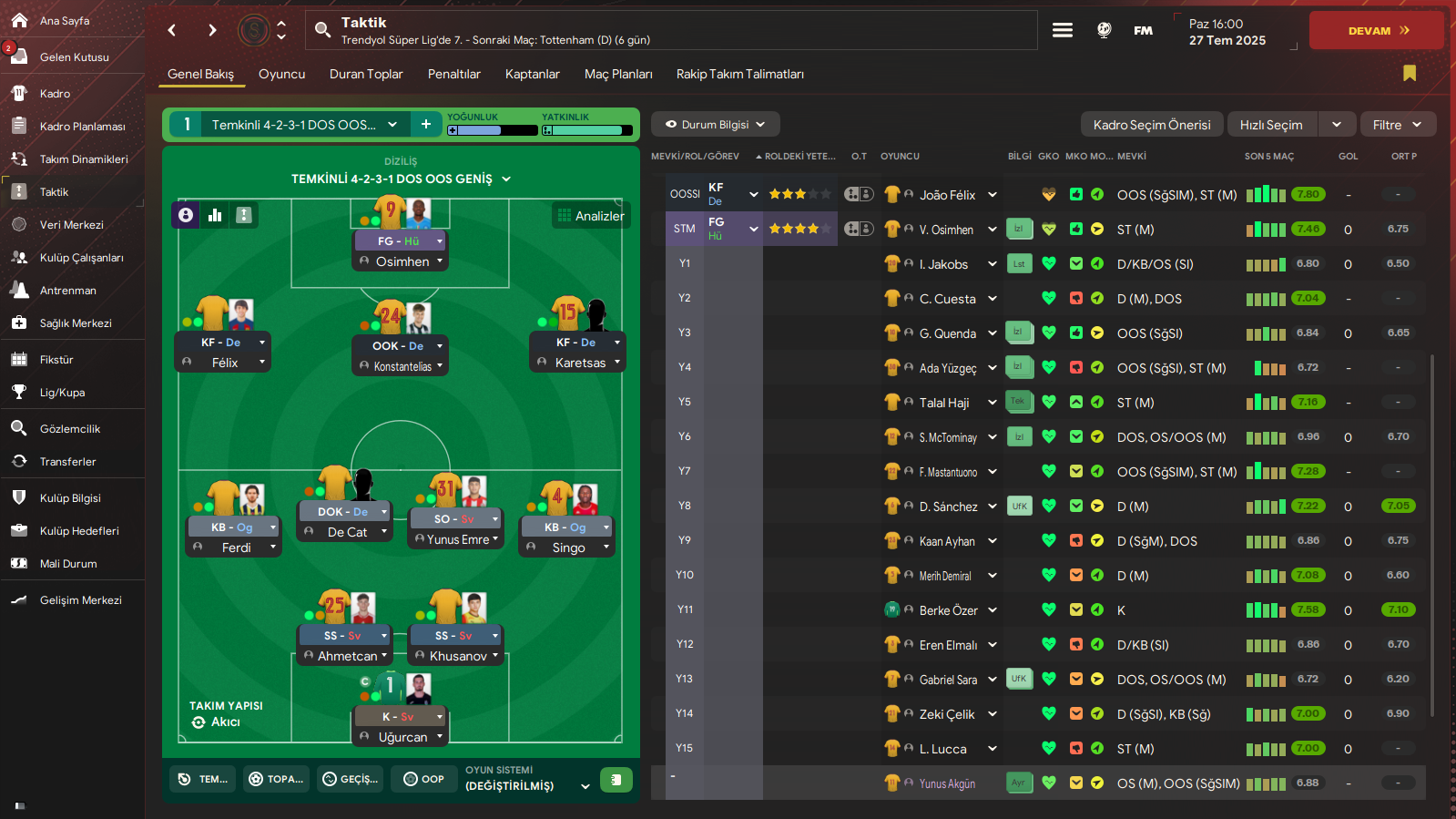

More Fluid Counter Attack tactics
Guides for this formation
The tactical theory behind the 4-2-3-1 Wide: roles, instructions, and the trade-offs that decide whether the system holds up.
Player pairings
Midfield Pairs in 4-2-3-1 and 4-4-2
Double pivots and flat pairs in 4-2-3-1 and 4-4-2: when each pairing works, when it collapses, and the AMC unicorn that rescues both.
Read guide
Playing styles
Gegenpressing: A Full Guide
Klopp-style gegenpressing in FM, including squad profile, line-and-press pairing, sustainable workload, and the antipatterns to avoid.
Read guide