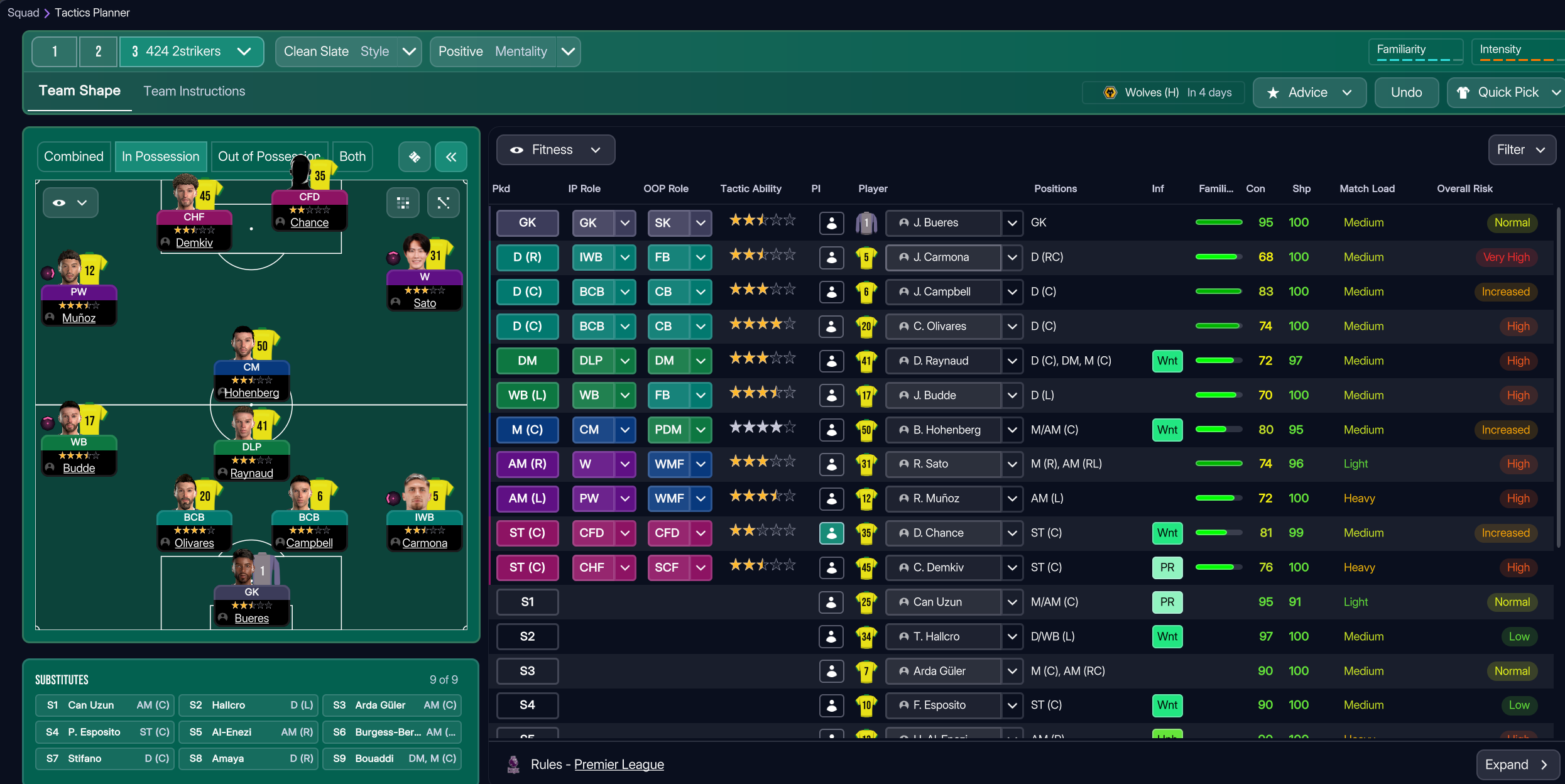
Uploaded Tactic
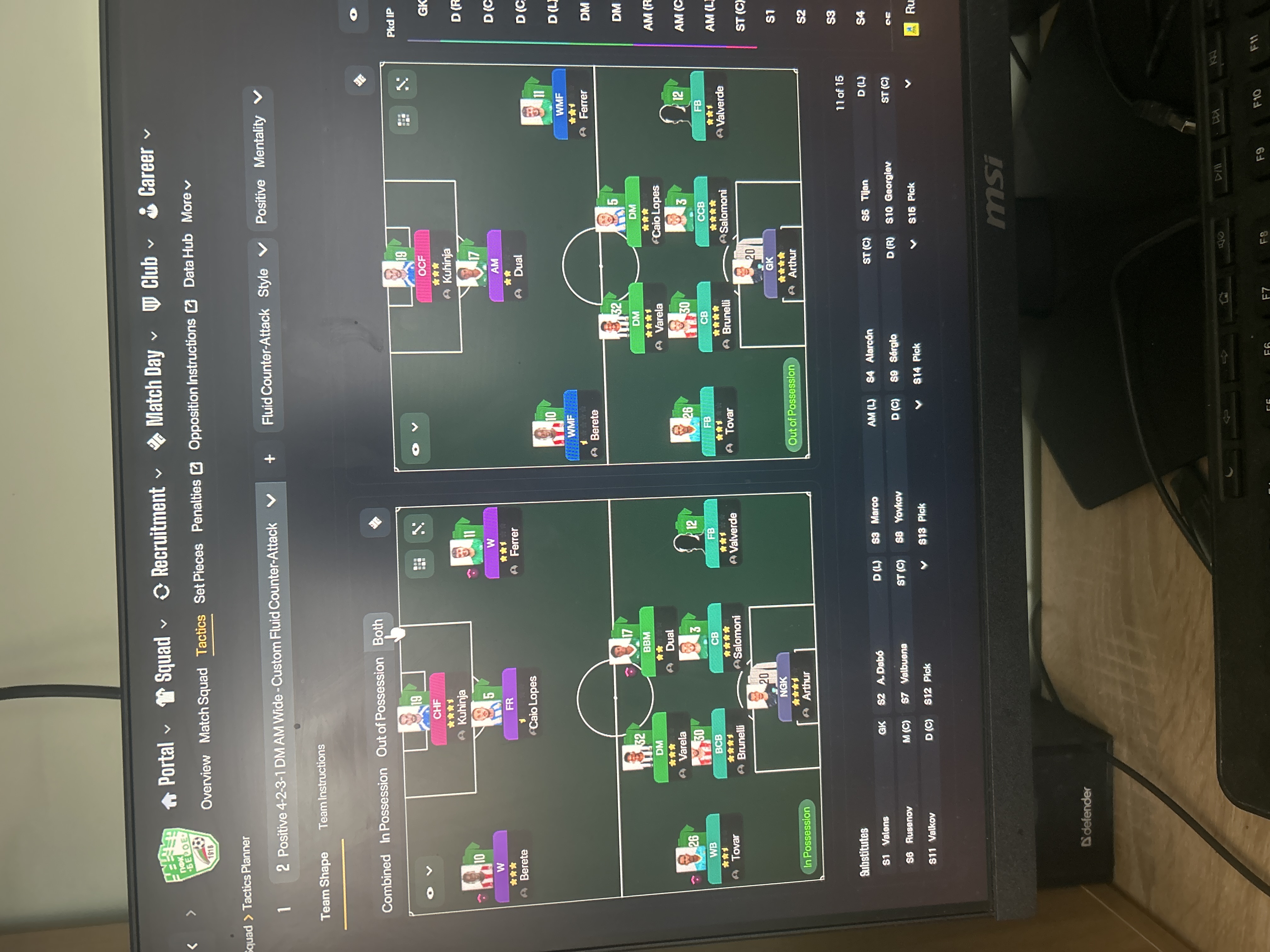
Formation & Style
Tactical Style:Fluid Counter-Attack
Mentality:Positive
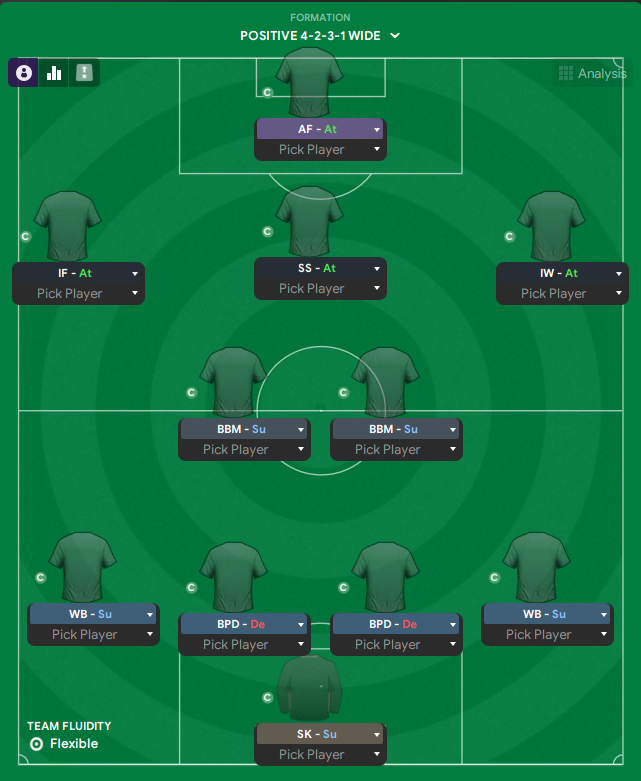
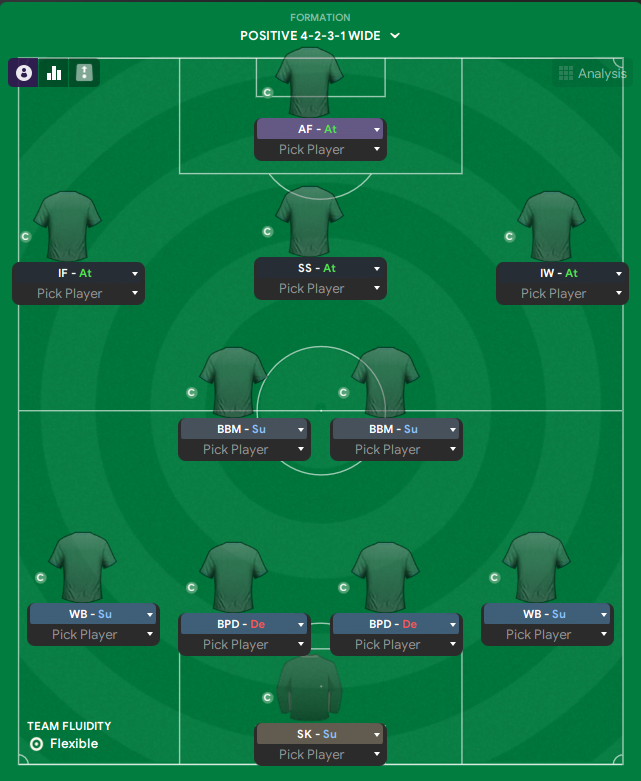
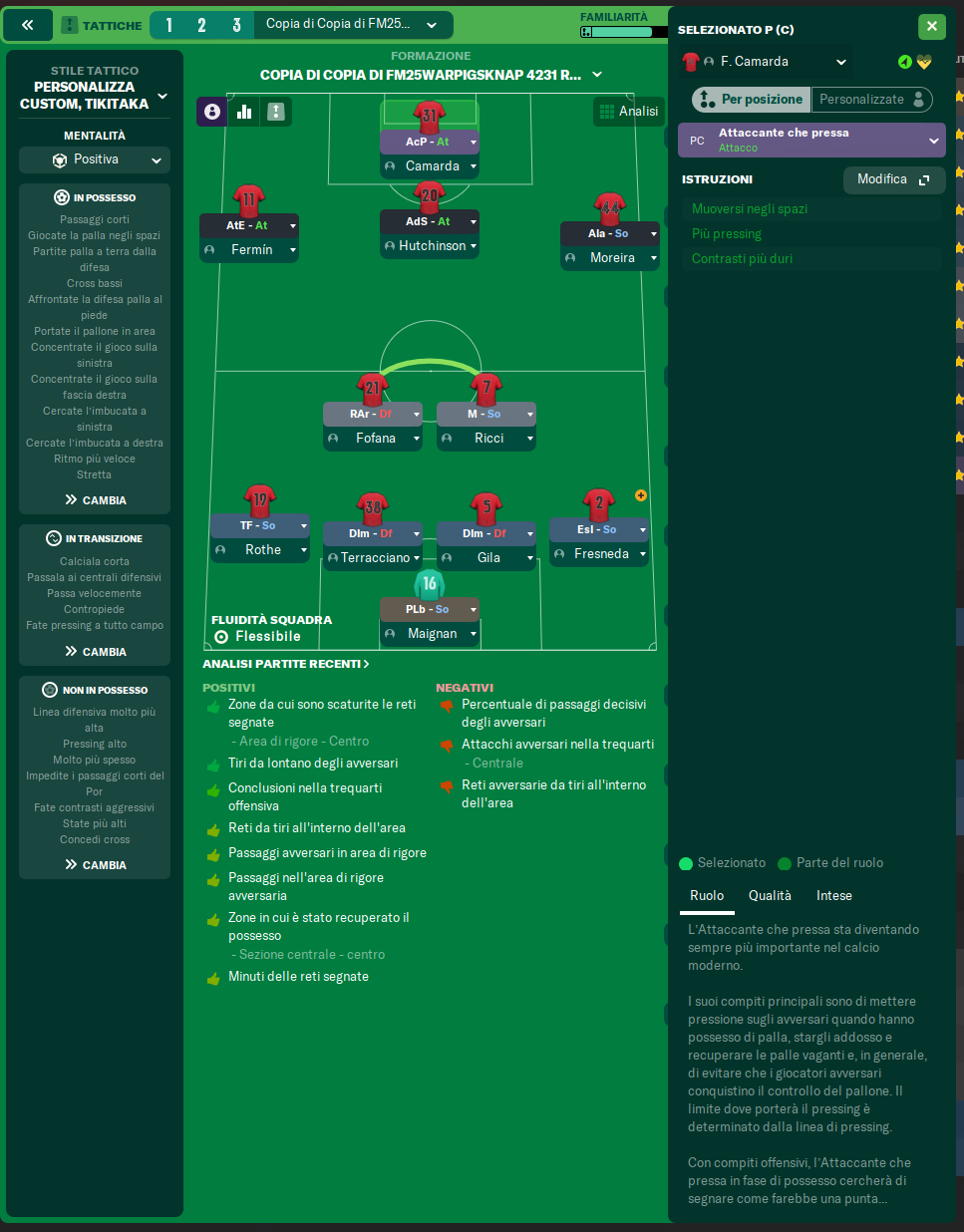
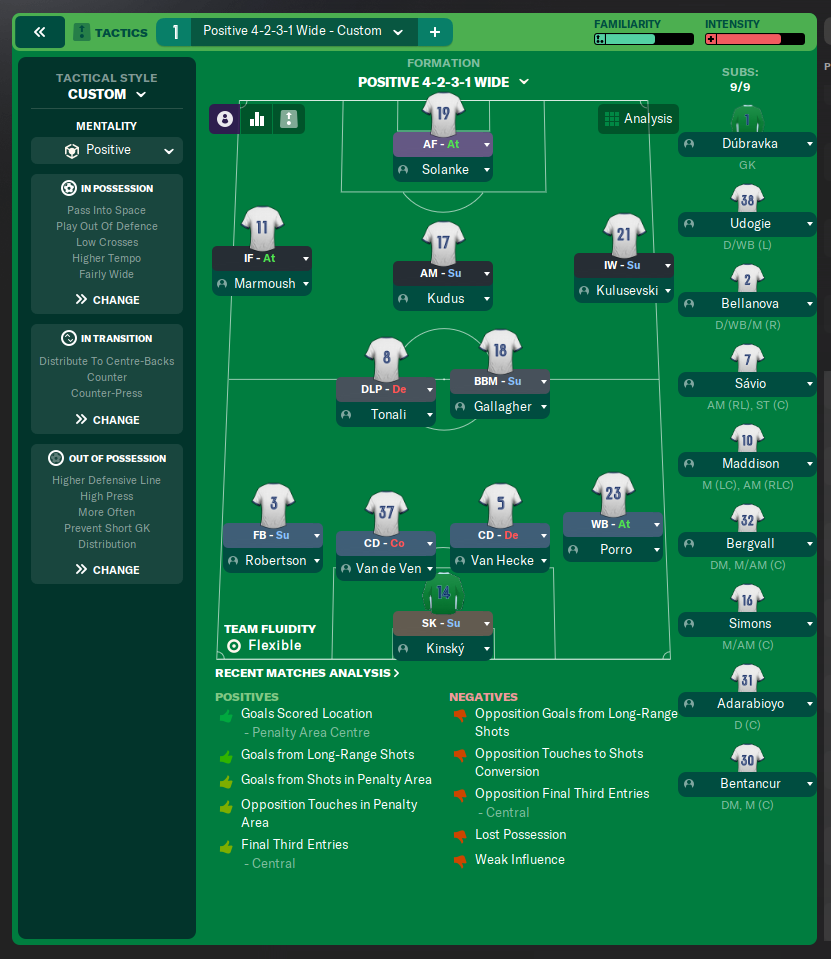
Formation:4-2-3-1 Wide
Team Fluidity:Fluid
In Possession
Play Out Of Defence
Work Ball Into Box
Focus Play Down Left
In Transition
Counter
Counter-Press
Out of Possession
Higher Defensive Line
More Urgent Pressing
Team Shape Without Ball
Shape:4-2-3-1
Description:A balanced defensive shape that provides cover both centrally and on the flanks.
Evidence:2 CBs and 2 FBs provide stability, while the DM supports defensive duties.
Team Shape With Ball
Shape:4-2-3-1
Description:Attacking width is created by WMs and a central attacking midfielder supporting the forward.
Evidence:The AM position is flexible, allowing it to connect with both WMs and the CF.
Phase Description
Attacking Play
Utilizes width effectively while looking to penetrate through quick, organized movements.
Defensive Transition
Players quickly transition to pressing high up the pitch upon losing possession.
Main Focus
Quick counter-attacking play, with emphasis on exploiting wide areas.
Key Strengths
Dynamic Width
Utilizes WMs effectively to stretch the opposition's defensive line.
Counter-Attacking Threat
Ability to transition quickly from defense to attack poses threats to opponents.
Central Playmaking
The BBM supports both defense and attack, creating central overloads.
Conflicting Directions
High Defensive Line
May expose the defense to quick counter-attacks.
Fluidity with Rigid Instructions
Fluid team shape may contradict against solid, organized defenses.
Inconsistent Pressing
May lead to gaps when players are not coordinated.
Tactical Suggestions
Consider Tactical Flexibility
Switching to a more conservative shape during tough matches can provide better stability.
Use of Subs for Fresh Legs
Introduce fresh players to maintain intensity in pressing.
Adjust Pressing Intensity
Tweak pressing levels based on the opponent's playing style.
Ask Questions About Your Lineup
Related Tactics
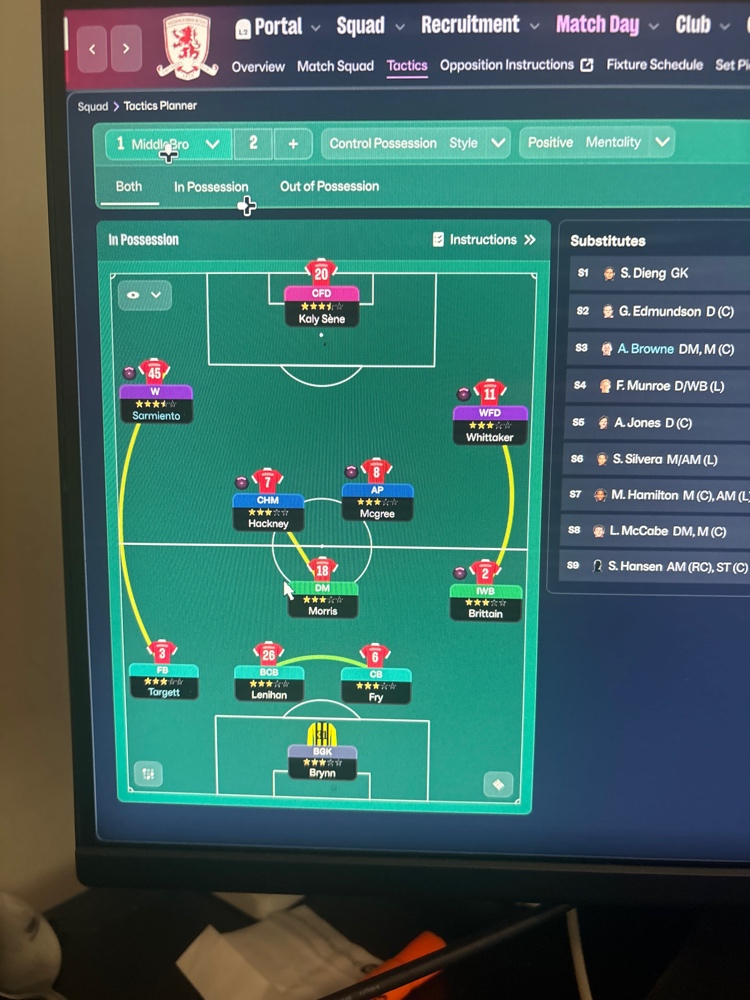
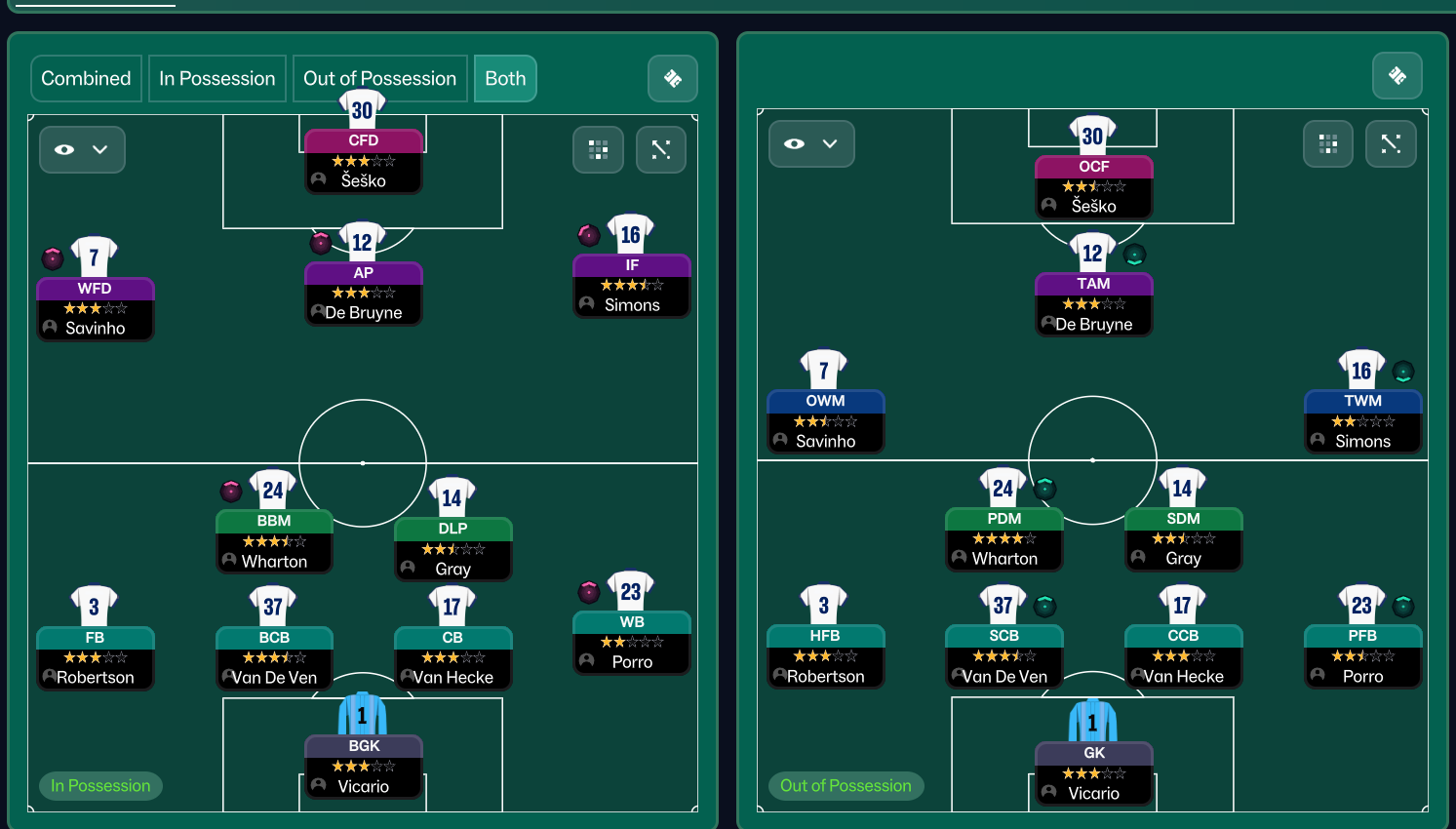
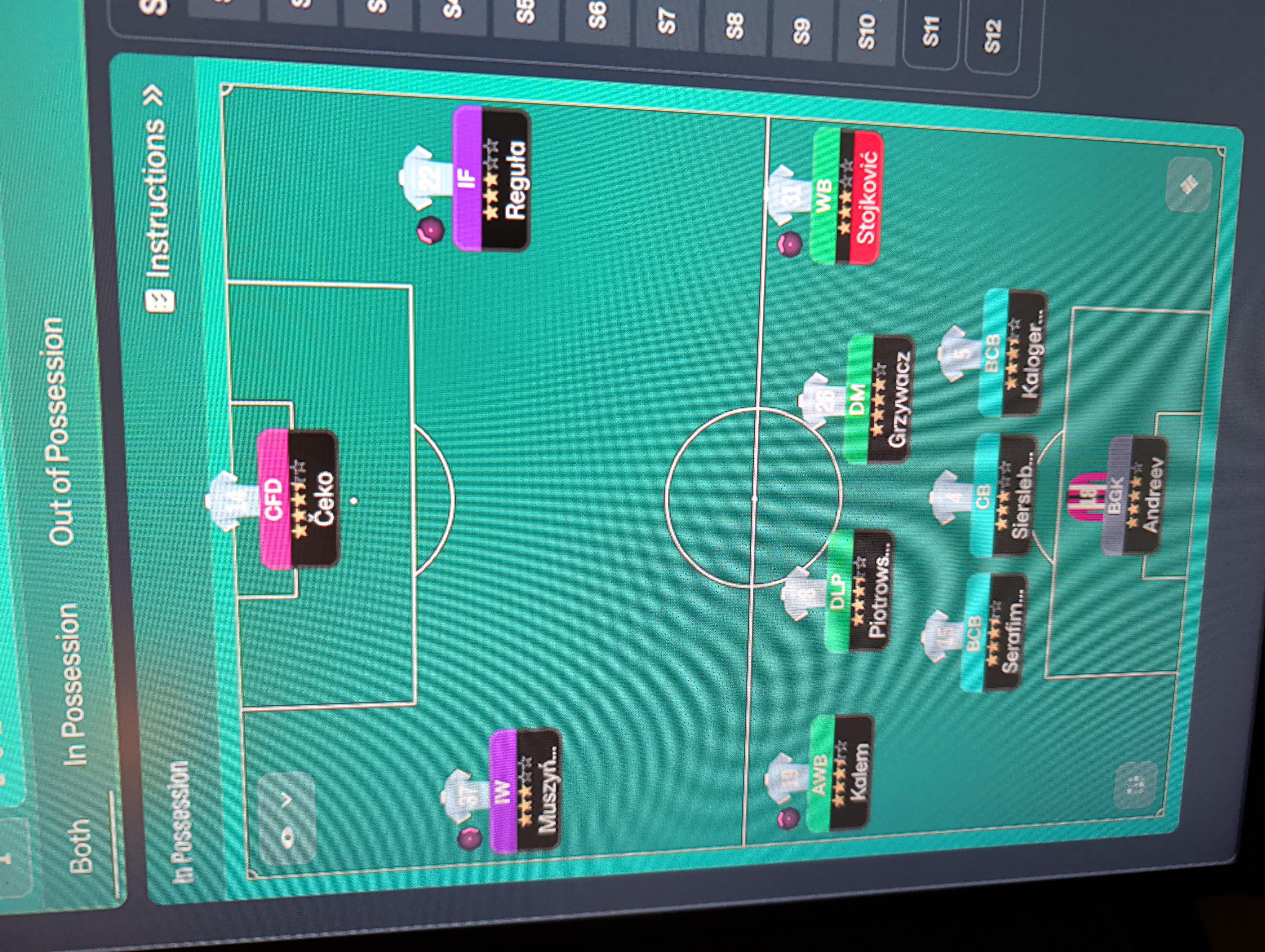
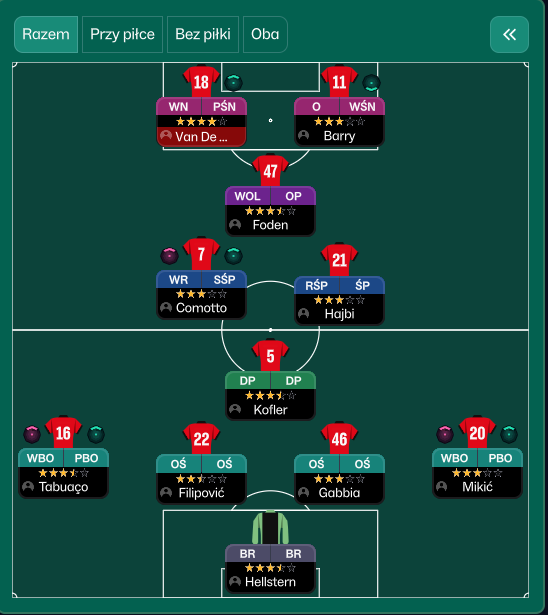
More Fluid Counter-Attack tactics
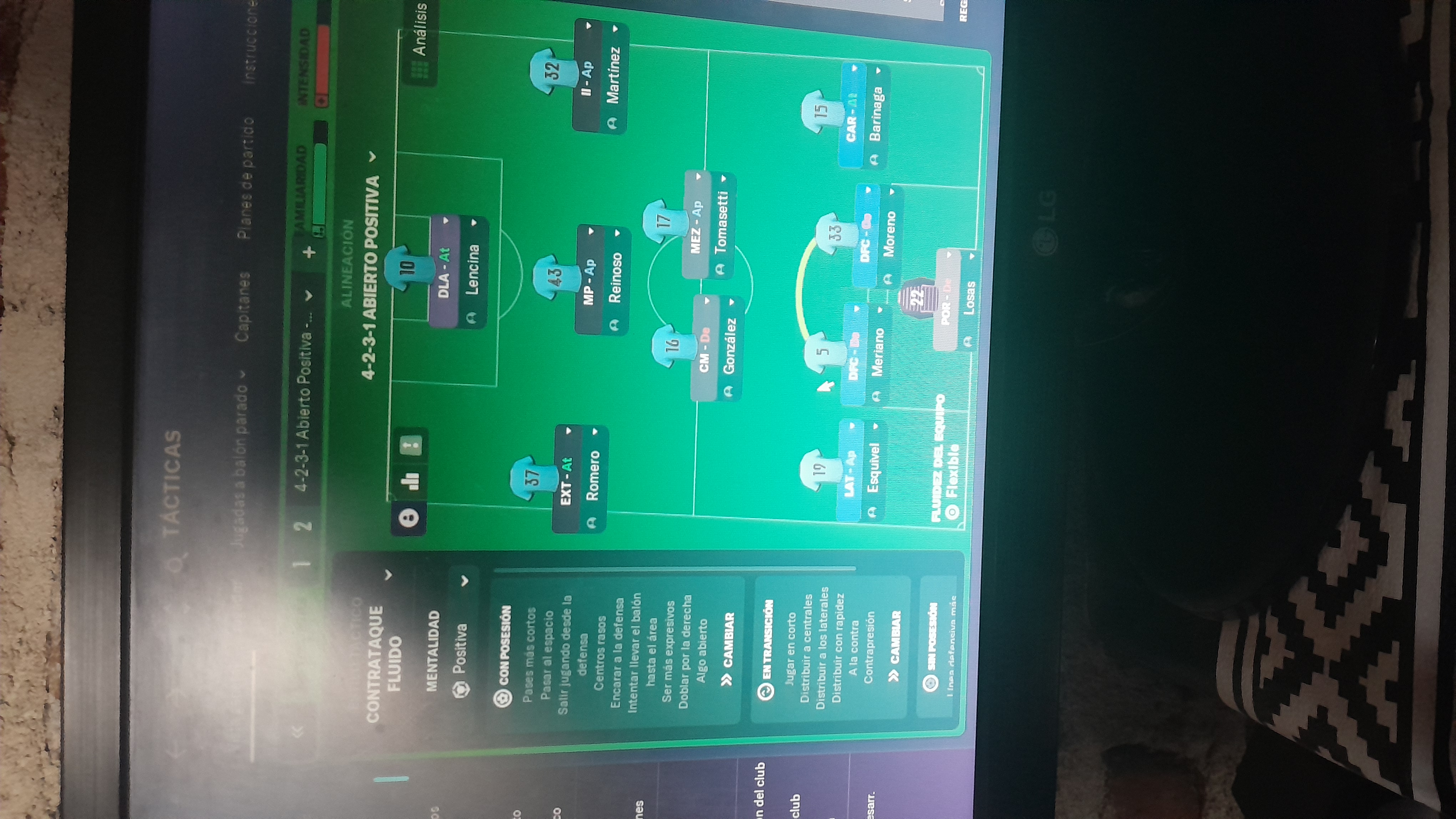
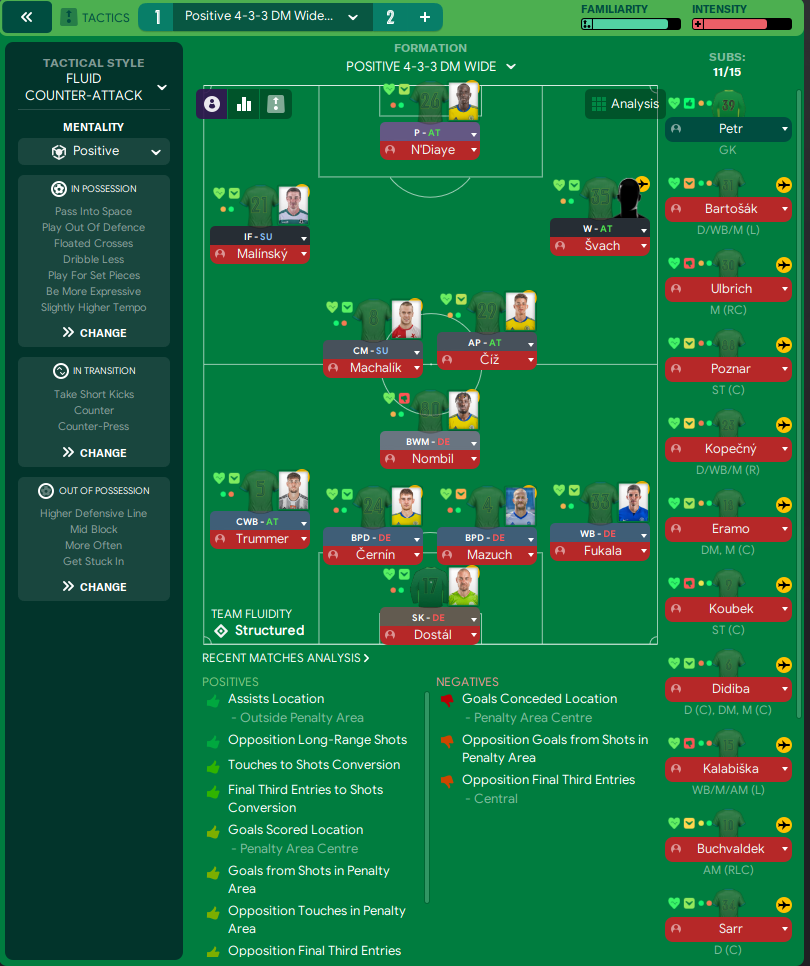
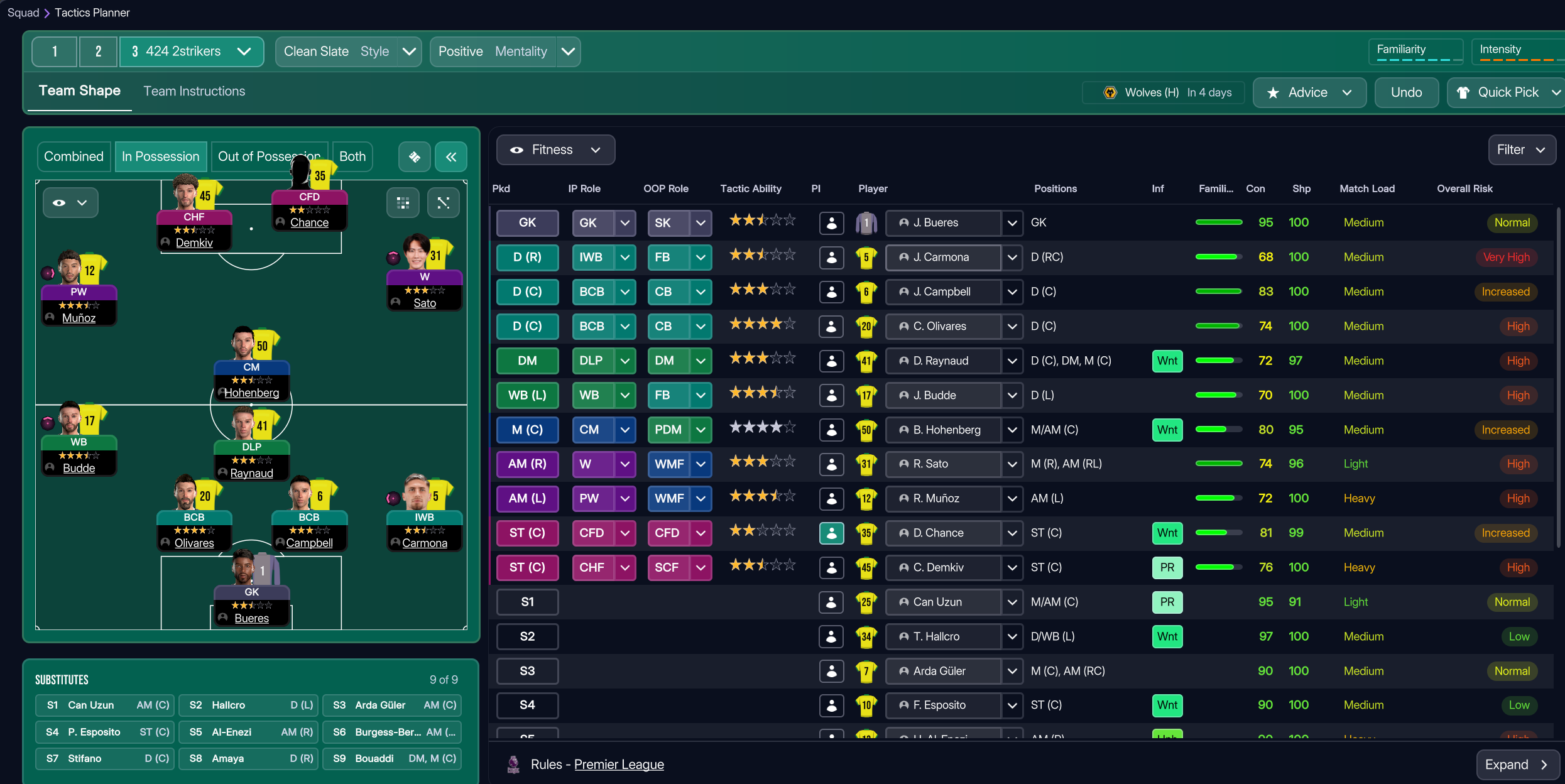
Guides for this formation
The tactical theory behind the 4-2-3-1 Wide: roles, instructions, and the trade-offs that decide whether the system holds up.
Player pairings
Midfield Pairs in 4-2-3-1 and 4-4-2
Double pivots and flat pairs in 4-2-3-1 and 4-4-2: when each pairing works, when it collapses, and the AMC unicorn that rescues both.
Read guide
Playing styles
Gegenpressing: A Full Guide
Klopp-style gegenpressing in FM, including squad profile, line-and-press pairing, sustainable workload, and the antipatterns to avoid.
Read guide