Uploaded Tactic
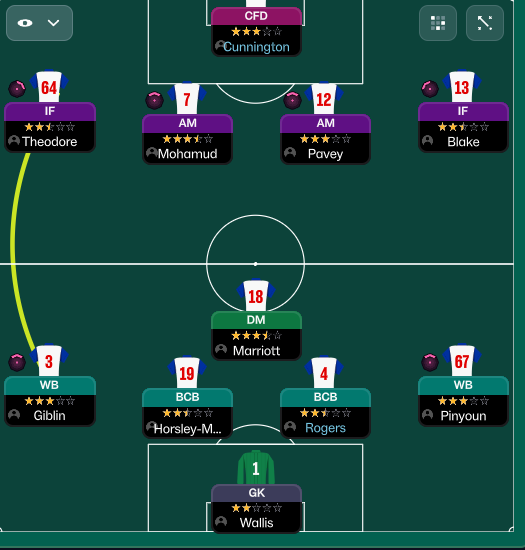
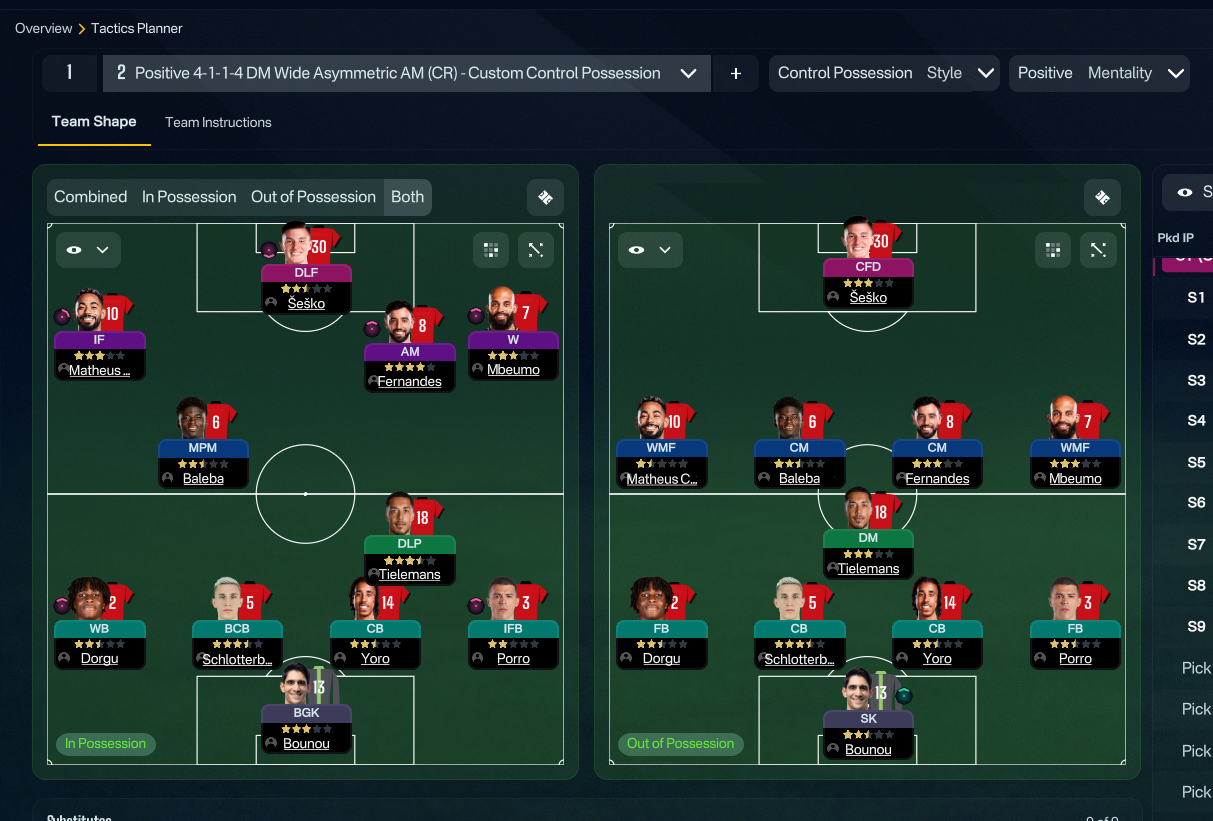
Formation & Style
Tactical Style:Control Possession
Mentality:Positive
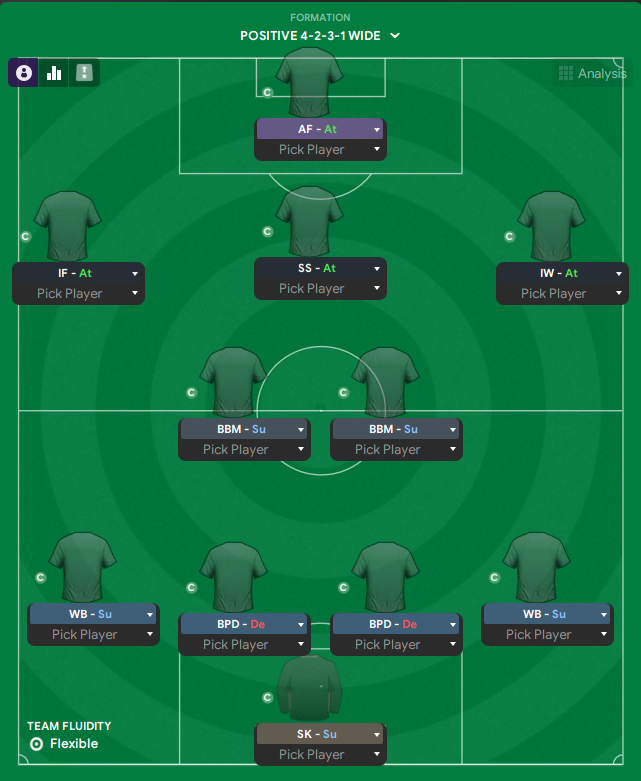
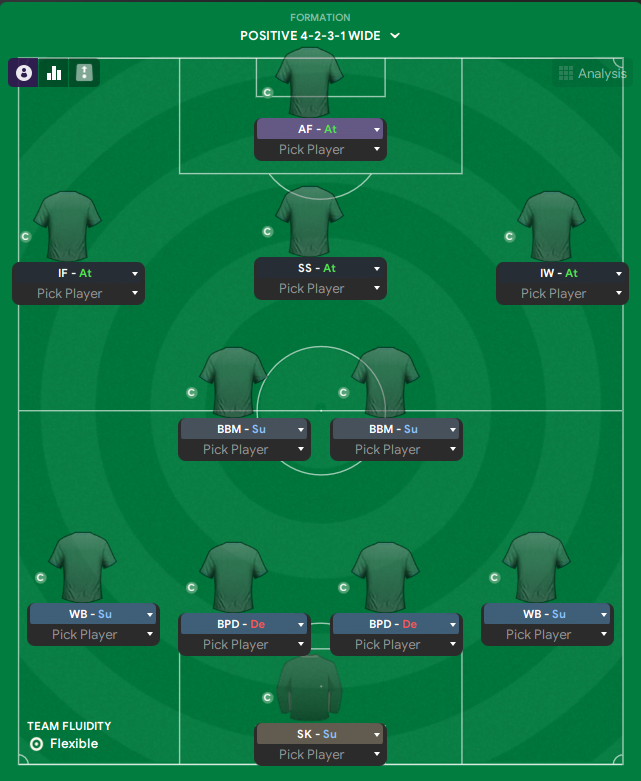
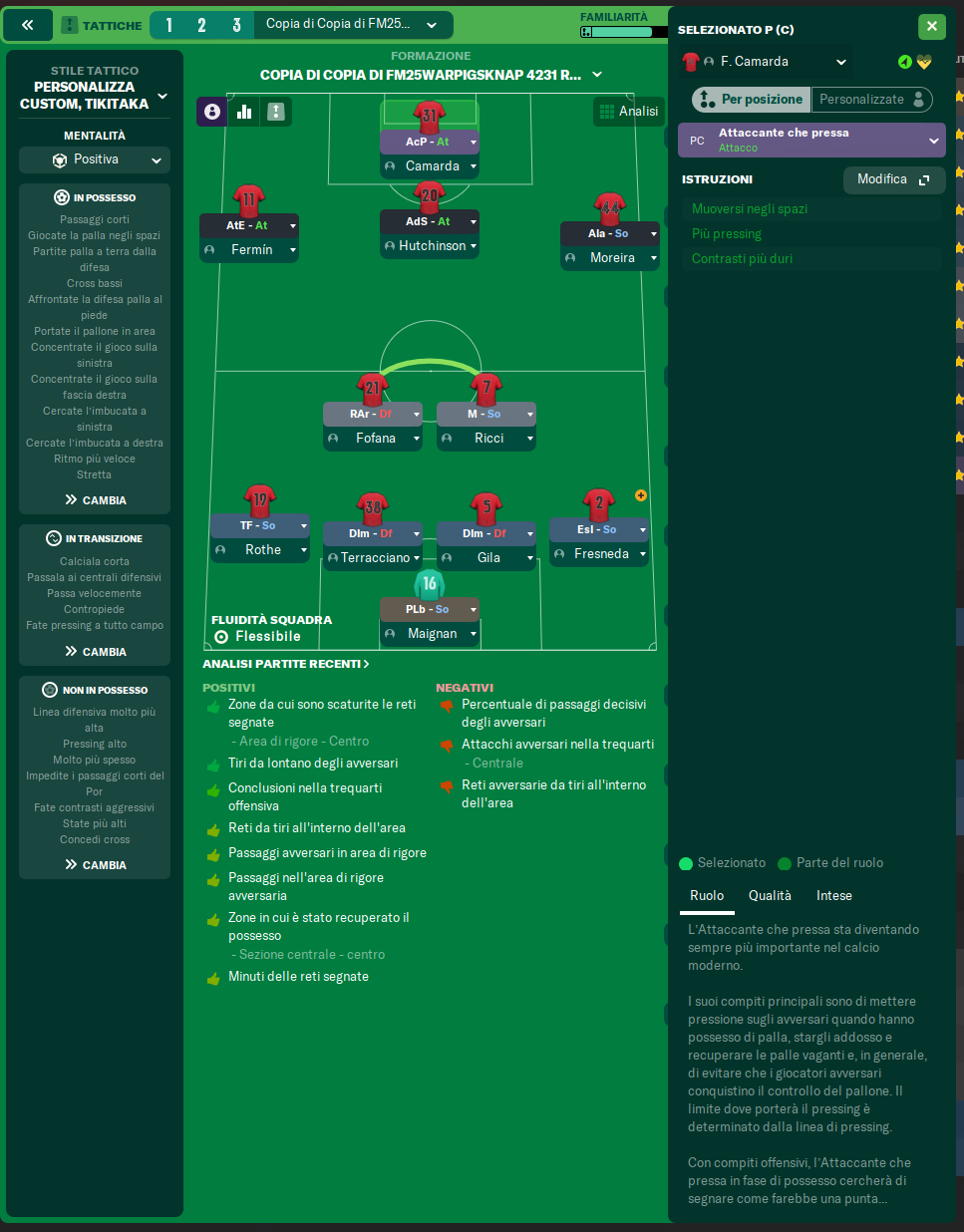
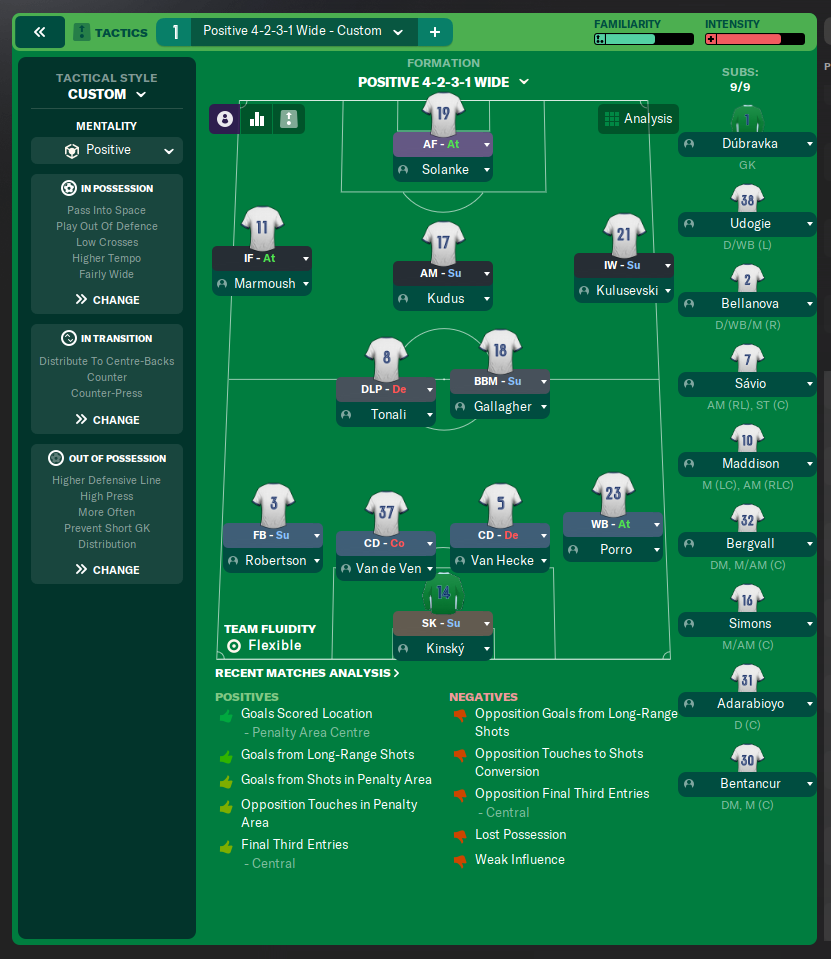
Formation:4-2-3-1 Wide
Team Fluidity:Structured
In Possession
Play Out Of Defence
Be More Expressive
Work Ball Into Box
In Transition
Counter-Press
Counter
Out of Possession
Higher Defensive Line
More Urgent Pressing
Team Shape Without Ball
Shape:4-2-3-1
Description:The team sets up with a flat four at the back, supported by a defensive midfielder providing cover.
Evidence:DM at [3,3] and two CBs at [2,2] and [2,4] offer defensive solidity.
Team Shape With Ball
Shape:4-2-3-1 with wide play
Description:The attacking shape allows for width from the wing-backs and inside forwards who cut inside.
Evidence:IFs at [6,1] and [6,5] create space and overload in central areas.
Phase Description
Attacking Play
The tactic relies on building from the back with a focus on retaining possession and gradually breaking down the opposition.
Defensive Transition
Upon losing the ball, the team immediately attempts to win possession back through a high press.
Main Focus
Creating high-quality chances through quick interchanges in and around the opposition's penalty area.
Key Strengths
Width from Wing-Backs
Both wing-backs can provide width and support the attack effectively.
Dynamic Attacking Trio
The interplay between the two inside forwards and the central forward creates various goal-scoring opportunities.
Solid Defensive Structure
A strong defensive core with a DM allows for resilience against counters.
Conflicting Directions
Potential Overcommitment in Attack
The high pressing style may leave gaps in defense if the team loses possession quickly.
Lack of Defensive Midfield Support
When pushing forward, the DM may be isolated, leading to exposure on counter-attacks.
Too Many Advanced Players
Having many players in offensive positions can lead to congestion in the final third.
Tactical Suggestions
Adjust Pressing Intensity
Consider moderating the pressing intensity to balance between pressing and maintaining shape.
Utilize the DM for Counter-Attacks
Encourage the defensive midfielder to distribute quickly during counter-attacking scenarios.
Incorporate a Central Playmaker
Adding a deeper playmaker can enhance creativity and link midfield to attack.
Ask Questions About Your Lineup
Related Tactics
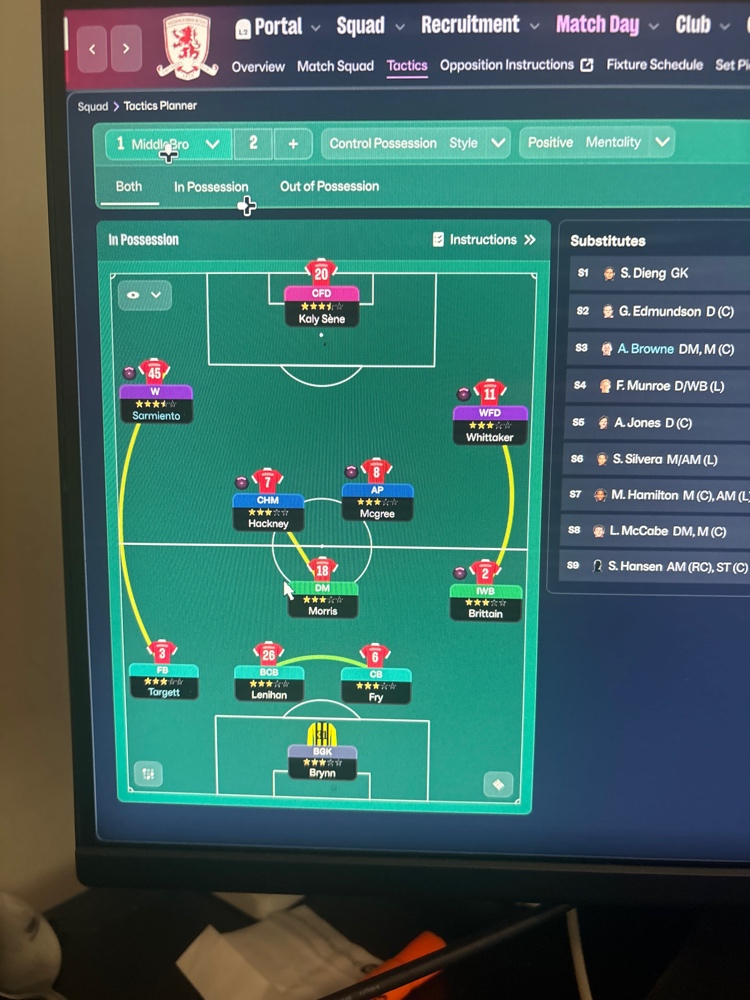
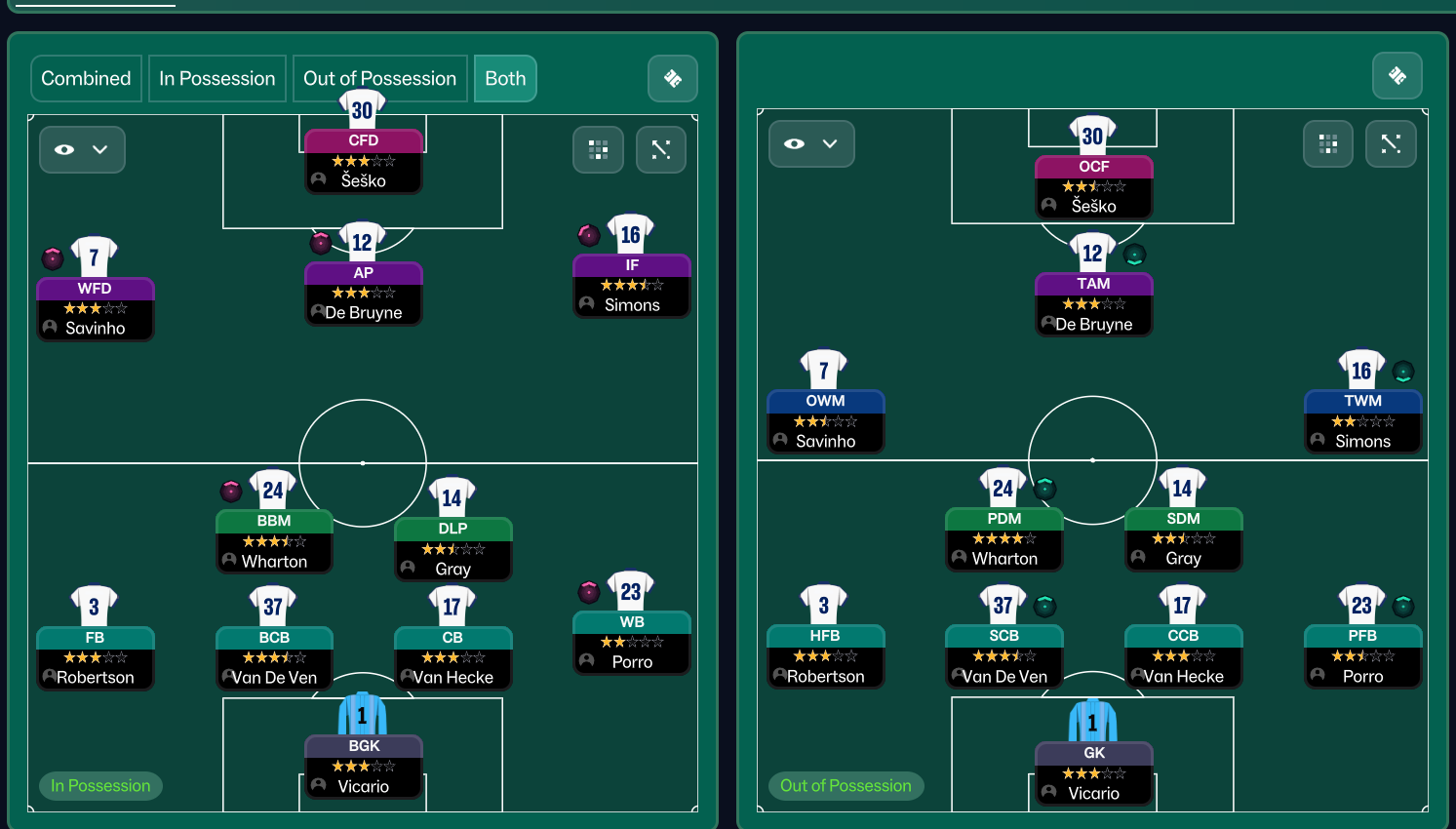
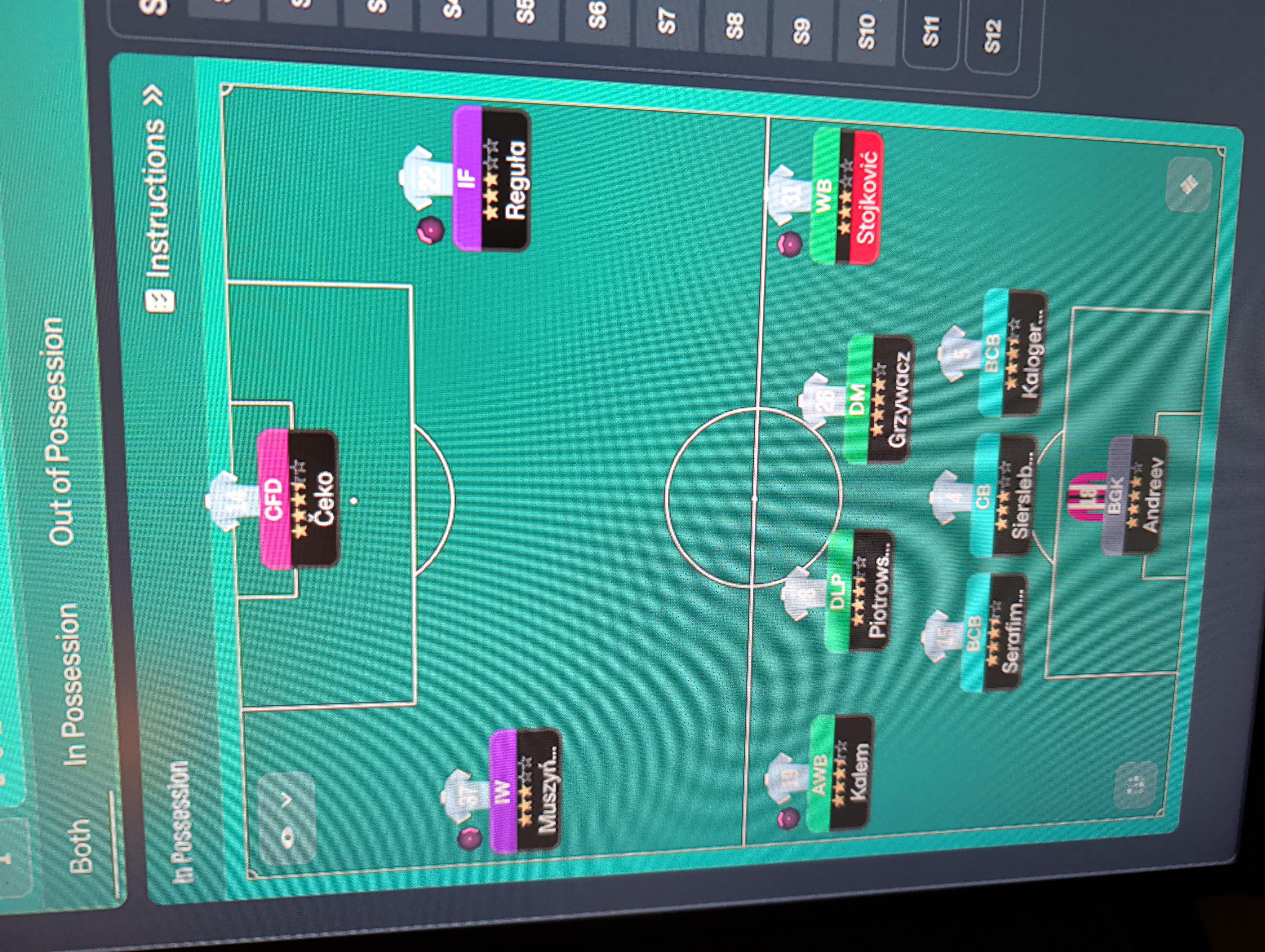
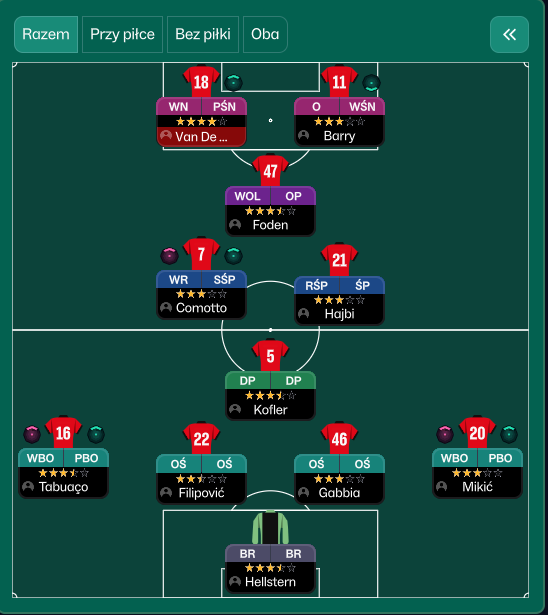
More Control Possession tactics
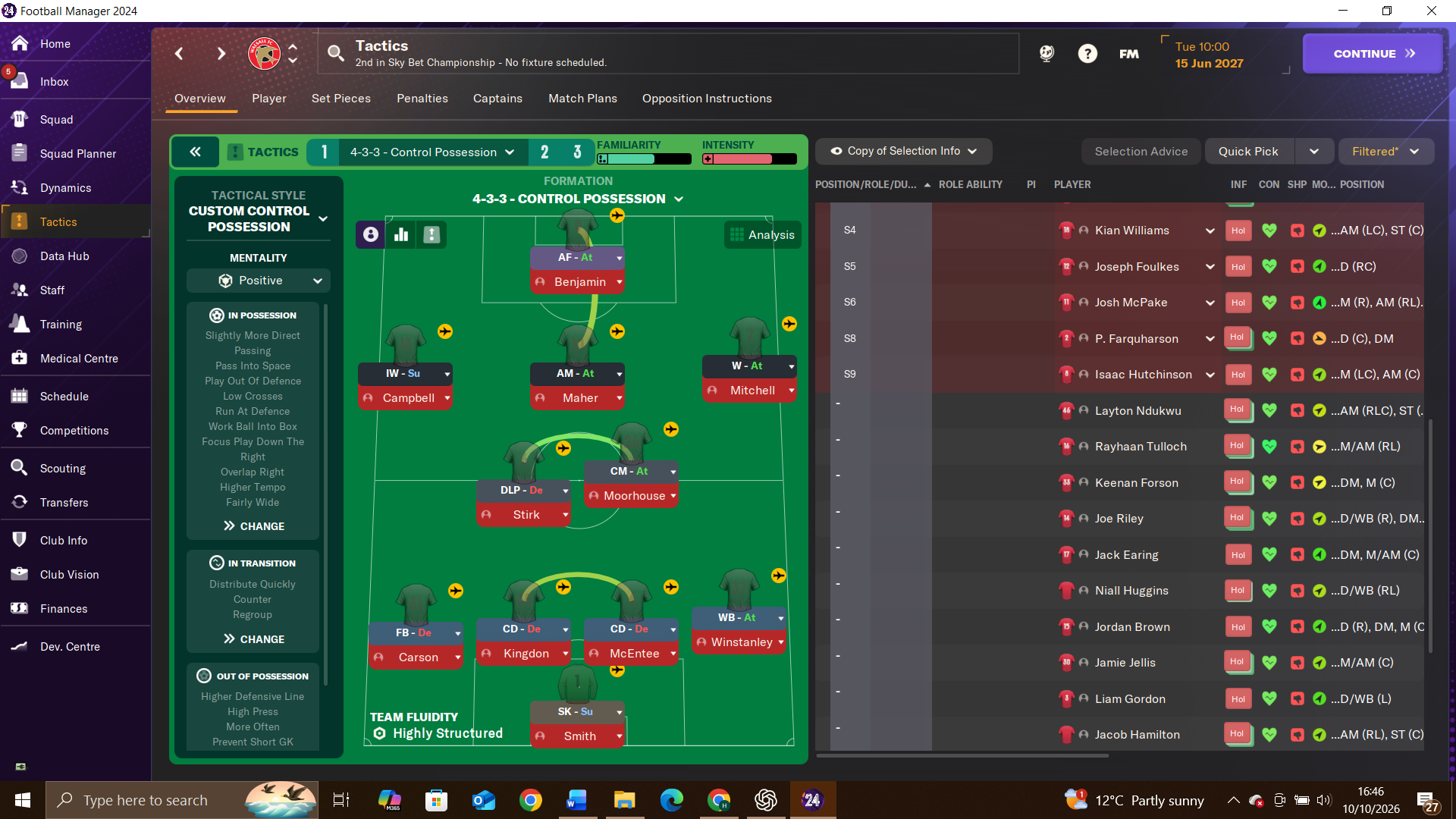
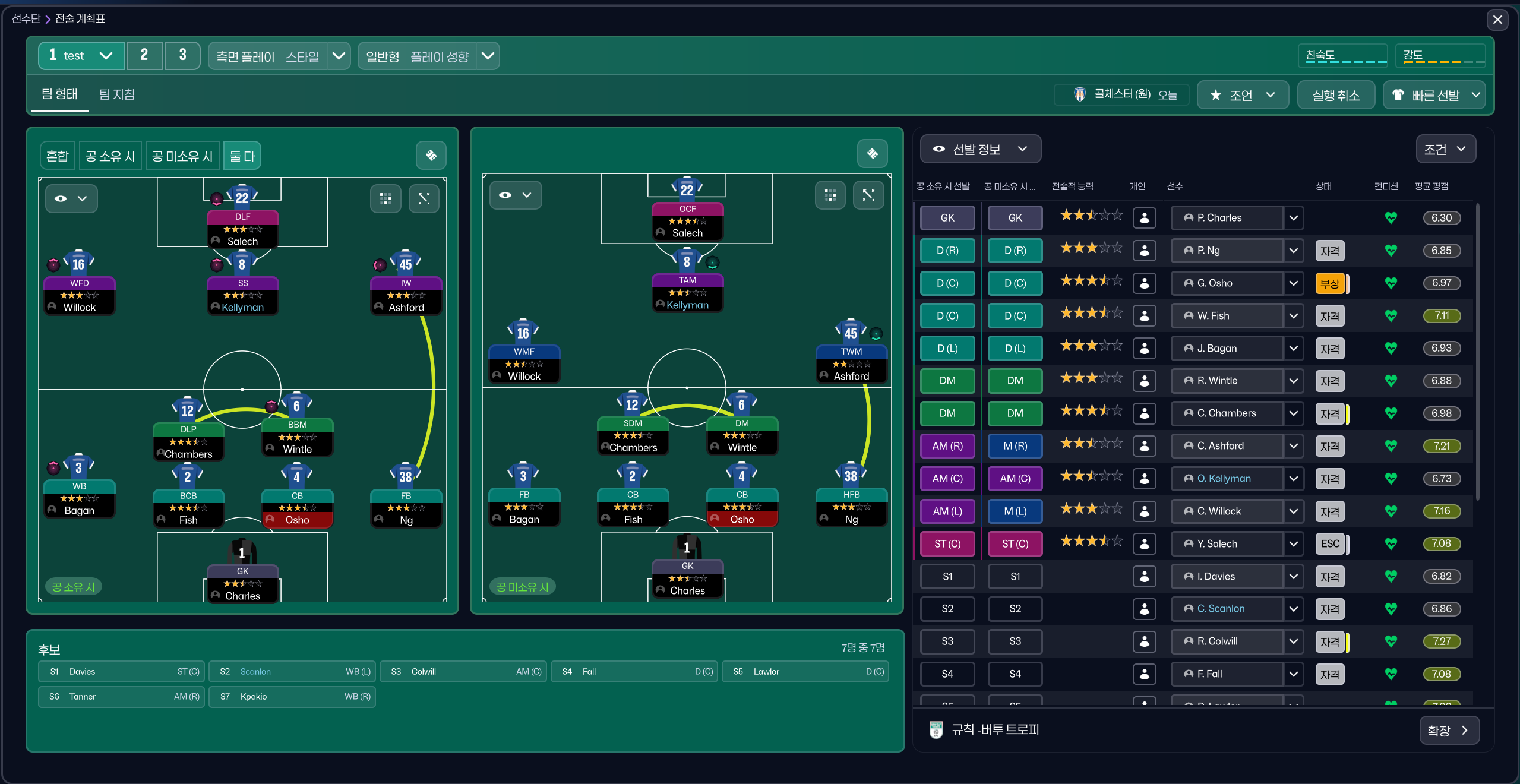
Guides for this formation
The tactical theory behind the 4-2-3-1 Wide: roles, instructions, and the trade-offs that decide whether the system holds up.
Player pairings
Midfield Pairs in 4-2-3-1 and 4-4-2
Double pivots and flat pairs in 4-2-3-1 and 4-4-2: when each pairing works, when it collapses, and the AMC unicorn that rescues both.
Read guide
Playing styles
Gegenpressing: A Full Guide
Klopp-style gegenpressing in FM, including squad profile, line-and-press pairing, sustainable workload, and the antipatterns to avoid.
Read guide