
4-2-3-1 Wide
Utilizing a flexible formation allows for fluid interchanging positions and offensive movement, keeping the opposition on their toes.
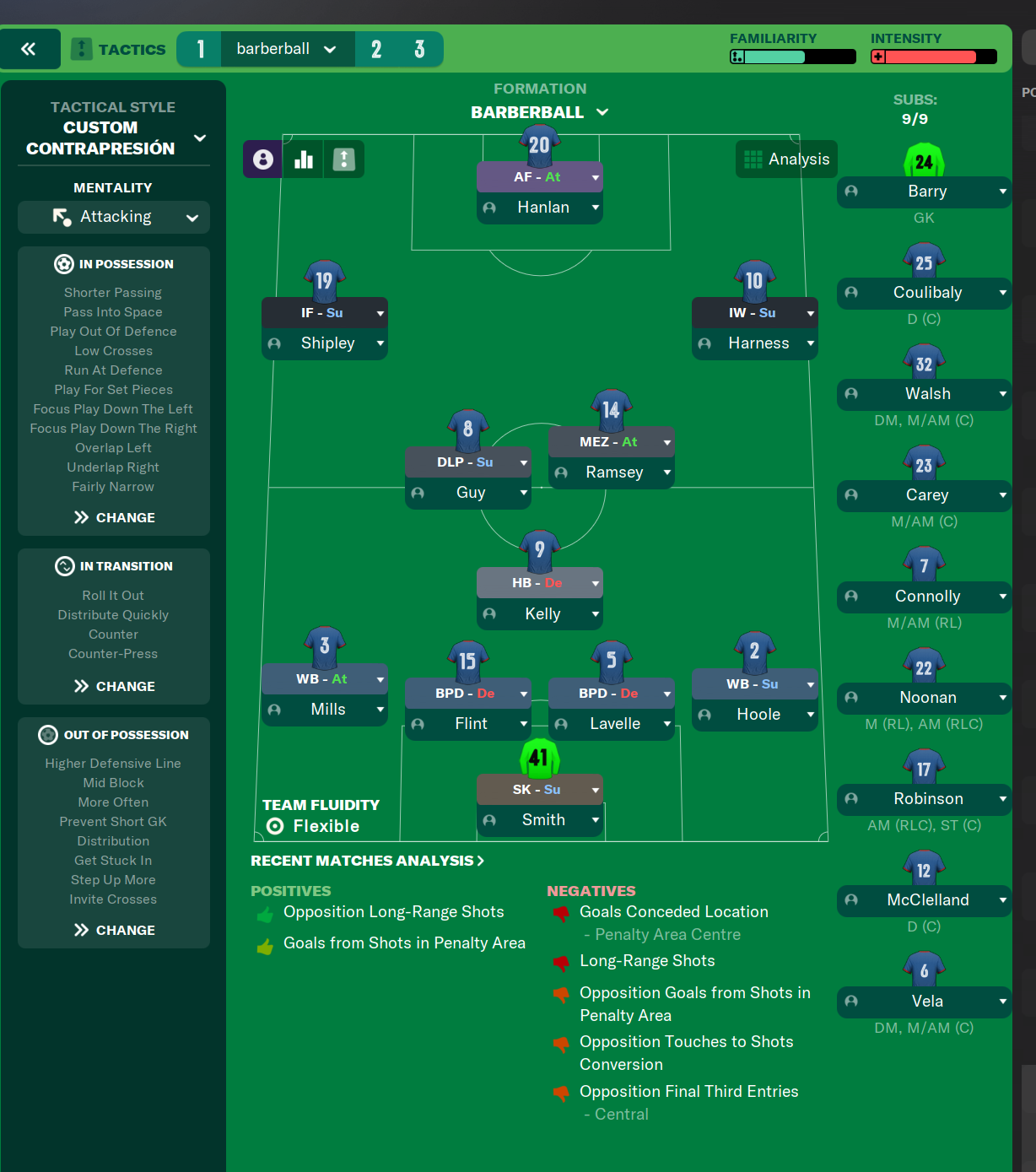
Loading tactical analysis...
Custom Contrapresión
Attacking
4-2-3-1 Wide
Flexible
Shorter Passing
Play Out of Defence
Run At Defence
Focus Play Down The Left
Focus Play Down The Right
Low Crosses
Roll It Out
Distribute Quickly
Counter
Counter-Press
Higher Defensive Line
Mid Block
Step Up More
Invite Crosses
ST
Advanced Forward
Attack
IF
Inside Forward
Support
DLP
Deep-Lying Playmaker
Support
HB
Half-Back
Defend
BPD
Ball-Playing Defender
Defend
SK
Sweeper Keeper
Support
Utilizing a flexible formation allows for fluid interchanging positions and offensive movement, keeping the opposition on their toes.
The role of Inside Forwards helps in creating overloads and provides goal-scoring opportunities from wide areas.
A higher defensive line may expose the backline to pacey counter-attacks, which conflicts with the pressing strategy.
While attacking, the wing-backs' overlapping runs can leave gaps in the defensive structure if not supported by the midfield.
How effective is the current formation in breaking down compact defenses?
Are the wingers receiving enough support from midfield?
How often do the full-backs contribute to the attack?
Is the counter-pressing effectively regaining possession?
Are the defensive duties of the midfielders adequately covering for the backline?
Is the attacking mindset leading to vulnerability in defense?
The tactical theory behind the 4-2-3-1 Wide: roles, instructions, and the trade-offs that decide whether the system holds up.
Klopp-style gegenpressing in FM, including squad profile, line-and-press pairing, sustainable workload, and the antipatterns to avoid.
Double pivots and flat pairs in 4-2-3-1 and 4-4-2: when each pairing works, when it collapses, and the AMC unicorn that rescues both.
The pairing rule for Defensive Line and Line of Engagement, all 9 combinations, and the gap that costs goals.







