Uploaded Tactic
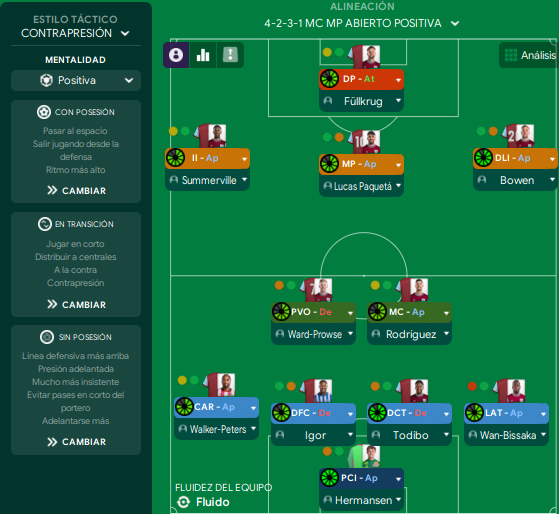
Formation & Style
Tactical Style:Counter-pressing
Mentality:Positive
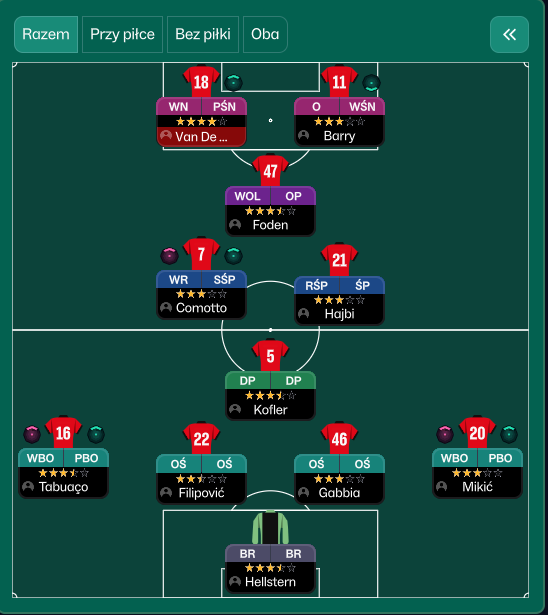
Formation:4-2-3-1 Wide
Team Fluidity:Fluid
In Possession
Pass into space
Play out of defence
Higher tempo
In Transition
Play short
Distribute to centre-backs
Counter-press
Out of Possession
Defensive line higher
Tighter marking
Prevent short GK distribution
Team Shape Without Ball
Shape:High line with compact midfield
Description:Defenders engage high up the pitch, with midfielders pressing tightly.
Evidence:BWM-D at [3,2] and CBs engaging higher, contributing to press.
Team Shape With Ball
Shape:Fluid attacking shape
Description:Inside forwards cut inside while full-backs provide width, with the striker holding up play.
Evidence:IFs at [6,2] and [6,4], creating central overloads.
Phase Description
Attacking Play
Utilizes width from inside forwards, focusing on quick transitions and high-tempo plays.
Defensive Transition
Quickly regains possession through high pressing and immediate counter-pressing.
Main Focus
Creating goal-scoring opportunities through inside runs and overlapping full-backs.
Key Strengths
Effective Pressing
High pressing disrupts opponent's build-up play, winning the ball back quickly.
Versatile Attack
The interplay between inside forwards and full-backs creates unpredictable attacking options.
Solid Midfield Structure
The presence of a BWM in front of the defence offers protection and allows transitions.
Conflicting Directions
Counter-Pressing vs. Higher Defensive Line
A higher defensive line might expose the backline against quick counters, conflicting with a pressing style.
Aggressive Wide Play vs. Central Stability
Pushing full-backs forward may reduce central stability, risking the middle against counter-attacks.
High Tempo vs. Fatigue Management
A high tempo can lead to player fatigue over time, especially with pressing demands.
Tactical Suggestions
Adjust Defensive Line
Consider lowering the defensive line to reduce vulnerability to through balls.
Balance Attack and Defence
Reassess the full-backs' roles to maintain central stability when attacking.
Manage Player Fatigue
Consider rotating players during matches to maintain a high pressing tempo.
Ask Questions About Your Lineup
Related Tactics
Guides for this formation
The tactical theory behind the 4-2-3-1 Wide: roles, instructions, and the trade-offs that decide whether the system holds up.
Player pairings
Midfield Pairs in 4-2-3-1 and 4-4-2
Double pivots and flat pairs in 4-2-3-1 and 4-4-2: when each pairing works, when it collapses, and the AMC unicorn that rescues both.
Read guide
Playing styles
Gegenpressing: A Full Guide
Klopp-style gegenpressing in FM, including squad profile, line-and-press pairing, sustainable workload, and the antipatterns to avoid.
Read guide